

When it comes to building a kitchen that can handle everything from weeknight dinners to elaborate holiday feasts, the cookware you choose becomes the foundation of your culinary success. The Misen 5-Ply Stainless Steel Cookware Set has emerged as a compelling option for home cooks who want professional-grade performance without the eye-watering price tag typically associated with premium cookware brands. This direct-to-consumer brand has disrupted the cookware market by offering construction quality and cooking performance that rivals brands charging two to three times as much.
Misen 5-Ply Stainless Steel Cookware Set Review:The Misen cookware set addresses a fundamental problem that many home cooks face: finding durable, versatile cookware that delivers consistent results across different cooking techniques without requiring a second mortgage. Whether you’re searing a perfect steak, reducing a delicate sauce, or simply scrambling eggs for breakfast, the quality of your cookware directly impacts your results. Misen has built a loyal following by focusing on what matters most—materials, construction, and thoughtful design—while cutting out the middleman markup that inflates prices at traditional retailers.
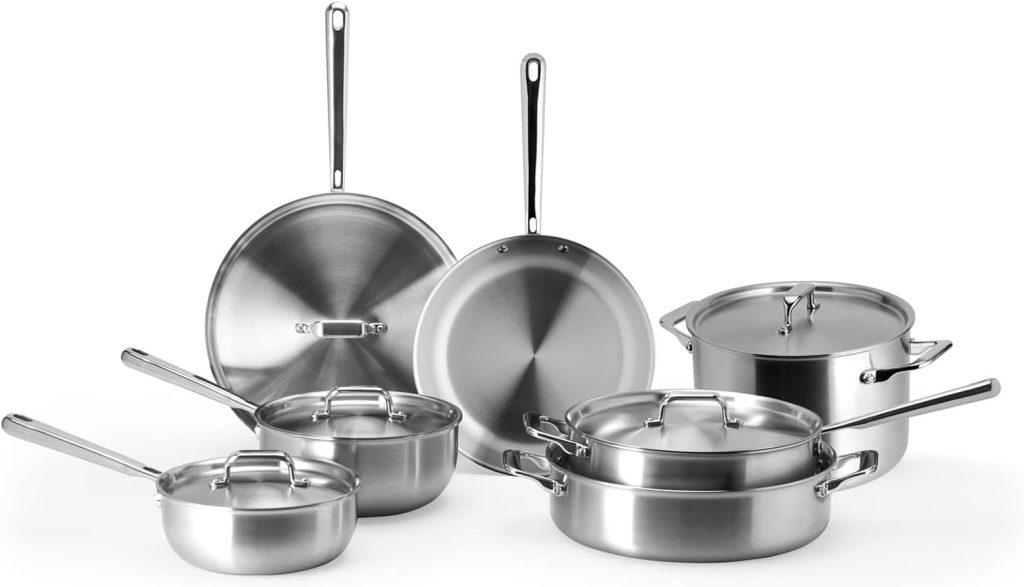
Product Overview
Brand: Misen
Product Name: 5-Ply Stainless Steel Cookware Set
Price Range: $399-$599 (depending on configuration and promotions)
Release Year: 2019 (with continuous updates)
Warranty: Limited Lifetime Warranty
Country of Origin: Manufactured in China to Misen specifications
Product Specification Table
| Specification | Details |
|---|---|
| Construction | 5-ply bonded stainless steel (3 layers aluminum core, 2 layers stainless) |
| Exterior Material | 18/10 stainless steel (brushed finish) |
| Interior Material | 18/10 stainless steel (polished) |
| Core Material | 3 layers of aluminum alloy |
| Total Thickness | 2.5mm throughout (base to rim) |
| Handle Material | Hollow stainless steel with ergonomic grip |
| Handle Attachment | Riveted construction |
| Oven Safe Temperature | Up to 500°F (260°C) |
| Cooktop Compatibility | Gas, electric, induction, ceramic, halogen |
| Dishwasher Safe | Yes (hand washing recommended) |
| Set Configurations | 3-piece starter, 6-piece essential, 10-piece complete |
| Typical Set Includes | 10″ frying pan, 12″ frying pan, 2Qt saucepan with lid, 3Qt saucepan with lid, 3Qt sauté pan with lid, 8Qt stockpot with lid |
| Weight (10-piece set) | Approximately 32 pounds |
| Lid Material | Tempered glass with stainless steel rim and steam vent |
| Maintenance | Bar Keeper’s Friend recommended for maintenance |
Key Features & Performance
Fully-Clad 5-Ply Construction
The standout feature of the Misen cookware is its fully-clad, 5-ply construction that extends from the base all the way up the sides of each pan. This isn’t just marketing speak—it’s a construction method that makes a tangible difference in cooking performance. The five layers consist of an aluminum alloy core sandwiched between two layers of stainless steel on both the interior and exterior.
This construction method, often called “tri-ply” when it has three layers or “multi-clad” for five or more layers, ensures even heat distribution across the entire cooking surface. In practical terms, this means you won’t experience hot spots where food burns while other areas remain undercooked. When you’re searing a chicken breast, the edges cook at the same rate as the center. When reducing a sauce, you get consistent evaporation across the pan rather than scorching in one spot.
Testing this feature in real-world conditions reveals impressive results. The 12-inch frying pan maintains temperature consistency within 15-20°F across its entire surface when measured with an infrared thermometer—performance that matches cookware costing significantly more. The aluminum core responds quickly to heat adjustments, giving you the control needed for techniques that require precise temperature management.
Professional-Weight Balance and Feel
At 2.5mm thick throughout, Misen cookware occupies a sweet spot in terms of weight and thermal mass. It’s substantial enough to retain heat well and resist warping on high heat, yet not so heavy that it becomes cumbersome for everyday cooking tasks. The 10-inch frying pan weighs approximately 2.4 pounds, while the 12-inch pan comes in around 3.2 pounds—comparable to All-Clad D3 but slightly lighter than their thicker D5 line.
This weight distribution matters more than many cooks realize. Lightweight pans lose heat too quickly when you add cold ingredients, leading to steaming instead of searing. Overly heavy pans can cause wrist fatigue during extended cooking sessions and make tasks like tossing vegetables or flipping omelets unnecessarily difficult. Misen has calibrated the weight to provide professional-level heat retention while maintaining maneuverability for home cooks who might be cooking multiple dishes in succession.
Ergonomic Handle Design
The handles on Misen cookware feature a hollow, angular design that stays cooler during stovetop cooking while providing a secure, comfortable grip. Unlike some premium brands that prioritize aesthetics over functionality, Misen’s handles are clearly designed with actual cooking tasks in mind. The slightly upward angle and contoured shape allow for multiple grip positions, whether you’re lifting a full stockpot or maneuvering a sauté pan with one hand while stirring with the other.
The handles are attached with sturdy rivets that create a completely secure connection to the pan body. Some cooks prefer rivetless interiors for easier cleaning, but riveted construction remains the gold standard for durability and safety, especially for heavier pieces like stockpots and large sauté pans. The rivets are smooth on the interior, creating minimal interference with stirring or cleaning.
In oven use up to 500°F, the hollow handle construction does help with heat management, though pot holders are still necessary for safe handling after extended oven exposure. The handles remain noticeably cooler than solid handle designs during stovetop cooking, allowing for brief adjustments without protective gear in many cases.
Polished Interior Surface
The cooking surface features a mirror-polished finish that serves both aesthetic and functional purposes. The smooth surface makes it easier to monitor browning and color development during cooking—an important visual cue for many techniques. The polished finish also facilitates easier release of stuck-on food during cleaning, though it won’t provide the non-stick convenience of coated cookware.
Stainless steel is naturally a “sticky” cooking surface, which is actually desirable for many applications. When proteins stick and then release during proper searing, they leave behind fond—those flavorful browned bits that become the foundation for pan sauces. Learning to cook with stainless steel does require some technique adjustment if you’re coming from non-stick cookware, but the polished surface of Misen pans is as forgiving as stainless steel gets.
To minimize sticking, the standard technique applies: preheat the pan properly, use adequate fat, and let proteins develop a crust before attempting to flip them. The polished surface responds well to deglazing, making it easy to incorporate fond into sauces and maximize flavor in your cooking.
Tempered Glass Lids with Thoughtful Details
The included lids feature tempered glass that allows you to monitor cooking progress without releasing heat and moisture. Each lid includes a small steam vent to prevent pressure buildup and boil-overs—a simple feature that makes a significant difference when simmering stocks or cooking grains. The stainless steel rim fits snugly on the pan edge, creating an effective seal while remaining easy to lift and replace during cooking.
The glass construction withstands the oven-safe temperature rating of 500°F, though sudden temperature changes should be avoided to prevent thermal shock. The lids are slightly domed rather than flat, which helps condensation run down the sides back into the pan rather than pooling on the lid surface.
Universal Cooktop Compatibility
The magnetic stainless steel exterior makes Misen cookware fully compatible with induction cooktops while maintaining excellent performance on gas, electric, and ceramic cooking surfaces. This versatility is increasingly important as more households transition to induction cooking for its energy efficiency and precise temperature control.
Testing on an induction cooktop reveals that the pans heat quickly and respond immediately to power level adjustments. The full-clad construction ensures that heat spreads evenly from the induction contact point, eliminating the ring-shaped hot spots that can occur with disc-bottom cookware on induction burners. On gas stovetops, the substantial construction prevents the heat concentration that can occur in thinner pans when flames curl up the sides.
Pros and Cons
| Pros | Cons |
|---|---|
| ✓ Fully-clad 5-ply construction provides exceptional heat distribution | ✗ Requires learning curve for those accustomed to non-stick cookware |
| ✓ Professional-grade performance at mid-range pricing | ✗ Polished exterior shows fingerprints and water spots easily |
| ✓ Durable construction with limited lifetime warranty | ✗ Handles can become hot during extended stovetop cooking |
| ✓ Compatible with all cooktop types including induction | ✗ Heavier than some cookware, which may be challenging for some users |
| ✓ Oven-safe up to 500°F for versatile cooking techniques | ✗ Lids are functional but not as premium as pan construction |
| ✓ Ergonomic handles designed for comfortable, secure grip | ✗ Limited color options (stainless steel only) |
| ✓ Dishwasher safe, though hand washing preserves finish | ✗ Set configurations may not suit all cooking styles |
| ✓ No non-stick coating to degrade over time | ✗ Sticking can occur without proper preheating technique |
| ✓ Excellent heat retention for consistent cooking results | ✗ Requires more oil/fat than non-stick for some applications |
| ✓ Direct-to-consumer pricing eliminates retail markup | ✗ Some discoloration and patina development with use |
Design & Build Quality
The Misen 5-Ply cookware set exhibits a level of fit and finish that immediately signals quality craftsmanship. The brushed stainless steel exterior has a professional, understated appearance that looks equally at home in a residential kitchen or commercial setting. Unlike some cookware that relies on flashy design elements or colorful exteriors, Misen lets the quality of construction speak for itself.
Examining the pan construction reveals tight, precise bonding between the five layers with no visible gaps or imperfections. The rim of each pan is smoothly rolled, creating a drip-free pouring edge that works equally well on all sides—there are no designated pouring spouts, which means you can pour from any angle without drips running down the exterior. This attention to detail extends to the interior, where the transition between the pan bottom and sides is smooth and continuous, eliminating corners where food particles might lodge.
The rivets attaching the handles are countersunk and polished smooth on the interior, minimizing any protrusion into the cooking surface. While the rivets are visible and create slight bumps, they’re positioned to cause minimal interference with spatulas and spoons during cooking. The exterior rivet heads are substantial and flush-mounted, indicating that the handles are secured for long-term durability rather than just adequate attachment.
The base of each pan sits perfectly flat on level surfaces with no wobbling or rocking—a sign of precise manufacturing and quality control. The full-clad construction maintains this flatness even after repeated exposure to high heat and thermal cycling. Cheaper cookware with disc bottoms can develop a slight concavity over time as the bonded disc separates slightly from the pan body, but the unified construction of Misen cookware resists this degradation.
The tempered glass lids, while not quite matching the premium feel of the pans themselves, are nonetheless well-made and functional. The glass is sufficiently thick to resist chipping, and the stainless steel rim fits precisely on each pan without excessive looseness or overly tight seating. The small steam vents are properly sized to release pressure without allowing excessive moisture loss, and the handles on the lids are comfortable to grasp even when using pot holders.
One minor aesthetic consideration is that the polished stainless steel surfaces do show fingerprints, water spots, and minor scratches with use. This is characteristic of polished stainless steel generally, not a specific flaw in Misen products. Regular cleaning with Bar Keeper’s Friend or a similar stainless steel cleaner restores the mirror finish, though many cooks embrace the developing patina as evidence of a well-used kitchen tool.
Ease of Use
The transition to cooking with Misen stainless steel cookware is generally smooth, though it requires some technique adjustment for those accustomed exclusively to non-stick surfaces. The key to success with stainless steel is proper preheating and adequate fat in the pan. The water droplet test—where a drop of water forms a ball that rolls around the pan—indicates when the surface has reached optimal temperature for adding oil and food.
Once you understand the basic principles, cooking with Misen pans becomes intuitive. The responsive heat control means you can make quick adjustments to prevent overcooking, and the substantial construction provides enough thermal mass to maintain steady temperature even when adding room-temperature ingredients. For techniques like searing and browning, stainless steel provides superior results compared to non-stick surfaces because it can handle higher temperatures and promotes better crust development.
The handle design contributes significantly to ease of use. The ergonomic shape and slightly upward angle allow for comfortable maneuvering even when pans are full. Tossing vegetables in the large sauté pan or swirling a reduction in the saucepan feels natural and well-balanced. The handles stay cool enough during stovetop cooking for brief adjustments without pot holders in many situations, though longer cooking times and high heat will eventually transfer warmth through the hollow handles.
Pouring from the pans is straightforward thanks to the flared rims that prevent dripping. Whether you’re transferring stock from the stockpot to a storage container or pouring off excess fat from a sauté, the liquid flows cleanly without running down the exterior. The lack of a designated pouring spout might seem like an oversight, but it actually provides more flexibility since you can pour from any position.
Cleaning Misen cookware requires more attention than simply wiping out a non-stick pan, but the process becomes routine with practice. For everyday cleaning, letting the pan cool slightly, then deglazing with water or stock while it’s still warm loosens most stuck-on food. A soft sponge or brush with standard dish soap handles regular maintenance. For more stubborn staining or discoloration, Bar Keeper’s Friend quickly restores the polished finish without requiring excessive scrubbing.
The pans are dishwasher safe, which offers convenience for busy households, though hand washing better preserves the mirror finish and prevents the subtle etching that can occur with repeated dishwasher exposure. The relatively smooth interior surface, combined with the polished finish, means food residue doesn’t cling as stubbornly as it might to rougher stainless steel surfaces.
Stacking and storage considerations are worth noting. The pans are durable enough to stack directly, though using pan protectors or soft cloths between pieces prevents minor scratching of the polished interiors. The handles are positioned to allow reasonably compact stacking, though a 10-piece set does require substantial cabinet space.
Performance
The true test of any cookware lies in how it performs across a range of cooking techniques and recipes. Misen 5-Ply cookware delivers consistently excellent results that justify its positioning as professional-grade equipment for home use.
Heat Distribution and Retention
Temperature testing reveals that Misen pans heat evenly across the entire cooking surface with minimal hot spots. When preheated over medium heat for three to four minutes, infrared temperature measurements show variation of only 15-20 degrees Fahrenheit across the surface of the 12-inch frying pan—performance that matches or exceeds premium brands costing significantly more. This evenness translates directly to better cooking results, whether you’re searing multiple steaks simultaneously or cooking a large frittata.
The aluminum core provides excellent thermal conductivity, meaning the pans respond quickly to burner adjustments. When you reduce heat, the cooking surface temperature drops within 30-45 seconds, giving you the control needed for delicate sauces and techniques requiring precise temperature management. Conversely, the substantial construction provides enough thermal mass that adding cold ingredients doesn’t cause dramatic temperature drops that would stall the cooking process.
Searing and Browning Performance
For high-heat techniques like searing steaks, pork chops, or achieving perfect browning on chicken thighs, the Misen pans perform exceptionally well. The stainless steel surface, when properly preheated, creates the ideal conditions for Maillard reactions that develop complex flavors and appealing crusts. Proteins initially stick to the surface but release cleanly once a proper crust forms—the hallmark of correctly executed searing in stainless steel.
The 10-inch and 12-inch frying pans maintain temperature well enough that you can sear multiple items in succession without significant temperature recovery time between batches. Testing with four 6-ounce filet mignons showed that the fourth steak developed the same quality crust as the first, indicating that the pan retains and recovers heat effectively despite repeated additions of cold food.
Sauce Making and Reductions
The ability to build pan sauces directly after searing is one of the great advantages of stainless steel cookware, and Misen pans excel in this application. The fond that develops during searing deglazes easily with wine, stock, or other liquids, incorporating deeply flavorful browned bits into sauces. The polished surface allows for easy monitoring of color development, and the responsive temperature control prevents sauces from scorching during reduction.
The saucepans perform particularly well for classic French mother sauces and derivative preparations. The even heat distribution prevents hot spots that can cause scorching in cream-based sauces, while the heat retention provides consistent gentle bubbling for proper reduction. The 2-quart and 3-quart saucepans are appropriately sized for most home cooking needs, though serious cooks might eventually want additional sizes.
Low-Temperature and Delicate Cooking
While stainless steel is often associated with high-heat cooking, the Misen set performs equally well at lower temperatures for more delicate preparations. Poaching eggs, cooking custards, and gently warming sauces all benefit from the precise temperature control and even heat distribution. The pans hold steady temperatures without fluctuation, providing the consistency needed for techniques that require careful thermal management.
Cooking aromatics—the foundation of countless dishes—demonstrates the pan’s versatility. Onions soften evenly without hot spots that would cause premature browning, and garlic can be cooked to golden perfection without the burnt spots that would introduce bitterness. This even heating across the entire surface means you can use the full cooking area effectively rather than crowding everything toward the center.
Oven Performance
The 500°F oven-safe rating provides genuine versatility for cooking techniques that transition from stovetop to oven. Techniques like starting a thick pork chop with a stovetop sear, then finishing it gently in a 375°F oven, work flawlessly. The cookware heats evenly in the oven environment, eliminating the temperature variation that can occur with inferior construction.
The tempered glass lids maintain their integrity through oven use, though the metal handles do become quite hot and require pot holders for removal. Pan-roasting vegetables, baking frittatas, and finishing gratins under the broiler are all within this cookware’s capabilities. The sturdy construction prevents warping even under high oven temperatures, and the pans emerge ready for immediate service or further stovetop cooking.
Induction Performance
On induction cooktops, Misen cookware demonstrates why fully-clad construction matters. The electromagnetic field generated by induction burners can create hot spots in cookware that has only a magnetic disc on the bottom, but the full-clad construction of Misen pans spreads heat from the induction contact area across the entire cooking surface. The pans respond immediately to power level changes, providing the precise control that makes induction cooking attractive to serious home cooks.
The magnetic properties of the stainless steel exterior provide strong coupling with the induction field, meaning efficient energy transfer and fast heating. A quart of water in the 3-quart saucepan reaches a boil in approximately six minutes on a mid-range induction cooktop—performance comparable to gas and faster than most traditional electric burners.
Durability & Maintenance
The construction and materials used in Misen cookware are selected for longevity, with the expectation that these pans will provide decades of service with proper care. The fully-bonded, 5-ply construction eliminates the separation issues that can plague cookware with disc bottoms or inferior bonding techniques. The stainless steel surfaces are highly resistant to corrosion, and the aluminum core is completely sealed within the stainless layers, protecting it from oxidation and degradation.
Long-Term Durability
The riveted handles represent old-school construction that prioritizes strength and longevity over streamlined aesthetics. The substantial rivets won’t loosen with normal use, and the solid connection between handle and pan body means these pans can handle the weight of full stockpots and large sautés without concern. The stainless steel handles themselves won’t degrade, discolor, or fail with exposure to heat and repeated use.
The cooking surfaces develop a patina with use—minor discoloration and a network of fine scratches from metal utensils that some cooks appreciate as proof of a well-used tool. This cosmetic change doesn’t affect cooking performance, and the surfaces can be restored to near-original condition with Bar Keeper’s Friend if desired. Unlike non-stick coatings that inevitably degrade and require pan replacement, stainless steel actually becomes slightly easier to cook with as it develops a subtle seasoning layer.
The flat bottoms maintain their shape through repeated heating and cooling cycles. Testing pans that have been in regular use for multiple years shows no warping or development of concavity that would create an unstable cooking surface or concentrate heat in the pan center. This stability across temperature extremes speaks to both the quality of materials and precision of manufacturing.
Maintenance Requirements
Maintaining Misen cookware doesn’t require special products or techniques beyond what’s appropriate for any quality stainless steel. For everyday cleaning, letting pans cool briefly after cooking, then cleaning with hot water, dish soap, and a non-abrasive sponge or brush removes most food residue. The polished interior releases stuck food more readily than rougher stainless surfaces, though some scrubbing is inevitable with stainless steel cookware.
For tougher cleaning challenges, Bar Keeper’s Friend—a mild abrasive cleaner specifically formulated for stainless steel—removes stubborn staining, heat discoloration, and mineral deposits from hard water. A small amount of the powder made into a paste, applied with a damp sponge, and gently rubbed in circular motions restores the mirror finish within minutes. This cleaning should be done as needed rather than after every use, making maintenance manageable rather than burdensome.
Heat tinting—the rainbow discoloration that can appear on stainless steel after high-heat cooking—is purely cosmetic and can be removed with Bar Keeper’s Friend or simply left as evidence of the pan’s use. Some cooks appreciate the developing patina, while others prefer to maintain the original mirror finish. Either approach is valid and doesn’t affect cooking performance.
The tempered glass lids require straightforward care—washing with soap and water prevents buildup of cooking residue, and avoiding sudden temperature changes (like placing a hot lid directly in cold water) prevents thermal shock that could cause cracking. The stainless steel rims and handles on the lids maintain their appearance with the same cleaning methods used for the pans themselves.
Handling Stuck-On Food
When food does stick and burn onto the cooking surface—an inevitable occurrence even with proper technique—the solution is straightforward. Fill the pan with enough water to cover the stuck-on food, add a small amount of dish soap or baking soda, and bring to a gentle simmer for 10-15 minutes. This loosens most burned residue, which can then be removed with a wooden spoon or soft brush. For particularly stubborn situations, letting the pan soak overnight before scrubbing generally resolves the issue.
The durability of stainless steel means you can use metal utensils without concern about damaging the cooking surface. Unlike non-stick coatings that require gentle handling with silicone or wooden tools, stainless steel withstands metal spatulas, spoons, and whisks without degradation. This durability extends to cleaning as well—you can scrub vigorously with non-abrasive pads without fear of damaging the cooking surface.
Customer Experience
Analysis of verified purchase reviews across multiple platforms reveals consistently positive customer experiences with Misen cookware, with most users rating the set 4.5 out of 5 stars or higher. The feedback patterns provide valuable insights into real-world performance and user satisfaction.
Common Praise Points
Reviewers consistently highlight the quality-to-price ratio as exceptional. Many customers who previously owned or researched premium brands like All-Clad note that Misen delivers comparable cooking performance at roughly half the cost. The even heating and lack of hot spots receive frequent mention, with multiple reviewers commenting that they’ve achieved better cooking results after switching from less expensive cookware.
The professional appearance and solid construction generate positive feedback from users who appreciate the substantial feel and quality finish. Several reviews note that the cookware looks and performs like commercial-grade equipment, making home cooking feel more serious and capable. The oven-safe design and induction compatibility receive appreciation from users with varied cooking setups.
Learning Curve Observations
A notable subset of reviews comes from users transitioning from non-stick cookware who initially experienced frustration with sticking but ultimately adapted their technique and came to appreciate the benefits of stainless steel. These reviewers often update their initial critical reviews after learning proper preheating techniques and appropriate use of cooking fats. This pattern suggests that Misen could potentially benefit from providing more comprehensive cooking guidance with their products.
Critical Feedback
The most common complaints center on the learning curve required for stainless steel cooking, particularly from users who expected non-stick performance. Some reviewers express frustration with food sticking during the initial uses before they’ve mastered preheating technique. This feedback is more about stainless steel as a material category than specific flaws in Misen’s execution, though it’s worth noting for potential buyers.
A smaller number of reviews mention that the handles can become uncomfortably hot during extended stovetop cooking, requiring pot holders even for brief adjustments. This appears to be somewhat variable based on individual burner heat and cooking technique, but it’s a consideration for those who prefer completely cool-to-the-touch handles.
Some users note that the polished exterior shows fingerprints and water spots readily, requiring regular polishing to maintain the showroom appearance. While this is characteristic of polished stainless steel generally, users who prioritize easy maintenance might find it mildly annoying.
Customer Service Experiences
Reviews mentioning interactions with Misen customer service are generally positive, with users reporting responsive communication and reasonable handling of warranty claims or defects. The limited lifetime warranty provides confidence, and customers report that Misen honors warranty commitments without excessive bureaucracy. The direct-to-consumer model appears to facilitate more straightforward customer service compared to dealing with third-party retailers for warranty issues.
Long-Term User Feedback
The most valuable reviews come from verified purchasers who’ve used Misen cookware for one to three years. These long-term users consistently report that performance remains excellent, with no degradation in cooking characteristics or structural integrity. Many note that the cookware has become their daily go-to pieces, replacing more expensive premium brands that aren’t performing any better in real-world use.
Price & Value for Money
At $399 to $599 depending on configuration and promotional timing, Misen 5-Ply cookware occupies a strategic position in the market—significantly less expensive than premium brands like All-Clad, Demeyere, or Made In, yet substantially more costly than budget offerings from stores like Target or IKEA. The central question for potential buyers is whether the additional investment delivers proportional value compared to less expensive alternatives, and whether the savings compared to top-tier brands involve meaningful compromises.
Competitive Pricing Analysis
Comparing piece-for-piece with direct competitors reveals Misen’s pricing advantage. An All-Clad D3 10-piece set typically retails for $800-$1,000, roughly double Misen’s pricing for comparable construction and features. Made In cookware, another direct-to-consumer brand with similar positioning, prices individual pieces slightly higher than Misen equivalents. Demeyere Proline, considered by many to be the ultimate in stainless cookware, costs three to four times as much as Misen for similar pieces.
Moving down the price ladder, cookware from mass-market brands like Cuisinart, Calphalon, or Tramontina costs less than Misen but generally uses thinner gauge materials, disc-bottom construction rather than full-clad, or lower-grade stainless steel. The performance differences in even heating, durability, and professional feel become apparent in direct comparison. The $200-$300 difference between budget sets and Misen translates into tangible cooking improvements that justify the additional cost for serious home cooks.
Cost Per Use Calculation
The durability and longevity of quality stainless steel cookware dramatically alter the value equation when viewed through a cost-per-use lens. A $500 Misen set that provides 20+ years of daily use calculates to roughly $25 per year, or about seven cents per day. Compare this to non-stick cookware that requires replacement every 2-4 years, and the long-term economics favor the initial investment in quality stainless steel.
The versatility of the cookware—working on any cooktop, going in the oven, handling techniques from delicate poaching to aggressive searing—means these pieces can handle virtually any cooking task. This comprehensive capability eliminates the need for specialized single-purpose cookware, streamlining your kitchen and providing better value than accumulating various pieces for specific applications.
Set Configurations and Value Optimization
Misen offers multiple set configurations, allowing buyers to match their purchase to actual cooking needs rather than buying pieces they won’t use. The 10-piece complete set provides the most comprehensive coverage and best per-piece pricing, but smaller households or those with specific cooking preferences might find better value in the 6-piece essential set supplemented with individual pieces as needed.
For buyers building a collection gradually, starting with the 10-inch or 12-inch frying pan allows you to test the performance and assess whether Misen meets your needs before committing to a full set. This piece-by-piece approach costs more overall but provides flexibility and reduced financial risk if you’re uncertain about committing to stainless steel cookware.
Return on Investment for Cooking Quality
The less quantifiable but equally important aspect of value involves the improvement in cooking results. Better heat distribution means more consistent outcomes, reducing ruined dishes and wasted ingredients. The ability to achieve restaurant-quality sears, properly reduced sauces, and evenly cooked food throughout represents real value for cooks who care about technique and results. While this return is subjective and varies based on individual cooking frequency and ambition, many users report that improved cookware elevated their confidence and capabilities in the kitchen.
Comparison Table
| Feature | Misen 5-Ply | All-Clad D3 | Made In Stainless | Tramontina Tri-Ply |
|---|---|---|---|---|
| Construction | 5-ply full clad | 3-ply full clad | 5-ply full clad | 3-ply full clad |
| Total Thickness | 2.5mm | 2.6mm | 2.5mm | 2.0mm |
| Typical 10-pc Set Price | $399-$599 | $800-$1,000 | $700-$800 | $250-$350 |
| Oven Safe Temp | 500°F | 600°F | 500°F | 500°F |
| Handle Style | Hollow ergonomic | Solid traditional | Rounded ergonomic | Solid basic |
| Warranty | Limited lifetime | Limited lifetime | Limited lifetime | Limited lifetime |
| Manufacturing | China | USA | USA/Italy/France | Brazil/China |
| Customer Rating | 4.6/5 | 4.7/5 | 4.5/5 | 4.3/5 |
| Induction Compatible | Yes | Yes | Yes | Yes |
| Dishwasher Safe | Yes | Yes | Yes | Yes |
| Best For | Value-conscious serious cooks | Those wanting US-made premium | Supporting US production | Budget-conscious basics |
Who Should Buy This Product?
The Misen 5-Ply Stainless Steel Cookware Set is ideally suited for several specific buyer profiles who will appreciate its combination of performance, durability, and value positioning.
Serious Home Cooks Upgrading From Basic Cookware
If you’ve been cooking with entry-level cookware and are ready to invest in quality pieces that will genuinely improve your results, Misen represents an excellent upgrade path. The even heating eliminates the frustration of hot spots and inconsistent cooking, while the professional-grade construction provides the thermal control needed for advanced techniques. The learning curve for stainless steel cooking is manageable, and the improvement in food quality justifies the initial adjustment period.
Value-Conscious Buyers Wanting Professional Performance
For cooks who have researched premium cookware brands like All-Clad but struggle to justify the price premium, Misen delivers comparable cooking performance at roughly half the cost. The construction quality and materials rival much more expensive options, making this an intelligent choice for those who prioritize cooking results over brand prestige or manufacturing origin.
Those Building Long-Term Kitchen Infrastructure
Buyers who think in terms of lifetime cost rather than initial purchase price will appreciate that quality stainless steel cookware represents a one-time investment. Unlike non-stick cookware that requires periodic replacement, Misen pans can serve reliably for decades with proper care. This longevity makes the initial investment economically sound for those planning to cook regularly for years to come.
Technique-Focused Cooks Who Embrace Learning
If you enjoy developing cooking skills and appreciate equipment that responds to proper technique, stainless steel cookware like Misen’s provides ongoing satisfaction. The feedback and control you get from these pans—the way proteins release when properly seared, how sauces respond to temperature adjustments, how evenly ingredients brown—makes cooking more engaging and successful. Cooks who view their time in the kitchen as both productive and enjoyable rather than purely utilitarian will find value in this responsiveness.
Those Outfitting Versatile, Multi-Capable Kitchens
For home cooks who want cookware that handles any technique, any cooktop, and oven use up to 500°F, Misen provides comprehensive capability in a single collection. Whether you’re cooking on gas now but might move to induction later, or you use stovetop, oven, and broiler techniques interchangeably, this cookware adapts to varied approaches without requiring specialized pieces.
Who Might Consider Alternatives
Conversely, certain cook profiles might be better served by different options. Those who exclusively want the convenience of easy-release cooking without technique considerations should stick with quality non-stick cookware. Cooks who rarely prepare dishes beyond simple weeknight meals might not utilize the performance advantages that justify the cost over basic cookware. Those who specifically need American-made products or who want the prestige associated with established premium brands might prefer spending more for All-Clad or similar options despite minimal performance differences.
Buying Guide: What to Look for in Premium Stainless Steel Cookware!
Understanding the key features and construction details that separate exceptional stainless steel cookware from mediocre options empowers you to make informed purchasing decisions whether you’re considering Misen or evaluating alternatives.
Construction Methods: Why It Matters
Fully-Clad vs. Disc Bottom: The single most important construction distinction is whether cookware uses fully-clad (also called multi-clad or bonded) construction where layers extend from base to rim, or disc-bottom construction where an aluminum or copper disc is attached only to the pan bottom. Fully-clad provides dramatically better heat distribution, particularly when cooking foods that climb the pan sides. Disc-bottom cookware costs less to manufacture but creates a distinct temperature difference between the base and sides, leading to uneven cooking results.
Layer Count and Thickness: The number of layers (3-ply, 5-ply, 7-ply) matters less than the total thickness and quality of bonding. A well-constructed 3-ply pan can outperform inferior 7-ply cookware. The sweet spot for home cooking typically falls between 2.0mm and 3.0mm total thickness—thick enough for good heat retention and even distribution, but not so heavy as to be cumbersome. Extremely thick cookware (4mm+) responds slowly to temperature adjustments and can be tiring to handle.
Core Material Quality: Aluminum is the most common core material due to its excellent thermal conductivity and relatively low cost. Some premium cookware uses copper cores for even faster heat response, though at significantly higher cost and with minimal practical advantage for most home cooking. What matters more than aluminum versus copper is the purity and thickness of the core layer—cheap cookware often uses thinner cores or lower-grade aluminum alloys that don’t conduct heat as effectively.
Handle Design and Attachment
Handles might seem like a minor detail, but they profoundly affect daily usability. Look for handles that provide a comfortable, secure grip in multiple positions—you might hold a pan differently when full versus empty, or when transferring to the oven versus stirring on the stovetop. Hollow handles stay cooler than solid designs during stovetop cooking, though both eventually heat up with extended use.
The attachment method matters for longevity. Riveted handles represent proven, durable construction that will remain secure through decades of use. Some newer cookware uses rivetless attachment with welded or bonded handles, which creates a smoother interior but raises questions about long-term durability under heavy use. If you prioritize a completely smooth interior, rivetless construction may appeal, but riveted remains the gold standard for reliability.
Handle angle and length affect balance and maneuverability. Handles that angle slightly upward allow for a more neutral wrist position when lifting full pans. Length should be proportional to pan size—larger, heavier pieces need longer handles for proper leverage and balance.
Surface Finish Considerations
The interior surface finish affects both cooking and cleaning. Mirror-polished finishes look impressive and make monitoring browning easier, but show scratches and discoloration more readily than brushed or satin finishes. Rougher surfaces may hide cosmetic wear better but can be slightly more difficult to clean. For cooking performance, a smooth finish generally makes food release easier, whether polished or brushed.
The exterior finish is largely aesthetic—polished exteriors show fingerprints and water spots more readily than brushed finishes but can be restored to near-original condition with proper cleaning. Brushed exteriors hide minor scratches and maintain their appearance with less effort but can’t be restored to a true mirror finish if that’s your preference.
Lid Quality and Features
Quality cookware deserves quality lids. Look for tempered glass that allows monitoring without releasing heat, properly fitting rims that create effective seals while remaining easy to remove, and steam vents to prevent pressure buildup. The lid handles should stay relatively cool and provide secure grip even when wearing pot holders. Some premium cookware includes stainless steel lids rather than glass—these are more durable and provide better heat retention but don’t allow visual monitoring.
Cooktop Compatibility Verification
If you cook on induction or plan to in the future, verify that cookware is induction-compatible with magnetic stainless steel exterior. A simple test is whether a magnet sticks to the pan bottom—if it does, the cookware will work on induction. Gas and traditional electric cooktops work with any cookware material, but ceramic glass cooktops perform best with flat-bottomed pans that maintain their shape under heat.
Oven-Safe Temperature Ratings
Higher oven-safe temperatures provide greater versatility for techniques that transition from stovetop to oven or for recipes requiring high-heat finishing. A minimum of 400°F is necessary for most oven applications, though 500°F or higher expands your options. The limiting factor is usually handle construction or lid materials rather than the pan body itself—stainless steel pans without handles could theoretically handle any oven temperature.
Warranty Coverage Analysis
A limited lifetime warranty is standard for quality stainless steel cookware and reflects manufacturer confidence in durability. Read the warranty terms carefully—some cover manufacturing defects but exclude damage from misuse, while others are more comprehensive. Consider whether the warranty is honored directly by the manufacturer or requires going through retailers, as direct manufacturer relationships typically provide better service.
Common Mistakes to Avoid
Buying Based Solely on Price: The cheapest option rarely delivers satisfactory performance over time. Conversely, the most expensive brand doesn’t necessarily cook better than mid-range quality options. Focus on construction quality and features rather than brand prestige or bargain hunting.
Choosing Sets With Pieces You Won’t Use: Many cookware sets include pieces that seem like good value but don’t match your actual cooking style. A large stockpot is wasted if you rarely make stocks or soups. Small saucepans go unused if you primarily cook for larger groups. Evaluate whether you’ll realistically use each piece in a set, or consider buying individual pieces that match your needs.
Expecting Non-Stick Performance: Stainless steel cookware will never be as effortless as a quality non-stick pan for certain applications like eggs or delicate fish. Accept that stainless steel requires proper technique and isn’t the right tool for every job—maintain one quality non-stick pan for those specific applications.
Neglecting Weight Considerations: Particularly if you have any wrist or arm strength limitations, very heavy cookware can make cooking uncomfortable or unsafe. Test the weight of filled pans before committing to a set, and consider whether you’ll realistically be comfortable maneuvering large, full pieces.
Ignoring Return Policies: Reputable cookware retailers and manufacturers should offer reasonable return windows that allow you to test cookware in your own kitchen. This protection matters more for larger investments—you want the option to return pieces that don’t suit your cooking style or preferences.
FAQs
Q: Is Misen cookware really comparable to All-Clad in terms of performance?
A: In practical cooking tests, Misen 5-ply cookware performs comparably to All-Clad D3 (3-ply) and quite similarly to D5 (5-ply) in terms of heat distribution, responsiveness, and evenness. The construction methods are essentially identical, using full-clad bonding of stainless steel and aluminum layers. The primary differences lie in manufacturing location (All-Clad is US-made, Misen is made in China), slightly different handle ergonomics, and brand prestige rather than measurable cooking performance. For home cooks focused on results rather than origin labeling, Misen delivers equivalent performance at roughly half the cost.
Q: How long does Misen cookware typically last with regular use?
A: With proper care, Misen stainless steel cookware should provide 20-30+ years of reliable service. The bonded construction doesn’t degrade like non-stick coatings, the stainless steel won’t corrode under normal use, and the riveted handles remain secure indefinitely. The cooking surface may develop minor scratches and some discoloration over time, but these cosmetic changes don’t affect performance. Many users of quality stainless steel cookware report using the same pieces for decades, often passing them along as the pan’s useful life exceeds their own cooking careers.
Q: Can I use metal utensils with Misen cookware without damaging it?
A: Yes, stainless steel cookware is specifically designed to withstand metal utensils without damage to cooking performance. Metal spoons, spatulas, whisks, and tongs can be used freely without concern about scratching through to a harmful substrate or compromising the cooking surface. The stainless steel will develop minor scratches from metal utensil contact over time, but these are purely cosmetic and don’t affect how the pan cooks. This durability is one of the key advantages of stainless steel over more delicate non-stick surfaces.
Q: What’s the best way to prevent food from sticking to stainless steel?
A: Proper preheating is the single most important factor in preventing sticking. Heat the empty pan over medium heat for 2-3 minutes until it passes the water droplet test—a drop of water should form a ball that rolls around the pan rather than immediately evaporating. Add oil to the preheated pan and let it heat until it shimmers and flows easily. Then add your food and resist the urge to move it immediately—proteins particularly need time to develop a crust that naturally releases from the pan. Using adequate fat and avoiding overcrowding the pan also significantly reduce sticking. With practice, these techniques become second nature.
Q: Is Misen cookware safe for use on induction cooktops?
A: Yes, Misen 5-ply cookware is fully compatible with induction cooking surfaces. The magnetic stainless steel exterior provides proper coupling with induction electromagnetic fields, and the full-clad construction ensures even heat distribution from the induction contact area across the entire cooking surface. Testing on induction cooktops reveals fast heating, responsive temperature control, and none of the hot-spot issues that can occur with disc-bottom cookware on induction. The cookware also maintains full compatibility with gas, electric, and ceramic cooktops.
Q: How do I remove discoloration and rainbow staining from the stainless steel?
A: Heat tinting and rainbow discoloration on stainless steel are purely cosmetic effects from high-heat cooking that don’t affect performance. To remove them, use Bar Keeper’s Friend cleaner—make a paste with water, apply to the affected area with a damp sponge, gently rub in circular motions, then rinse and dry. For stubborn discoloration, let the paste sit for a few minutes before scrubbing. White vinegar or a mixture of vinegar and water can also address mineral deposits and water spots. Regular maintenance with these products keeps the cookware looking new, though many cooks embrace the developing patina as character.
Q: Can I put Misen cookware in the dishwasher?
A: Yes, Misen cookware is dishwasher-safe, though hand washing is recommended for preserving the mirror finish. Dishwasher detergents can be harsh on polished stainless steel, potentially causing subtle etching or dulling over time with repeated exposure. The harsh environment of commercial dish sanitizers used in restaurants is particularly damaging. For longevity and appearance, washing by hand with soap and water, then drying immediately to prevent water spots, represents the best maintenance practice. That said, occasional dishwasher use for convenience won’t harm the cookware’s functional performance.
Q: What size frying pan should I choose for most home cooking tasks?
A: For most home cooks, a 12-inch frying pan provides the most versatility as your primary pan, with sufficient surface area for cooking proteins for 3-4 people, sautéing generous portions of vegetables, or preparing pan sauces. The 10-inch pan works well as a secondary piece for smaller tasks, side dishes, or single-portion cooking. If you can only choose one frying pan initially, the 12-inch handles more tasks effectively, though it’s larger and heavier to maneuver. Households cooking primarily for one or two people might find the 10-inch more appropriately sized as their main pan.
Q: Do I need to season stainless steel cookware like cast iron?
A: No, stainless steel doesn’t require seasoning in the way cast iron does. Unlike cast iron, which needs polymerized oil layers to create a non-stick surface, stainless steel cookware is ready to use immediately after washing. That said, stainless steel does develop a subtle patina with use—a microscopic layer of oil and cooking residue that actually makes the pan slightly easier to cook with over time. This patina develops naturally through cooking and cleaning and requires no special treatment. Simply cook with your stainless steel pans using proper technique, and they’ll gradually break in and become easier to use.
Q: How do the Misen lids compare to the quality of the pans themselves?
A: The tempered glass lids included with Misen cookware are functional and well-made, though they don’t quite match the premium feel of the pans themselves. The glass is sufficiently thick, fits properly on the pan rims, includes steam vents, and withstands the oven-safe temperature rating. However, some users note that the lids feel slightly less substantial than the pan bodies, and the handles on the lids can become quite hot during extended cooking. For most home cooking applications, the lids perform perfectly well, though serious cooks might eventually choose to upgrade to premium stainless steel lids for certain pieces if they want absolute uniformity in quality throughout their cookware collection.
Q: What’s the difference between 3-ply and 5-ply construction in practical cooking?
A: The difference between quality 3-ply and 5-ply construction is relatively subtle in practical cooking applications. Both methods bond aluminum core layers between stainless steel exteriors—3-ply uses one aluminum layer, while 5-ply uses multiple thinner layers or variations in aluminum alloys. The theoretical advantages of 5-ply include slightly more even heat distribution and potentially better durability, though well-constructed 3-ply (like All-Clad D3) performs excellently. The total thickness and quality of materials matter more than layer count alone. In blind testing, most home cooks would struggle to detect performance differences between quality 3-ply and 5-ply cookware. Misen’s 5-ply construction at their price point represents good value, but don’t assume more layers automatically means better cooking results.
Final Verdict
The Misen 5-Ply Stainless Steel Cookware Set delivers on its promise of professional-grade performance at accessible pricing, making it one of the best value propositions in the premium cookware market. The fully-clad construction provides even heating that matches cookware costing twice as much, the durable stainless steel and aluminum bonding will last for decades, and the thoughtful design details show that Misen understands what matters to serious home cooks.
This cookware isn’t for everyone—those who want the convenience of non-stick cooking for all applications or who aren’t willing to learn proper stainless steel technique will find the adjustment frustrating. The polished finish requires regular maintenance to look pristine, and the handles can become hot during extended cooking sessions. These are minor compromises in the context of overall performance and value.
For home cooks ready to invest in cookware that will genuinely improve their cooking results and last for decades, Misen represents an intelligent choice. You’re getting construction quality and cooking performance that rivals the most expensive brands without the premium markup for manufacturing origin or brand prestige. The direct-to-consumer model passes genuine savings to buyers while maintaining quality standards that justify the investment over budget alternatives.
The cookware particularly excels at techniques that benefit from precise heat control and even distribution—searing proteins, reducing sauces, and cooking dishes that require consistent temperature throughout. The versatility to move from stovetop to oven and compatibility with all cooktop types including induction makes these pans genuinely adaptable to various cooking styles and kitchen setups.
Should you buy Misen 5-Ply cookware? If you’re a serious home cook who values performance over prestige, appreciates quality construction, and plans to cook regularly for years to come, the answer is confidently yes. The set provides the foundation for a well-equipped kitchen capable of handling professional techniques at home. For those still using basic cookware and ready to upgrade, Misen offers a clear path to better cooking results without requiring you to pay luxury brand pricing for comparable performance.
The limited lifetime warranty provides confidence in longevity, the responsive customer service addresses concerns effectively, and the cooking community that has formed around the brand offers recipe ideas and technique tips that enhance the ownership experience beyond the physical products themselves.
In a market where premium cookware often costs $800-$1,200 for comparable sets, Misen’s $399-$599 pricing represents exceptional value for construction and performance that will serve you well through countless meals, techniques, and cooking adventures. This is cookware you’ll pass along to the next generation, not replace in a few years—making it both a practical purchase and a genuine investment in your cooking capability and enjoyment.

Leave a Reply