

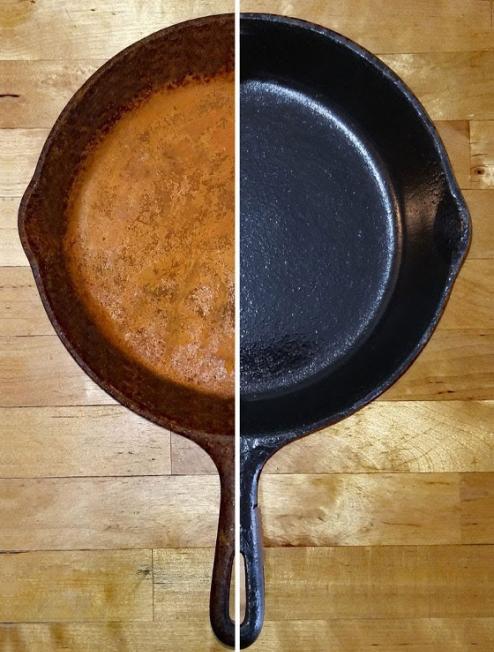
To remove rust from cast iron cookware, scrub the affected area with a steel wool pad and mild dish soap. Rinse thoroughly and dry completely before re-seasoning.
Cast iron cookware is known for its durability and excellent heat retention. However, rust can develop if it’s not properly maintained. Rust not only affects the appearance of your cookware but can also impact its performance. Removing rust promptly is essential to preserving the quality of your cast iron.
With the right techniques, you can restore your cookware to its former glory. This guide will explore effective methods to eliminate rust and keep your cast iron in top condition. Whether you have a family heirloom or a recent purchase, maintaining your cast iron cookware ensures it lasts for generations.
Credit: www.lodgecastiron.com
The Perils Of Rust On Cast Iron Cookware
Rust can be a serious threat to your cast iron cookware. It damages the surface and affects cooking. Understanding the causes and effects of rust helps in prevention. Let’s explore why rust forms and its impact on cooking and health.
Why Rust Forms
Rust forms when iron reacts with moisture and oxygen. This process is called oxidation. Several factors contribute to this reaction:
- Exposure to water
- Humidity in the air
- Improper cleaning methods
- Storing without seasoning
Even small scratches on the surface can lead to rust. The protective layer wears away, allowing moisture to penetrate. Regular maintenance prevents rust formation.
Impact On Cooking And Health
Rusty cast iron cookware affects both cooking and health. Here are the key impacts:
| Impact | Description |
|---|---|
| Flavor Alteration | Rusty pans can impart a metallic taste to food. |
| Food Safety | Rust can harbor bacteria and affect food safety. |
| Cooking Efficiency | Rusty surfaces reduce heat conductivity. |
Using rusted cookware can lead to health risks. Consuming food cooked in rust can cause stomach issues. It’s crucial to maintain cast iron cookware in good condition.
Regular inspection and proper care keep your cookware rust-free. Enjoy the benefits of cooking with well-maintained cast iron.
Preventive Measures To Avoid Rust
Rust can damage your cast iron cookware. Preventive measures keep your pans in top shape. Proper care ensures longevity and performance.
Proper Cleaning Techniques
Cleaning your cast iron cookware correctly is crucial. Follow these steps to maintain its integrity:
- Use Hot Water: Rinse your cookware with hot water.
- Avoid Soap: Do not use soap or harsh detergents.
- Scrub Gently: Use a stiff brush or a non-metal scrubber.
- Dry Immediately: Wipe your cookware dry with a towel.
These techniques prevent moisture build-up. Moisture invites rust. Proper cleaning helps keep your cookware rust-free.
Seasoning: The Armor Against Rust
Seasoning creates a protective layer. It prevents rust and enhances non-stick properties. Follow these steps to season your cast iron:
- Clean: Start with a clean, dry pan.
- Apply Oil: Use a thin layer of vegetable oil.
- Heat: Place the pan upside down in the oven at 375°F (190°C).
- Bake: Bake for one hour, then cool in the oven.
Repeat this process regularly. Seasoning improves your cookware’s lifespan. A well-seasoned pan is your best defense against rust.
Early Signs Of Rust And When To Act
Rust can ruin your cast iron cookware. Spotting rust early helps maintain its quality. Understanding the signs and acting quickly makes a difference.
Spotting The First Specks
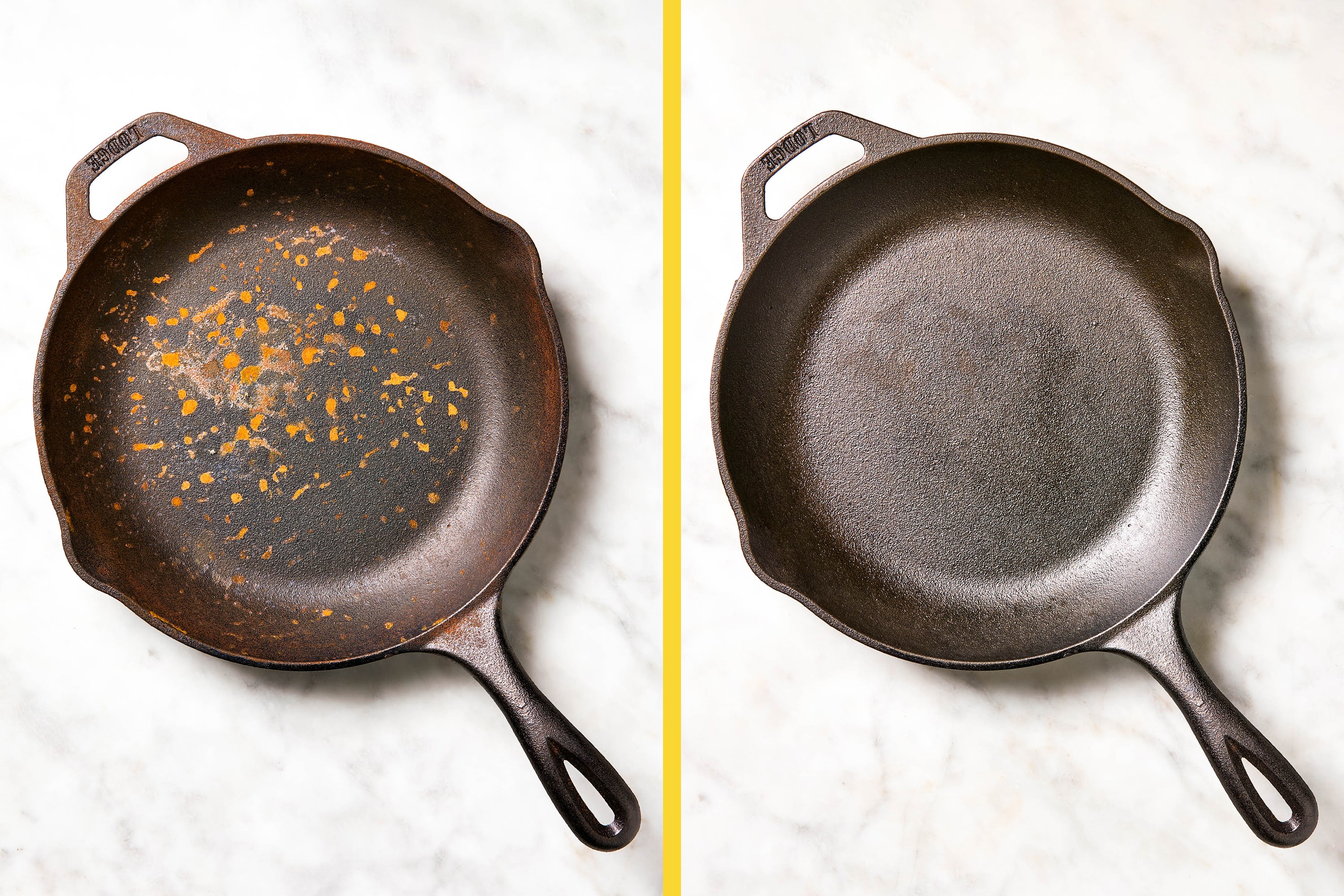
Rust often starts as tiny, brown spots. These spots appear on the surface. Look for:
- Faded color: The surface may look dull.
- Small dots: Brown or orange spots indicate rust.
- Rough texture: The surface feels uneven or gritty.
Regularly inspect your cookware. Check after each use. Early detection prevents further damage.
The Right Time For Intervention
Act quickly when you see rust. The longer you wait, the worse it gets. Follow these steps for timely action:
- Clean the cookware immediately.
- Use a gentle scrubber to remove rust.
- Dry it thoroughly to prevent more rust.
- Season the cast iron to protect it.
Regular maintenance is key. Keep your cast iron in great shape. A little attention goes a long way.
Credit: www.thekitchn.com
Home Remedies For Rust Removal
Rust can ruin your favorite cast iron cookware. Fortunately, you can use simple home remedies to remove rust effectively. These methods are safe, natural, and easy to follow. Let’s explore two popular techniques: vinegar soak and salt with potato scrub.
Vinegar Soak: Nature’s Rust Dissolver
Vinegar is a powerful rust remover. Its acidity breaks down rust quickly. Follow these steps for a vinegar soak:
- Fill a container with white vinegar.
- Submerge the rusty cookware in the vinegar.
- Let it soak for 1 to 6 hours. Check it every hour.
- Once the rust loosens, scrub it with a brush.
- Rinse the cookware with water.
- Dry it immediately to prevent new rust.
Vinegar is safe and effective for rust removal.
Salt And Potato Scrub: The Abrasive Duo
Using salt with a potato creates a great scrub for rust. The salt acts as an abrasive while the potato provides moisture. Here’s how to do it:
- Cut a potato in half.
- Sprinkle salt on the cut side.
- Rub the potato on the rusty areas.
- Apply more salt as needed.
- Rinse with water and dry thoroughly.
This method is fun and effective. It helps remove stubborn rust without harsh chemicals.
| Method | Materials Needed | Time Required |
|---|---|---|
| Vinegar Soak | White vinegar, container | 1 to 6 hours |
| Salt and Potato Scrub | Salt, potato | 5 to 10 minutes |
Commercial Solutions: When To Consider
Sometimes, removing rust from cast iron cookware requires more than home remedies. Commercial solutions can effectively tackle severe rust problems. Knowing when to use these products can save time and effort. Here’s a closer look at your options.
Chemical Rust Removers: Pros And Cons
Chemical rust removers can be highly effective. They often work faster than natural methods. However, these products come with both advantages and disadvantages.
| Pros | Cons |
|---|---|
| Fast and efficient rust removal | May contain harmful chemicals |
| Easy to use | Can damage the seasoning |
| Available at most stores | Requires careful handling |
Choose a rust remover that fits your needs. Always follow the instructions. Wear gloves and work in a well-ventilated area. Check if the product can harm your cookware’s surface.
Professional Restoration Services
Hiring professionals can be a wise choice for badly rusted cookware. They have the tools and expertise to restore your pans. Here are some reasons to consider this option:
- Expertise: Professionals understand the best techniques.
- Time-saving: You avoid the hassle of DIY methods.
- Quality results: They can restore the original finish.
Professional services may come at a cost. Prices vary based on the extent of rust. Always ask for a quote before proceeding. Trust their experience for optimal results.
Step-by-step Guide To Removing Rust
Rust on cast iron cookware can be frustrating. Follow this guide to restore your pans. This step-by-step process will help you remove rust effectively.
Gathering Your Tools
Before starting, gather the following tools:
- Steel wool or a scrub brush
- Dish soap or a vinegar solution
- Paper towels or a clean cloth
- Cooking oil (like vegetable or flaxseed oil)
- Gloves to protect your hands
The Removal Process
- Put on your gloves.
- Mix vinegar and water in a bowl (1:1 ratio).
- Soak the rusty areas with the vinegar solution.
- Let it sit for 10-15 minutes.
- Use steel wool or a scrub brush to scrub away rust.
- Rinse the cookware with warm water.
- Apply dish soap and scrub again if needed.
- Dry the cast iron thoroughly with paper towels.
- Apply a thin layer of cooking oil to prevent future rust.
Post-removal Care
Taking care of your cast iron cookware is essential. Follow these steps:
- Store cookware in a dry place.
- Avoid soaking it in water.
- Regularly apply a thin layer of oil.
- Use it often to maintain seasoning.
These simple steps will keep your cast iron cookware rust-free. Enjoy cooking with your restored pans!
Re-seasoning Your Cast Iron After Rust Removal
After removing rust from your cast iron cookware, re-seasoning is essential. This process restores the protective layer and enhances cooking performance. Proper seasoning keeps food from sticking and adds flavor.
Cleaning And Preparing For Seasoning
Before re-seasoning, clean your cast iron thoroughly. Follow these steps:
- Wash: Use warm water and a mild detergent.
- Scrub: Use a non-metal brush or sponge. Remove any residue or rust.
- Dry: Wipe your cookware with a towel. Ensure it is completely dry.
- Heat: Place it on low heat for a few minutes. This removes any remaining moisture.
The Seasoning Process
Now, it’s time to season your cast iron. Follow these simple steps:
- Choose oil: Use a high-smoke point oil like flaxseed or canola.
- Apply oil: Pour a small amount on a paper towel. Rub it all over the cookware, inside and out.
- Remove excess: Wipe off any excess oil. A thin layer works best.
- Heat it: Place the cookware upside down in the oven at 450°F (232°C).
- Bake: Bake for one hour. This allows the oil to polymerize.
- Cool down: Turn off the oven and let it cool inside.
Maintaining The Seasoning
Proper maintenance keeps your seasoning intact. Follow these tips:
- Clean gently: Avoid soap. Use hot water and a brush.
- Dry immediately: Prevent rust by drying right away.
- Re-season: Repeat the seasoning process if food starts to stick.
- Avoid acidic foods: Foods like tomatoes can strip seasoning.
- Store properly: Keep in a dry place. Place a paper towel inside to absorb moisture.

Credit: m.youtube.com
Frequently Asked Questions
How Can I Remove Rust From Cast Iron?
To remove rust from cast iron, start by scrubbing the affected area with a stiff brush or steel wool. Use mild dish soap and warm water for extra cleaning power. Rinse thoroughly and dry the cookware completely to prevent further rust.
Finally, apply a thin layer of oil to protect the surface.
What Are The Best Methods For Rust Removal?
The best methods for rust removal include using vinegar, baking soda, or a specialized rust remover. Vinegar is effective due to its acidity, while baking soda creates a paste that can scrub away rust. Always rinse and dry the cookware after using these methods to ensure longevity.
Is It Safe To Use Steel Wool On Cast Iron?
Yes, using steel wool on cast iron is safe for rust removal. It effectively removes rust and stubborn residues. However, be cautious not to over-scrub, as it may damage the seasoning. After cleaning, re-season the cookware to maintain its non-stick properties.
How Do I Prevent Rust On Cast Iron Cookware?
To prevent rust on cast iron, ensure it is dried completely after washing. Apply a thin layer of oil after cleaning to create a protective barrier. Store your cookware in a dry place and avoid soaking it in water. Regular seasoning also helps maintain its protective coating.
Conclusion
Removing rust from cast iron cookware is essential for maintaining its durability and cooking performance. Regular cleaning and proper seasoning can prevent rust from returning. Remember to store your cookware in a dry place. With these tips, your cast iron will remain in excellent condition for years to come, enhancing your culinary experience.

Leave a Reply