
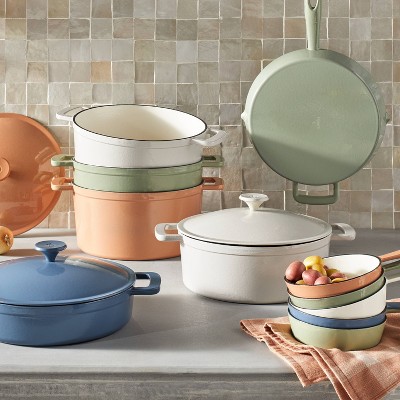
Enamel cookware is metal cookware coated with a layer of enamel for a non-stick, easy-to-clean surface. It combines durability with aesthetic appeal, making it a popular choice for home chefs.
Enamel cookware has gained popularity for its vibrant designs and practical features. The enamel coating provides a non-reactive surface, making it ideal for cooking a variety of dishes. It distributes heat evenly, preventing hot spots that can burn food. This type of cookware is suitable for both stovetops and ovens, adding versatility to your kitchen.

Many people appreciate its easy maintenance; a simple wash is often enough to keep it looking new. With proper care, enamel cookware can last for years, making it a worthwhile investment for anyone who enjoys cooking.
Credit: www.amazon.com
Introduction To Enamel Cookware
Enamel cookware offers a beautiful blend of style and functionality. This type of cookware features a glossy, colorful coating. It makes cooking enjoyable and adds charm to your kitchen. Its durable surface makes it easy to clean and perfect for various cooking methods.
Historical Context
Enamel cookware has a rich history. It dates back to ancient times. Craftsmen used enamel coatings to protect metal from rust.
- 16th Century: Enamel started in Europe.
- 19th Century: Production methods improved.
- 20th Century: Became popular in American kitchens.
Classic brands like Le Creuset emerged. They introduced vibrant colors and designs. This made enamel cookware a kitchen essential.
Resurgence In Popularity
Recently, enamel cookware has become trendy again. Many people love its vintage appeal. Social media showcases its beauty, inspiring new cooks.
| Reasons for Popularity | Benefits |
|---|---|
| Stylish Designs | Enhances kitchen aesthetics |
| Versatile Use | Suitable for stovetop and oven |
| Easy Maintenance | Simple to clean and maintain |
| Durability | Long-lasting with proper care |
Chefs and home cooks appreciate its versatility. Enamel cookware works for slow cooking, baking, and more. It’s a great addition to any kitchen.
The Basics Of Enamel
Enamel cookware is popular for many reasons. It offers beauty, durability, and versatility. Understanding its composition and properties is essential for making informed choices. Here’s a closer look at what makes enamel cookware special.
Composition And Properties
Enamel is made from glass and metal. The metal base is typically cast iron or steel. The glass coating is fused to the metal through high heat. This process creates a smooth, non-porous surface.
| Material | Benefits |
|---|---|
| Cast Iron | Excellent heat retention and distribution. |
| Steel | Lightweight and quick to heat up. |
The glass coating provides several properties:
- Non-stick surface for easy cooking and cleaning.
- Resistant to scratching and chipping.
- Colorful designs enhance kitchen aesthetics.
Advantages Over Other Materials
Enamel cookware has distinct advantages. It outperforms many other materials in the kitchen.
- Heat Distribution: Even heat for perfect cooking.
- Non-reactive: Does not react with acidic foods.
- Easy to Clean: Smooth surface resists stains.
- Versatile: Suitable for stovetop and oven use.
Choosing enamel cookware is a smart decision. It combines style with functionality. Enjoy cooking with this amazing kitchen essential!
Types Of Enamel Cookware
Enamel cookware comes in various types. Each type offers unique benefits. Understanding these types helps in choosing the right cookware for your kitchen.
Cast Iron Enamel
Cast iron enamel cookware is popular for its durability. It retains heat well, making it great for slow cooking. Here are some key features:
- Heat Retention: Stays hot for a long time.
- Versatility: Suitable for stovetop and oven use.
- Non-Stick Surface: Enamel coating prevents sticking.
Common items include:
- Dutch Ovens
- Skillets
- Casserole Dishes
Steel Enamel Options
Steel enamel cookware is lightweight and easy to handle. It heats quickly and evenly. Check out these features:
- Lightweight: Easy to lift and maneuver.
- Quick Heating: Reduces cooking time.
- Colorful Designs: Available in many vibrant colors.
Popular choices include:
- Stock Pots
- Sauce Pans
- Baking Dishes
Choosing Quality Enamel Cookware
Choosing quality enamel cookware can elevate your cooking experience. It offers durability, aesthetic appeal, and excellent heat retention. Picking the right pieces ensures they last longer and perform better in your kitchen.
Key Features To Look For
When selecting enamel cookware, consider these key features:
- Material: Look for cast iron or steel bases.
- Enamel Coating: Choose a smooth, chip-resistant finish.
- Heat Resistance: Ensure it can withstand high temperatures.
- Compatibility: Check if it’s safe for your cooktop.
- Weight: Heavier pieces hold heat better.
- Handles: Comfortable and heat-resistant handles are essential.
Top Brands In The Market
Here are some of the top brands known for quality enamel cookware:
| Brand | Notable Features |
|---|---|
| Le Creuset | Color variety, excellent heat retention, durable. |
| Cuisinart | Affordable, stylish designs, versatile. |
| Staub | Self-basting lid, great for slow cooking. |
| Rachael Ray | Fun colors, easy to use, lightweight. |
| Emile Henry | High-quality ceramic, even heating, dishwasher safe. |
Research each brand to find the best fit for your needs.
Caring For Your Enamel Cookware
Caring for your enamel cookware helps it last longer. With proper cleaning and maintenance, it can stay beautiful and functional. Follow these tips to keep your cookware in top shape.
Cleaning Techniques
Cleaning enamel cookware requires gentle methods. Follow these steps for effective cleaning:
- Allow cookware to cool before cleaning.
- Use warm, soapy water and a soft sponge.
- Avoid abrasive cleaners and steel wool.
- For tough stains, soak in soapy water.
- Rinse thoroughly and dry with a soft cloth.
For stubborn stains:
- Make a paste with baking soda and water.
- Apply it to the stained area.
- Let it sit for 15 minutes.
- Gently scrub with a soft sponge.
- Rinse and dry.
Maintenance Tips
Maintaining enamel cookware is essential for durability. Follow these tips:
- Store cookware in a dry place.
- Use silicone or wooden utensils to avoid scratches.
- Do not heat empty cookware on the stove.
- Inspect for chips or cracks regularly.
To keep your enamel cookware looking new:
| Tip | Description |
|---|---|
| Use Mild Detergents | Avoid harsh chemicals that can damage the surface. |
| Season Occasionally | Lightly oil the inside to prevent sticking. |
| Avoid Extreme Temperature Changes | Prevent thermal shock by not placing hot cookware in cold water. |
Following these steps ensures your enamel cookware stays vibrant and functional for years to come.
Cooking With Enamel
Enamel cookware is popular for its unique features. It offers great aesthetics and functionality. Many home cooks enjoy using it for daily meals.
Heat Distribution And Retention
Enamel cookware heats evenly. This ensures that food cooks uniformly. Here are the key benefits:
- Consistent Heat: No hot spots or cold areas.
- Long-lasting Heat: Keeps food warm for longer.
- Energy Efficient: Cooks food faster, saving energy.
These features make enamel cookware ideal for various cooking methods. From slow cooking to searing, it performs well.
Versatility In The Kitchen
Enamel cookware is versatile. It can be used on different heat sources:
| Heat Source | Compatibility |
|---|---|
| Gas Stoves | Yes |
| Electric Stoves | Yes |
| Induction Cooktops | Yes (with a magnetic base) |
| Ovens | Yes |
It is suitable for various dishes. You can make soups, stews, and casseroles. Baking bread and roasting meats is also possible.
Cleaning is simple, too. Most enamel cookware is dishwasher safe. Hand washing with mild soap is also effective.
Safety And Health Considerations
Enamel cookware is popular for its beauty and functionality. Safety and health are vital factors to consider. This section explores its non-toxic qualities and potential hazards.
Non-toxic Qualities
Enamel cookware is often praised for its non-toxic properties. Here are key features:
- Lead-Free: Most enamel cookware is free from lead.
- Cadmium-Free: Safe for cooking; it does not leach harmful chemicals.
- Non-Reactive: Enamel does not react with food. It keeps flavors intact.
- Easy to Clean: Smooth surface resists stains and bacteria buildup.
This makes enamel cookware a healthy choice for your kitchen.
Potential Hazards And How To Avoid Them
While enamel cookware is generally safe, some hazards exist. Follow these tips to minimize risks:
| Hazard | Prevention Method |
|---|---|
| Chipped Enamel | Avoid using metal utensils; opt for silicone or wood. |
| High Heat Damage | Use low to medium heat. Avoid direct flames. |
| Heavy Weight | Lift carefully to prevent accidents. |
Stay informed about these hazards. Enjoy safe cooking experiences with enamel cookware.
Enamel Cookware In Modern Kitchen Design
Enamel cookware brings charm to modern kitchen design. Its vibrant colors and sleek finishes elevate any space. This cookware blends functionality with style seamlessly. Home chefs appreciate its versatility and aesthetic value.
Aesthetic Appeal
The visual charm of enamel cookware is undeniable. Its glossy finish catches the eye and enhances kitchen decor. Available in various colors, it complements many design themes. Choose from classic white, bold red, or soothing pastels.
- Bright colors add energy to kitchen spaces.
- Glossy surfaces reflect light, brightening the room.
- Stylish designs can be displayed on countertops.
Enamel cookware can serve as a decorative element. Hang pots on hooks or display them on shelves. This practical approach showcases both beauty and utility.
Integration With Contemporary Appliances
Enamel cookware fits well with modern appliances. It complements stainless steel, glass, and ceramic designs.
| Appliance Type | Color Combinations |
|---|---|
| Stainless Steel | Red, Blue, Green |
| Black Appliances | White, Bright Colors |
| Wooden Finishes | Earthy Tones |
This cookware’s durability allows it to withstand heat. Use it on stovetops and in ovens without worry. Its compatibility with induction cooktops is a bonus.
Enamel cookware is easy to clean. Most pieces are dishwasher safe. This convenience enhances its appeal in busy kitchens.
Cost And Value Assessment
Understanding the cost and value of enamel cookware is essential. This assessment helps you make informed decisions. Enamel cookware offers durability and versatility, but how does it compare in terms of cost?
Initial Investment Vs. Longevity
The initial cost of enamel cookware can be higher than other types. However, its longevity often justifies the price. Here are key points to consider:
- Durability: Enamel cookware resists scratches and chips.
- Heat Retention: It maintains heat well, improving cooking efficiency.
- Versatility: Suitable for stovetop and oven use.
Most enamel cookware lasts for years with proper care. The long lifespan reduces the need for replacements. This can save you money over time.
Comparing Price Points
Enamel cookware varies in price based on brand and quality. Here’s a quick comparison:
| Brand | Price Range | Quality |
|---|---|---|
| Le Creuset | $150 – $400 | High-end |
| Cuisinart | $50 – $150 | Mid-range |
| Amazon Basics | $25 – $50 | Budget |
Investing in higher-end brands may yield better results. Consider your cooking needs and budget carefully.
Evaluate the overall value of enamel cookware. Think about its durability, versatility, and long-term savings. This assessment helps you choose wisely.
Real-life User Experiences
Discover how real users feel about enamel cookware. Their stories highlight its benefits and drawbacks. Let’s dive into their experiences.
Testimonials And Reviews
Users love enamel cookware for various reasons. Here are some testimonials:
- Sarah M.: “I adore my enamel pot. It heats evenly and looks beautiful!”
- John D.: “Cleaning is easy. It doesn’t stick at all!”
- Emma T.: “I use it daily. It’s perfect for soups and stews!”
- Mike R.: “It adds color to my kitchen. Highly recommend!”
Many users appreciate the durability of enamel cookware. Here’s a summary of key points:
| User | Rating | Comment |
|---|---|---|
| Sarah M. | 5/5 | Heats evenly and easy to clean. |
| John D. | 4/5 | Great for cooking. Lovely design. |
| Emma T. | 5/5 | Perfect for daily meals! |
| Mike R. | 4/5 | Bright colors, very appealing! |
Case Studies
Let’s explore some detailed case studies of users.
-
Family of Four:
This family switched from non-stick to enamel cookware. They find it healthier. The kids enjoy cooking with it. Meals taste better, and cleanup is a breeze.
-
Professional Chef:
A chef uses enamel cookware for its heat retention. It delivers consistent results. He appreciates its aesthetic appeal in his kitchen.
-
College Student:
A student loves the lightweight design. It’s easy to store in a small kitchen. The student cooks a variety of dishes with ease.
These stories show the versatility and charm of enamel cookware. Users from all walks of life enjoy its benefits.
Innovations And Future Trends
Enamel cookware is evolving quickly. Manufacturers focus on new technologies and sustainability. These changes improve cooking experiences and reduce environmental impact.
Technological Advancements
New technologies enhance enamel cookware. Here are some key innovations:
- Heat Distribution: Advanced materials ensure even heat distribution.
- Durability: Enhanced coatings resist chipping and scratching.
- Non-Stick Surfaces: Innovative non-stick layers make cooking easier.
These advancements make cooking more enjoyable. Chefs appreciate better performance and reliability. Consumers benefit from longer-lasting products.
Eco-friendly Developments
Many brands focus on eco-friendly practices. Here’s how they are making a difference:
| Development | Description |
|---|---|
| Recyclable Materials | Companies use materials that can be recycled. |
| Low-Emission Production | Manufacturers reduce emissions during production. |
| Natural Coatings | Non-toxic coatings replace harmful chemicals. |
These eco-friendly developments attract conscious consumers. People want safe and sustainable products. Enamel cookware meets these growing demands.
The Ultimate Buying Guide
Choosing the right enamel cookware can be overwhelming. This guide simplifies your decision. It covers essential factors and purchasing options. Let’s dive into the key aspects of buying enamel cookware.
Step-by-step Selection Process
Follow these steps to choose the best enamel cookware:
- Determine Your Needs: Decide the type of cooking you do most.
- Check the Material: Look for high-quality enamel-coated materials.
- Size Matters: Choose the right size for your kitchen.
- Color and Design: Pick a style that matches your kitchen decor.
- Price Range: Set a budget that works for you.
- Read Reviews: Look for customer feedback on durability and performance.
- Warranty: Check for a warranty for peace of mind.
These steps help you make an informed choice. Each factor plays a vital role in your purchase.
Where To Purchase
You can buy enamel cookware from various places:
- Online Retailers: Websites like Amazon and eBay offer a wide selection.
- Specialty Kitchen Stores: Visit local shops for expert advice.
- Department Stores: Stores like Target and Walmart carry popular brands.
- Direct from Manufacturers: Check brand websites for exclusive deals.
Consider comparing prices and options online. Look for deals and discounts.
Conclusion: Is Enamel Cookware Right For You?
Choosing the right cookware can be overwhelming. Enamel cookware offers unique benefits. Understanding these can help you decide if it’s for you.
Summary Of Benefits
Enamel cookware has several advantages:
- Durability: Resists scratches and chips.
- Versatile: Suitable for stovetop and oven use.
- Easy to Clean: Smooth surface prevents food sticking.
- Colorful Designs: Adds beauty to your kitchen.
- Non-Reactive: Safe for acidic foods.
| Benefit | Description |
|---|---|
| Durability | Long-lasting with proper care. |
| Versatile | Can be used for various cooking methods. |
| Easy to Clean | Non-stick surface makes cleanup simple. |
| Colorful Designs | Brightens up your kitchen decor. |
| Non-Reactive | Safe for cooking with acidic ingredients. |
Personalizing Your Cookware Choices
Your kitchen reflects your style. Enamel cookware comes in many colors and designs. Consider these factors:
- Color: Choose vibrant shades or classic tones.
- Size: Select pots and pans that fit your needs.
- Brand: Research trusted manufacturers.
- Budget: Find options that suit your financial plan.
- Functionality: Pick pieces that enhance your cooking.
Personalizing your cookware helps create a unique cooking experience. Choose wisely for both style and function.

Credit: www.stpgoods.com
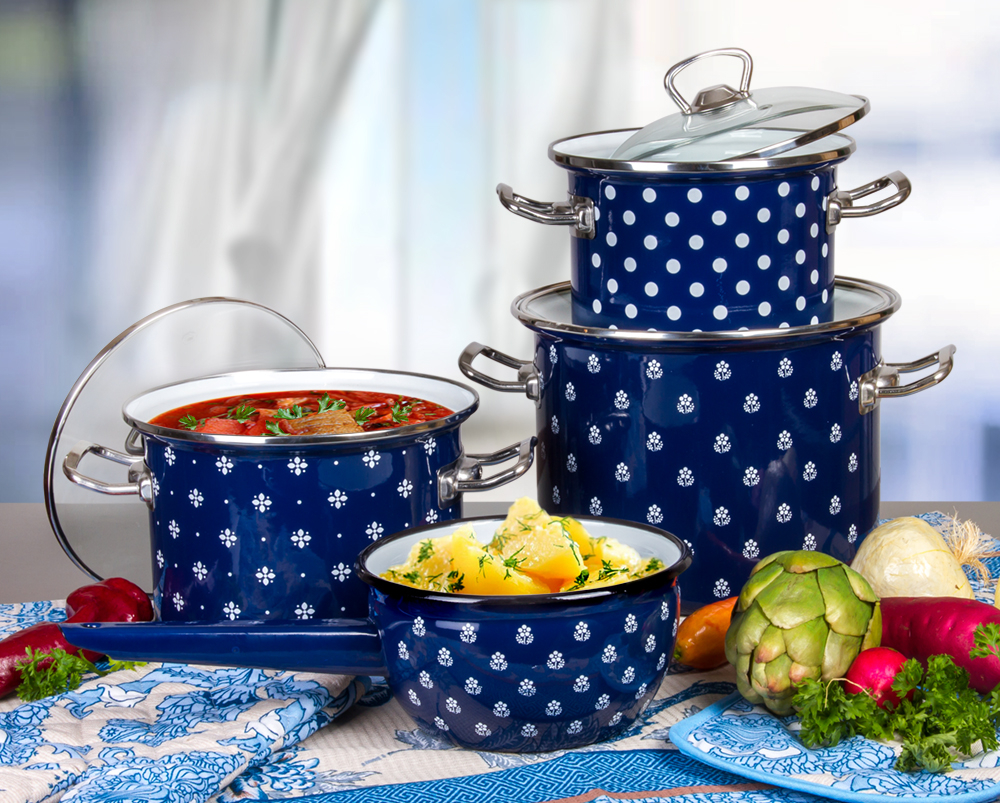
Credit: www.stpgoods.com
Enamel Cookware: A Perfect Fusion of Durability and Style in Your Kitchen
Enamel cookware has established itself as a beloved choice in the culinary arena, celebrated not only for its striking visual appeal but also for its remarkable functional benefits. With a spectrum of vibrant colors and superior heat distribution, enamel cookware offers a blend of durability and elegance, making it an indispensable element in kitchens worldwide. This comprehensive guide will explore the unique characteristics, advantages, and maintenance tips for enamel cookware, providing valuable insights to enhance your cooking endeavors.
Understanding Enamel Cookware
Enamel cookware consists of metal pots and pans that have been coated with vitreous enamel—a glass-like material fused to the metal at high temperatures. This innovative combination yields a smooth, non-reactive surface, making it ideal for a wide variety of culinary tasks.
Table 1: Composition of Enamel Cookware
| Material | Description | Common Uses |
|---|---|---|
| Cast Iron | Heavy and retains heat exceptionally well | Stews, braising, baking |
| Aluminum | Lightweight and heats up quickly | Sautéing, frying |
| Steel | Durable and often lighter than cast iron | General cooking, oven use |
The Evolution of Enamel Cookware
Enamel cookware boasts a fascinating history that dates back to the early 18th century. Initially utilized for various household items due to its corrosion resistance, its popularity surged as manufacturers refined the quality of enamel coatings, transforming it into a kitchen essential.
Table 2: Timeline of Enamel Cookware Development
| Year | Milestone |
|---|---|
| 1760s | Early production of enamelware in Europe |
| 19th C | Enamel cookware gains traction in kitchens |
| 1950s | Mass production techniques enhance quality |
| 21st C | Premium brands like Le Creuset rise to fame |
Advantages of Enamel Cookware
1. Non-Toxic Cooking Surface
Enamel cookware features a safe, non-toxic cooking surface that does not interact with food. This makes it particularly well-suited for cooking acidic ingredients, such as tomatoes, without altering their flavor.
2. Superior Heat Distribution
The construction of enamel cookware ensures even heat distribution, minimizing the risk of hot spots that can scorch food. This is especially beneficial for dishes that require slow cooking.
3. Versatile Cooking Options
Whether you’re sautéing, braising, or baking, enamel cookware is versatile enough to handle a variety of cooking methods. You can seamlessly transition from stovetop to oven, simplifying your meal preparation.
4. Aesthetic Appeal
Available in a diverse array of colors and designs, enamel cookware serves not only as a functional tool but also as a decorative element for your kitchen.
Selecting the Right Enamel Cookware
Table 3: Factors to Consider
| Factor | Considerations |
|---|---|
| Material Quality | Choose heavy-duty cast iron or premium aluminum |
| Coating Quality | Look for a smooth, defect-free enamel finish |
| Brand Reputation | Opt for well-known brands recognized for quality |
1. Material Quality
High-quality enamel cookware is typically made from cast iron or heavy-duty aluminum. Cast iron is renowned for its excellent heat retention, while aluminum is lighter and heats up faster.
2. Coating Quality
Inspect your cookware for a uniform enamel coating that is free from chips or cracks. A high-quality enamel finish enhances durability and prevents rust.
3. Brand Reputation
Investing in enamel cookware from reputable brands ensures long-lasting performance and reliability. Established brands often provide warranties, reflecting their commitment to quality.
Maintaining Your Enamel Cookware
1. Cleaning Tips
To preserve the beauty and functionality of your enamel cookware, follow these cleaning tips:
| Cleaning Method | Tips |
|---|---|
| Hand Washing | Use mild soap and a soft sponge to avoid scratches. |
| Stubborn Stains | Soak in warm soapy water before cleaning. |
| Avoid Abrasives | Never use steel wool or harsh cleaners on the surface. |
2. Storage Tips
Proper storage is essential to prevent chipping the enamel. Always stack cookware with a soft cloth between each piece to protect the surfaces.
Table 4: Do’s and Don’ts of Enamel Cookware Care
| Do’s | Don’ts |
|---|---|
| Use wooden or silicone utensils | Avoid using metal utensils |
| Store with care | Don’t stack without protection |
| Hand wash when possible | Avoid prolonged high heat |
Noteworthy Enamel Cookware Brands
Several brands have gained recognition for their exceptional enamel cookware. Here are a few of the most esteemed:
| Brand | Highlights |
|---|---|
| Le Creuset | Famous for its colorful and durable cast iron cookware |
| Staub | Offers stylish, heavy-duty cookware favored by chefs |
| Lodge | Known for its affordability and solid performance in enamel cast iron |
Enamel cookware presents an appealing combination of functionality, beauty, and versatility that can elevate your culinary adventures. With its non-toxic surface, excellent heat distribution, and ease of care, it is an invaluable addition to any kitchen. By familiarizing yourself with its features, selecting the right products, and following proper care techniques, you can reap the rewards of enamel cookware for years to come. Whether you’re simmering a hearty stew or baking a delicious dessert, enamel cookware will be a reliable partner in your culinary journey.
Frequently Asked Questions
What Are The Benefits Of Enamel Cookware?
Enamel cookware offers excellent heat distribution, ensuring even cooking. It’s also non-reactive, which means it won’t affect the taste of your food. Additionally, its colorful designs add aesthetic appeal to your kitchen. Enamel is easy to clean, making it a practical choice for everyday cooking.
Is Enamel Cookware Safe For Health?
Yes, enamel cookware is generally safe for health. It is made from natural materials and is non-toxic. Unlike some non-stick coatings, enamel won’t release harmful chemicals when heated. Always check the manufacturer’s guidelines to ensure safety and proper usage.
Can You Use Metal Utensils On Enamel Cookware?
It’s best to avoid metal utensils on enamel cookware. Metal can scratch the enamel surface, leading to chips and damage. Instead, opt for wooden, silicone, or plastic utensils. This will help maintain the integrity and longevity of your cookware.
How Do You Clean Enamel Cookware?
Cleaning enamel cookware is straightforward. Allow it to cool before washing to prevent thermal shock. Use warm soapy water and a soft sponge for cleaning. Avoid abrasive cleaners, as they can damage the enamel finish. For stubborn stains, soak the cookware before scrubbing.
Conclusion
Enamel cookware offers both beauty and functionality for your kitchen. Its vibrant colors brighten up any space while providing excellent heat distribution. Easy to clean and durable, this cookware is perfect for everyday use. Choosing enamel cookware can elevate your cooking experience and add charm to your culinary creations.

Leave a Reply