
Microwave cooking has evolved far beyond reheating leftovers and popping popcorn. Modern microwave cookware has transformed this humble appliance into a versatile cooking tool capable of preparing complete meals, steaming vegetables to perfection, and even baking desserts. However, the quality of your microwave cookware can make the difference between a culinary triumph and a kitchen disaster.
Choosing the right microwave cookware isn’t just about convenience—it’s about safety, efficiency, and getting the most from your microwave investment. The wrong containers can leach chemicals into your food, warp after a few uses, or create dangerous hot spots that lead to burns. Meanwhile, high-quality microwave cookware distributes heat evenly, preserves nutrients better than traditional cooking methods, and can significantly reduce your cooking time and energy consumption.
Best Microwave Cookware:The market is flooded with options ranging from budget-friendly plastic containers to premium glass and silicone sets. Some promise to cook rice perfectly every time, while others claim to create crispy bacon without a traditional oven. With so many choices, how do you separate genuinely useful products from marketing hype?
Why Quality Microwave Cookware Matters!
This comprehensive guide examines eleven of the best microwave cookware options available on Amazon today. We’ve analyzed customer reviews, tested performance claims, and evaluated each product’s durability, safety, and value proposition. Whether you’re a college student furnishing your first apartment, a busy professional seeking meal prep solutions, or a health-conscious cook exploring microwave steaming, you’ll find options tailored to your needs.
We’ll explore everything from multi-purpose cookware sets that handle various cooking tasks to specialized items designed for specific foods. You’ll discover which materials are safest, which designs are most practical, and which brands consistently deliver on their promises. Beyond individual product reviews, we’ve created an extensive buying guide that covers essential factors like BPA-free materials, ventilation systems, portion sizes, and cleaning considerations.
The goal isn’t to push you toward the most expensive option or the flashiest marketing. Instead, we’re providing honest, detailed information to help you make an informed decision based on your cooking habits, budget, and kitchen needs. Let’s dive into the world of microwave cookware and find the perfect match for your lifestyle.
Top 11 Microwave Cookware Products Reviewed!
1. Sistema Microwave Collection Cookware Set
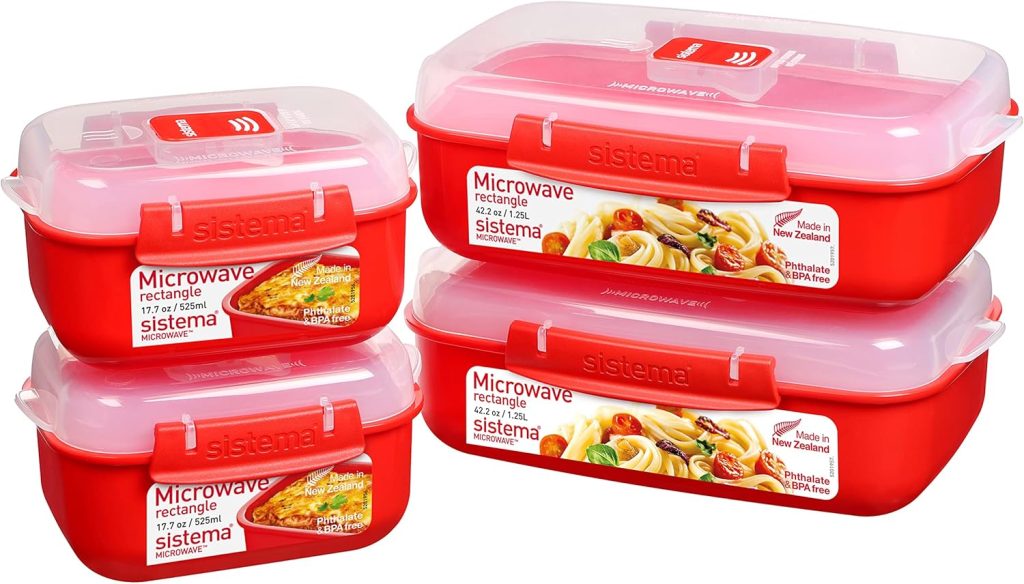
Overview: Sistema has built a reputation for creating innovative, practical kitchen storage and cooking solutions, and their Microwave Collection represents the brand at its best. This comprehensive set includes multiple containers designed specifically for microwave cooking, each with specialized features for different food types. The New Zealand-based company has focused on creating BPA-free, phthalate-free products that prioritize both safety and functionality.
Key Features:
- Complete set with rice cooker, pasta cooker, steamer, and multipurpose containers
- Patented steam-release vents that prevent messy overflow
- Stackable, space-saving design for efficient storage
- Clear plastic construction allows monitoring without opening
- Dishwasher-safe for easy cleanup
- BPA and phthalate-free materials certified safe for food contact
- Measurement markings on multiple containers for precise cooking
- Microwave, freezer, and fridge safe versatility
The Sistema set shines in everyday usability. The rice cooker produces consistently fluffy rice without the need for a dedicated appliance, while the pasta cooker eliminates the hassle of boiling water on the stovetop. The steamer basket maintains vegetables’ vibrant colors and nutrients better than traditional boiling methods. Each piece features Sistema’s clever locking clips that secure lids during storage and transport, though these should be opened before microwaving to allow steam release.
Users particularly appreciate the versatility of this set. You can cook rice for dinner, store leftovers in the same container, refrigerate overnight, and reheat the next day—all without transferring food between dishes. The clear construction lets you check cooking progress at a glance, reducing the need to stop the microwave and release steam repeatedly.
Pros:
✅ Comprehensive set covers most microwave cooking needs
✅ Patented vents effectively prevent boil-overs and splatters
✅ Durable construction withstands daily use without warping
✅ Stackable design maximizes cabinet and refrigerator space
✅ Affordable price point for the quantity and quality provided
✅ Easy-to-clean smooth surfaces without hard-to-reach corners
✅ Clear material allows visual monitoring during cooking
Cons:
❌ Plastic construction may stain with tomato-based sauces over time
❌ Not suitable for browning or crisping foods
❌ Some users report the locking clips becoming loose after extended use
❌ Larger pieces may not fit in compact microwaves
Ideal For: Families and individuals seeking an all-in-one microwave cooking solution, students in dorm rooms with limited kitchen access, and health-conscious cooks who want to steam vegetables regularly. This set is particularly valuable for meal preppers who need containers that transition seamlessly from cooking to storage.
Final Verdict: The Sistema Microwave Collection delivers exceptional value by combining multiple specialized cooking vessels in one affordable package. While the plastic construction won’t appeal to everyone, the practical design, safety certifications, and consistent performance make this a top choice for everyday microwave cooking. The set typically maintains a 4.5+ star rating on Amazon, with thousands of reviews praising its durability and versatility.
2. Anyday Microwave Cookware Set
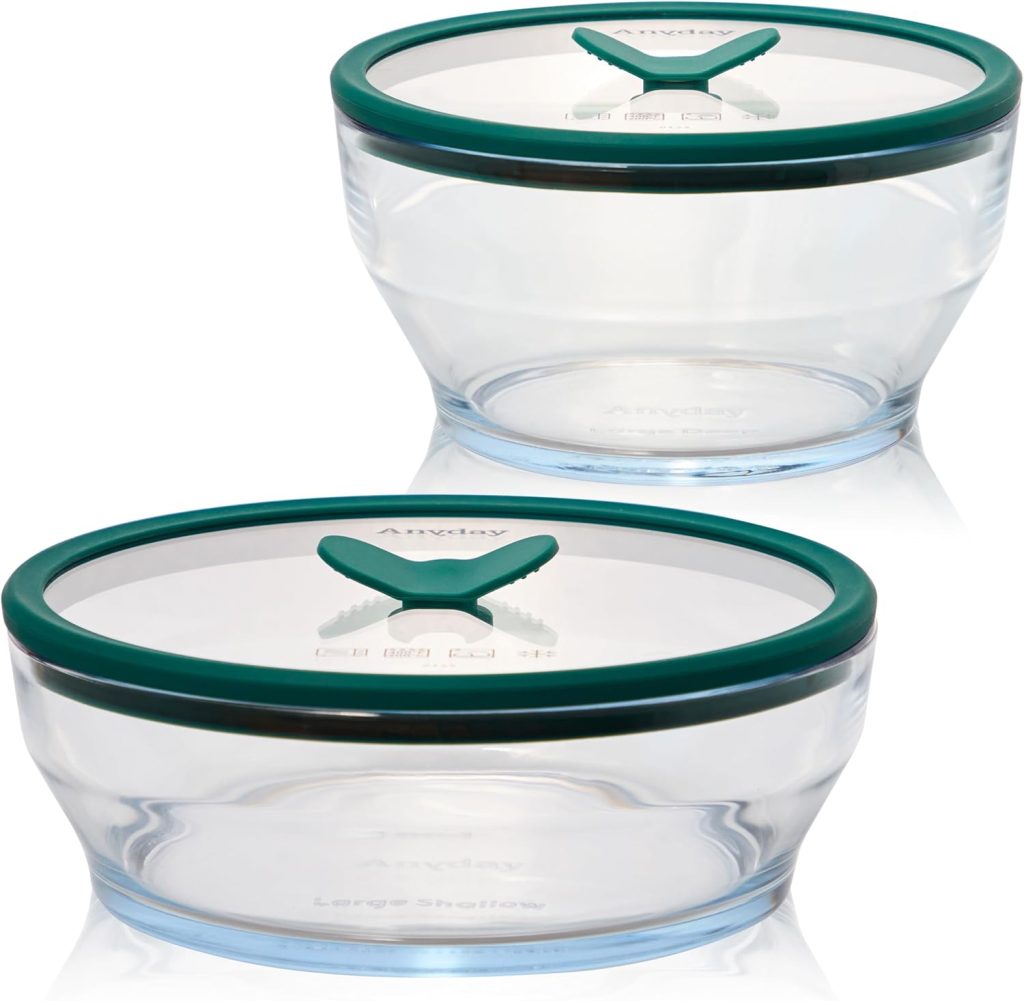
Overview: Anyday represents a new generation of microwave cookware designed with input from professional chefs and food scientists. This premium glass cookware set has garnered attention for its sleek aesthetics and thoughtful engineering. Unlike traditional microwave containers that feel utilitarian, Anyday dishes are attractive enough to serve directly at the table, bridging the gap between cooking vessel and serveware.
Key Features:
- High-quality borosilicate glass construction resistant to thermal shock
- Proprietary lid design with automatic steam release mechanism
- Four sizes ranging from small (2 cups) to large (8 cups)
- Microwave, oven, freezer, and dishwasher safe
- Completely free from BPA, lead, and other harmful chemicals
- Accompanying app with recipes and cooking time guidance
- Elegant design suitable for serving directly from
- Lifetime warranty covering manufacturing defects
The standout feature is Anyday’s innovative lid technology. The knob on each lid is actually a precision-engineered vent that releases just enough steam to prevent pressure buildup while retaining moisture for optimal cooking results. This eliminates the guesswork of leaving lids partially ajar or remembering to vent containers mid-cooking.
The borosilicate glass can withstand dramatic temperature changes without cracking—you can take a container from the freezer and place it directly in the microwave safely. This durability extends the cookware’s versatility beyond the microwave to conventional ovens up to 450°F (without lids).
Anyday has invested heavily in recipe development and provides access to hundreds of tested recipes through their free app. Each recipe includes specific container recommendations and cooking times calibrated for different microwave wattages, taking the guesswork out of microwave cooking.
Pros:
✅ Premium glass construction feels substantial and long-lasting
✅ Automated steam venting eliminates monitoring during cooking
✅ Beautiful design worthy of table presentation
✅ Exceptional versatility across cooking and storage methods
✅ Comprehensive recipe support through dedicated app
✅ Lifetime warranty demonstrates manufacturer confidence
✅ Non-porous glass won’t absorb odors, stains, or flavors
✅ Environmentally friendly alternative to disposable containers
Cons:
❌ Significantly more expensive than plastic alternatives
❌ Glass construction adds weight compared to plastic options
❌ Limited color options may not suit all kitchen aesthetics
❌ Smaller capacity options may require multiple containers for family meals
Ideal For: Home cooks who want to elevate their microwave cooking game, environmentally conscious consumers seeking sustainable alternatives to plastic, and anyone who values multi-functional cookware that performs across various cooking methods. The investment makes particular sense for those committed to learning proper microwave cooking techniques through the app’s guidance.
Final Verdict: Anyday justifies its premium pricing through exceptional quality, thoughtful design, and comprehensive support resources. This isn’t just cookware—it’s a complete microwave cooking system backed by culinary expertise. With consistent 4.7+ star ratings from Amazon customers and recognition from food publications, Anyday has earned its reputation as the luxury option in microwave cookware. If your budget allows, this set transforms microwave cooking from a compromise to a preferred method.
3. OXO Good Grips Microwave Steamer
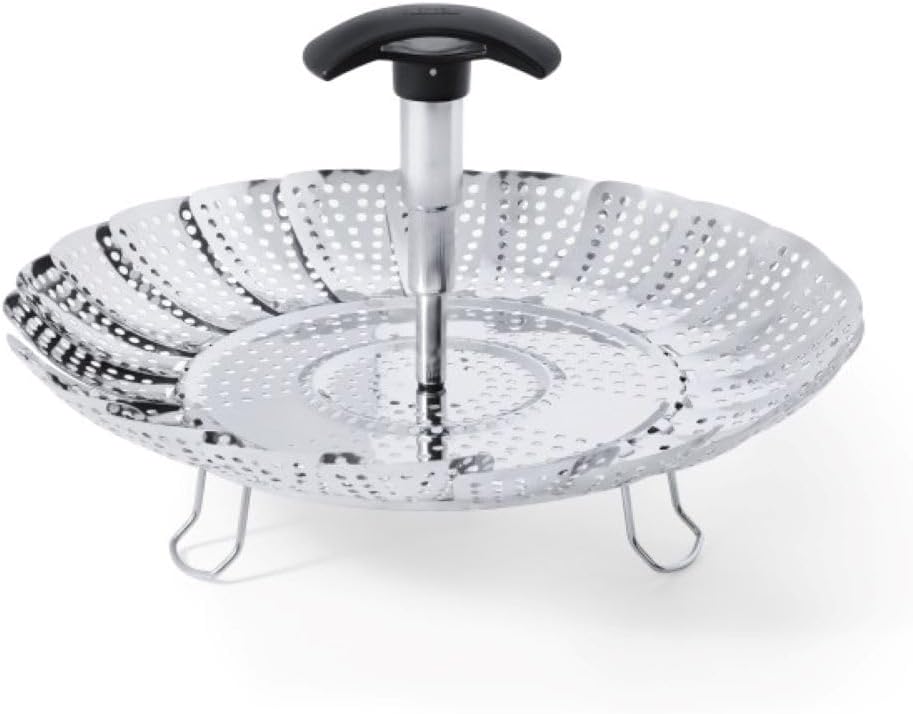
Overview: OXO has built an empire on thoughtfully designed kitchen tools that solve everyday problems, and their Microwave Steamer continues this tradition. This isn’t trying to be everything to everyone—it’s specifically engineered for one task: steaming vegetables, fish, and dumplings to perfection in the microwave. The focused design approach results in a product that excels at its intended purpose.
Key Features:
- Two-tier steaming design maximizes capacity
- Removable divider allows customization for different foods
- Built-in handles stay cool for safe removal from microwave
- Measurement markings for precise water addition
- Nested design for compact storage
- BPA-free plastic construction
- Dishwasher safe for convenient cleaning
- Fits most standard microwaves
The dual-tier design is particularly clever, allowing you to steam different vegetables simultaneously without flavor transfer. The lower basket sits in water, while the upper tier steams from the rising moisture. A removable divider in the lower basket lets you separate foods that require different cooking times or that you want to keep distinct.
OXO’s signature Good Grips handles remain comfortable to touch even immediately after steaming, eliminating the need for oven mitts or waiting for the container to cool. The handles fold down for storage, and the entire unit nests efficiently when not in use.
The steamer includes clear markings indicating proper water levels for different foods and cooking times, reducing trial and error. The lid features integrated vents positioned to release steam away from your hands when removing it.
Pros:
✅ Dedicated steaming design produces consistently excellent results
✅ Dual-tier capacity accommodates family-sized portions
✅ Cool-touch handles enhance safety and convenience
✅ Compact nesting design minimizes storage footprint
✅ Simple, foolproof operation requires minimal learning curve
✅ Affordable pricing for the quality and brand reputation
✅ Durable construction withstands frequent use
✅ Clear water level indicators prevent overcooking
Cons:
❌ Limited to steaming—not suitable for other cooking methods
❌ Plastic construction may not appeal to glass-only users
❌ Some delicate vegetables may overcook in the time needed for denser items in the other tier
❌ Not ideal for browning or crisping applications
Ideal For: Health-conscious individuals who regularly steam vegetables, pescatarians who prefer steamed fish preparations, and busy parents seeking nutritious side dishes without stovetop supervision. This steamer particularly suits those with limited kitchen space who need compact, single-purpose tools that perform flawlessly.
Final Verdict: The OXO Good Grips Microwave Steamer represents focused design at its finest. While it won’t replace a comprehensive cookware set, it executes its steaming mission with excellence that justifies keeping it in your kitchen arsenal. Amazon customers consistently rate it 4.6+ stars, praising its reliability and the quality of steamed foods it produces. For anyone who steams vegetables weekly or more, this tool pays for itself in convenience and consistent results.
4. Nordic Ware Microwave Pasta Boat
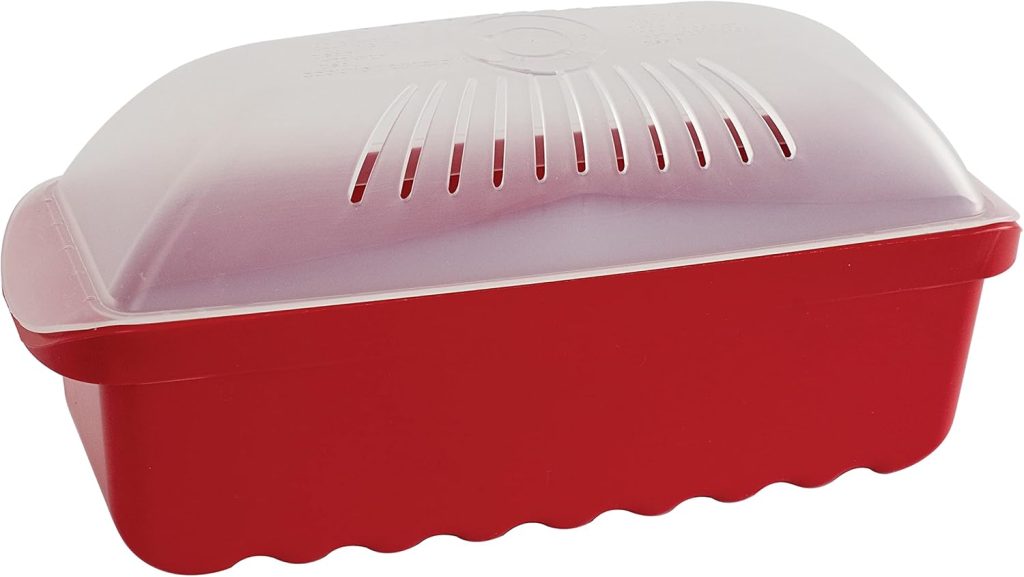
Overview: Nordic Ware’s Microwave Pasta Boat has achieved cult status among college students, busy professionals, and anyone seeking to simplify pasta preparation. This innovative vessel reimagines pasta cooking for the microwave age, eliminating the need for stovetop boiling, pot watching, and potential boil-overs. The boat-shaped design isn’t just whimsical—it’s functional, allowing pasta to cook evenly while the elongated shape accommodates long pasta varieties.
Key Features:
- Unique boat design fits long pasta varieties like spaghetti and fettuccine
- Built-in strainer lid eliminates the need for a separate colander
- Measurement markings for water and pasta portions
- Patented venting system prevents overflow during cooking
- BPA-free plastic construction
- Handles stay cool for safe handling
- Dishwasher safe cleanup
- Recipe booklet included with purchase
The integrated strainer is ingenious—once your pasta is cooked, you simply hold the boat over the sink and tilt, allowing the specially designed lid to drain water while retaining every strand of pasta. No separate colander needed, no hunting for pot holders, no risk of dumping pasta down the drain.
Measurement markings take the guesswork out of portions. Lines indicate water levels for different pasta quantities, helping you achieve perfect al dente texture consistently. The vented lid regulates steam release, preventing the volcanic eruptions common when boiling pasta on the stovetop.
Beyond pasta, creative users have discovered the Pasta Boat works excellently for steaming vegetables, cooking rice, and even preparing instant ramen with less packaging waste. The elongated shape fits nicely in most microwaves, though measuring your microwave interior before purchase is advisable.
Pros:
✅ Dramatically simplifies pasta cooking process
✅ Integrated strainer eliminates extra dishes and steps
✅ Consistent results with less monitoring than stovetop methods
✅ Energy-efficient compared to boiling large pots of water
✅ Compact footprint ideal for small kitchens and dorm rooms
✅ Foolproof measurements prevent cooking errors
✅ Multi-functional beyond just pasta preparation
✅ Budget-friendly price point
Cons:
❌ Shape may not fit in all microwave configurations
❌ Plastic construction can stain from tomato sauces
❌ Limited to approximately 4 servings maximum capacity
❌ Some pasta shapes cook more evenly than others
Ideal For: Students with limited cooking equipment, singles and couples who don’t want to dirty multiple pots for small pasta portions, office workers who want hot lunch options, and anyone seeking faster, simpler pasta preparation. The Pasta Boat particularly suits those in RVs, boats, or vacation rentals with microwaves but limited cooking facilities.
Final Verdict: Nordic Ware’s Pasta Boat succeeds through its focused mission: making microwave pasta cooking reliable and convenient. While it won’t replace your entire cookware collection, it excels at its specialized task. With over 4.5 stars from thousands of Amazon reviews and a remarkably affordable price, this is one of those quirky products that genuinely delivers on its promise. If you eat pasta regularly and value convenience, the Pasta Boat deserves a spot in your kitchen.
5. Pyrex Simply Store Glass Food Storage Set with Microwave Lids
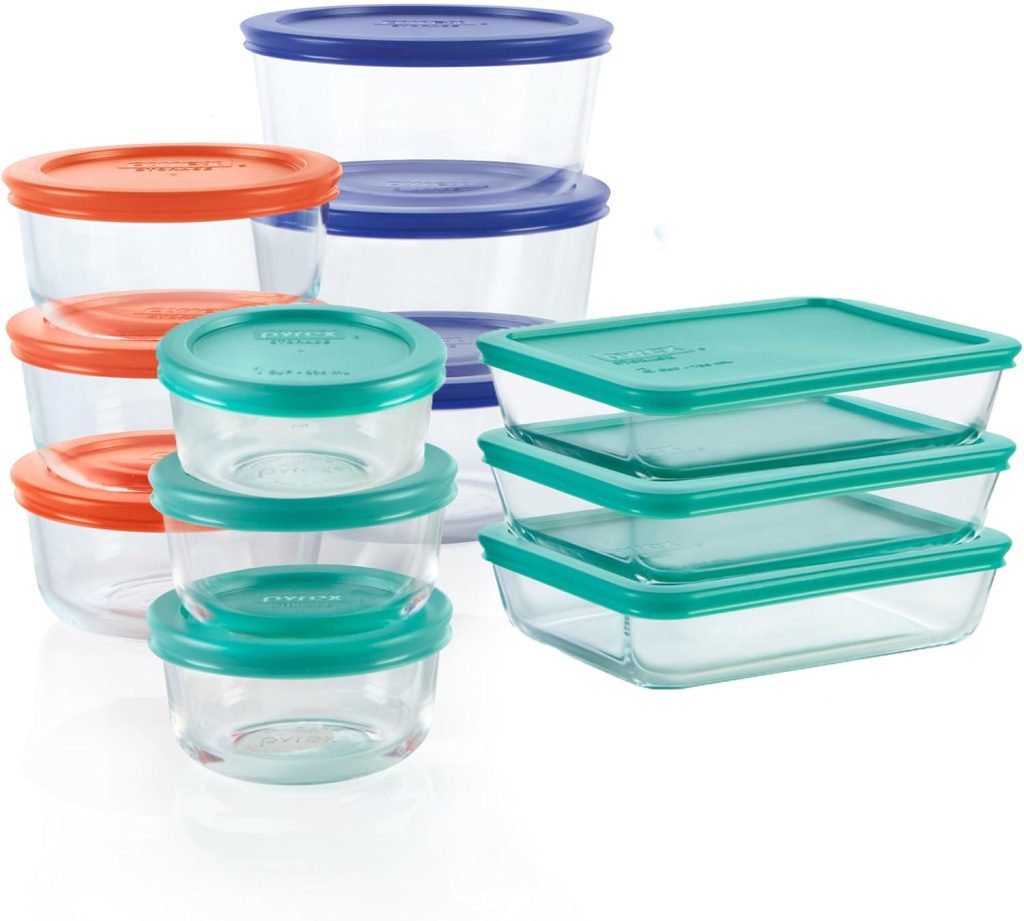
Overview: Pyrex has been synonymous with glass cookware for over a century, and their Simply Store collection applies that heritage to microwave cooking. While marketed primarily as food storage, these containers excel at microwave reheating and cooking when paired with their specially designed microwave-safe lids. The tempered glass construction provides safety and durability that plastic alternatives can’t match, making this a favorite among those concerned about chemicals leaching into food.
Key Features:
- Made from tempered glass that resists thermal shock
- BPA-free plastic lids designed specifically for microwave use
- Multiple sizes from 1 cup to 7 cups capacity
- Clear glass allows monitoring without removing lids
- Stain and odor resistant glass construction
- Oven safe up to 425°F (glass containers only)
- Lids and containers are dishwasher safe
- Nesting design for efficient storage
The tempered glass construction can transition from freezer to microwave to dishwasher without concerns about warping, melting, or degradation. Unlike plastic containers that may need replacement every few years, Pyrex glass containers can last decades with proper care.
The microwave-safe lids include venting tabs that allow steam release during heating, preventing pressure buildup while minimizing splatter. When storing food in the refrigerator or freezer, these same vents seal tightly to maintain freshness. The lids fit securely but remove easily—a balance many cheaper sets fail to achieve.
Pyrex’s transparency offers a practical advantage: you can check if food is heated through without interrupting the microwave cycle. The glass doesn’t absorb flavors or odors, so your container won’t smell like last week’s curry when you’re reheating rice.
Pros:
✅ Glass construction eliminates concerns about chemical leaching
✅ Exceptional durability provides years or decades of service
✅ Versatile from freezer to oven to microwave
✅ Stain and odor resistance maintains like-new appearance
✅ Clear sides allow visual monitoring during heating
✅ Brand reputation backed by century-long history
✅ Wide range of sizes accommodates various portion needs
✅ Attractive enough for table service
Cons:
❌ Heavier than plastic alternatives
❌ Glass can break if dropped, though tempered glass is quite resilient
❌ More expensive than comparable plastic sets
❌ Lids may not last as long as the glass containers themselves
Ideal For: Health-conscious consumers prioritizing glass over plastic, environmentally minded individuals seeking durable long-term solutions, and cooks who want seamless transitions between storage and reheating. This set particularly suits households that batch cook and meal prep, requiring both excellent storage and reliable reheating capabilities.
Final Verdict: Pyrex Simply Store bridges the gap between food storage and microwave cookware with characteristic quality and reliability. While the initial investment exceeds plastic alternatives, the longevity and versatility justify the premium. Amazon customers award these sets 4.7+ stars, with many reviewers noting they’ve owned their sets for years without issues. For those committed to reducing plastic in their kitchens, Pyrex represents the gold standard in glass food storage and microwave cookware.
6. Progressive International Microwave Multi-Cooker
Overview: Progressive International’s Multi-Cooker attempts to be the Swiss Army knife of microwave cookware—a single vessel capable of handling rice, pasta, vegetables, eggs, and more. This ambitious design incorporates multiple accessories and cooking modes, appealing to minimalists who prefer one versatile tool over multiple specialized items. The modular approach allows customization for specific cooking tasks while maintaining a compact footprint.
Key Features:
- 4-quart capacity handles family-sized portions
- Includes steaming tray, pasta insert, and rice paddle
- Built-in straining feature for pasta and vegetables
- Measurement markings for various foods and water levels
- Microwave, dishwasher, and freezer safe
- BPA-free construction
- Vented lid with secure locking mechanism
- Recipe guide covering multiple cooking applications
The Multi-Cooker’s genius lies in its accessory system. The steaming tray elevates vegetables above water for perfect steaming, the pasta insert provides optimal spacing for even cooking, and the rice paddle features a uniquely designed edge that prevents rice from sticking. All accessories nest inside the main vessel for storage.
The four-quart capacity represents a sweet spot—large enough for family meals but not so oversized that it won’t fit in standard microwaves. The vessel’s height allows for cooking pasta without breaking noodles, while the wide base provides stability and even heat distribution.
Progressive International includes surprisingly comprehensive cooking instructions covering timing and techniques for various foods. While not as sophisticated as Anyday’s app-based approach, the printed guide provides enough information to get started confidently.
Pros:
✅ Multi-functional design reduces kitchen clutter
✅ Generous capacity suitable for family cooking
✅ Included accessories expand cooking options
✅ Straightforward operation doesn’t require technical expertise
✅ Affordable considering the versatility provided
✅ All components dishwasher safe for easy cleanup
✅ Durable construction withstands regular use
✅ Integrated straining simplifies pasta and vegetable preparation
Cons:
❌ Larger footprint may not fit compact microwaves
❌ Plastic construction may not satisfy glass-only advocates
❌ Learning curve to master all functions and accessories
❌ Some accessories may be unnecessary for users with specific needs
Ideal For: Households seeking maximum versatility from minimal equipment, renters with limited storage space, college students or young professionals establishing first kitchens, and RV enthusiasts who need multipurpose cookware. This cooker particularly benefits those who regularly rotate between different types of microwave cooking.
Final Verdict: Progressive International’s Multi-Cooker successfully delivers on its promise of versatility, though it requires more user engagement than single-purpose alternatives. The accessory system genuinely expands capabilities without excessive complexity. With 4.4+ stars on Amazon and praise for its capacity and functionality, this represents excellent value for those who will utilize its full range of features. However, if you primarily cook one type of food, a specialized tool might serve better than this generalist approach.
7. Joseph Joseph M-Cuisine Cool-Touch Microwave Rice and Grain Cooker
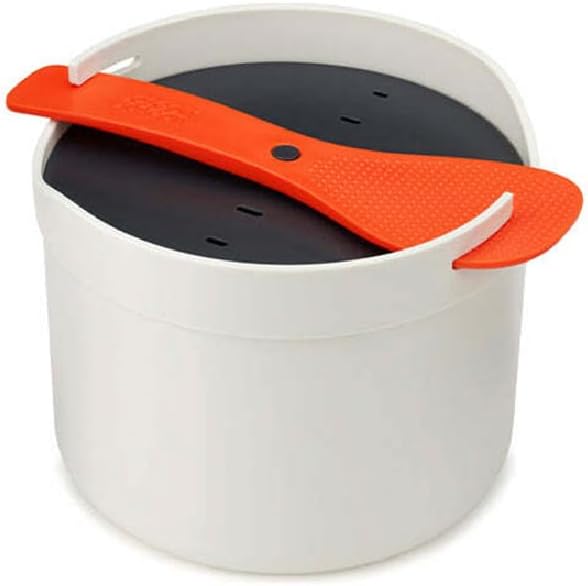
Overview: Joseph Joseph has built a brand around clever design solutions, and their M-Cuisine line applies this philosophy to microwave cooking. The Cool-Touch Rice and Grain Cooker addresses one of microwave cooking’s most annoying problems: dangerously hot containers that require oven mitts and careful handling. The double-walled construction keeps exteriors comfortably cool while interiors reach proper cooking temperatures—a seemingly simple innovation that dramatically improves user experience.
Key Features:
- Innovative double-wall construction maintains cool exterior surface
- 2-liter capacity suitable for 2-4 servings
- Integrated measuring cup with leveling feature
- Locking lid with steam vent prevents spills during cooking
- Suitable for rice, quinoa, couscous, and other grains
- BPA-free plastic materials
- Dishwasher safe for convenient cleanup
- Compact design stores efficiently
The cool-touch technology genuinely works—you can remove this container from the microwave immediately after cooking and handle it comfortably with bare hands. This isn’t just a convenience feature; it’s a significant safety improvement, particularly in households with children or elderly users who might struggle with hot, heavy containers.
The integrated measuring cup is calibrated specifically for rice and grains, with a clever leveling edge that ensures accurate measurements. The cup nests in the lid’s handle, so it’s always available and won’t get lost in kitchen drawers.
Joseph Joseph provides cooking charts for various grains, though some experimentation may be needed to account for different microwave wattages and personal texture preferences. The locking lid system differs from many competitors—it secures firmly but releases easily with a simple button press.
Pros:
✅ Cool-touch design dramatically improves safety and handling
✅ Specialized for grain cooking with optimized design
✅ Integrated measuring cup prevents lost accessories
✅ Locking lid adds security during cooking and transport
✅ Thoughtful details reflect Joseph Joseph’s design expertise
✅ Dishwasher-safe materials simplify cleanup
✅ Moderate price point for the innovation provided
✅ Attractive design suitable for modern kitchens
Cons:
❌ Limited to grain cooking—not multipurpose
❌ 2-liter capacity may be insufficient for larger families
❌ Double-wall construction increases overall footprint slightly
❌ Some users report needing to adjust cooking times from provided guidelines
Ideal For: Individuals and small families who regularly cook rice and grains, those concerned about handling hot containers safely, design-conscious consumers who appreciate thoughtful kitchen tools, and anyone who has been burned by traditional microwave containers. This cooker particularly suits those with arthritis or limited hand strength who struggle with hot, heavy cookware.
Final Verdict: Joseph Joseph’s Cool-Touch Rice Cooker represents thoughtful problem-solving applied to everyday cooking challenges. While the cool-touch feature might seem like a minor enhancement, it genuinely transforms the user experience. Amazon reviewers consistently highlight the safety benefits and reliable rice cooking performance, maintaining 4.5+ star ratings. If you frequently cook grains and value safety alongside functionality, Joseph Joseph’s innovative approach justifies the investment over basic rice cookers.
8. Lekue Microwave Grill
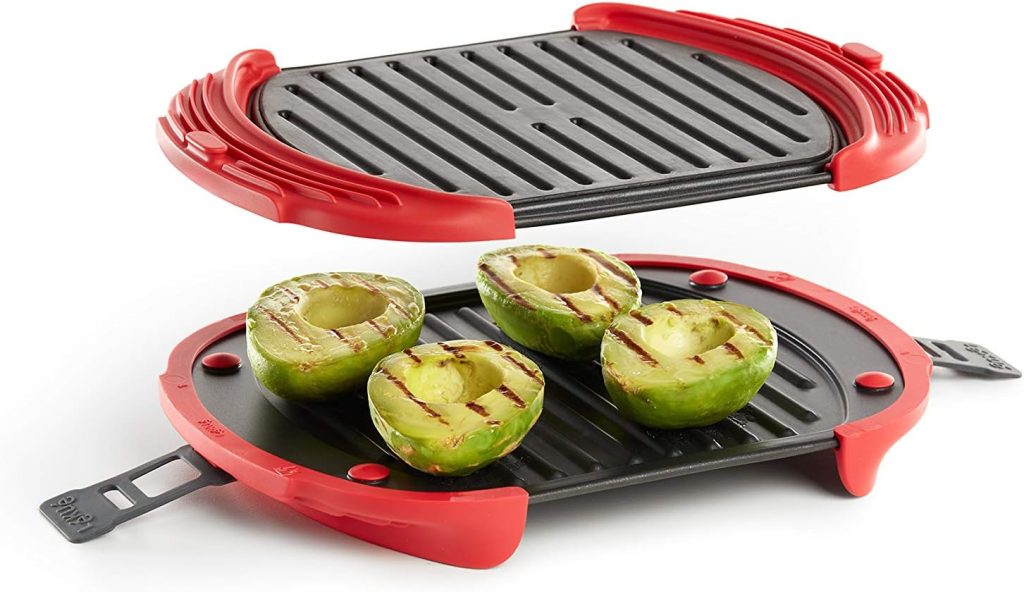
Overview: The Lekue Microwave Grill challenges conventional wisdom about microwave cooking’s inability to brown and crisp foods. This Spanish company has engineered a specialized plate that concentrates microwave energy to create grill-like results, opening possibilities for bacon, sausages, vegetables, and even panini-style sandwiches. The silicone and ceramic construction represents a different approach than traditional microwave cookware, targeting users who miss the textural qualities of grilled foods when cooking in microwaves.
Key Features:
- Patented Silikomart ceramic base concentrates heat for browning
- Food-grade platinum silicone lid with integrated pressure system
- Grill pattern base creates attractive sear marks
- Suitable for meats, vegetables, fish, and sandwiches
- Microwave, oven, and dishwasher safe
- Compact 9.5-inch diameter fits most microwaves
- Non-stick surface requires minimal oil
- Includes recipe book with cooking times and techniques
The ceramic base absorbs microwave energy and converts it to direct heat, functioning similarly to a grill pan on a stovetop. Meanwhile, the silicone lid traps steam and pressure, cooking food from both top and bottom. The combination produces results remarkably close to conventional grilling—something most microwave cookware can’t approach.
The grill ridges aren’t just decorative; they elevate food slightly, allowing fat to drain away while creating those coveted grill marks. The silicone lid includes small vents that can be adjusted to control moisture retention—open for crispier results, closed for more steaming effect.
Lekue’s recipe book demonstrates the grill’s versatility beyond obvious applications like bacon and burgers. Grilled vegetables develop pleasant char, fish cooks with attractive presentation, and even fruit can be grilled for desserts. The learning curve is steeper than conventional microwave cookware, but results justify the investment of time.
Pros:
✅ Unique ability to brown and crisp foods in microwave
✅ Healthier cooking with fat drainage system
✅ Versatile across proteins, vegetables, and creative applications
✅ Dishwasher safe despite specialized construction
✅ Compact design doesn’t dominate storage space
✅ Non-stick surface minimizes cleanup effort
✅ Innovative approach expands microwave cooking possibilities
✅ Durable materials withstand high-temperature cooking
Cons:
❌ Higher price point than standard microwave cookware
❌ Requires experimentation to master timing and techniques
❌ Ceramic base can get very hot, requiring careful handling
❌ Limited capacity suitable mainly for 1-2 servings
Ideal For: Microwave cooking enthusiasts wanting to expand capabilities, health-conscious individuals seeking low-fat cooking methods, small households or singles who want grilled foods without heating a full outdoor grill, and apartment dwellers without access to outdoor grilling. This grill particularly appeals to those who miss textural variety when relying primarily on microwave cooking.
Final Verdict: The Lekue Microwave Grill represents genuine innovation in a category often characterized by minor variations on similar themes. While it won’t replace an outdoor grill for large gatherings, it successfully brings browning and crisping to microwave cooking. Amazon customers rate it 4.3+ stars, with many expressing surprise at the quality of results. The higher price reflects specialized construction and capabilities—if you frequently wish your microwave could brown foods, Lekue offers a legitimate solution worth considering.
9. Prep Solutions Microwave Egg Cooker
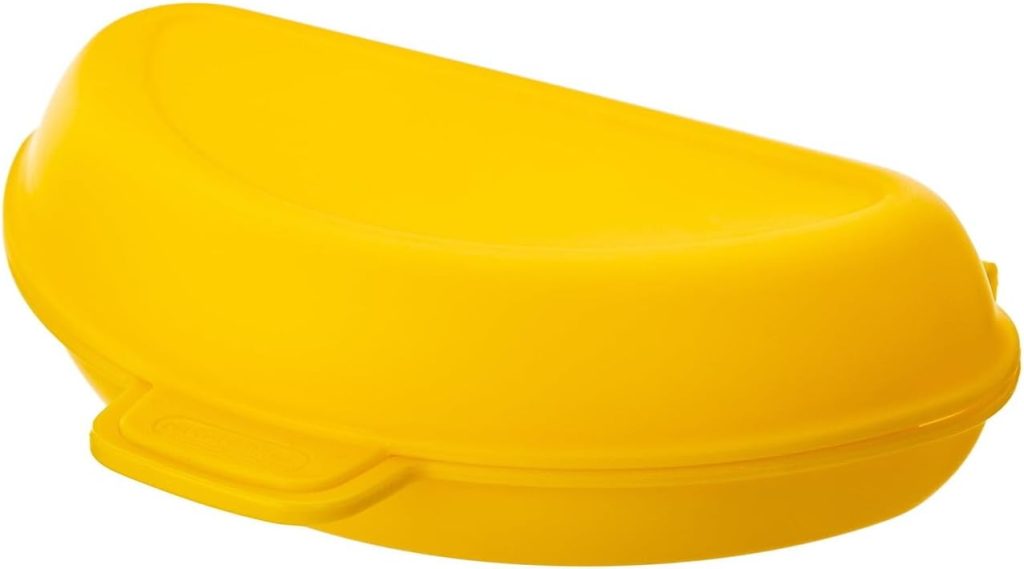
Overview: Prep Solutions has created a focused, budget-friendly solution for one of the trickiest microwave cooking challenges: eggs. Anyone who has attempted to microwave eggs knows the explosive risks and unpredictable results. This specialized cooker addresses these issues through thoughtful design that controls steam, distributes heat evenly, and produces consistently cooked eggs in various styles—from soft-boiled to poached to scrambled.
Key Features:
- Four-egg capacity with individual cooking chambers
- Specialized design prevents explosive steam buildup
- Suitable for hard-boiled, soft-boiled, and poached eggs
- Built-in egg piercer ensures proper venting
- BPA-free plastic construction
- Dishwasher safe for easy cleanup
- Compact footprint for efficient storage
- Includes cooking time guidelines for different egg styles
The individual chambers are key to this cooker’s success. Each egg sits in its own space with precisely calculated water levels and venting. The included piercer creates a tiny hole in each egg shell, allowing steam to escape gradually rather than building pressure until the egg explodes—a common microwave egg cooking disaster.
Instructions cover multiple egg styles with timing adjustments based on desired doneness. Hard-boiled eggs emerge with creamy yolks and fully set whites, soft-boiled eggs feature runny yolks, and poached eggs achieve that delicate texture difficult to replicate in microwave cooking.
The cooker’s simplicity is an advantage—there’s no complex assembly or confusing settings. Add water to the marked line, place eggs in chambers, pierce shells, microwave for the recommended time, and let stand. The straightforward process produces reliable results even for novice cooks.
Pros:
✅ Specialized design solves microwave egg cooking challenges
✅ Consistent results across different egg preparations
✅ Budget-friendly price point
✅ Simple operation requires minimal learning
✅ Compact size perfect for small kitchens
✅ Easy cleanup with dishwasher-safe construction
✅ Prevents the mess and danger of exploding eggs
✅ Four-egg capacity suitable for small families
Cons:
❌ Limited to egg cooking exclusively
❌ Plastic construction may not appeal to all users
❌ Four-egg maximum insufficient for larger families
❌ Requires some timing experimentation for personal preferences
Ideal For: Egg enthusiasts who want quick, reliable breakfast preparation, protein-focused eaters who include eggs in daily meals, students and office workers seeking convenient protein sources, and anyone who has struggled with traditional microwave egg cooking methods. This cooker particularly benefits those following meal prep routines that include boiled eggs.
Final Verdict: Prep Solutions’ Microwave Egg Cooker succeeds through focused design and realistic pricing. While it won’t revolutionize your entire cooking routine, it executes its specific mission admirably. Amazon customers consistently praise its reliability and convenience, maintaining 4.4+ star ratings. For the modest investment, this represents excellent value for anyone who regularly eats eggs and wants hassle-free microwave preparation. If eggs feature in your weekly routine, this simple tool pays for itself in saved time and eliminated frustration.
10. Rubbermaid TakeAlongs Microwave Food Storage Containers
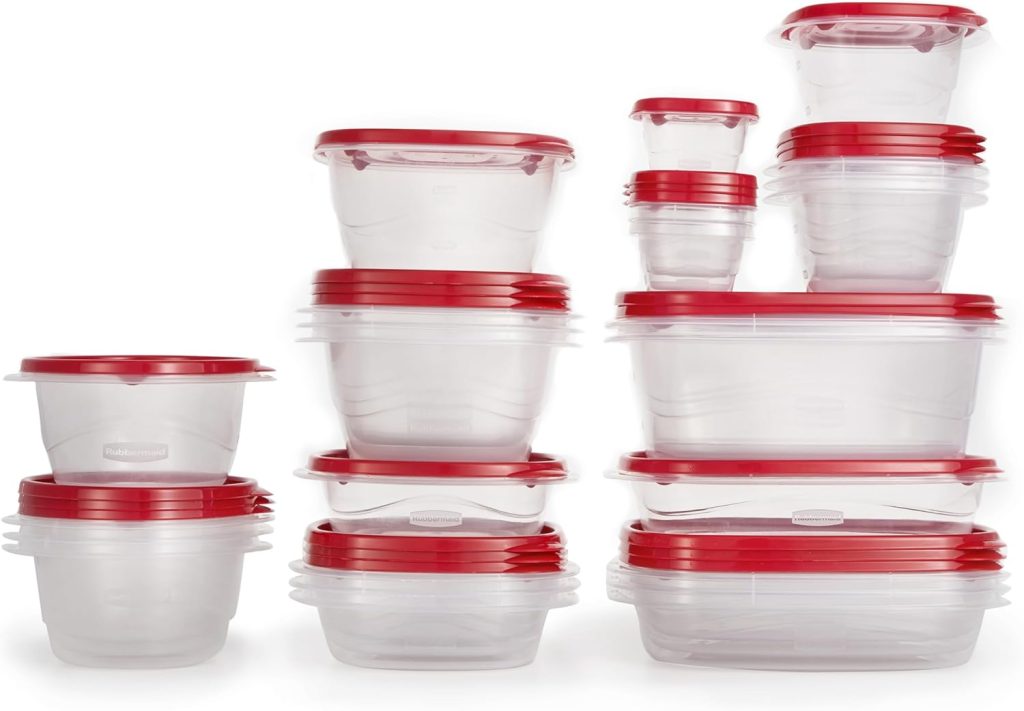
Overview: Rubbermaid’s TakeAlongs represent the budget-conscious entry point to microwave cookware, offering basic functionality at prices that make purchasing multiple sets practical. While lacking the specialized features of premium options, these containers deliver reliable performance for reheating, simple cooking, and food storage. The brand’s long-standing reputation for durable plastics provides confidence that even budget products will withstand regular use.
Key Features:
- Value-pack includes multiple sizes (typically 20-40 pieces)
- Quik Clik Seal lids provide secure, leak-resistant closures
- Stackable, modular design maximizes storage efficiency
- BPA-free plastic construction
- Microwave, dishwasher, and freezer safe
- Clear bases for content visibility
- Graduated sizes accommodate various portion needs
- Affordable enough for single-use scenarios when necessary
The Quik Clik Seal system represents Rubbermaid’s answer to leaky containers—lids snap securely with audible clicks at multiple points around the perimeter. While you should still keep containers upright during transport, the seal confidently contains liquids and prevents spills during refrigerator storage.
These containers aren’t trying to compete with premium cookware for specialized cooking tasks. Instead, they focus on everyday reliability—reheating leftovers, storing meal prep portions, packing lunches, and organizing refrigerator contents. The variety of sizes in each set ensures you have appropriate containers for single servings up to family-sized portions.
The modular design allows containers of different sizes to stack efficiently, whether storing empty containers or organizing refrigerator contents. This practical approach to space management appeals to those with limited kitchen storage.
Pros:
✅ Extremely affordable, especially in multi-pack configurations
✅ Large quantity allows having clean containers readily available
✅ Secure sealing system prevents leaks and spills
✅ Versatile across storage, reheating, and simple cooking
✅ Durable enough for repeated use despite budget pricing
✅ Wide size range accommodates various needs
✅ Modular design simplifies organization
✅ Widely available with consistent quality
Cons:
❌ Basic functionality without specialized features
❌ May stain and absorb odors over time
❌ Lids may lose sealing effectiveness after extended use
❌ Not designed for complex cooking tasks
❌ Plastic construction won’t satisfy those seeking glass alternatives
Ideal For: Budget-conscious shoppers needing quantity over specialized features, families requiring many containers for various family members’ needs, meal preppers who want dedicated containers for each weekly portion, and anyone establishing a kitchen without significant investment. These containers particularly suit those who need disposable-quality convenience with reusable-quality economics.
Final Verdict: Rubbermaid TakeAlongs won’t win design awards or enable gourmet microwave cooking, but they reliably handle everyday tasks at prices that make them accessible to everyone. Amazon customers appreciate the value proposition, maintaining 4.5+ star ratings despite the budget positioning. These containers prove you don’t need premium cookware for basic reheating and storage needs. If your priority is having plenty of containers available rather than specialized cooking capabilities, TakeAlongs deliver excellent value for money.
11. Fasta Pasta Microwave Pasta Cooker
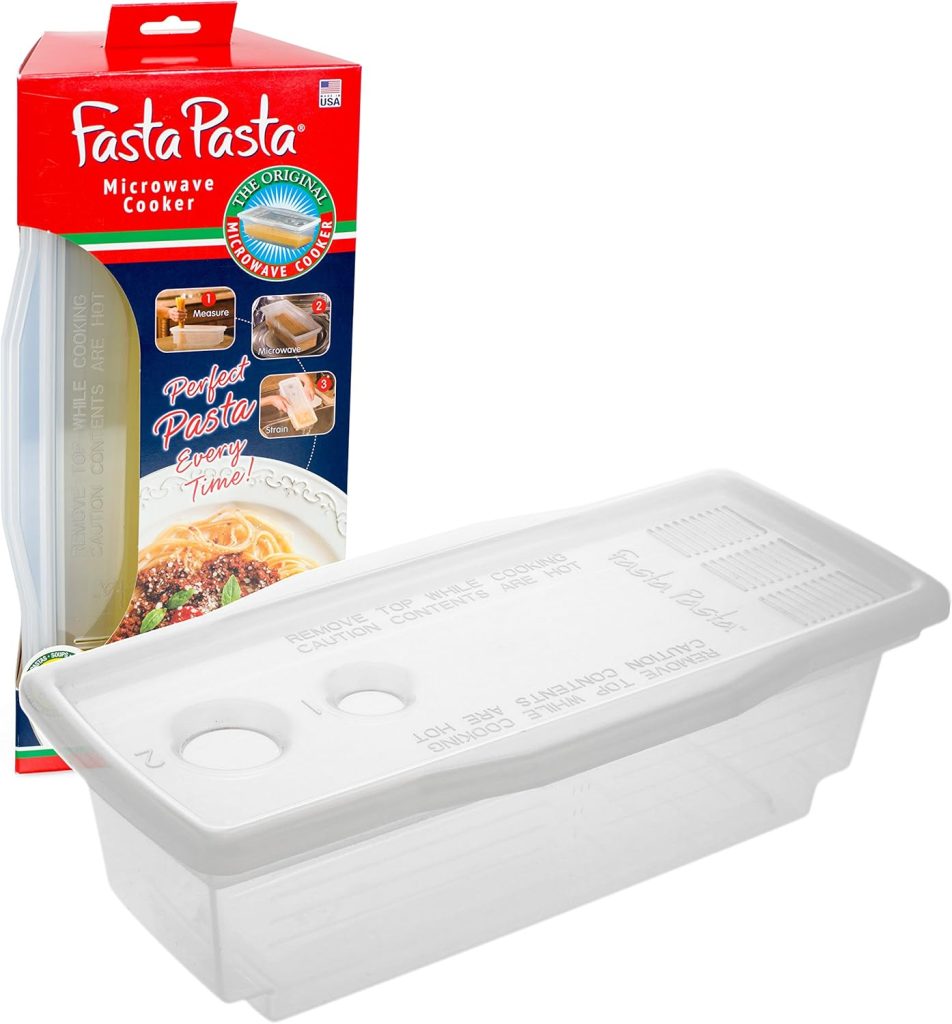
Overview: Fasta Pasta takes a different approach to microwave pasta cooking than Nordic Ware’s boat design, utilizing a tubular construction that accommodates various pasta shapes while ensuring even cooking. This Australian innovation has gained international popularity for its ability to produce restaurant-quality pasta without stovetop supervision. The design philosophy emphasizes foolproof operation—even inexperienced cooks achieve consistently good results following the simple instructions.
Key Features:
- Tall cylindrical design accommodates long and short pasta varieties
- Built-in strainer basket simplifies draining
- No-boil-over technology with specially designed vent
- Measurement markings for pasta and water portions
- BPA-free plastic construction
- Microwave and dishwasher safe
- Compact diameter despite tall profile
- Recipe booklet with cooking time charts
The cylindrical shape provides advantages for pasta cooking that boat-shaped alternatives can’t match. Water circulates around pasta more evenly, cooking starches uniformly from all sides. The vertical orientation means less microwave real estate required, fitting easily even in compact microwaves.
The integrated strainer basket is brilliantly simple—lift the basket after cooking and water drains through perforations in the container walls. No separate colander needed, no fumbling with hot containers over the sink. The basket also allows rinsing pasta directly in the cooker for cold pasta salads.
Fasta Pasta’s venting system deserves special mention. Unlike containers that simply leave lids loose, this design incorporates precision vents that release exactly enough steam to prevent boil-overs while retaining heat for efficient cooking. The result is truly hands-off pasta preparation—set the timer and walk away.
Pros:
✅ Cylindrical design ensures even cooking for all pasta types
✅ Integrated strainer eliminates extra equipment and steps
✅ Reliable venting prevents messy boil-overs
✅ Compact diameter fits easily in most microwaves
✅ Dishwasher safe despite specialized construction
✅ Comprehensive cooking charts remove guesswork
✅ Handles multiple pasta shapes equally well
✅ Budget-friendly pricing for the convenience provided
Cons:
❌ Tall profile may not fit microwaves with limited height
❌ Limited capacity compared to some alternatives
❌ Plastic construction vulnerable to staining from sauces
❌ Some users report needing to adjust timing from provided charts
Ideal For: Pasta lovers seeking the simplest possible preparation method, individuals with limited cooking skills wanting foolproof results, small households that don’t need large batch cooking, and anyone frustrated with traditional pasta cooking methods. This cooker particularly benefits those in shared living situations where stovetop access is limited or complicated.
Final Verdict: Fasta Pasta delivers on its straightforward promise: easy, reliable microwave pasta cooking. The cylindrical design and integrated strainer represent genuine functional advantages over alternative approaches. Amazon customers consistently praise the consistent results and convenience, maintaining 4.5+ star ratings. While the tall profile limits compatibility with some microwaves, those with adequate height clearance will find this one of the most foolproof pasta cooking solutions available at any price point.
Comprehensive Buying Guide: Choosing the Right Microwave Cookware!
Understanding Microwave-Safe Materials
The foundation of quality microwave cookware begins with appropriate materials. Not all substances suitable for food contact work safely or effectively in microwaves, and understanding these differences prevents dangerous situations and disappointing results.
Glass remains the gold standard for microwave cooking. Borosilicate glass, used in premium brands like Pyrex and Anyday, withstands thermal shock without cracking when moving between temperature extremes. Regular glass or tempered soda-lime glass works adequately for reheating but may not handle the stress of cooking from frozen states or transitioning to conventional ovens. Glass offers complete transparency for monitoring cooking progress, won’t absorb flavors or stains, and eliminates concerns about chemical leaching. The primary disadvantages are weight and fragility—glass containers are heavier than plastic alternatives and can shatter if dropped.
BPA-Free Plastics dominate the affordable microwave cookware market. Modern food-grade plastics, when properly formulated and labeled as microwave-safe, provide safe, durable service. Look for containers specifically marked “BPA-free” and “phthalate-free,” as these chemicals have raised health concerns when heated. High-quality microwave plastics resist warping and melting at typical cooking temperatures, though they will eventually stain and absorb odors from strong foods like curry or tomato sauce. The lightweight nature and shatter-resistance make plastic ideal for households with children or for portable applications like lunch boxes and meal prep containers.
Silicone represents a newer option in microwave cookware, particularly for specialized items like steamers and molds. Food-grade silicone withstands both extreme heat and cold without degrading, making it suitable for microwave, conventional oven, and freezer use. Silicone’s flexibility allows creative designs impossible in rigid materials—collapsible containers that expand for use and compress for storage, or steamers with intricate shapes. Quality silicone doesn’t leach chemicals, resists staining better than plastic, and provides non-stick properties. However, silicone containers can’t support themselves when filled with liquids, often requiring placement on microwave-safe plates or trays.
Ceramic appears less frequently in microwave cookware but excels in specific applications like the Lekue Microwave Grill, where ceramic absorbs and retains heat to create browning effects. Ceramic used in microwave cookware must be formulated specifically for this purpose—decorative ceramics often contain metal compounds that spark and damage microwaves. Microwave-safe ceramic distributes heat excellently and presents attractively for table service, but adds significant weight and fragility.
Materials to absolutely avoid include traditional metals (aluminum foil, metal cookware), containers with metallic trim or decoration, brown paper bags, plastic grocery bags, single-use plastic containers not designed for heating, foam containers, and any container not explicitly labeled microwave-safe.
Sizing Considerations for Different Household Needs
Selecting appropriate sizes prevents frustration from containers too small for family portions or unnecessarily large for single servings. Consider your typical cooking scenarios when evaluating capacity options.
Individual Servings (1-2 cups/250-500ml): Perfect for single-person households, portion control meal prep, or specialized uses like melting butter or heating small amounts of sauce. These containers often feel too small initially but prove invaluable for preventing waste and controlling portions. They also excel for children’s portions or seniors eating smaller amounts.
Standard Servings (2-4 cups/500ml-1L): The workhorses of microwave cookware, these sizes handle most individual to couple-sized meals. They’re ideal for reheating dinner portions, cooking single-serve pasta or rice, or steaming vegetables for two. Most households benefit from having several containers in this size range for versatility.
Family Portions (4-8 cups/1-2L): Designed for cooking full family meals or batch cooking for meal prep, these larger containers accommodate 3-4 servings of most dishes. They’re essential for households with children or those who cook several days’ worth of meals at once. Consider your microwave’s interior dimensions before purchasing, as these larger containers may not fit comfortably or may leave insufficient space for proper microwave energy circulation.
Bulk Cooking (8+ cups/2L+): These largest options suit serious meal preppers, large families, or those cooking for events. Verify microwave turntable clearance and door height before purchasing, as many oversized containers won’t fit standard microwaves. Even if they technically fit, overcrowding the microwave cavity can result in uneven cooking.
Beyond capacity, consider container shapes. Round containers heat more evenly than square or rectangular shapes because microwaves create hot spots in corners. However, rectangular containers often store more efficiently in refrigerators and utilize cabinet space better. Oval and boat shapes excel for specific foods like whole fish or long pasta.
Depth matters significantly—shallow containers heat more evenly and quickly than deep containers, as microwave energy penetrates only a few inches. For heating large volumes, wider shallow containers typically outperform tall narrow ones.
Ventilation and Steam Management Systems
Proper steam management separates exceptional microwave cookware from mediocre options. Steam buildup causes pressure that can lead to exploding containers, volcanic eruptions when removing lids, or soggy food from excessive moisture.
Simple Vent Holes: The most basic approach involves small holes molded into lids or edges. While functional, these provide little control over steam release and may not prevent all pressure-related issues.
Adjustable Vents: More sophisticated containers feature vents that can be opened wider or closed partially, allowing users to control moisture retention based on specific cooking needs. Opening vents wider produces drier results ideal for reheating breaded items, while closing them partway creates steaming conditions perfect for vegetables.
Automatic Release Systems: Premium cookware like Anyday incorporates engineering that automatically releases steam at safe rates without user intervention. These systems prevent dangerous pressure buildup while retaining enough moisture for optimal cooking results.
Steam Valve Technology: Some containers use rubber or silicone valves that lift when pressure builds, releasing steam automatically. These valves require periodic cleaning to prevent clogging but provide reliable hands-off operation.
Consider how you’ll use containers when evaluating venting systems. Containers used primarily for reheating leftovers benefit from generous venting that prevents soggy food. Containers intended for steaming vegetables need controlled venting that maintains moisture while preventing dangerous pressure buildup. Multi-purpose containers ideally offer adjustable systems accommodating various cooking methods.
Handle Design and Safety Features
Microwave cooking creates dangerously hot containers, steam, and food. Well-designed handles and safety features prevent burns and accidents.
Cool-Touch Handles: The best microwave cookware incorporates handles that remain comfortable to touch even when container contents reach boiling temperatures. Double-wall construction, strategic material choices, and thermal breaks between hot zones and handles all contribute to this feature. Joseph Joseph’s M-Cuisine line exemplifies excellent cool-touch design.
Size and Grip: Handles should be large enough to grasp comfortably when wearing oven mitts, yet compact enough to not interfere with microwave door closure or turntable rotation. Textured or ridged grips prevent slipping even when hands are damp.
Handle Positioning: Side handles work best for heavier containers, providing balanced lifting. Top handles suit lighter items and allow single-handed carrying. Some containers feature both options for versatility.
Folding Handles: Space-saving containers incorporate handles that fold down for storage and pop up for use. Ensure folding mechanisms are robust and won’t fail under load.
Beyond handles, look for these safety features: rounded edges and corners that prevent cuts, stable bases that prevent tipping, secure lid-locking mechanisms that prevent spills during transport, and clear “hot” or “caution” markings reminding users of temperature dangers.
Evaluating Multi-Functionality and Versatility
The most valuable microwave cookware serves multiple purposes, reducing kitchen clutter and maximizing return on investment. Evaluate potential purchases across these functional dimensions:
Cooking Versatility: Can the container cook various food types, or is it specialized for single applications? Multi-purpose containers like Progressive International’s Multi-Cooker justify their footprint through diverse capabilities, while specialized items like egg cookers must excel at their specific task to warrant dedicated storage space.
Storage Capabilities: Containers that transition from cooking to storage eliminate dish transfers and reduce cleaning. Look for secure lids that maintain seal integrity in refrigerators and freezers. Stackable designs maximize refrigerator and freezer organization.
Serving Applications: Premium cookware attractive enough for table service adds value by eliminating serving dish requirements. Anyday’s aesthetic design exemplifies this dual functionality.
Other Appliance Compatibility: Containers safe for conventional ovens, toaster ovens, dishwashers, and freezers provide flexibility when microwave cooking isn’t optimal or when transitioning between cooking methods. Verify temperature limits for each use case.
Measurement and Portioning: Built-in measurement markings simplify recipe following and portion control, particularly valuable for those managing dietary requirements or following meal prep plans.
Consider your kitchen’s existing inventory when evaluating multi-functionality. If you already own excellent food storage containers, microwave cookware designed primarily for cooking makes sense. Conversely, those establishing new kitchens or downsizing benefit from consolidated multi-purpose solutions.
Price vs. Performance: Understanding Value
Microwave cookware spans enormous price ranges from under $10 for basic plastic containers to $150+ for premium glass sets. Understanding what you’re paying for helps identify genuine value.
Budget Tier ($5-$20): Basic plastic containers, simple steamers, and specialized single-use items occupy this range. Expect functional performance without premium materials or advanced features. Value here comes from quantity—large sets providing many containers—or focused excellence in simple designs. Rubbermaid TakeAlongs and Prep Solutions Egg Cooker represent smart budget choices.
Mid-Range ($20-$50): Quality materials, thoughtful design features, and brand reputation characterize this tier. BPA-free plastics improve in quality, basic glass options appear, and specialized features like cool-touch handles or integrated strainers become available. OXO and Nordic Ware products typically occupy this space, delivering reliability and durability that justify moderate pricing.
Premium Tier ($50-$150+): High-end borosilicate glass, innovative technologies, comprehensive sets, and exceptional warranties define premium cookware. These investments make sense for serious cooks who will utilize full capabilities and appreciate quality materials. Anyday represents this tier, justifying costs through superior materials, thoughtful engineering, and comprehensive recipe support.
Value isn’t determined solely by price—a $15 tool you use daily provides better value than a $100 set gathering dust. Assess expected usage frequency, your commitment to microwave cooking, and whether advanced features genuinely benefit your cooking style.
Common Mistakes to Avoid When Purchasing
Mistake 1: Ignoring Microwave Dimensions Measure your microwave’s interior dimensions before purchasing, particularly turntable diameter and height clearance. Many enthusiastic buyers discover their new cookware doesn’t fit after unboxing.
Mistake 2: Overlooking Lid Storage Containers with many pieces require organized lid storage. Ensure lids nest efficiently or have dedicated storage solutions, or you’ll face frustrating searches for matching lids.
Mistake 3: Prioritizing Appearance Over Function Attractive cookware appeals initially but provides little satisfaction if it doesn’t cook well. Prioritize functional features like even heating and proper venting over aesthetics alone.
Mistake 4: Buying Specialized Tools for Rare Uses That bacon cooker seems appealing, but will you actually use it weekly? Specialized tools justify their existence through regular use, not occasional convenience.
Mistake 5: Assuming All Plastic is Equal Not all microwave-safe plastics perform identically. Read reviews about staining, warping, and durability rather than assuming any BPA-free plastic will suffice.
Mistake 6: Neglecting Dishwasher Compatibility Hand-washing microwave containers becomes tedious quickly. If you rely on your dishwasher, ensure all components are dishwasher-safe and won’t degrade from regular dishwasher use.
Mistake 7: Buying Individual Items Instead of Sets Sometimes purchasing a coordinated set costs less than acquiring individual pieces while providing better size variety and consistent quality across pieces.
Expert Recommendations for Different Use Cases
For College Students and Dorm Living: Sistema Microwave Collection or Nordic Ware Pasta Boat provide maximum utility in minimal space with foolproof operation. Priority: compact storage, multi-functionality, budget-friendly pricing.
For Health-Conscious Cooks: Anyday glass cookware or Pyrex Simply Store eliminate plastic concerns while OXO Good Grips Steamer preserves nutrients through perfect steaming. Priority: non-toxic materials, nutrient preservation, healthy cooking methods.
For Busy Families: Progressive International Multi-Cooker or Sistema Microwave Collection handle diverse family meals efficiently with generous portions and dishwasher-safe construction. Priority: capacity, versatility, ease of cleaning.
For Meal Prep Enthusiasts: Pyrex Simply Store glass containers with Rubbermaid TakeAlongs for supplementary storage create ideal batch cooking workflows with seamless storage transitions. Priority: storage integration, variety of sizes, durability.
For Kitchen Minimalists: Anyday set or Progressive International Multi-Cooker consolidate multiple functions in minimal pieces while maintaining high performance. Priority: multi-functionality, quality over quantity, aesthetic appeal.
For Microwave Cooking Adventurers: Lekue Microwave Grill unlocks cooking techniques impossible with standard containers, while Anyday’s recipe app provides technique guidance. Priority: expanding capabilities, innovation, learning resources.
Maintenance and Longevity Considerations
Proper care extends microwave cookware life significantly while maintaining performance and safety. Follow these guidelines for maximum longevity:
Cleaning Practices: Hand-wash containers after first use to remove any manufacturing residues. For ongoing maintenance, dishwasher cleaning typically suffices for dishwasher-safe items, though hand-washing extends life. Avoid abrasive scrubbers that scratch surfaces, creating texture where bacteria can harbor. For stubborn stains, soak in warm water with baking soda rather than using harsh chemicals.
Stain Prevention: Spray containers lightly with cooking oil before heating tomato-based foods to prevent staining. Alternatively, accept that plastic containers will eventually stain and plan to replace them when staining becomes excessive.
Odor Management: Plastic containers absorb strong food odors over time. Wash with vinegar solutions or soak with baking soda to minimize odors. Some odor absorption is inevitable with plastic; consider dedicating containers to specific purposes (one for curries, another for mild foods).
Storage Methods: Stack containers properly to prevent warping. Avoid placing heavy items on plastic containers during storage. Store containers with lids slightly ajar to prevent odor and moisture accumulation. Keep containers away from heat sources like stoves or sunny countertops that can warp plastic.
Inspection Routines: Regularly inspect containers for cracks, warping, or degraded seals. Discard damaged containers immediately, as cracks can harbor bacteria and warped containers may fail during use. Check lids for seal integrity—if containers no longer seal properly, replace lids or entire containers.
Replacement Timelines: Expect plastic containers to require replacement every 2-5 years depending on usage intensity and care quality. Glass containers can last decades but monitor for chips or cracks. Replace containers showing any damage immediately rather than risking contamination or failure during use.
Frequently Asked Questions (FAQs)!
1. Can I use regular plastic containers in the microwave if they seem heat-resistant?
Never use containers in the microwave unless explicitly labeled “microwave-safe.” Many plastics that seem heat-resistant contain chemicals that leach into food when heated, even if the container doesn’t obviously melt or warp. Containers designed for cold storage may use different plastic formulations than those engineered for microwave use. Manufacturers test microwave-safe containers at various temperatures and durations to ensure they won’t release harmful chemicals or fail structurally.
The FDA regulates plastics used in microwave cookware, requiring manufacturers to demonstrate safety at expected use temperatures. Containers lacking microwave-safe labeling haven’t undergone this testing. While you might successfully use non-approved containers occasionally without obvious problems, you’re gambling with your health through potential chemical exposure. The minimal cost of proper microwave-safe containers makes this an unnecessary risk.
Look for containers with clear microwave-safe symbols—typically a dish with wavy lines above it—or explicit text stating “microwave-safe.” When in doubt, transfer food to a known microwave-safe container or use glass dinnerware, which is generally safe unless it has metallic trim.
2. Why do some microwave cookware products specifically mention “BPA-free” and why does it matter?
BPA (bisphenol A) is a chemical used in certain plastics and resins that can leach into food and beverages, particularly when heated. Research suggests BPA acts as an endocrine disruptor, potentially affecting hormones even at low exposure levels. While ongoing scientific debate continues about BPA’s safety at typical exposure levels, many consumers and manufacturers have adopted a precautionary approach.
Heating amplifies BPA leaching from plastics, making microwave cookware a particular concern. When plastic containers heat up during microwave cooking, BPA molecules become more mobile and can transfer into hot foods, especially fatty or acidic items. Children, pregnant women, and infants face elevated risks from BPA exposure due to developmental concerns.
BPA-free labeling indicates manufacturers have replaced BPA with alternative plastics. However, some BPA alternatives (like BPS and BPF) may pose similar concerns—the science is still developing. The safest approach for those concerned about plastic chemicals is choosing glass or ceramic microwave cookware, which completely eliminates these worries. For those preferring plastic’s convenience and affordability, BPA-free products represent a reasonable middle ground based on current scientific understanding.
3. How do I prevent my food from cooking unevenly in microwave cookware?
Uneven cooking is microwave technology’s primary challenge, but proper cookware and techniques minimize this issue. Microwaves create standing wave patterns inside the oven cavity, resulting in hot spots and cold spots. Several strategies combat this:
Choose appropriate container shapes: Round containers heat more evenly than square or rectangular shapes because corners receive less microwave energy. Ring-shaped or donut-shaped containers (with food arranged around a central empty space) heat most evenly of all.
Use proper food arrangement: Arrange food with thicker portions toward container edges where microwave energy concentrates more intensely, placing thinner portions toward the center. Create uniform thickness when possible—flatten meatloaf or shape fish fillets to consistent thickness.
Leverage stirring and rotation: Stop the microwave halfway through cooking to stir contents, redistributing hot and cold areas. Many microwave cookware products include lids that allow stirring without removal. If your microwave lacks a turntable, manually rotate containers 180 degrees mid-cooking.
Don’t overfill containers: Overfilled containers cook less evenly as microwave energy can’t penetrate deeply stacked food. Use larger containers or cook in batches rather than overcrowding.
Allow standing time: Many recipes specify standing time after microwaving—this isn’t optional. Heat continues redistributing during standing, evening out temperature differences. Cover containers during standing to trap heat and moisture.
Select quality cookware: Premium containers like Anyday use materials and shapes specifically engineered for even heat distribution. The investment pays dividends in consistent results.
4. Can microwave cookware go in conventional ovens, and vice versa?
This depends entirely on the specific product and materials. Never assume cookware is oven-safe without verification, as consequences can range from ruined containers to dangerous chemical release or even fires.
Glass cookware designed for microwaves is often oven-safe, but check manufacturer specifications for temperature limits. Borosilicate glass typically handles conventional oven temperatures (usually up to 450-500°F), while soda-lime glass may have lower limits or restrictions. Glass lids typically are NOT oven-safe due to plastic or silicone components.
Plastic microwave cookware should never go in conventional ovens. Even heat-resistant plastics designed for microwave use will melt at conventional oven temperatures starting around 300°F.
Silicone cookware is generally safe in both microwaves and conventional ovens, usually up to 400-500°F. Verify manufacturer specifications, as quality varies significantly.
Ceramic cookware labeled microwave-safe usually works in conventional ovens too, but confirm temperature limits and ensure there’s no metallic decoration.
Conversely, many conventional oven dishes work in microwaves IF they’re made from microwave-safe materials (glass, ceramic) WITHOUT metal trim, handles, or decoration. The “oven-safe” designation doesn’t automatically mean “microwave-safe”—they require separate verification.
Always consult product documentation or manufacturer websites before using cookware in any appliance it wasn’t explicitly designed for. When documentation is unavailable and you’re uncertain, use cookware only in the appliance it was marketed for.
5. How do I know when it’s time to replace my microwave cookware?
Several signs indicate cookware has reached the end of its safe usable life:
Visible damage: Cracks, chips, deep scratches, or warping mean immediate replacement. Damaged containers can harbor bacteria in crevices, may leak during use, and could fail catastrophically when heated. Even small cracks in glass can suddenly expand under thermal stress, causing dangerous shattering.
Persistent staining or discoloration: While superficial staining is cosmetic, significant discoloration can indicate plastic degradation from repeated heating. If plastic appears melted, bubbled, or significantly changed texture, replace it.
Seal failures: Lids that no longer create proper seals have lost functionality. While the container might still work for cooking, it’s useless for storage and may allow excessive moisture loss during cooking.
Persistent odors: Plastic that retains strong odors despite thorough cleaning has absorbed too much contamination. While not necessarily dangerous, these containers will transfer flavors to future meals.
Material changes: Plastic becoming brittle, sticky, or tacky indicates chemical breakdown. Glass showing cloudiness or opacity (beyond normal mineral deposits from dishwasher use) may be degrading.
Safety label deterioration: If labels indicating proper use temperatures or instructions have worn away and you can’t remember specifications, replacement is safer than guessing.
As a general guideline, replace plastic microwave containers every 2-5 years depending on usage frequency. Glass containers can last indefinitely if undamaged. When uncertain about a container’s condition, err on the side of caution—replace it. The modest cost of new cookware is negligible compared to health risks or the inconvenience of failed containers spilling food in your microwave.
6. Are glass or plastic microwave containers better for health and safety?
Glass offers several health and safety advantages over plastic:
Chemical concerns: Glass is inert and doesn’t leach chemicals into food regardless of temperature. While quality BPA-free plastics are considered safe when used correctly, glass eliminates any uncertainty about chemical migration, particularly relevant for families with young children or those with health concerns.
Durability: Glass doesn’t degrade from repeated heating cycles. Plastic eventually breaks down from heat exposure, potentially releasing chemicals and requiring replacement. Quality glass containers can last decades.
Cleanliness: Glass’s non-porous surface prevents bacterial growth in scratches and doesn’t absorb odors or stains. Plastic becomes scratched with use, creating texture where bacteria can accumulate, and readily absorbs colors and smells from strong foods.
Temperature versatility: Glass typically handles wider temperature ranges from freezer to conventional oven, while plastic is limited to refrigerator and microwave temperatures.
However, plastic has advantages too:
Safety from breakage: Plastic won’t shatter if dropped, making it safer for children’s use and less risky in busy kitchens. Broken glass creates injury risks and cleanup challenges.
Weight: Plastic containers are significantly lighter, easier to handle when filled with food, and more suitable for packed lunches or portable meals.
Cost: Quality plastic costs less than comparable glass, making it more accessible for those on tight budgets or those wanting many containers.
The optimal choice depends on priorities: health-conscious consumers committed to eliminating plastic exposure should choose glass despite higher costs and weight. Those needing lightweight, child-safe, budget-friendly options may prefer quality BPA-free plastic, particularly for portable use. Many households benefit from both—glass for home cooking and storage, plastic for transport and children’s meals.
7. What’s the difference between microwave-safe and dishwasher-safe, and do I need both?
These are separate safety certifications addressing different stresses:
Microwave-safe means containers can withstand temperatures and rapid heating from microwave energy without warping, melting, or releasing harmful chemicals. Testing evaluates material stability at high temperatures and ensures containers don’t contain substances that migrate into food when heated.
Dishwasher-safe indicates containers can endure repeated exposure to hot water, detergent chemicals, and drying heat without degrading. Dishwasher cycles subject materials to different stresses than microwave cooking—prolonged water exposure, harsh detergents, and mechanical spray pressure.
A container can be microwave-safe but not dishwasher-safe (or vice versa). For example, some containers handle microwave temperatures fine but use lids with seals that degrade from dishwasher detergents. Other containers might be dishwasher-safe for cleaning but use materials inappropriate for microwave heating.
For microwave cookware, having both certifications dramatically improves convenience. Microwave cooking frequently involves messy foods—sauces, fatty meats, sticky starches—making easy cleanup essential. Hand-washing these containers becomes tedious quickly, reducing likelihood you’ll use them regularly. Containers lacking dishwasher-safe certification require hand-washing after every use, significantly increasing work.
When shopping, prioritize products certified for both microwave and dishwasher use unless you’re specifically seeking display-worthy serving pieces you’ll hand-wash anyway. The slight additional cost of dual-certified cookware pays for itself in time savings and increased usage.
8. Can I cook rice and pasta properly in the microwave, or are specialized cookers just marketing gimmicks?
Properly designed specialized cookers genuinely improve results compared to generic containers or improvised methods. Here’s why:
Rice cookers like Sistema’s and Joseph Joseph’s incorporate specific features that address rice cooking challenges: precise water-to-rice ratios marked on containers, venting systems that release steam at optimal rates, and shapes that distribute heat evenly throughout the grain mass. These factors prevent common microwave rice problems—gummy texture from excess moisture, hard centers from inadequate cooking, or messy boil-overs.
Pasta cookers like Nordic Ware’s Pasta Boat and Fasta Pasta solve pasta-specific issues: elongated shapes accommodate long noodles without breaking, integrated strainers eliminate the colander transfer step, and venting systems prevent the volcanic eruptions common when boiling pasta. The controlled environment ensures even cooking and proper starch hydration.
Could you cook rice in any microwave-safe bowl? Yes. Will results match a designed rice cooker? Unlikely, especially for beginners. Generic containers require more trial and error to determine correct water levels, cooking times, and whether to vent or seal containers. The learning curve frustrates many people into abandoning microwave rice cooking entirely.
Specialized cookers encode best practices into their design—the “correct” water level is marked, venting is preset appropriately, shapes optimize heat distribution. Following included instructions produces reliable results immediately without extensive experimentation.
The investment makes sense if you regularly cook these foods and value consistent results without fussing. If you occasionally prepare rice or pasta and don’t mind experimenting, generic containers can work with patience. For frequent use, specialized cookers justify their existence through reliable performance and reduced frustration.
9. Why are some microwave containers designed with double walls or special materials?
Double-wall construction and specialty materials address specific microwave cooking challenges:
Cool-touch double walls (like Joseph Joseph M-Cuisine) create an air gap between hot food and the container exterior. The inner wall reaches cooking temperatures while the outer wall remains comfortable to touch. This prevents burns when removing containers and eliminates the need for oven mitts, dramatically improving safety and convenience. The engineering adds cost but prevents accidents, particularly valuable in households with children or elderly members who might have slower reactions or reduced sensation in hands.
Ceramic bases (like Lekue’s Microwave Grill) absorb and concentrate microwave energy, converting it to direct heat similar to stovetop cooking. This enables browning and crisping impossible with standard containers. The ceramic heats significantly hotter than food or standard containers, allowing Maillard reactions that create appealing colors, flavors, and textures. This specialty material justifies higher pricing by enabling cooking techniques otherwise impossible in microwaves.
Vented lid systems incorporate engineered steam release mechanisms preventing dangerous pressure buildup and messy explosions. While this might seem simple, precision engineering determines optimal vent size, positioning, and configuration for various foods. Over-venting dries food; under-venting creates pressure problems.
Borosilicate glass resists thermal shock that would crack ordinary glass when moving between temperature extremes. The specialty formulation allows containers to transition safely from freezer to microwave to hot dishwasher, expanding versatility. Manufacturing borosilicate glass costs more than standard glass, but durability and safety justify the premium.
These engineered features separate quality cookware from basic containers. While adding cost, they solve real problems and enhance safety, convenience, or results. Whether these benefits justify premium pricing depends on usage patterns—frequent users benefit significantly, while occasional microwave cooks might not notice the difference enough to warrant the investment.
10. How can I prevent containers from getting stained or developing odors over time?
Staining and odor absorption primarily affect plastic containers; glass remains largely immune to both issues. For plastic cookware:
Prevention strategies:
- Spray containers lightly with cooking oil before adding tomato-based sauces, curry, or other pigmented foods. The oil barrier reduces direct contact between staining compounds and plastic surfaces.
- Avoid microwaving extremely acidic foods (heavy tomato sauce, citrus-based dishes) in plastic when possible, as acid facilitates staining. Use glass for these applications.
- Don’t heat plastic containers hotter or longer than necessary—excessive heat intensifies both staining and odor absorption.
- Clean containers promptly after use rather than letting stained food sit for hours or days.
Remediation methods:
- For stains: Make a paste of baking soda and water, scrub affected areas, then leave the paste on for several hours before washing. Alternatively, fill containers with very hot water and denture cleaning tablets, letting soak overnight.
- For odors: Wash containers, then fill with crumpled newspaper and seal with lid. Leave for several days—newspaper absorbs odors effectively. Alternatively, create a solution of equal parts water and white vinegar, fill containers, and soak for several hours.
- Sunlight bleaching: Place stained containers in direct sunlight for several hours. UV light naturally bleaches many stains.
Acceptance and planning: Despite best efforts, plastic containers eventually stain and retain odors. This is inevitable rather than preventable. Consider:
- Dedicating specific containers to heavily staining foods (curry container, marinara container) so other containers remain pristine for delicate foods.
- Accepting cosmetic staining as normal wear rather than a failure requiring immediate replacement. Stained containers remain functional and safe.
- Budgeting for periodic replacement of plastic containers as consumable items rather than lifetime investments.
- Choosing dark-colored containers for stain-prone uses—staining is less visible.
For those who can’t accept staining and odor absorption, glass cookware eliminates these concerns entirely, though at higher cost and with increased weight and fragility.
Final Verdict: Expert Recommendations and Closing Thoughts!
After examining eleven diverse microwave cookware options spanning budget-friendly basics to premium innovations, several clear winners emerge for different use cases and priorities.
Best Overall Value: Sistema Microwave Collection delivers the most comprehensive solution at an accessible price point. The set’s versatility handles most common microwave cooking tasks while the patented venting technology and BPA-free construction address safety and performance concerns. For households establishing or upgrading microwave cooking capabilities, this set provides exceptional value.
Premium Choice: Anyday Microwave Cookware Set represents the pinnacle of microwave cooking design. The borosilicate glass construction, innovative auto-venting lids, and comprehensive recipe support justify the premium pricing for those committed to frequent, varied microwave cooking. The lifetime warranty and multi-appliance versatility make this an investment that could serve you for decades.
Best Specialized Tool: OXO Good Grips Microwave Steamer excels at its focused mission, producing consistently excellent steamed vegetables, fish, and dumplings. The cool-touch handles and dual-tier capacity address real user needs, making this specialized tool worth dedicated storage space for anyone who regularly steams food.
Budget Champion: Rubbermaid TakeAlongs prove you don’t need premium cookware for basic microwave tasks. The generous quantity, secure sealing, and reliable performance make these perfect for cost-conscious shoppers, students, or anyone needing many containers for meal prep organization.
Most Innovative: Lekue Microwave Grill breaks new ground by enabling browning and crisping in microwaves. While specialized and requiring a learning curve, it genuinely expands microwave cooking possibilities beyond what standard containers can achieve.
The microwave cookware market has matured significantly, offering thoughtfully designed solutions for various needs and budgets. Gone are the days when microwave cooking meant compromise—modern cookware enables healthy, efficient, delicious meal preparation when you choose appropriate tools for your cooking style.
Consider your household size, cooking frequency, budget constraints, and material preferences when selecting cookware. Those cooking for one or two benefit from compact, versatile sets; families need generous capacities and durable construction; health-conscious consumers should prioritize glass construction; budget-focused shoppers can find excellent value in quality plastic options.
Don’t overlook the importance of proper care and maintenance. Even premium cookware fails prematurely if misused, while budget options can last years with proper handling. Follow manufacturer guidelines, inspect regularly for damage, and replace worn items promptly.
Finally, remember that cookware is a tool enabling your culinary goals—the best choice is whatever you’ll actually use regularly. A specialized tool gathering dust provides no value, while a humble plastic container used daily delivers excellent return on investment. Choose based on your real cooking patterns rather than aspirational meal plans.
The cookware reviewed here represents the best currently available on Amazon, but continue monitoring for new innovations and reading recent reviews before purchasing. Manufacturers constantly refine designs and introduce improvements, while long-term user experiences reveal durability and practical performance better than initial impressions.
Whether you’re reheating leftovers, steaming vegetables, cooking complete meals, or exploring microwave cooking’s expanding possibilities, quality cookware makes the experience safer, more convenient, and more successful. Invest thoughtfully in tools matching your needs, and you’ll discover that microwaves offer far more culinary potential than their reputation suggests.

Leave a Reply