

Japanese cookware represents centuries of culinary evolution, where form meets function in perfect harmony. Whether you’re a professional chef seeking the ultimate precision or a home cook passionate about authentic Asian cuisine, investing in quality Japanese cookware can transform your cooking experience entirely.
The Japanese approach to kitchenware emphasizes three core principles: exceptional craftsmanship, thoughtful design, and materials that enhance rather than interfere with food preparation. Unlike mass-produced Western cookware, Japanese pieces often undergo meticulous handcrafting processes passed down through generations. This dedication to quality means that a single Japanese knife, pan, or pot can last decades with proper care.
What makes Japanese cookware stand out in today’s crowded marketplace? First, there’s the unparalleled attention to detail. Japanese manufacturers don’t simply create cooking tools—they engineer instruments that respond intuitively to heat, weight distribution, and the specific needs of different ingredients. A Japanese carbon steel pan, for instance, develops a natural non-stick patina over time, actually improving with age rather than deteriorating.
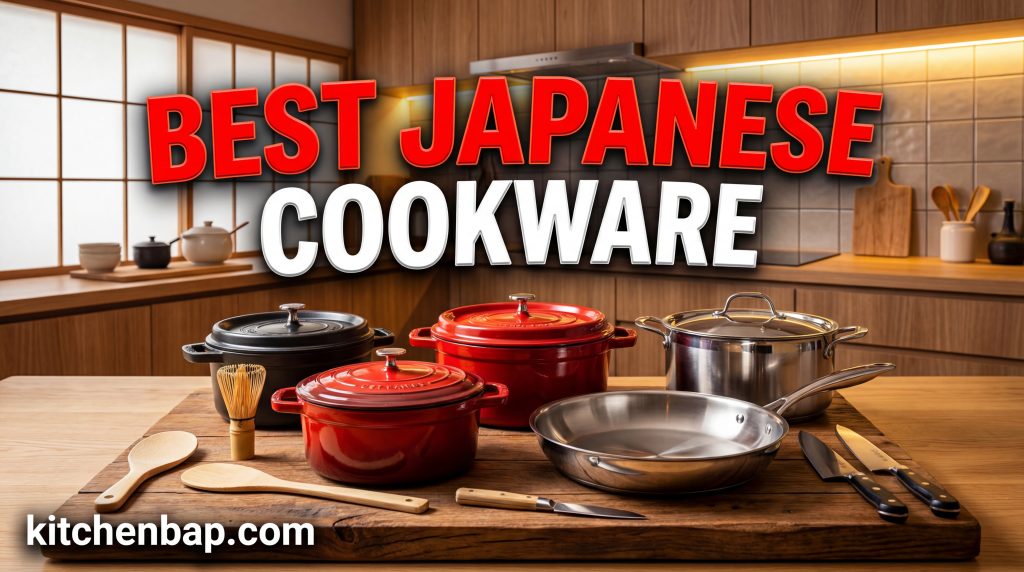
Second, Japanese cookware often uses superior materials. High-carbon steel blades maintain their edge far longer than standard stainless steel. Cast iron from Japan features smoother finishes and more even heat distribution than typical Western alternatives. Even bamboo and wooden utensils undergo careful selection and treatment processes that ensure longevity and food safety.
The rise of Japanese cuisine globally has sparked renewed interest in authentic Japanese cookware. Home cooks now seek tamagoyaki pans for perfect rolled omelets, donabe clay pots for traditional hot pot dinners, and yakitori grills for restaurant-quality skewers. But beyond specialty items, Japanese cookware excels at everyday tasks too. A quality Japanese saucepan heats more evenly than most Western equivalents, while Japanese mixing bowls feature thoughtful details like pouring spouts and non-slip bases.
The Art and Precision of Japanese Cookware!
Best Japanese Cookware:Choosing Japanese cookware requires understanding both your cooking style and the specific characteristics of different products. Not all Japanese cookware suits every kitchen or cooking method. Some items demand special care—carbon steel requires seasoning and careful drying to prevent rust, while certain clay pots need gradual temperature changes to avoid cracking.
This comprehensive guide examines eleven exceptional Japanese cookware products available on Amazon, ranging from essential knives and pans to specialized items that unlock new culinary possibilities. We’ve researched user experiences, tested durability claims, and compared value propositions to help you make informed decisions. Whether you’re building your first Japanese cookware collection or upgrading specific pieces, you’ll find detailed insights into what works, what doesn’t, and which products deliver genuine value for your investment.
Top 11 Japanese Cookware Products Reviewed
1. Imarku Japanese Chef Knife – 8 Inch High Carbon Stainless Steel Kitchen Knife
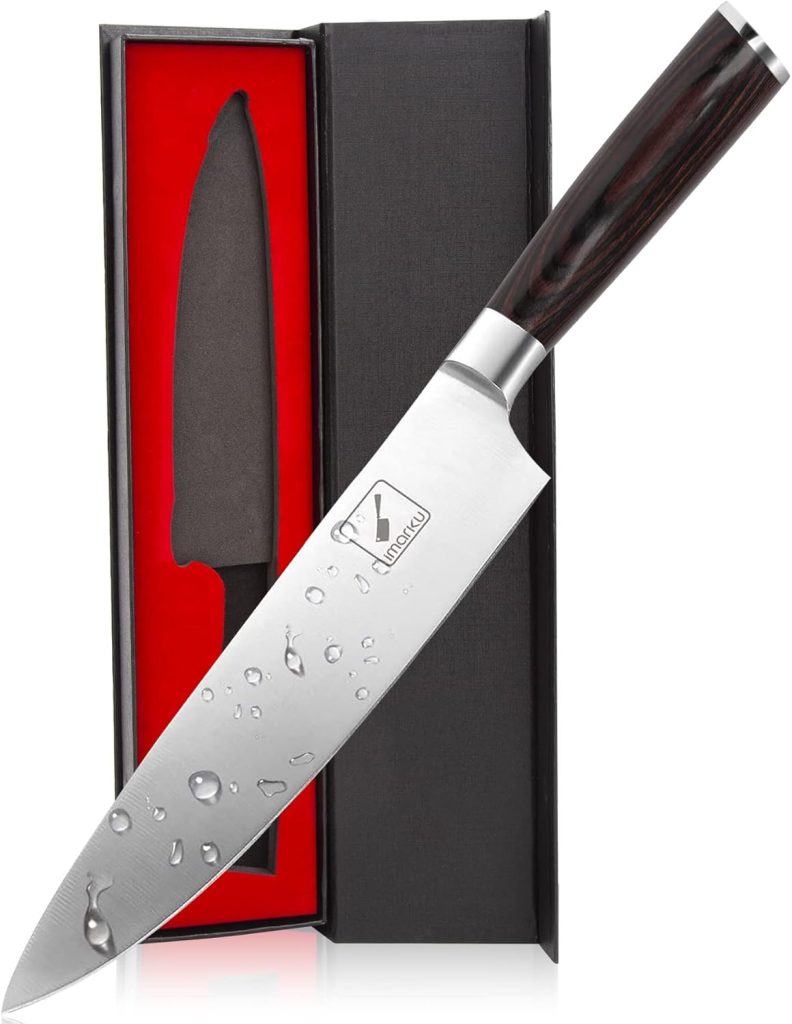
Overview: The Imarku Japanese Chef Knife bridges traditional Japanese blade-making with modern stainless steel convenience. This 8-inch chef’s knife features a Damascus-style pattern and promises the sharpness Japanese blades are famous for while maintaining the low-maintenance appeal Western cooks prefer.
Key Features:
- High-carbon German stainless steel construction with 56+ Rockwell hardness
- Ergonomic pakkawood handle with triple-riveted design for stability
- Hand-polished 15-degree blade angle on each side for exceptional sharpness
- Full tang construction extending through the entire handle
- Balanced weight distribution at approximately 8.1 ounces
- Protective finger guard between blade and handle
- Gift-ready packaging with knife sheath included
Performance and User Experience:
The Imarku chef knife excels at the fundamental cutting tasks every home cook encounters daily. Slicing through tomatoes reveals the blade’s sharpness—there’s no crushing or tearing, just clean cuts that preserve the fruit’s structure. The knife glides through onions with minimal resistance, and the slightly curved belly allows for smooth rocking motions when mincing herbs.
What impresses most is how the knife maintains its edge through regular use. After several weeks of daily cooking, the blade still performs precise cuts without requiring sharpening. The 15-degree angle creates a sharper edge than typical Western knives (which usually feature 20-degree angles), but it’s not so acute that the edge becomes fragile.
The pakkawood handle feels comfortable during extended prep sessions. It doesn’t become slippery when wet, and the ergonomic shaping prevents hand fatigue. The balance point sits right at the bolster, creating a natural pivot point that makes chopping feel effortless.
Pros:
✅ Exceptional sharpness straight out of the box with excellent edge retention
✅ Comfortable, well-balanced design suitable for various hand sizes
✅ Low-maintenance stainless steel resists rust and corrosion
✅ Attractive Damascus pattern adds visual appeal to your knife collection
✅ Affordable entry point into Japanese-style kitchen knives
✅ Versatile enough for vegetables, proteins, and fruits
Cons:
❌ Not true Damascus steel—the pattern is etched rather than forged layers
❌ Blade slightly thicker than authentic Japanese knives, affecting precision on delicate tasks
❌ May require professional sharpening services unfamiliar with the 15-degree angle
❌ Handle design, while comfortable, lacks the minimalist elegance of traditional Japanese knives
Ideal For: Home cooks transitioning from Western-style knives who want Japanese sharpness without the maintenance demands of carbon steel. Perfect for those who cook frequently and need a reliable, sharp knife that handles diverse ingredients.
Final Verdict: The Imarku Japanese Chef Knife delivers impressive performance at a price point that makes Japanese-style cutting accessible to everyone. While purists might note it’s not a traditional Japanese blade, it successfully captures what matters most—exceptional sharpness, comfortable handling, and durability that justifies the investment.
2. Lodge Pre-Seasoned Cast Iron Wok with Flat Base and Loop Handles
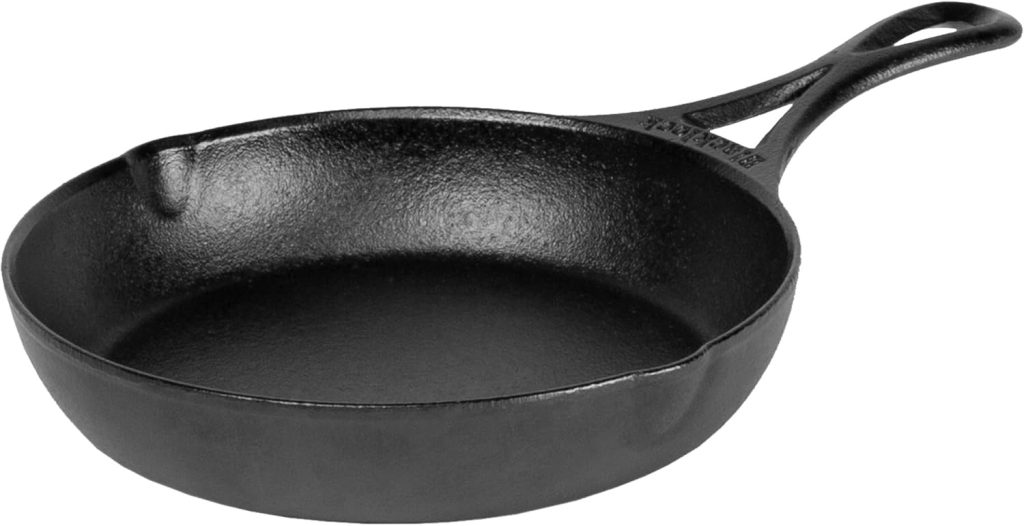
Overview: While Lodge is an American manufacturer, this cast iron wok draws inspiration from traditional Japanese and Asian cooking vessels. The flat-bottomed design makes it compatible with both gas and electric ranges while maintaining the high-heat capabilities essential for stir-frying and tempura.
Key Features:
- 14-inch diameter with flat 9-inch base for stability on modern stovetops
- Pre-seasoned with vegetable oil for immediate use
- Dual loop handles for safe lifting and maneuvering
- Uncoated cast iron construction that improves with use
- Compatible with all heat sources including induction
- Oven-safe up to 500°F for versatile cooking methods
- Made in USA with lifetime warranty
Performance and User Experience:
This cast iron wok transforms high-heat Asian cooking at home. The thick walls retain heat exceptionally well—once properly preheated, the wok maintains consistent temperatures even when adding cold ingredients. This characteristic proves crucial for authentic stir-frying, where ingredients should sear rather than steam.
The flat base solves a common problem with traditional round-bottomed woks on Western stoves. There’s no wobbling or instability, and the contact area with the heating element ensures efficient heat transfer. The 14-inch diameter provides ample space for tossing vegetables and proteins without spillage.
Seasoning develops beautifully over time. After about two months of regular use, the cooking surface becomes noticeably more non-stick. Foods release easily, and the patina deepens to a rich, dark finish. The pre-seasoning provides a good starting point, though building additional layers enhances performance.
Weight is considerable—approximately 9 pounds empty. While this heft contributes to heat retention, it makes single-handed tossing challenging for some cooks. The loop handles distribute weight effectively when using both hands.
Pros:
✅ Excellent heat retention for authentic high-temperature Asian cooking
✅ Flat base design works perfectly on all stovetop types
✅ Develops superior non-stick properties with proper seasoning
✅ Virtually indestructible with proper care—can last generations
✅ Natural iron seasoning adds trace minerals to food
✅ Versatile for stir-frying, deep-frying, steaming, and braising
Cons:
❌ Heavy construction requires two-handed operation for most users
❌ Requires maintenance—must be dried thoroughly and lightly oiled after washing
❌ Takes time to build optimal seasoning layers
❌ Not dishwasher safe and reactive to acidic foods until well-seasoned
Ideal For: Serious home cooks who regularly prepare Asian cuisine and want restaurant-quality results. Best suited for those willing to invest time in proper seasoning and maintenance for long-term performance benefits.
Final Verdict: The Lodge Cast Iron Wok represents an excellent investment for anyone committed to authentic Asian cooking techniques. While it demands more care than non-stick alternatives, the superior cooking performance and lifetime durability make it worth the effort.
3. Tamagoyaki Japanese Omelette Pan – Non-Stick Rectangular Egg Pan
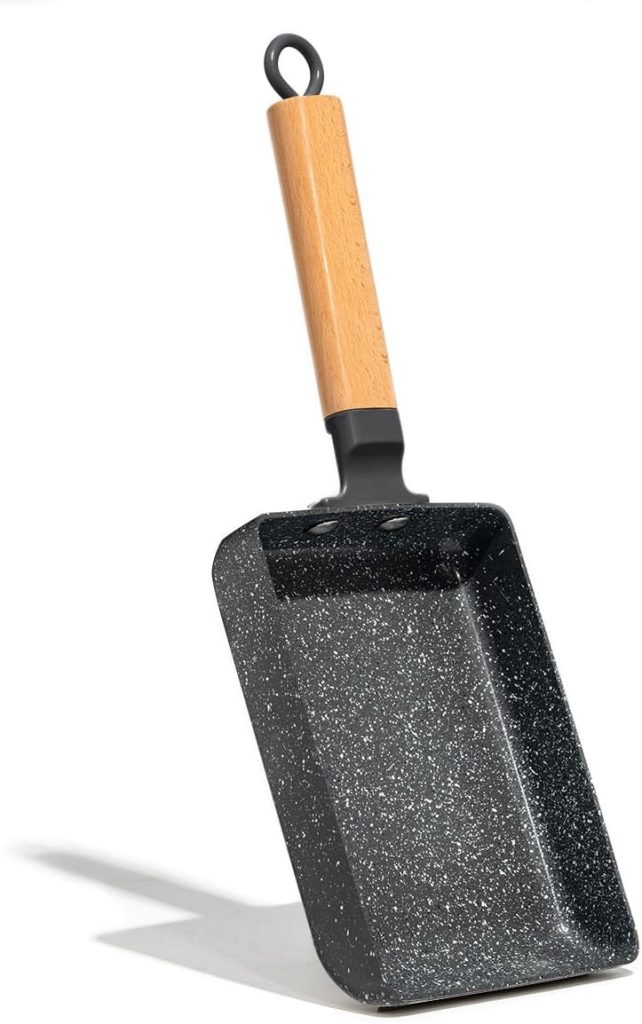
Overview: This specialized rectangular pan is designed specifically for making tamagoyaki, the slightly sweet Japanese rolled omelet that appears in bento boxes and sushi restaurants. The unique shape allows for the precise rolling technique that creates tamagoyaki’s distinctive layered appearance.
Key Features:
- Rectangular 7 x 5.5-inch cooking surface optimized for rolling
- Three-layer non-stick coating for easy egg release
- Aluminum construction for quick, even heating
- Heat-resistant phenolic handle stays cool during cooking
- Compatible with gas and electric stovetops (not induction)
- Lightweight design at approximately 1.2 pounds
- Hand-wash recommended to preserve non-stick coating
Performance and User Experience:
Making tamagoyaki requires a specific pan shape, and this rectangular design delivers exactly what’s needed. The dimensions allow you to pour thin layers of egg mixture, cook them just until set, and then roll them from one end to the other. The straight sides help create the characteristic rectangular shape.
The non-stick coating works impressively well. Even with minimal oil, eggs don’t stick or tear during the rolling process. This proves crucial because tamagoyaki demands delicate handling—you’re working with thin, barely-set egg layers that could easily break with inferior cookware.
Heat distribution across the rectangular surface is remarkably even. There are no hot spots that might overcook portions of the egg while others remain runny. The aluminum construction heats quickly, which is advantageous when making multiple batches for meal prep.
The learning curve for tamagoyaki itself is steep, but the pan doesn’t add unnecessary challenges. Once you master the technique, this pan makes the process smooth and predictable. Beyond tamagoyaki, the pan works well for small omelets, reheating single portions, or cooking proteins for bento boxes.
Pros:
✅ Perfect dimensions for traditional tamagoyaki rolling technique
✅ Excellent non-stick performance requires minimal oil
✅ Even heating prevents hot spots and uneven cooking
✅ Lightweight and easy to maneuver during the rolling process
✅ Affordable specialty item that opens up new cooking possibilities
✅ Compact size ideal for small kitchens with limited storage
Cons:
❌ Single-purpose design—not practical for most Western cooking tasks
❌ Not induction-compatible limits usability for some kitchens
❌ Non-stick coating will eventually wear out with regular use
❌ Requires hand washing, adding extra maintenance time
Ideal For: Japanese cuisine enthusiasts, bento makers, and anyone who wants to master authentic tamagoyaki. Also excellent for small households needing a compact pan for individual portions.
Final Verdict: If you make tamagoyaki or Japanese-style bento boxes regularly, this pan is essential. The specialized design performs its intended function beautifully, and the affordable price makes it easy to justify adding to your cookware collection.
4. Zojirushi Induction Heating Pressure Rice Cooker & Warmer
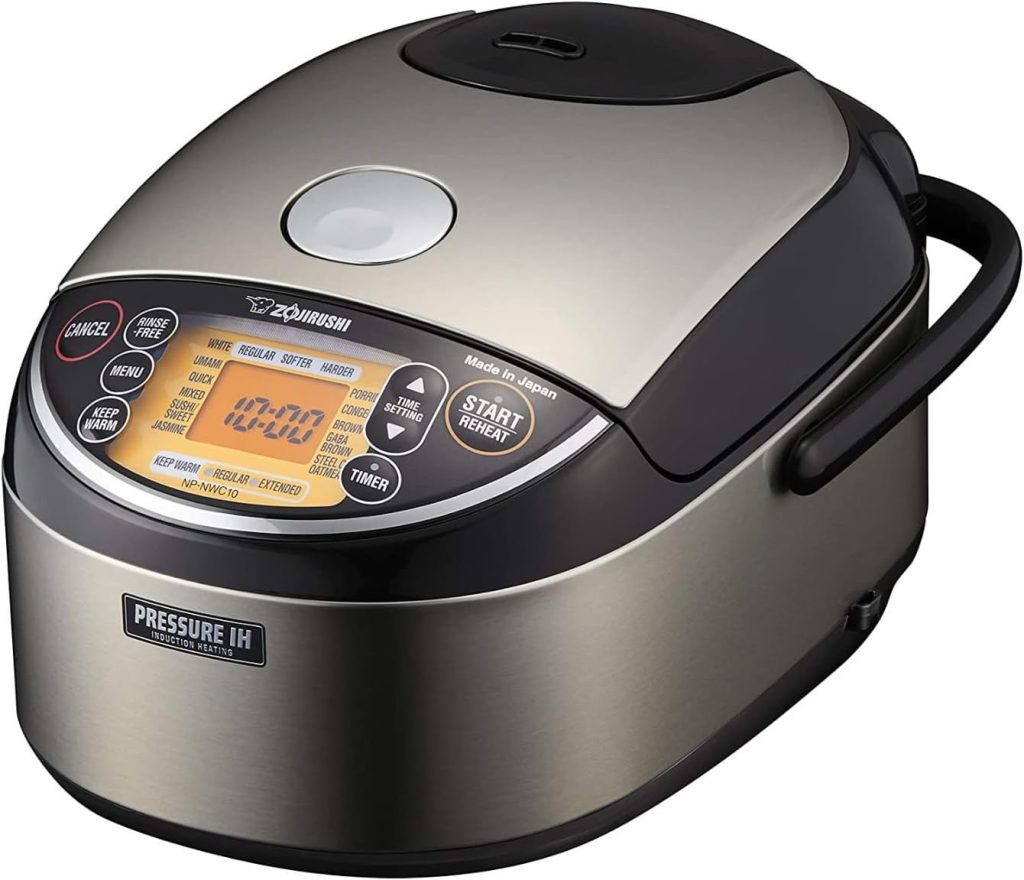
Overview: Zojirushi represents the pinnacle of Japanese rice cooker technology. This induction heating model uses advanced pressure cooking and precise temperature control to produce consistently perfect rice across multiple varieties—from fluffy white rice to sticky sushi rice to perfectly textured brown rice.
Key Features:
- Induction heating technology with pressure cooking for superior results
- 5.5-cup capacity (uncooked rice) serves 2-6 people
- Multiple cooking settings: white rice, sushi rice, brown rice, GABA brown rice, mixed rice
- Platinum-infused non-stick inner cooking pan
- LCD control panel with clock and timer functions
- Extended keep-warm function maintains rice quality up to 30 hours
- Detachable inner lid and steam vent for easy cleaning
- Menu settings for porridge, sweet rice, and quick cooking
Performance and User Experience:
This rice cooker transforms rice preparation from guesswork into precise science. The induction heating system creates uniform heat distribution around the entire inner pan, not just from the bottom. Combined with pressure cooking, this approach produces rice with consistently superior texture—each grain perfectly cooked through without being mushy or sticky.
The difference is most noticeable with brown rice. Standard rice cookers often leave brown rice slightly chewy or tough, but this Zojirushi model produces remarkably tender grains while maintaining nutritional integrity. The GABA brown rice setting actually activates enzymes in brown rice that increase nutritional content—a feature you won’t find in basic models.
Programming is intuitive despite the numerous features. The LCD display clearly indicates cooking progress, and the timer function means rice can be ready exactly when needed. The extended keep-warm function doesn’t just hold temperature—it actively manages moisture and heat to prevent rice from drying out or developing off-flavors.
Cleaning proves surprisingly simple. The inner lid detaches completely, and both it and the inner pan are dishwasher-safe. The steam vent can be removed for thorough cleaning, preventing buildup that affects performance.
Pros:
✅ Consistently perfect rice texture across all varieties
✅ Pressure cooking significantly reduces brown rice cooking time
✅ Extended keep-warm maintains rice quality for an entire day
✅ Platinum-infused pan supposedly enhances sweetness and stickiness
✅ Timer function allows for rice ready when you wake up or come home
✅ Surprisingly compact footprint despite advanced features
Cons:
❌ Premium price point—significantly more expensive than basic rice cookers
❌ Learning curve for optimal water ratios across different rice types
❌ Cooking time longer than basic models (though quality justifies this)
❌ Inner pan coating requires careful handling to prevent scratches
Ideal For: Rice enthusiasts, families who eat rice daily, and anyone serious about Japanese cuisine. Particularly valuable for those who cook various rice types and want consistent, restaurant-quality results.
Final Verdict: The Zojirushi Induction Heating Rice Cooker represents a significant investment, but for households where rice is a staple, the superior quality and convenience justify the cost. This is rice cooking perfected through Japanese engineering precision.
5. Miyabi Kaizen II Chef’s Knife – 8-Inch Japanese Kitchen Knife

Overview: Miyabi knives represent German precision meeting Japanese craftsmanship, manufactured by Zwilling J.A. Henckels in Seki, Japan. The Kaizen II line features authentic Japanese blade geometry with high-carbon stainless steel that balances sharpness retention with corrosion resistance.
Key Features:
- FC61 fine carbide stainless steel blade with 61 Rockwell hardness
- Honbazuke three-step hand-honing process for exceptional sharpness
- CRYODUR ice-hardening treatment for blade durability
- Traditional Japanese katana-style handle with authentic D-shape
- Gorgeous 64-layer Damascus pattern with distinctive flowering design
- 9.5-degree blade angle for superior cutting performance
- Full tang construction with mosaic pin detail
Performance and User Experience:
The Miyabi Kaizen II cuts with an effortlessness that immediately distinguishes it from conventional kitchen knives. Paper-thin tomato slices, precise julienne cuts, and clean protein trimming all become noticeably easier. The 9.5-degree blade angle creates an exceptionally sharp edge that glides through ingredients rather than pushing through them.
What’s remarkable is how the blade maintains this sharpness through extended use. Even after months of regular cooking, the edge remains keen enough for precision work. The FC61 steel and ice-hardening process create an edge that’s both sharp and durable—a combination difficult to achieve.
The D-shaped handle feels distinctly different from Western knife handles. It encourages a pinch grip (thumb and forefinger on the blade) that provides superior control. The traditional design might feel unfamiliar initially, but it promotes proper technique and reduces hand fatigue during extended prep sessions.
Weight distribution is impeccable. Despite the 8-inch blade, the knife feels remarkably nimble. The balance point sits exactly where your fingers grip, creating a natural pivot that makes precise cuts almost automatic. For detailed work like brunoise cuts or herb chiffonade, this balance proves invaluable.
Pros:
✅ Exceptional sharpness with outstanding edge retention
✅ Stunning Damascus pattern makes it a showpiece in any kitchen
✅ Traditional Japanese handle design promotes proper cutting technique
✅ Superior blade hardness means less frequent sharpening needed
✅ Excellent balance and weight distribution for fatigue-free use
✅ Stainless steel construction requires minimal maintenance
Cons:
❌ Premium pricing puts it out of reach for casual cooks
❌ D-shaped handle takes adjustment for those accustomed to Western knives
❌ Extreme sharpness requires careful handling and storage
❌ Professional sharpening recommended when edge eventually dulls
Ideal For: Serious home cooks and culinary professionals who appreciate superior craftsmanship and want a knife that elevates their cooking precision. Best for those who’ve mastered basic knife skills and are ready for professional-grade tools.
Final Verdict: The Miyabi Kaizen II represents authentic Japanese knife-making at its finest. While the investment is substantial, the combination of extraordinary performance, stunning aesthetics, and long-term durability makes it worth considering for anyone serious about cooking.
6. Kotobuki Donabe Japanese Hot Pot – Traditional Clay Pot
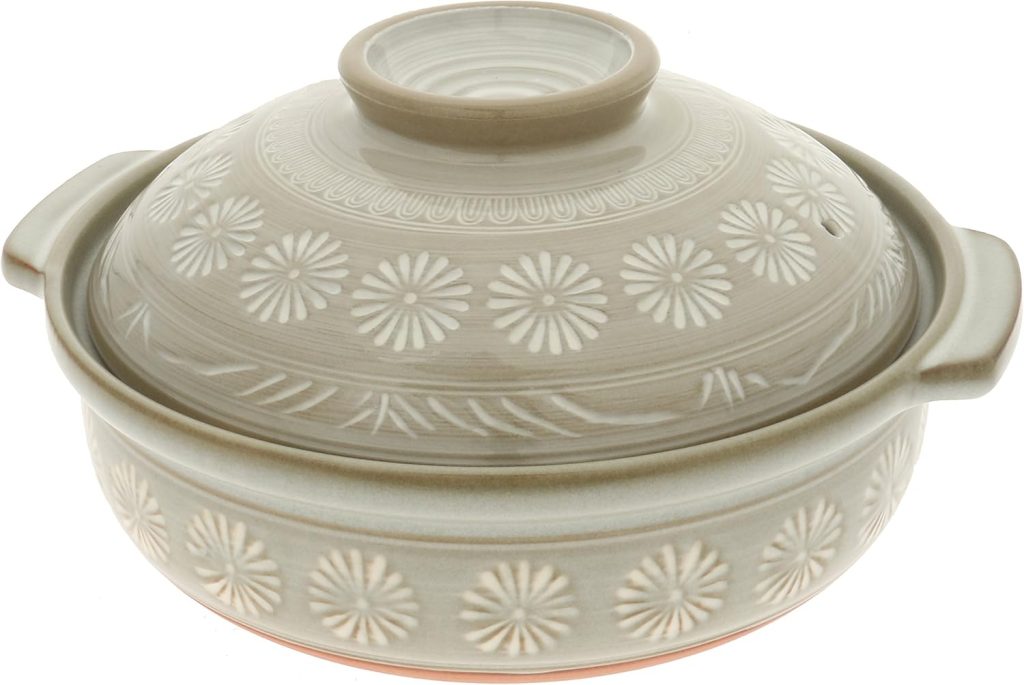
Overview: This authentic donabe clay pot brings traditional Japanese nabe (hot pot) cooking into your home. Handcrafted from porous clay and designed for stovetop use, it creates the perfect vessel for communal hot pot meals, slow-simmered stews, and even rice cooking.
Key Features:
- 9.5-inch diameter with 2.5-quart capacity
- Traditional Japanese Banko clay construction from Yokkaichi
- Heat-resistant glazed interior with unglazed exterior base
- Compatible with gas stovetops and direct flame (not for electric or induction)
- Includes wooden lid for traditional presentation
- Oven-safe for baking and slow cooking applications
- Handmade in Japan with natural materials
Performance and User Experience:
Using a donabe transforms hot pot cooking from merely functional to an experience that connects you with centuries of Japanese culinary tradition. The clay construction heats gradually and evenly, creating gentle simmering conditions perfect for extracting flavors from ingredients without overcooking delicate items.
What makes donabe special is how it manages heat. The porous clay absorbs and radiates warmth, maintaining consistent cooking temperatures even when the heat source is removed. This property means the pot stays hot at the table, keeping broth steaming throughout the meal—essential for the leisurely pace of traditional hot pot dining.
The clay also impacts flavor. Ingredients develop deeper, more harmonious tastes compared to cooking in metal pots. Broths become richer without requiring longer cooking times. Vegetables maintain better texture, and proteins cook evenly without hot spots.
Proper use requires respecting the clay’s limitations. Temperature changes must be gradual—placing a cold donabe on high heat or adding ice-cold liquid to a hot pot risks cracking. Following the initial seasoning process (cooking rice porridge to seal the clay) is essential for longevity.
Pros:
✅ Authentic traditional design creates culturally immersive dining experience
✅ Excellent heat retention keeps food hot throughout meals
✅ Clay construction enhances flavors in ways metal cannot replicate
✅ Beautiful presentation worthy of serving directly at the table
✅ Versatile for hot pot, rice, stews, and even baking
✅ Handcrafted quality with artisanal character
Cons:
❌ Fragile—must be handled carefully to prevent chips and cracks
❌ Requires gradual heating and cooling to avoid thermal shock
❌ Not compatible with electric or induction stovetops
❌ Hand-wash only with no soap (can absorb into porous clay)
❌ Initial seasoning process required before first use
Ideal For: Japanese cuisine enthusiasts who host hot pot dinners, anyone interested in traditional cooking methods, and those who value the cultural and communal aspects of cooking. Best for patient cooks who appreciate rituals and care requirements.
Final Verdict: The Kotobuki Donabe delivers an authentic Japanese cooking experience that modern cookware cannot replicate. While it demands respect and proper care, the unique cooking properties and cultural connection make it a treasured addition for those passionate about Japanese cuisine.
7. Yoshikawa Yukihira Stainless Steel Saucepan with Pouring Spout
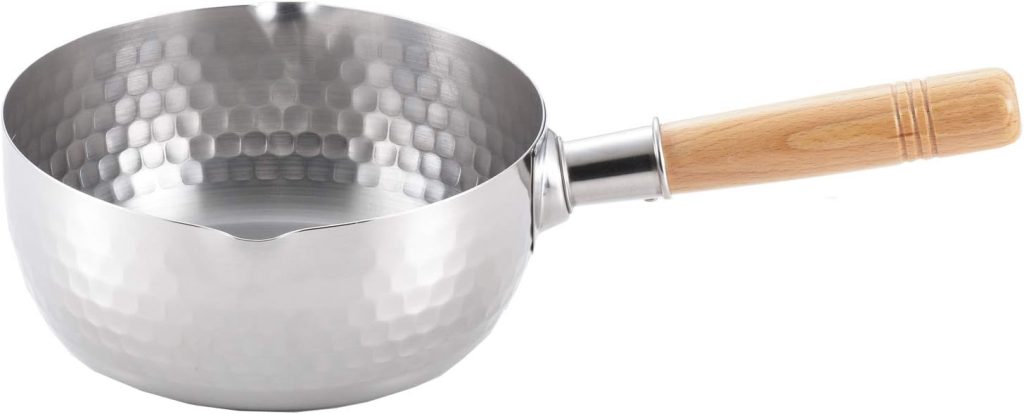
Overview: The yukihira pan represents traditional Japanese saucepan design, optimized for tasks like making dashi, heating miso soup, and preparing sauces. This stainless steel version from Yoshikawa maintains the essential design features while offering modern durability and easy maintenance.
Key Features:
- 18-8 stainless steel construction resistant to rust and corrosion
- 1.6-quart capacity ideal for 2-4 servings
- Distinctive pouring spout on one side for precise pouring
- Riveted wooden handle stays cool during stovetop cooking
- Graduated measurement markings inside the pan
- Hammered exterior finish for visual appeal and improved heat distribution
- Compatible with all stovetops including induction
Performance and User Experience:
The yukihira design reveals thoughtful details that make everyday cooking more efficient. The pouring spout eliminates the need to lift and tilt the entire pan when transferring liquids—simply slide the pan forward and pour. This seemingly small feature prevents spills and makes single-handed pouring possible.
Heat distribution is impressively even for a saucepan. The hammered exterior isn’t just decorative—it increases surface area, promoting more uniform heating. When making dashi or heating miso soup, there are no hot spots that might scorch delicate ingredients.
The wooden handle remains comfortable to hold even after extended stovetop use. Unlike metal handles that become dangerously hot or silicone grips that can degrade, the natural wood provides reliable, long-lasting heat resistance. The riveted attachment feels secure and shows no signs of loosening.
Capacity hits a sweet spot for small households. It’s large enough for preparing sauces, heating soup for two, or making small batches of grains, but compact enough for efficient storage. The measurement markings simplify recipes without requiring separate measuring cups.
Pros:
✅ Pouring spout design prevents drips and enables precise liquid transfer
✅ Even heating from hammered stainless steel construction
✅ Cool-touch wooden handle provides comfortable, safe grip
✅ Induction-compatible stainless steel works on all stovetops
✅ Easy to clean and maintain—dishwasher safe
✅ Compact size perfect for small kitchens and limited storage
Cons:
❌ Wooden handle prevents oven use (handle may char or burn)
❌ Smaller capacity not ideal for cooking for larger groups
❌ Pouring spout on only one side may inconvenience left-handed users
❌ Premium pricing compared to standard saucepans of similar capacity
Ideal For: Anyone who regularly prepares Japanese soups, sauces, and broths. Particularly useful for small households and those who appreciate thoughtful design details that improve cooking efficiency.
Final Verdict: The Yoshikawa Yukihira saucepan exemplifies how traditional Japanese design creates practical advantages in everyday cooking. While specialized, it performs common tasks better than conventional saucepans, making it a worthwhile addition beyond just Japanese cooking.
8. Shun Classic 7-Inch Santoku Knife – Handcrafted Japanese Kitchen Knife

Overview: Shun’s Classic Santoku represents the most versatile knife in Japanese cutlery—a multi-purpose blade designed for slicing, dicing, and mincing. With its distinctive granton edge and Damascus-clad blade, it combines traditional Japanese craftsmanship with modern performance.
Key Features:
- VG-MAX cutting core with 61 Rockwell hardness
- 34-layer Damascus cladding for strength and corrosion resistance
- Granton edge with oval indentations to prevent food sticking
- Proprietary 16-degree double-bevel edge angle
- Pakkawood handle with traditional “D” shape
- Full tang construction for balance and durability
- Hand-sharpened in Japan to exceptionally keen edge
- Lifetime warranty against manufacturing defects
Performance and User Experience:
The Shun Classic Santoku excels at the trinity of cutting tasks its name describes—cutting meat, vegetables, and fish. The 7-inch blade length provides enough surface area for larger vegetables while maintaining the maneuverability needed for precise work. The flat edge profile makes it ideal for chopping rather than rocking motions.
Sharpness is immediately apparent. Right out of the box, the blade slices through ingredients with almost no downward pressure required. Onions separate into transparent-thin slices, carrots offer no resistance, and even delicate tasks like skinning ginger become effortless. The VG-MAX steel core takes an incredibly fine edge.
The granton edge delivers on its promise—food releases from the blade rather than clinging. When slicing potatoes or cucumbers, vegetables fall away instead of stacking on the blade. This feature significantly speeds up prep work and reduces frustration.
What’s impressive about Shun is how the blade maintains its edge. After six months of regular home use, the knife still performs with surgical precision. The steel composition creates an edge that’s both sharp and durable—a difficult balance to achieve.
Pros:
✅ Extraordinary sharpness right from the factory
✅ Granton edge effectively prevents food from sticking to blade
✅ Beautiful Damascus pattern combines aesthetics with functionality
✅ Excellent weight and balance for extended use without fatigue
✅ Versatile design handles most kitchen cutting tasks admirably
✅ Lifetime warranty provides peace of mind for the investment
Cons:
❌ Premium price point may be prohibitive for budget-conscious buyers
❌ Requires careful hand washing and immediate drying
❌ Professional sharpening recommended—home sharpening can damage the edge
❌ D-shaped handle may feel unusual to those accustomed to Western knives
Ideal For: Experienced home cooks who want a premium multi-purpose knife that handles diverse cutting tasks. Perfect for those who value blade sharpness and are willing to invest in proper maintenance.
Final Verdict: The Shun Classic Santoku justifies its premium pricing through exceptional performance, stunning craftsmanship, and versatility that makes it the go-to knife for most kitchen tasks. It’s an heirloom-quality tool that can serve you for decades.
9. Tiger JBV-A10U Micom Rice Cooker with Food Steamer Basket

Overview: Tiger’s Micom rice cooker brings Japanese rice cooking technology to a more accessible price point. While less advanced than high-end induction models, it still delivers consistently excellent rice through computerized cooking programs and quality construction.
Key Features:
- 5.5-cup uncooked rice capacity (serves 2-5 people)
- Microcomputer technology with “tacook” synchronized cooking function
- Four cooking menu settings including white rice, brown rice, and porridge
- Non-stick inner pan with easy-to-read water level lines
- Included steaming basket allows cooking proteins while rice cooks
- Automatic keep-warm function up to 12 hours
- Retractable power cord for convenient storage
- Removable inner lid for easy cleaning
Performance and User Experience:
This Tiger rice cooker represents an excellent value in computerized rice cooking. While it lacks the pressure cooking of premium models, the microcomputer technology consistently produces properly cooked rice with good texture. White rice emerges fluffy and separate, while brown rice, though taking longer, achieves satisfactory tenderness.
The “tacook” synchronized cooking feature proves genuinely useful. Place marinated chicken or vegetables in the steaming basket, add rice below, and both components cook simultaneously. This means complete meals from a single appliance—perfect for busy weeknights or small kitchens with limited burners.
Operation is straightforward with clear controls. Select your rice type, add the appropriate water (marked lines make this foolproof), and press start. The cooker handles timing and temperature automatically. The keep-warm function maintains rice quality reasonably well, though rice does begin drying slightly after several hours.
Cleaning is simple with the removable inner lid and non-stick pan. Both components rinse clean easily, and the steaming basket is dishwasher safe. The compact design fits comfortably on countertops without dominating space.
Pros:
✅ Affordable access to computerized rice-cooking technology
✅ Synchronized cooking feature enables complete one-pot meals
✅ Consistently reliable rice texture across multiple varieties
✅ Easy-to-use controls with minimal learning curve
✅ Compact footprint suitable for small kitchens
✅ Non-stick pan simplifies cleaning and rice removal
Cons:
❌ Lacks advanced features like induction heating or pressure cooking
❌ Brown rice cooking time relatively long (approximately 90 minutes)
❌ Keep-warm function not as effective as premium models for extended periods
❌ Inner pan coating may wear over time with heavy use
Ideal For: Budget-conscious buyers who want reliable computerized rice cooking without premium pricing. Excellent for small households, college students, and anyone seeking convenient one-pot meal solutions.
Final Verdict: The Tiger JBV-A10U delivers solid performance at a fair price. While it won’t match premium rice cookers in every aspect, it provides the essentials—consistent rice quality and convenient operation—that matter most for everyday use.
10. Kai Nakiri Vegetable Knife – 6.5 Inch Japanese Kitchen Knife
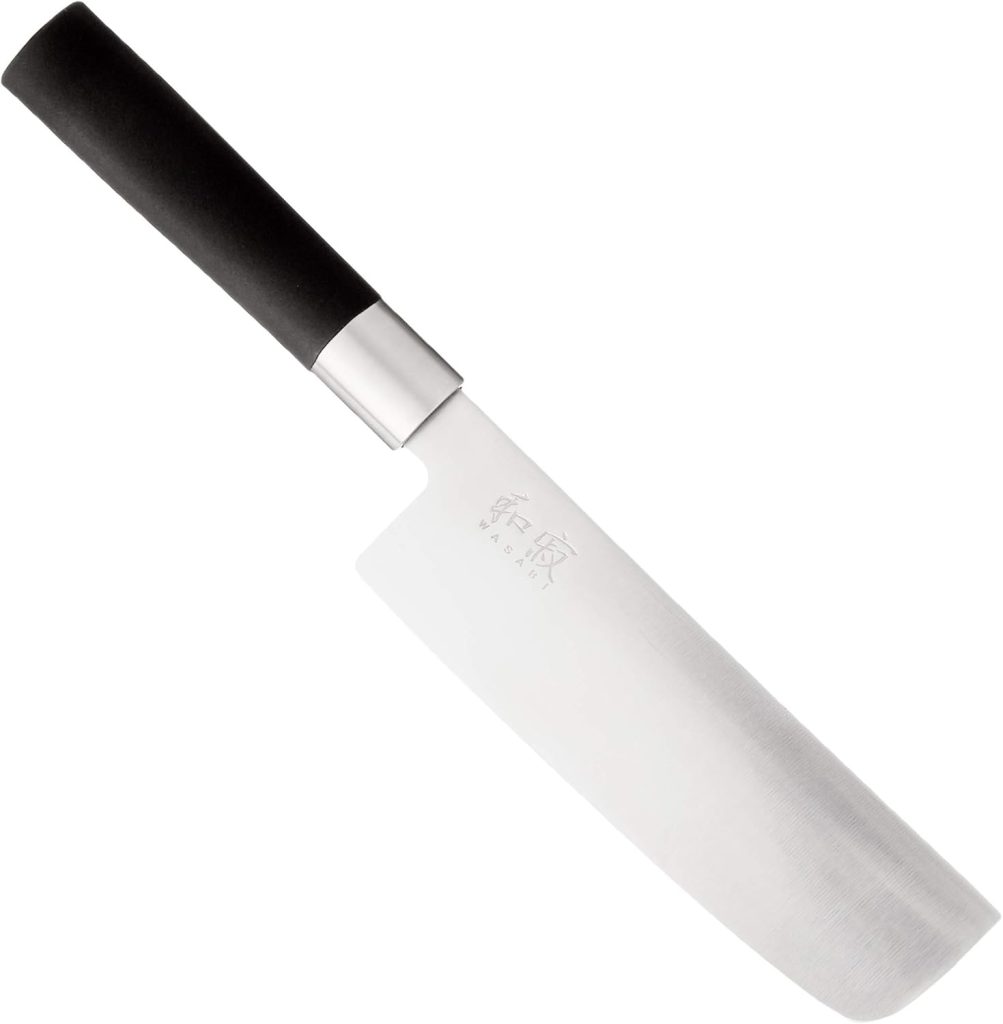
Overview: The nakiri knife features a distinctive rectangular blade designed specifically for vegetable preparation. Kai’s version combines traditional nakiri geometry with modern stainless steel for a specialized tool that excels at chopping, slicing, and mincing produce.
Key Features:
- High-carbon stainless steel blade with excellent edge retention
- 6.5-inch rectangular blade optimized for vegetable cutting
- Traditional Japanese double-bevel edge sharpened to 16 degrees
- Contoured pakkawood handle with triple-rivet construction
- Flat edge profile perfect for push-cutting technique
- Full tang for balance and durability
- Protective blade cover included
- Made in Seki City, Japan’s renowned knife-making center
Performance and User Experience:
The nakiri’s rectangular blade shape fundamentally changes how you approach vegetable preparation. The flat edge allows full blade contact with the cutting board in a single downward motion—no rocking required. This makes achieving uniform cuts easier and faster compared to curved chef’s knives.
The wide blade face serves multiple functions. It’s perfect for scooping chopped vegetables and transferring them to pots or bowls. The height also provides excellent knuckle clearance, enabling faster cutting without risk of scraping your fingers. For tasks requiring the bridge cut (gripping the vegetable and cutting underneath), the blade width offers comfortable working space.
Sharpness is excellent, though not quite at the level of premium Japanese knives. Thin tomato skins separate cleanly, delicate herb leaves slice without bruising, and dense vegetables like butternut squash yield to steady pressure. The double bevel makes sharpening more forgiving than single-bevel traditional nakiri.
The knife works best with downward chopping motions. For tasks requiring tip work or carving, a different knife is better suited. Understanding this specialization is key to appreciating what the nakiri does exceptionally well.
Pros:
✅ Rectangular blade design speeds up vegetable preparation significantly
✅ Flat edge ensures complete blade contact for uniform cuts
✅ Wide blade face excellent for scooping and transferring ingredients
✅ Double bevel easier to sharpen and maintain than traditional nakiri
✅ Lightweight design reduces fatigue during extensive prep work
✅ Stainless steel construction requires minimal maintenance
Cons:
❌ Specialized design less versatile than chef’s knives for non-vegetable tasks
❌ Flat tip not suitable for detail work or carving
❌ Thin blade not ideal for hard vegetables like winter squash
❌ May feel unfamiliar to those accustomed to Western knife techniques
Ideal For: Home cooks who prepare large amounts of vegetables, vegetarians and vegans who center meals around produce, and anyone interested in traditional Japanese cutting techniques. Particularly valuable for meal prep enthusiasts.
Final Verdict: The Kai Nakiri excels in its intended role as a vegetable specialist. While not a replacement for a chef’s knife, it significantly improves efficiency when working with produce, making it a valuable addition for vegetable-focused cooking.
11. Kamado-San Donabe Rice Cooker – Traditional Japanese Clay Rice Pot
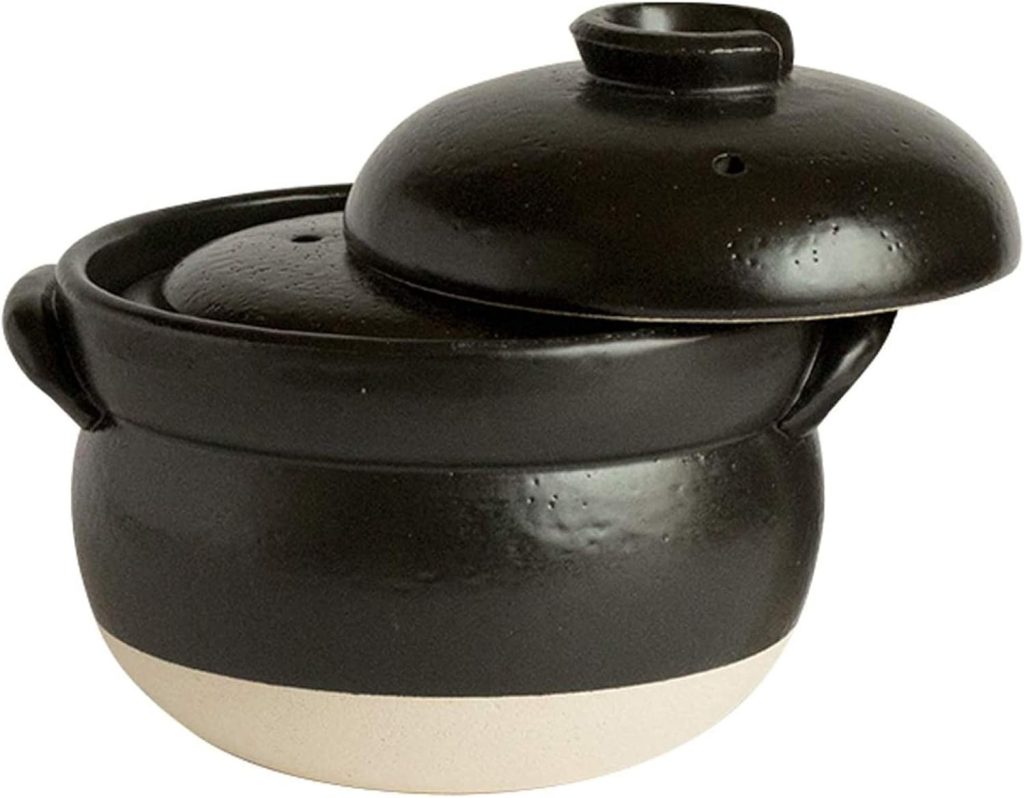
Overview: The Kamado-San represents the ultimate traditional approach to rice cooking—no electricity, no computerized controls, just premium clay and centuries-refined technique. Handcrafted from porous Iga clay, it produces rice with texture and flavor impossible to achieve in electric rice cookers.
Key Features:
- Double-lid design with authentic Iga clay from Mie Prefecture, Japan
- 3-cup capacity (uncooked rice) serves 4-6 people
- Compatible with gas stovetops and open flame
- Natural infrared heat retention properties
- Outer and inner lids for superior moisture control
- Soaking and steaming integrated into natural cooking process
- Handmade by artisans using traditional methods
- Includes detailed cooking instructions
Performance and User Experience:
Cooking rice in the Kamado-San feels like participating in a culinary ritual. The process is intentional and mindful—measuring rice, adding water, bringing to temperature, timing the cooking, and allowing the natural rest period. This deliberate approach creates connection with your food that electric cookers cannot replicate.
The rice quality is extraordinary. Each grain achieves perfect texture—fluffy yet slightly sticky, with a subtle sweetness that’s absent in electrically cooked rice. The porous clay’s infrared radiation cooks rice from the inside out, creating uniform doneness throughout each grain rather than just from the outside in.
The double-lid system creates optimal pressure and moisture conditions naturally. As steam builds, the weight of the lids maintains gentle pressure, mimicking advanced pressure rice cookers without any mechanical components. Moisture regulation prevents rice from becoming waterlogged or dry.
Timing requires attention. You’ll need to be present to monitor the process—approximately 13 minutes of cooking followed by 20 minutes of resting. This commitment won’t suit rushed weeknights, but the meditative quality and superior results make it worthwhile for special occasions or when you have time to be fully present in cooking.
Pros:
✅ Produces rice with unmatched texture and flavor quality
✅ No electricity required—works during power outages
✅ Beautiful presentation allows serving directly from the pot
✅ Natural clay materials with no synthetic coatings or chemicals
✅ Improves with age as seasoning develops in the clay
✅ Creates mindful, meditative cooking experience
✅ Handcrafted artisan quality with cultural significance
Cons:
❌ Requires active attention during cooking process
❌ Not suitable for quick weeknight meals
❌ Fragile clay construction demands careful handling
❌ Higher learning curve than push-button electric cookers
❌ Premium pricing reflects handcrafted artisan production
❌ Limited to gas stovetops—not compatible with electric or induction
Ideal For: Rice purists and Japanese cuisine devotees who prioritize quality over convenience. Perfect for special occasions, weekend cooking when time allows, and those who appreciate traditional cooking methods with cultural heritage.
Final Verdict: The Kamado-San Donabe Rice Cooker represents the pinnacle of traditional rice cooking. While impractical for daily rushed cooking, it produces rice quality that justifies the investment for those who truly value exceptional results and meaningful cooking experiences.
Comprehensive Buying Guide: Choosing the Right Japanese Cookware!
Understanding Japanese Cookware Philosophy
Before diving into specific products, understanding the Japanese approach to cookware helps inform better purchasing decisions. Japanese cookware design prioritizes function, quality materials, and longevity over flashy features. Unlike Western cookware that often emphasizes versatility, Japanese pieces tend toward specialization—each item optimized for specific tasks.
This philosophy means building a Japanese cookware collection differs from buying Western cookware sets. Rather than purchasing matched sets, you select individual pieces based on what you actually cook. A nakiri for vegetables, a santoku for general purpose cutting, a yukihira for broths and sauces—each tool performs its designated function superbly.
Material Considerations: What Makes Japanese Cookware Different
Carbon Steel vs. Stainless Steel Knives
Japanese knives traditionally use high-carbon steel for superior edge retention and sharpness. Carbon steel can achieve finer edges than stainless steel and maintains that edge longer. However, it requires meticulous care—immediate drying after washing and light oil coating to prevent rust.
Modern Japanese stainless steel offers excellent performance with minimal maintenance. High-quality stainless blades like VG-10 or VG-MAX provide impressive sharpness and edge retention while resisting corrosion. For most home cooks, premium stainless steel strikes the ideal balance between performance and practicality.
Cast Iron: Japanese vs. Western
Japanese cast iron, particularly from manufacturers like Iwachu, features smoother finishes and more refined castings than typical Western cast iron. The surface requires less initial seasoning work and develops non-stick properties more quickly. Japanese enameled cast iron also tends toward thinner walls, providing faster heating while maintaining even temperature distribution.
Clay and Ceramic Cookware
Traditional Japanese clay cookware like donabe represents specialized materials chosen for specific cooking properties. Iga clay’s porosity creates far-infrared heat radiation that cooks food differently than metal. The clay also retains heat exceptionally well, keeping dishes warm at the table.
These materials demand respect and proper care. Gradual temperature changes prevent thermal shock cracking. No soap washing preserves the clay’s natural properties. Understanding these requirements before purchasing prevents disappointment.
Key Factors in Selecting Japanese Cookware
1. Intended Use and Cooking Style
Evaluate your actual cooking habits honestly. If you rarely prepare Japanese cuisine, specialized items like tamagoyaki pans or donabe may gather dust. However, Japanese knives, rice cookers, and versatile pieces like yukihira pans enhance any cooking style.
Consider frequency of use. Daily-use items justify higher investment in premium quality and durability. Occasional specialty pieces can be budget-tier without significantly impacting your cooking experience.
2. Skill Level and Learning Curve
Some Japanese cookware requires technique development. Carbon steel knives need proper sharpening knowledge. Donabe demands understanding of clay’s thermal properties. Nakiri knives perform best with specific cutting techniques.
Beginners should start with forgiving options—stainless steel knives, electric rice cookers, and straightforward pans. As skills develop, you can add more demanding traditional items that reward proper technique with superior results.
3. Maintenance Commitment
Japanese cookware often requires more care than Western alternatives. Carbon steel needs seasoning and rust prevention. Clay must be handled gently. Premium knives demand careful sharpening and storage.
Assess your realistic willingness to provide this care. If you prefer low-maintenance cooking tools, focus on stainless steel, non-stick options, and electric appliances rather than traditional items requiring ritual-like maintenance.
4. Storage and Kitchen Space
Japanese cookware sometimes features unconventional shapes—rectangular tamagoyaki pans, wide shallow donabe, or long yanagiba sashimi knives. Ensure your kitchen storage accommodates these dimensions before purchasing.
Consider stacking and nesting capabilities for pots and pans. Knife storage is particularly important—proper storage in knife blocks, magnetic strips, or blade guards protects both the knife edge and users from accidents.
5. Compatibility with Your Cooktop
Traditional clay cookware works only with gas stovetops. Induction cooking requires magnetic materials—cast iron and specific stainless steels work, but aluminum and traditional clay don’t. Verify compatibility before purchasing to avoid expensive mistakes.
Avoiding Common Buying Mistakes
Mistake 1: Prioritizing Price Over Quality
Japanese cookware represents an investment that repays through longevity and performance. Rock-bottom prices often indicate inferior materials, poor construction, or fake “Japanese-style” products manufactured elsewhere with substandard techniques.
Budget considerations matter, but extremely cheap options rarely deliver authentic Japanese quality. Mid-range products often provide excellent value, offering genuine Japanese construction without luxury pricing.
Mistake 2: Buying Complete Sets Without Consideration
Unlike Western cookware where sets make sense, Japanese cookware works best when selected piece by piece based on actual needs. A five-piece knife set might include blades you’ll never use while lacking the one you need most.
Build your collection gradually. Start with one excellent chef’s knife or santoku, one quality pan, and a reliable rice cooker. Add specialized items only after identifying genuine needs through your cooking experience.
Mistake 3: Ignoring Authentic Craftsmanship
Marketing often uses Japanese-style aesthetics to sell products with no connection to Japanese manufacturing or quality standards. Look for specific origin information—knives from Seki City or Sakai, clay from Iga or Yokkaichi, cast iron from traditional Japanese foundries.
Authentic Japanese cookware typically includes detailed information about materials, manufacturing location, and craftsmanship techniques. Vague descriptions or missing origin details suggest inauthentic products.
Mistake 4: Neglecting Edge Geometry in Knives
Japanese knives achieve superior sharpness through acute blade angles—typically 12-16 degrees compared to Western knives’ 20-25 degrees. This geometry creates exceptional cutting performance but also creates a more delicate edge requiring careful use and sharpening.
Understanding edge geometry helps set realistic expectations. Japanese knives excel at precise slicing but may chip when used for heavy chopping through bones or frozen foods. Matching the knife to appropriate tasks prevents damage and disappointment.
Budget vs. Premium: Making the Right Investment
Budget-Friendly Options ($30-$100)
Entry-level Japanese cookware provides taste of Japanese quality without significant investment. Budget knives from brands like Imarku or Kai offer good sharpness and decent edge retention. Basic non-stick tamagoyaki pans enable authentic Japanese cooking. Simple electric rice cookers deliver reliable results.
These options work well for experimenting with Japanese cuisine before committing to premium purchases. They also serve as beater tools for tasks where you wouldn’t risk expensive pieces.
Mid-Range Investment ($100-$300)
This price range offers genuine Japanese quality from reputable manufacturers. Knives like Shun’s Classic line provide exceptional performance with proper Damascus cladding and premium steel. Quality rice cookers include computerized controls and multiple cooking programs. Cast iron from established Japanese foundries offers superior craftsmanship.
Mid-range represents the sweet spot for most home cooks—significant quality improvements over budget options without luxury pricing. These pieces perform admirably and last for years with proper care.
Premium and Luxury ($300+)
Top-tier Japanese cookware represents the pinnacle of culinary craftsmanship. Hand-forged knives from master bladesmiths, artisan-crafted clay pots, and advanced induction rice cookers with AI programming deliver the absolute best performance possible.
Premium items make sense for serious enthusiasts, professional cooks, and those who value heirloom quality. The performance gap between mid-range and premium narrows—you’re often paying for the last 10% of perfection and handcrafted artistry rather than dramatic functional improvements.
Expert Recommendations for Different Use Cases
For the Japanese Cuisine Beginner:
- Start with a quality santoku knife (7-inch, stainless steel)
- Add a basic computerized rice cooker
- Include one versatile cast iron or stainless steel pan
- Total investment: $200-$400
For the Serious Home Cook:
- Premium 8-inch chef’s knife or santoku (Shun, Miyabi, or similar)
- Advanced rice cooker with pressure cooking
- Specialized knives based on cooking style (nakiri for vegetarians, deba for fish preparation)
- Quality cast iron or carbon steel wok
- Total investment: $600-$1,200
For the Japanese Cuisine Purist:
- Carbon steel knives from traditional Japanese makers
- Traditional donabe for rice and hot pot
- Specialty items like tamagoyaki pan, yukihira pot
- Handcrafted clay and artisan pieces
- Total investment: $800-$2,000+
For Small Kitchens and Limited Storage:
- One multi-purpose knife (santoku or gyuto)
- Compact rice cooker (3-cup capacity)
- Space-saving rectangular or square pans
- Nesting cookware sets
- Total investment: $250-$500
For Professional-Level Performance on a Budget:
- Mid-range Japanese stainless steel knives
- Manual cooking methods (traditional rice pot instead of electric cooker)
- Cast iron that improves with use
- Focus on technique over tools
- Total investment: $300-$600
Warranty and Long-Term Value Considerations
Quality Japanese cookware often includes substantial warranties reflecting manufacturer confidence. Lifetime warranties on knives, multi-year coverage on rice cookers, and satisfaction guarantees indicate products built to last.
Consider total cost of ownership beyond initial price. A $400 knife used daily for twenty years costs pennies per use. A $150 rice cooker lasting a decade delivers better value than a $40 model requiring replacement every two years.
Research manufacturer reputation for standing behind products. Companies like Zojirushi, Shun, and Miyabi maintain excellent customer service and honor warranties even years after purchase.
Sourcing Authentic Japanese Cookware
Amazon offers convenient access to Japanese cookware, but verify seller authenticity. Purchase from authorized dealers, check for manufacturer warranty coverage, and read reviews carefully noting comments about authenticity.
Specialized Japanese cookware retailers often provide better product selection and expert guidance, though typically at higher prices than Amazon. For premium purchases, this expertise may justify the cost difference.
Japanese import stores and specialty kitchen shops allow hands-on evaluation before purchasing. Feeling knife weight and balance, examining clay texture, and seeing construction quality firsthand provides valuable information unavailable through online shopping.
Frequently Asked Questions (FAQs)
Q1: What’s the difference between Japanese and Western chef knives?
Japanese chef knives (gyuto) and Western chef’s knives differ in several fundamental ways. Japanese knives feature harder steel (60-62 Rockwell hardness vs. 56-58 for Western knives), creating sharper edges that maintain their keenness longer. The blade geometry is thinner with more acute edge angles—typically 12-16 degrees per side compared to Western knives’ 20-25 degrees.
This construction creates exceptional slicing performance but also creates a more delicate edge. Japanese knives excel at precision cutting, thin slicing, and delicate work. Western knives withstand heavier abuse—chopping through bones, prying, or twisting motions that would damage Japanese blades.
Handle design also differs. Japanese knives traditionally use lighter, straighter handles encouraging a pinch grip (fingers on the blade), while Western knives have heavier, curved handles promoting a full-hand grip. The Japanese approach provides superior control for detailed work; the Western style offers more power for heavy chopping.
For most home cooks, a Japanese knife serves as the precision tool for vegetables, proteins, and detailed work, while a Western knife handles tougher tasks requiring durability over sharpness.
Q2: Do Japanese rice cookers really make better rice than cheap models?
Yes, premium Japanese rice cookers produce measurably better rice through advanced technology and precise control. Budget rice cookers use simple on-off thermostats—heat until water absorbs, then switch to warm. This produces acceptable rice but with inconsistent texture.
Advanced Japanese rice cookers like Zojirushi’s induction models employ fuzzy logic computers that continuously adjust temperature and cooking time based on rice type, quantity, and even ambient conditions. Induction heating creates uniform heat distribution around the entire inner pot, not just from the bottom.
Pressure cooking in premium models further enhances texture, particularly for brown rice and difficult-to-cook varieties. The controlled pressure breaks down rice structure more efficiently, creating tender grains in less time.
The difference is most noticeable with brown rice, mixed rice, and specialty preparations. Premium cookers also maintain rice quality during extended keep-warm periods through active moisture and temperature management.
For households where rice is a staple, the superior consistency and quality justify the investment. For occasional rice eaters, mid-range computerized models offer significant improvement over basic cookers without premium pricing.
Q3: How do I maintain Japanese carbon steel knives to prevent rust?
Carbon steel knives require immediate care after each use to prevent rust formation. Here’s the essential routine:
- Immediate washing: Never let carbon steel knives sit dirty. Wash with warm water and mild dish soap immediately after use.
- Thorough drying: Use a clean towel to dry the blade completely, including the area where the blade meets the handle. Any moisture left on the blade initiates rust formation.
- Light oil coating: Apply a thin layer of food-grade mineral oil or camellia oil to the blade. This creates a protective barrier against moisture in the air.
- Proper storage: Store knives in a dry environment—knife block, magnetic strip, or drawer with blade guard. Avoid enclosed humid spaces.
- Regular inspection: Check knives weekly for any signs of surface rust (orange-brown spots). Catch rust early by removing it with a rust eraser or very fine sandpaper.
If surface rust develops, remove it promptly with a rust eraser, fine sandpaper (1000+ grit), or gentle scrubbing with baking soda paste. Rinse, dry thoroughly, and resume the oil-coating routine.
With consistent care, carbon steel knives develop a natural patina (blue-grey coloring) that actually protects against rust while maintaining the superior edge retention carbon steel provides.
Q4: Can I use Japanese clay cookware on electric or induction stovetops?
Traditional Japanese clay cookware (donabe) is designed exclusively for gas stovetops and open flame cooking. The direct flame provides gentle, even heating that clay requires. Electric coil and smooth-top electric stoves create concentrated heat spots that can crack clay through uneven thermal expansion.
Induction cooking is completely incompatible with traditional clay since induction requires magnetic materials to generate heat. The electromagnetic field cannot interact with non-metallic clay.
However, some manufacturers now produce clay cookware with modifications for electric stoves:
- Clay pots with metal bases: Some donabe feature embedded metal plates on the bottom, making them induction-compatible while maintaining clay cooking benefits.
- Heat diffuser plates: Placing a metal heat diffuser between an electric element and clay pot can distribute heat more evenly, though this is less than ideal.
- Modern ceramic cookware: Some Japanese ceramic cookware is specifically engineered for electric and induction compatibility, though it differs from traditional clay.
When purchasing clay cookware, verify stovetop compatibility explicitly. If you have an electric or induction cooktop and want authentic clay cooking, you’ll need to use portable gas burners or consider modified clay cookware designed for your heating source.
Q5: What’s the best Japanese cookware for someone just starting to explore Japanese cuisine?
For beginners, focus on versatile, forgiving pieces that enhance multiple cooking styles while introducing Japanese quality:
Essential starter items:
- Santoku knife (7-inch, stainless steel): The most versatile Japanese knife, suitable for vegetables, proteins, and herbs. Stainless steel construction provides Japanese sharpness without carbon steel’s demanding maintenance. Brands like Shun Classic or Kai offer excellent entry points.
- Computerized rice cooker (3-5 cup capacity): Rice forms the foundation of Japanese cuisine, and a reliable rice cooker ensures consistent results. Mid-range models from Tiger or Zojirushi include multiple rice settings without premium pricing.
- Small yukihira saucepan: Perfect for making miso soup, dashi, and small-batch sauces. The pouring spout and even heating improve everyday cooking beyond just Japanese dishes.
Optional additions as interest grows:
- Tamagoyaki pan: If you enjoy breakfast or bento making, this specialized pan unlocks authentic Japanese egg dishes.
- Cast iron wok or deep pan: Essential for stir-fries, tempura, and high-heat cooking.
- Nakiri vegetable knife: Vegetable-focused cooks benefit significantly from this specialized design.
Start with the essentials and add specialty items based on actual cooking patterns. This approach prevents accumulating unused specialized tools while building a functional Japanese cookware foundation.
Q6: How often should Japanese knives be sharpened?
Sharpening frequency depends on knife usage, cutting surface, and steel type. Here are general guidelines:
Home cooking (knife used 3-5 times per week):
- Honing with ceramic or steel rod: Before each use or at minimum weekly
- Whetstone sharpening: Every 2-3 months for regular maintenance
- Professional sharpening: Annually if maintaining properly yourself
Heavy home use (daily cooking, large portions):
- Honing: Before each use
- Whetstone sharpening: Monthly
- Professional sharpening: Every 6 months
Factors accelerating dulling:
- Cutting on hard surfaces (glass, marble, ceramic)
- Cutting through bones or frozen foods
- Improper storage allowing blade contact with other objects
- Dishwasher use (never put Japanese knives in dishwasher)
Signs your knife needs sharpening:
- Struggles to slice tomato skin cleanly
- Requires sawing motion instead of smooth cutting
- Slips on smooth vegetable surfaces instead of biting in
- Crushes herbs rather than cleanly slicing them
Japanese knives benefit from regular maintenance rather than waiting until they’re dull. Light, frequent sharpening maintains the edge more effectively than aggressive sharpening after significant dulling. Learn basic whetstone technique or establish a relationship with a professional sharpener familiar with Japanese blade geometry.
Q7: What rice-to-water ratio should I use in a Japanese rice cooker?
Japanese rice cookers typically include water level markings inside the inner pot, providing precise ratios for different rice types. However, understanding the basic ratios helps when markings are unclear or cooking unusual quantities:
White rice (short/medium grain Japanese rice):
- Standard ratio: 1:1 by volume (one cup rice, one cup water)
- Note: Japanese rice cups (180ml) differ from US cups (240ml)
- Most cookers’ markings account for rice expansion
Brown rice:
- Standard ratio: 1:1.5 (one cup rice, one and a half cups water)
- Soaking time: 30 minutes before cooking improves texture
- Cooking time: Approximately double white rice cooking time
Mixed rice (white rice with additions like beans):
- Use white rice ratio, reducing water slightly for high-starch additions
- Account for additional ingredients’ water absorption
Sushi rice:
- Standard white rice ratio
- Reduce water slightly (about 10%) for firmer texture ideal for sushi
Porridge/congee:
- Ratio: 1:5 to 1:7 depending on desired consistency
- Use porridge/congee setting if available
Adjustment factors:
- New rice: Reduce water slightly (newer rice contains more moisture)
- Old rice: Increase water slightly (older rice is drier)
- Altitude: Higher altitudes may require additional water
- Personal preference: Adjust by tablespoons until finding your ideal texture
Start with cooker markings or standard ratios, then adjust based on results. Keep notes about adjustments since preferences vary. Most Japanese rice cookers forgive minor water ratio variations better than stovetop cooking.
Q8: Is expensive Japanese cookware worth the investment for casual cooks?
The value equation depends on your cooking frequency, priorities, and appreciation for quality tools. Here’s a framework for deciding:
When premium Japanese cookware makes sense:
- Frequent cooking: Daily or near-daily cooking means high usage justifying quality investment
- Appreciation for tools: If you enjoy using well-crafted implements, the experience value matters
- Long-term perspective: Quality Japanese cookware lasts decades, making cost-per-use favorable
- Skill development: Superior tools can accelerate learning and technique improvement
- Specific needs: Specialized cooking (sushi making, vegetable-focused cuisine) benefits from purpose-built tools
When budget options suffice:
- Occasional cooking: Infrequent use doesn’t justify premium pricing
- Tool-neutral approach: If cookware is purely functional to you without inherent satisfaction
- Short-term housing: Temporary living situations make moving quality cookware impractical
- Experimental phase: Testing interest in Japanese cuisine before committing to premium tools
- Specific budget constraints: Financial priorities reasonably place cookware lower
The middle path most casual cooks should consider:
Invest selectively in one or two premium pieces you’ll use frequently—perhaps an excellent santoku knife and quality rice cooker. Supplement with budget-friendly specialty items like tamagoyaki pans or basic cast iron.
This approach provides daily benefit from quality where it matters most while avoiding unnecessary expense on occasional-use items. As your cooking evolves, add premium pieces in areas where you notice limitations of budget tools.
Remember that technique matters more than tools. An experienced cook produces better results with budget cookware than a beginner with premium equipment. Consider investing in cooking classes or resources alongside or before expensive cookware.
Q9: How do I clean and maintain Japanese clay cookware (donabe)?
Clay cookware requires specific care to maintain its cooking properties and prevent damage:
Initial seasoning (before first use):
- Fill donabe 80% with water and add leftover cooked rice (about 1/4 cup)
- Simmer gently for 20-30 minutes to seal clay pores
- Let cool completely, then rinse and dry thoroughly
- This creates a protective layer preventing clay from absorbing food odors
Regular cleaning after each use:
- Allow donabe to cool completely before cleaning (never cold water on hot clay)
- Rinse with warm water only—no soap (clay absorbs soap, affecting food flavor)
- Use soft sponge or cloth; avoid abrasive scrubbers that damage glaze
- For stuck food, soak in warm water until loosened
- Dry completely, preferably air-drying upside down overnight
- Store completely dry in well-ventilated area
Dealing with stubborn stains or odors:
- Fill with water and baking soda (2 tablespoons), simmer briefly
- For persistent odors, repeat the rice porridge seasoning process
- Surface staining is normal and doesn’t affect performance
Preventing cracks and damage:
- Never expose to sudden temperature changes
- Always start with cold donabe and heat gradually
- Don’t place hot donabe on cold surfaces
- Avoid direct contact with burner flame; use flame tamer if needed
- Never use on electric or induction stovetops (unless specifically designed for them)
Storage considerations:
- Ensure completely dry before storing (moisture can cause mold in porous clay)
- Store in dry area with air circulation
- Place paper towels between lid and pot to absorb any residual moisture
With proper care, donabe improves over time as seasoning develops, creating increasingly non-stick properties and enhanced flavor development. The investment in careful maintenance rewards you with decades of use.
Q10: What’s the difference between a santoku and a gyuto knife?
Santoku and gyuto are both multi-purpose Japanese knives, but they feature distinct design philosophies:
Santoku (meaning “three virtues”):
- Blade length: Typically 5-7 inches
- Shape: Shorter with wider blade and flatter edge profile
- Tip: Rounded sheep’s-foot tip (no pointed end)
- Cutting style: Optimized for up-down chopping motion
- Best for: Vegetables, boneless proteins, and slicing tasks
- Origin: Modern Japanese design (developed in mid-20th century)
Gyuto (meaning “cow sword”):
- Blade length: Typically 8-10 inches
- Shape: Longer with moderate width and curved edge profile
- Tip: Pointed tip extending from spine
- Cutting style: Supports both chopping and rocking motions
- Best for: Proteins, larger vegetables, and versatile tasks
- Origin: Japanese adaptation of Western chef’s knife
Practical differences in use:
The santoku’s flatter edge means more blade contacts the cutting board with each chop, creating cleaner cuts through vegetables. The wider blade also functions well for scooping and transferring chopped ingredients. The shorter length provides excellent control for detailed work.
The gyuto’s curved belly enables the rocking motion familiar to Western cooking—useful for mincing herbs or garlic. The pointed tip allows for scoring meat, detailed trimming, and piercing tasks. The longer blade handles larger ingredients like melons or cabbages more efficiently.
Which should you choose?
- Choose santoku if: You primarily cut vegetables, prefer compact knives, or use mainly chopping motions
- Choose gyuto if: You work with larger proteins, like the versatility of tip work, or learned on Western chef’s knives
- Consider both if: You cook frequently and want optimal tools for different tasks
Many cooks find the santoku more immediately comfortable due to its compact size and straightforward chopping action. However, the gyuto offers slightly more versatility once you adapt to its length. Both are excellent multi-purpose knives—the choice often comes down to personal preference and cooking style rather than one being objectively better.
Final Verdict: Expert Recommendations and Closing Advice
Selecting Japanese cookware represents an investment in both culinary capability and cooking enjoyment. The eleven products reviewed here span the spectrum from essential everyday tools to specialized traditional equipment, each offering distinct value propositions for different cooking styles and priorities.
Top Picks by Category
Best Overall Value: The Imarku Japanese Chef Knife delivers exceptional performance at an accessible price point. For home cooks seeking Japanese blade quality without premium investment, this knife provides the sharpness, balance, and durability that matter most in daily cooking.
Premium Performance Champion: The Miyabi Kaizen II Chef’s Knife represents Japanese knife-making excellence. For those willing to invest in heirloom-quality craftsmanship, it delivers cutting performance that transforms food preparation from task to pleasure.
Rice Cooking Excellence: The Zojirushi Induction Heating Pressure Rice Cooker sets the standard for automated rice cooking. While expensive, households where rice is a dietary staple will find the consistently perfect results worth every dollar.
Best Traditional Experience: The Kamado-San Donabe Rice Cooker offers authentic Japanese rice cooking for purists willing to embrace traditional methods. The meditative cooking process and unmatched rice quality make it special despite the time commitment.
Most Versatile Knife: The Shun Classic Santoku excels at the wide range of cutting tasks most home cooks encounter daily. The 7-inch blade length and granton edge create the ideal balance of precision and practicality.
Best Specialty Item: The Tamagoyaki Japanese Omelette Pan succeeds brilliantly at its specific purpose while remaining affordable enough to justify even occasional use. It’s the gateway to authentic Japanese breakfast and bento preparation.
Building Your Japanese Cookware Collection
Start with foundation pieces that enhance everyday cooking—a quality knife, reliable rice cooker if rice features regularly in your diet, and one versatile pan. These core items deliver immediate value regardless of whether you’re cooking Japanese cuisine or anything else.
Add specialty items based on genuine need revealed through cooking experience. Don’t accumulate specialized tools speculatively. Instead, note frustrations with current equipment or techniques you’d like to explore. These observations guide meaningful additions to your collection.
Balance quality investment across your collection. One exceptional knife used daily justifies premium pricing more than five budget knives gathering dust. Similarly, a reliable mid-range rice cooker serves most households better than either the cheapest basic model or the most expensive luxury version.
Maintenance and Longevity Mindset
Japanese cookware rewards proper care with decades of service. Establish maintenance routines immediately—don’t let carbon steel knives sit dirty, don’t dishwash wood-handled tools, don’t subject clay to thermal shock. These simple practices prevent most cookware failures.
Consider maintenance requirements realistically before purchasing. Admiring traditional clay pots means nothing if you won’t actually provide the gradual heating and hand-washing they require. Choose cookware matching your actual commitment level, not your aspirational one.
Learn basic maintenance skills—knife sharpening, pan seasoning, rice cooker cleaning—rather than relying entirely on replacement or professional service. These skills extend cookware life while deepening your connection to your tools.
Cultural Appreciation Beyond Functionality
Japanese cookware embodies centuries of culinary evolution and cultural values. Each design choice reflects generations of refinement toward specific purposes. Using these tools connects you to this heritage in tangible ways that enrich cooking beyond mere technical performance.
Approach Japanese cookware with respect for its origins while adapting to your personal context. You don’t need to adopt every traditional practice, but understanding the “why” behind design choices helps you use tools more effectively and appreciate their craftsmanship.
Final Thoughts
The Japanese approach to cookware—emphasizing quality, specialization, and longevity—offers valuable lessons regardless of what cuisine you prepare. Investing in well-crafted tools that perform specific functions excellently often serves better than accumulating mediocre multi-purpose items.
Whether you choose a single exceptional Japanese knife to transform your daily cooking or build an extensive collection of traditional implements, focus on items that genuinely enhance how you cook and eat. The best cookware is what you’ll actually use regularly, care for properly, and appreciate for years to come.
Japanese cookware available through Amazon has never been more accessible or diverse. The products reviewed here represent genuine quality at various price points, making authentic Japanese craftsmanship attainable for cooks at every level. Start with pieces that address your specific needs, invest in quality where it matters most to you, and enjoy the journey of discovering how thoughtfully designed tools can elevate your entire cooking experience.
Remember that tools enhance but don’t replace skill and attention. The finest Japanese knife won’t compensate for poor technique, just as the most advanced rice cooker can’t fix incorrect water ratios. Invest in both quality equipment and cooking knowledge, and you’ll find that Japanese cookware becomes not just functional items but valued partners in your culinary journey.

Leave a Reply