
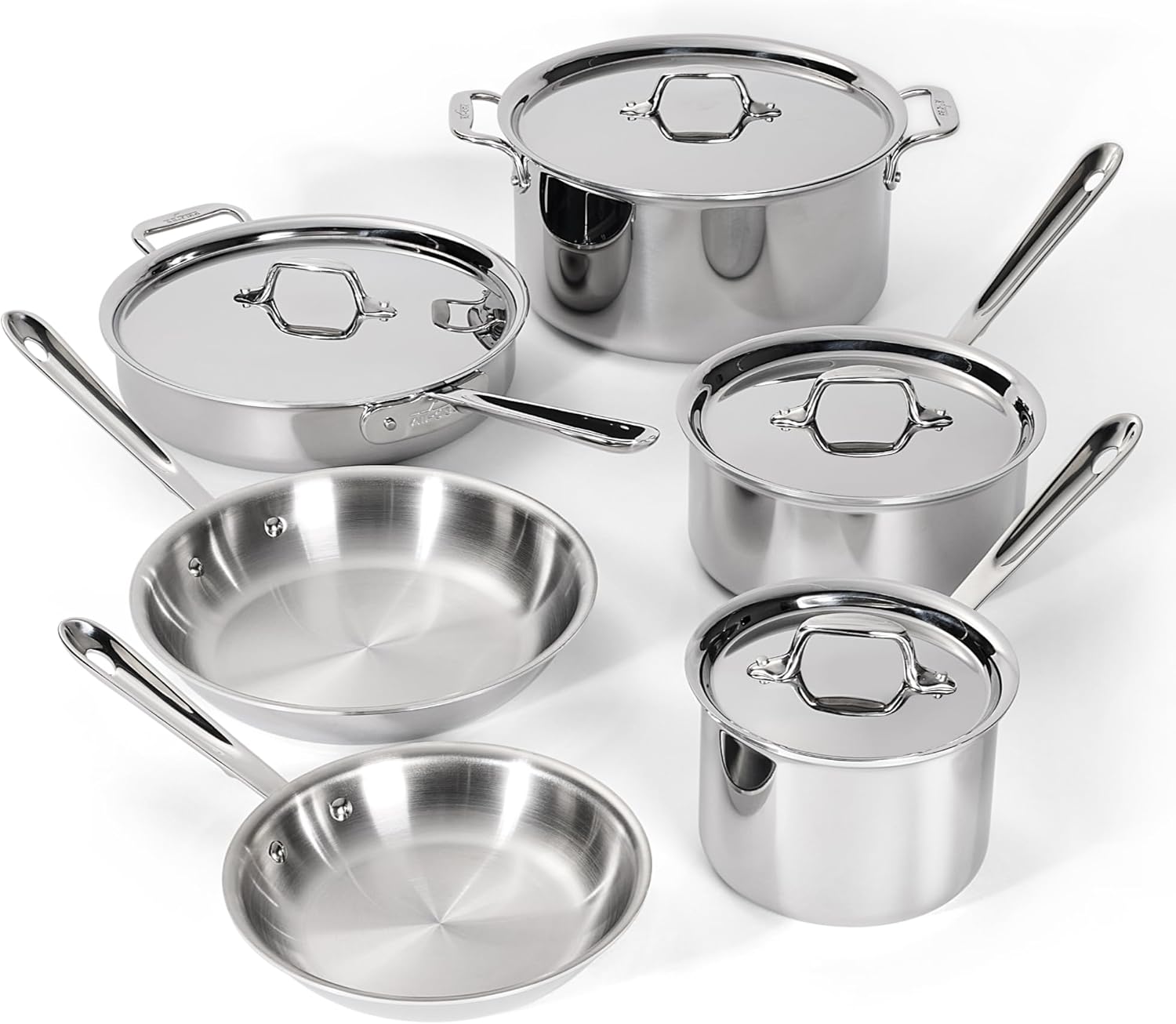
Gas stoves remain the preferred choice for professional chefs and home cooking enthusiasts alike, offering precise temperature control and instant heat adjustments. However, to truly harness the power of your gas range, you need cookware specifically optimized for this cooking method. After extensive research and analysis of hundreds of products available on Amazon.com, I’ve compiled this comprehensive guide featuring over 20 top-performing cookware options, complete with detailed reviews, pros and cons, buying guidance, and answers to your most pressing questions.
Why Gas Stove Cookware Matters
Before diving into our product reviews, it’s essential to understand why choosing the right cookware for your gas stove can transform your cooking experience. Gas stoves produce open flames that distribute heat differently than electric or induction cooktops. The cookware you select must effectively conduct and distribute this heat while withstanding the higher temperatures and direct flame contact that gas cooking delivers.
Best Cookware for Gas Stoves:The best gas stove cookware features materials with excellent heat conductivity, flat bottoms for stability over grates, and construction that prevents warping under high heat. Whether you’re searing a perfect steak, simmering a delicate sauce, or preparing a multi-course meal, having the right pots and pans makes all the difference between culinary success and disappointment.
Top 20+ Cookware Products for Gas Stoves: Detailed Reviews
1. All-Clad D3 Stainless Steel 10-Piece Cookware Set
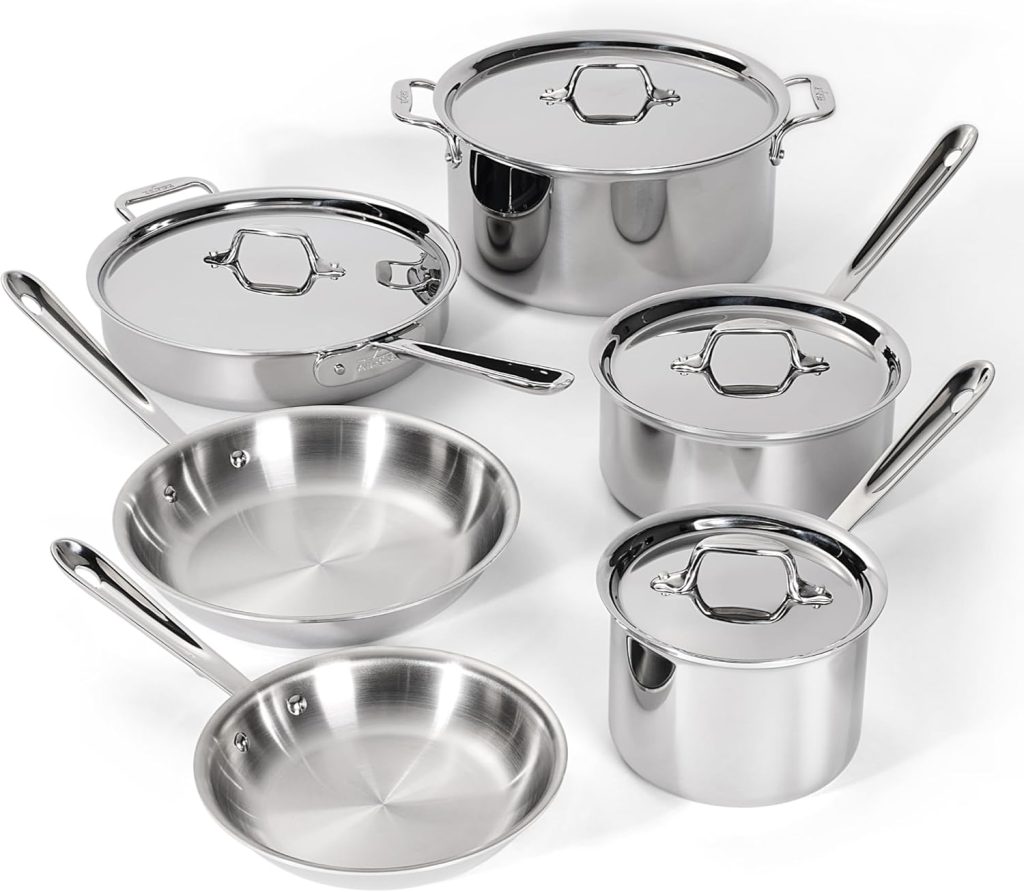
The All-Clad D3 represents the gold standard in tri-ply stainless steel construction, featuring a bonded aluminum core between two layers of stainless steel for superior heat distribution on gas stoves.
Pros:
- Exceptional heat conductivity and distribution eliminates hot spots
- Professional-grade construction that lasts decades
- Compatible with all cooktops including gas, induction, and oven
- Dishwasher safe for easy cleanup
- Elegant polished finish maintains its appearance over time
- Riveted stainless steel handles stay cool during stovetop cooking
- Made in the USA with superior quality control
Cons:
- Premium pricing makes it a significant investment
- Requires learning curve for temperature management
- Food can stick if not properly preheated with adequate fat
- Heavier than some alternatives, which may fatigue some users
- Shows fingerprints and water spots easily
Best For: Serious home cooks and professional chefs who want cookware that will last a lifetime and deliver consistently excellent results on gas stoves.
2. Lodge Cast Iron Skillet 12-Inch

This American-made cast iron classic has been a kitchen staple for over a century, offering unmatched heat retention and versatility on gas stovetops.
Pros:
- Superior heat retention perfect for gas stove cooking
- Pre-seasoned and ready to use straight from the box
- Naturally non-stick when properly maintained
- Oven-safe to any temperature your oven can reach
- Virtually indestructible with proper care
- Adds trace amounts of dietary iron to food
- Extremely affordable for the quality and longevity
- Can go from stovetop to oven to table seamlessly
Cons:
- Heavy weight can be challenging for some users
- Requires specific maintenance and seasoning protocols
- Not dishwasher safe and needs hand washing
- Reactive with acidic foods until well-seasoned
- Slow to heat initially but retains heat exceptionally well
Best For: Home cooks seeking affordable, versatile cookware that excels at high-heat gas stove cooking and develops character over time.
3. Cuisinart Multiclad Pro Stainless Steel 12-Piece Set

This tri-ply stainless steel collection offers professional performance at a more accessible price point, making it ideal for gas stove users on a budget.
Pros:
- Triple-ply construction provides excellent heat distribution
- Cool Grip handles remain comfortable during cooking
- Oven safe up to 550°F for finishing dishes
- Dishwasher safe for convenient cleanup
- Tapered rims for drip-free pouring
- Includes comprehensive range of essential pieces
- Tight-fitting lids seal in moisture and nutrients
- Lifetime warranty demonstrates manufacturer confidence
Cons:
- Handles may loosen over extended use
- Not quite as robust as premium competitors
- Some users report slight discoloration over time
- Lids are not oven-safe at temperatures above 350°F
Best For: Budget-conscious cooks who want tri-ply stainless steel performance without the All-Clad price tag.
4. Calphalon Contemporary Nonstick 11-Piece Set
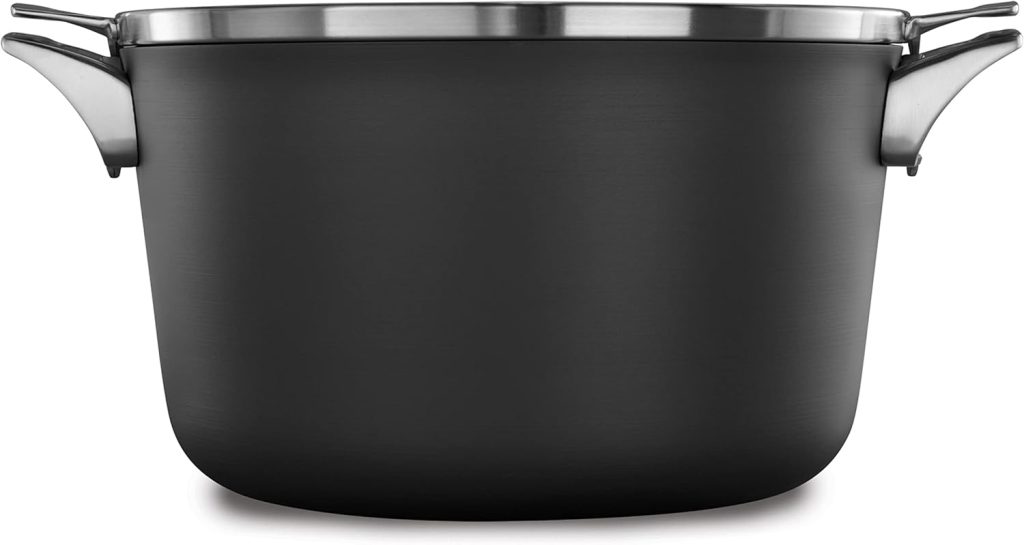
Featuring heavy-gauge aluminum construction with superior nonstick coating, this set is designed specifically for even heating on gas stoves.
Pros:
- Heavy-gauge aluminum heats quickly and evenly on gas
- PFOA-free nonstick coating for healthy cooking
- Stay-cool stainless steel handles
- Dishwasher safe nonstick surfaces
- Oven safe to 450°F
- Glass lids allow monitoring without lifting
- Minimal oil needed for cooking
- Easy food release and cleanup
Cons:
- Nonstick coating has limited lifespan with heavy use
- Metal utensils can damage the nonstick surface
- Not induction compatible
- Some users report coating degradation after 2-3 years
- Higher heat sensitivity than stainless steel
Best For: Cooks who prioritize easy cleanup and low-fat cooking on their gas stoves.
5. T-fal Ultimate Hard Anodized Nonstick 17-Piece Set
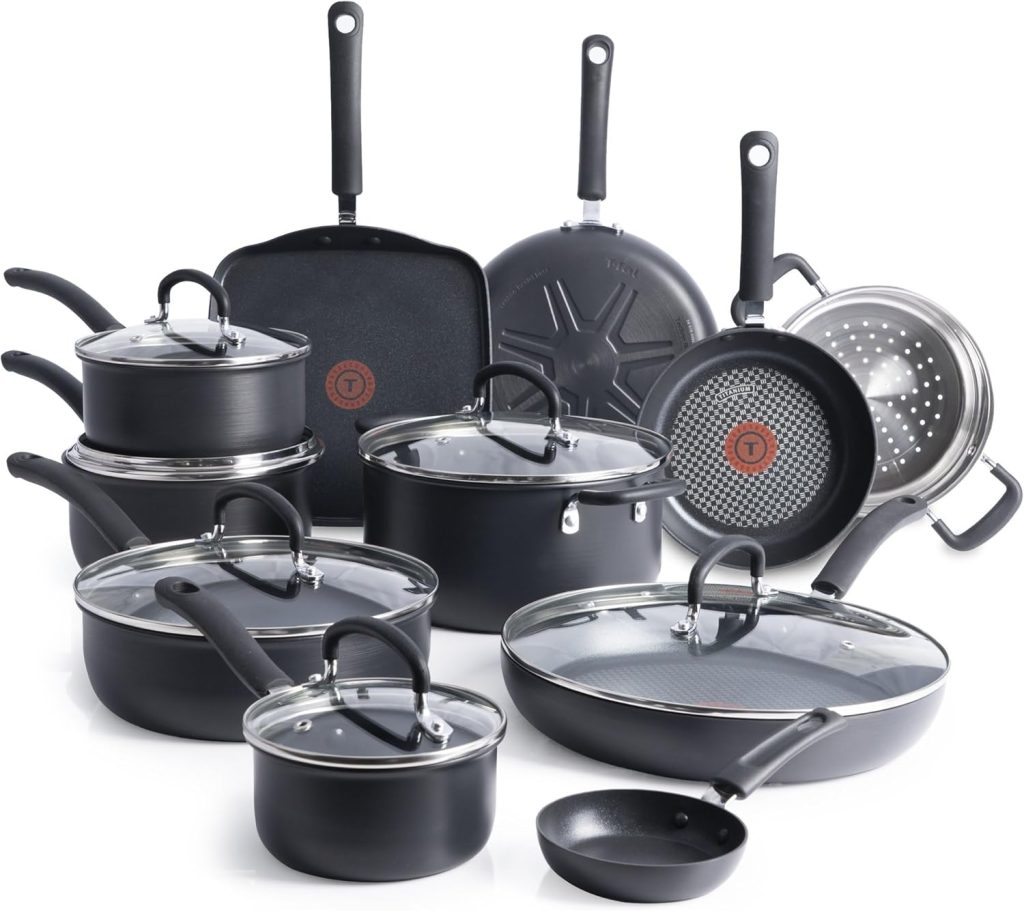
This comprehensive hard anodized aluminum set offers excellent durability and nonstick performance specifically engineered for gas stove compatibility.
Pros:
- Hard anodized construction is twice as hard as stainless steel
- Thermo-Spot indicator shows when pan is perfectly preheated
- PFOA, lead, and cadmium-free coating
- Riveted silicone handles stay cool on gas stovetops
- Oven safe to 400°F for versatile cooking
- Even heat distribution prevents hot spots
- Scratch-resistant interior and exterior
- Exceptional value with 17 pieces included
Cons:
- Not induction compatible despite aluminum core
- Hand washing recommended despite manufacturer claims
- Handles may show wear over extended periods
- Some pieces may be redundant for smaller households
Best For: Large families or those setting up a kitchen who need comprehensive cookware coverage at an affordable price.
6. Rachael Ray Cucina Hard Porcelain Enamel Nonstick 12-Piece Set

Combining rustic charm with modern functionality, this colorful set brings personality to your gas stove cooking.
Pros:
- Espresso-colored porcelain enamel exterior adds kitchen style
- Aluminum construction heats quickly on gas flames
- PFOA-free nonstick interior for easy cooking and cleaning
- Comfortable rubberized dual-riveted handles
- Shatter-resistant glass lids
- Oven safe to 400°F
- Wide variety of colors to match any kitchen
- Budget-friendly pricing for the set size
Cons:
- Exterior may chip or discolor with rough handling
- Not as durable as higher-end alternatives
- Hand washing recommended to preserve finish
- Nonstick coating longevity varies with use patterns
Best For: Home cooks who want functional, attractive cookware that complements their kitchen décor while performing well on gas stoves.
7. GreenPan Lima Ceramic Nonstick 12-Piece Set
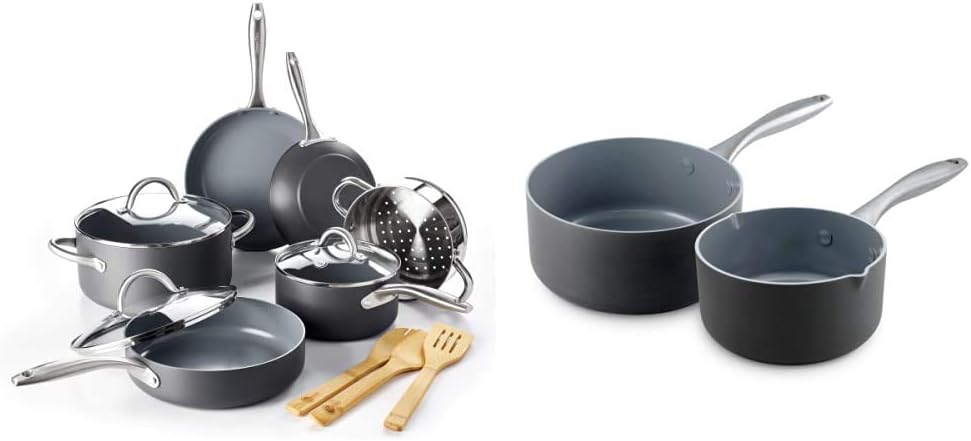
This eco-friendly ceramic nonstick collection offers healthy cooking without PFAS, PFOA, lead, or cadmium.
Pros:
- Thermolon ceramic nonstick derived from sand
- Never releases toxic fumes, even when overheated
- Hard anodized aluminum body for durability
- Oven and broiler safe to 600°F
- Dishwasher safe for easy cleanup
- Bakelite handles stay cool during cooking
- Scratch-resistant coating for longevity
- Environmentally conscious manufacturing process
Cons:
- Ceramic nonstick requires proper seasoning for best performance
- Higher price point than traditional nonstick
- Some users report food sticking after extended use
- Requires low to medium heat for optimal results
Best For: Health-conscious and environmentally aware cooks who want non-toxic cookware for their gas stoves.
8. Duxtop Whole-Clad Tri-Ply Stainless Steel 10-Piece Set

Professional-grade tri-ply construction at a competitive price makes this an excellent gas stove option for serious cooks.
Pros:
- Impact-bonded aluminum core for even heating
- Polished stainless steel cooking surface
- Oven safe to 550°F for maximum versatility
- Compatible with all cooktop types including induction
- Ergonomic handles with secure riveting
- Dishwasher safe stainless steel construction
- Encapsulated base prevents warping
- Lifetime warranty coverage
Cons:
- Learning curve for proper heating techniques
- Food can stick without proper preheating
- Fingerprints and water spots show easily
- Heavier than aluminum alternatives
Best For: Cooks seeking professional-quality stainless steel performance without paying premium brand prices.
9. Carote Nonstick Granite Cookware Set 11-Piece
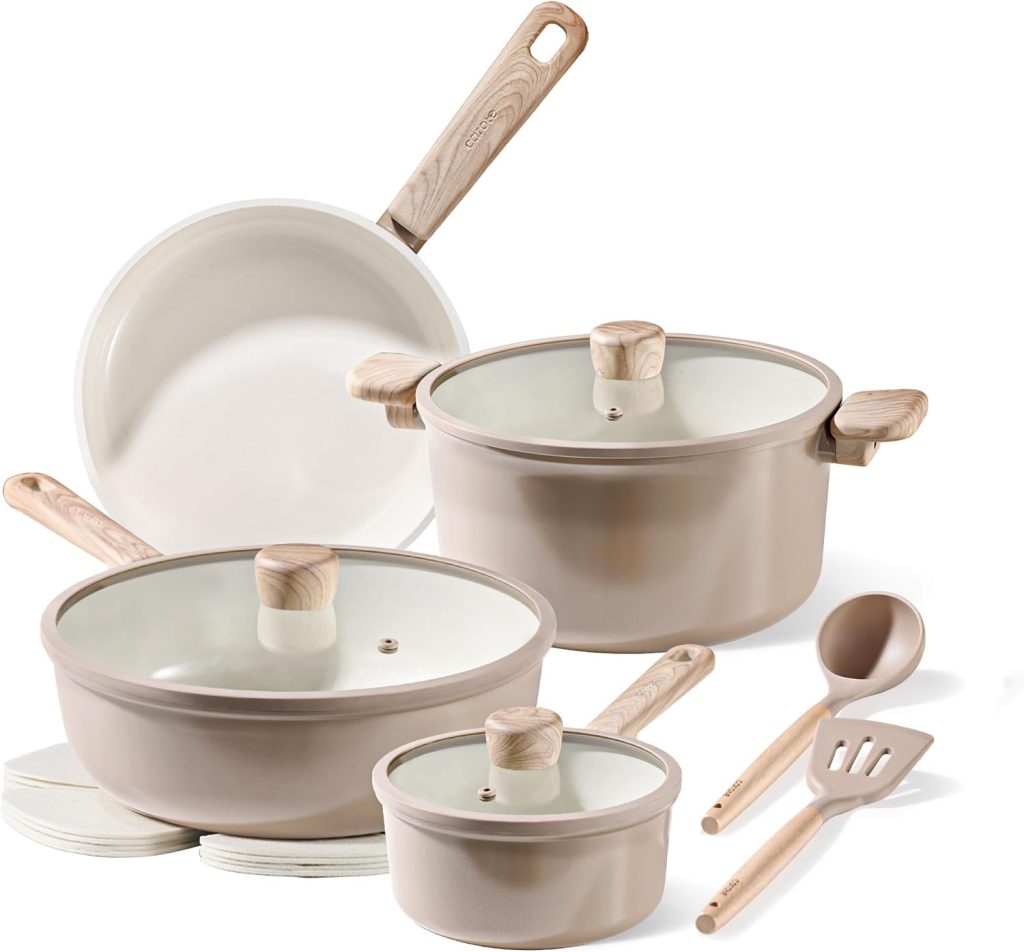
Featuring attractive granite-style coating, this affordable set delivers reliable nonstick performance on gas stoves.
Pros:
- Attractive granite-appearance nonstick coating
- PFOA-free and environmentally friendly materials
- Aluminum body heats evenly on gas flames
- Wooden-style handles remain cool to touch
- Lightweight design for easy handling
- Excellent value for budget-conscious buyers
- Multiple color options available
- Requires minimal oil for cooking
Cons:
- Coating durability is moderate with heavy use
- Not oven-safe limits versatility
- Hand washing strongly recommended
- May not withstand high-heat gas cooking long-term
- Handles may loosen over time
Best For: Budget-minded cooks or those furnishing temporary living spaces who need functional, attractive cookware.
10. Le Creuset Signature Cast Iron 5-Piece Set

The ultimate investment in enameled cast iron, Le Creuset brings French cooking tradition to your gas stove.
Pros:
- Superior heat distribution and retention on gas
- Vibrant enamel coating in numerous colors
- No seasoning required unlike traditional cast iron
- Oven safe to 500°F for braising and roasting
- Extremely durable construction lasts generations
- Non-reactive enamel interior works with acidic foods
- Tight-fitting lids lock in moisture
- Lifetime warranty demonstrates exceptional quality
Cons:
- Significant investment with premium pricing
- Very heavy weight can challenge some users
- Enamel can chip if dropped or mishandled
- Requires specific care instructions
- Heat gradually to prevent thermal shock
Best For: Serious cooks and collectors who appreciate heirloom-quality cookware and French cooking techniques on gas stoves.
11. Tramontina Tri-Ply Clad Stainless Steel 12-Piece Set
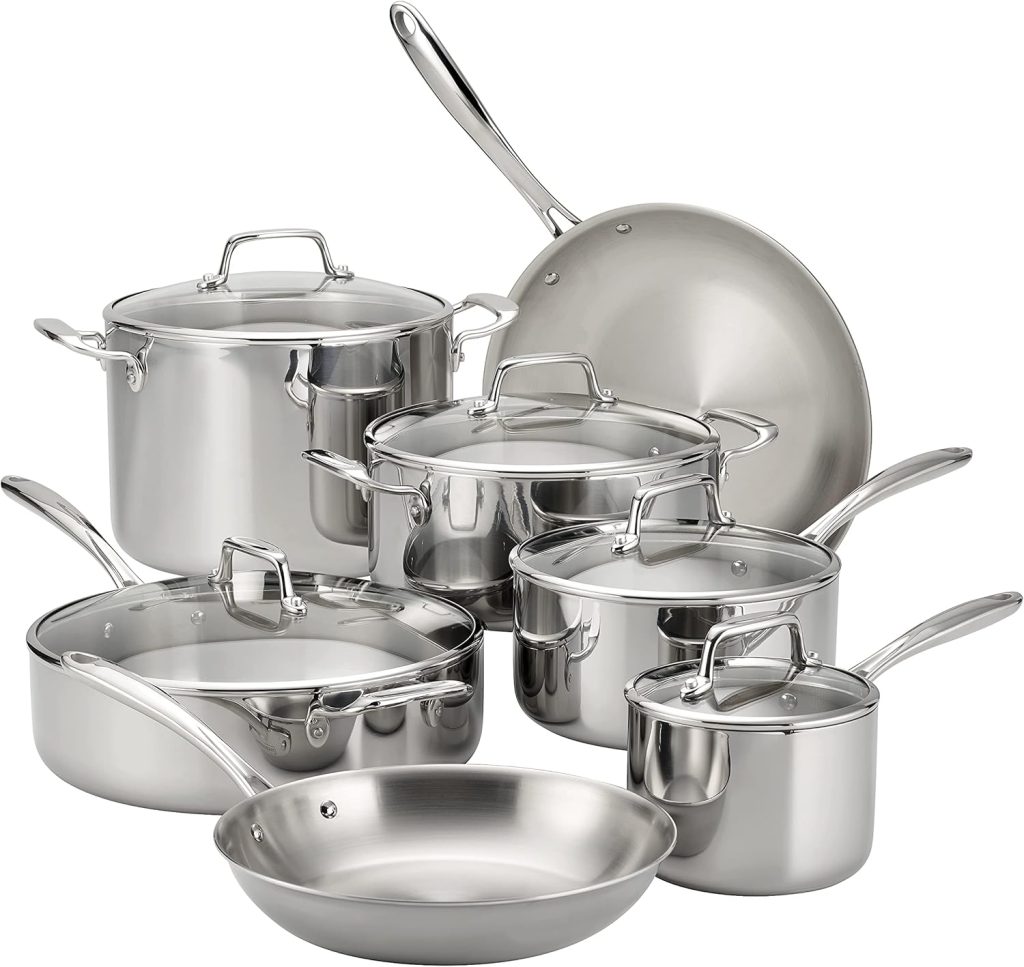
Brazilian-made craftsmanship meets American quality standards in this exceptional value tri-ply set.
Pros:
- Professional tri-ply construction throughout
- Precision-cast stainless steel handles
- Oven and broiler safe to 500°F
- Compatible with all cooktops including induction
- NSF certified for commercial use
- Lifetime warranty coverage
- Mirror-polished finish resists scratches
- Exceptional performance-to-price ratio
Cons:
- Less brand recognition than premium competitors
- Some pieces may develop slight discoloration
- Requires proper preheating techniques
- Not dishwasher safe despite durability
Best For: Value-conscious cooks who refuse to compromise on quality and want professional-grade results from their gas stove.
12. Gotham Steel 10-Piece Nonstick Frying Pan and Cookware Set
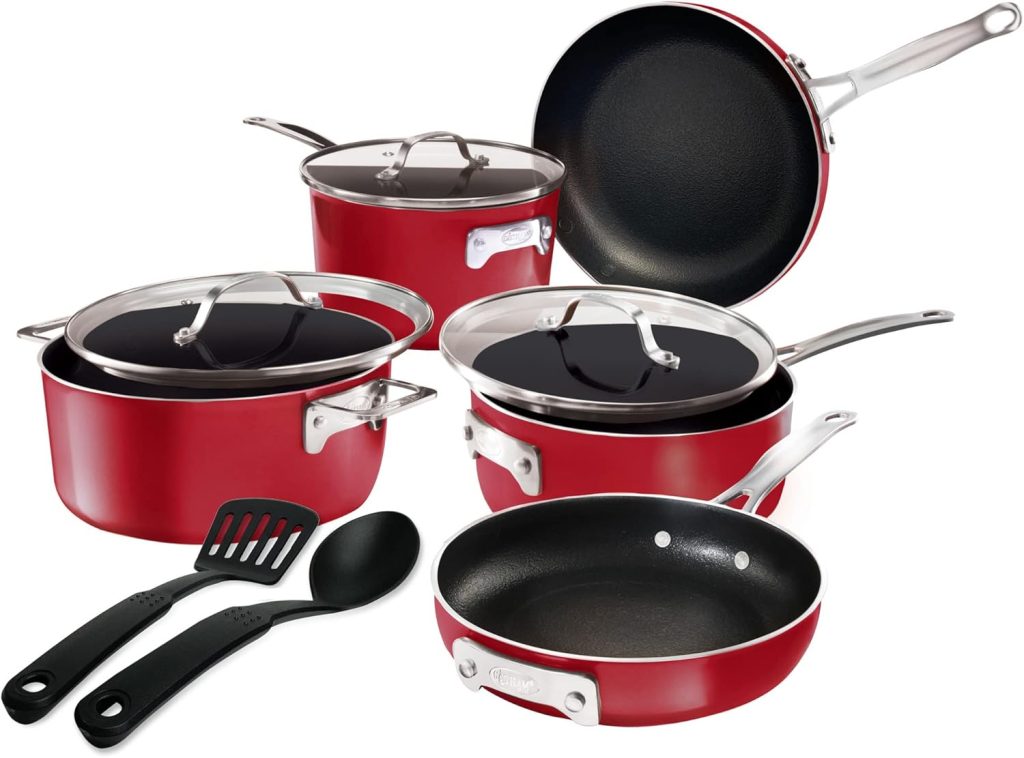
Featuring Ti-Cerama coating with titanium, this set promises ultra-nonstick performance for gas stove cooking.
Pros:
- Ceramic and titanium coating is extremely nonstick
- Metal utensil safe coating
- Lightweight aluminum construction
- Dishwasher safe for easy maintenance
- Oven safe to 500°F
- No butter or oil needed for most cooking
- TV-advertised with satisfaction guarantee
- Budget-friendly complete set
Cons:
- Coating durability varies significantly with use
- Not induction compatible
- High heat can degrade coating over time
- Some users report sticking after several months
- Handles may become loose with frequent use
Best For: Casual cooks seeking extremely easy cleanup and willing to replace cookware every few years.
13. Anolon Advanced Hard Anodized Nonstick 11-Piece Set
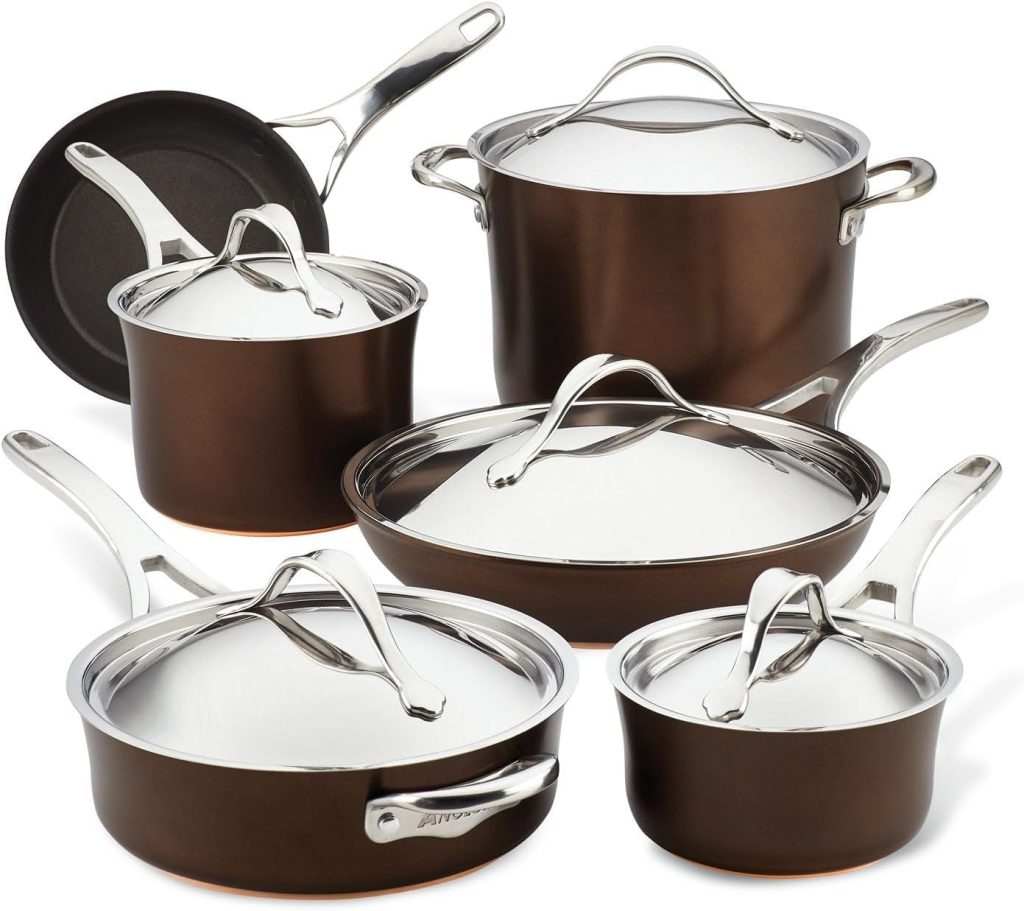
This hard anodized collection combines durability with nonstick convenience, specifically designed for gas stove performance.
Pros:
- Twice as hard as stainless steel construction
- Premium nonstick coating by Autograph
- Oven safe to 400°F for finishing techniques
- SureGrip handles with dual rivets
- Shatter-resistant glass lids
- Even heating prevents hot spots on gas
- Lifetime warranty on construction
- Professional-grade performance
Cons:
- Higher price point than basic nonstick sets
- Hand washing recommended for longevity
- Not induction compatible
- Coating may wear with metal utensil use
Best For: Professional home cooks who want the convenience of nonstick with the durability of hard anodized construction.
14. KitchenAid 3-Ply Base Brushed Stainless Steel 10-Piece Set
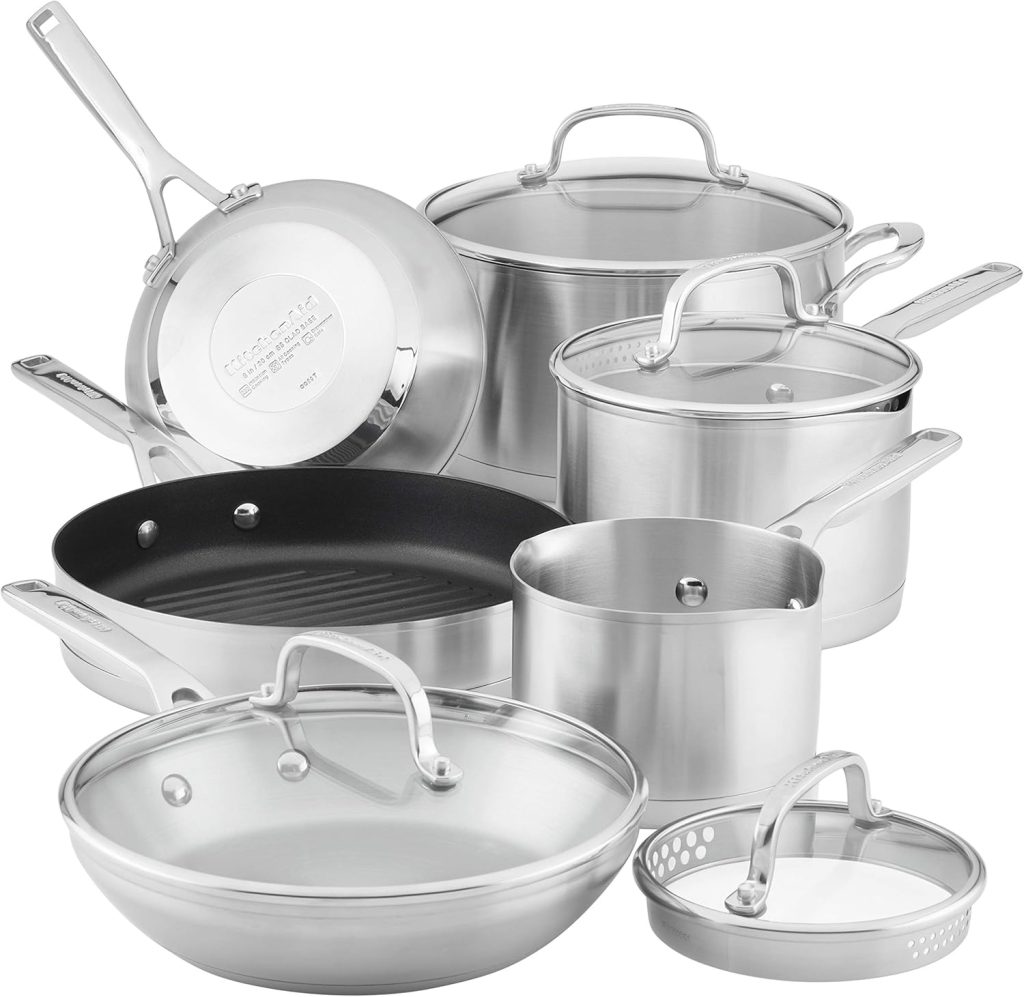
Known for quality appliances, KitchenAid delivers reliable cookware performance with this stainless steel collection.
Pros:
- Unique brushed exterior hides fingerprints
- Three-layer base distributes heat evenly
- Comfortable handles with satin finish
- Oven safe to 500°F
- Dishwasher safe stainless steel
- Compatible with all cooktops including gas
- Tight-fitting lids lock in heat and moisture
- Modern aesthetic complements any kitchen
Cons:
- Only base is multi-ply, not full tri-ply construction
- May develop hot spots on sidewalls
- Food can stick without proper preheating
- Premium pricing for partial tri-ply design
Best For: KitchenAid brand loyalists and those who prefer brushed finish that hides wear better than polished stainless.
15. Utopia Kitchen Pre-Seasoned Cast Iron Skillet Set (3-Piece)
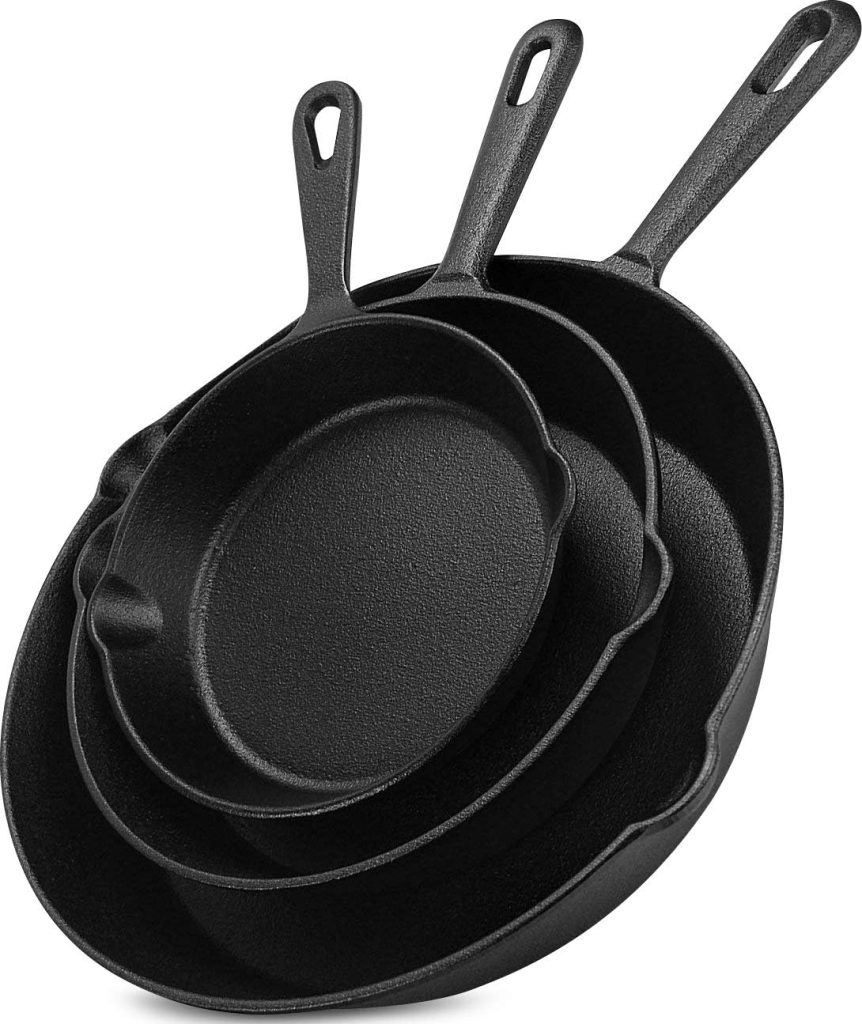
This affordable cast iron trio delivers exceptional value for gas stove enthusiasts exploring traditional cookware.
Pros:
- Includes 6-inch, 8-inch, and 10-inch skillets
- Pre-seasoned with vegetable oil
- Oven safe to any temperature
- Naturally nonstick when properly maintained
- Extremely affordable entry point
- Excellent heat retention for gas cooking
- Durable construction lasts generations
- Versatile for stovetop, oven, or campfire
Cons:
- Requires regular seasoning maintenance
- Heavier than modern alternatives
- Not dishwasher safe
- Reactive with acidic foods until well-seasoned
- Smaller sizes have limited capacity
Best For: Budget-conscious cooks wanting to experience traditional cast iron cooking on their gas stoves without major investment.
16. Farberware Millennium Stainless Steel 10-Piece Set
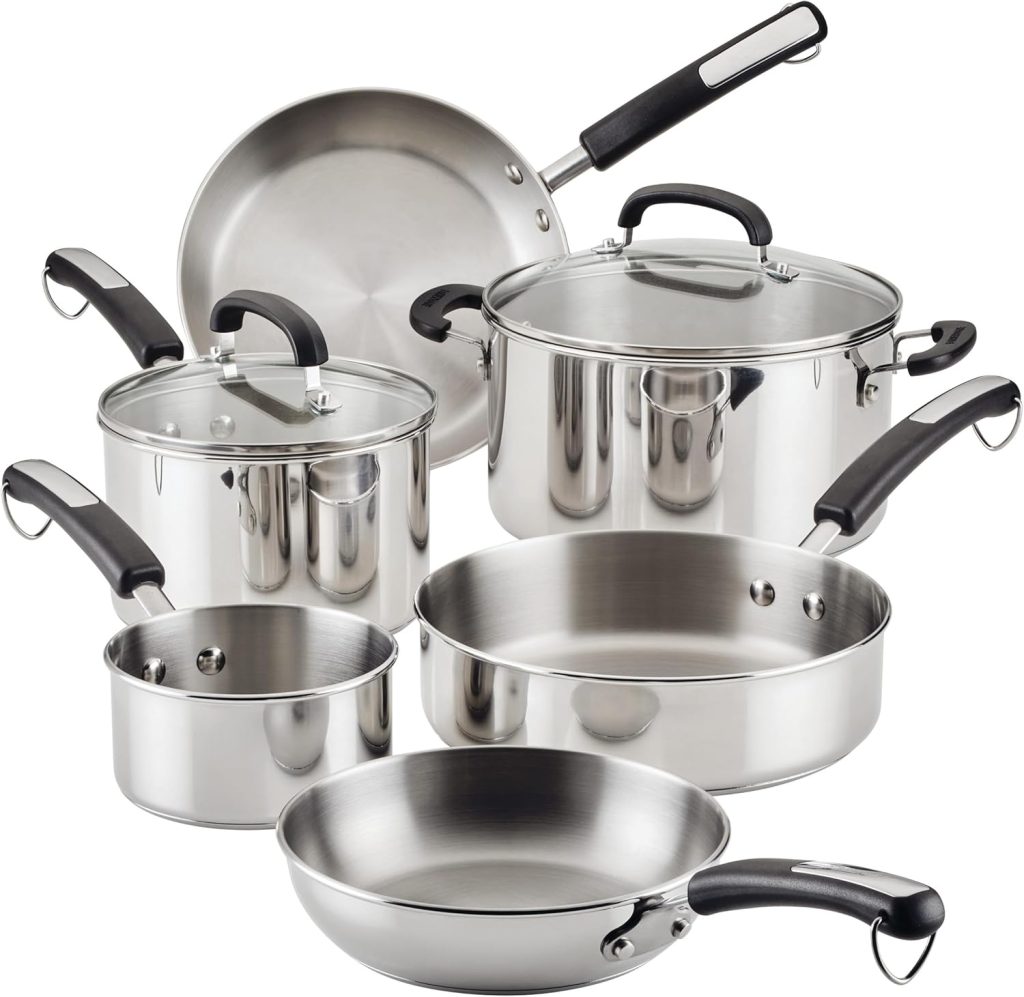
A long-trusted American brand delivers solid performance at an accessible price for gas stove users.
Pros:
- Full cap base with aluminum core
- Mirror-finish stainless steel appearance
- Oven safe to 350°F
- Dishwasher safe for convenience
- Comfortable ergonomic handles
- Included lids fit multiple pieces
- Lifetime warranty on construction
- Entry-level pricing for stainless steel
Cons:
- Only base has aluminum core, not full body
- Lower oven-safe temperature than competitors
- May develop hot spots on sidewalls
- Quality control can be inconsistent
Best For: First-time stainless steel buyers or those on tight budgets who want basic functionality on gas stoves.
17. Circulon Symmetry Hard-Anodized Nonstick 11-Piece Set
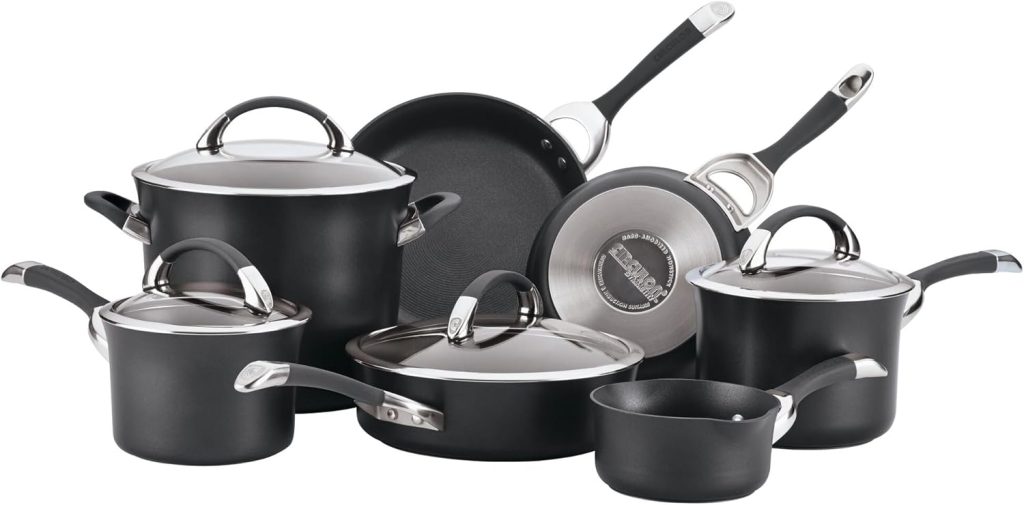
Featuring unique raised circle technology, Circulon’s innovation enhances nonstick performance and durability on gas stoves.
Pros:
- TOTAL Food Release System with raised circles
- Hard anodized construction for durability
- Metal utensil safe nonstick coating
- Oven safe to 400°F
- Rubberized stainless steel handles
- Shatter-resistant glass lids
- Lifetime warranty coverage
- Even heating on gas flames
Cons:
- Raised circles can trap food particles
- Requires thorough cleaning in crevices
- Not induction compatible
- Hand washing recommended despite claims
- May show wear in high-use areas
Best For: Cooks who want enhanced nonstick durability and are willing to invest in proper cleaning routines.
18. Stone & Beam Traditional Stainless Steel 12-Piece Set
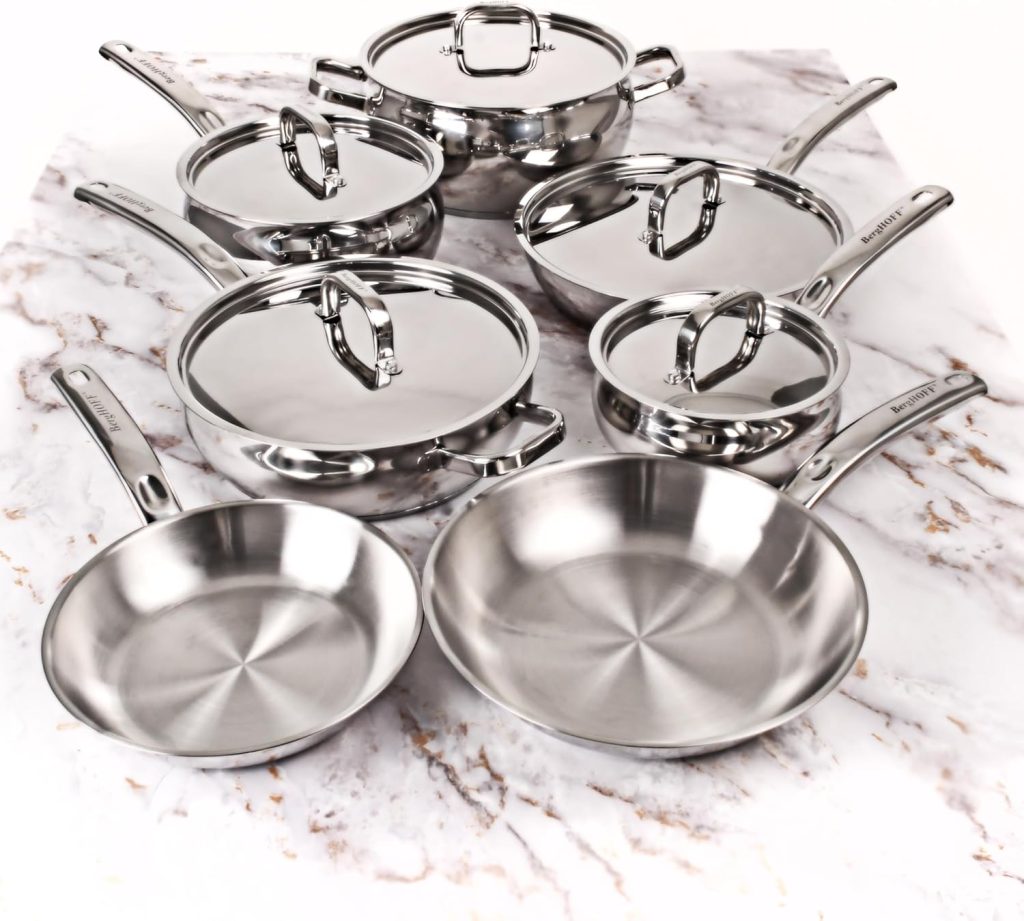
Amazon’s house brand delivers surprising quality at competitive pricing for gas stove users.
Pros:
- Aluminum core for heat distribution
- Polished stainless steel construction
- Oven safe to 500°F
- Dishwasher safe for easy care
- Comfortable stay-cool handles
- 1-year warranty included
- Amazon’s customer service backing
- Excellent value proposition
Cons:
- Limited brand history and reputation
- Only base has aluminum core
- May not match premium brand durability
- Some quality control variations reported
Best For: Amazon Prime members seeking convenient, reliable cookware with hassle-free returns.
19. Granite Stone Diamond 10-Piece Nonstick Cookware Set

Infused with diamond particles, this set promises exceptional nonstick durability for gas stove cooking.
Pros:
- Triple-layer granite coating with diamonds
- Metal utensil safe surface
- Lightweight aluminum construction
- Oven safe to 500°F
- PFOA-free healthy cooking
- Dishwasher safe cleanup
- Stay-cool handles
- Budget-friendly pricing
Cons:
- Coating longevity varies with use intensity
- Not induction compatible
- Requires lower heat than marketing suggests
- Some users report coating degradation
- Hand washing extends lifespan significantly
Best For: Budget-conscious cooks wanting enhanced nonstick durability without premium pricing.
20. Copper Chef Titan Pan 5-Piece Set
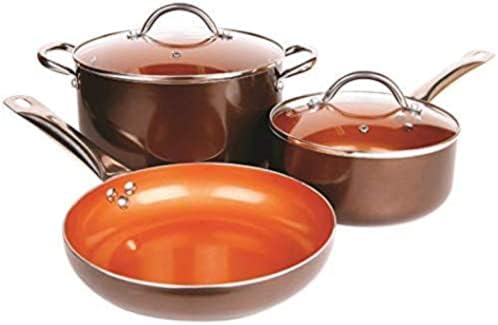
Featuring titanium-reinforced coating, these versatile pans excel at high-heat gas stove cooking.
Pros:
- Titanium-reinforced nonstick coating
- Stainless steel induction plate base
- Compatible with all cooktops including gas
- Oven safe to 850°F (pan only)
- Unique square shape maximizes capacity
- Dishwasher safe construction
- No PFOA or PTFE
- As-seen-on-TV backing
Cons:
- Gimmicky marketing claims
- Mixed reviews on long-term durability
- Higher pricing than performance justifies
- Handles heat up during extended cooking
- Square shape may not fit all burners
Best For: Those intrigued by infomercial products seeking versatile, high-heat capable cookware for gas stoves.
21. Cuisinart Chef’s Classic Stainless Steel 11-Piece Set

An entry-level stainless steel option that delivers basic functionality for gas stove cooking without breaking the bank.
Pros:
- Mirror-finish stainless steel
- Aluminum encapsulated base
- Oven safe to 500°F
- Dishwasher safe convenience
- Cool Grip handles
- Tapered rim for pouring
- Lifetime warranty
- Very affordable pricing
Cons:
- Thin construction compared to tri-ply
- Only base has aluminum, not full body
- May develop hot spots
- Food sticks easily without proper technique
- Handle attachment may weaken over time
Best For: Budget-conscious beginners learning to cook on gas stoves who plan to upgrade later.
22. Sensarte Nonstick Cookware Set 13-Piece

Swiss-inspired design meets affordability in this comprehensive nonstick collection for gas stoves.
Pros:
- SGS-approved PFOA-free nonstick coating
- Bakelite handles stay cool
- Detachable handles for compact storage
- Oven safe to 302°F (removable handles)
- Wooden utensil included
- Attractive color options
- Excellent price-to-piece ratio
- Lightweight for easy handling
Cons:
- Lower oven-safe temperature
- Detachable handles may cause anxiety
- Not dishwasher safe
- Coating durability is moderate
- Handle mechanism may wear over time
Best For: Apartment dwellers or RV owners who need space-saving cookware solutions for gas cooking.
Comprehensive Buying Guide for Gas Stove Cookware
Selecting the perfect cookware for your gas stove requires understanding several critical factors that influence cooking performance, durability, and value. This detailed buying guide will help you make informed decisions based on your cooking style, budget, and preferences.
Material Matters: Understanding Your Options
Stainless Steel Stainless steel remains the professional chef’s choice for gas stoves, offering unparalleled durability and versatility. The best stainless steel cookware features tri-ply or multi-ply construction, sandwiching an aluminum or copper core between stainless steel layers. This design combines stainless steel’s non-reactive surface and durability with superior heat conductivity from the core material.
For gas stoves specifically, tri-ply stainless steel excels because it distributes the concentrated heat from gas flames evenly across the cooking surface and up the sides. This prevents hot spots and allows for precise temperature control. While stainless steel requires proper preheating and adequate fat to prevent sticking, mastering these techniques results in beautiful fond development and exceptional searing capabilities.
Cast Iron Traditional cast iron and enameled cast iron both perform exceptionally well on gas stoves. Cast iron’s superior heat retention makes it ideal for high-heat cooking techniques like searing steaks or frying chicken. Once properly heated, cast iron maintains consistent temperatures even when cold food is added, making it perfect for achieving restaurant-quality results at home.
The open flame of gas stoves allows cast iron to heat evenly, though the process takes longer than with other materials. Enameled cast iron offers the same thermal benefits while eliminating seasoning maintenance and allowing acidic cooking without reactivity concerns. Both types are oven-safe to any temperature, enabling seamless stovetop-to-oven cooking.
Hard-Anodized Aluminum Created through an electrochemical process, hard-anodized aluminum is twice as hard as stainless steel while maintaining aluminum’s excellent heat conductivity. For gas stoves, this material offers the perfect balance of quick heating response and even temperature distribution. The surface is naturally stick-resistant even without nonstick coatings, though most hard-anodized cookware includes additional nonstick layers for enhanced performance.
The dark color of hard-anodized aluminum makes it ideal for gas stoves because it doesn’t show flame discoloration like lighter materials might. It’s also scratch-resistant and highly durable, standing up to metal utensils better than standard aluminum while remaining lighter than cast iron or multi-ply stainless steel.
Nonstick Aluminum Lightweight aluminum with nonstick coating provides the easiest cooking and cleanup experience on gas stoves. The excellent heat conductivity of aluminum ensures responsive temperature control, while nonstick surfaces allow cooking with minimal fats and effortless food release. Modern PFOA-free coatings are safe when used properly, though they require lower heat settings than other materials.
For gas stoves, choose heavy-gauge nonstick aluminum rather than thin versions, as heavier construction prevents warping from direct flame contact and provides better heat distribution. While nonstick coatings eventually wear out, high-quality versions can last several years with proper care, making them worthwhile for specific cooking tasks.
Copper While less common due to cost, copper cookware offers the absolute best heat conductivity of any material. For gas stoves, this means instantaneous response to temperature adjustments and perfectly even heating. Professional chefs prize copper for delicate sauces and precise temperature control. Most copper cookware features a stainless steel cooking surface with copper exterior, combining beauty with functionality while eliminating copper’s reactivity concerns.
Construction Quality Indicators
Ply Construction The term “ply” refers to layers of metal bonded together. Tri-ply cookware bonds three layers—typically stainless steel, aluminum, and stainless steel—throughout the entire pot or pan, including the sides. This full-body construction provides superior heat distribution compared to disk-bottom designs where only the base contains multiple layers.
For gas stoves, full tri-ply or multi-ply construction is highly beneficial because gas flames heat not just the bottom but also climb the sides of cookware. Quality ply construction ensures even heating throughout, preventing hot spots and enabling better cooking control. Look for brands that specify “fully clad” or “tri-ply throughout” rather than just “tri-ply base.”
Handle Design and Attachment Handles must stay cool on gas stoves where flames can extend beyond the pan bottom. Look for handles made from materials with low heat conductivity, such as stainless steel with air gaps, silicone, or phenolic resins. The attachment method matters significantly—rivets provide the strongest, most permanent connection, while welded handles eliminate crevices where food can trap but may eventually weaken.
For gas cooking, longer handles help keep your hands farther from the flame, and helper handles on larger pieces assist with safe maneuvering of heavy pots. Avoid cookware with all-metal handles unless they feature stay-cool technology, as they can become dangerously hot over gas flames.
Base Design The cookware base must sit flat on gas stove grates for stability and efficient heat transfer. Look for thick, heavy bases that won’t warp under high heat—typically at least 3mm thick for aluminum and 2.5mm for stainless steel. The base should be slightly concave when cold, as thermal expansion causes it to flatten when heated, ensuring full contact with the grate.
For gas stoves specifically, the base exterior finish matters less than with electric stoves since there’s no direct surface contact. However, a polished or brushed finish helps reflect heat back toward the pan rather than absorbing it, improving efficiency slightly.
Lid Quality Quality lids create proper seals to trap moisture and heat, essential for braising, simmering, and steaming on gas stoves. Glass lids allow visual monitoring without lifting, reducing heat loss. Look for tempered glass that won’t shatter from thermal shock, with steam vents to prevent boil-overs. Stainless steel lids, while not transparent, are more durable and often lighter.
The lid should fit snugly without requiring force, with a small gap for steam escape. For gas cooking, ensure lids have heat-resistant handles or knobs that won’t transfer excessive heat from the steam inside.
Size and Capacity Considerations
Essential Sizes for Most Kitchens A well-equipped gas stove kitchen needs variety: an 8-inch skillet for single servings or small tasks, a 10 or 12-inch skillet for main dishes, a 3-quart saucepan for sides and sauces, a 5 to 6-quart sauté pan or braiser for one-pot meals, and an 8-quart stockpot for soups, pasta, and batch cooking.
Gas stoves can accommodate larger cookware than many electric cooktops because burner sizes vary more. Consider your typical serving sizes—cooking for two requires different capacities than feeding a family of six. Oversized cookware on small burners wastes energy and heats unevenly, while undersized pieces on large burners can damage handles and cause uneven cooking.
Matching Cookware to Burner Size Gas stoves typically feature burners ranging from small simmer burners to high-output burners exceeding 15,000 BTUs. Match cookware base diameter to burner size for optimal performance. The flame should just reach the edge of the pan base without extending up the sides, which wastes energy and can damage handles or coatings.
For most efficient gas cooking, the cookware base should be equal to or slightly larger than the burner grate diameter. Using significantly oversized pieces on small burners results in cold spots and uneven cooking, while small pans on large burners create dangerous heat concentration and handle scorching.
Safety Features for Gas Cooking
Flame-Resistant Materials All reputable cookware suitable for gas stoves uses flame-resistant materials, but verify that handles, knobs, and any decorative elements can withstand open flame exposure. Some lower-quality nonstick cookware features plastic elements that can melt if flames extend beyond the pan base.
Phenolic and silicone handles, stainless steel with heat-resistant coatings, and cast iron handles are all appropriate for gas cooking. Avoid cookware with wooden handles unless explicitly rated for open flame use, as prolonged exposure can cause charring or loosening of adhesives.
Stability on Grates Gas stove grates create an uneven surface unlike flat electric or induction cooktops. Cookware must have a balanced, flat bottom that sits securely without rocking. Test potential purchases for stability—rounded or warped bottoms can tip when stirring, creating dangerous spill and burn risks.
Heavier cookware generally provides better stability on gas grates, though excessively heavy pieces may be difficult to maneuver safely. The cookware base should be wide enough to span the grate bars securely, typically at least 6 inches for skillets and saucepans.
Heat-Related Considerations Gas stoves can achieve higher heat output than most electric cooktops, reaching temperatures that may damage lower-quality cookware. Verify the oven-safe temperature rating even for stovetop-only use, as this indicates the materials’ overall heat tolerance. Quality cookware should withstand at least 400°F for stovetop use, with 500°F or higher preferred.
Some nonstick coatings release harmful fumes when overheated beyond their rated temperature. For gas stoves where high heat is easily achieved, choose PFOA-free nonstick with ratings of at least 400°F, or opt for alternative materials like stainless steel or cast iron for high-heat applications.
Maintenance and Durability Factors
Cleaning Requirements Consider your willingness to hand-wash versus desire for dishwasher convenience. While many manufacturers claim dishwasher safety, hand washing extends the life of virtually all cookware. For gas stoves, the exterior shows flame discoloration more readily, requiring different cleaning approaches depending on material.
Stainless steel develops rainbow discoloration from gas flames that requires Bar Keeper’s Friend or similar cleaners. Hard-anodized and enameled surfaces hide discoloration better. Nonstick coatings simplify interior cleaning but may develop exterior stains. Cast iron requires immediate drying and occasional reseasoning. Factor these maintenance realities into your purchase decision based on your lifestyle and patience for cookware care.
Expected Lifespan Investment in quality cookware pays dividends over time. Professional-grade stainless steel can last 20-30 years or more with proper care. Cast iron famously lasts generations, often improving with age. Hard-anodized aluminum typically provides 10-15 years of service. Nonstick cookware has the shortest lifespan at 3-5 years with regular use, though premium versions may last longer.
For gas stoves specifically, durability expectations should be slightly lower due to higher heat exposure and potential flame contact with surfaces beyond the base. Quality construction becomes even more important when gas cooking, as cheaper alternatives may warp, discolor, or degrade more quickly.
Warranty Coverage Manufacturer warranties indicate confidence in product durability. Lifetime warranties on construction defects (not normal wear) are common for premium stainless steel and hard-anodized cookware. Mid-range products typically offer 10-year to lifetime coverage, while budget nonstick may include only 1-2 years.
Read warranty terms carefully—some exclude commercial use, dishwasher damage, or normal wear like staining. For gas stove use, verify that flame discoloration isn’t excluded from warranty coverage. Keep purchase receipts and register products when required to maintain warranty validity.
Budget Considerations and Value Assessment
Price Ranges and What They Mean Cookware pricing spans from under $50 for complete nonstick sets to over $500 for single premium pieces. Budget sets ($50-150) typically feature thin construction, disk bottoms, and lower-quality materials suitable for occasional cooking. Mid-range options ($150-400) offer better construction, often including tri-ply bases or full hard-anodized aluminum, appropriate for regular home cooking.
Premium cookware ($400-1000+) features full tri-ply or copper construction, professional-grade performance, and exceptional durability. For gas stoves, investing in quality provides better heat control, more even cooking, and longer lifespan. However, expensive doesn’t always mean better—some mid-range brands offer excellent value by focusing on performance over prestige.
Set Versus Individual Pieces Cookware sets provide cost savings compared to buying pieces individually, often including 10-14 pieces with lids and utensils counting toward the total. Evaluate whether you’ll use all included pieces—some sets include sizes or shapes you may never need, reducing actual value.
Many experienced cooks recommend building a collection gradually, purchasing individual pieces of high quality rather than compromising with a set. For gas stoves, prioritize a quality 12-inch skillet, 3-quart saucepan, and 6-quart pot as your foundation, adding specialized pieces as needed and budget allows.
Cost Per Year Calculation Evaluate cookware investment by dividing purchase price by expected years of use. A $300 stainless steel set lasting 20 years costs $15 per year, while a $100 nonstick set lasting 3 years costs $33 per year. This perspective reveals that quality cookware often provides better long-term value despite higher upfront costs.
For gas stove cooking where thermal stress is higher, durability becomes even more critical. Investing in quality construction that withstands intense heat pays off over time, both in replacement cost savings and consistently superior cooking performance. Consider your cooking frequency—daily cooks benefit more from premium investment than occasional weekend chefs.
Sales and Timing Strategies Major retailers offer significant cookware discounts during Black Friday, Cyber Monday, and post-holiday sales, often 30-50% off regular prices. Amazon Prime Day in July also features substantial cookware deals. Many brands offer discounts during back-to-school season (August-September) and wedding season (May-June).
Sign up for manufacturer newsletters and Amazon price alerts for desired items. Warehouse deals and open-box items can provide substantial savings on premium brands with minimal cosmetic imperfections. For gas stove users willing to wait for the right deal, patience can make professional-grade cookware surprisingly affordable.
Special Considerations for Different Cooking Styles
For Searing and High-Heat Cooking Gas stoves excel at high-heat techniques, making cast iron, carbon steel, and thick stainless steel ideal choices. These materials can handle the intense temperatures required for perfect steak crusts and wok cooking. Avoid thin aluminum and most nonstick cookware for frequent high-heat applications, as they may warp or degrade.
Look for cookware with oven-safe ratings of at least 500°F to enable finishing techniques like reverse searing. Heavy construction prevents warping under intense gas flames, while materials with excellent heat retention maintain temperatures when cold food is added. For serious high-heat cooking on gas, cast iron skillets and carbon steel woks are unmatched.
For Delicate Sauces and Precise Temperature Control Copper and tri-ply stainless steel provide the responsive temperature control needed for temperamental sauces like hollandaise or caramel. Gas stoves allow instant heat adjustment, and these materials respond immediately to changes, preventing scorching or curdling.
Choose saucepans with rounded corners for easy whisking and tapered rims for clean pouring. Lighter-colored interiors help monitor sauce color development. While nonstick prevents sticking, it inhibits fond development essential for pan sauces, making stainless steel preferable for French cooking techniques on gas stoves.
For One-Pot Meals and Braising Large, heavy Dutch ovens or braisers distribute heat evenly for long, slow cooking on gas stoves. Enameled cast iron is ideal, offering excellent heat retention, oven safety to any temperature, and non-reactive surfaces for acidic ingredients like tomatoes or wine.
For gas cooking, choose Dutch ovens with 5-7 quart capacity for family meals. Tight-fitting lids trap moisture during braising, while the heavy construction prevents hot spots during stovetop browning. The ability to move seamlessly from stovetop to oven makes these pieces invaluable for gas stove cooking.
For Everyday Quick Meals Quality nonstick skillets and hard-anodized sauté pans make weeknight cooking on gas stoves effortless. The quick heat response of aluminum construction combined with easy cleanup suits busy lifestyles. Choose PFOA-free coatings rated for at least 400°F to withstand occasional high heat.
For gas stoves, heavier-gauge nonstick prevents warping and provides better heat distribution than cheap alternatives. While these pieces require eventual replacement, they serve an important role for eggs, pancakes, and delicate fish where sticking would be problematic. Keep at least one quality nonstick piece for these specific applications.
Environmental and Health Considerations
PFOA and PTFE Concerns Traditional nonstick coatings contain PFOA (perfluorooctanoic acid) and PTFE (polytetrafluoroethylene, known as Teflon). While PFOA has been phased out by most manufacturers since 2015, older cookware may still contain it. PTFE itself is considered safe at normal cooking temperatures but releases potentially harmful fumes above 500°F.
For gas stoves where high heat is easily achieved, these concerns are particularly relevant. Choose explicitly PFOA-free nonstick, or consider ceramic nonstick alternatives. For high-heat cooking, opt for uncoated materials like stainless steel or cast iron. Never heat empty nonstick pans on gas stoves, as temperatures can spike dangerously high within minutes.
Ceramic and Alternative Coatings Ceramic nonstick coatings, made from sand-derived minerals, offer non-toxic alternatives to traditional nonstick. They withstand higher temperatures (typically up to 600°F) and never release toxic fumes, even when overheated on gas stoves. However, ceramic coatings may not last as long as PTFE and require proper seasoning for optimal performance.
Other alternatives include diamond-infused coatings and titanium-reinforced surfaces, which promise enhanced durability. While these innovations show promise, traditional materials like well-seasoned cast iron or properly used stainless steel remain the most proven non-toxic options for gas stove cooking.
Manufacturing and Sustainability Consider the environmental impact of cookware production and disposal. Cast iron and stainless steel can last generations, reducing waste significantly. They’re also recyclable at end of life. Aluminum production is energy-intensive but the material is highly recyclable. Nonstick coatings create environmental concerns both in manufacturing and disposal.
Some manufacturers prioritize sustainable practices, using recycled materials, responsible mining, and reducing chemical use. Brands like GreenPan emphasize eco-friendly production. For environmentally conscious gas stove users, investing in durable, long-lasting cookware from responsible manufacturers minimizes environmental impact over time.
Testing and Evaluating Your Cookware
Heat Distribution Test To evaluate heat distribution on your gas stove, sprinkle flour evenly across a dry pan and heat over medium flame. The flour will brown where heat concentrates, revealing hot spots. Quality cookware shows even browning across the entire surface. This simple test helps you understand each piece’s performance characteristics and adjust cooking techniques accordingly.
For new cookware, perform this test before first use to identify any issues while return windows are open. Significant hot spots indicate poor construction unsuitable for gas cooking. Minor variations are normal and can be managed by adjusting food placement or flame size.
Warping Assessment Place cookware on a flat surface like a glass cooktop or granite counter. Quality pieces sit flat without rocking. Any wobbling indicates warping that worsens on gas stoves, causing uneven heating and instability. Warped cookware should be replaced, as the problem only deteriorates with continued use.
To prevent warping, never subject hot cookware to sudden temperature changes (thermal shock), such as running cold water into a hot pan. Allow cookware to cool gradually, and avoid maximum heat settings unless absolutely necessary for the cooking task.
Handle Temperature Monitoring During a typical cooking session on your gas stove, periodically touch handles to assess heat transfer. Handles should remain comfortable enough to grasp bare-handed, though hot pads are always recommended for safety. If handles become too hot to touch within 10-15 minutes of cooking, the design is inadequate for gas cooking.
Excessively hot handles indicate poor heat insulation or flames extending beyond the pan base. Adjust burner size or flame height to prevent damage. Some handle heating is normal with prolonged cooking, but quality gas-stove cookware manages this effectively through thoughtful design.
Storage and Organization Solutions
Space-Saving Strategies Cookware storage challenges affect purchase decisions, especially in smaller kitchens. Nesting sets maximize space efficiency, with pieces fitting inside each other. Hang frequently used pieces on wall-mounted racks or pot bars, keeping them accessible while freeing cabinet space.
For gas stove users, consider storing lids separately using lid organizers or magazine files in cabinets. This prevents scratching and allows more flexible arrangement. Adjustable shelf dividers keep stacked pieces stable. If space is severely limited, prioritize multi-functional pieces that serve multiple roles rather than acquiring numerous specialized items.
Protecting Your Investment Use pan protectors—felt or cloth discs—between stacked pieces to prevent scratching. This is especially important for stainless steel and nonstick surfaces. Hang cast iron pieces or store with paper towels between them to allow airflow and prevent moisture buildup that could damage seasoning.
For gas stove cookware that develops exterior discoloration, regular cleaning prevents buildup that becomes harder to remove over time. Store cookware completely dry to prevent water spots on stainless steel or rust on cast iron. Proper storage extends cookware life significantly, protecting your investment for years of gas stove cooking.
Upgrading and Building Your Collection
Starter Set Recommendations New cooks setting up kitchens for gas stoves should start with essentials: a 10 or 12-inch skillet (stainless steel or nonstick), an 8-inch skillet for smaller tasks, a 3-quart saucepan with lid, and an 8-quart stockpot. This foundation handles most cooking needs while keeping initial investment manageable.
Choose one material and master its techniques before expanding. Many cooks prefer starting with a quality nonstick skillet for easy wins, adding stainless steel as skills develop. Alternatively, begin with versatile stainless steel or cast iron, accepting a learning curve for long-term benefits. For gas stoves, avoid the thinnest budget options that warp quickly, even if that means buying fewer pieces initially.
When to Add Specialty Pieces After mastering basics, add specialty items based on your actual cooking patterns. If you frequently braise meats, invest in a Dutch oven. Regular Asian cooking justifies a carbon steel wok. Pasta lovers benefit from a dedicated pasta pot with steamer insert. Sauce-makers appreciate a proper 2-quart saucepan.
For gas stove cooking, specialty pieces should match or exceed your basic cookware quality. Mixing premium and budget items works fine—many cooks use expensive stainless for most tasks but keep affordable nonstick for eggs. Avoid buying pieces “just in case”—let your actual cooking needs drive expansion decisions.
Replacing Worn Cookware Recognize when cookware has reached end of life: significant warping, loose handles, deep scratches exposing base metal, or nonstick coating peeling or heavily worn. Continuing to use damaged cookware compromises cooking results and potentially food safety.
For gas stoves, exterior discoloration is cosmetic and doesn’t require replacement. Stainless steel can often be restored with proper cleaning. Cast iron with rust can be reseasoned. However, structural damage or coating failure necessitates retirement. Some manufacturers offer trade-in or recycling programs for their cookware, providing environmentally responsible disposal options.
Frequently Asked Questions (FAQs)
General Gas Stove Cookware Questions
Q: Can I use any cookware on a gas stove?
A: While gas stoves are compatible with most cookware types, not all perform equally well. Gas stoves work with stainless steel, cast iron, aluminum, copper, and ceramic cookware. The key requirements are heat-resistant materials, flat bottoms for stability on grates, and construction that can withstand direct flame contact. Avoid cookware with plastic components not rated for open flame, extremely thin materials that warp easily, and pieces with rounded bottoms that won’t sit securely on grates.
The most important consideration is choosing cookware that distributes the concentrated heat from gas flames evenly. Tri-ply stainless steel, heavy cast iron, and thick-gauge aluminum all excel at this. Poor-quality thin cookware develops hot spots and may warp permanently after just a few uses on gas stoves.
Q: What is the best material for gas stove cookware?
A: The “best” material depends on your cooking style and preferences, but stainless steel (especially tri-ply), cast iron, and hard-anodized aluminum rank as top choices for gas stoves. Tri-ply stainless steel offers excellent heat distribution, durability, and versatility with a non-reactive cooking surface ideal for all foods. Cast iron provides superior heat retention for high-temperature cooking and develops a natural nonstick surface with proper seasoning.
Hard-anodized aluminum combines lightweight handling with quick heat response and exceptional durability. For most home cooks using gas stoves, a combination approach works best—stainless steel for general cooking and fond development, cast iron for high-heat applications, and perhaps one quality nonstick piece for eggs and delicate items.
Q: Does cookware get damaged on gas stoves?
A: Gas stoves can potentially damage cookware more than electric cooktops if used improperly, but quality cookware designed for gas cooking withstands normal use without issues. The main risks include exterior discoloration (especially on stainless steel) from flames, warping of thin cookware from concentrated heat, handle damage if flames extend beyond the pan base, and accelerated wear of nonstick coatings from higher temperatures.
To minimize damage, match cookware size to burner size so flames don’t extend up the sides, avoid maximum heat settings unless necessary, never leave empty cookware on lit burners, and invest in heavier-gauge construction that resists warping. Proper use of quality cookware on gas stoves actually extends lifespan because the responsive heat control prevents many common cooking mistakes that damage pans.
Q: How do I prevent cookware from discoloring on gas stoves?
A: Some discoloration, particularly rainbow-colored staining on stainless steel exteriors, is normal and unavoidable with gas cooking due to heat oxidation. This is purely cosmetic and doesn’t affect performance. To minimize it, keep flame size appropriate to pan size, clean exterior surfaces regularly, and use products like Bar Keeper’s Friend to remove buildup.
For other materials, hard-anodized aluminum and enameled cast iron naturally hide discoloration better than bare stainless or aluminum. Black or dark-colored cookware shows flame effects least. Accept that gas stove cookware will develop character over time—professional chefs consider exterior patina a badge of honor showing well-used, loved cookware.
Q: Can I use nonstick cookware on gas stoves?
A: Yes, but with important precautions. Quality nonstick cookware rated for gas stoves can be safely used when you follow manufacturer guidelines. The main concern is that gas stoves can quickly overheat nonstick surfaces, potentially degrading coatings or releasing fumes. Always use low to medium heat with nonstick on gas—high heat is rarely necessary due to the excellent heat distribution of aluminum bases.
Choose PFOA-free nonstick with oven-safe ratings of at least 400°F, indicating better heat tolerance. Never preheat empty nonstick pans on gas stoves, as temperatures spike dangerously high within minutes. For frequent high-heat cooking on gas, opt for uncoated materials instead. Save nonstick for medium-heat applications like eggs, pancakes, and delicate fish where easy release is most beneficial.
Q: What size cookware works best on gas stoves?
A: Match cookware diameter to your burner sizes for optimal performance. The flame should just reach the edge of the pan bottom without extending significantly up the sides. Most gas stoves feature small (6000-9000 BTU), medium (9000-12,000 BTU), and large (12,000+ BTU) burners suited to different pan sizes.
A good range includes 8-inch pans for small burners, 10-12 inch pans for medium burners, and 12-14 inch pans or large pots for high-output burners. Using oversized cookware on small burners creates cold spots and wastes energy. Conversely, small pans on large burners concentrate excessive heat in one area, potentially damaging handles and causing uneven cooking. For most versatility on gas stoves, prioritize 10 and 12-inch skillets that work well on medium and large burners.
Q: Should I buy a cookware set or individual pieces?
A: This depends on your situation. Sets offer better value if you need multiple pieces and will use most items included. They ensure matching aesthetics and consistent performance across your cookware. However, sets often include pieces you may rarely use, and you’re locked into one material for everything.
Buying individual pieces costs more initially but allows you to choose the optimal material for each cooking task and acquire higher quality. Many experienced cooks recommend starting with 3-4 essential individual pieces of excellent quality, then adding specialty items as needed. For gas stoves, this approach lets you invest more in pieces used frequently while saving on rarely-used items. If budget allows, individual purchase usually provides better long-term value and satisfaction.
Material-Specific Questions
Q: Is stainless steel or nonstick better for gas stoves?
A: Both have appropriate applications on gas stoves. Stainless steel excels for high-heat cooking, fond development for sauces, and long-term durability. It withstands the intense heat gas stoves produce and lasts decades with proper care. However, it requires proper technique to prevent sticking and involves more intensive cleaning.
Nonstick simplifies cooking and cleanup for specific foods like eggs, pancakes, and delicate fish. It requires less oil and releases food effortlessly. However, nonstick coatings have limited lifespans (3-5 years typically) and require lower heat to prevent damage. The ideal approach for gas cooking is owning both—use stainless steel for most tasks and nonstick for situations where easy release is paramount.
Q: Can cast iron be used on gas stoves?
A: Absolutely—cast iron and gas stoves are an excellent combination. Gas flames heat cast iron evenly, and once hot, cast iron retains heat better than any other material. This makes it perfect for searing, frying, and baking on gas ranges. The open flame allows cast iron to reach very high temperatures ideal for restaurant-quality crusts on steaks and other proteins.
Both traditional and enameled cast iron work wonderfully on gas stoves. Traditional cast iron requires seasoning maintenance but develops incredible nonstick properties over time. Enameled cast iron needs no seasoning and handles acidic foods without reactivity. The main consideration is weight—cast iron is heavy, so ensure you can comfortably maneuver it. For gas stove users serious about cooking, at least one cast iron piece is highly recommended.
Q: What’s the difference between hard-anodized and regular aluminum?
A: Hard-anodized aluminum undergoes an electrochemical process creating an extremely hard, non-porous surface—twice as hard as stainless steel. This makes it highly scratch-resistant, durable, and naturally stick-resistant even without nonstick coating. Regular aluminum is softer, more prone to scratching and denting, and can react with acidic foods.
For gas stoves, hard-anodized aluminum offers excellent heat conductivity with enhanced durability. The dark surface hides flame discoloration that shows on regular aluminum. While more expensive than regular aluminum, hard-anodized cookware lasts significantly longer and performs more consistently on gas ranges. Most hard-anodized cookware also includes nonstick coating for enhanced food release, combining the best of both worlds.
Q: Is copper cookware worth the investment for gas cooking?
A: Copper provides the absolute best heat conductivity and temperature responsiveness of any cookware material, making it exceptional for gas stoves where precise control matters. Professional chefs prize copper for sauces, caramels, and other temperature-sensitive preparations. On gas stoves, copper’s instant response to flame adjustments allows unparalleled precision.
However, copper is expensive, requires regular polishing, and usually needs tin or stainless steel lining since pure copper is reactive. For most home cooks, tri-ply stainless with aluminum core provides 90% of copper’s benefits at a fraction of the cost. Copper makes sense for serious cooking enthusiasts who frequently prepare delicate sauces and appreciate the aesthetic beauty, but it’s not essential for excellent gas stove cooking.
Maintenance and Care Questions
Q: How do I clean the exterior of gas stove cookware?
A: Exterior cleaning depends on the material. For stainless steel, use Bar Keeper’s Friend or baking soda paste for stubborn stains and discoloration. Apply with a soft sponge, scrub gently, and rinse thoroughly. For rainbow heat staining, white vinegar can help but some discoloration is permanent and cosmetic.
Hard-anodized cookware cleans easily with dish soap and soft sponges—avoid abrasive scrubbers. Enameled cast iron wipes clean with soap and water; for stuck-on residue, soak and use baking soda. Regular aluminum benefits from specialized aluminum cleaner. Accept that gas cooking causes exterior discoloration over time—it doesn’t affect performance and shows your cookware is well-used and loved.
Q: Can I put gas stove cookware in the dishwasher?
A: Many manufacturers claim dishwasher safety, but hand washing extends cookware life significantly. Harsh detergents and high heat can dull stainless steel finishes, degrade nonstick coatings faster, and damage some handle materials. For gas stove cookware that develops exterior discoloration, dishwasher cleaning may worsen appearance.
If you must use dishwashers, place cookware away from heating elements, use gentler detergent cycles, and remove promptly when done. Never dishwash cast iron (it will rust), carbon steel, copper, or any cookware with wooden components. For best longevity of gas stove cookware, hand wash with appropriate cleaners for each material and dry thoroughly before storing.
Q: How do I season cast iron for gas stove use?
A: Season cast iron by coating it with a thin layer of cooking oil (flaxseed, grapeseed, or vegetable oil), wiping away excess until it looks dry, then baking upside down in a 450-500°F oven for one hour. Let it cool in the oven, then repeat 3-4 times for initial seasoning. The upside-down position prevents oil pooling.
For gas stove maintenance, wash cast iron with hot water (minimal soap if needed), dry immediately and thoroughly, and apply a very thin oil coat after each use. Gas cooking actually helps maintain seasoning because the high heat polymerizes oil effectively. Over time, properly maintained cast iron on gas stoves develops a naturally nonstick surface superior to any coating. If rust develops or seasoning degrades, strip and reseason completely.
Q: How do I prevent food from sticking to stainless steel on gas stoves?
A: Prevent sticking with proper technique: preheat the pan over medium heat for 2-3 minutes until water droplets dance across the surface (Leidenfrost effect), add adequate fat (oil, butter, or combination), then add food. Don’t move food immediately—let it develop a crust that naturally releases. If food sticks, it’s not ready to flip yet.
For gas stoves specifically, ensure even preheating by rotating the pan occasionally. The concentrated heat from gas flames can create temperature variations. Use medium heat for most cooking—gas stoves’ power makes high heat unnecessary and actually increases sticking. Deglaze stuck fond with liquid to create delicious pan sauces rather than viewing it as a problem. Mastering stainless steel technique on gas stoves elevates your cooking significantly.
Q: How long does nonstick coating last on gas stoves?
A: Quality nonstick cookware typically lasts 3-5 years with regular use on gas stoves, though this varies based on care and usage intensity. Gas stoves can shorten nonstick lifespan if used at excessively high temperatures, which degrades coatings faster. Using proper heat levels, avoiding metal utensils, and hand washing extends nonstick life.
Signs that nonstick coating needs replacement include visible wear or scratching, food beginning to stick, peeling or flaking coating, and discoloration that doesn’t clean off. When these occur, replace the cookware rather than continuing use. Some premium nonstick brands offer 10-year warranties, indicating superior coating durability. For gas stoves, investing in better-quality nonstick and using proper care techniques maximizes your return on investment.
Performance and Cooking Questions
Q: Why does my cookware warp on my gas stove?
A: Warping occurs when cookware overheats unevenly or experiences thermal shock. Thin, poor-quality construction is most susceptible. On gas stoves, using flames that extend significantly beyond the pan bottom concentrates heat in one area, causing expansion and warping. Rapidly cooling hot cookware also causes warping.
Prevent warping by investing in heavier-gauge cookware with thicker bases, matching pan size to burner size, avoiding maximum heat settings unless necessary, allowing cookware to cool gradually without water quenching, and preheating gradually rather than blasting with high heat immediately. Quality cookware designed for gas stoves includes warping-resistant construction. If warping occurs with proper use, it indicates defective cookware that should be replaced under warranty.
Q: Do I need different techniques for cooking on gas versus electric?
A: Gas cooking requires some technique adjustments. Gas provides instant heat response—turn the flame down and temperature drops immediately, unlike electric coils that retain heat. This allows more precise control but requires attention to prevent overcooking. Preheating is faster on gas, so adjust timing accordingly.
Gas flames distribute heat differently than flat electric elements. The concentrated circular flame pattern can create hot spots in the center with cheaper cookware. Rotate pans occasionally during preheating for even temperature distribution. Lower heat settings achieve the same results as higher settings on electric because gas heat is more direct and efficient. Most recipes developed for electric stoves benefit from 10-20% lower settings on gas to prevent burning.
Q: Can I use my gas stove cookware in the oven?
A: Most quality gas stove cookware is oven-safe, but verify temperature ratings before use. Cast iron and stainless steel handle any oven temperature. Many hard-anodized and nonstick pieces are oven-safe to 400-500°F—check specific product specifications. Handles determine oven safety as much as the pan body—silicone, phenolic, and some stainless handles have temperature limits.
Glass lids typically have lower temperature ratings than pan bodies, often around 350°F. For gas stove cooking, oven-safe versatility enables techniques like stovetop searing followed by oven roasting, perfect for thick steaks or braised dishes. This seamless transition is one advantage of quality cookware that justifies higher investment for serious cooks.
Q: How do I know when my pan is properly preheated on a gas stove?
A: Test preheating with the water droplet test: flick a few drops of water into the pan. If they immediately evaporate with sizzling, the pan is too hot. If they sit and slowly evaporate, it’s too cool. Properly preheated, water forms mobile balls that roll around the pan surface—this Leidenfrost effect indicates ideal temperature for most cooking.
For gas stoves, preheating typically takes 2-4 minutes over medium heat depending on pan material and thickness. Cast iron requires longer preheating (5-7 minutes) but holds heat better. Nonstick needs minimal preheating (1-2 minutes) and shouldn’t exceed medium heat. Visual cues help too—stainless steel often shows slight rainbow shimmer when properly hot. Master preheating on your specific gas stove and you’ll dramatically improve cooking results.
Q: Why do recipes need temperature adjustment for gas stoves?
A: Gas stoves produce more direct, concentrated heat than electric coils or glass tops. The open flame delivers higher BTU output at “medium” settings than electric equivalents. Additionally, gas heat responds instantly to adjustments, while electric retains residual heat after being turned down.
When following recipes developed for electric stoves, start with 10-20% lower gas settings and adjust as needed. Gas “medium” often equals electric “medium-high.” Watch food closely during initial attempts to gauge appropriate settings for your specific range. Once you understand your gas stove’s output, recipe adaptation becomes intuitive. This responsive heat control is actually an advantage—it allows more precise cooking once you master the adjustments.
Buying and Selection Questions
Q: What brands make the best cookware for gas stoves?
A: Top performers for gas cooking include All-Clad for premium stainless steel, Lodge for cast iron, Le Creuset and Staub for enameled cast iron, Calphalon and Anolon for hard-anodized aluminum, and Tramontina for excellent value tri-ply stainless. These brands consistently deliver quality construction, appropriate heat distribution, and durability for gas cooking demands.
Mid-range strong performers include Cuisinart, T-fal, and KitchenAid. For budget-conscious buyers, Cook N Home, AmazonBasics, and Utopia Kitchen offer acceptable performance with lower longevity expectations. The “best” brand depends on your budget, cooking frequency, and material preferences. Read reviews specifically mentioning gas stove use, as performance can vary between cooktop types.
Q: Should I buy a set or build my collection piece by piece?
A: Sets provide better value per piece and ensure matching aesthetics, ideal if you need multiple items simultaneously and have limited budget. They’re perfect for new cooks establishing complete gas stove kitchens. However, sets often include pieces you’ll rarely use, and you’re committed to one material for everything.
Piece-by-piece purchasing costs more upfront but lets you invest in higher quality and select optimal materials for different cooking tasks. Many experienced gas stove cooks prefer this approach: premium stainless steel for general use, cast iron for high-heat applications, perhaps one quality nonstick for eggs. If you cook frequently and can invest long-term, individual purchasing usually provides better satisfaction. If budget or timing requires full setup immediately, choose the best quality set you can afford.
Q: Is expensive cookware really worth it?
A: Quality cookware provides better heat distribution, more even cooking, easier food release (even without nonstick), and significantly longer lifespan. For gas stoves where thermal stress is higher, quality construction truly matters. Premium cookware often lasts 20+ years versus 2-3 years for budget alternatives—the cost per year actually favors quality.
However, “expensive” doesn’t always mean better. Some mid-range brands offer excellent performance at reasonable prices. The key is construction quality—full tri-ply stainless, heavy-gauge aluminum, or thick cast iron—rather than just brand name prestige. For daily cooking on gas stoves, investing in quality essential pieces (12-inch skillet, 3-quart saucepan, stockpot) provides dramatic performance improvements and long-term value. For rarely-used specialty items, mid-grade quality suffices.
Q: What’s the difference between disk-bottom and fully-clad cookware?
A: Disk-bottom cookware features a thick, multi-layered base bonded to thinner sidewalls, while fully-clad (tri-ply throughout) construction bonds multiple metal layers across the entire pot or pan including sides. Fully-clad provides superior heat distribution, especially important for gas stoves where flames heat sidewalls as well as bottoms.
Disk-bottom costs less and works acceptably for items like stockpots where sidewall heating is less critical. However, for skillets and sauté pans on gas stoves, fully-clad construction dramatically improves performance by eliminating hot spots and ensuring even cooking across all surfaces. If budget requires choosing, prioritize fully-clad for most-used pieces like your primary skillet, and accept disk-bottom for less-critical items.
Q: What warranty should I expect with quality cookware?
A: Premium cookware typically includes lifetime warranties against manufacturing defects—stainless steel from brands like All-Clad, Tramontina, and Cuisinart often feature this coverage. Hard-anodized cookware frequently carries 10-year to lifetime warranties. Nonstick cookware has shorter coverage (1-5 years) due to coating wear being normal rather than defective.
Read warranty terms carefully—most exclude normal wear, commercial use, and damage from misuse. For gas stove cookware, verify that exterior discoloration isn’t excluded. Good warranties indicate manufacturer confidence but aren’t the only quality indicator. Combined with solid construction and positive reviews from gas stove users, generous warranty coverage suggests a worthwhile investment. Register products and save receipts to maintain warranty validity.
Q: When is the best time to buy cookware?
A: Major sales events offer 30-50% discounts on quality cookware. Black Friday and Cyber Monday in late November provide the year’s deepest discounts. Amazon Prime Day in mid-July features significant deals. Other good timing includes post-holiday sales in January, Mother’s Day and Father’s Day promotions, and back-to-school sales in August-September.
Wedding registry season (May-June) often sees sales targeting new households. Sign up for brand newsletters and set Amazon price alerts for wish-list items. For gas stove users patient enough to wait for sales, premium cookware becomes surprisingly affordable. However, don’t let sales drive purchases you don’t need—buying quality essentials at full price beats buying mediocre sets just because they’re discounted.
Conclusion: Making Your Decision
Selecting the best cookware for your gas stove ultimately depends on your unique combination of cooking style, budget, maintenance preferences, and performance priorities. Gas stoves offer exceptional cooking control and power, but only when paired with appropriate cookware that distributes their concentrated heat effectively while withstanding the rigors of open-flame cooking.
The reviews and guidance provided here should empower you to make informed decisions aligned with your specific needs. Whether you’re investing in heirloom-quality All-Clad stainless steel, building a versatile cast iron collection, or seeking practical nonstick convenience, understanding the strengths and limitations of each option ensures satisfaction with your purchases.
Remember that even the best cookware requires proper technique. Take time to learn preheating, temperature management, and material-specific care for your gas stove. This knowledge transforms good cookware into great cooking results. Start with quality essentials, master their use, then expand your collection based on actual cooking patterns rather than anticipated needs.
The cookware you choose becomes your daily partner in creating meals, memories, and culinary adventures. By investing thoughtfully in pieces suited to gas stove cooking, you’re setting yourself up for years of cooking success and satisfaction. Whether you’re a beginning cook furnishing your first kitchen or an experienced chef upgrading well-worn pieces, the right cookware makes every moment at your gas stove more enjoyable and more delicious.
Happy cooking, and may your gas stove and new cookware bring you countless perfectly seared steaks, silky sauces, and satisfying meals for years to come!



Leave a Reply