
Electric stoves have become increasingly popular in modern kitchens due to their consistent heat distribution, safety features, and energy efficiency. However, choosing the right cookware for your electric stove can significantly impact your cooking experience and the longevity of both your cookware and stovetop. Unlike gas stoves that work well with virtually any cookware material, electric stoves require specific considerations to achieve optimal performance.
Best Cookware for Electric Stoves:The flat, smooth surface of electric stovetops demands cookware with completely flat bottoms to ensure maximum contact and efficient heat transfer. The wrong cookware can lead to hot spots, uneven cooking, scratched surfaces, and inefficient energy use. This comprehensive guide will walk you through everything you need to know about selecting the perfect cookware for your electric stove, including detailed reviews of 11 top-rated products that have proven their worth in real-world kitchen testing.
Understanding Electric Stove Cookware Requirements
Electric stoves operate differently from gas stoves, creating unique demands for cookware selection. The heating element transfers heat through direct contact with the cookware bottom, making the interface between pan and stovetop crucial for cooking success. Unlike gas flames that wrap around the sides of pans, electric elements only heat from below, requiring cookware that can efficiently conduct and distribute this heat.
The smooth glass or ceramic surface of modern electric cooktops is particularly sensitive to scratches and damage from inappropriate cookware materials. Cast iron skillets with rough bottoms, for example, can permanently scratch these surfaces, leading to expensive repairs. Similarly, warped or uneven pan bottoms create air gaps that reduce heating efficiency and can cause hot spots in your food.
Material selection becomes critical when choosing cookware for electric stoves. Some materials conduct heat more efficiently than others, while certain combinations can provide the best of multiple worlds. Stainless steel offers durability and non-reactivity but may have hot spots without an aluminum or copper core. Aluminum provides excellent heat conduction but can react with acidic foods. Non-stick surfaces offer easy cleanup but may have temperature limitations that don’t work well with high-heat electric elements.
Top 11 Cookware Products for Electric Stoves – Detailed Reviews
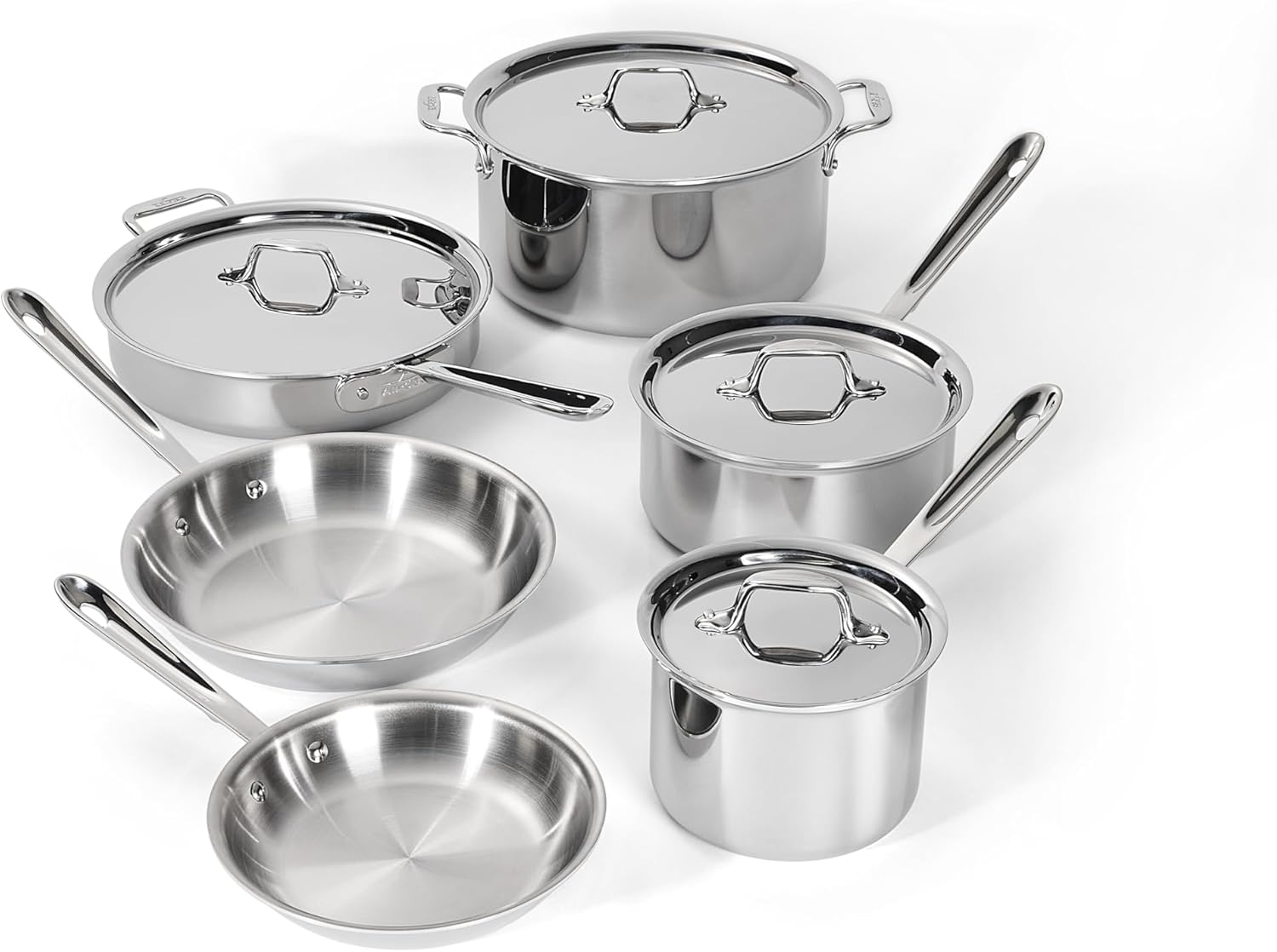
1. All-Clad D3 Stainless Steel Tri-Ply Cookware Set
Rating: 5/5 Stars

The All-Clad D3 represents the gold standard in professional-grade cookware, and it performs exceptionally well on electric stoves. This tri-ply construction features a pure aluminum core sandwiched between two layers of 18/10 stainless steel, creating cookware that heats evenly and responds quickly to temperature changes.
Pros:
- Exceptional heat distribution eliminates hot spots
- Perfectly flat bottoms ensure maximum contact with electric elements
- Dishwasher safe and oven safe up to 600°F
- Professional-grade construction will last decades
- Works on all cooktop types including induction
- Non-reactive surface won’t affect food flavors
Cons:
- Premium price point may be prohibitive for some budgets
- Stainless steel requires proper technique to prevent sticking
- Heavier than single-layer cookware
- Shows water spots and fingerprints easily
Performance on Electric Stoves: The All-Clad D3 excels on electric stoves due to its flat, polished bottom that makes complete contact with the heating element. The aluminum core distributes heat evenly across the entire cooking surface, preventing the hot spots that plague many other materials on electric cooktops. Temperature changes are responsive, though not as immediate as on gas stoves.
Best For: Serious home cooks and professionals who want restaurant-quality results and don’t mind the investment. Perfect for techniques requiring precise temperature control like searing steaks or making delicate sauces.
Value Assessment: While expensive upfront, the lifetime warranty and exceptional performance make this a worthwhile investment for dedicated cooks. The even heating saves energy and produces better results than cheaper alternatives.
2. Calphalon Premier Hard-Anodized Nonstick Cookware Set
Rating: 4.5/5 Stars

Calphalon’s Premier line combines the durability of hard-anodized aluminum with a high-quality non-stick surface, creating cookware that’s particularly well-suited for electric stove users who want easy cleanup and consistent results.
Pros:
- Hard-anodized aluminum provides excellent heat conduction
- Three-layer non-stick interior ensures easy food release
- Flat, smooth bottoms work perfectly on electric cooktops
- Cool-touch stainless steel handles stay comfortable
- Oven safe up to 450°F
- PFOA-free non-stick coating
Cons:
- Non-stick coating will eventually wear out with use
- Not suitable for high-heat searing
- Hand washing recommended to preserve non-stick surface
- More expensive than basic non-stick options
Performance on Electric Stoves: The heavy-gauge hard-anodized aluminum base distributes heat evenly across the cooking surface, preventing hot spots that can burn food or damage non-stick coatings. The flat bottom ensures excellent contact with electric elements, making heat transfer efficient and responsive.
Best For: Home cooks who prioritize easy cleanup and healthy cooking with minimal oil. Excellent for everyday cooking tasks like scrambled eggs, sautéing vegetables, and cooking delicate proteins.
Value Assessment: The combination of durability and performance justifies the premium price. The hard-anodized construction outlasts standard aluminum, while the quality non-stick coating maintains its properties longer than cheaper alternatives.
3. Lodge Cast Iron Skillet with Smooth Bottom
Rating: 4.5/5 Stars

Lodge’s pre-seasoned cast iron skillet with a machined smooth bottom specifically addresses the needs of electric stove users. Unlike traditional rough-bottom cast iron that can scratch glass cooktops, this version features a polished bottom surface that’s safe for all cooktop types.
Pros:
- Exceptional heat retention and even cooking
- Pre-seasoned and ready to use
- Smooth bottom won’t scratch glass cooktops
- Incredibly durable and improves with age
- Oven safe to any temperature
- Naturally non-stick when properly maintained
Cons:
- Heavy weight may be challenging for some users
- Requires maintenance to prevent rust
- Slow to heat up on electric elements
- Cannot go in dishwasher
Performance on Electric Stoves: Cast iron’s superior heat retention makes it ideal for electric stoves, where maintaining consistent temperature is crucial. Once heated, the skillet holds temperature exceptionally well, making it perfect for searing and high-heat cooking. The smooth bottom ensures proper contact without damaging delicate cooktop surfaces.
Best For: Cooks who want versatility and durability. Excellent for searing, baking, and any cooking technique that benefits from excellent heat retention. Perfect for cornbread, steaks, and dishes that go from stovetop to oven.
Value Assessment: Outstanding value for money. With proper care, this skillet will last generations and actually improve with use as the seasoning develops.
4. T-fal E93808 Professional Total Nonstick Fry Pan
Rating: 4/5 Stars
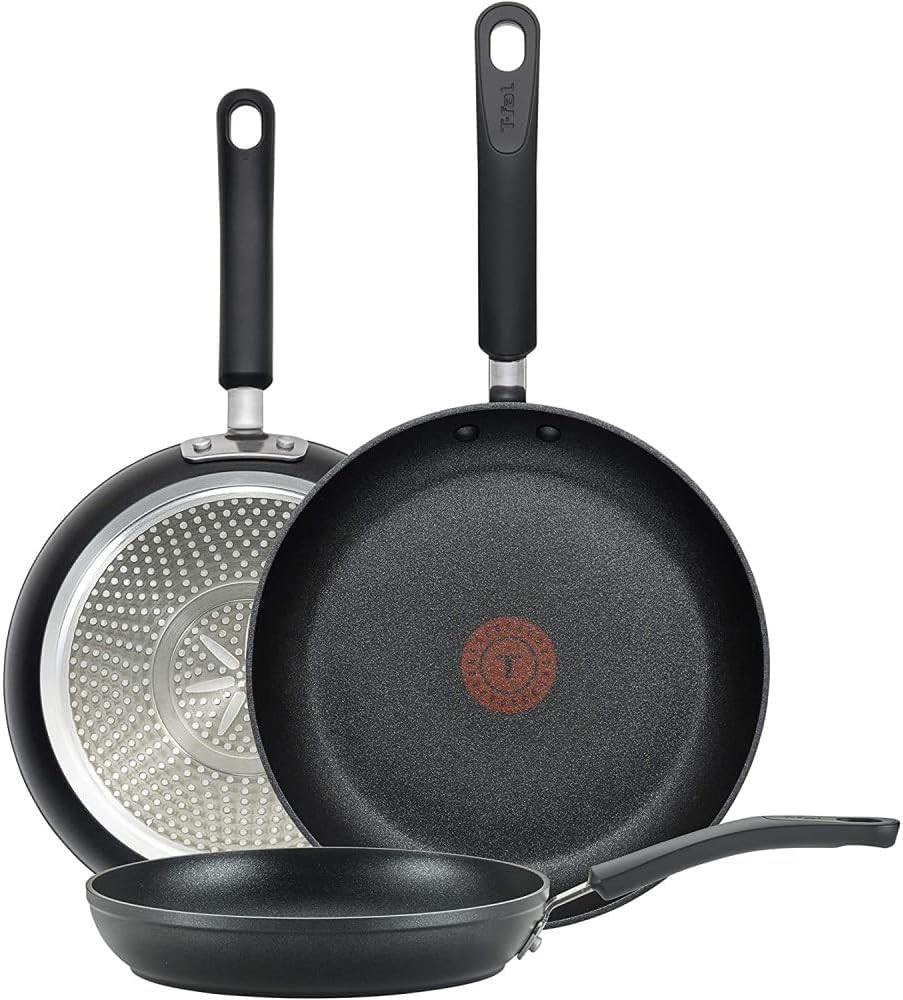
T-fal’s Professional series offers restaurant-quality non-stick performance at a consumer-friendly price point. The unique Thermo-Spot heat indicator takes the guesswork out of preheating on electric stoves.
Pros:
- Thermo-Spot indicator shows when pan is properly preheated
- Heavy-gauge aluminum base heats evenly
- PFOA-free non-stick interior and exterior
- Riveted silicone handles stay cool
- Dishwasher safe for easy cleanup
- Excellent value for the performance
Cons:
- Non-stick coating has limited lifespan
- Not induction compatible
- Handle design may not appeal to all users
- Limited oven temperature rating (400°F)
Performance on Electric Stoves: The heavy aluminum construction distributes heat evenly, while the Thermo-Spot indicator eliminates guesswork about when the pan is ready for cooking. This feature is particularly valuable on electric stoves where visual heat cues are limited.
Best For: Budget-conscious cooks who want quality non-stick performance. Ideal for everyday cooking tasks and families who need easy cleanup.
Value Assessment: Excellent performance-to-price ratio. While the non-stick coating will eventually wear out, the overall construction and features provide good value for several years of regular use.
5. GreenPan Valencia Pro Hard Anodized Ceramic Non-Stick Cookware
Rating: 4/5 Stars

GreenPan’s Valencia Pro line features Thermolon ceramic non-stick coating, offering a healthy alternative to traditional PTFE-based non-stick surfaces while maintaining excellent performance on electric stoves.
Pros:
- Ceramic non-stick coating is PFAS-free
- Hard anodized aluminum base provides even heating
- Oven safe up to 600°F
- Dishwasher safe for convenient cleaning
- Stainless steel handles with comfortable grip
- Won’t release toxic fumes if overheated
Cons:
- Ceramic coating can be more sensitive to thermal shock
- Higher price point than traditional non-stick
- May require more oil than PTFE non-stick surfaces
- Color options may show wear over time
Performance on Electric Stoves: The hard anodized aluminum base excels on electric cooktops, providing even heat distribution that prevents hot spots. The ceramic coating performs well at the moderate temperatures typical of electric stove cooking.
Best For: Health-conscious cooks who want non-stick convenience without PFAS concerns. Great for families with children and anyone who prioritizes chemical-free cooking surfaces.
Value Assessment: The health benefits and oven-safe design justify the premium price for many users. Durability is good, though not quite at the level of professional-grade options.
6. Cuisinart MCP-12N Multiclad Pro Stainless Steel Cookware Set
Rating: 4/5 Stars

Cuisinart’s Multiclad Pro offers tri-ply construction similar to much more expensive brands, providing excellent performance on electric stoves at a more accessible price point.
Pros:
- Tri-ply construction with aluminum core
- Professional-grade performance at consumer prices
- Drip-free pouring edges
- Oven and broiler safe up to 550°F
- Cool-grip handles stay comfortable
- Dishwasher safe
Cons:
- May show discoloration over time
- Handles can get warm during extended cooking
- Requires learning curve for temperature control
- Not as heavy-duty as premium brands
Performance on Electric Stoves: The aluminum core provides excellent heat distribution on electric elements, while the flat, polished bottom ensures good contact and efficient heat transfer. Performance rivals much more expensive cookware for most cooking tasks.
Best For: Home cooks who want professional-quality results without the premium price tag. Excellent starter set for those upgrading from basic cookware.
Value Assessment: Outstanding value proposition. Provides 80% of the performance of premium brands at 40% of the cost, making it ideal for budget-conscious serious cooks.
7. Tramontina Tri-Ply Clad Stainless Steel Cookware Set
Rating: 4/5 Stars
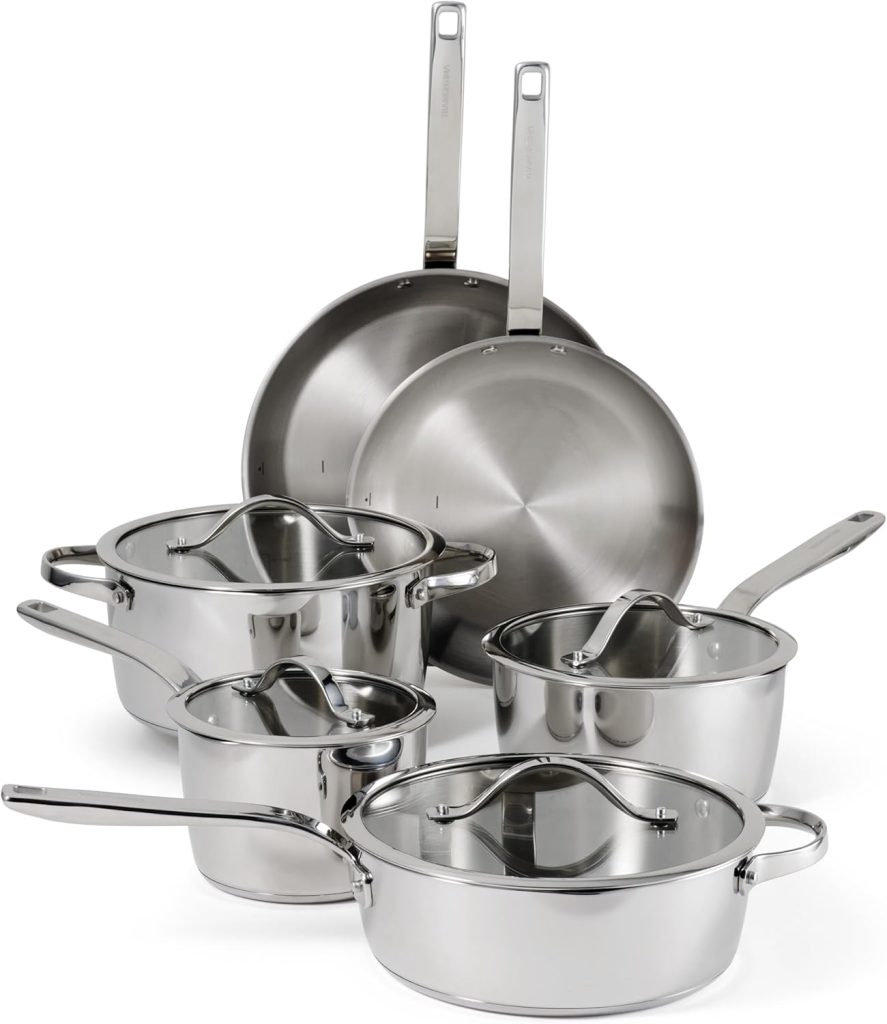
Tramontina’s tri-ply cookware offers professional-grade construction at an incredibly affordable price, making quality stainless steel cookware accessible to more home cooks.
Pros:
- Tri-ply construction with full aluminum core
- NSF certified for professional use
- Precision-fitted lids
- Comfortable welded handles
- Induction compatible
- Exceptional value for money
Cons:
- Lighter gauge than premium brands
- Limited lifetime warranty
- Handles may get warm during cooking
- Polish shows water spots easily
Performance on Electric Stoves: Despite the budget price, the tri-ply construction performs admirably on electric stoves. Heat distribution is even, and the flat bottoms ensure good contact with heating elements.
Best For: Budget-conscious cooks who want stainless steel performance. Great for those just starting to build a quality cookware collection.
Value Assessment: Incredible value – offers professional-grade construction at a fraction of typical tri-ply prices. Perfect for those who want to try stainless steel before investing in premium brands.
8. Anolon Nouvelle Copper Hard-Anodized Cookware Set
Rating: 4.5/5 Stars
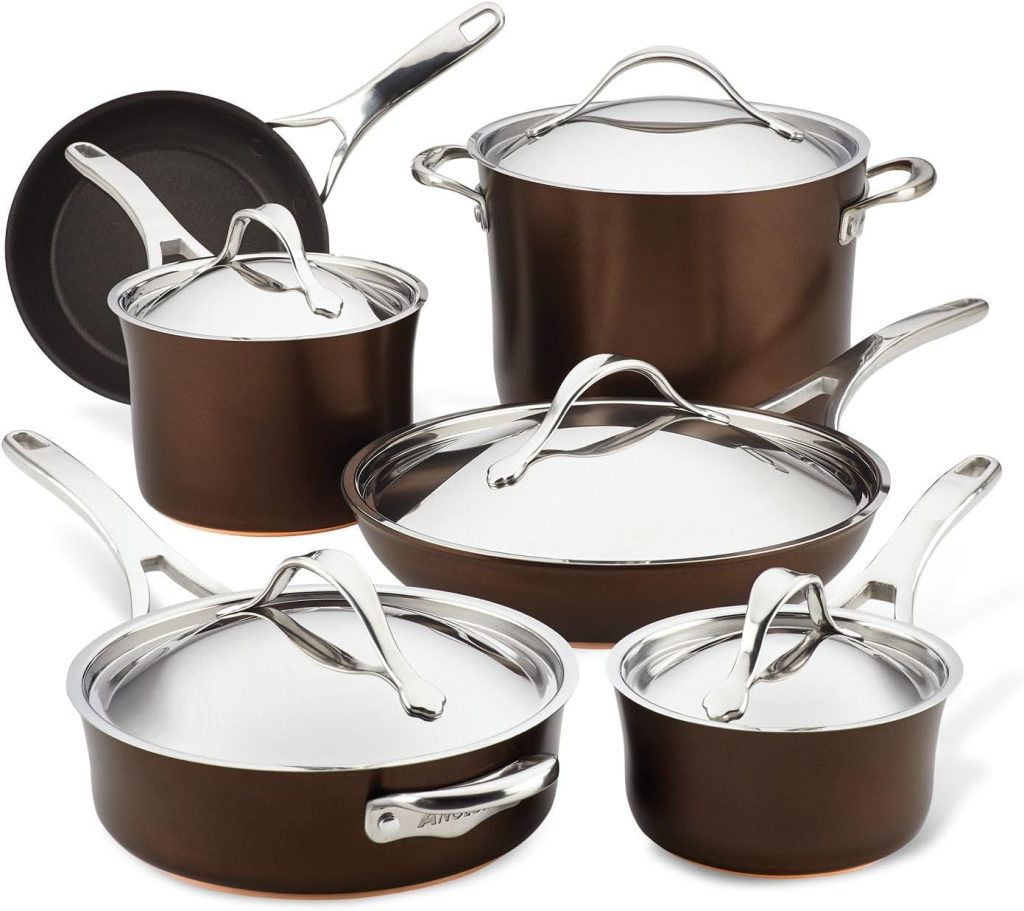
Anolon’s Nouvelle Copper line combines hard-anodized aluminum with a copper base for superior heat conduction, making it particularly effective on electric stoves.
Pros:
- Copper base provides exceptional heat conductivity
- Hard-anodized construction for durability
- SureGrip handles for comfortable control
- Oven safe up to 500°F
- Non-stick interior for easy cooking and cleanup
- Professional appearance
Cons:
- Copper base requires maintenance to prevent tarnishing
- Higher price than standard hard-anodized options
- Non-stick coating has limited lifespan
- Heavier than standard aluminum cookware
Performance on Electric Stoves: The copper base excels on electric elements, providing rapid and even heat distribution that responds quickly to temperature changes. This combination works particularly well with the consistent heat output of electric stoves.
Best For: Experienced cooks who want the performance benefits of copper without the full cost and maintenance of pure copper cookware.
Value Assessment: Good value for those who appreciate copper’s cooking properties. The hard-anodized construction adds durability while the copper base enhances performance.
9. Rachael Ray Cucina Hard-Anodized Aluminum Cookware Set
Rating: 3.5/5 Stars
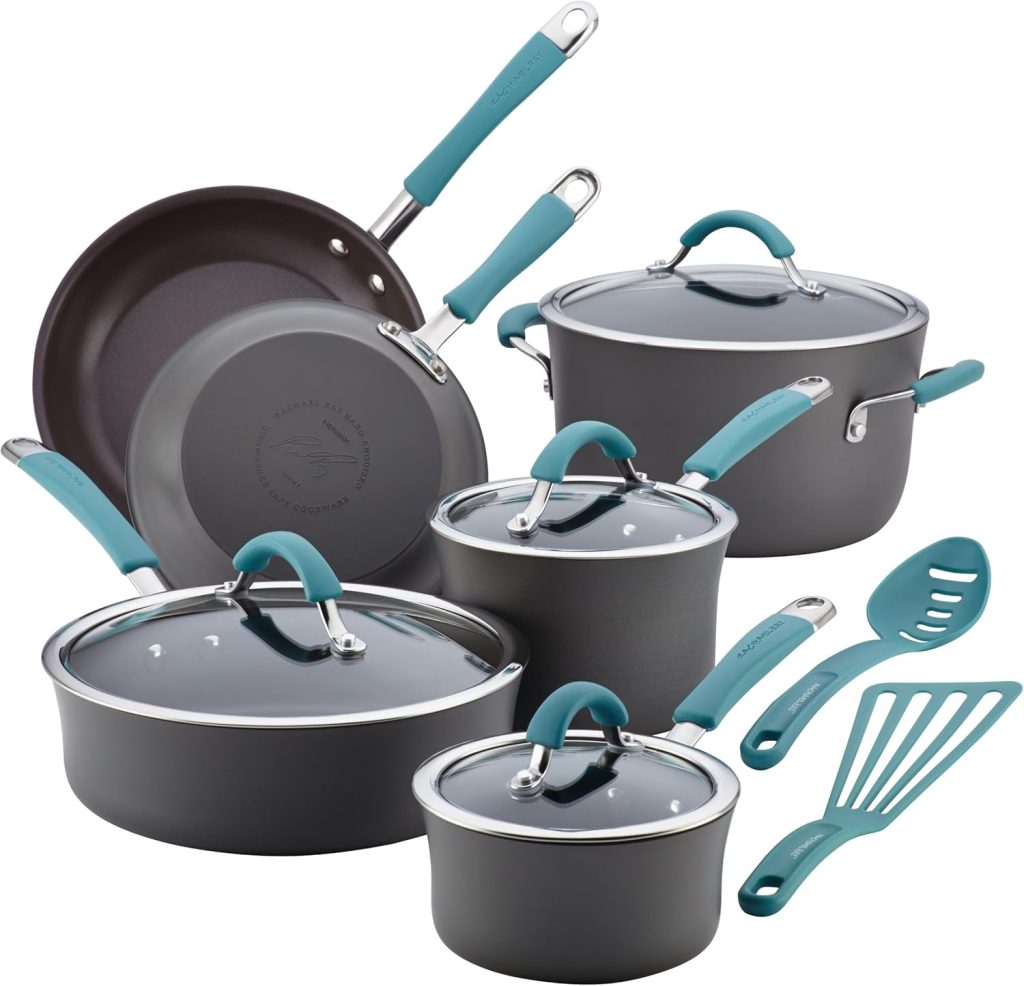
Rachael Ray’s Cucina line offers colorful, functional cookware that performs well on electric stoves while adding personality to the kitchen.
Pros:
- Attractive rustic colors add style to kitchen
- Hard-anodized aluminum provides good heat distribution
- Comfortable rubberized handles
- Oven safe up to 400°F
- PFOA-free non-stick interior
- Budget-friendly pricing
Cons:
- Non-stick coating may not last as long as premium options
- Limited color choices
- Handles not removable for compact storage
- May show wear more readily than neutral colors
Performance on Electric Stoves: The hard-anodized aluminum construction distributes heat well on electric elements, while the flat bottoms ensure good contact. Performance is solid for the price point.
Best For: Home cooks who want functional cookware with personality. Great for those who prefer colorful kitchen accessories.
Value Assessment: Good value for casual cooks who prioritize style along with function. Performance is adequate for everyday cooking needs.
10. Caraway Ceramic Non-Stick Cookware Set
Rating: 4/5 Stars
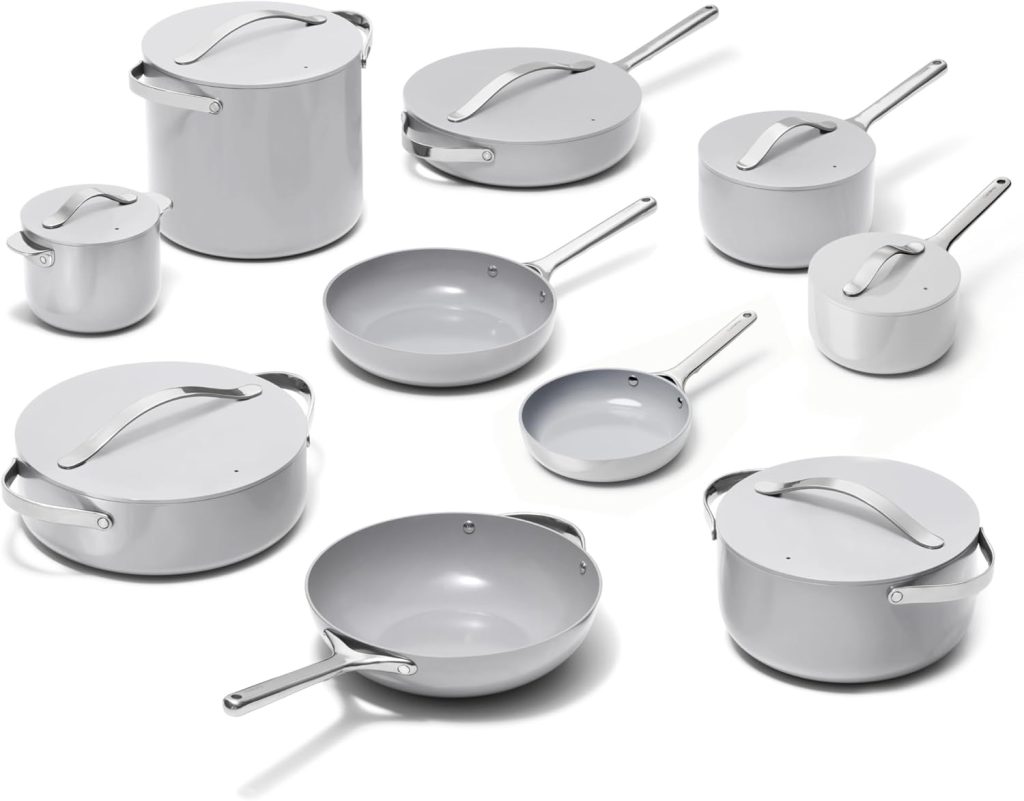
Caraway’s direct-to-consumer cookware features mineral-based ceramic coating and aluminum cores, designed specifically for healthy cooking and aesthetic appeal.
Pros:
- Mineral-based ceramic non-stick coating
- Free from PTFE, PFOA, and other chemicals
- Aluminum core provides even heating
- Magnetic pan storage system included
- Oven safe up to 550°F
- Modern, attractive design
Cons:
- Premium pricing for the construction level
- Limited color options
- Ceramic coating requires careful handling
- Direct-to-consumer only availability
Performance on Electric Stoves: The aluminum construction heats evenly on electric elements, while the ceramic coating provides good non-stick properties at moderate temperatures typical of home electric cooking.
Best For: Design-conscious cooks who prioritize health and aesthetics. Perfect for those who want Instagram-worthy cookware that performs well.
Value Assessment: Moderate value proposition. The health benefits and design justify the price for some users, though performance doesn’t exceed the cost significantly.
11. Zwilling J.A. Henckels Spirit Stainless Steel Cookware Set
Rating: 4/5 Stars

Zwilling’s Spirit line offers German engineering and tri-ply construction, providing excellent performance on electric stoves with attention to ergonomic details.
Pros:
- German engineering and quality control
- Tri-ply construction with aluminum core
- Ergonomic handles designed for comfort
- Sigma Classic Plus base technology
- Oven safe up to 500°F
- Pouring edges for clean transfers
Cons:
- Premium pricing
- Learning curve for proper temperature control
- Shows fingerprints and water spots
- Heavier than single-layer alternatives
Performance on Electric Stoves: The Sigma Classic Plus base technology ensures excellent contact with electric elements, while the tri-ply construction distributes heat evenly. The flat, polished bottom works perfectly with glass-top stoves.
Best For: Cooks who appreciate German engineering and want professional-quality results. Ideal for those who plan to use cookware heavily and want long-term durability.
Value Assessment: Good value for those who prioritize build quality and engineering. The German construction justifies the premium price for serious cooks.
Comprehensive Buying Guide for Electric Stove Cookware
Understanding Heat Transfer on Electric Stoves
Electric stoves transfer heat through direct contact between the heating element and the cookware bottom. This conductive heat transfer method requires cookware with specific characteristics to achieve optimal performance. Unlike gas stoves where flames provide radiant heat that wraps around pan sides, electric elements only heat from below, making bottom design and material crucial.
The efficiency of heat transfer depends on the contact area between the element and cookware. Any air gaps caused by warped bottoms or poor surface finish reduce efficiency and create hot spots. This is why flat, smooth bottoms are essential for electric stove cookware.
Material Considerations
Stainless Steel: Provides durability and non-reactive cooking surfaces but requires aluminum or copper cores for even heating. Pure stainless steel has poor heat conduction, leading to hot spots on electric elements. Tri-ply construction with aluminum cores offers the best balance of performance and durability.
Aluminum: Excellent heat conduction makes it ideal for electric stoves, but pure aluminum can react with acidic foods and may warp over time. Hard-anodized aluminum provides better durability while maintaining heat conduction benefits.
Copper: Superior heat conductivity responds quickly to temperature changes, but requires maintenance and is expensive. Copper-bottom cookware offers benefits without full copper construction costs.
Cast Iron: Exceptional heat retention works well with electric stoves’ consistent heat output. However, traditional rough-bottom cast iron can scratch glass cooktops. Look for smooth-bottom versions specifically designed for glass surfaces.
Carbon Steel: Similar benefits to cast iron but lighter weight. Develops natural non-stick properties with proper seasoning and provides excellent heat retention for electric cooking.
Size and Capacity Matching
Matching cookware size to element size maximizes efficiency and prevents wasted energy. Pans significantly smaller than elements waste heat, while oversized pans may have uneven heating around edges. Most electric stoves have multiple element sizes, so having cookware that matches each size optimizes performance.
Consider your typical cooking quantities when selecting sizes. A family of four will have different needs than a couple. Having a range of sizes allows flexibility in meal preparation while ensuring optimal element utilization.
Handle Design and Safety
Electric stoves maintain heat longer than gas stoves, making handle design crucial for safety. Look for handles that stay cool during cooking and provide secure, comfortable grips. Removable handles can save storage space but may compromise durability and cooking performance.
Handle material affects both comfort and safety. Stainless steel handles conduct heat and can become uncomfortable, while silicone and rubberized grips stay cooler but may have temperature limitations for oven use.
Maintenance and Longevity
Electric stove cookware experiences different stresses than gas cookware, affecting maintenance needs and longevity. The consistent, concentrated heat from electric elements can cause warping in thin materials over time. Quality construction with heavy bottoms resists warping and maintains flat contact surfaces.
Non-stick coatings face particular challenges on electric stoves where temperature control is less immediate. Overheating can damage coatings permanently, making quality construction and temperature awareness crucial for longevity.
Budget Considerations
Quality cookware for electric stoves ranges from budget-friendly options around $100 for complete sets to professional-grade sets exceeding $500. Consider your cooking frequency, skill level, and priorities when budgeting.
Entry-level cooks may find excellent value in mid-range options that offer good performance without premium prices. Serious cooks who use their cookware daily may find premium options worthwhile for their superior performance and longevity.
Compatibility with Other Cooktop Types
Many households may upgrade or change cooktop types over time. Choosing cookware compatible with multiple heat sources provides flexibility for future changes. Induction compatibility requires magnetic materials, while gas stoves work with virtually any material.
Multi-compatible cookware like tri-ply stainless steel works on all cooktop types, making it a safe long-term investment even if your cooking situation changes.
Detailed Performance Analysis by Cooking Method
Searing and High-Heat Cooking
Electric stoves excel at maintaining consistent high temperatures, making them excellent for searing when paired with appropriate cookware. Cast iron and heavy-bottomed stainless steel perform best for high-heat applications, as they can withstand and distribute intense heat effectively.
The key to successful searing on electric stoves is patience during preheating. Unlike gas stoves that reach temperature quickly, electric elements need time to heat cookware thoroughly. However, once heated, they maintain temperature more consistently than gas.
Heavy materials like cast iron store heat energy, creating the intense, sustained heat necessary for proper searing. The thermal mass helps maintain temperature when cold food is added, preventing the temperature drops that can cause steaming instead of searing.
Simmering and Delicate Cooking
Electric stoves’ consistent heat output makes them excellent for long, slow cooking methods like simmering sauces or braising. The steady temperature prevents the hot and cool cycles that can occur with gas flames cycling on and off.
For delicate cooking, look for cookware with responsive temperature changes. Aluminum cores in stainless steel cookware provide the responsiveness needed for techniques requiring precise temperature control.
The thermal stability of electric elements makes them ideal for candy making, where consistent temperatures are crucial for success. Heavy-bottomed pans distribute this steady heat evenly, preventing hot spots that could burn sugar.
Boiling and Pasta Cooking
Electric stoves take longer to reach boiling temperatures than gas but maintain rolling boils efficiently once achieved. Large, wide-bottomed pots maximize contact with heating elements for faster heating times.
Aluminum construction excels for boiling applications due to its excellent heat conduction. The quick heat transfer brings water to boil efficiently and maintains consistent temperatures throughout the cooking process.
Consider pot size relative to element size for boiling applications. Oversized pots may have uneven heating around edges, while properly sized pots heat uniformly across the entire bottom surface.
Baking and Braising
Many electric cookware pieces are oven-safe, allowing seamless transitions from stovetop to oven. This capability is particularly valuable for braising, where initial browning on the stovetop is followed by slow oven cooking.
Cast iron excels for baking applications due to its heat retention and even heating properties. Dutch ovens can handle the high temperatures needed for bread baking while providing excellent heat distribution for even results.
Stainless steel cookware with aluminum cores provides even heating for oven applications while maintaining the durability needed for frequent stovetop-to-oven transitions.
Energy Efficiency and Environmental Impact
Power Consumption Optimization
The right cookware can significantly impact energy consumption on electric stoves. Properly sized pans that match element dimensions maximize heat transfer efficiency, reducing cooking times and energy waste.
Flat-bottomed cookware ensures maximum contact with heating elements, improving heat transfer efficiency. Warped or uneven bottoms create air gaps that waste energy and increase cooking times.
Heavy-bottomed cookware retains heat longer, allowing lower power settings for simmering and slow cooking. This thermal mass stores energy and releases it gradually, improving overall efficiency.
Environmental Considerations
Quality cookware lasts longer, reducing replacement frequency and associated environmental impact. Stainless steel and cast iron can last generations with proper care, making them environmentally sustainable choices.
Non-stick coatings have limited lifespans and may contain chemicals of environmental concern. While convenient, they require eventual replacement and disposal, increasing environmental impact over time.
Consider the full lifecycle cost when selecting cookware. Higher initial investment in durable materials often results in lower long-term environmental impact and total cost of ownership.
Recycling and Disposal
Stainless steel and aluminum cookware are highly recyclable, making them environmentally responsible choices at end of life. Cast iron can often be refurbished rather than discarded, extending useful life indefinitely.
Non-stick cookware presents disposal challenges due to coating materials. Some recycling programs accept these items, but many end up in landfills where coatings may persist for extended periods.
Research local recycling options when purchasing cookware. Choosing materials with established recycling streams supports circular economy principles and reduces environmental impact.
Advanced Features and Technology
Heat Distribution Technology
Modern cookware incorporates various technologies to improve heat distribution on electric stoves. Tri-ply and multi-ply construction sandwiches aluminum or copper cores between stainless steel layers, combining the best properties of each material.
Some manufacturers use specialized base designs with heat-spreading discs or unique alloy combinations. These technologies aim to eliminate hot spots and improve temperature responsiveness on electric elements.
Advanced surface treatments can improve heat absorption and distribution. Some cookware features textured or specially treated bottoms designed to maximize contact with smooth electric surfaces.
Temperature Indicators
Heat indicators help take guesswork out of preheating, particularly valuable on electric stoves where visual temperature cues are limited. These systems use thermochromic materials that change color when optimal temperatures are reached.
Digital temperature displays integrated into handles provide precise temperature feedback, allowing better control over cooking processes. These systems are particularly useful for techniques requiring specific temperatures.
Smart cookware with app connectivity can provide temperature monitoring and cooking guidance, helping users optimize electric stove performance for various cooking methods.
Ergonomic Innovations
Handle designs continue evolving to improve comfort and safety during extended cooking sessions. Hollow handles stay cooler while maintaining strength, and ergonomic shapes reduce hand fatigue.
Lid designs with improved venting and steam management help maintain consistent cooking conditions. Some lids feature built-in strainers or measurement marks for added convenience.
Weight distribution improvements make heavy cookware more manageable. Balanced designs with properly positioned handles reduce strain when lifting and maneuvering full pans.
Maintenance and Care Guide
Daily Cleaning Practices
Proper daily cleaning extends cookware life and maintains performance. Different materials require specific approaches to preserve their properties and appearance.
Stainless steel benefits from immediate cleaning after use to prevent water spots and discoloration. Gentle abrasives like baking soda can remove stubborn stains without damaging surfaces.
Non-stick surfaces require gentle cleaning with soft sponges and mild detergents. Harsh abrasives or steel wool can damage coatings permanently, reducing non-stick properties and shortening lifespan.
Cast iron requires immediate drying and light oil application to prevent rust. Avoid soap if possible, using coarse salt as an abrasive for stubborn food residue.
Long-term Maintenance
Regular seasoning maintains cast iron’s non-stick properties and rust resistance. Apply thin oil layers and heat to create protective polymerized coatings that improve with use.
Stainless steel may require periodic polishing to maintain appearance and performance. Commercial cleaners designed for stainless steel can remove heat discoloration and restore original finish.
Check for warping periodically by placing cookware on flat surfaces. Replace warped pieces as they create inefficient heating and potential safety hazards on electric stoves.
Storage Solutions
Proper storage prevents damage and maintains cookware condition. Stacking pans with protective layers prevents scratches and dings that can affect performance.
Hanging storage saves space while preventing bottom damage that affects electric stove contact. Ensure hanging systems can support cookware weight safely.
Drawer storage with dividers keeps pieces organized while preventing damage from movement. Soft linings protect surfaces and reduce noise during access.
Troubleshooting Common Issues
Hot spots often indicate warped bottoms or inadequate heat distribution in cookware construction. Replace damaged pieces or adjust cooking techniques to compensate.
Sticking in stainless steel usually results from incorrect temperature or insufficient fat. Proper preheating and temperature management prevent most sticking issues.
Non-stick coating degradation appears as increased sticking or visible wear. Replace non-stick cookware when coating fails, as damaged coatings may pose health concerns.
Frequently Asked Questions (FAQs)
General Electric Stove Cookware Questions
Q: What makes cookware suitable for electric stoves? A: Electric stove cookware requires perfectly flat bottoms to ensure maximum contact with heating elements, efficient heat conduction materials to distribute heat evenly, and construction that won’t scratch glass or ceramic surfaces. The best materials include stainless steel with aluminum cores, hard-anodized aluminum, and smooth-bottom cast iron.
Q: Can I use my gas stove cookware on an electric stove? A: Most gas stove cookware will work on electric stoves, but performance may vary. Gas cookware with warped or uneven bottoms will create hot spots on electric elements. Cookware with rough bottoms may scratch glass-top stoves. Check bottom flatness and smoothness before using existing cookware on electric stoves.
Q: Why does my food cook unevenly on my electric stove? A: Uneven cooking typically results from poor heat distribution in the cookware or inadequate contact between pan and element. Warped bottoms create air gaps that cause hot spots. Low-quality cookware without aluminum or copper cores may not distribute heat evenly across the cooking surface.
Q: How do I know if my cookware bottom is flat enough for electric stoves? A: Place a ruler or straight edge across the cookware bottom. Any gaps indicate warping that will affect performance on electric stoves. For glass-top stoves, the bottom should also be smooth without scratches or rough areas that could damage the surface.
Q: What size cookware should I use on my electric stove elements? A: Match cookware diameter to element size for optimal efficiency. Pans should cover 80-90% of the element surface for best heat transfer. Significantly smaller pans waste energy, while larger pans may have uneven heating around edges.
Material-Specific Questions
Q: Is stainless steel good for electric stoves? A: High-quality stainless steel with aluminum or copper cores excels on electric stoves. The metal cores provide even heat distribution, while stainless steel offers durability and non-reactive cooking surfaces. Avoid single-layer stainless steel without cores, as it creates hot spots on electric elements.
Q: Can I use cast iron on a glass-top electric stove? A: Yes, but only cast iron with smooth, flat bottoms designed for glass surfaces. Traditional rough-bottom cast iron can scratch glass cooktops permanently. Look for cast iron specifically labeled as glass-top safe or with machined smooth bottoms.
Q: What about copper cookware on electric stoves? A: Pure copper provides excellent performance on electric stoves due to superior heat conduction, but requires significant maintenance and investment. Copper-bottom cookware offers many benefits without full copper construction costs and maintenance requirements.
Q: Are non-stick pans good for electric cooking? A: Quality non-stick pans with heavy aluminum bases work well on electric stoves for low to medium-heat cooking. However, the slower temperature response of electric elements can lead to overheating, which damages non-stick coatings. Choose heavy-gauge construction and monitor temperatures carefully.
Q: What about carbon steel for electric stoves? A: Carbon steel works excellently on electric stoves, providing similar benefits to cast iron but with lighter weight. It develops natural non-stick properties with proper seasoning and offers excellent heat retention for consistent electric cooking.
Performance and Cooking Questions
Q: Why does my cookware take so long to heat up on my electric stove? A: Electric elements heat more slowly than gas flames, requiring patience during preheating. Heavy cookware takes longer to heat but provides better temperature stability once hot. Thin or lightweight cookware heats faster but may have less even temperature distribution.
Q: How can I prevent food from sticking to stainless steel on electric stoves? A: Proper preheating is crucial – heat the pan until water droplets dance and evaporate quickly, then add oil or butter. The slower heating of electric stoves requires more patience during preheating compared to gas. Use adequate fat and avoid moving food too soon.
Q: Can I get good searing results on electric stoves? A: Yes, electric stoves can produce excellent searing results with proper technique and cookware. Use heavy materials like cast iron or thick stainless steel that retain heat well. Preheat thoroughly and be patient – electric stoves maintain consistent high temperatures better than gas once heated.
Q: What’s the best cookware for making sauces on electric stoves? A: Heavy-bottomed stainless steel with aluminum cores or enameled cast iron work best for sauces. These materials provide even heat distribution that prevents scorching, while the consistent heat output of electric stoves maintains stable simmering temperatures.
Q: How do I adjust cooking times for electric vs. gas stoves? A: Electric stoves typically require longer preheating times but maintain temperatures more consistently. Initial heating takes 25-50% longer, but cooking times are often similar once proper temperatures are reached. The key is patience during the preheating phase.
Maintenance and Safety Questions
Q: How do I clean burnt food from cookware used on electric stoves? A: For stainless steel, create a paste with baking soda and water, let sit for 15 minutes, then scrub gently. For non-stick surfaces, soak in warm soapy water and use only soft sponges. Cast iron can use coarse salt as an abrasive with minimal water.
Q: Why did my cookware warp on my electric stove? A: Warping typically results from rapid temperature changes or overheating. Thin cookware is more susceptible to warping. Prevent warping by heating gradually, avoiding extreme temperature changes, and choosing heavy-gauge construction that resists thermal stress.
Q: Is it safe to use aluminum cookware on electric stoves? A: Yes, aluminum cookware is safe and performs well on electric stoves. Hard-anodized aluminum is particularly good as it provides excellent heat conduction while being more durable than regular aluminum. Avoid uncoated aluminum for acidic foods as it can react and affect taste.
Q: What should I do if my cookware scratches my glass-top stove? A: Stop using that cookware immediately to prevent further damage. Check the bottom for rough spots, burrs, or attached debris. Sand smooth any rough areas carefully or replace the cookware. Use cookware cleaner and a razor blade to remove existing scratches if they’re not too deep.
Q: How often should I replace non-stick cookware used on electric stoves? A: Quality non-stick cookware typically lasts 3-5 years with regular use on electric stoves. Replace when coating shows visible wear, food begins sticking regularly, or you see chips or scratches in the coating. High-quality brands may last longer with proper care.
Q: Can I use my electric stove cookware in the oven? A: Most quality cookware suitable for electric stoves is also oven-safe, but check manufacturer specifications for maximum temperatures. Stainless steel and cast iron typically handle high oven temperatures, while non-stick cookware may have lower temperature limits (usually 400-500°F).
Shopping and Selection Questions
Q: What’s the minimum I should spend on cookware for an electric stove? A: Plan to spend at least $200-300 for a basic set of quality cookware that will perform well on electric stoves. Budget options under $100 often lack the heavy bottoms and even heating needed for optimal electric stove performance, leading to frustrating cooking experiences.
Q: Should I buy a complete set or individual pieces? A: Individual pieces allow you to choose specific materials and sizes for your cooking style, but sets often provide better value. Consider starting with a basic set of quality pieces (fry pan, saucepan, stockpot) and adding specialized items as needed.
Q: What’s the most important piece to invest in first? A: Start with a high-quality 10-12 inch fry pan or skillet, as this handles the majority of everyday cooking tasks. Choose stainless steel with aluminum core or quality hard-anodized aluminum for versatility on electric stoves.
Q: Are expensive brands worth the cost for electric stove cooking? A: Premium brands often provide better heat distribution, durability, and warranty coverage that justify higher costs for serious cooks. However, several mid-range options offer 80-90% of premium performance at much lower costs, making them better value for casual cooks.
Q: What features should I prioritize when shopping? A: Prioritize flat, heavy bottoms for good element contact, materials that conduct heat evenly (aluminum cores, copper), comfortable handles that stay cool, and construction quality that resists warping. Secondary features like non-stick coatings or special finishes are nice but not essential.
Compatibility and Technical Questions
Q: Will induction-compatible cookware work on regular electric stoves? A: Yes, induction-compatible cookware works excellently on regular electric stoves. The magnetic materials required for induction (stainless steel, cast iron) also perform very well on electric coil and glass-top stoves.
Q: Can I use cookware with rough or textured bottoms on electric stoves? A: Avoid rough or textured bottoms on electric stoves, especially glass-top models. Rough surfaces reduce heat transfer efficiency and can scratch delicate surfaces. Look for smooth, polished bottoms that make complete contact with elements.
Q: What about cookware with riveted handles – are they safe for electric ovens? A: Riveted handles are generally safe for oven use if the cookware is rated oven-safe. However, rivets can conduct heat, making handles warm during extended oven cooking. Check manufacturer specifications for maximum oven temperatures.
Q: Do I need special cookware for electric coil vs. glass-top stoves? A: Glass-top stoves require smoother bottoms to prevent scratching, while coil stoves are more forgiving of minor bottom imperfections. Both benefit from flat, heavy bottoms for optimal heat transfer, but glass-tops are more demanding regarding surface smoothness.
Troubleshooting Performance Issues
Q: Why does water take so long to boil on my electric stove? A: Electric stoves heat more slowly than gas, but proper cookware can improve performance. Use wide-bottomed pots that match element size, choose materials with good heat conduction like aluminum, and cover pots to trap heat and reduce boiling time.
Q: My food burns in the center but stays raw around edges – what’s wrong? A: This indicates poor heat distribution, usually from cookware without aluminum or copper cores, or warped bottoms that don’t contact elements evenly. Upgrade to tri-ply or multi-ply cookware with even heat distribution properties.
Q: Why do my eggs stick to stainless steel even with oil? A: Sticking usually results from inadequate preheating or wrong temperature. Heat the pan until water droplets dance and evaporate quickly, then add oil. Electric stoves require more patience during preheating compared to gas stoves.
Q: Can I fix warped cookware to work better on my electric stove? A: Minor warping might be improved by gentle hammering on a flat surface, but severely warped cookware should be replaced. Prevention through gradual heating and cooling is better than trying to fix warped pans.
Advanced Cooking Techniques for Electric Stoves
Temperature Control Mastery
Electric stoves require different temperature management approaches compared to gas stoves. The thermal mass of electric elements means they respond more slowly to control changes, requiring anticipation and planning. Successful electric cooking involves understanding heat lag and planning temperature changes in advance.
Professional chefs working with electric equipment often use multiple burners at different temperatures, moving pans between elements to achieve precise temperature control. This technique works particularly well for complex sauces requiring multiple temperature stages.
The consistent heat output of electric stoves excels for techniques requiring stable temperatures over extended periods. Candy making, slow braises, and delicate custards benefit from this thermal stability that gas stoves struggle to maintain.
Multi-Element Cooking Strategies
Modern electric stoves typically offer multiple element sizes and power levels. Strategic use of different elements allows simultaneous cooking at various temperatures and speeds. Large elements for high-heat searing, medium elements for everyday cooking, and small elements for gentle warming create a complete cooking system.
Element management becomes particularly important for complex meals requiring multiple pans. Planning which elements to use for each component ensures optimal cooking conditions for all dishes simultaneously.
Some electric stoves feature bridge elements or expandable heating zones that accommodate specialty cookware like griddles or oval pans. Understanding these features expands cooking possibilities beyond standard round cookware.
Heat Retention Cooking
Electric cookware’s superior heat retention allows energy-efficient cooking techniques. Starting high-heat cooking then turning elements to lower settings or off entirely uses stored heat to finish cooking. This approach saves energy while maintaining excellent results.
Cast iron and heavy stainless steel retain heat long enough to continue cooking after elements turn off. This residual heat cooking works particularly well for steaks, where initial high-heat searing can be followed by gentle finishing using retained heat.
Planning heat retention into cooking sequences allows better energy management and often improves food texture by providing gentler finishing conditions.
Precision Cooking Applications
Electric stoves excel at precision cooking techniques like tempering chocolate, making hollandaise sauce, or cooking delicate proteins that require exact temperature control. The consistent heat output provides better control than fluctuating gas flames.
Sous-vide preparation benefits from electric stove consistency when using traditional methods before immersion circulators became common. Water baths maintained on electric elements stay more stable than those on gas burners.
Modern electric stoves with precise temperature controls allow techniques previously requiring specialized equipment. Candy making, oil temperature maintenance for frying, and sauce preparation all benefit from this precision.
Health and Safety Considerations
Chemical Safety in Cookware Selection
Non-stick coatings raise health concerns when overheated, releasing potentially harmful fumes. Electric stoves’ slower temperature response can lead to overheating if not monitored carefully. Choose PFOA-free coatings and maintain moderate temperatures for safer cooking.
Aluminum cookware in direct contact with acidic foods may leach small amounts of aluminum into food. While generally considered safe, those with concerns can choose anodized aluminum or stainless steel alternatives for acidic cooking.
Ceramic and glass cookware offer completely inert cooking surfaces but may be more fragile on electric stoves where precise placement is crucial. These materials provide peace of mind for those concerned about any chemical interactions.
Physical Safety Features
Handle design becomes critical for electric stove safety, as elements retain heat longer than gas flames. Cool-touch handles prevent burns during cooking, while proper handle attachment prevents loosening that could cause accidents.
Weight distribution affects handling safety, particularly with larger pieces filled with hot liquids. Well-balanced cookware with ergonomic handles reduces accident risk during transfers from stovetop to other surfaces.
Lid design impacts safety through steam management and splatter control. Quality lids with proper venting prevent pressure buildup while containing cooking splatter that could damage electric elements.
Long-term Health Benefits
Quality cookware investments support healthier cooking methods through better temperature control and even heating. Properly heated pans require less oil for non-stick cooking, supporting heart-healthy preparation methods.
Even heating prevents hot spots that can create harmful compounds in overcooked food. Quality cookware’s consistent performance promotes better nutrition through optimal cooking conditions.
Durable cookware reduces replacement frequency, avoiding potential health risks from degrading non-stick coatings or damaged surfaces that might harbor bacteria.
Environmental Impact and Sustainability
Energy Efficiency Optimization
Proper cookware selection significantly impacts energy consumption on electric stoves. Flat-bottomed pans that match element sizes maximize heat transfer efficiency, reducing cooking times and energy waste. This efficiency translates directly into lower electricity bills and reduced environmental impact.
Heavy-bottomed cookware retains heat longer, allowing lower power settings for simmering and slow cooking operations. This thermal mass effect stores energy and releases it gradually, improving overall system efficiency.
Lid usage becomes more critical on electric stoves where heat loss directly impacts energy consumption. Quality lids that seal well maintain cooking temperatures with less energy input, improving both cooking results and environmental impact.
Material Lifecycle Analysis
Stainless steel and cast iron offer excellent sustainability profiles due to their longevity and recyclability. These materials can last decades with proper care, reducing replacement frequency and associated manufacturing impacts.
Aluminum cookware provides good energy efficiency during use but has higher manufacturing energy requirements. However, aluminum’s excellent recyclability helps offset initial manufacturing impacts over the product lifecycle.
Non-stick coatings present environmental challenges due to limited lifespans and disposal difficulties. While convenient, these coatings require eventual replacement and may contain persistent chemicals of environmental concern.
Sustainable Cooking Practices
Quality cookware enables more sustainable cooking practices through better results with less energy input. Even heating reduces cooking times and allows lower temperature cooking that preserves nutrients while using less energy.
Proper cookware care extends useful life, reducing replacement frequency and associated environmental impacts. Simple maintenance practices like proper cleaning and storage can double or triple cookware lifespan.
Choosing multi-functional pieces reduces overall cookware needs while providing cooking versatility. A quality Dutch oven can replace multiple specialized pieces, reducing manufacturing impact and kitchen storage requirements.
Future Trends in Electric Stove Cookware
Smart Cookware Integration
Emerging smart cookware incorporates sensors and connectivity features that optimize performance on electric stoves. Temperature monitoring, cooking timers, and app integration provide guidance for optimal results while preventing overheating and energy waste.
Induction-ready smart cookware can communicate with compatible electric stoves to optimize heating patterns and energy consumption. This integration promises more efficient cooking with reduced environmental impact.
Predictive cooking features in smart cookware can learn user preferences and adjust heating recommendations for consistent results across different electric stove types and power levels.
Advanced Materials Development
New alloy compositions promise improved heat distribution and durability for electric stove applications. Multi-layer constructions with specialized cores aim to provide gas stove responsiveness on electric elements.
Ceramic and mineral-based coatings continue evolving to provide non-stick properties without traditional coating concerns. These developments may eliminate the environmental and health issues associated with PTFE-based non-stick surfaces.
Nano-technology applications in cookware surfaces promise improved heat transfer and easier maintenance. These advances could make electric stove cooking more efficient and enjoyable while extending cookware lifespans.
Design Evolution
Ergonomic improvements focus on making cookware more comfortable and safe for extended electric stove cooking sessions. Handle designs, weight distribution, and user interface elements continue evolving based on electric stove usage patterns.
Modular cookware systems allow customization for specific electric stove types and cooking preferences. These systems may include interchangeable bases, handles, and accessories optimized for different cooking methods.
Aesthetic trends incorporate electric stove considerations into design elements. Color-changing indicators, sleek profiles, and materials specifically chosen for electric stove compatibility create cookware that matches modern kitchen designs.
Conclusion
Selecting the right cookware for electric stoves involves understanding the unique characteristics of electric heating and choosing products that optimize this cooking method’s strengths while mitigating its limitations. The eleven products reviewed in this guide represent the best options available across different price points, materials, and cooking preferences.
The key factors for electric stove cookware success include flat, heavy bottoms for optimal element contact, materials that distribute heat evenly to prevent hot spots, and construction quality that resists warping and maintains performance over time. Whether you choose professional-grade stainless steel, versatile hard-anodized aluminum, or traditional cast iron, the right cookware transforms electric stove cooking from a compromise into a preferred cooking method.
Investment in quality cookware pays dividends through improved cooking results, energy efficiency, and longevity. While initial costs may seem high, the performance benefits and extended lifespan of premium cookware make it a worthwhile investment for anyone serious about cooking on electric stoves.
The future of electric stove cooking looks bright with continued innovations in materials, smart technology integration, and design optimization. As electric cooking becomes more prevalent due to environmental and efficiency considerations, cookware manufacturers continue developing products specifically optimized for electric stove performance.
Remember that the best cookware is the one that matches your cooking style, budget, and performance expectations. The reviews and guidance in this comprehensive guide provide the information needed to make informed decisions that will enhance your electric stove cooking experience for years to come.
Whether you’re setting up your first kitchen or upgrading existing cookware, the principles and product recommendations outlined here will help you achieve professional-quality results on your electric stove. The investment in proper cookware transforms daily cooking from a chore into an enjoyable culinary experience that produces consistently excellent results.

Leave a Reply