
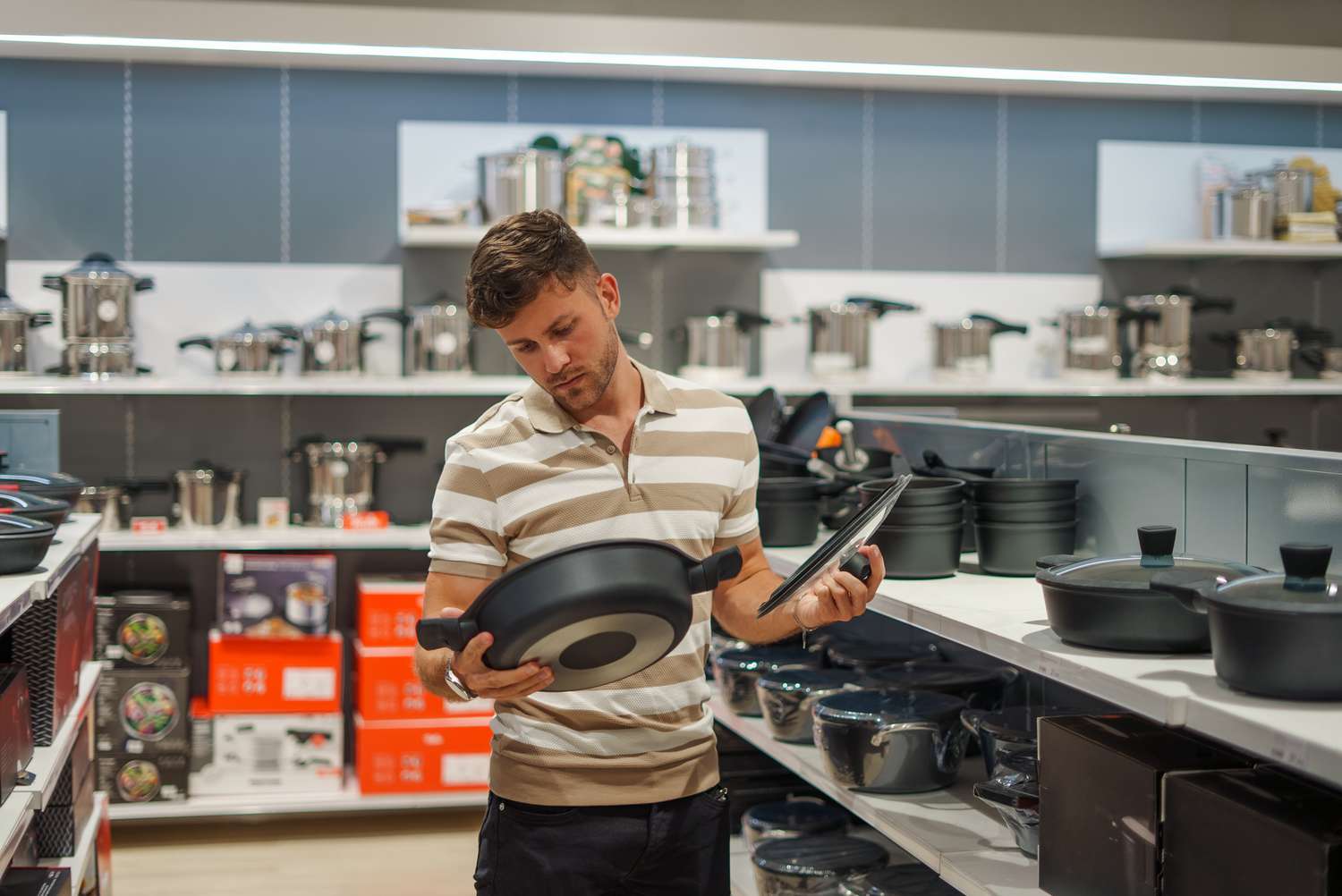
Stainless steel, cast iron, and ceramic cookware are the safest options for your health. When you’re shopping for cookware, you’re not just picking out pots and pans—you’re making a decision that affects what ends up on your plate and in your body every single day. The materials your cookware is made from can either support your health or introduce harmful chemicals into your meals, which is why understanding which cookware is safest for health matters more than most people realize.
I’ve spent years researching kitchen essentials and testing different cookware types with friends and family. What I’ve learned is that the safest cookware is actually accessible and affordable—you don’t need to spend a fortune to eat healthier. In this guide, I’ll walk you through the safest cookware options available, explain what makes them safe, and help you avoid the materials that could harm your health. By the end, you’ll know exactly what to look for when shopping and how to make the best choice for your kitchen.
Understanding Cookware Safety and Why It Matters
When we talk about safe cookware, we’re really discussing how different materials interact with food during cooking. Some materials release chemicals when heated, while others are inert and don’t leach anything into your food. The temperature of cooking, the type of food, and how often you use certain cookware all play roles in whether harmful substances end up in your meals.
Think of your cookware as a barrier between heat and your food. The best cookware acts like a neutral middleman, simply conducting heat without adding anything unwanted to the equation. Over time, using unsafe cookware can lead to accumulation of harmful substances in your body, which is why choosing the right cookware is safest for health in the long run.
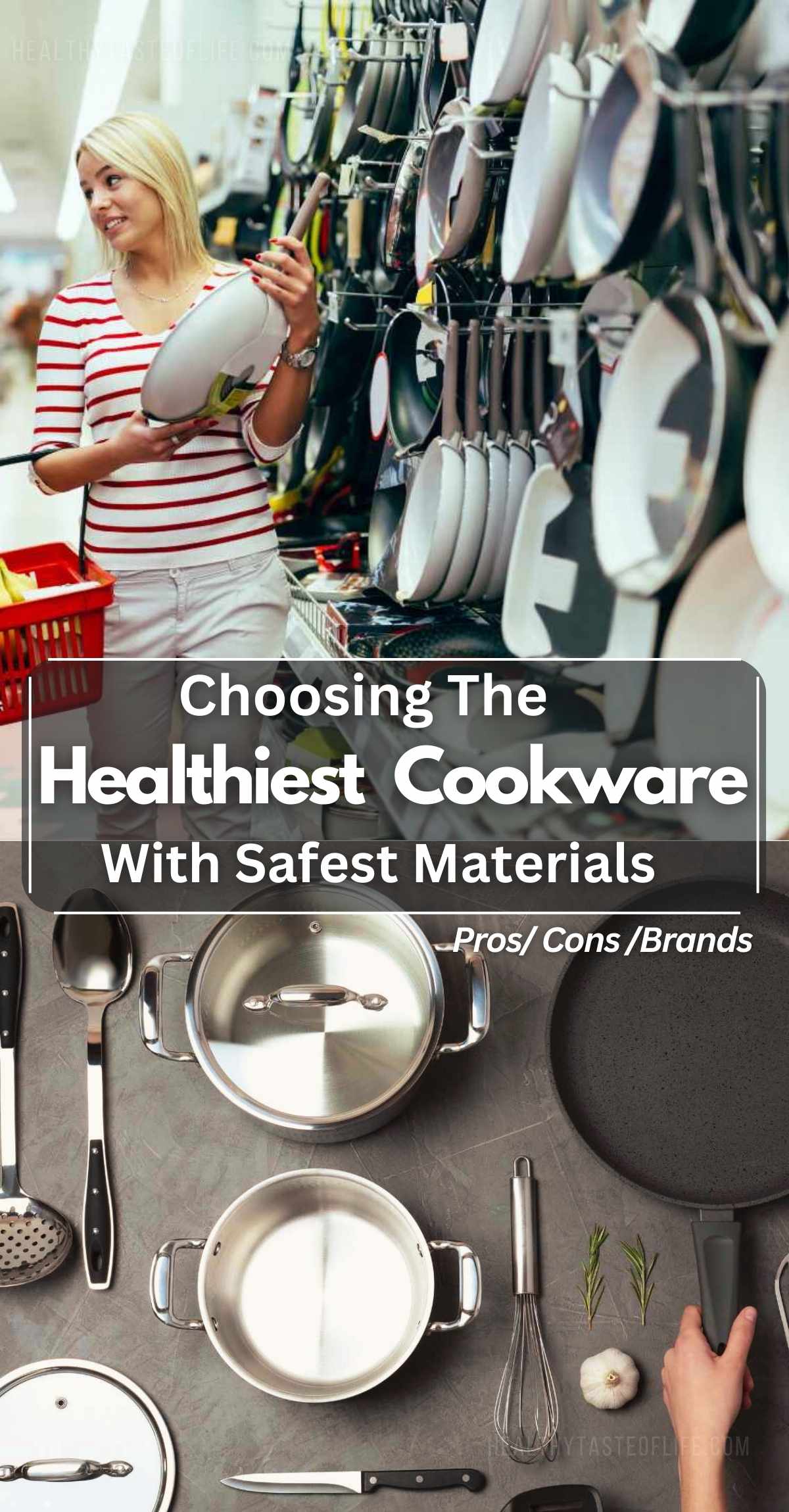
The key factors that determine if cookware is safest for health include the material composition, whether it has a protective coating, and how that coating holds up over time. Some cookware has non-stick coatings that break down with use, while others are made from solid materials that don’t change.
Source: healthytasteoflife.com
Stainless Steel: A Trusted Choice for Safe Cooking
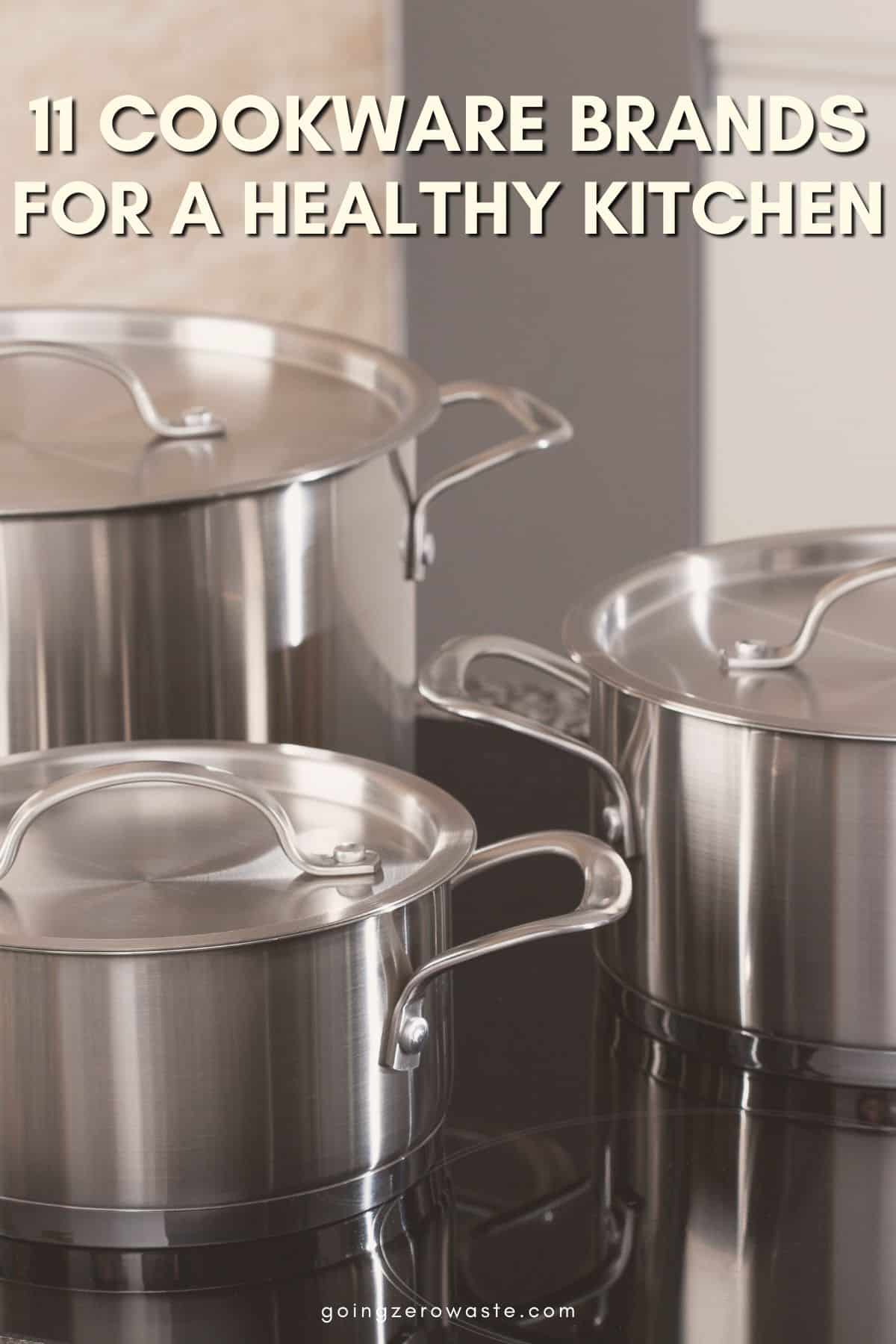
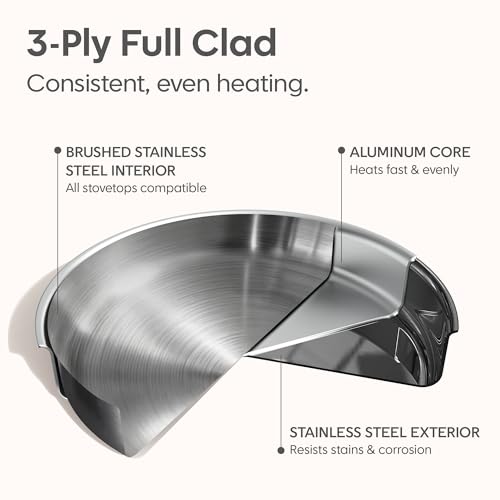
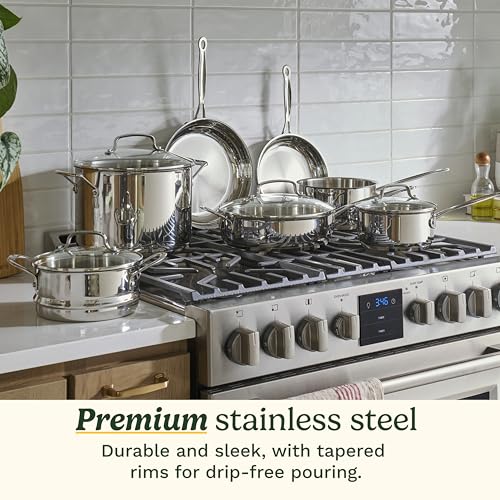
Stainless steel cookware stands out as one of the most reliable options when it comes to what is safest for health. This material is an alloy made primarily of iron, chromium, and nickel, which creates a non-reactive surface that doesn’t leach chemicals into your food. When you’re cooking with stainless steel, you can rest assured that your meals remain uncontaminated by the cookware itself.
What makes stainless steel cookware safest for health is its durability and longevity. Unlike non-stick coatings that degrade over time, stainless steel maintains its integrity for decades. I’ve been using the same stainless steel pots for over ten years, and they perform just as well today as they did when I first bought them. The material doesn’t scratch easily, won’t chip, and definitely won’t peel into your food.
However, stainless steel does have a learning curve when it comes to cooking. The material isn’t naturally non-stick, so foods can stick if you don’t use proper technique. Adding a bit of oil and preheating the pan properly solves this issue quickly. Many cooks find that once they master stainless steel, they prefer it because it offers superior heat distribution and durability.
When shopping for stainless steel cookware that is safest for health, look for pieces labeled 18/10, which means 18% chromium and 10% nickel. This composition provides excellent corrosion resistance and safety. Some people worry about nickel leaching, but studies show that the amount released is negligible and well within safe limits set by health organizations.

Source: youtube.com
Cast Iron: Traditional Safety That Improves Over Time
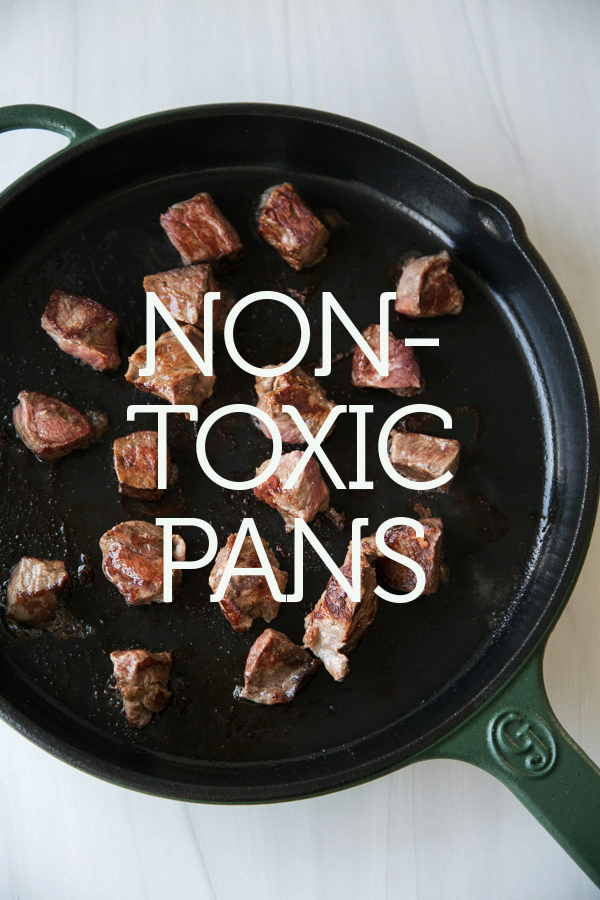
Cast iron cookware represents another excellent option when considering which cookware is safest for health. This material has been used for centuries and has a proven track record of safety. Cast iron is simply iron with a carbon coating, and it doesn’t release any harmful chemicals during cooking. In fact, cooking with cast iron can actually add beneficial iron to your meals, which is a unique advantage.
What makes cast iron cookware safest for health is its chemical simplicity. There are no coatings to break down, no chemicals to leach, and no modern manufacturing concerns. A well-maintained cast iron pan is essentially indestructible and can pass down through generations. My grandmother gave me her cast iron skillet from the 1950s, and it’s still my favorite pan to use today.
The seasoning of cast iron is crucial for making it truly safe and effective cookware. Seasoning creates a protective layer that prevents rust and provides a non-stick surface that improves with use. This natural seasoning is superior to synthetic non-stick coatings because it won’t wear off or release chemicals when scratched. Every time you cook with a well-seasoned cast iron pan, you’re reinforcing this protective layer.
Maintaining cast iron cookware that is safest for health involves simple steps. Avoid putting it in the dishwasher, don’t use harsh soaps, and dry it immediately after washing. Some people worry that acidic foods might damage the seasoning, but studies show that the impact is minimal for everyday cooking. Cast iron is versatile enough to use on stovetops, ovens, and even outdoor grills, making it a truly practical choice for health-conscious cooks.
Source: feedmephoebe.com
Ceramic Cookware: Modern Safety Without Chemicals
Ceramic cookware has gained popularity in recent years as people search for which cookware is safest for health. This category includes cookware with ceramic coatings, as well as pure ceramic pieces. The appeal is clear: ceramic doesn’t contain the chemicals found in traditional non-stick coatings, making it a safer alternative for many households.
What makes ceramic cookware safest for health is its non-toxic coating made from inorganic materials. Unlike older non-stick coatings containing PFOA (perfluorooctanoic acid), ceramic coatings are free from this chemical and its modern replacements. The coating is created by fusing ceramic particles to the metal base, resulting in a durable, inert surface that won’t leach harmful substances into your food.
Ceramic cookware that is safest for health offers genuine non-stick properties from day one, which means you can use less oil when cooking. This is particularly appealing to people trying to reduce their fat intake or improve their heart health. I’ve used ceramic pans for breakfast cooking, and they work wonderfully for eggs and pancakes without sticking.
The lifespan of ceramic cookware depends heavily on how you care for it. While ceramic coatings are tough, they can scratch and eventually wear away with aggressive use. Hand washing is recommended to extend the life of ceramic cookware that is safest for health. Most quality ceramic cookware lasts three to five years with proper care, which is considerably longer than the shortest-lasting non-stick options but shorter than cast iron or stainless steel.
When choosing ceramic cookware for health safety, look for pieces labeled as PFOA-free and lead-free. Some ceramic products, particularly decorative ceramics, can contain lead or cadmium, so it’s essential to buy cookware specifically marketed for food preparation. Always check the manufacturer’s specifications to ensure the cookware is truly safe for cooking.
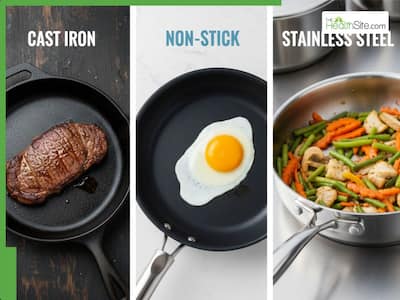
Source: thehealthsite.com
Glass Cookware: Transparency and Safety Combined
Glass cookware represents another legitimate answer to which cookware is safest for health. Pure glass is completely inert, meaning it doesn’t react with food or leach any substances, regardless of temperature or cooking time. Glass cookware is transparent, allowing you to monitor your cooking without lifting lids, and it doesn’t absorb odors or stains from foods.
What makes glass cookware safest for health is its complete chemical inertness. Glass doesn’t contain any protective coatings that can degrade, no metals that can leach, and no synthetic materials that can break down. You’re simply using a chemically stable material that safely separates heat from food. Glass has been used for food storage and preparation for generations without any documented health concerns.
Glass cookware that is safest for health works particularly well for baking, roasting, and stovetop cooking with lids. I often use glass baking dishes for lasagna and casseroles, and the even heat distribution produces excellent results. The main limitation is that glass requires careful handling—it can break if dropped and shouldn’t be subjected to rapid temperature changes that cause thermal shock.
When shopping for glass cookware for health safety, ensure it’s labeled as oven-safe and borosilicate glass when possible. Borosilicate glass is more resistant to thermal shock than regular soda-lime glass, making it more practical for everyday use. Some glass cookware can go from stovetop to oven to table, offering versatility that complements its safety profile.
:max_bytes(150000):strip_icc()/GettyImages-1347712086-c70f121318ae478bb4580c7cb8821709.jpg)
Source: health.com
Non-Stick Cookware to Avoid for Better Health
Understanding which cookware is not safest for health is just as important as knowing which options are good. Traditional non-stick cookware with PTFE (polytetrafluoroethylene) coatings, commonly known as Teflon, has been at the center of health concerns for decades. While manufacturers have phased out PFOA in many products, the chemical that replaced it, GenX, hasn’t been thoroughly tested for long-term health effects.
The primary concern with traditional non-stick cookware is that the coating can break down at high temperatures, potentially releasing harmful particles into food. When the coating scratches or peels, you’re not only losing the non-stick benefit but also potentially consuming microscopic fragments of the coating. Even though the FDA has approved these materials, many health-conscious people prefer to avoid them based on the precautionary principle.
Older non-stick cookware is particularly problematic for health safety. If your non-stick pans are scratched, discolored, or peeling, they should be replaced immediately. The degraded coating poses real risks to your health, and there’s no benefit to continuing to use compromised cookware. I recommend inspecting your non-stick pans regularly and retiring them at the first sign of damage.
The safest approach to non-stick cookware is avoidance when possible. While manufacturers claim modern non-stick coatings are safe, the ongoing evolution of these chemicals—with each generation replacing the previous one due to health concerns—suggests caution is warranted. Choosing which cookware is safest for health means prioritizing options with proven long-term safety records.

Source: youtube.com
Aluminum Cookware: Weighing the Risks
Aluminum cookware is affordable and conducts heat efficiently, but when considering which cookware is safest for health, aluminum comes with important caveats. Uncoated aluminum can leach aluminum into your food, particularly when cooking acidic foods like tomatoes, citrus, or vinegar-based dishes. This is especially concerning for people concerned about aluminum accumulation in the body.
What makes aluminum cookware potentially unsafe for health is its reactivity. Unlike stainless steel or glass, aluminum is an active metal that can interact with food. The amount of aluminum leaching depends on several factors: the pH of the food being cooked, the cooking time, and the temperature. More acidic foods result in more leaching, which is why health experts recommend avoiding uncoated aluminum for certain cooking tasks.
Hard-anodized aluminum cookware represents an improvement, as the anodization process creates a hard, non-reactive surface that seals the aluminum underneath. This type of cookware that is safest for health can be a reasonable middle ground between cost and safety. However, if the coating becomes damaged, the underlying aluminum becomes exposed once again.
For people seeking which cookware is safest for health, I generally recommend avoiding uncoated aluminum entirely and being cautious even with hard-anodized versions. The small cost difference to upgrade to stainless steel or cast iron is worth the peace of mind knowing you’re using truly inert cookware.
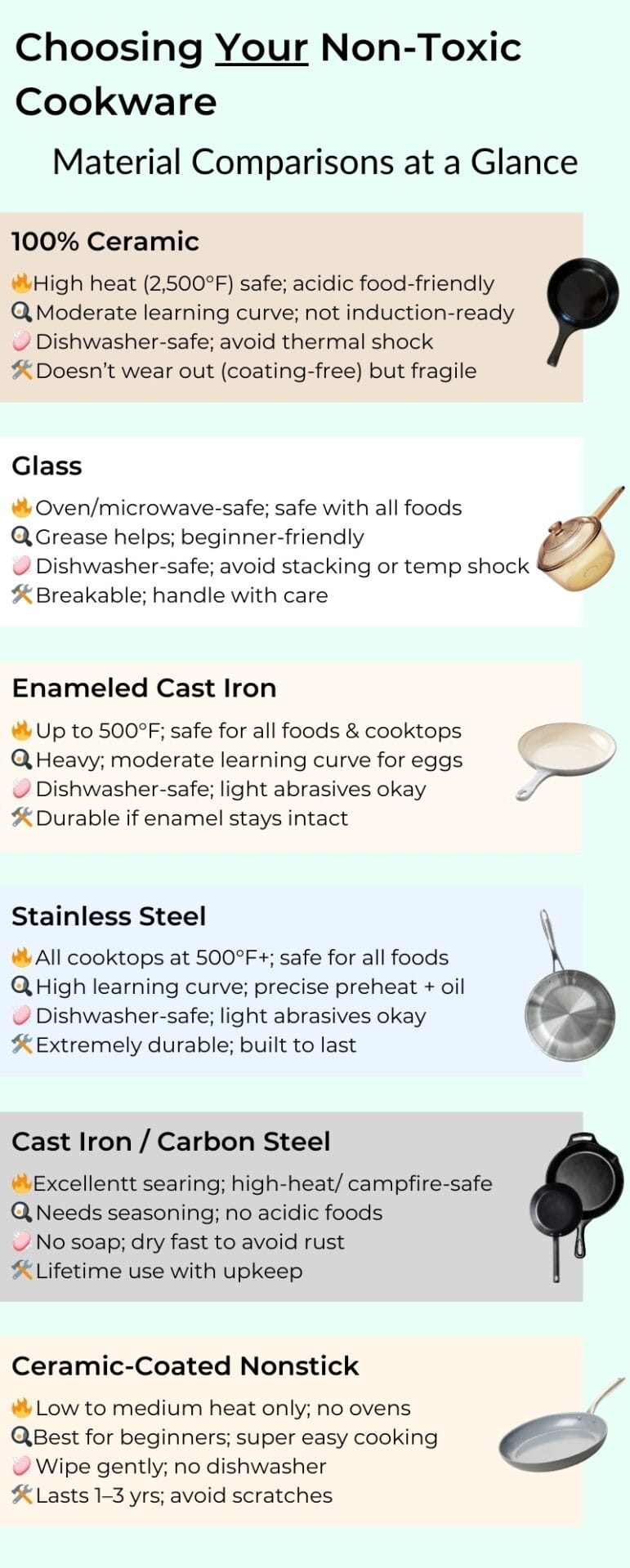
Source: thegoodlifedesigns.com
Copper Cookware: Luxury with Caution
Copper cookware is prized by professional chefs for its superior heat conductivity, but determining whether it is safest for health requires some nuance. Pure copper can leach into food, which is why copper cookware designed for cooking is typically lined with stainless steel or tin. The lining protects your food from copper exposure while preserving the heat conductivity benefits.
What makes copper cookware potentially unsafe for health is unlined copper or copper whose protective lining has worn away. Copper accumulation in the body can cause various health issues, so the protective lining is essential. When shopping for copper cookware that is safest for health, always verify that it has a substantial, protective lining that’s still in good condition.
Copper cookware requires more maintenance than stainless steel or cast iron. The copper exterior can tarnish, requiring regular polishing to maintain its appearance. For health-conscious cooks on a budget, the combination of expense and maintenance makes copper less practical than other safe cookware options.
If you love the cooking performance of copper cookware and want to ensure it is safest for health, have the lining inspected periodically. A professional can assess whether the protective layer is still intact and recommend replacement if necessary. This extra step ensures your copper cookware remains safe for daily use.
Reading Labels and Understanding Material Claims
When you’re shopping for which cookware is safest for health, understanding how to read labels and manufacturer claims is essential. Many companies use marketing language that sounds good but may not tell the full story about the cookware’s safety. Terms like “non-toxic,” “eco-friendly,” and “healthy cooking” are often unregulated marketing claims rather than official health certifications.
Look for specific information about materials rather than vague health claims. Cookware that is safest for health will clearly state its materials, such as “stainless steel 18/10” or “pure borosilicate glass.” Avoid cookware where the manufacturer is evasive about what materials are used or what coatings are applied. A transparent manufacturer is more likely selling a product they’re confident is safe.
Check for third-party testing and certifications when evaluating which cookware is safest for health. Organizations like NSF International and the Consumer Product Safety Commission provide certifications that indicate independent verification of safety claims. These certifications carry more weight than manufacturer claims alone.
Temperature ratings on cookware labels provide valuable information about safe use. Cookware that is safest for health will have clear maximum temperature guidelines that you should respect. Exceeding recommended temperatures can damage coatings and potentially release chemicals, so understanding these limits is part of using your cookware safely.
Frequently Asked Questions
Is stainless steel cookware completely safe for daily use?
Yes, stainless steel cookware is safe for daily use and is considered one of the best options for long-term health. The material is non-reactive and doesn’t leach chemicals even at high temperatures, making it reliable for any cooking task.
Can you cook acidic foods in cast iron cookware safely?
Cast iron can safely handle acidic foods, though prolonged exposure to very acidic ingredients may affect the seasoning layer slightly. For everyday cooking, occasional use with tomatoes, citrus, or vinegar won’t harm your cast iron or compromise its safety.
What’s the lifespan of ceramic non-stick cookware?
Ceramic non-stick cookware typically lasts three to five years with proper care and hand washing. The ceramic coating gradually wears away with use, and once scratching becomes visible, it’s time to replace the cookware to maintain food safety.
Are glass cookware and ceramic cookware the same thing?
No, glass and ceramic cookware are different. Glass is completely inert and chemically stable, while ceramic cookware typically refers to cookware with a ceramic coating over a metal base. Both are safe, but they have different properties and performance characteristics.
Should I replace all my non-stick cookware immediately?
Not necessarily, but you should inspect all non-stick cookware for signs of damage. If coatings are scratched, peeling, or discolored, replace the cookware promptly to avoid potential health risks from degraded coatings.
How can I transition to safer cookware without replacing everything at once?
Start by replacing your most-used pieces first, particularly cookware you use for high-heat cooking or acidic foods. Invest in one quality stainless steel pan and one cast iron skillet—these two pieces can handle most cooking tasks safely and affordably.
Conclusion
Making informed decisions about which cookware is safest for health is one of the most practical ways to protect your family’s wellbeing. Stainless steel, cast iron, ceramic, and glass cookware have all proven their safety through extensive use and testing, offering you multiple excellent options regardless of your cooking style or budget. The good news is that safe cookware doesn’t require choosing between health and performance—these materials often cook better than their unsafe alternatives once you learn to use them properly.
The journey to a healthier kitchen doesn’t require perfection or replacing every pan overnight. Start by being mindful of what you currently own, retire any damaged non-stick cookware, and gradually transition to safer options as you replace items. When you choose which cookware is safest for health, you’re investing in years of safer, healthier cooking for yourself and everyone who eats your food.
Take action today by inspecting your current cookware and assessing what needs to be replaced. If you have questions about specific pieces you own, research the manufacturer’s information or ask in cooking communities where others have tested similar products. Share what you learn with friends and family—when we make informed choices about cookware safety, we create healthier homes for everyone around us.

Leave a Reply