
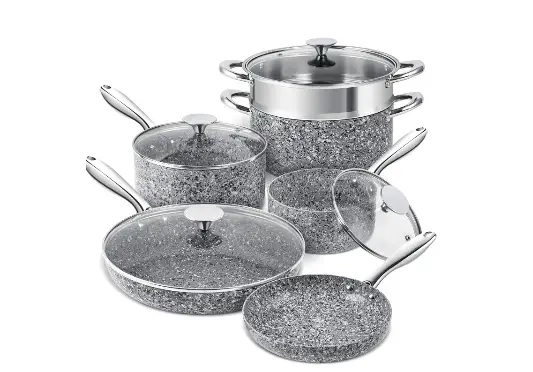
Granite cookware is typically made from a base material like cast iron or aluminum, coated with a layer of enamel. This enamel gives the cookware its distinctive granite-like appearance and non-stick qualities.
Granite cookware has gained popularity for its appealing aesthetics and functional benefits. The unique blend of materials provides durability and heat retention, making it ideal for various cooking methods. Home cooks appreciate its non-stick surface, which promotes healthier cooking with less oil.
Many choose granite cookware for its ability to withstand high temperatures while being easy to clean. With a wide range of colors and designs available, it fits seamlessly into any kitchen decor. Understanding what granite cookware is made of helps consumers make informed choices for their cooking needs.
Introduction To Granite Cookware
Granite cookware offers a unique blend of style and functionality. It combines the beauty of natural stone with modern cooking technology. This cookware is gaining popularity in kitchens worldwide. Many chefs and home cooks enjoy its durability and non-stick features.
The Appeal Of Granite In The Kitchen
Granite cookware stands out for several reasons:
- Durability: Granite is tough and resistant to scratches.
- Non-stick surface: Food slides off easily, reducing the need for oils.
- Even heating: Granite distributes heat evenly for consistent cooking.
- Easy to clean: Most granite cookware is dishwasher safe.
- Stylish design: It adds an elegant touch to any kitchen.
Granite Cookware On The Rise
Granite cookware is becoming a popular choice for many reasons:
- Healthier cooking options with less oil.
- Safe for various cooking methods, including stovetop and oven.
- Available in different colors and designs.
- Affordable compared to other premium cookware options.
Many brands now offer granite cookware. This rise in popularity shows a shift towards healthier and stylish cooking solutions. Home cooks and chefs appreciate its benefits.

Credit: formeelec.en.made-in-china.com
Composition Of Granite Cookware
Granite cookware is popular for its durability and non-stick properties. Understanding its composition reveals its quality and benefits. Let’s explore the materials and core elements that make granite cookware effective.
Materials Used In Manufacturing
Granite cookware is not made of pure granite. It typically consists of several key materials:
- Cast Iron: Provides strength and heat retention.
- Porcelain Enamel: Creates a non-stick surface.
- Granite Coating: Offers a scratch-resistant finish.
These materials work together to enhance cooking performance.
Core Elements Of Granite Cookware
The core elements of granite cookware focus on its construction. Each component plays a vital role:
| Element | Function |
|---|---|
| Base Layer | Provides strength and stability. |
| Granite Coating | Ensures a non-stick surface. |
| Protective Layer | Prevents scratches and damage. |
These core elements contribute to the overall performance of granite cookware.
The Manufacturing Process
The manufacturing process of granite cookware is fascinating. It involves several steps. Each step ensures high quality and durability. The final product is both beautiful and functional.
From Raw Materials To Cookware
Granite cookware starts with raw materials. These materials include:
- Aluminum or stainless steel base
- Granite stone particles
- Non-toxic bonding agents
The process begins by preparing the base. Manufacturers heat the aluminum or stainless steel. This forms a sturdy foundation. Next, they mix granite particles with bonding agents. This mixture is crucial for strength.
The mixture is then applied to the heated base. This creates a solid layer of granite. After that, the cookware goes through a high-temperature curing process. This step ensures the coating adheres well. The final result is a durable and attractive cookware piece.
Coating Techniques For Non-stick Surfaces
Non-stick surfaces are essential for granite cookware. Manufacturers use different coating techniques. These techniques enhance cooking performance.
| Technique | Description | Benefits |
|---|---|---|
| Spray Coating | Evenly applies non-stick layer. | Ensures uniform coverage. |
| Powder Coating | Uses dry powder to coat the surface. | Creates a durable, scratch-resistant finish. |
| Thermal Coating | Heats the cookware for better adhesion. | Enhances non-stick properties. |
Each technique provides unique advantages. The right coating ensures food does not stick. This makes cooking and cleaning easy.
Benefits Of Using Granite Cookware
Granite cookware offers many advantages for your kitchen. Its unique properties make cooking easier and healthier. Let’s explore the key benefits.
Durability And Longevity
Granite cookware is known for its strong build. It resists scratches and chips, making it last longer. Here are some reasons why durability matters:
- Withstands high temperatures.
- Does not warp easily.
- Maintains a beautiful appearance over time.
This durability saves you money. You won’t need to replace your pots and pans often.
Non-toxic Cooking Experience
Granite cookware is free from harmful chemicals. It ensures a safe cooking environment. Here are some benefits:
- No release of toxic fumes.
- Safe for your family’s health.
- Easy to clean without harmful detergents.
Cooking with granite means less worry about chemicals. Enjoy a healthier lifestyle with every meal.
Comparing Granite To Other Cookware Materials
Granite cookware offers unique benefits. It stands out against other materials. Understanding its differences helps in choosing the best cookware.
Granite Vs. Stainless Steel
Granite and stainless steel are popular choices. Each has distinct features. Here’s how they compare:
| Feature | Granite Cookware | Stainless Steel Cookware |
|---|---|---|
| Non-Stick Surface | Yes, easy food release | No, requires oil or butter |
| Durability | Scratch-resistant, but can chip | Very durable, resistant to rust |
| Weight | Lightweight | Heavier than granite |
| Heat Conductivity | Even heating | Excellent, heats quickly |
Granite cookware is easier to clean. It also provides a non-stick surface. Stainless steel requires more maintenance. It lasts longer but may require seasoning.
Granite Vs. Cast Iron
Granite and cast iron serve different cooking needs. Cast iron is known for its heat retention. Here’s a quick comparison:
| Feature | Granite Cookware | Cast Iron Cookware |
|---|---|---|
| Weight | Lightweight | Very heavy |
| Non-Stick Surface | Yes, great for delicate foods | No, needs seasoning |
| Heat Retention | Good, but not as strong | Excellent, holds heat well |
| Versatility | Great for everyday cooking | Ideal for slow cooking and frying |
Granite cookware offers convenience for daily meals. It’s perfect for quick and easy cooking. Cast iron excels in slow cooking and deep frying. Choose based on your cooking style.
Safety Concerns And Myths
Granite cookware has become popular in many kitchens. Yet, many people worry about its safety. This section addresses health concerns and debunks myths surrounding granite cookware.
Addressing Common Health Concerns
Some people fear that granite cookware is unsafe. Here are some common concerns:
- Lead Content: Many granite cookware brands are lead-free.
- Non-stick Surface: The coating is safe for cooking.
- Durability: Granite cookware resists scratching and chipping.
Reputable brands ensure their products meet safety standards. Always check for certifications before buying.
Debunking Myths About Granite Cookware
Several myths exist about granite cookware. Let’s clear them up:
- Myth 1: Granite cookware is heavy.
- Myth 2: It releases harmful chemicals.
- Myth 3: It cannot handle high heat.
Granite cookware is not excessively heavy. It’s designed for ease of use. It does not release harmful chemicals. Properly made granite cookware can handle high temperatures.
Choosing granite cookware can be a safe option. Understanding the facts helps you make informed decisions.
Maintenance And Care For Granite Cookware
Granite cookware is known for its durability and beauty. Proper maintenance ensures it lasts long. Follow these care tips to keep your cookware in great shape.
Cleaning Tips For Longevity
Cleaning granite cookware requires special attention. Use these effective cleaning tips:
- Hand Wash: Always hand wash with warm, soapy water.
- Avoid Abrasives: Never use steel wool or harsh scrubbers.
- Use Soft Cloths: Soft sponges or cloths are best.
- Rinse Thoroughly: Remove all soap residue after washing.
- Dry Immediately: Wipe dry with a soft towel to prevent spots.
Avoiding Common Wear And Tear
Prevent wear and tear on your granite cookware with these tips:
- Use Low to Medium Heat: High heat can damage the coating.
- Don’t Preheat Empty Pans: Always add food or oil first.
- Use Wooden or Silicone Utensils: Avoid metal utensils that scratch.
- Store Carefully: Stack cookware with cloths in between to avoid scratches.
- Inspect Regularly: Check for chips or cracks often.
Following these tips will help you maintain your granite cookware. Enjoy cooking with beautiful and durable pots and pans.

Credit: toxicityfacts.com
Making An Informed Decision
Choosing the right cookware affects your cooking experience. Granite cookware is popular for its durability and style. Understanding its composition helps you make smart choices. Let’s explore what granite cookware is made of and how to pick the best options.
Choosing The Right Cookware For Your Needs
Granite cookware offers unique features. Here are some points to consider:
- Material: Granite cookware usually has a core of aluminum. This ensures even heat distribution.
- Coating: It is coated with a layer of enamel. This makes it non-stick and easy to clean.
- Durability: Granite cookware is resistant to scratches and chips.
- Weight: It can be heavier than traditional non-stick pans.
Think about your cooking style before buying. Here’s a quick guide:
| Cooking Style | Recommended Cookware |
|---|---|
| Frying | Granite frying pan |
| Baking | Granite baking dish |
| Boiling | Granite saucepan |
The Cost-effectiveness Of Granite Cookware
Granite cookware can be a smart investment. Here are the key benefits:
- Longevity: It lasts longer than many other cookware types.
- Non-stick surface: Reduces the need for oil or butter.
- Easy cleaning: Saves time and effort after cooking.
- Versatility: Suitable for various cooking methods.
Consider these factors when assessing cost:
- Initial price of the cookware.
- Durability and lifespan.
- Cost of maintenance and cleaning.
Granite cookware may have a higher upfront cost. It can save money over time. Think about these aspects before making your final decision.

Credit: www.amazon.com
Frequently Asked Questions
What Materials Are Used In Granite Cookware?
Granite cookware is typically made from a core material, often aluminum or steel, coated with a layer of enamel that includes granite particles. This combination offers durability, even heat distribution, and a non-stick surface. The granite coating is designed to be scratch-resistant and easy to clean.
Is Granite Cookware Safe For Cooking?
Yes, granite cookware is generally safe for cooking. The granite coating is non-toxic and does not leach harmful chemicals into food. However, it’s essential to avoid using metal utensils to prevent scratches. Always check for safety certifications to ensure your cookware meets health standards.
How Do You Maintain Granite Cookware?
To maintain granite cookware, use gentle cleaning methods. Avoid abrasive sponges and harsh chemicals. Hand wash with warm soapy water and dry thoroughly. Store cookware carefully to prevent chipping. Regular maintenance helps preserve the non-stick properties and extends the life of your cookware.
Can Granite Cookware Go In The Oven?
Many granite cookware pieces are oven-safe, but it depends on the brand. Check the manufacturer’s guidelines for temperature limits and safe usage. Typically, granite cookware can withstand moderate oven temperatures, making it versatile for various cooking methods, including baking and roasting.
Conclusion
Granite cookware combines durability and style, making it a popular choice for many kitchens. Its unique composition ensures even heat distribution for better cooking results. Understanding what granite cookware is made of can help you choose the best options for your culinary needs.
Invest in quality granite cookware for a superior cooking experience.

Leave a Reply