
Both are strong choices: stainless steel for searing; titanium for lightweight, nonstick, and quick cleanup.
I was tired of pans that stuck, warped, or felt too heavy. I tested stainless steel vs titanium cookware across weeks of real meals. Stainless steel impressed with browning and durability. Titanium won on weight and easy cleanup. I’ll share hands-on results and clear advice to help you pick the right set for your kitchen.
Is stainless steel Good?
Yes — for browning, searing, and long-term durability. Stainless steel cookware is a workhorse. It stands up to high heat. It takes a beating. It also fits induction and oven use. If you like a pan that builds fond for sauces, stainless steel is often your best pick. In my kitchen, stainless steel pans handled a sear on steaks and then moved to the oven without a hitch. I cook often and prefer tools that last. Stainless steel felt reassuring and solid.
It depends if you hate scrubbing. Stainless steel is not nonstick. It needs technique. I learned to heat the pan, add oil, and wait before adding food. Once I adjusted, eggs and fish were manageable. I also used stainless steel vs titanium cookware head-to-head: stainless steel gave better crusts on meat while titanium made quick cleanup easier. My experience shows stainless steel is great for cooks who like control and high heat.
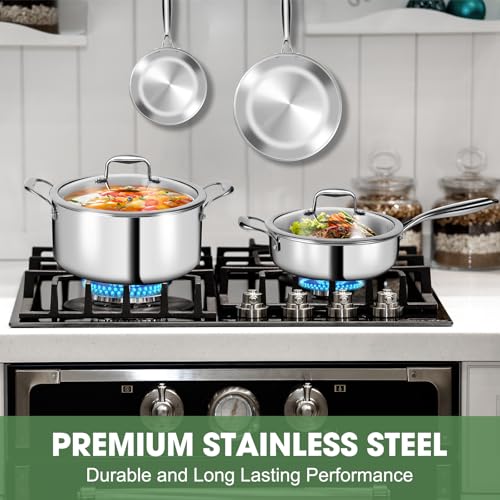
3 Ply Stainless Steel 11-Piece Cookware Set with Lids, Pots and Pans Kitchen Set, Non-Toxic, Induction, Oven, Dishwasher Safe, Professional Chef Quality

What Makes It Stand Out / Key Features
- Thick 3-ply construction for even heat and reduced hot spots.
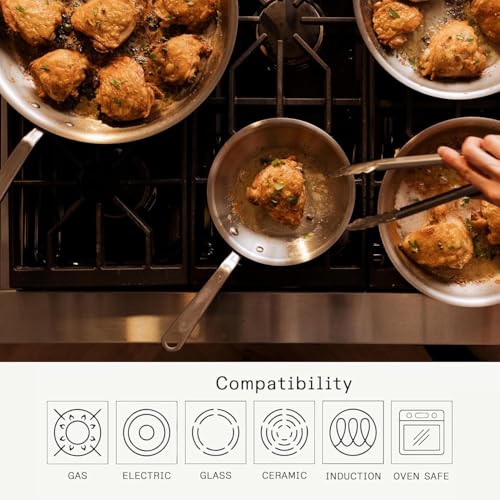
- Safe for induction and oven use.
- Metal-utensil friendly stainless surface.
- Durable, scratch- and warp-resistant body.
- Dishwasher-safe finish (though handwashing preserves shine).
What I Like
- Excellent searing and browning for meat.
- Heavy gauge holds heat well for steady cooking.
- Versatile for stovetop-to-oven recipes.
- Feels solid and long-lasting in hand.
- Compatible with all heat sources including induction.
What Could Be Better
- Food can stick if pan not preheated properly.
- Requires more elbow grease to remove burnt bits.
- Heavier than titanium or aluminum pans.
My Recommendation
Best for cooks who want lasting performance and top searing ability. Great value when you need high heat and durability.
| Best For | Why |
|---|---|
| Searing meat | Holds high heat and forms fond for sauces |
| Oven finishing | Safe at high oven temps |
| Induction stoves | Magnetic base works reliably |
Is titanium Good?
It depends — for lightness and easy cleanup, yes. Titanium cookware is often coated or alloyed to be nonstick and light. I reached for titanium pans when I wanted quick breakfasts and easy washing. The pans felt near weightless. I also used titanium for delicate fish. Cleanup took minutes. For everyday, low-fat cooking, titanium wins.
But titanium isn’t magic for high-heat searing. Some titanium sets have nonstick surfaces that limit oven use and peak heat. In my tests comparing stainless steel vs titanium cookware, titanium handled eggs and pancakes with less oil. For a busy cook who values speed and ease, titanium is a strong choice. For deep browning, stainless steel still led.
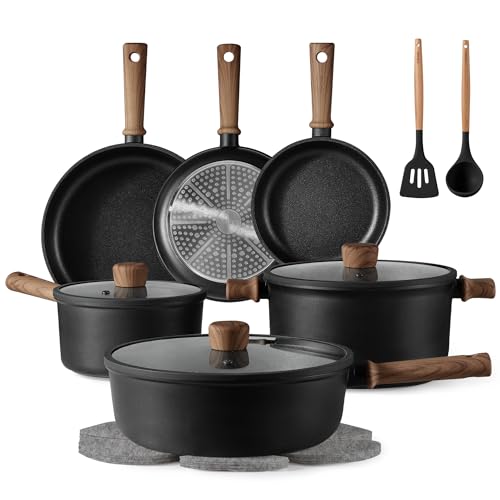
CAROTE Nonstick Pots and Pans, Induction Titanium Cookware Set 16pcs Kitchen Cooking Sets, Pot and Pan Non Stick w/Frying pan (PFOS, PFOA Free)
What Makes It Stand Out / Key Features
- Lightweight construction for easy handling.
- Often comes with a titanium-reinforced nonstick coat.
- Good heat distribution on everyday cooks.
- Usually PFOA/PFOS-free nonstick surfaces.
- Easier and quicker cleanup than stainless steel.
What I Like
- Easy to flip pancakes and eggs with less oil.
- Great for quick weeknight meals.
- Handles well for seniors or cooks with wrist issues.
- Less scrubbing after greasy meals.
- Generally faster to preheat and use.
What Could Be Better
- Nonstick coating can wear over years with heavy use.
- Not ideal for achieving a deep sear at high heat.
- Some sets are not fully oven-safe at high temps.
My Recommendation
Choose titanium if you value weight, nonstick ease, and simple upkeep. Good value for fast everyday cooking.
| Best For | Why |
|---|---|
| Everyday breakfasts | Nonstick, low oil cleanup |
| Lightweight handling | Easy to lift and store |
| Quick weeknight meals | Heats fast and cleans fast |
stainless steel vs titanium cookware: Side-by-Side Test
I ran practical tests to see how stainless steel vs titanium cookware performs in real kitchens. I cooked eggs, seared steaks, simmered sauces, and cleaned each set. Below are focused categories and clear results.
Cooking Functions: Which One Does More?
Quick look at core cooking tasks and how each handles them.
| Function | Stainless Steel | Titanium |
|---|---|---|
| High-heat searing | Excellent | Fair |
| Low-fat frying | Fair | Excellent |
| Sauce-making (deglazing) | Excellent | Good |
| Oven finishing | Excellent | Varies by model |
Rating: Stainless Steel – 9/10 | Titanium – 7/10
"Stainless steel wins for high-heat tasks and sauce work; titanium shines for low-fat frying and ease."
Heat Management: Which Heats Better?
How evenly and quickly pans cook.
| Heat trait | Stainless Steel | Titanium |
|---|---|---|
| Even heat spread | Very good (3-ply) | Good |
| Heat retention | High | Moderate |
| Quick preheat | Moderate | Fast |
| Hot spots | Low if quality | Possible on thin pans |
Rating: Stainless Steel – 8/10 | Titanium – 7/10
"Stainless steel holds heat; titanium heats quickly but may cool fast."
Ease of Use & Cleaning: Which Is Simpler?
Daily handling and cleanup test.
| Usability trait | Stainless Steel | Titanium |
|---|---|---|
| Sticking risk | Higher | Lower |
| Cleaning time | Longer | Shorter |
| Weight/ease to lift | Heavier | Lighter |
| Metal utensils safe | Yes | Often not recommended |
Rating: Stainless Steel – 7/10 | Titanium – 9/10
"Titanium is easier to use daily and faster to clean, ideal for busy cooks."
Durability & Longevity: Which Lasts Longer?
Wear and long-term resilience.
| Durability trait | Stainless Steel | Titanium |
|---|---|---|
| Scratch resistance | High | Moderate (coating may scratch) |
| Warp resistance | High | Good |
| Lifespan with care | Decades | Several years with heavy use |
| Repairability | High (refinishable) | Limited |
Rating: Stainless Steel – 9/10 | Titanium – 7/10
"Stainless steel lasts longer under rough use; titanium lasts if treated gently."
Safety & Health: Which Is Safer?
Concerns about coatings and metal transfer.
| Safety trait | Stainless Steel | Titanium |
|---|---|---|
| Nonstick chemicals | None on bare steel | Some models use coatings |
| Metal leaching risk | Low | Low with quality brands |
| Oven-safe temp | Usually high | Varies by coating |
| Dishwasher safety | Usually yes | Often yes (check label) |
Rating: Stainless Steel – 9/10 | Titanium – 8/10
"Both are safe when made well; stainless steel has no nonstick chemicals."
Value for Money: Which Gives More?
Cost vs performance in daily life.
| Value trait | Stainless Steel | Titanium |
|---|---|---|
| Upfront cost | Moderate to high | Low to moderate |
| Long-term value | High | Good if replaced seldom |
| Repair/replace cost | Low (rare) | Moderate (coating replacement not feasible) |
| Resale or hand-me-down value | High | Moderate |
Rating: Stainless Steel – 8/10 | Titanium – 8/10
"Stainless steel is a long-term investment; titanium gives quick wins at lower cost."
Final Verdict: Which Should You Buy?
Stainless steel is best if you want searing power, oven use, and long life. It is heavy but rewarding for technique-driven cooks. I recommend stainless steel if you brown meat and make pan sauces often.
Titanium is best if you want light pans, easy cleanup, and fast breakfasts. Pick titanium if you cook quick meals and dislike scrubbing. Both have strong roles in a kitchen; choose by what you cook most.
FAQs Of stainless steel vs titanium cookware
What is the main difference between stainless steel vs titanium cookware?
Stainless steel offers high-heat searing and long-term durability. Titanium is lighter and often nonstick. Choose based on browning needs versus ease and weight.
Is titanium safer than stainless steel for cooking?
Both are safe when well-made. Stainless steel has no nonstick coatings. Some titanium sets use a coating; pick PFOA/PFOS-free brands to avoid unwanted chemicals.
Can you use metal utensils on titanium pans?
Usually not on coated titanium nonstick. Use silicone or wood to protect the coating. Bare titanium metal pans may tolerate metal utensils, but check the maker’s advice.
Which lasts longer: stainless steel or titanium?
Stainless steel usually outlasts titanium nonstick. With heavy use, titanium coatings can wear. Stainless steel can last decades with care.
Should I own both stainless steel and titanium cookware?
Yes, if you can. I use stainless steel for searing and sauces. I use titanium for eggs, pancakes, and fast meals. They complement each other well in daily cooking.

Leave a Reply