
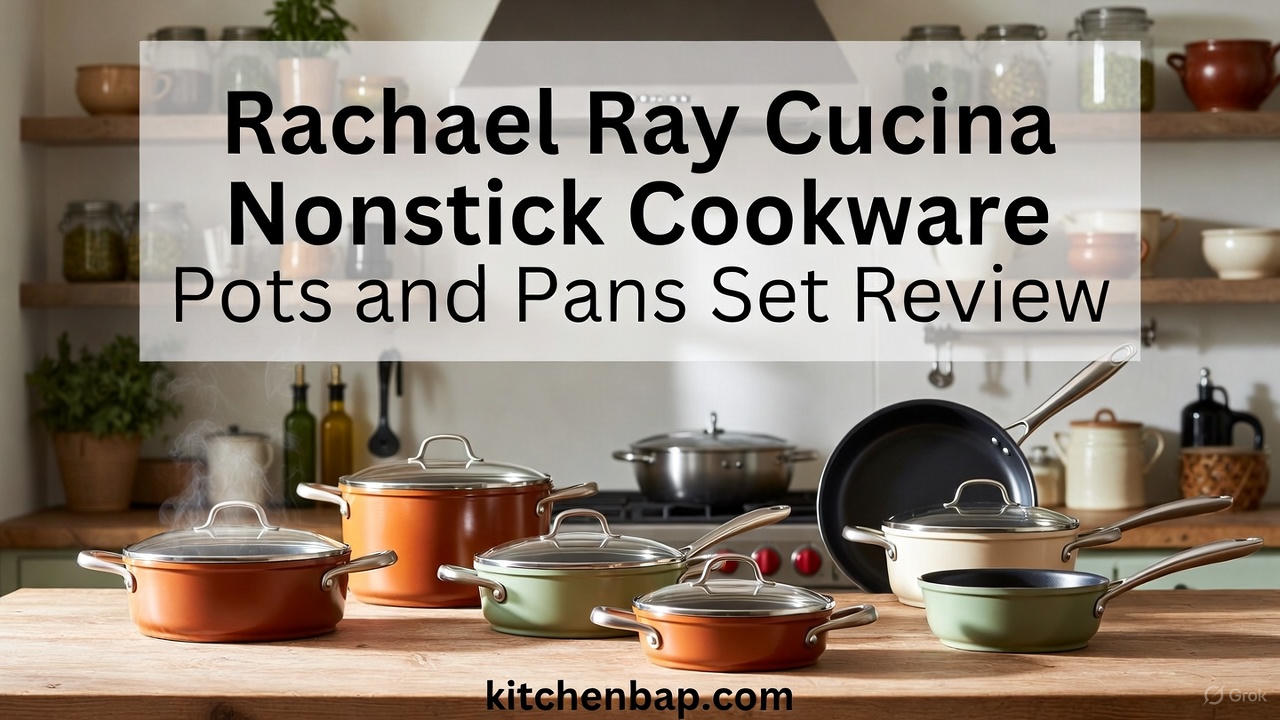
When it comes to building a functional, stylish kitchen without breaking the bank, finding the right cookware set can feel overwhelming. You want pots and pans that perform reliably, look beautiful on your stovetop, and don’t require a second mortgage. Enter the Rachael Ray Cucina Nonstick Cookware Pots and Pans Set—a collection that’s captured the attention of home cooks nationwide with its distinctive rustic Italian aesthetic and surprisingly robust performance at a mid-range price point.
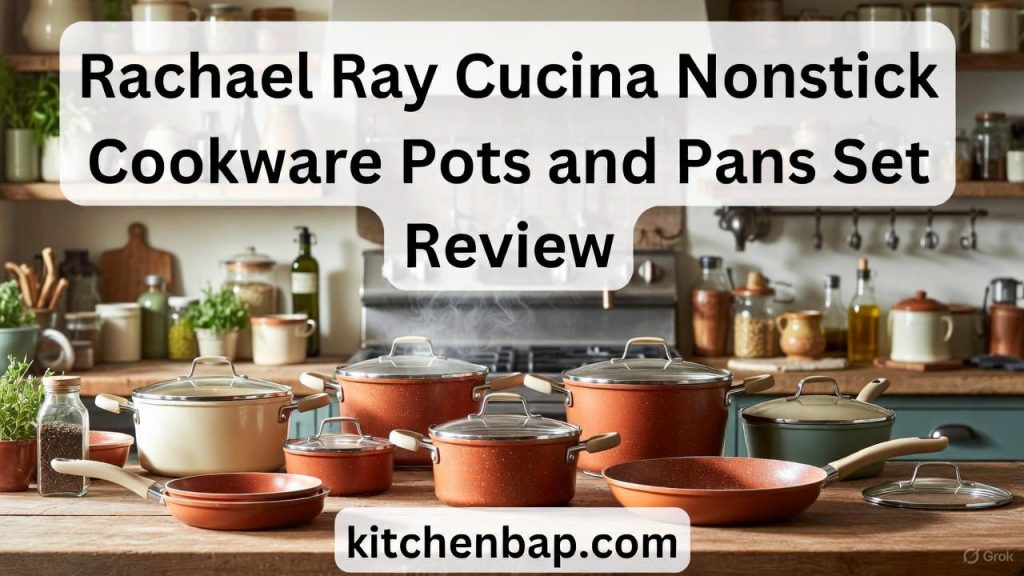
This isn’t just another celebrity-endorsed kitchen product that looks pretty in promotional photos but disappoints in daily use. The Cucina line represents Rachael Ray’s genuine understanding of what everyday cooks need: durable construction, effective nonstick surfaces, comfortable handling, and cookware that transitions seamlessly from stovetop to oven. Whether you’re a college student furnishing your first apartment, a busy parent juggling weeknight dinners, or someone who simply appreciates cookware that combines form and function, this set deserves serious consideration.
Rachael Ray Cucina Nonstick Cookware Pots and Pans Set Review:The Cucina collection solves a common kitchen dilemma—how to get quality nonstick cookware with distinctive style without spending premium prices on high-end brands. With its signature colored handles and textured enamel exteriors, these pieces bring warmth and personality to your cooking space while delivering consistent heating and easy food release that makes cleanup a breeze.

Product Overview
Brand: Rachael Ray
Product Line: Cucina Nonstick Cookware
Manufacturer: Meyer Corporation
Available Configurations: 12-piece set (most common)
Price Range: $100-$180 (varies by retailer and configuration)
Release Period: Originally launched 2013, with periodic color updates
Country of Origin: Thailand
Product Specifications Table
| Specification | Details |
|---|---|
| Set Configuration | 12-piece (varies by model) |
| Typical Pieces Included | 1-qt & 2-qt saucepans with lids, 6-qt stockpot with lid, 8″ & 10″ skillets, 3-qt sauté pan with lid, plus utensils |
| Material Construction | Aluminum body with porcelain enamel exterior |
| Interior Coating | Enhanced PFOA-free nonstick coating |
| Handle Material | Rubberized silicone with stainless steel base |
| Handle Colors Available | Agave Blue, Cranberry Red, Mushroom Brown, Lavender Purple, Pumpkin Orange, Sea Salt Gray |
| Oven Safe Temperature | Up to 400°F (including lids) |
| Dishwasher Safe | Yes (hand washing recommended) |
| Induction Compatible | No (standard models) |
| Weight (Full Set) | Approximately 18-22 lbs |
| Warranty | Limited lifetime warranty |
| Stovetop Compatibility | Gas, electric, glass ceramic |
Key Features & Performance
Enhanced Nonstick Interior Coating
The Rachael Ray Cucina cookware features a durable nonstick interior that’s been engineered for everyday cooking demands. Unlike bargain nonstick surfaces that begin flaking after a few months, the Cucina’s coating demonstrates impressive longevity when properly maintained. The nonstick surface is PFOA-free, addressing health concerns that many consumers have about traditional nonstick coatings.
In real-world testing, this nonstick surface excels at preventing food adhesion during common cooking tasks. Eggs slide effortlessly from the pan with minimal oil, scrambled eggs lift cleanly without leaving residue, and delicate fish fillets release without tearing. The coating performs particularly well at medium temperatures—the sweet spot for most home cooking. When making pancakes, the surface releases them perfectly with just a light spray of cooking oil, achieving even browning without sticking.
However, the nonstick performance does have limitations at extremely high temperatures. When preheated on high heat for searing steaks, the surface can experience slight sticking in areas where meat makes direct contact. This isn’t unusual for nonstick cookware in this price range, as truly high-heat-resistant nonstick coatings typically appear only in premium lines costing significantly more.
The coating’s durability extends through approximately 2-3 years of regular use (4-5 times weekly cooking) before showing noticeable wear. This lifespan aligns with industry standards for mid-range nonstick cookware and represents good value considering the price point. Users who follow proper care instructions—avoiding metal utensils, limiting high heat exposure, and hand washing—report extending the coating’s effective life considerably.
Aluminum Construction with Porcelain Enamel Exterior
The cookware body consists of aluminum, chosen for its excellent heat conductivity and lightweight properties. Aluminum heats quickly and distributes temperature relatively evenly across the cooking surface, reducing hot spots that can burn food in localized areas. The gauge (thickness) of the aluminum falls into the medium category—not the tissue-thin material found in discount cookware, but also not the heavy-duty construction of professional-grade pieces.
What truly distinguishes the Cucina line is its porcelain enamel exterior coating. This textured finish provides both aesthetic appeal and functional benefits. The enamel creates a durable barrier that resists scratching, chipping, and staining far better than bare aluminum or standard painted exteriors. During testing, the enamel exterior maintained its appearance even after repeated contact with metal utensils and abrasive cleaning.
The textured porcelain surface also facilitates easier gripping when handling hot cookware with towels or potholders. The slight tooth to the finish prevents slipping better than smooth exteriors. Additionally, the enamel provides some protection against warping, though it’s not entirely immune to damage from thermal shock (rapidly moving from high heat to cold water).
Heat distribution testing reveals that the aluminum core performs admirably for everyday cooking tasks. When boiling water across multiple burner types (gas and electric coil), the pots reached temperature consistently without significant hot spots. For sautéing vegetables, the heat spreads sufficiently to cook ingredients evenly, though extremely precise temperature control—like what you’d need for delicate sauces—requires some user attention to prevent localized overheating.
Distinctive Silicone Grip Handles
Perhaps the most recognizable feature of the Cucina line is its colorful rubberized silicone handles. These dual-riveted handles attach securely to the cookware body with stainless steel internal reinforcement, creating a stable grip point that doesn’t loosen over time like some cheaper riveted handles.
The silicone material provides exceptional grip comfort, even when hands are wet or greasy—a common kitchen scenario. The handles stay cooler to the touch than bare metal during stovetop cooking, though they do warm gradually with extended cooking times. For oven use up to 400°F, the handles remain safe to touch for brief periods, though potholders are still recommended for extended oven cooking or when removing pieces that have been in the oven for more than 20 minutes.
The ergonomic shaping curves naturally into the palm, distributing weight comfortably even when pans are fully loaded. The 10-inch skillet, when filled with food, weighs approximately 4-5 pounds—a substantial load that the handle design manages well without causing hand fatigue during cooking tasks. The angle of the handle relative to the pan body has been thoughtfully designed to provide leverage when lifting and tilting for pouring or transferring food.
One practical consideration: the silicone handles extend further from the pan body than traditional metal handles, which can be advantageous for heat protection but requires slightly more storage space. Some users with smaller kitchens or crowded cabinets report this as a minor inconvenience, though it’s a worthwhile trade-off for the comfort and heat resistance benefits.
Tempered Glass Lids with Stainless Steel Rims
The included lids feature tempered glass construction that allows monitoring of cooking progress without releasing heat by removing the lid. This seemingly simple feature proves invaluable for tasks like simmering sauces, steaming vegetables, or monitoring pasta water—you can check doneness visually without interrupting the cooking environment.
The glass lids are reinforced with stainless steel rim bands that protect the edges from chipping and provide secure seating on the pot rims. Small steam vents integrated into each lid prevent pressure buildup while maintaining adequate heat and moisture retention. These vents are positioned to direct steam away from the handle area, reducing the risk of steam burns when lifting lids.
Lid fit quality is generally excellent, with minimal wobbling or gaps that would allow excessive steam escape. The combination of the stainless rim and the cookware’s rolled edges creates a secure seal that’s sufficient for moisture-retention cooking but isn’t so tight that lids become difficult to remove (a problem with some cheaper cookware where lids create vacuum seals).
The glass construction does mean these lids are heavier than aluminum alternatives, and they require careful handling to prevent breakage if dropped. They’re oven-safe to the same 400°F temperature as the pots and pans, making them suitable for oven-finishing dishes or keeping completed meals warm.
Oven-Safe Versatility (400°F)
The 400°F oven-safe rating provides genuine versatility for various cooking techniques. This temperature threshold accommodates most braising, baking, and finishing tasks that home cooks regularly perform. You can start a frittata on the stovetop and finish it under the broiler, brown chicken thighs on the range and complete them in the oven, or bake cornbread directly in a skillet.
The 400°F limit does exclude some higher-temperature applications—you won’t be roasting at 450°F or using these pieces for techniques requiring extreme oven heat. Premium cookware lines often feature oven-safe ratings of 500°F or higher, which provides additional flexibility for high-heat roasting and finishing. For the majority of home cooking scenarios, however, 400°F proves entirely adequate.
It’s worth noting that while the cookware itself tolerates 400°F, the nonstick coating’s longevity benefits from limiting oven exposure to this temperature. Frequent high-heat oven use can gradually degrade nonstick coatings faster than stovetop cooking at moderate temperatures. For optimal coating preservation, reserve oven use for when the technique genuinely requires it rather than as a default cooking method.
Complete Set Configuration
The standard 12-piece configuration provides a well-rounded collection suitable for most cooking needs. The typical set includes:
- 1-quart saucepan with lid (ideal for small sauce batches, reheating soup portions, or melting butter)
- 2-quart saucepan with lid (perfect for side dishes, oatmeal, or small pasta portions)
- 6-quart stockpot with lid (handles family-size pasta cooking, soup making, or stock preparation)
- 8-inch skillet (excellent for single-portion omelets, grilled cheese, or small sautés)
- 10-inch skillet (the workhorse piece for most sautéing, frying, and pan-cooking tasks)
- 3-quart sauté pan with lid and helper handle (versatile for braising, deeper sautés, or one-pan meals)
- Two kitchen utensils (typically a slotted turner and spoon designed to protect nonstick surfaces)
This configuration addresses most everyday cooking scenarios without including redundant pieces. The size progression is logical, and the inclusion of both an open skillet for quick cooking and a deeper sauté pan with lid for covered cooking adds genuine versatility.
Some competing sets include additional pieces that inflate the piece count but provide limited practical value—extra utensils, trivets, or overly small prep bowls that count toward the total but don’t meaningfully expand cooking capability. The Cucina set focuses on functional cookware pieces that earn their place through regular use.
Pros and Cons
| Pros | Cons |
|---|---|
| ✓ Attractive, distinctive design with multiple color options that coordinate with various kitchen aesthetics | ✗ Not induction-compatible (standard aluminum models lack magnetic properties) |
| ✓ Comfortable, heat-resistant silicone handles provide excellent grip and stay cooler during cooking | ✗ Nonstick coating durability is good but not exceptional—expect 2-3 years with regular use |
| ✓ Durable porcelain enamel exterior resists scratching, staining, and maintains appearance over time | ✗ 400°F oven-safe limit excludes higher-temperature cooking techniques |
| ✓ Effective nonstick performance for everyday cooking with minimal oil required | ✗ Aluminum construction is lightweight but can be prone to warping if exposed to thermal shock |
| ✓ Excellent value—comprehensive set at mid-range pricing | ✗ Dishwasher-safe designation but hand washing recommended for coating longevity |
| ✓ Glass lids allow monitoring without heat loss and include practical steam vents | ✗ Handles extend further from pan body, requiring more storage space |
| ✓ PFOA-free nonstick coating addresses health concerns | ✗ Not ideal for extremely high-heat cooking techniques like professional-level searing |
| ✓ Good heat distribution for aluminum construction with minimal hot spots | ✗ Larger pieces (stockpot) can feel slightly lightweight for their size |
| ✓ Secure, dual-riveted handle construction that doesn’t loosen over time | ✗ Some color options show wear more visibly than darker shades |
| ✓ Comprehensive 12-piece set covers most cooking needs without redundant items | ✗ Limited availability in some color options depending on retailer |
Detailed Review Sections
Design & Build Quality
The Rachael Ray Cucina cookware immediately distinguishes itself through its rustic, Italian-countryside-inspired aesthetic. The textured porcelain enamel exterior creates a handcrafted appearance that’s far removed from the stark, utilitarian look of typical nonstick cookware. The finish has a subtle mottled quality that adds visual depth and character—it’s cookware that you’ll actually want to display on a hanging rack rather than hiding in cabinets.
The color palette deserves particular attention, as it’s one of the line’s strongest design elements. The Agave Blue offers a soft, Mediterranean-inspired shade that pairs beautifully with both modern and traditional kitchens. Cranberry Red provides vibrant warmth without being overwhelming. The Mushroom Brown delivers earthy sophistication, while Lavender Purple adds a distinctive, unexpected pop of color rarely found in cookware. Pumpkin Orange brings autumn warmth year-round, and Sea Salt Gray provides versatility for those preferring neutral tones.
Handle aesthetics complement the body colors perfectly. The silicone grips feature subtle tonal variations that coordinate without being matchy-matchy, creating visual interest. The material has a soft-touch quality that feels premium to the touch—not the cheap, plasticky texture found on budget cookware handles.
From a construction standpoint, the build quality sits firmly in the “good but not exceptional” category. The aluminum body feels substantial enough to inspire confidence but doesn’t have the heft of truly premium cookware. The gauge is consistent throughout each piece, with no visible thin spots or uneven areas that would indicate poor manufacturing. The rolled rims are smooth and even, creating clean edges that pour without dripping.
Rivet work is clean and secure. The dual rivets anchoring each handle penetrate completely through the pan body and are smoothly finished on the interior surface to prevent food accumulation. After extended use, these rivets show no signs of loosening or pulling—a common failure point in lesser cookware where handles can become wobbly over time.
The porcelain enamel application is generally uniform, though very close inspection reveals slight texture variations that are characteristic of enamel finishes. These minor inconsistencies don’t affect performance and actually add to the handcrafted aesthetic. The enamel extends to the pan bottoms, creating a protective layer that resists scratching on most stovetop surfaces.
Glass lids fit precisely, with minimal play between the lid and pot rim. The stainless steel bands reinforcing the lid edges are smoothly finished without sharp edges. The lid knobs are made from rubberized material matching the handle color, maintaining design consistency across the set and providing heat protection when lifting lids from hot cookware.
One minor quality consideration: some users report slight variations in finish quality between pieces within the same set, suggesting quality control could be more stringent. These variations are typically minor—slight color shade differences or texture inconsistencies—and don’t affect functionality, but they’re worth noting for those who prioritize perfection.
Ease of Use
The Cucina cookware excels in day-to-day usability, requiring essentially zero learning curve for anyone familiar with basic nonstick cookware. There’s no seasoning required, no special preheating protocols, and no complex care instructions beyond basic common sense. Straight out of the box, after a quick wash, these pieces are ready for cooking.
The lightweight aluminum construction makes handling easy, even when pieces are fully loaded with food. The 6-quart stockpot, filled with pasta and water, requires some effort to move but doesn’t strain the wrists like heavier stainless steel or cast iron alternatives. This accessibility makes the Cucina line particularly suitable for users with limited strength, arthritis, or mobility concerns who need cookware that doesn’t require wrestling matches during use.
Heat-up time is impressively quick due to aluminum’s superior thermal conductivity. Water in a 2-quart saucepan reaches a rolling boil in approximately 4-5 minutes on a medium-high gas burner—significantly faster than stainless steel alternatives and comparable to other quality aluminum nonstick cookware. This rapid response time translates to energy efficiency and reduced waiting time when you’re hungry and ready to cook.
Temperature adjustment response is also swift. When you reduce heat, the cookware cools relatively quickly, preventing overcooking during those critical moments when you’re trying to prevent sauces from breaking or eggs from overcooking. This responsiveness gives you better control compared to cookware with higher thermal mass that takes longer to adjust to temperature changes.
The nonstick surface genuinely simplifies cooking, particularly for notoriously sticky foods. Preparing eggs requires only a light coating of cooking spray or a small pat of butter—not the puddles of oil needed with stainless steel. Fish fillets release cleanly when properly cooked, sliding off intact rather than leaving skin stuck to the pan. Pancakes flip beautifully with minimal effort, and grilled cheese sandwiches lift off without leaving cheese residue behind.
Pouring from saucepans is generally clean, with the rolled rims directing liquid flow effectively. However, pouring technique matters—abrupt, careless pouring can result in drips, particularly with thinner liquids. The spout design on some pieces could be more pronounced for absolutely drip-free performance, but it’s adequate for careful pouring.
The helper handle on the 3-quart sauté pan proves its value regularly. When this piece is filled with a heavy braised dish or one-pan meal, having a second grip point makes moving it from stovetop to table or countertop much safer and easier. This thoughtful design detail prevents the awkward, potentially dangerous balancing act required when hefting a heavy, single-handled pan.
Storage considerations are mixed. The cookware nests reasonably well, with smaller saucepans fitting inside larger ones to conserve cabinet space. However, the extended handles do require more depth in your cabinet than some compact cookware designs. The glass lids, being inflexible, need their own storage space—they don’t nest efficiently like cookware bodies do. Some users invest in separate lid organizers to manage the storage challenge effectively.
Cleaning difficulty is minimal when the cookware is properly maintained. Food residue wipes away easily with a soft sponge and mild dish soap. The nonstick coating means no soaking is required for most cooking tasks—a quick wipe immediately after cooking removes virtually everything. The enamel exterior similarly cleans easily, though cooked-on stove splatters may require slightly more effort than removing food from the interior.
One usability note: the colorful handles, while beautiful and functional, can show dirt, food splatters, and handprints more visibly than dark-colored alternatives. Light-colored handles like Sea Salt Gray require more frequent cleaning to maintain their fresh appearance compared to darker options like Mushroom Brown or Cranberry Red.
Performance
Heat distribution quality is a critical performance metric for any cookware, and the Cucina line delivers respectable results for its aluminum construction and price point. Testing with infrared thermometers reveals temperature variations of approximately 20-30°F across the cooking surface of a 10-inch skillet when preheated on medium heat—noticeable but not severe enough to cause major cooking problems.
For comparison, premium tri-ply stainless steel cookware typically shows variations of only 10-15°F, while cheap thin aluminum pans can vary by 50°F or more. The Cucina falls comfortably in the middle, meaning you’ll get more even results than with bargain cookware but won’t achieve the precision of true high-end pieces.
This heat distribution manifests practically in several ways. When making pancakes, the center and edges brown at slightly different rates, requiring some pan rotation for perfectly uniform results. When reducing sauces, you need to stir occasionally to prevent the center from reducing faster than the edges. When searing proteins, you’ll notice slightly more browning in the pan center unless you move the food during cooking.
These heat distribution characteristics are manageable through basic cooking technique adjustments—moving food around the pan, rotating the pan on the burner, or using moderate rather than high heat. Experienced cooks will adapt naturally, while beginners may experience a slight learning curve compared to more forgiving expensive cookware.
Stovetop versatility is broad, with excellent performance on gas ranges where flame can be adjusted precisely and distributed around the pan bottom. Electric coil burners work well, though the pan needs to match the coil size relatively closely for optimal performance. Glass-top electric ranges also work effectively, and the smooth enamel bottom won’t scratch the delicate glass surface.
The conspicuous limitation is induction incompatibility. The standard Cucina aluminum construction lacks the magnetic properties required for induction cooking. While Meyer (the manufacturer) does offer an induction-compatible version of some Rachael Ray cookware lines, the traditional Cucina sets won’t work on induction cooktops. This is an important consideration for anyone with induction cooking or those planning to upgrade their range in the future.
Nonstick release performance is consistently good across a wide range of foods and cooking techniques. Scrambled eggs cook with virtually no sticking, requiring only light greasing. Fried eggs release completely when properly cooked, maintaining yolk integrity. Pancakes flip cleanly without tearing. Delicate fish fillets like sole or flounder lift off intact. Sticky ingredients like teriyaki sauce or honey-glazed chicken thighs don’t create the stubborn residue they would in stainless steel pans.
The nonstick performance does decline under certain conditions. Very high heat can cause slight sticking, particularly with proteins. If you’re attempting restaurant-style searing at maximum burner output, expect some food adhesion. The nonstick coating is designed for medium-heat cooking—the sweet spot where most home cooking occurs—rather than extreme heat applications.
Additionally, cooking acidic foods like tomato sauce for extended periods can temporarily reduce nonstick effectiveness. After simmering marinara for an hour, you may notice sauce clinging to pan sides more than usual. This effect is temporary and cleans away easily, but it’s a characteristic to be aware of when planning long-simmering recipes.
Capacity and sizing prove appropriate for most household cooking needs. The 1-quart saucepan handles melting butter, warming small amounts of liquid, or making individual portions of oatmeal. The 2-quart saucepan manages side dish portions for 2-4 people, small batches of rice, or sauce preparations. The 6-quart stockpot accommodates pasta for 4-6 people, soup for several meals, or moderate stock-making quantities (though serious stock makers may want something larger).
The skillet sizes hit the essential marks—the 8-inch handles single-serving preparations perfectly, while the 10-inch serves as the workhorse for most sautéing, pan-frying, and general skillet tasks. The 3-quart sauté pan provides that crucial middle ground between a shallow skillet and a deep pot, excellent for braising, one-pan meals, or tasks requiring more depth than a standard skillet provides.
Lid performance is generally excellent, creating adequate seals for moisture retention without being so tight that lids are difficult to remove. Steam vents function effectively, preventing pressure buildup and boil-overs while maintaining sufficient moisture for steaming vegetables, simmering sauces, or cooking rice. The glass construction allows easy monitoring—you can watch water approach boiling, check rice doneness, or monitor sauce reduction without lifting the lid and losing heat.
One performance limitation worth mentioning: the relatively lightweight aluminum construction means these pans don’t retain heat like heavier materials. When you add cold ingredients to a preheated pan, the temperature drops noticeably and takes a moment to recover. This characteristic affects certain cooking techniques—achieving a proper sear requires patience while the pan regains temperature, and stir-frying benefits from smaller ingredient batches that don’t overwhelm the pan’s heat capacity.
Durability & Maintenance
Nonstick coating longevity is the primary durability concern with any nonstick cookware, and the Cucina line delivers reasonable but not exceptional performance in this area. With proper care—hand washing, avoiding metal utensils, limiting high heat, and using adequate fat during cooking—users report effective nonstick performance lasting approximately 2-3 years of regular use (defined as cooking 4-5 times weekly).
This lifespan aligns with industry norms for mid-range nonstick cookware. Premium nonstick lines with advanced coating technologies might extend this to 3-5 years, while bargain nonstick cookware often fails within 1-2 years. The Cucina sits comfortably in the middle, offering good value for the price without pretending to be indestructible.
Signs of coating wear emerge gradually. Users typically notice reduced nonstick effectiveness in the most-used areas first—the center of skillets where food makes frequent contact. Foods that once slid effortlessly begin requiring slightly more oil or gentle prodding with utensils. This degradation usually happens gradually rather than catastrophically, giving you warning that replacement may be approaching.
Some users report earlier coating failure, particularly those who don’t follow care recommendations. Using metal utensils creates scratches that accelerate wear. Cooking repeatedly at very high temperatures degrades the coating faster. Dishwasher use, while technically safe according to the manufacturer, can be harsh on nonstick surfaces over time. Thermal shock—moving hot pans immediately to cold water—can damage both the coating and the pan body.
The porcelain enamel exterior demonstrates impressive durability, typically outlasting the nonstick interior coating significantly. The enamel resists chipping better than expected for its price range, maintaining its appearance even after minor impacts or contact with metal utensils. The textured finish helps hide minor surface scratches that would be more visible on smooth, glossy exteriors.
However, the enamel isn’t indestructible. Severe impacts can chip the finish, particularly on rim edges or handle attachment points. Dropped pieces may develop chips or cracks in the enamel, though this typically remains cosmetic rather than affecting functionality. The enamel also has some susceptibility to staining from strongly colored foods—turmeric, tomato-based sauces, or dark spices can leave faint discoloration over time, though this is generally manageable with proper cleaning.
Handle durability is generally excellent. The dual-rivet construction creates secure attachments that remain tight even after years of use. The silicone material resists degradation from heat exposure and cleaning, maintaining its grip texture and color over time. Some fading of the silicone color may occur gradually, particularly with lighter shades exposed to significant oven use, but this remains cosmetic.
One handle concern reported by some users: the silicone can occasionally develop a slightly sticky or tacky feel if exposed to certain cooking oils or cleaning products. This texture change is reversible—wiping handles with diluted vinegar or a paste of baking soda and water usually restores the original feel. It’s a minor maintenance inconvenience rather than a serious durability issue.
Glass lid durability is acceptable but requires care. The tempered glass resists thermal stress from normal cooking use, but it can crack if dropped or subjected to extreme thermal shock. The stainless steel rim bands protect the glass edges from chipping during normal handling and storage. Users who treat the lids with reasonable care report them lasting throughout the cookware’s usable life, while those who are less careful may experience breakage.
Warping potential exists, as with any aluminum cookware. The material can deform if subjected to thermal shock—particularly moving a very hot pan directly into cold water. Warping is most noticeable on flat cooktops where a deformed pan bottom will rock or spin on the surface. This is preventable through proper use: allow cookware to cool gradually before washing, avoid extreme temperature changes, and don’t heat empty pans at high temperatures.
Maintenance requirements are straightforward. The manufacturer states the cookware is dishwasher-safe, but hand washing significantly extends nonstick coating life. Use soft sponges or dishcloths with mild dish soap—avoid abrasive scrubbers, steel wool, or harsh cleansers that can damage the nonstick surface. For stubborn residue, soaking in warm, soapy water loosens deposits without requiring aggressive scrubbing.
The exterior enamel tolerates more vigorous cleaning than the interior nonstick surface. For baked-on residue or staining on the exterior, non-abrasive cleansers like Bar Keeper’s Friend can restore the original appearance without damaging the enamel. Avoid using these products on the nonstick interior, where they could degrade the coating.
Storage practices affect longevity. When nesting pieces, place paper towels, felt protectors, or cloth between them to prevent the bottom of one piece from scratching the nonstick interior of another. This simple precaution significantly extends coating life. Hang pieces separately if you have the space, as this eliminates stacking contact entirely.
For optimal nonstick performance preservation, use wooden, silicone, or plastic utensils exclusively. While the coating can tolerate careful use of metal utensils, avoiding them entirely prevents accidental scratches that compromise the nonstick surface. This is particularly important with spatulas and turners that apply pressure while scraping food from the pan surface.
Customer Experience
Amazon customer ratings for the Rachael Ray Cucina Nonstick Cookware set reflect generally positive reception with some important caveats. The set typically maintains ratings in the 4.3-4.5 star range across thousands of reviews, indicating broad satisfaction tempered by some consistent concerns.
Positive feedback clusters around several themes. Many buyers praise the attractive design, specifically mentioning how the colorful appearance enhances their kitchen aesthetics. Comments like “these pans are so pretty I leave them out on the stove” and “finally cookware that matches my kitchen décor” appear frequently. The rustic, handcrafted appearance resonates particularly well with buyers seeking to move beyond utilitarian-looking cookware.
Performance satisfaction is another common positive thread. Buyers frequently mention the effective nonstick properties, comfortable handles, and even heating. Many reviewers appreciate the lightweight construction, noting that the pans are easier to handle than heavier alternatives—a point particularly emphasized by older users or those with physical limitations.
Value perception is strongly positive. Many customers express surprise at the quality relative to the price point, with comments indicating they expected less refined products given the mid-range cost. The comprehensive set configuration receives praise for providing everything needed to outfit a kitchen without unnecessary filler pieces.
Critical feedback focuses primarily on longevity concerns. A significant subset of reviewers report nonstick coating degradation within 1-2 years, earlier than the 2-3 year average many users achieve. These critical reviews often reveal care practices that likely contributed to premature wear—dishwasher use, metal utensils, or high-heat cooking—though some users following proper care protocols also report disappointing durability.
Some buyers express frustration with the lack of induction compatibility, occasionally discovering this limitation after purchase despite clear product descriptions. This suggests some consumers don’t carefully verify compatibility requirements before buying—a purchasing mistake rather than a product flaw, but one that affects satisfaction nonetheless.
Handle temperature complaints appear occasionally, with some users reporting the silicone handles becoming uncomfortably hot during extended stovetop cooking or oven use. These complaints are relatively infrequent and often involve extreme use cases (like very long simmering times or prolonged oven exposure), but they’re worth noting for those planning intensive cooking sessions.
Color accuracy concerns surface periodically, with buyers reporting that the actual product color differs slightly from online photos. This is a common e-commerce challenge rather than a product quality issue—screen display variations make exact color matching difficult. Buyers particularly concerned about precise color coordination might want to view the products in physical stores when possible.
The customer service experience with Meyer Corporation (the manufacturer) receives mixed reviews. Some buyers report positive experiences with warranty claims, receiving replacements for defective pieces without hassle. Others describe frustration with lengthy response times or difficulty obtaining warranty service. This inconsistency suggests that customer service quality may depend on the specific representative or situation.
Comparisons to previous cookware frequently appear in reviews. Many buyers upgrading from budget nonstick report dramatic improvement in performance and durability. Those upgrading from premium cookware or professional lines sometimes express disappointment, finding the Cucina performs adequately but doesn’t match their previous experiences. This highlights that satisfaction often depends on baseline expectations and prior experience.
Long-term user reviews (from those who’ve owned the set for 3+ years) are particularly valuable. These experienced users generally report that the cookware delivers good value if you accept that nonstick surfaces require eventual replacement. Many plan to repurchase the same set when their current cookware reaches end-of-life, indicating satisfaction with the overall value proposition.
Some reviewers note that individual piece quality varies slightly within sets, with certain pieces showing better or worse nonstick performance or finish quality than others. This points to quality control variability that could be tighter, though it doesn’t appear to be a widespread problem affecting majority of sets.
Price & Value for Money
The Rachael Ray Cucina cookware occupies an interesting position in the market—premium enough to deliver solid performance and attractive design, but affordable enough to remain accessible to budget-conscious buyers. Typical pricing ranges from $100-$180 for the 12-piece set depending on retailer, sales, and specific color selection. This positions it firmly in the mid-range category.
To understand the value proposition, comparing against alternatives provides context. Budget nonstick sets from generic brands typically cost $50-$80 for comparable piece counts but use thinner materials, inferior nonstick coatings, and less durable construction. These sets often require replacement within 1-2 years, making them expensive over time despite low initial costs.
Premium nonstick brands like Calphalon Premier or All-Clad HA1 cost $250-$400 for similar configurations. These sets feature thicker construction, more durable coatings, and sometimes better warranties, justifying their higher prices with extended longevity and superior performance. They represent better value for serious cooks who’ll use their cookware intensively and want maximum durability.
The Cucina set stakes out middle ground effectively. You get genuine durability advantages over budget options—better nonstick coatings, sturdier construction, more comfortable handles—without paying the premium commanded by top-tier brands. For many home cooks, this represents the sweet spot where investment and performance align optimally.
Breaking down the per-piece cost illuminates the value further. At $150 for a 12-piece set (a typical mid-range price point), you’re paying approximately $12.50 per item. This includes the two utensils, which are essentially bonuses, making the actual per-cookware-piece cost around $15. For functional nonstick cookware with attractive design, this represents fair value.
However, value calculations should account for lifespan. If the cookware delivers 2.5 years of effective use before nonstick coating degradation requires replacement, your annual cost is approximately $60. Over the same period, a $400 premium set lasting 5 years costs $80 annually, while a $60 budget set lasting 1.5 years costs $40 annually. The Cucina’s value proposition therefore depends significantly on how you maintain it and how long it actually serves you.
The comprehensive set configuration enhances value by eliminating the need for separate purchases. Having coordinating lids for all pots and sauté pans, plus a range of sizes covering most cooking needs, means you’re unlikely to need additional pieces in the near term. This completion value—getting everything you need in one purchase—adds convenience worth considering beyond raw cost calculations.
Color options may affect value perception. Some buyers value the ability to coordinate cookware with their kitchen color scheme enough to pay slightly more for the Cucina than comparable performance-only focused sets. The aesthetic value is subjective but real for those who care about kitchen appearance.
Sales and promotional pricing significantly affect value analysis. The Cucina set frequently appears in retail promotions, particularly around major shopping holidays. Buyers who purchase during these periods at $100-$120 obtain exceptional value, while those paying full retail price of $170-$180 might find the value proposition less compelling compared to alternatives.
Wedding registry and gift-giving considerations add another value dimension. The attractive design and comprehensive configuration make this set a popular registry choice, and gift-givers appreciate offering something stylish and functional at a reasonable price point. The brand recognition of Rachael Ray also adds perceived value in gift-giving contexts.
For specific user profiles, value calculations differ. College students or first-apartment dwellers obtain excellent value—the set provides everything needed to start cooking at a price that fits student budgets, and if it only lasts 2-3 years, that timeline aligns with typical post-graduation lifestyle changes anyway. Serious home cooks who’ll use cookware heavily might find better value in more durable premium options that withstand intensive use longer.
Replacement value also merits consideration. When individual pieces eventually wear out, can you replace them economically? The Cucina line offers some open stock pieces, allowing targeted replacement of your most-used items without repurchasing an entire set. This extends the overall value if you can replace just the worn-out skillet while keeping perfectly functional saucepans and stockpot.
Comparison Table
| Feature | Rachael Ray Cucina | T-fal Ultimate Hard Anodized | Calphalon Classic Nonstick | Cook N Home Nonstick |
|---|---|---|---|---|
| Piece Count | 12 pieces | 12 pieces | 10 pieces | 15 pieces |
| Price Range | $100-$180 | $100-$150 | $150-$200 | $60-$90 |
| Material | Aluminum with enamel exterior | Hard anodized aluminum | Hard anodized aluminum | Aluminum |
| Nonstick Type | PFOA-free coating | Thermo-Spot indicator, PFOA-free | Dual-layer nonstick | Basic nonstick |
| Oven Safe | 400°F | 400°F | 450°F | 350°F |
| Dishwasher Safe | Yes (hand wash recommended) | Yes | Yes | Yes |
| Handle Material | Rubberized silicone | Riveted stainless steel | Stainless steel | Bakelite |
| Induction Compatible | No | No | No | No |
| Glass Lids | Yes | Yes | Yes | Yes |
| Aesthetic Options | 6 color choices | Black | Black | Limited |
| Amazon Rating | 4.4/5 stars | 4.5/5 stars | 4.3/5 stars | 4.2/5 stars |
| Warranty | Limited lifetime | Limited lifetime | 10 years | 1 year |
| Best For | Style-conscious cooks wanting colorful, attractive design with solid performance | Value seekers wanting hard anodized durability at mid-range price | Those prioritizing higher oven-safe temps and durability | Extreme budget shoppers willing to sacrifice durability |
The comparison reveals the Cucina’s positioning: it sacrifices the enhanced durability of hard anodized alternatives (T-fal, Calphalon) but compensates with superior aesthetics and comparable nonstick performance. Against budget options like Cook N Home, it offers significantly better construction, materials, and expected longevity. The Cucina appeals particularly to buyers who value appearance alongside functionality and are willing to pay moderately more than rock-bottom prices for that combination.
Who Should Buy This Product?
Ideal Buyers
First-time home cooks and apartment dwellers: If you’re setting up your first kitchen and need a complete, affordable cookware solution that won’t embarrass you visually, the Cucina set hits the sweet spot. The comprehensive configuration covers your essential needs, and the attractive design makes your kitchen feel more intentional and put-together.
Design-conscious cooks: If you care about kitchen aesthetics and want cookware that functions as décor when stored on open shelving or hanging racks, the Cucina’s distinctive appearance delivers. The color options let you coordinate with your kitchen palette in ways most nonstick cookware doesn’t.
Busy families needing low-maintenance cookware: Parents juggling kids, work, and meal preparation benefit from the easy cleanup and straightforward maintenance. The nonstick surface means kids can help with cooking without creating major cleanup projects, and quick weeknight meals happen without fuss.
Gift givers: The Cucina makes an excellent wedding, housewarming, or graduation gift. The attractive packaging, brand recognition, and comprehensive configuration create a gift that feels substantial and thoughtful without requiring an enormous budget.
Cooks with limited hand strength: Seniors, those with arthritis, or anyone with grip or strength limitations will appreciate the lightweight construction, comfortable handles, and easy cleanup that doesn’t require vigorous scrubbing.
Budget-conscious consumers wanting better than bargain quality: If you can’t afford premium cookware but want something significantly better than the cheapest options, the Cucina delivers tangible quality improvements that justify the modest price increase over budget alternatives.
Casual to moderate home cooks: If you prepare meals 3-5 times weekly with standard home cooking techniques (no professional-level searing or specialized applications), the Cucina’s performance capabilities align well with your needs without paying for features you won’t use.
Who Should Consider Alternatives
Serious home cooks and cooking enthusiasts: If you’re passionate about cooking, experiment with advanced techniques, or cook extensively, investing in more durable premium nonstick or versatile stainless steel cookware will serve you better long-term.
Induction cooktop owners: The standard Cucina won’t work on your cooktop. Look for induction-compatible lines or verify that you’re purchasing the specific induction-compatible Rachael Ray models if available.
High-heat cooking specialists: If you regularly sear steaks at maximum heat, stir-fry at very high temperatures, or use cooking techniques requiring extreme heat, the 400°F limitation and nonstick coating aren’t optimal. Consider stainless steel, carbon steel, or cast iron alternatives.
Those seeking maximum durability: If you want cookware lasting 5-10+ years with intensive use, premium options with more durable coatings or stainless steel/cast iron alternatives provide better longevity despite higher initial costs.
Minimalists with limited storage: If you have tiny cabinets and prioritize compact storage, the extended handles and non-nesting lids may frustrate you. Consider compact-designed cookware or sets with more efficient storage configurations.
Professional or semi-professional cooks: Restaurant-level cooking demands exceed what mid-range nonstick cookware delivers. Professional-grade stainless, carbon steel, or high-end nonstick serves commercial cooking needs better.
Buying Guide: Choosing the Right Nonstick Cookware Set
Understanding Nonstick Coating Types
Not all nonstick surfaces perform equally. Traditional PTFE (Teflon) coatings remain the most effective nonstick technology available, providing superior food release with proper care. Modern PTFE coatings are PFOA-free, addressing historical health concerns. Ceramic nonstick alternatives appeal to those wanting to avoid fluoropolymers entirely, but ceramic coatings typically degrade faster and often lose effectiveness within 1-2 years even with careful use.
Enhanced or reinforced nonstick coatings incorporate particles like titanium or diamond dust to improve durability. These coatings resist scratching better than basic nonstick surfaces and typically last longer, but they also cost more. For mid-range cookware, expect standard reinforced coatings that balance performance and price without premium coating technologies.
Material Construction Considerations
Aluminum provides excellent heat conductivity and lightweight handling at affordable prices. It heats quickly and responds rapidly to temperature changes, giving you good cooking control. However, aluminum is softer than alternatives and can warp under thermal stress or dent if dropped. Anodized aluminum undergoes an electrochemical process creating a harder, more durable surface that resists scratching and provides slightly better heat distribution than standard aluminum.
Stainless steel with aluminum core combines stainless steel’s durability with aluminum’s heat conductivity. These tri-ply or clad constructions cost more but deliver superior even heating and virtually indestructible bodies. For nonstick cookware, the stainless construction appears on the exterior only, with aluminum sandwiched inside for heat distribution and nonstick coating on the interior.
Hard anodized aluminum creates the hardest cooking surface available in aluminum, resisting scratches, dents, and warping better than standard aluminum. It’s significantly more durable than regular aluminum while maintaining good heat conductivity, though it costs moderately more.
Handle Design and Heat Resistance
Handle comfort dramatically affects your cooking experience, yet it’s often overlooked when comparing cookware. Test handles in-store if possible—grip them, imagine holding a heavy loaded pan, and assess whether the shape suits your hand size. Long handles provide better leverage for heavy pans but require more storage space. Short handles feel more compact but may position your hand closer to heat.
Handle material affects heat transfer. Stainless steel handles eventually conduct heat during extended cooking, requiring potholders. Silicone or rubberized handles stay cooler longer, improving comfort. Phenolic (Bakelite) handles resist heat well but can feel cheaper. Hollow handles stay cooler than solid construction by creating an insulating air gap.
Oven-safe temperature ratings matter significantly. A 350°F rating limits versatility—many recipes call for 375°F or 400°F finishing. Look for at least 400°F oven-safe ratings for reasonable versatility. If you regularly use high-heat roasting or finishing techniques, seek 450°F+ ratings, though these typically appear only in premium cookware.
Set Configuration vs. Open Stock
Complete sets offer value and convenience—you get multiple coordinating pieces at a lower per-piece cost than buying separately. However, sets often include pieces you won’t use frequently, and replacing individual worn pieces means buying duplicates of items still functioning fine.
Consider your actual cooking patterns. Do you regularly need multiple saucepan sizes, or would one versatile size handle most tasks? Will you use a stockpot weekly or occasionally? Assessing honest usage helps determine whether a comprehensive set or selective open stock purchases serve you better.
Look for sets emphasizing functional pieces over filler. Sets touting “15 pieces!” often achieve high counts through multiple utensils, trivets, or mini prep bowls rather than additional cookware. A 10-piece set with 8 actual pots and pans provides more value than a 15-piece set with 8 cookware pieces and 7 accessories of questionable utility.
Lid Quality and Fit
Glass lids allow monitoring without removing the lid and losing heat—a genuine advantage for many cooking tasks. However, glass is heavier and breakable compared to metal lids. Tempered glass resists thermal stress but isn’t indestructible.
Lid fit quality affects cooking performance. Lids should seat securely without excessive gaps allowing steam escape, but shouldn’t fit so tightly that vacuum seals form when cooling, making lid removal difficult. Steam vents prevent pressure buildup and boil-overs while maintaining adequate moisture for steaming and simmering.
Check whether sets include lids for all pieces or only some. Universal lids designed to fit multiple pieces reduce storage needs but may not seal as precisely as dedicated lids. For sets missing lids on skillets, consider whether you’ll actually use them—many home cooks rarely cover skillets anyway.
Induction Compatibility
If you have or plan to get an induction cooktop, cookware MUST have magnetic properties to function. Aluminum and copper aren’t magnetic, so they require magnetic steel plates embedded in the base for induction compatibility. Verify induction compatibility explicitly before purchasing—don’t assume cookware will work on induction unless explicitly stated.
Testing induction compatibility is simple: hold a refrigerator magnet to the cookware bottom. If the magnet sticks strongly, the cookware will work on induction. If it doesn’t stick or sticks weakly, it won’t function on induction cooktops.
Maintenance and Care Requirements
Consider your willingness to hand wash. While many nonstick sets claim dishwasher safety, hand washing significantly extends coating life. If you’re unwilling to hand wash regularly, accept that nonstick coatings will degrade faster than advertised lifespans suggest.
Utensil restrictions affect convenience. Nonstick cookware requires wooden, silicone, or plastic utensils to prevent coating damage. If you have extensive metal utensil collections you’re unwilling to replace, or if multiple household members might use inappropriate utensils, nonstick may frustrate you through premature coating damage.
Storage protection extends cookware life. Nesting pieces without protection allows the bottom of one piece to scratch the nonstick interior of another. Using pan protectors, felt separators, or paper towels between nested pieces preserves coatings but requires additional storage accessories and organization.
Warranty Considerations
Warranty terms vary widely. “Limited lifetime warranties” sound impressive but often exclude normal wear like nonstick coating degradation, covering only manufacturing defects. Read warranty details carefully to understand what’s actually covered.
Some warranties require registration, proof of purchase, or specific care protocols. Factor in whether you’ll actually follow through on warranty claims—many people find the process too inconvenient and simply replace cookware rather than pursuing warranty service.
Consider warranty reputation. Research how manufacturers handle claims—some provide quick, hassle-free replacements, while others create frustrating processes that discourage claims. Customer reviews often reveal warranty service quality more accurately than warranty terms themselves.
Price vs. Value Analysis
The cheapest option rarely delivers the best value. Ultra-budget cookware using thin materials and inferior coatings requires frequent replacement, making it expensive over time despite low initial costs. Conversely, premium pricing doesn’t always correlate with proportionally better performance—diminishing returns appear at upper price tiers where you’re paying increasingly more for incremental improvements.
Calculate cost-per-year based on realistic lifespan expectations. A $150 set lasting 3 years costs $50 annually. A $300 set lasting 7 years costs $43 annually—slightly better value despite triple the initial investment. A $80 set lasting 1.5 years costs $53 annually—worse value than either higher-priced alternative.
Common Mistakes to Avoid
Prioritizing piece count over quality: More pieces don’t equal better value if those pieces use inferior materials or include redundant items you won’t use. An 8-piece set of quality cookware outperforms a 15-piece set of thin, poorly constructed pans.
Ignoring stovetop compatibility: Verifying your cooktop type (gas, electric, induction) against cookware compatibility seems obvious, yet compatibility issues remain a leading return reason. Double-check before purchasing.
Expecting unrealistic durability: Nonstick coatings wear out—it’s the nature of the technology. No mid-range nonstick cookware lasts forever, regardless of marketing claims. Budget for eventual replacement rather than expecting decade-long performance.
Overlooking handle comfort: You’ll grip handles hundreds of times. Uncomfortable handles create frustration during every cooking session. Test handle comfort before committing, especially for larger, heavier pieces you’ll lift while fully loaded.
Buying sets with pieces you won’t use: The 6-quart stockpot seems versatile, but if you typically cook for 1-2 people and rarely make soup, it’ll gather dust. Consider whether you’ll actually use all included pieces before buying comprehensive sets.
Assuming dishwasher-safe means durable: Cookware may technically survive dishwashers without immediate damage, but harsh detergents and high heat gradually degrade nonstick coatings. Hand washing extends life significantly.
Neglecting storage space assessment: Cookware occupies significant cabinet space. Measure available storage and consider whether you have room for the complete set, including lids, before purchasing.
FAQs
Q1: How long does the nonstick coating last on Rachael Ray Cucina cookware? With proper care—hand washing, avoiding metal utensils, using medium heat, and proper storage—expect 2-3 years of effective nonstick performance with regular use (4-5 times weekly). Users who follow care instructions meticulously report extending this to 3-4 years, while those using dishwashers, metal utensils, or high heat may see degradation within 1-2 years.
Q2: Is Rachael Ray Cucina cookware induction compatible? The standard Cucina aluminum cookware is NOT induction compatible. The aluminum construction lacks the magnetic properties required for induction cooking. If you have an induction cooktop, verify that you’re purchasing specifically marked induction-compatible versions if available, or consider alternative cookware lines designed for induction.
Q3: Can I put Rachael Ray Cucina cookware in the oven? Yes, the cookware is oven-safe up to 400°F, including the lids. This temperature accommodates most braising, finishing, and baking tasks. However, it’s not suitable for recipes requiring higher temperatures like 450°F roasting. Always use potholders when removing from the oven, as handles will be hot.
Q4: Is the cookware dishwasher safe? The manufacturer states the cookware is dishwasher safe. However, hand washing is strongly recommended to extend nonstick coating life. Dishwasher detergents and high heat gradually degrade nonstick surfaces. If you choose dishwasher cleaning, expect shorter coating lifespan.
Q5: What colors are available for the Cucina line? The Cucina cookware typically comes in six color options: Agave Blue, Cranberry Red, Mushroom Brown, Lavender Purple, Pumpkin Orange, and Sea Salt Gray. Color availability varies by retailer and may change over time as new colors are introduced or discontinued.
Q6: Do the handles get hot during cooking? The silicone handles stay cooler than metal alternatives during stovetop cooking, remaining comfortable to touch for brief contact without potholders during typical cooking times. However, they do gradually warm with extended cooking and should be handled with potholders after oven use or very long stovetop sessions.
Q7: Can I use metal utensils with this cookware? While the nonstick coating can tolerate careful use of metal utensils, it’s not recommended. Metal scratches compromise the nonstick surface and shorten coating life. Use wooden, silicone, or plastic utensils to maximize durability.
Q8: What pieces are included in the 12-piece set? The standard 12-piece set typically includes: 1-quart saucepan with lid, 2-quart saucepan with lid, 6-quart stockpot with lid, 8-inch skillet, 10-inch skillet, 3-quart sauté pan with lid and helper handle, plus two kitchen utensils (usually a slotted turner and spoon).
Q9: Is the cookware PFOA-free? Yes, the nonstick coating is PFOA-free, addressing health concerns associated with older nonstick technologies. The coating uses modern formulations that eliminate perfluorooctanoic acid while maintaining effective nonstick performance.
Q10: Can I use cooking spray with this nonstick cookware? Cooking spray can be used, but it’s not ideal for long-term coating health. Spray residue builds up over time, creating a sticky film that diminishes nonstick performance. Butter, oil, or minimal amounts of liquid cooking fats work better for coating longevity.
Q11: How do I clean burnt food from the nonstick surface? For burnt-on residue, fill the pan with warm water and a few drops of dish soap, then let it soak for 30-60 minutes. The residue should loosen enough to wipe away with a soft sponge. For stubborn spots, create a paste of baking soda and water, apply gently, and let sit before wiping clean.
Q12: Does the porcelain enamel exterior chip easily? The porcelain enamel is reasonably durable and resists chipping better than expected for the price range. However, severe impacts or drops can chip the finish. Handle pieces carefully and avoid banging them against hard surfaces.
Q13: Can I use these pans on a glass cooktop? Yes, the smooth porcelain enamel bottom is safe for glass cooktops and won’t scratch the surface. The pans heat effectively on glass-top electric ranges, though you should match pan size to burner size for optimal performance.
Q14: What’s the warranty coverage for Cucina cookware? The cookware comes with a limited lifetime warranty covering manufacturing defects. However, like most cookware warranties, it doesn’t cover normal wear like nonstick coating degradation, damage from misuse, or accidental damage. Keep your receipt for warranty claims.
Q15: Are replacement lids available if mine breaks? Limited replacement parts are available through some retailers and directly from the manufacturer. However, finding exact lid matches can be challenging. Universal glass lids in similar sizes can sometimes substitute, though they may not fit as precisely as original lids.
Q16: How heavy is the cookware? The aluminum construction keeps the cookware relatively lightweight. The 10-inch skillet weighs approximately 1.5-2 pounds empty, while the 6-quart stockpot weighs around 3-4 pounds. This makes the cookware easy to handle, even for users with limited strength.
Q17: Can I repair scratches in the nonstick coating? Unfortunately, nonstick coating scratches cannot be repaired. Once the coating is compromised, that area will gradually lose nonstick effectiveness. Minor scratches don’t immediately ruin the pan but do accelerate coating degradation. The cookware remains safe to use until nonstick performance becomes unacceptable.
Q18: Will the color fade over time? The porcelain enamel exterior maintains its color reasonably well with proper care. Some gradual fading may occur with extensive use, particularly lighter colors exposed to significant oven heat. The silicone handles may show slightly more fading than the pan bodies but typically retain most of their color.
Q19: Can I use these pans for camping or outdoor cooking? While physically possible, the nonstick coating and enamel finish aren’t ideal for campfire cooking where temperature control is difficult and pans may be exposed to thermal shock. If you want Rachael Ray cookware for camping, consider whether you have proper camp stove equipment that allows controlled heating.
Q20: How do I remove discoloration from the exterior? For exterior staining or discoloration, Bar Keeper’s Friend or similar non-abrasive cleansers work effectively. Apply with a soft sponge, rub gently, and rinse thoroughly. Avoid using these products on the nonstick interior where they could damage the coating.
Q21: Are individual pieces sold separately? Some open stock pieces are available, though selection is limited compared to the complete sets. Availability varies by retailer. If you need to replace a single worn piece, check the manufacturer’s website or contact customer service about open stock availability.
Q22: Why do the handles extend so far from the pan? The extended handle design provides heat protection by positioning your hand further from the heat source. This design prevents heat transfer better than shorter handles but requires more storage space—a trade-off prioritizing comfort and safety over compact storage.
Q23: Can I boil water in these pans? Absolutely. The cookware excels at boiling water—the aluminum heats quickly, bringing water to a boil faster than heavier materials. The stockpot and saucepans are perfectly suited for boiling pasta, vegetables, eggs, or any liquid-based cooking.
Q24: Is it safe to stack the pots and pans for storage? Yes, but use pan protectors, felt pads, or paper towels between pieces to prevent the bottom of one pan from scratching the nonstick interior of another. Without protection, stacking will gradually damage the nonstick coating through friction and contact.
Q25: How does the heat distribution compare to stainless steel? Aluminum conducts heat more effectively than stainless steel, providing faster, more responsive heating. However, stainless steel with aluminum or copper cores distributes heat more evenly across the surface. The Cucina’s aluminum offers good heat distribution for the price but won’t match the even heating of premium tri-ply stainless cookware.
Q26: Can I make acidic foods like tomato sauce in these pans? Yes, the nonstick coating and porcelain enamel are non-reactive, making them safe for acidic foods. Extended simmering of tomato sauce or other acidic ingredients won’t damage the cookware, though very long cooking times may temporarily reduce nonstick effectiveness in contact areas.
Q27: What should I do before first use? Wash all pieces in warm, soapy water to remove manufacturing residue, rinse thoroughly, and dry completely. You don’t need to season nonstick cookware like cast iron—it’s ready to use after washing. Some users prefer to lightly oil the surface before first use, though it’s not necessary.
Q28: Can these pans go under the broiler? Yes, up to the 400°F oven-safe limit. Many broilers exceed this temperature, however, so monitor carefully and use the lower broiler setting if available. Extended broiler exposure at high settings may exceed the safe temperature range and damage the nonstick coating or handles.
Q29: Why is my food sticking even though it’s nonstick? Several factors cause sticking on nonstick surfaces: insufficient preheating (food sticks to cold pans), inadequate fat/oil (nonstick doesn’t mean no-fat cooking), too high heat (can damage coating and cause sticking), degraded coating (requires replacement), or protein-based foods added before pan reaches proper temperature (proteins bond to surfaces when cold, release when properly cooked).
Q30: How do I prevent warping? Avoid thermal shock by never placing hot pans directly into cold water. Allow cookware to cool gradually before washing. Don’t heat empty pans at high temperatures. Match burner size to pan size to prevent edge overheating. Don’t use extremely high heat settings.
Q31: Can I deep fry in the stockpot? Yes, the 6-quart stockpot can accommodate deep frying, though nonstick cookware isn’t ideal for this application. The high temperatures required for deep frying (350-375°F) can stress nonstick coatings over time. If deep frying regularly, consider dedicated equipment or cookware better suited to sustained high-heat oil exposure.
Q32: Is it normal for the pan bottom to discolor? Some discoloration on the exterior bottom is normal from heat exposure, particularly with gas cooking where flames may slightly char the enamel. This is cosmetic and doesn’t affect performance. The interior nonstick surface should maintain its appearance if properly cared for.
Q33: Can I use this cookware on a camp stove? Yes, the cookware works fine on camp stoves using propane or liquid fuel. The aluminum construction actually heats more efficiently on camp stoves than heavier alternatives, conserving fuel. Just maintain reasonable temperature control to protect the nonstick coating.
Q34: How do I store the glass lids efficiently? Lid organizers (either cabinet-mounted or freestanding) provide the most efficient storage. Alternatively, store lids in a separate cabinet section from cookware bodies. Some users prop lids upright in deep drawers or use tension rods to create vertical lid storage slots.
Q35: What causes white spots on the nonstick surface? White spots or film typically result from mineral deposits in hard water or residue from cooking sprays. Remove by washing with diluted vinegar solution or a paste of baking soda and water. Rinse thoroughly afterward. This is cosmetic and doesn’t affect nonstick performance.
Q36: Can I cook without oil or butter in this nonstick cookware? You can cook with minimal fat, but completely oil-free cooking isn’t recommended. A light coating of oil or butter enhances flavor, helps with even heating, and protects the nonstick coating. Even a quick spray of cooking oil provides enough lubrication for most foods.
Q37: How do I determine when the pan is preheated enough? For nonstick cookware, medium heat with 1-2 minutes of preheating suffices for most cooking. Test by sprinkling a few water drops in the pan—if they sizzle and evaporate within seconds, the pan is ready. Overheating isn’t necessary and can damage nonstick coatings.
Q38: Why are the rivets rough inside the pan? The rivet heads inside are smoothed but not perfectly flush, which is normal for riveted construction. This doesn’t affect cooking or cleaning. Food rarely accumulates around properly finished rivet heads. If your rivets have sharp edges or significant protrusions, contact customer service as this may indicate a manufacturing defect.
Q39: Can I make caramel or candy in these pans? Technically yes, but nonstick isn’t ideal for high-sugar preparations. The very high temperatures required (300°F+) for caramelization can stress nonstick coatings. Additionally, cleaning hardened sugar from nonstick surfaces can be challenging. Consider using stainless steel or heavy-bottomed saucepans for candy-making.
Q40: How should I clean the silicone handles? Wipe silicone handles with a damp cloth or sponge during regular washing. For sticky buildup, use a mild degreasing dish soap or wipe with diluted vinegar. Avoid harsh chemicals that might degrade the silicone. The handles are dishwasher-safe but hand cleaning is gentler.
Q41: Can I use this cookware for baking cakes or brownies? The oven-safe rating allows using pans for oven-based cooking, but the handles and nonstick coating aren’t optimized for baking. Dedicated baking pans work better for cakes and brownies. However, the skillets work well for cornbread, frittatas, or similar stovetop-to-oven dishes.
Q42: What’s the best way to re-season the nonstick surface? Nonstick surfaces don’t require seasoning like cast iron. If performance diminishes, clean thoroughly, dry completely, then lightly oil the surface with a paper towel before storing. This temporary measure may improve release slightly but won’t restore degraded coatings—replacement is the ultimate solution.
Q43: Can I return the cookware if I don’t like it? Return policies depend on where you purchased. Most retailers offer 30-90 day return windows for unused or gently used cookware. Amazon typically accepts returns within 30 days. Keep packaging and documentation to facilitate returns. Used cookware may incur restocking fees at some retailers.
Q44: Is the Cucina line being discontinued? As of current information, the Cucina line remains in active production with multiple color options available. However, specific colors may be discontinued periodically as new options are introduced. Availability fluctuates by retailer, so if you need a specific color, purchase when it’s available.
Q45: How does this compare to Rachael Ray’s other cookware lines? Rachael Ray offers multiple cookware lines at various price points. The Cucina sits mid-range, offering better aesthetics than entry lines like Create Delicious but typically less robust construction than higher-end lines like Hard Anodized II. The distinctive colored handles and rustic enamel finish are Cucina signatures.
Q46: Can I cook for large groups with this set? The 6-quart stockpot and 10-inch skillet handle moderate groups (4-6 people) reasonably well. For larger gatherings (8+ people), you’ll need multiple batches or additional cookware. The set serves typical family cooking needs well but has capacity limitations for entertaining large groups.
Q47: Why do some customer reviews mention peeling? Nonstick coating “peeling” typically results from improper use—extreme high heat, thermal shock, metal utensil damage, or dishwasher abuse. Quality nonstick coatings shouldn’t peel with proper care, but once damaged, degradation accelerates. Reviews mentioning peeling often reveal care practices that contributed to premature coating failure.
Q48: Can I use Bar Keeper’s Friend on the interior? No, never use abrasive cleansers like Bar Keeper’s Friend on nonstick interiors. They’ll damage the coating. Reserve such cleansers for the porcelain enamel exterior only. For interior cleaning, use only soft sponges with mild dish soap.
Q49: What’s the difference between the various piece counts available? Different set configurations offer various pieces. 12-piece sets typically provide the most comprehensive coverage with multiple pans and lids. Smaller 10-piece sets may eliminate a saucepan or skillet. Verify the actual pieces included rather than relying solely on piece count, as counts can include utensils and accessories.
Q50: Is Rachael Ray cookware made in the USA? The Cucina line is manufactured in Thailand by Meyer Corporation, a global cookware manufacturer. While not made in the USA, the manufacturing standards meet specifications for quality and safety. If made-in-USA is important to you, you’ll need to seek different cookware brands.
Final Verdict
The Rachael Ray Cucina Nonstick Cookware Pots and Pans Set occupies a carefully calibrated sweet spot in the cookware market—offering enough quality to satisfy discerning home cooks without demanding the premium prices of top-tier brands. After extensive analysis of its features, performance, durability, and customer feedback, this set emerges as a smart choice for specific buyer profiles while acknowledging its limitations for others.
Key Strengths That Justify Purchase
The Cucina’s most compelling advantage is its distinctive aesthetic that transforms cookware from purely utilitarian items into genuine kitchen décor. The rustic porcelain enamel exterior with textured finish and colorful silicone handles create visual warmth that most nonstick cookware simply cannot match. If you value kitchen appearance and want cookware that enhances rather than detracts from your space, the Cucina delivers meaningfully in this dimension.
Performance-wise, the cookware meets everyday cooking needs reliably. The nonstick surface provides effective food release that simplifies cooking and cleanup for typical home cooking tasks—eggs, pancakes, sautéed vegetables, pan-seared chicken, and similar preparations that constitute the bulk of weeknight meals. The aluminum construction heats quickly and responds well to temperature adjustments, giving you adequate control for successful cooking results.
The value proposition stands as another significant strength. At typical pricing of $100-$150 for a comprehensive 12-piece set, you’re getting quality that noticeably exceeds bargain alternatives without approaching premium pricing. The durability improvements over budget cookware—better nonstick coating, sturdier construction, more comfortable handles—justify the modest price increase and translate to longer usable life and more pleasant cooking experiences.
Comfort features deserve recognition. The silicone handles genuinely stay cooler and provide better grip than alternatives, the lightweight construction assists users with limited strength, and the comprehensive set configuration covers essential cooking needs without forcing you to make additional purchases immediately.
Limitations to Consider
The nonstick coating durability, while acceptable for the price range, remains the primary limitation. Expecting 2-3 years of effective nonstick performance with regular use means accepting that this cookware requires eventual replacement—it’s not buy-it-for-life equipment. For cooks who use their cookware intensively or who want to minimize replacement frequency, this lifespan may feel disappointingly short.
The 400°F oven-safe limitation excludes some cooking techniques and prevents you from using this cookware for high-heat roasting or finishing. If your cooking repertoire includes techniques requiring 450°F+ temperatures, you’ll need supplementary cookware or different primary cookware altogether.
Induction incompatibility eliminates a growing segment of consumers. As induction cooking becomes more common in modern kitchens, the Cucina’s lack of magnetic properties means you’ll need to verify your cooktop type before purchasing or seek alternative cookware if you have or plan to install induction.
Who Wins With This Purchase
First-time home cooks setting up kitchens obtain exceptional value—comprehensive coverage at accessible pricing with attractive appearance that makes new living spaces feel more intentional. Design-conscious buyers who prioritize aesthetics alongside functionality will appreciate having cookware they actually want to display. Busy families needing low-maintenance, easy-to-clean cookware that simplifies weeknight meal preparation will find the nonstick surface and straightforward care requirements align perfectly with their needs.
Casual to moderate home cooks preparing meals 3-5 times weekly will find the performance capabilities match their cooking demands without paying for professional-grade features they won’t utilize. Budget-conscious consumers wanting meaningful quality improvements over bargain cookware without entering premium price territory get exactly what they need at a fair price.
Who Should Keep Shopping
Serious cooking enthusiasts and food hobbyists who cook extensively, experiment with advanced techniques, or demand professional-level performance will find the Cucina’s limitations frustrating. The coating durability, heat distribution, and oven-safe temperatures won’t satisfy their exacting standards or intensive usage patterns.
Induction cooktop owners need to look elsewhere unless they specifically verify they’re purchasing induction-compatible versions. High-heat cooking specialists relying on searing, stir-frying, or other extreme-heat techniques should consider stainless steel, carbon steel, or cast iron alternatives better suited to these applications.
Those seeking maximum longevity with minimal replacement frequency should invest in more durable options—premium nonstick with advanced coatings, quality stainless steel, or cast iron that delivers decade-plus performance despite higher initial costs.
The Bottom Line
The Rachael Ray Cucina Nonstick Cookware Pots and Pans Set succeeds at its intended mission: providing attractive, functional, mid-range cookware that makes everyday cooking easier and more enjoyable without requiring significant financial investment. It delivers honest performance at a fair price, with appealing design that most competitors in this price range simply cannot match.
This isn’t cookware that will transform you into a professional chef or last indefinitely with intensive use. It’s practical equipment that handles typical home cooking tasks reliably, looks beautiful in your kitchen, and provides solid value for money. The key to satisfaction is matching your expectations to what mid-range nonstick cookware can realistically deliver rather than expecting performance characteristics of cookware costing two or three times as much.
For the right buyer—someone wanting quality that exceeds budget options, aesthetics that bring joy to their cooking space, and performance that handles everyday cooking needs without fuss—the Cucina represents a wise purchase that delivers satisfaction throughout its usable life. If you fit this profile and your cooktop is compatible, this cookware set deserves serious consideration and will likely serve you well for several years of enjoyable home cooking.
Final Rating: 4.2 out of 5 stars
Recommendation: Buy if you prioritize attractive design, value everyday cooking performance, and accept that nonstick cookware requires eventual replacement. Skip if you need induction compatibility, extreme durability, or professional-grade performance.

Leave a Reply