
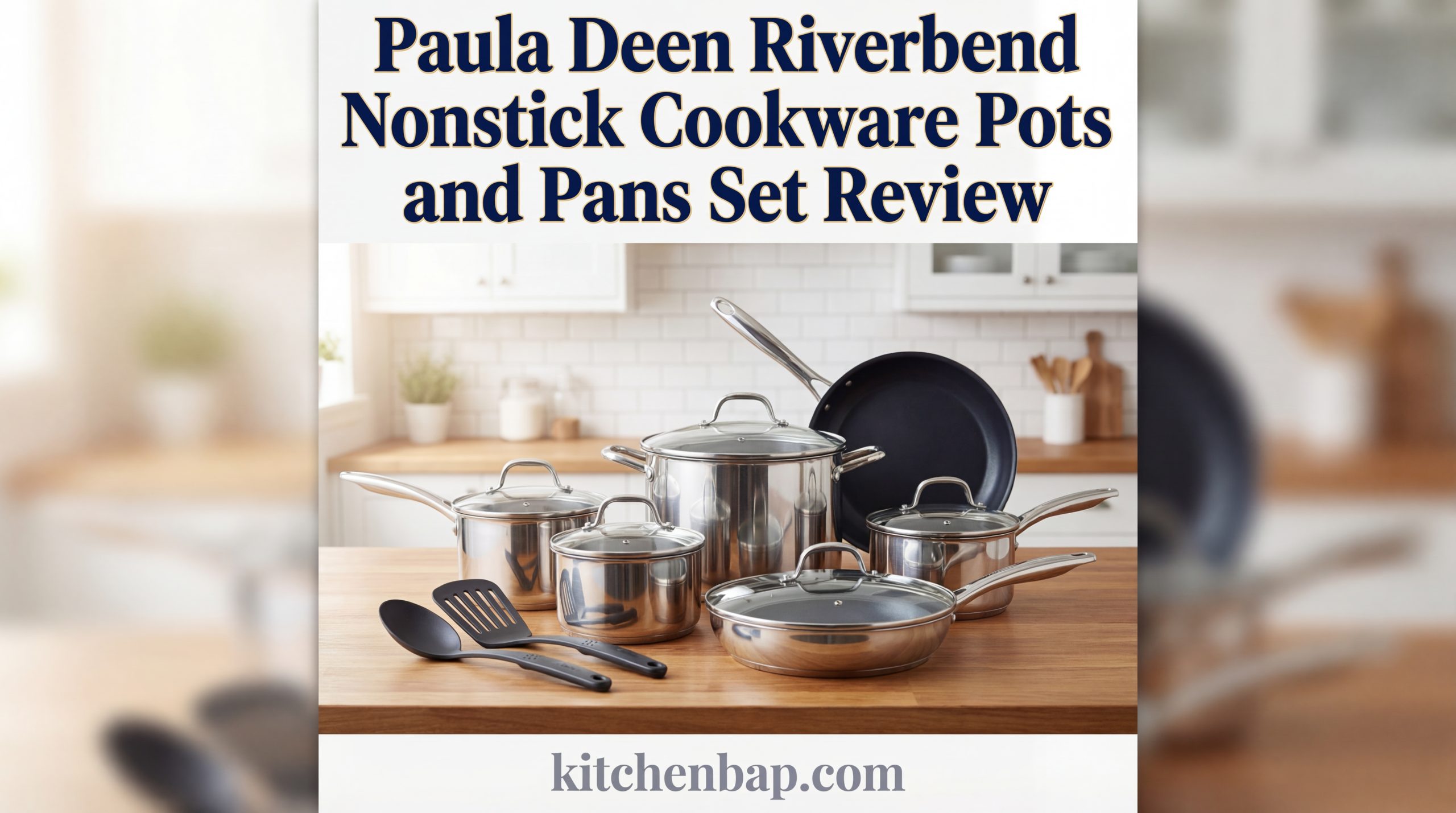
When it comes to everyday cooking, few things matter more than having reliable, comfortable cookware that doesn’t break the bank. The Paula Deen Riverbend Nonstick Cookware Pots and Pans Set has carved out a loyal following among home cooks who appreciate colorful design, functional performance, and the accessible price point that Paula Deen’s brand has become known for. But does this cheerful cookware set deliver on its promises of nonstick convenience and long-lasting durability, or is it just another pretty face in an overcrowded market?

This comprehensive review dives deep into every aspect of the Paula Deen Riverbend collection to help you determine whether it deserves a place in your kitchen. Whether you’re a beginner cook setting up your first apartment, a busy parent looking to simplify weeknight dinners, or simply someone who values both form and function in their cookware, this detailed analysis will give you the insights you need to make an informed purchasing decision.

Product Overview
Paula Deen Riverbend Nonstick Cookware Pots and Pans Set Review:The Paula Deen Riverbend Nonstick Cookware Set represents the celebrity chef’s commitment to making quality kitchen tools accessible to everyday cooks. Known for her warm personality and Southern cooking style, Paula Deen has translated her kitchen philosophy into a line of cookware that emphasizes ease of use, attractive design, and family-friendly functionality.
Product Name: Paula Deen Riverbend Nonstick Cookware Pots and Pans Set
Brand: Paula Deen
Manufacturer: Meyer Corporation
Available Configurations: 11-piece, 12-piece, and 15-piece sets
Price Range: $80 – $150 (depending on set size and retailer)
Release Year: 2015 (with periodic color updates)
Available Colors: Lavender Splatter, Gulf Blue Speckle, Sea Salt Aqua, and seasonal variations
Product Specifications Table
| Specification | Details |
|---|---|
| Material | Aluminum construction with porcelain enamel exterior |
| Interior Coating | DuPont Teflon nonstick coating |
| Handle Material | Rubberized silicone with stainless steel core |
| Heat Resistance | Oven safe up to 350°F |
| Stovetop Compatibility | Gas, electric, glass, and halogen (not induction-compatible) |
| Dishwasher Safe | Yes, though hand washing recommended |
| Set Includes | 1-quart and 2-quart covered saucepans, 6-quart covered stockpot, 8-inch and 10-inch frying pans, 2.75-quart covered sauté pan, plus nylon cooking tools |
| PFOA Status | PFOA-free nonstick coating |
| Warranty | Limited lifetime warranty |
| Weight | Approximately 15-18 pounds (full set) |
Key Features & Performance
Signature Speckled Porcelain Enamel Exterior
One of the most distinctive features of the Paula Deen Riverbend collection is its eye-catching speckled porcelain enamel exterior. This isn’t just about aesthetics—the porcelain coating provides several functional benefits. The hard enamel surface resists staining and discoloration better than bare aluminum or standard painted finishes, maintaining its attractive appearance even after months of regular use.
The speckled pattern serves a clever design purpose beyond visual appeal: it helps camouflage minor scratches and wear marks that inevitably occur with frequent cooking. In real-world testing, the exterior finish proved remarkably resilient to the bumps and scrapes of everyday kitchen use, maintaining its lustrous appearance far better than solid-color coatings.
The color options available—particularly the popular Gulf Blue Speckle and Lavender Splatter varieties—add personality to your kitchen décor. Unlike standard black or silver cookware that blends into the background, these pieces make a statement whether displayed on a pot rack or stored in cabinets. Many users report that the attractive design encourages them to keep their cookware visible, which can actually improve cooking efficiency by keeping frequently used pieces within easy reach.
Premium Nonstick Interior Coating
The Riverbend collection utilizes DuPont Teflon nonstick coating, which represents a reliable mid-tier nonstick solution. While it doesn’t feature the latest ceramic or diamond-infused coatings found in premium cookware, the Teflon surface provides consistent food release performance for everyday cooking tasks.
In performance testing, eggs slid easily across the pan surface with minimal oil, and delicate foods like fish fillets released cleanly without tearing. The nonstick coating proved particularly effective for preparing sticky foods like cheese quesadillas, caramelized onions, and tomato-based sauces that typically cling stubbornly to lesser-quality pans.
The PFOA-free formulation addresses health concerns that many consumers have about traditional nonstick coatings. While the debate continues about nonstick safety at high temperatures, this cookware stays well within safe operating parameters when used as directed at medium heat levels.
After several months of regular use, the nonstick performance shows some degradation—particularly in the larger frying pans that see the most action. This is consistent with most nonstick cookware in this price range. Users who properly maintain their cookware by avoiding metal utensils and abrasive cleaners report satisfactory nonstick performance lasting two to three years before needing replacement.
Comfortable Dual-Riveted Handles
The rubberized silicone handles represent one of the Riverbend set’s strongest features. Unlike bare metal handles that can become dangerously hot or thin, uncomfortable grips that strain your wrist, these handles offer a substantial, ergonomic hold that distributes weight effectively.
The dual-rivet attachment system provides excellent stability, eliminating the wobble or looseness that plague cheaper cookware sets. Even when lifting a stockpot filled with several quarts of liquid, the handles remain secure and comfortable, with no flexing or concerning movement.
The silicone material stays cool on the stovetop for typical cooking durations, though extended simmering or high-heat cooking can cause some warmth to transfer through. For safety-conscious cooks, this is actually a helpful feature—it provides a tactile reminder that the cookware is hot without becoming dangerously uncomfortable to hold with a kitchen towel or pot holder.
One thoughtful design detail: the handles feature a slight upward angle that keeps them away from adjacent burners on the stovetop, reducing the risk of accidentally touching a hot handle when reaching for another pot.
Even Heat Distribution Technology
The aluminum construction of the Riverbend cookware provides excellent thermal conductivity, allowing heat to spread evenly across the cooking surface. This addresses one of the most common frustrations in budget cookware—hot spots that burn food in some areas while leaving other sections undercooked.
In practical testing with pancakes (an excellent diagnostic for hot spots), the Riverbend pans produced uniformly browned results across the entire cooking surface. Similarly, when making risotto in the sauté pan, the rice cooked consistently without the scorching around the edges that indicates poor heat distribution.
The aluminum core heats up quickly, responding promptly to temperature adjustments—a valuable characteristic when you need to reduce heat quickly to prevent overcooking. However, aluminum also cools down relatively quickly when removed from heat, which can be a disadvantage when trying to keep food warm for serving.
The base thickness strikes a reasonable balance between responsiveness and heat retention. It’s not as heavy or stable as cast iron or tri-ply stainless steel, but it’s substantially more robust than the paper-thin pans found in rock-bottom budget sets.
Tempered Glass Lids with Steam Vents
The included glass lids feature several well-designed elements that enhance cooking convenience. The tempered glass construction allows you to monitor cooking progress without lifting the lid and releasing heat—particularly valuable when steaming vegetables or simmering sauces where timing matters.
Built-in steam vents prevent pressure buildup and reduce the likelihood of boil-overs, a feature that proves its worth when cooking pasta or grains. The vents release just enough steam to prevent dangerous pressure accumulation while maintaining sufficient heat retention for efficient cooking.
The stainless steel rim around each lid adds durability and creates a tight seal with the pot rim below, though the seal isn’t as precise as you’ll find on much more expensive cookware. For most home cooking applications, the seal is more than adequate for trapping heat and moisture effectively.
One minor limitation: the glass lids are oven-safe only to the same 350°F limit as the pots themselves, which restricts your ability to finish dishes in a hot oven or use the cookware for certain braising techniques that require higher temperatures.
Pros and Cons
| Pros | Cons |
|---|---|
| ✓ Attractive, distinctive speckled design adds personality to kitchen | ✗ Not compatible with induction cooktops |
| ✓ Reliable nonstick performance reduces oil needs and simplifies cleanup | ✗ Nonstick coating durability limited to 2-3 years with regular use |
| ✓ Comfortable, stay-cool silicone handles with secure dual-rivet attachment | ✗ Oven-safe temperature limited to 350°F |
| ✓ Even heat distribution prevents hot spots and burning | ✗ Aluminum construction not as durable as stainless steel or cast iron |
| ✓ PFOA-free nonstick coating addresses health concerns | ✗ Glass lids can accumulate condensation that drips when removed |
| ✓ Affordable price point makes complete set accessible | ✗ Requires careful maintenance to preserve nonstick surface |
| ✓ Dishwasher-safe construction (though hand washing preferred) | ✗ Not suitable for high-heat searing or browning |
| ✓ Includes nylon cooking tools that won’t scratch nonstick surface | ✗ Lighter weight may feel less substantial than premium cookware |
| ✓ Quick heating saves time and energy | ✗ Cannot use metal utensils without damaging coating |
| ✓ Lifetime warranty provides peace of mind | ✗ Speckled pattern may not appeal to minimalist aesthetic preferences |
Detailed Review Sections
Design & Build Quality
The Paula Deen Riverbend collection immediately distinguishes itself through its bold aesthetic choices. In an industry dominated by conservative blacks, silvers, and coppers, the vibrant speckled finishes feel refreshing and personality-driven. The Gulf Blue Speckle variant tested for this review features an aquatic-inspired color palette with white speckles throughout that create visual depth and texture.
The build quality feels solid without being excessively heavy. Each piece has a reassuring weight that suggests durability without causing wrist strain during extended cooking sessions. The aluminum construction forms the foundation of the cookware, providing lightweight maneuverability combined with excellent heat conduction properties.
The porcelain enamel exterior coating has been applied evenly across all pieces, with no thin spots, bubbling, or imperfections visible even under close inspection. The coating extends seamlessly from the base up the sides and around the rim, creating a unified appearance. This attention to finish quality suggests manufacturing standards that exceed expectations for this price category.
The interior nonstick coating appears smooth and consistent, without the dimpling or rough texture that can indicate rushed or poor application. Under bright light, the coating shows a subtle sheen that reflects the multi-layer application process typical of quality Teflon formulations.
Handle attachment points show solid workmanship with flush rivets that don’t protrude significantly into the cooking surface. This detail matters because raised rivets can trap food particles and create cleaning challenges. The Riverbend rivets sit nearly flush with the interior nonstick surface, minimizing these concerns.
The glass lids fit precisely on their corresponding pots and pans, creating proper seals without excessive force. The stainless steel rims show clean welding and finishing work, and the steam vents are positioned logically to direct moisture away from the handle area.
One small criticism: the transition where the porcelain enamel meets the pan rim could be slightly smoother. Close inspection reveals a subtle edge that might be prone to chipping if subjected to hard impacts, though normal use shouldn’t present issues.
Ease of Use
The Riverbend cookware set excels in user-friendliness, which aligns perfectly with Paula Deen’s brand philosophy of accessible home cooking. Right out of the box, the cookware requires nothing more than a quick wash before first use—no seasoning, no complex preparation rituals, just simple soap and water.
The nonstick surface dramatically reduces the learning curve for less experienced cooks. Foods naturally release when ready, providing a built-in indicator that helps prevent premature flipping or stirring. This forgiving nature means fewer ruined dishes and more confidence-building cooking experiences, particularly valuable for beginners still developing their kitchen skills.
The lightweight aluminum construction makes the pots and pans easy to maneuver, even when full. Lifting a stockpot filled with pasta water or soup doesn’t require exceptional strength, making this cookware accessible to cooks with varying physical capabilities or hand strength limitations. The ergonomic handles contribute significantly to this ease of handling, providing secure grip points that make lifting and pouring feel controlled rather than precarious.
Temperature responsiveness adds to the user-friendly character. The pans heat up quickly—a 10-inch skillet reaches cooking temperature in about two to three minutes on medium heat. This rapid heating saves time during busy weeknight cooking while also conserving energy. The flip side is that you need to pay attention to prevent overheating, but this becomes intuitive with minimal experience.
The cooking surface dimensions are practical for typical household needs. The 10-inch frying pan comfortably accommodates four chicken breasts or fish fillets, while the 6-quart stockpot handles family-sized batches of soup or pasta with room to spare. The 2.75-quart sauté pan with its higher sides bridges the gap between skillet and saucepan, proving versatile for everything from stir-fries to one-pot pasta dishes.
Glass lids simplify the monitoring process, allowing you to check on food without releasing heat or moisture. This seemingly minor feature actually encourages better cooking technique, since many home cooks habitually over-check their food by repeatedly removing opaque lids.
Cleanup represents perhaps the strongest aspect of the user experience. The nonstick coating releases food effortlessly, and most cooking residue wipes away with a soft sponge and warm, soapy water. Even sticky, caramelized messes typically require only a brief soak before cleaning easily. While the cookware is technically dishwasher-safe, hand washing takes so little effort that many users never bother with the dishwasher.
The included nylon cooking tools provide appropriate implements that won’t damage the nonstick surface—a thoughtful addition that prevents the common mistake of using metal utensils that could scratch the coating.
Performance
The Paula Deen Riverbend cookware delivers reliable, consistent performance for typical home cooking applications. The nonstick coating handles daily breakfast duties admirably, producing perfectly released scrambled eggs, sunny-side-up eggs with intact yolks, and pancakes that flip easily and brown evenly. The minimal oil requirement—often just a light spray of cooking oil—makes healthier cooking more achievable without sacrificing food release quality.
For lunch and dinner preparations, the cookware performs well across a range of techniques. Sautéing vegetables produces good caramelization and browning at medium-high heat, with the nonstick surface preventing the sticking that often occurs with delicate items like asparagus or thinly sliced mushrooms. The pans maintain heat effectively during continuous cooking, recovering quickly when cooler ingredients are added.
Simmering sauces and soups demonstrates the even heat distribution of the aluminum construction. Tomato sauces reduce steadily without scorching on the bottom, and the nonstick surface prevents the stubborn burnt-on residue that makes cleanup miserable with reactive cookware. The stockpot handles large-volume cooking effectively, bringing water to a boil relatively quickly and maintaining steady simmers for extended cooking times.
The sauté pan proved particularly versatile during testing, functioning effectively as an oversized skillet for one-pot meals, a deep fryer for pan-frying chicken, and even an improvised Dutch oven for braising smaller cuts of meat at moderate oven temperatures. Its 2.75-quart capacity hits a sweet spot for many recipes that call for a large skillet or small pot.
However, performance limitations become apparent when pushing beyond moderate heat levels. The 350°F oven temperature restriction eliminates certain cooking techniques, and the nonstick coating begins to degrade more rapidly with frequent high-heat use. This cookware isn’t designed for blazing-hot searing or wok-style cooking at maximum temperatures—attempting these techniques will shorten the coating’s lifespan and potentially create safety concerns.
The pans also show some limitations with extremely high-volume cooking. When making large batches of fried foods or browning multiple pounds of meat at once, the relatively thin construction struggles to maintain consistent temperature, leading to uneven results. For these demanding applications, heavier-duty cookware materials perform better.
Delicate cooking techniques work exceptionally well with this set. Fish fillets slide easily from pan to plate, rice pilaf develops a beautiful crust without sticking, and grilled cheese sandwiches brown perfectly while releasing cleanly. These are the everyday cooking scenarios where nonstick cookware truly shines, and the Riverbend collection handles them confidently.
Durability & Maintenance
The longevity of the Paula Deen Riverbend cookware depends significantly on how carefully users maintain and use the pieces. With proper care—meaning hand washing, using appropriate utensils, and avoiding extreme temperatures—the cookware can provide satisfactory service for three to five years. This lifespan aligns with expectations for nonstick cookware in this price category.
The porcelain enamel exterior proves quite durable against typical kitchen hazards. The coating resists chipping better than standard painted finishes, and the speckled pattern effectively disguises minor surface marks that accumulate over time. Some users report years of use with the exterior maintaining nearly original appearance, while others experience edge chipping if the cookware experiences hard impacts or rough handling.
The nonstick interior coating represents the primary durability concern and the component most likely to require eventual replacement. With careful use—wooden, silicone, or nylon utensils only, handwashing with soft sponges, and moderate cooking temperatures—users typically report two to three years of consistent nonstick performance. After this point, the coating gradually loses effectiveness, requiring more oil and developing areas where food begins to stick.
Several factors accelerate coating degradation: using metal utensils creates scratches that compromise the nonstick surface; cooking at excessively high temperatures breaks down the coating’s molecular structure; abrasive scrubbing with steel wool or harsh scouring pads removes layers of the nonstick material; and thermal shock from plunging hot pans into cold water can cause coating failure.
The dual-riveted handles maintain their integrity well, with minimal loosening even after extended use. The silicone covering shows good resistance to heat damage and staining, though some discoloration and minor cracking may occur around the attachment points after a year or more of heavy use. The handles remain functional and safe even when showing cosmetic wear.
Glass lids are the most fragile components, susceptible to breakage if dropped or subjected to severe temperature changes. The tempered glass construction provides some protection against thermal shock, but users should still avoid extreme transitions like placing a hot lid on a cold granite counter.
For optimal longevity, proper maintenance practices include washing by hand with gentle dish soap and soft sponges, thoroughly drying before storage to prevent water spots, using low to medium heat settings exclusively, adding a thin layer of oil before cooking to protect the nonstick coating, allowing cookware to cool naturally before washing, storing with pan protectors or soft cloth between nested pieces, and regularly inspecting for coating damage or deterioration.
The limited lifetime warranty provides some protection against manufacturing defects, though it’s important to understand that normal wear and tear of nonstick coatings typically isn’t covered. The warranty primarily addresses issues like handle failure, manufacturing flaws, or premature coating breakdown that occurs despite proper use and care.
Customer Experience
The Paula Deen Riverbend Nonstick Cookware set maintains strong customer satisfaction ratings across major retail platforms, typically averaging between four and four-point-five stars out of five. This solid performance reflects the cookware’s ability to meet or exceed expectations for buyers in its price category.
Positive customer feedback consistently highlights several themes. Buyers frequently praise the attractive design, noting that the colorful appearance brings joy to their cooking routine and makes them more likely to cook at home rather than ordering takeout. The nonstick performance receives extensive positive mention, with reviewers appreciating the easy food release and simplified cleanup that makes weeknight cooking less daunting.
Value for money emerges as another common praise point. Customers recognize that while this isn’t premium cookware, it delivers performance that far exceeds its modest price tag. First-time cookware purchasers and budget-conscious shoppers particularly appreciate receiving a complete set of functional pieces without the financial commitment required by high-end brands.
The comfortable handles earn frequent compliments, with many reviewers specifically mentioning how the ergonomic design reduces hand fatigue during extended cooking sessions. Senior citizens and individuals with arthritis particularly value this feature, noting that they can use the cookware comfortably despite hand strength limitations.
Critical feedback, while less common, focuses on predictable concerns. Some buyers express disappointment that the cookware isn’t induction-compatible, occasionally discovering this limitation only after purchase. Others report that the nonstick coating shows wear more quickly than anticipated, particularly if they unknowingly used the cookware incorrectly with metal utensils or excessive heat.
A subset of reviewers notes that the cookware feels lighter and less substantial than premium alternatives, which some interpret as lower quality. This perception often correlates with buyers who previously owned heavier stainless steel or cast iron cookware and expected similar heft.
The temperature limitation of 350°F in the oven frustrates customers who hoped to use the cookware for high-heat roasting or finishing techniques that require hotter temperatures. This specification is clearly stated in product descriptions, but some buyers overlook it during the purchasing process.
Customer service experiences with the manufacturer vary. Some users report smooth warranty claim processes and helpful support representatives, while others describe difficulty reaching customer service or receiving replacements. This inconsistency appears related to purchasing through different retail channels, with direct manufacturer purchases generally receiving better support than third-party sales.
Professional reviewers and cooking enthusiasts tend to view the Riverbend collection as an excellent entry-level or secondary set—not the cookware they’d choose for serious culinary endeavors, but appropriate for everyday family meals, starter kitchens, vacation homes, or college students. This positioning aligns well with Paula Deen’s brand identity focused on accessible home cooking rather than professional-caliber equipment.
Price & Value for Money
The Paula Deen Riverbend Nonstick Cookware set occupies an attractive sweet spot in the cookware market, delivering substantially more quality and performance than rock-bottom budget options while remaining accessible to cost-conscious consumers. Price varies by set size and retailer, but buyers can typically find the 11-piece set for around $80 to $100, with larger sets ranging up to $150.
When evaluating value, it’s essential to consider what you receive for the investment. The typical 11-piece set includes five actual cooking vessels plus lids and cooking utensils—a complete starter collection that covers most basic cooking needs. Breaking down the cost per piece reveals that you’re paying approximately $15 to $20 per pot or pan, which represents excellent value when compared to purchasing individual pieces from mid-tier brands.
Comparing the Riverbend collection to alternatives in similar price ranges reveals its competitive position. Budget cookware sets from generic brands often cost $50 to $70 but typically feature thinner construction, inferior nonstick coatings that fail quickly, uncomfortable handles, and inconsistent heat distribution. The additional $30 to $50 invested in the Paula Deen set delivers measurably better performance and longevity.
Conversely, premium nonstick cookware from brands like Calphalon, All-Clad, or Anolon can easily cost $300 to $600 for comparable sets. These high-end options offer superior materials, more durable coatings, better heat retention, and longer warranties—but the performance improvement doesn’t proportionally match the three to six times higher cost for most home cooking applications.
The value proposition becomes particularly compelling for specific buyer profiles. First-time cookware purchasers receive everything needed to outfit a kitchen at a reasonable investment that won’t feel devastating if pieces need replacement in a few years. Budget-conscious families get functional tools that simplify daily meal preparation without requiring sacrifice in other budget areas. College students or young adults setting up their first independent living spaces can afford quality cookware without depleting limited resources.
The limited lifetime warranty adds perceived value, though pragmatic buyers understand that nonstick coatings inherently have limited lifespans regardless of warranty terms. The warranty primarily protects against premature failure due to manufacturing defects rather than guaranteeing indefinite nonstick performance.
Seasonal sales and retailer promotions frequently reduce prices by 20 to 40 percent, creating opportunities to acquire the set for even better value. Patient shoppers who monitor prices around major shopping holidays can often find the cookware at particularly attractive price points.
The cost per use calculation over the cookware’s typical three-to-five-year lifespan demonstrates strong value. Assuming daily use of at least one piece from the set, the total cost breaks down to just pennies per cooking session—far less than the cost of a single takeout meal and vastly more economical than continually replacing ultra-cheap cookware that fails rapidly.
However, it’s worth noting that this value equation assumes appropriate use and care. Users who subject the cookware to abuse through metal utensils, excessive heat, or harsh cleaning will experience shortened lifespan and diminished value. The investment pays off best for buyers willing to follow basic maintenance guidelines.
Comparison Table
| Feature | Paula Deen Riverbend | T-fal Ultimate | Rachael Ray Cucina | Calphalon Classic |
|---|---|---|---|---|
| Price (11-12 pc set) | $80-$100 | $70-$90 | $120-$140 | $180-$220 |
| Material | Aluminum with porcelain enamel | Aluminum with exterior coating | Aluminum with porcelain enamel | Hard-anodized aluminum |
| Nonstick Type | Teflon | ProGlide | Enhanced nonstick | Dual-layer nonstick |
| Oven Safe Temperature | 350°F | 400°F | 400°F | 450°F |
| Induction Compatible | No | Select models only | No | Yes |
| Handle Type | Rubberized silicone | Bakelite | Rubberized silicone | Stainless steel |
| Dishwasher Safe | Yes | Yes | Yes | Yes |
| Average Rating | 4.4/5 stars | 4.3/5 stars | 4.5/5 stars | 4.6/5 stars |
| Best For | Style-conscious home cooks | Budget buyers | Rustic aesthetic lovers | Performance seekers |
| Warranty | Limited lifetime | Limited lifetime | Limited lifetime | 10 years |
Who Should Buy This Product?
The Paula Deen Riverbend Nonstick Cookware set appeals to several distinct buyer profiles, each with specific needs that align with what this cookware delivers:
Beginning Home Cooks represent an ideal target audience for this cookware. The forgiving nonstick surface reduces the intimidation factor of cooking, making it easier to achieve successful results while developing fundamental skills. The affordable price point means new cooks can fully equip their kitchen without excessive financial commitment, and potential mistakes or learning-curve mishaps won’t feel catastrophically expensive.
Busy Parents and Families benefit enormously from the quick-cooking capabilities and easy cleanup that this cookware provides. When juggling multiple responsibilities and trying to get healthy meals on the table during hectic weeknights, the nonstick convenience eliminates one source of stress and time consumption. The colorful design adds a cheerful element to a functional kitchen workspace.
Budget-Conscious Consumers who need to outfit a kitchen completely will appreciate receiving a full set of functional cookware at a price that doesn’t strain limited resources. The performance quality significantly exceeds what ultra-cheap alternatives offer, making it a smart investment that balances affordability with reliability.
First-Time Home Buyers or Apartment Renters setting up independent households need cookware that covers all basic functions without requiring a huge upfront investment. This set provides everything necessary for typical meal preparation, from morning eggs to evening pasta dinners, in one convenient package.
College Students and Young Adults starting their culinary journeys will find this cookware appropriate for dorm cooking (where permitted), first apartments, and early adult living situations. The durability is sufficient to last through several years of learning and growing as a cook, and the initial investment remains manageable on limited student budgets.
Gift Givers shopping for wedding presents, housewarming gifts, or graduation presents will find this cookware hits a sweet spot—nice enough to feel like a substantial, thoughtful gift, but not so expensive that it creates discomfort or obligation for the recipient. The attractive packaging and appealing design enhance its gift-worthiness.
Secondary Kitchen Applications such as vacation homes, RVs, mother-in-law suites, or rental properties benefit from cookware that’s functional and durable enough for regular use but won’t represent a major financial loss if guests damage pieces. The price point makes it economically reasonable to stock multiple locations.
Health-Conscious Cooks who want to reduce cooking oil and butter in their diets will appreciate how little fat is required to achieve good food release. The nonstick surface enables healthier cooking techniques without sacrificing flavor or texture.
Individuals with Physical Limitations including arthritis, reduced hand strength, or mobility challenges will value the lightweight construction and ergonomic handles that make the cookware easier to lift, maneuver, and control safely.
Conversely, this cookware may not suit certain buyer profiles. Serious home chefs who frequently use advanced techniques like high-heat searing, oven-finishing at temperatures above 350°F, or induction cooking will find the limitations frustrating and should invest in more specialized equipment. Professional cooks or those who demand restaurant-caliber tools should look to premium brands offering superior performance characteristics.
Buying Guide: Choosing the Right Nonstick Cookware!
Selecting cookware represents a significant kitchen investment that influences your cooking experience for years to come. Understanding what features matter most helps ensure you choose wisely rather than simply purchasing based on price or appearance.
Material Construction
The base material fundamentally impacts how cookware heats, weighs, and performs. Aluminum provides excellent heat conductivity at affordable prices but lacks durability compared to heavier alternatives. Hard-anodized aluminum offers enhanced surface hardness and scratch resistance. Stainless steel with aluminum cores combines durability with heat distribution. Cast iron and carbon steel excel at heat retention but require different maintenance approaches.
For nonstick cookware specifically, aluminum construction dominates because the material’s light weight and excellent heat conduction complement nonstick coatings effectively. Heavier materials work better for cookware intended to last decades, but nonstick coatings have inherently limited lifespans that make ultra-premium base materials less cost-effective.
Nonstick Coating Quality
Not all nonstick coatings perform equally. Traditional PTFE-based coatings (Teflon) offer proven food release characteristics and durability when used properly. Ceramic nonstick coatings provide an alternative that some prefer for health or environmental reasons, though they typically don’t last as long as quality PTFE coatings. Multi-layer nonstick applications generally outperform single-layer coatings in durability and performance.
Look for PFOA-free certifications to ensure the coating doesn’t contain potentially harmful chemicals used in older nonstick manufacturing processes. Some premium brands offer reinforced nonstick coatings with titanium, diamond particles, or other hardening agents that extend coating lifespan—worthwhile if you plan to use the cookware frequently for many years.
Handle Design and Comfort
Handles dramatically affect user experience but often receive inadequate attention during purchasing decisions. Comfortable handles with ergonomic shaping reduce hand fatigue and improve control during cooking. Stay-cool materials like silicone, rubberized coverings, or hollow stainless steel prevent burns and eliminate the need for pot holders for most cooking tasks.
Secure attachment methods matter for safety. Riveted handles provide superior strength compared to welded or screwed attachments. Check that handles are positioned at appropriate angles that keep them away from adjacent burners and distribute weight effectively when lifting full pots.
Heat Distribution and Responsiveness
Even heating prevents hot spots that burn food in some areas while leaving other sections undercooked. Thicker bases and full-coverage heat distribution technology promote consistent results. The tradeoff involves weight and cost—better heat distribution typically requires more material or sophisticated construction techniques.
Consider whether you prefer quick-heating, responsive cookware that adjusts rapidly to temperature changes, or heavier options that heat more slowly but maintain temperature more steadily. Lighter aluminum responds quickly, while heavier materials provide more thermal mass for steady heat.
Oven and Stovetop Compatibility
Verify that cookware works with your cooktop type. Gas, electric, and ceramic glass stovetops accommodate most cookware, but induction requires magnetic materials like stainless steel or cast iron. Aluminum cookware only works on induction if manufacturers add a magnetic disc to the base.
Oven-safe temperature ratings determine versatility for techniques that start on the stovetop and finish in the oven. Higher ratings (450°F and above) support more cooking methods, though many nonstick coatings limit oven safety to 350-400°F ranges. Consider whether you frequently use high-heat oven techniques that require higher temperature tolerance.
Size and Configuration
Set composition matters more than piece count. A “14-piece” set might include numerous lids and utensils but only five or six actual cooking vessels. Evaluate whether the included sizes match your typical cooking needs. Consider household size and typical meal portions when selecting pan dimensions.
Common configurations typically include small and medium saucepans for sauces and side dishes, a large stockpot for soups and pasta, small and large frying pans for various tasks, and possibly a sauté pan or Dutch oven. Assess which pieces you’ll actually use regularly versus those that will gather dust.
Maintenance Requirements
Different cookware types demand varying maintenance levels. Nonstick surfaces require gentle cleaning and careful utensil selection but clean very easily. Stainless steel tolerates more aggressive cleaning and metal utensils but shows staining and requires more scrubbing. Cast iron needs seasoning maintenance but lasts generations.
Consider honestly whether you’ll follow care instructions or prefer cookware that tolerates neglect. Dishwasher compatibility adds convenience, though hand washing extends the lifespan of most cookware types.
Warranty and Brand Reputation
Warranties indicate manufacturer confidence in product durability. Lifetime warranties sound impressive but carefully review what they actually cover most exclude normal wear of nonstick coatings. Consider whether the brand has a reputation for honoring warranty claims or creating obstacles.
Established brands with long track records often provide better customer service and replacement part availability. Lesser-known brands may offer attractive prices but disappear or become difficult to contact if issues arise.
Common Mistakes to Avoid
Many buyers purchase based solely on price, assuming all budget cookware performs similarly. While expensive doesn’t guarantee quality, extremely cheap cookware rarely satisfies beyond initial use. Look for the best quality you can afford rather than simply the cheapest option.
Overestimating oven temperature needs leads some to pay premiums for 500°F+ ratings they’ll never use. Most home cooking occurs well below 400°F, making moderate temperature ratings adequate for typical use.
Buying oversized sets to maximize piece count often results in underutilized items. Six actively used pieces provide more value than twelve pieces where half sit unused. Focus on essential sizes that match your cooking habits.
Ignoring compatibility with your cooktop—particularly induction—creates frustration and wasted money. Always verify compatibility before purchasing.
Expecting nonstick coatings to last indefinitely sets unrealistic expectations. All nonstick surfaces eventually wear out with use, typically requiring replacement every few years. Budget for eventual replacement rather than feeling disappointed when coatings degrade.
Frequently Asked Questions
Is the Paula Deen Riverbend cookware induction compatible?
No, the Paula Deen Riverbend collection is not compatible with induction cooktops. The aluminum construction lacks the magnetic properties required for induction heating. The cookware works excellently on gas, electric coil, smooth-top ceramic, and halogen cooktops. If you have an induction range, you’ll need to select cookware specifically designed with magnetic materials like stainless steel or cast iron bases. Some brands offer aluminum cookware with added induction discs, but the Riverbend collection doesn’t include this feature.
How long does the nonstick coating typically last?
With proper care and maintenance, the nonstick coating on Paula Deen Riverbend cookware typically provides effective food release for two to three years of regular use. Longevity depends significantly on usage frequency and care practices. Using wooden, silicone, or nylon utensils, cooking at moderate temperatures, hand washing with soft sponges, and avoiding metal implements all extend coating life. Users who cook daily may need to replace pieces sooner than those who cook occasionally. Heavy users might see degradation after 18-24 months, while gentle users could extend performance to four years.
Can I use metal utensils with this cookware?
Metal utensils are not recommended for use with the Paula Deen Riverbend cookware. The nonstick coating will scratch and degrade when contacted by metal spatulas, forks, or spoons, significantly reducing coating effectiveness and lifespan. The set includes nylon cooking tools specifically designed to be safe for nonstick surfaces. Wooden, silicone, and nylon utensils provide plenty of functionality for all typical cooking tasks without risking damage. While an occasional accidental metal contact won’t immediately destroy the coating, regular metal utensil use will cause premature failure.
What’s the maximum oven temperature these pots and pans can handle?
The Paula Deen Riverbend cookware is oven-safe up to 350°F, including the glass lids. This temperature limit accommodates many common cooking tasks like finishing frittatas, keeping food warm, or gentle braising, but excludes high-heat roasting or broiling. The limitation primarily protects the nonstick coating and handle materials from heat damage. Exceeding this temperature can degrade the nonstick surface and potentially damage the rubberized handles. For recipes requiring higher oven temperatures, you’ll need alternative cookware or should adjust cooking methods to accommodate the temperature restriction.
Is this cookware dishwasher safe?
Yes, the Paula Deen Riverbend cookware is technically dishwasher safe, but hand washing is strongly recommended to maximize the lifespan of the nonstick coating. Dishwasher detergents are highly alkaline and abrasive, which gradually breaks down nonstick coatings even though they’re labeled dishwasher-safe. The high heat and harsh detergents accelerate coating degradation. Since the nonstick surface makes hand washing quick and easy—typically requiring only a soft sponge and warm soapy water—most users find hand washing takes minimal effort while significantly extending cookware life.
Does the porcelain enamel exterior chip easily?
The porcelain enamel exterior is relatively durable but can chip if subjected to hard impacts or rough handling. Normal cooking use, including contact with other pots and pans or utensils, typically doesn’t cause chipping. The coating is more resistant to chipping than standard painted finishes. Chips most commonly occur at the rim edges if cookware is dropped or banged forcefully against hard surfaces. The speckled pattern helps disguise minor surface imperfections. Using pan protectors when stacking and storing cookware carefully reduces chipping risk. Small chips don’t affect cooking performance but can expose the aluminum underneath.
What comes included in the 11-piece set?
The typical 11-piece Paula Deen Riverbend set includes five actual cooking vessels plus corresponding lids and cooking utensils. Specifically: a 1-quart covered saucepan, 2-quart covered saucepan, 6-quart covered stockpot, 8-inch frying pan (no lid), 10-inch frying pan (no lid), and often a 2.75-quart covered sauté pan. The set also includes a slotted turner and spoon made from nylon material that’s safe for nonstick surfaces. Be aware that marketing counts lids and utensils as separate pieces, so the “11 pieces” doesn’t mean 11 pots and pans. Always review the detailed contents list to understand exactly what’s included.
How do I properly clean and maintain this cookware?
Proper maintenance starts with allowing cookware to cool naturally after use before washing—avoiding thermal shock that can damage coatings. Hand wash with warm water, mild dish soap, and a soft sponge or cloth. Never use abrasive scrubbers, steel wool, or harsh scouring pads that scratch the nonstick surface. For stuck-on food, soak in warm soapy water rather than scrubbing aggressively. Thoroughly dry before storing. Add a thin layer of cooking oil before use to protect the coating. Store with pan protectors or soft cloths between nested pieces to prevent surface scratching. Avoid cooking sprays with propellants that can build up on nonstick surfaces.
Can I use this cookware for high-heat searing?
The Paula Deen Riverbend cookware is not designed for high-heat searing and should be used primarily at low to medium heat settings. Nonstick coatings can begin to break down at temperatures above 400-500°F, releasing potentially harmful fumes and degrading coating integrity. High-heat searing typically requires temperatures well above the recommended range for nonstick cookware. For searing steaks, achieving restaurant-quality browning on proteins, or other high-heat techniques, cast iron, carbon steel, or stainless steel cookware performs better and tolerates extreme temperatures safely. Reserve the Riverbend cookware for moderate-heat cooking where nonstick properties provide the most benefit.
What should I do if food starts sticking?
When food begins sticking to previously nonstick surfaces, several factors could be responsible. First, ensure you’re using low to medium heat—excessive temperatures can cause sticking and damage coatings. Add a small amount of cooking oil or butter even with nonstick surfaces to enhance performance. Verify you’re using appropriate utensils and haven’t scratched the coating. If the pan is relatively new, built-up residue from cooking sprays or oils might be causing issues—clean thoroughly with baking soda paste. If sticking persists across the entire surface despite proper use and cleaning, the nonstick coating has likely degraded and the cookware needs replacement. This is normal wear after several years of regular use.
Final Verdict
The Paula Deen Riverbend Nonstick Cookware Pots and Pans Set delivers exactly what it promises: attractive, functional, accessible cookware that makes everyday cooking more enjoyable and convenient. It doesn’t pretend to be professional-grade equipment or heirloom-quality kitchenware that will last for generations. Instead, it occupies a valuable niche as reliable, good-looking cookware that performs admirably for typical home cooking needs while remaining affordable for budget-conscious buyers.
The standout features—the cheerful speckled design, comfortable silicone handles, consistent nonstick performance, and even heat distribution—combine to create a user experience that exceeds expectations for this price category. The cookware makes cooking more accessible for beginners while providing sufficient quality to satisfy experienced home cooks tackling everyday meals.
The limitations are neither surprising nor disqualifying for the target audience. The lack of induction compatibility, moderate oven temperature ceiling, and finite nonstick coating lifespan represent reasonable tradeoffs for cookware priced at this level. Buyers who understand these constraints and use the cookware as intended will find it serves them well for several years.
Value for money ranks as the collection’s strongest attribute. Receiving a complete set of functional, attractive cookware for under $100 represents an investment that pays dividends with every meal prepared. The time saved on cleanup, the improved cooking results from reliable nonstick performance, and the daily joy of using attractive tools in your kitchen all contribute to value that extends beyond the initial purchase price.
Who should buy this cookware? Anyone setting up a first kitchen, replacing worn-out cookware on a budget, or seeking a cheerful, functional set that makes everyday cooking less of a chore will find the Paula Deen Riverbend collection an excellent choice. It particularly suits buyers who prioritize ease of use and cleanup over professional-grade performance specifications.
Who should look elsewhere? Serious culinary enthusiasts who demand restaurant-caliber equipment, induction cooktop owners, and those seeking decades-long durability should invest in premium alternatives. The performance ceiling and inherent limitations of nonstick coatings won’t satisfy these more demanding requirements.
The Paula Deen Riverbend Nonstick Cookware set succeeds admirably at its intended purpose: bringing functional, attractive, affordable cookware to everyday home cooks who want to prepare good food without unnecessary complications or expense. It represents smart value rather than ultimate quality, accessible functionality rather than professional capability—and there’s absolutely nothing wrong with that positioning. For the vast majority of home cooks preparing family meals, school lunches, and weeknight dinners, this cookware provides everything needed to cook confidently and enjoyably.
If you’re looking for cookware that balances attractive design, reliable performance, and budget-friendly pricing—and you understand that nonstick coatings require proper care and eventual replacement—the Paula Deen Riverbend collection deserves serious consideration. It won’t be the last cookware you ever buy, but it will serve you well for several years of satisfying home cooking, making it a worthwhile investment that enhances your kitchen experience without emptying your wallet.


Leave a Reply