
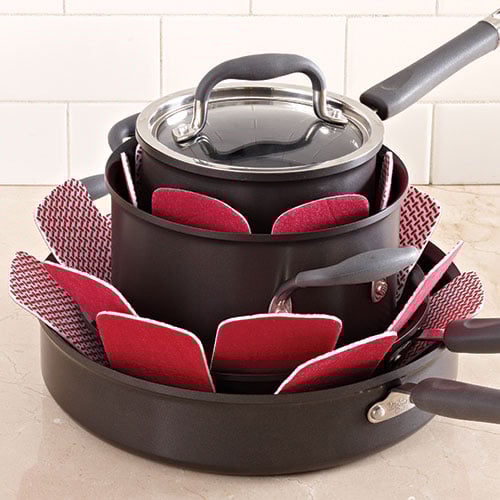
Cookware protectors are used to prevent scratches by placing them between pots and pans when stored. They provide cushioning to maintain your cookware’s pristine condition.
How to Use Cookware Protectors:Storing kitchenware correctly is essential for preserving its quality and extending its lifespan. Cookware protectors are a simple yet effective solution for safeguarding your investment in high-quality pots and pans. These soft, often felt-like pads slip between each piece, acting as a barrier against scratches, chips, and other damage that can occur when items are stacked.
Not only do they help keep your cookware looking new, but they also reduce noise when accessing your items. Whether you’re a professional chef or a home cooking enthusiast, using cookware protectors is an easy step that ensures your kitchen essentials remain in top-notch shape for years to come. Embracing this method maximizes the value of your cookware collection, making it a smart move for anyone who takes pride in their kitchen tools.

Credit: www.amazon.com
Introduction To Cookware Protectors
Cookware protectors are essential for anyone who loves to cook. They keep your pans safe and looking new. In this guide, we dive into why these protectors are a must-have and the different types available.
Why Protect Your Pans?
- Prevents scratches and damage.
- Extends the life of your cookware.
- Makes stacking pans safe and easy.
- Keeps cookware looking brand new.
Types Of Cookware Protectors
Different protectors suit different needs. Here’s a quick look:
| Type | Material | Use For |
|---|---|---|
| Felt Protectors | Soft fabric | General use |
| Silicone Protectors | Durable silicone | High heat resistance |
| Rubber Protectors | Flexible rubber | Non-slip grip |
Selecting The Right Protectors
Selecting the right protectors is essential to keep cookware scratch-free. Cookware protectors come in various materials and sizes. They ensure pans and pots stay in pristine condition. Picking the suitable type and size is key for effective protection.
Material Matters: Felt, Silicone, And More
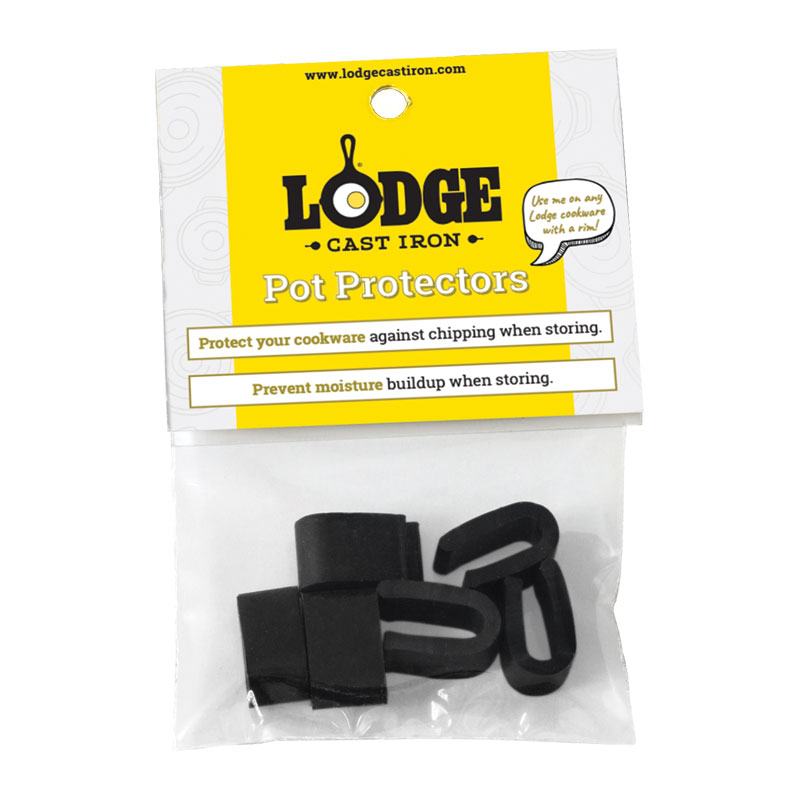
The choice of material is crucial for cookware protectors. Felt protectors are common and affordable. They provide a soft barrier between cookware. Silicone protectors offer more durability. They resist heat and are easy to clean. Other materials include rubber, cork, and foam. Each has its own benefits. Consider the cookware type and storage needs before choosing.
- Felt: Soft, effective, budget-friendly
- Silicone: Heat-resistant, washable, long-lasting
- Rubber, Cork, Foam: Alternative options, each with unique features
Sizing Up: Matching Protectors To Pans
Getting the right size is as important as the material. Protectors should cover the entire surface of the cookware. This prevents scratches and chips. Measure your pans and pots before buying protectors. Look for adjustable or various size options.
| Pan Size | Protector Size |
|---|---|
| Small (up to 8″) | Small |
| Medium (9″-12″) | Medium |
| Large (over 12″) | Large |
Some protectors can be trimmed to fit. This ensures a perfect match for any cookware size. Stack your cookware with the right protectors. This will keep them looking new for years.
The Benefits Of Using Protectors
Kitchen enthusiasts understand the value of quality cookware. Protecting these items is crucial. Cookware protectors offer several benefits. They maintain the condition of your pots and pans. Below, we explore two key advantages.
Scratch Prevention
Stacking pots and pans can cause scratches. These scratches damage the surface. Over time, they can ruin your cookware. Using protectors prevents this issue. They act as a barrier between each item. This keeps your cookware looking new. It also extends its lifespan.
- Keep surfaces pristine
- Extend cookware life
- Prevent metal or coating damage
Space Optimization In Storage
Small kitchens require smart storage solutions. Cookware protectors help with this. They allow for neat stacking. This maximizes cabinet space. You can store more items in the same area. Efficient storage leads to a clutter-free kitchen. It also makes finding the right pan easier.
| Without Protectors | With Protectors |
|---|---|
| Cluttered cabinets | Neat stacks |
| Less space | More space |
| Hard to find items | Easy access |
Step-by-step Guide To Using Protectors
Keeping your cookware in top shape is essential. Cookware protectors offer a simple solution. They shield your pots and pans from scratches and damage. Follow these steps to use cookware protectors effectively.
Layering Your Cookware
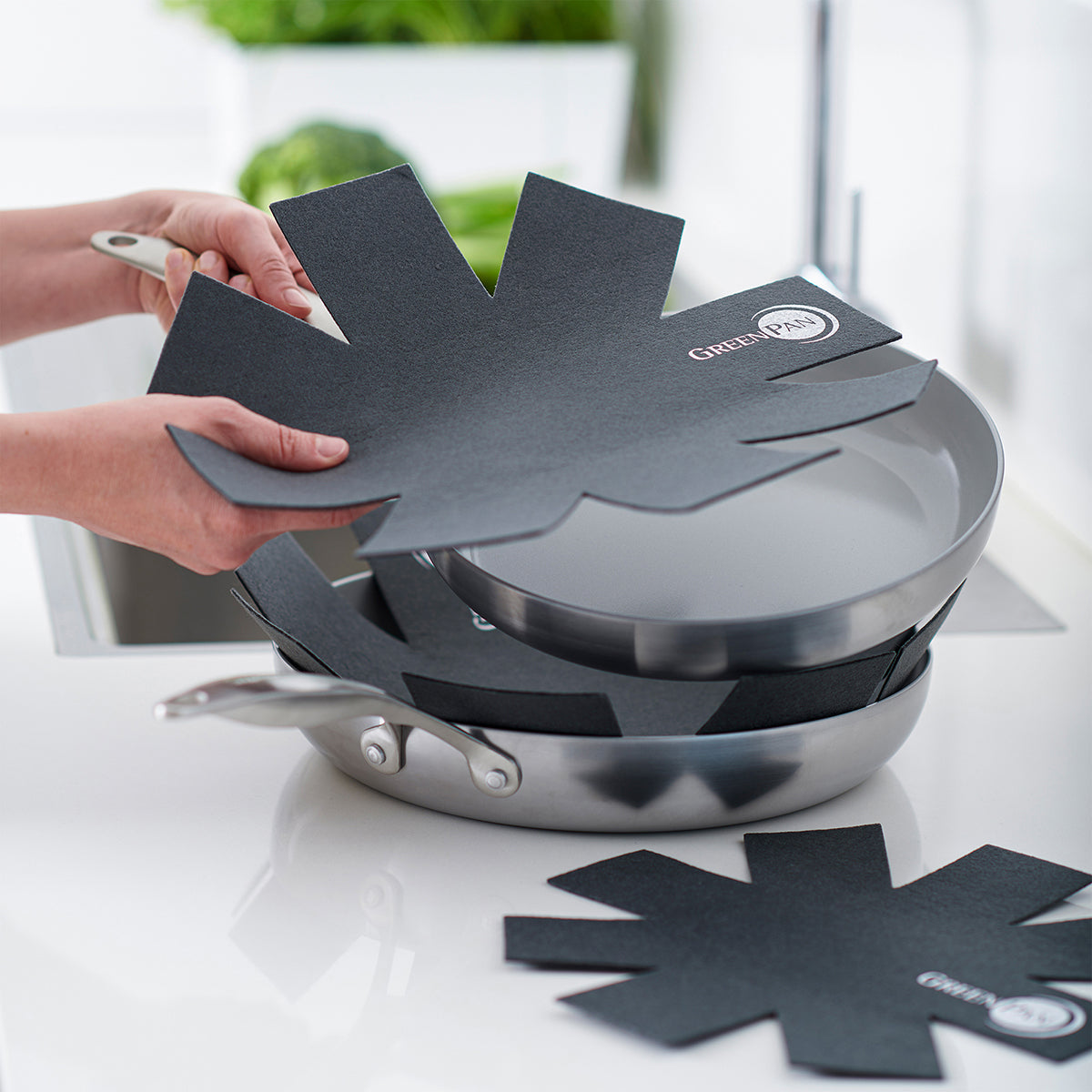
- Begin with your largest pan on the bottom.
- Place a cookware protector inside the pan.
- Stack the next size pan on top.
- Repeat the process for all your cookware.
By layering protectors, you keep your cookware like new. This method is great for non-stick, stainless steel, and ceramic pieces.
Handling And Care
Proper use ensures longevity for your protectors. Here’s how:
- Wash protectors with mild soap and water.
- Avoid abrasive cleaners.
- Dry them completely before use.
- Store them flat or rolled up.
Remember, clean protectors mean clean cookware. Handle them with care to maintain their quality.
Innovative Storage Solutions
Cookware protectors offer a smart way to store your pots and pans. They prevent scratches and damage. Your kitchen stays organized. Your cookware looks new for years.
Vertical Stacking With Protectors
Make the most of your cabinet space. Use cookware protectors between pans and pots. Stack them vertically. This method saves space. It also keeps your cookware within easy reach.
- Place a protector on a flat pan’s surface.
- Set another pan on top.
- Repeat until the stack is complete.
Choose protectors that fit well. They should not slip. Your stack will stay stable and safe.
Creative Cabinet Arrangements
Arrange your cabinets with flair. Use protectors to organize cookware in various ways. Place pans sideways. Create sections with dividers. Your cabinets look neat. You find items quickly.
| Without Protectors | With Protectors |
|---|---|
| Scratched cookware | Perfect condition |
| Cluttered cabinets | Organized spaces |
| Hard to find items | Easy access |
Use bold colors for fun. Clear ones offer a clean look. Your kitchen feels personal and functional.
Credit: www.lodgecastiron.com
Maintaining Your Cookware Protectors
Keeping your cookware protectors in top shape is key. They guard your pots and pans against scratches, making them last longer. Proper maintenance ensures they continue to perform well. Here’s how to care for them effectively.
Cleaning Best Practices
Regular cleaning keeps protectors fresh and effective. Follow these steps:
- Hand wash with mild soap and warm water.
- Rinse thoroughly to remove soap residue.
- Air dry completely before storing or using again.
For tougher stains, a soft brush can help. Avoid harsh cleaners.
When To Replace Protectors
Over time, protectors wear out. Look for these signs:
| Sign | Action |
|---|---|
| Thin or torn areas | Replace immediately |
| Permanent stains or odors | Consider replacing |
| Loss of shape | Time for new ones |
New protectors ensure continued protection for your cookware.
Do-it-yourself Protectors
Keeping your cookware safe and scratch-free is essential. Do-It-Yourself (DIY) protectors offer a fun, affordable way to do this. Let’s explore how to craft your own.
Diy Material Choices
Selecting the right materials is the first step. Consider these options:
- Felt fabric – Soft and thick, perfect for padding.
- Cotton fabric – Easy to find and washable.
- Bubble wrap – Offers good cushioning for glassware.
- Old t-shirts – A great way to recycle fabric.
Crafting Your Own Protectors
Creating your protectors is simple. Follow these steps:
- Cut your chosen material into squares or circles. Size depends on your cookware.
- If using fabric, sew two pieces together for extra thickness.
- For bubble wrap, no sewing is needed. Just cut and place between items.
Use these protectors between pots, pans, or dishes. They prevent scratches and chips.
| Material | Benefits |
|---|---|
| Felt Fabric | Soft, durable, great for heavy items |
| Cotton Fabric | Washable, easy to find, versatile |
| Bubble Wrap | Excellent cushioning, easy to use |
| Old T-Shirts | Eco-friendly, soft, readily available |
Credit: www.greenpan.us
Additional Tips For Cookware Longevity
Cookware longevity is key for any home chef. Proper care ensures years of reliable use. Below, find essential tips for maintaining cookware.
Proper Washing Techniques
Keep cookware looking new with correct cleaning methods.
- Use mild detergents: Harsh chemicals can damage surfaces.
- Hand wash when possible: Dishwashers may cause wear over time.
- Soft sponges only: Avoid metal scrubbers that scratch.
- Dry immediately: Water spots can lead to stains and rust.
Avoiding Common Damages
Prevent damage to cookware with these simple steps.
- Avoid high heat: This can warp and discolour your pots and pans.
- Store carefully: Stack with space or use protectors between them.
- Utensil choice matters: Use wooden or silicone tools to prevent scratches.
Frequently Asked Questions
What Do You Do With Cookware Protectors?
Cookware protectors prevent scratches and damage by cushioning pots, pans, and dishes when stacked in storage.
Do You Need Pan Protectors?
Pan protectors are useful for preventing scratches and damage when stacking cookware, especially for non-stick or coated pans. They’re not essential but recommended for maintaining your pans’ longevity.
How To Use Ceramic Cookware?
Begin by using low to medium heat to prevent damage. Always hand wash with mild detergent, avoiding harsh scrubbers. Ensure cookware is completely dry before storing. Use silicone or wooden utensils to protect the surface. Avoid drastic temperature changes to prevent cracking.
What To Put Between Pans?
To prevent scratches, use pan protectors, paper towels, or soft cloths between stacked pans.
Conclusion
Protecting your cookware is key to its longevity. Embrace the use of cookware protectors to keep your kitchen investments scratch-free. Remember, well-maintained pots and pans enhance cooking experiences. Start safeguarding your cookware today, ensuring each meal is a culinary success.
Your kitchen deserves this small, yet significant, gesture of care.



Leave a Reply