

To make pans work on induction cooktops, they must have a magnetic base. Use a magnet to test if your cookware is compatible.
How to Make Pans Work on Induction:Induction cooking has revolutionized kitchen efficiency and safety, harnessing electromagnetic energy to heat cookware directly. For a pan to work on an induction stove, it must respond to a magnetic field. Many modern kitchens now feature induction cooktops, prized for their precise temperature control and energy efficiency.
Home cooks and professional chefs alike need to ensure their cookware is induction-ready. The quickest way to check is by placing a magnet on the bottom of the pan; if it sticks firmly, the pan will work. Stainless steel and cast iron pans typically meet this requirement, while aluminum and copper generally do not unless they have an added magnetic layer. Choosing the right cookware can unleash the full potential of induction cooking, making meal preparation faster and more enjoyable.
Induction Cooking Essentials
Induction cooking essentials are key to a modern kitchen. This method heats pots and pans quickly and safely. Understanding how it works is the first step. Let’s explore the essentials for making pans work on induction stoves.
The Science Behind Induction Stoves
Induction stoves use a cool tech trick. They have coils under the cooktop. When you turn on the stove, these coils create a magnetic field. This field only heats pots and pans with iron. The cooktop itself stays cool. This makes cooking safe and fast.
Compatibility Of Cookware With Induction
Not all pots and pans work with induction stoves. The key is in the material. Cookware must have iron to get hot. Here’s how to tell if your cookware is ready for induction:
- Magnet test: Stick a magnet to the bottom of the pot. If it sticks, it works!
- Look for symbols: Some pots have a coil symbol. This means they’re good for induction.
- Check the box: New cookware often says if it’s induction-friendly.
Remember, the right cookware makes all the difference. With the correct pots and pans, induction cooking is easy, fast, and safe.

Credit: www.youtube.com
Identifying Induction-ready Cookware
Switching to induction cooking changes your kitchen game. But it requires the right cookware. Not all pans work with induction cooktops. Let’s dive into how to spot induction-ready pots and pans.
Materials That Work With Induction
Induction cooking uses magnetic fields to heat pots and pans directly. Only magnetic materials can work with this technology. These materials include:
- Cast iron – heavy, durable, traditional
- Stainless steel – must contain iron
- Enamel cast iron – coated for non-stick
- Magnetic stainless steel – a special blend
Materials like aluminum, glass, and copper do not work unless they have a magnetic layer.
The Magnet Test For Pans
Here is a simple way to test if your cookware is induction-ready:
- Take a magnet.
- Place it at the base of the pan.
- If it sticks firmly, it’s good to go.
This test helps you avoid buying new pans if you don’t need to.
Tip: Keep a magnet in your kitchen drawer. It’s handy for testing any new cookware you consider.
Quick Hacks For Non-induction Pans
Induction cooktops need specific pans, but there’s hope for your old favorites. Try these quick hacks to bridge the gap. Your non-induction pans can still shine on a new cooktop.
Using An Induction Interface Disk
Induction interface disks act as a translator for your pans. Simply place the disk on the cooktop and your pan on top. The disk heats up and passes that warmth to your pan. It’s a straightforward solution.
- Choose the right size disk for your pan.
- Heat can transfer slower, so be patient.
- Disks come in various materials like stainless steel.
Diy Methods To Make Pans Work
Get creative and save your non-induction pans. A DIY hack can be a game-changer. Attach a magnetic knob to the bottom of the pan. This can sometimes trigger the induction cooktop.
- Find a strong magnet that sticks to your pan.
- Secure it to the pan’s base with heat-resistant adhesive.
- Test the pan on the induction cooktop.
Remember, safety comes first. Always use heat-resistant materials. Test your DIY solutions carefully.
:max_bytes(150000):strip_icc()/Cast-iron-skillet-meal-GettyImages-544544359-58755a883df78c17b6d904d3.jpg)
Credit: www.thespruceeats.com
Maximizing Efficiency With Induction Cooking
Induction cooking stands out for its precision and speed. To get the best results, understanding how pans work on induction cooktops is key. This section will guide you through proper pan placement and controlling the temperature. These tips ensure you make the most of induction cooking.
Proper Pan Placement
Place pans centrally on the induction cooking zone. Make sure they cover the zone completely. This improves heating efficiency and reduces cooking times.
- Use flat-bottomed pans for full contact.
- Check for the induction symbol before using a pan.
Controlling Temperature For Optimal Cooking
Induction cooktops offer precise temperature control. Adjust settings as needed for even cooking.
- Start with high heat to warm the pan.
- Reduce heat to simmer or cook gently.
- Use built-in timers for consistent results.
Remember to use induction-compatible cookware for best performance. Enjoy faster and more efficient cooking with these tips.
Maintaining Your Induction Cooktop
Maintaining an induction cooktop is key to its longevity. Clean surfaces and proper use ensure peak performance. Let’s delve into the essential practices for keeping your induction cooktop in top shape.
Cleaning Tips For Longevity
Regular cleaning is vital for your cooktop. Here are simple steps to follow:
- Turn off and let it cool before cleaning.
- Use a soft cloth and mild detergent.
- Wipe spills immediately to prevent stains.
- Avoid abrasive cleaners that can scratch the surface.
- Use a glass cleaner for a streak-free shine.
Avoiding Common Mistakes
Avoid these mistakes to protect your cooktop:
| Mistake | Impact | Solution |
|---|---|---|
| Using the wrong cleaner | Damages surface | Choose the right cleaner |
| Leaving spills | Causes stains | Clean spills quickly |
| Dragging pots | Scratches cooktop | Lift pots to move |
Cookware Upgrades And Alternatives
Upgrading your kitchen for induction cooking needs the right cookware. Cookware upgrades and alternatives are essential. Let’s explore the best options.
Investing In Induction-specific Pans
Induction stoves require pans with magnetic bases. These pans heat fast and save energy.
- Stainless steel pans work well.
- Cast iron skillets are another good choice.
- Look for the induction symbol when shopping.
Remember, not all pans labeled “induction-ready” perform the same. Research and read reviews before buying.
Exploring Universal Cookware Options
Sometimes, buying new pans is not an option. Universal adapters can help.
- A universal induction disk acts as a bridge. It allows non-induction pans to work on induction stoves.
- They are cost-effective and offer flexibility.
- Remember, cooking with an adapter may increase cooking time.
Choosing between new pans or an adapter depends on your needs and budget.
| Option | Pros | Cons |
|---|---|---|
| Induction-Specific Pans | Efficient, Durable | Can be expensive |
| Universal Adapter | Cost-effective, Versatile | Slower cooking times |
Induction Cooking Myths Debunked
Many people think induction cooking is complicated. Let’s explore induction cooking myths and learn the truth.
Separating Fact From Fiction
Understanding induction cooktops is easy. Let’s bust some myths.
- Myth: Only expensive pans work on induction.
- Fact: Any pan with a magnetic base works.
- Myth: Induction cooking is slow.
- Fact: It’s faster than gas or electric.
These facts show induction cooking is efficient and versatile.
Addressing Common Concerns
People worry about finding the right pans. No need to worry!
| Pan Type | Induction Compatible |
|---|---|
| Stainless Steel | Yes |
| Cast Iron | Yes |
| Non-Magnetic | No |
Check your pans with a magnet. If it sticks, it works!
Mastering Induction Cooking Techniques
Induction cooking is a game-changer in the kitchen. It requires specific techniques to make the most of its efficiency. As you master induction cooking, you’ll find that your pans heat up faster and your food cooks more evenly. Let’s dive into the advanced tips and innovative recipes that will help you become an induction cooking pro.
Advanced Tips For Seasoned Cooks
Understand your cookware. Not all pans work on induction cooktops. Look for pans with a magnetic base. Use a magnet to test your existing pans. If it sticks firmly, they are induction-ready.
Control the heat. Induction cooking heats pans quickly. Start with a lower heat setting. Adjust as needed to prevent burning.
Use the right size. Match your pan size to the induction cook zone. This ensures even cooking and energy efficiency.
- Pre-heat pans for searing meats
- Use a timer to avoid overcooking
- Clean spills immediately to prevent sticking
Innovative Recipes For Induction Stovetops
Induction stovetops inspire creative cooking. They offer precise temperature control. This is perfect for recipes that require steady heat.
- Chocolate Melting: Melt chocolate gently using a double boiler setup. This prevents burning.
- Perfect Rice: Cook rice with the exact water ratio. Use a timer for fluffiness every time.
- Homemade Yogurt: Maintain a consistent low temperature. This is crucial for fermentation.
Explore international dishes. Try a French Coq au Vin or an Italian Risotto. These dishes benefit from the precise heat control of induction cooking.
| Recipe | Prep Time | Cook Time |
|---|---|---|
| Induction Stir-fry | 10 mins | 15 mins |
| Induction Poached Eggs | 5 mins | 4 mins |
Remember, the secret is in the technique. With practice, your induction stovetop will elevate your cooking to new heights.
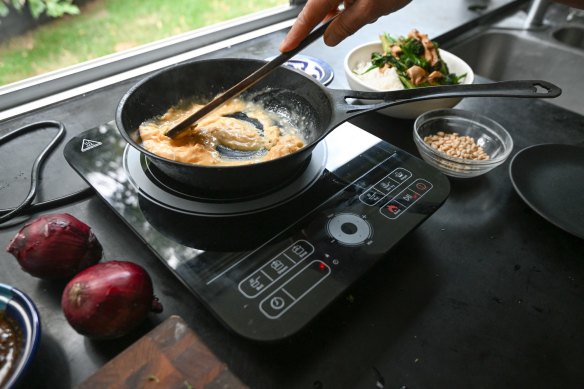
Credit: www.smh.com.au
Frequently Asked Questions
How Do I Make My Cookware Induction Compatible?
To make cookware induction compatible, use an induction converter disk or purchase pans made of magnetic materials like cast iron or magnetic stainless steel.
Why Is My Pan Not Working On Induction?
Your pan may not work on an induction stove if it’s not made from ferromagnetic material like cast iron or some stainless steels. Induction cooktops require pans with a base that a magnet can stick to for proper heating. Check your pan’s compatibility with an induction hob.
How Can I Get My Pans To Work On An Induction Hob?
To use pans on an induction hob, ensure they are induction-compatible, usually marked with a coil symbol or stating ‘induction-ready. ‘ Use a magnet to test; if it sticks to the pan’s base, it’s suitable for induction cooking.
What Happens If I Use Non-induction Pans On An Induction Hob?
Using non-induction pans on an induction hob typically results in no heat, since these pans can’t conduct the electromagnetic energy required to cook food.
Conclusion
Embracing induction cooking transforms your kitchen experience. Ensure your pans are induction-ready to harness this technology’s efficiency. For those that aren’t, consider an interface disk as a handy workaround. By selecting the right cookware, you’ll enjoy the speed and precision induction offers.
Let’s make every meal an adventure in innovation!


Leave a Reply