
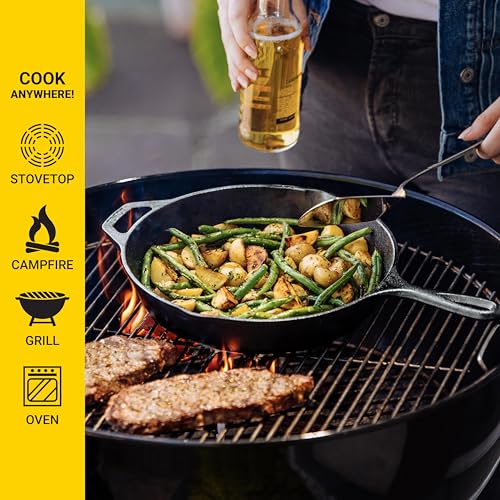
Both excel: cast iron holds heat and depth; carbon steel heats fast and is lighter to handle.
I once burned a stir-fry and then seared the best steak of my life in the same week. That split shows the core cast iron vs carbon steel pan dilemma. Cast iron keeps heat like a champ. Carbon steel warms fast and flips food with less work. I’ve cooked with both for years. I’ll share hands-on notes, simple tests, and what each pan is best for so you can pick the right pan for your kitchen and style.
Is cast iron pan Good?
Yes — for many home cooks. Cast iron is a workhorse. It holds heat and browns food deeply. If you like steady, even heat and you do oven work or campfire meals, cast iron serves well. It can feel heavy. It needs care and love to keep its seasoning. For casseroles, slow-cooked stews, and searing thick steaks, cast iron shines.
I remember using a cast iron skillet to bake cornbread on a cold night. The crust was perfect. Another time I seared a ribeye, slid it in the oven, and the steak stayed hot through plating. Those wins came from heat hold and the pan’s thermal mass. I also used it on a grill for pizza. It is not for quick flips or delicate eggs unless you have a very well-seasoned surface.
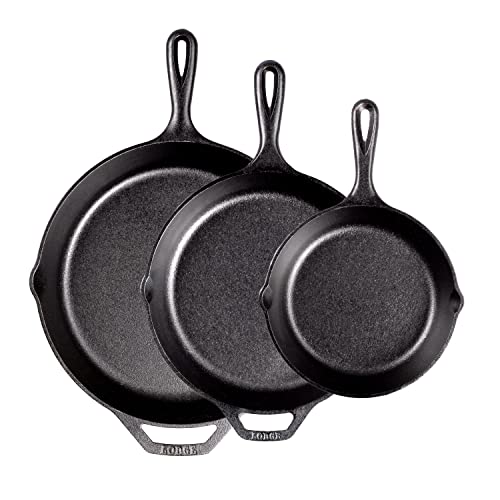
What Makes It Stand Out / Key Features
- Excellent heat retention for steady cooking and searing.
- Durable; can last generations with care.
- Works on oven, stove, grill, and campfire.
- Develops natural non-stick seasoning over time.
- Thick walls and heavy base for even browning.
What I Like
- Transforms into a reliable non-stick with regular use.
- Keeps food hot on the plate longer.
- Great for finishing dishes in the oven.
- Easy to clean with hot water and a scrub when needed.
- Feels sturdy and gives confident sears on steaks.
What Could Be Better
- Heavy to lift and maneuver, especially when full.
- Slow to heat and slow to cool—less ideal for quick cooking.
- Needs seasoning care to prevent rust and stickiness.
My Recommendation
Choose cast iron if you want heat retention and rugged versatility. Great value and widely available.
| Best For | Why |
|---|---|
| Searing thick steaks | Holds high heat for even crust formation |
| Oven-to-table baking | Oven safe and keeps food warm |
| Campfire cooking | Durable and stable over coals |
Is carbon steel pan Good?
It depends on your needs, but often yes. Carbon steel heats quickly and is lighter than cast iron. It is my go-to for fast work. I use carbon steel for stir-fries, pancakes, and eggs. The pan gets hot fast and responds quickly when I change heat. It takes seasoning too, and when well-seasoned it can be nearly as non-stick as cast iron for many tasks.
I once cooked a full breakfast—eggs, bacon, and hash—in one pan without crowding. The carbon steel stayed nimble. I also tossed a quick stir-fry on high heat and loved how it flipped and moved food. Yet it can warp on uneven heat if thin, and it needs routine seasoning and drying. For chefs who flip, toss, and move quickly, carbon steel often wins.

What Makes It Stand Out / Key Features
- Heats quickly and responds fast to temperature changes.
- Lightweight compared to cast iron, easier to handle.
- Develops a smooth seasoning suitable for quick-cook tasks.
- Great for high-heat searing and stir-fry.
- Often compatible with induction and oven use.
What I Like
- Fast heat-up saves time and energy.
- Easy to flip and toss food in the pan.
- Works well for delicate tasks when well-seasoned.
- Lighter for frequent use and cleaning.
- Gives a great sear on thin cuts and fish.
What Could Be Better
- Seasoning can wear unevenly if washed harshly.
- Thinner pans may warp on intense, uneven heat.
- Not as heat-stable as cast iron for long, slow cooks.
My Recommendation
Pick carbon steel if you value quick heat and easy handling. It’s ideal for fast cooks and frequent use.
| Best For | Why |
|---|---|
| Stir-fries and quick sautés | Heats fast and responds to temp changes |
| Eggs and pancakes | Lighter pan aids quick flips and control |
| Everyday weekday cooking | Less fatiguing to lift and manage |
cast iron vs carbon steel pan: Side-by-Side Test
I tested both pans in my kitchen for weeks. I cooked steaks, eggs, stir-fries, pancakes, and baked dishes. Below are clear categories based on hands-on results to help you decide between cast iron vs carbon steel pan.
Cooking Functions: Which One Does More?
Compare key cooking tasks and how each pan performs.
| Function | Cast Iron | Carbon Steel |
|---|---|---|
| Searing thick steaks | Excellent | Very Good |
| Stir-fry at high heat | Good | Excellent |
| Eggs and delicate foods | OK when well-seasoned | Better when seasoned |
| Oven baking | Excellent | Good |
Rating: Cast iron – 9/10 | Carbon steel – 8/10
“Cast iron edges this category for heavy searing and oven work. Carbon steel wins quick, high-heat tossing.”
Heat Retention & Responsiveness
How they hold and change temperature.
| Trait | Cast Iron | Carbon Steel |
|---|---|---|
| Heat hold | Excellent | Good |
| Heat up speed | Slow | Fast |
| Heat response to dial changes | Slow | Fast |
| Evenness across surface | Very Even | Even |
Rating: Cast iron – 9/10 | Carbon steel – 8/10
“Cast iron wins for steady heat. Carbon steel wins for speed and control.”
Weight & Handling
How easy they are to hold, flip, and clean.
| Aspect | Cast Iron | Carbon Steel |
|---|---|---|
| Overall weight | Heavy | Light |
| One-handed flipping | Hard | Easy |
| Storage | Takes space | Easier |
| Transport for camping | Cumbersome | Better |
Rating: Cast iron – 6/10 | Carbon steel – 9/10
“Carbon steel is lighter and easier to handle. Cast iron is hefty but stable.”
Maintenance & Care
Seasoning, cleaning, and rust resistance.
| Care Task | Cast Iron | Carbon Steel |
|---|---|---|
| Seasoning buildup | Slow, durable | Faster, smooth |
| Post-wash drying | Needed to avoid rust | Also needed |
| Dishwasher safe | No | No |
| Ease of re-seasoning | Easy but slow | Quick touch-ups |
Rating: Cast iron – 7/10 | Carbon steel – 7/10
“Both need care. Carbon steel needs a bit more routine attention for a smooth surface.”
Value & Longevity
Cost vs long-term use and resale or heirloom value.
| Metric | Cast Iron | Carbon Steel |
|---|---|---|
| Initial cost | Low to mid | Low to mid |
| Durability | Generational | Long with care |
| Resale/heirloom | High | Moderate |
| Replacement need | Rare | Rare if treated well |
Rating: Cast iron – 9/10 | Carbon steel – 8/10
“Both offer solid value. Cast iron can be an heirloom; carbon steel rewards regular use.”
Final Verdict: Which Should You Buy?
Cast iron and carbon steel each excel in different ways. Cast iron wins for heat retention, oven work, and heavy-duty sears. Carbon steel wins for speed, lightness, and quick cooks. Both need seasoning and care but will last a long time.
If you want one pan only, pick cast iron for versatility. If you cook fast, flip often, or prefer lighter pans, pick carbon steel. For many home cooks, keeping one of each covers all bases in the kitchen.
FAQs Of cast iron vs carbon steel pan
What is the main difference between cast iron and carbon steel?
Cast iron holds heat longer and is heavier. Carbon steel heats faster and is lighter. Both need seasoning and care.
Which pan is better for searing steaks: cast iron or carbon steel?
Cast iron has the edge for thick steaks due to heat retention. Carbon steel does very well for thinner cuts and faster sears.
Can I use soap on cast iron or carbon steel?
Yes, mild soap is okay occasionally. Rinse, dry fully, and re-oil to protect seasoning. Avoid harsh dishwashers.
Which pan is easier for everyday use?
Carbon steel is easier to handle daily because it’s lighter and heats quickly. Cast iron is great if you want one all-purpose, heavy-duty pan.
Do both pans work on induction stovetops?
Yes. Both cast iron and carbon steel are magnetic and work well on induction cooktops.

Leave a Reply