
In the ever-evolving world of kitchen equipment, titanium cookware has emerged as a game-changer for home cooks and outdoor enthusiasts alike. This remarkable material, once reserved exclusively for aerospace applications and high-end camping gear, has gradually made its way into everyday kitchens, bringing with it a unique combination of strength, lightness, and durability that traditional cookware materials simply cannot match.
Titanium cookware represents a significant investment in your culinary arsenal, and understanding what sets it apart is crucial before making a purchase decision. Unlike conventional aluminum, stainless steel, or cast iron options, titanium offers an exceptional strength-to-weight ratio that makes handling effortless while maintaining incredible durability. A titanium pan can weigh half as much as its stainless steel counterpart while being stronger and more resistant to corrosion, warping, and damage.
Why Titanium Cookware Deserves Your Attention!
Best Titanium Cookware:The health-conscious cooking movement has also contributed to titanium’s rising popularity. Pure titanium is completely non-reactive and biocompatible, meaning it won’t leach chemicals into your food regardless of what you’re cooking. This makes it ideal for those with metal sensitivities or anyone seeking the cleanest possible cooking experience. Additionally, titanium naturally forms a stable oxide layer that provides some non-stick properties without the need for chemical coatings that can degrade over time.
However, titanium cookware isn’t without its learning curve and considerations. The material’s excellent heat conductivity comes with a caveat—it heats quickly and unevenly, requiring a different cooking approach than traditional materials. The price point also sits significantly higher than most alternatives, making it essential to choose the right pieces for your specific needs rather than replacing your entire kitchen collection impulsively.
Whether you’re an ultralight backpacker looking to shave ounces from your pack, a health-focused home cook seeking the purest cooking surface, or simply someone who appreciates premium kitchen tools that will last decades, this comprehensive guide will help you navigate the world of titanium cookware. We’ve tested and researched eleven exceptional products across various price points and use cases, from budget-friendly camping sets to premium chef-grade pieces that belong in serious home kitchens.
In this detailed review, you’ll discover which titanium cookware pieces deliver the best value, performance, and longevity for different cooking styles and environments. We’ll cut through marketing hype, examine real-world performance, and provide honest assessments that help you make an informed decision. By the end of this guide, you’ll know exactly which titanium cookware deserves a place in your kitchen or backpack—and which pieces might not live up to their premium price tags.
Top 11 Titanium Cookware Products Reviewed!
1. Snow Peak Titanium Multi Compact Cookset
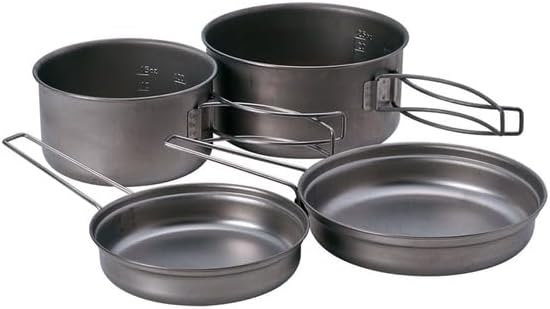
Overview: Snow Peak has built its reputation on crafting premium outdoor gear that seamlessly blends Japanese design philosophy with exceptional functionality. Their Titanium Multi Compact Cookset represents the gold standard for backpacking cookware, offering a thoughtfully designed nesting system that maximizes packability without sacrificing performance.
Key Features:
- Pure grade 1 titanium construction throughout all pieces
- Three-pot nesting system (900ml, 1000ml, and 1400ml capacities)
- Folding handles with heat-resistant grips
- Mesh storage bag included for organization
- Weighs only 318 grams for the complete set
- Graduated measurement marks inside each pot
- Compatible with most backpacking stoves
Performance and User Experience:
The Snow Peak set excels in real-world backcountry conditions where every ounce matters. The pots heat remarkably fast over both canister stoves and open flames, though you’ll need to watch carefully to prevent hot spots. The folding handles lock securely in place and remain cool enough to touch even when the pot is boiling, thanks to their clever insulated design.
The nesting capability is genuinely impressive—everything packs down to roughly the size of a Nalgene bottle, leaving ample room in your pack for essentials. The measurement markings prove invaluable for portion control on multi-day trips, and the lids fit snugly enough to prevent spillage while cooking.
One standout feature is the rim design, which allows for clean pouring without dripping. This might seem minor until you’ve spilled precious freeze-dried meals or clean water in the wilderness. The titanium surface develops a beautiful rainbow patina over time, indicating proper heat tempering and adding character to your gear.
Pros:
✅ Exceptionally lightweight without feeling flimsy
✅ Brilliant nesting design saves significant pack space
✅ Durable construction that withstands years of abuse
✅ Easy to clean—food rarely sticks to the surface
✅ Handles stay cool and lock firmly in position
✅ Lifetime warranty from a reputable manufacturer
Cons:
❌ Premium price point may deter budget-conscious buyers
❌ No non-stick coating means some foods require oil
❌ Heats unevenly compared to aluminum alternatives
❌ Lids lack steam vents for better heat regulation
Ideal For: Serious backpackers, thru-hikers, and ultralight enthusiasts who prioritize weight savings and durability over cost. This set particularly suits those planning extended wilderness trips where reliability cannot be compromised.
Final Verdict: The Snow Peak Titanium Multi Compact Cook set justifies its premium price through exceptional engineering, feather-light construction, and bombproof durability. While the investment is substantial, this set will likely outlast your hiking boots, tent, and backpack combined. For dedicated outdoor adventurers, it represents a lifetime purchase that delivers consistent performance in the most demanding conditions.
2. TOAKS Titanium 750ml Pot with Bail Handle
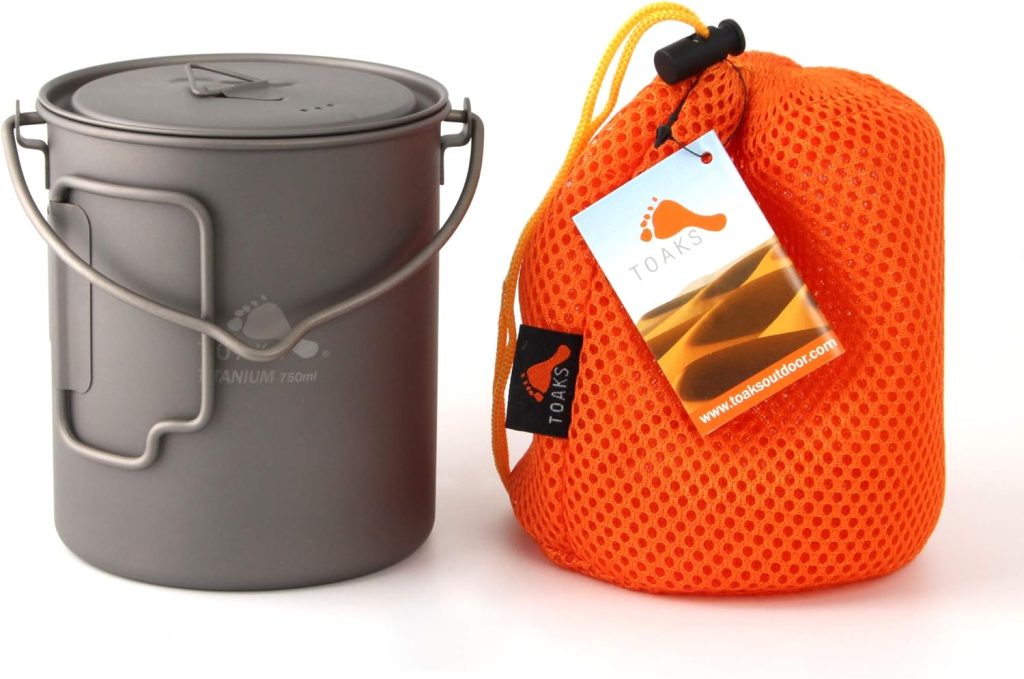
Overview: TOAKS has democratized titanium cookware by offering quality pieces at accessible price points without significant compromise in performance. Their 750ml pot represents the sweet spot for solo backpackers seeking minimalist functionality and excellent value.
Key Features:
- Pure titanium construction with reinforced rim
- 750ml capacity perfect for solo meals
- Bail handle design for versatile hanging and cooking
- Graduated interior markings in ml and oz
- Weighs just 95 grams including lid
- Tight-fitting lid with small grab loops
- Compatible with most ultralight stove systems
Performance and User Experience:
This pot punches well above its weight class in terms of performance and versatility. The bail handle design initially seems simple, but it proves incredibly functional—you can hang it over a fire, use it with pot grips, or lift it directly when cool. The 750ml size handles everything from morning coffee to dehydrated dinners with ease.
Heat distribution requires attention, as with all titanium cookware, but the thin walls ensure rapid boiling times that conserve fuel. Water typically reaches a rolling boil in under three minutes with a quality backpacking stove. The lid fits snugly enough to retain heat while the small grab loops prevent accidental drops when removing it.
The pot’s diameter allows most 110g fuel canisters to nest inside along with a small stove, creating an efficient packing system. The measurement markings remain clearly visible even after extensive use, and the titanium surface cleans effortlessly with just water and a small scrubber.
Pros:
✅ Exceptional value for money in the titanium category
✅ Ultra-lightweight at under 100 grams
✅ Versatile bail handle suits multiple cooking methods
✅ Extremely compact when packed with fuel canister
✅ Heats water quickly, conserving stove fuel
✅ Virtually indestructible with proper care
Cons:
❌ Single pot limits cooking versatility
❌ Bail handle can rotate if not secured properly
❌ Lid lacks a vent hole for pressure release
❌ No heat-resistant grip on the handle
Ideal For: Minimalist solo backpackers, fast packers, and anyone seeking to reduce pack weight without breaking the bank. This pot works beautifully for those who eat simple trail meals and prioritize efficiency over culinary complexity.
Final Verdict: The TOAKS 750ml pot delivers outstanding value by focusing on essentials rather than extras. It’s proof that titanium cookware doesn’t need to cost a fortune to perform reliably. For solo adventurers who cook simple meals and value weight savings, this represents one of the best investments in outdoor cooking gear available today.
3. Keith Titanium Ti6053 2-Piece Cookware Set
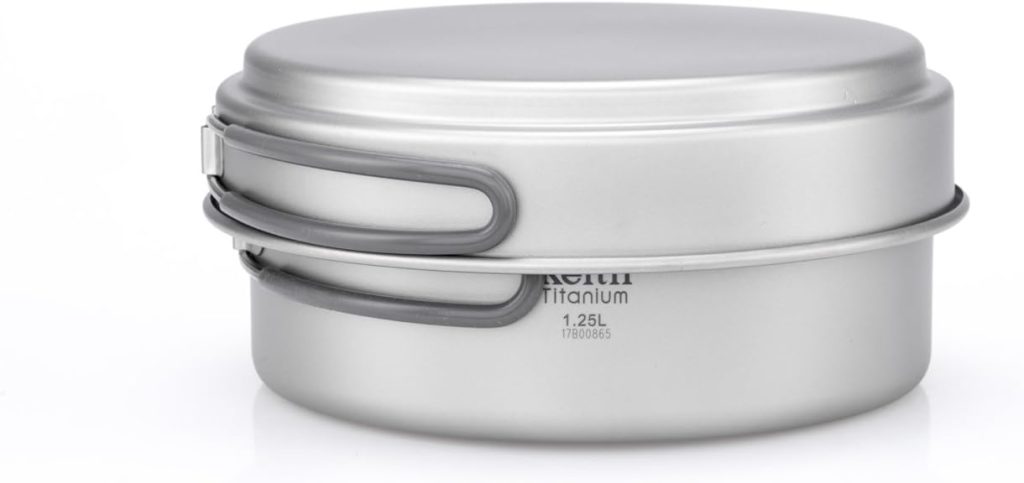
Overview: Keith Titanium bridges the gap between outdoor cooking and car camping with their Ti6053 set, offering larger capacities and more home-kitchen functionality than typical backpacking gear. This two-piece system includes a 1.8L pot and 1.2L pan, making it ideal for cooking real meals in outdoor settings.
Key Features:
- Food-grade titanium construction with reinforced bases
- 1.8L pot and 1.2L frying pan that nest together
- Folding stainless steel handles with silicone grips
- Both pieces include fitted lids
- Combined weight of approximately 470 grams
- Mesh storage bag and cleaning sponge included
- Wide cooking surfaces suitable for various foods
Performance and User Experience:
This set shines when cooking actual meals rather than just boiling water. The frying pan’s wider surface area makes it possible to cook eggs, pancakes, or sauté vegetables—tasks that frustrate most ultralight cookware users. The pot’s 1.8L capacity handles group meals, allowing you to prepare pasta, soups, or stews for two to three people comfortably.
The folding handles represent a significant upgrade from bail handles, providing better control when stirring or flipping foods. The silicone grips stay cool during cooking, though they add minimal weight to the overall package. Both lids fit securely and feature small knobs for easy removal.
Heat management requires practice, particularly with the frying pan. The titanium surface heats rapidly and can burn foods if you’re not attentive, but once you master the temperature control, it performs admirably. A small amount of oil prevents most sticking issues, and cleanup remains straightforward even after cooking sticky foods like eggs or pancakes.
Pros:
✅ Larger capacities accommodate group cooking needs
✅ Frying pan enables diverse cooking techniques
✅ Handles provide superior control compared to bail designs
✅ Nesting design saves space despite larger sizes
✅ Durable enough for frequent car camping use
✅ Excellent price-to-performance ratio
Cons:
❌ Too heavy for ultralight backpacking applications
❌ Handles don’t lock, occasionally flopping during transport
❌ Requires more oil than non-stick alternatives
❌ Limited performance over campfire due to uneven heating
Ideal For: Car campers, overlanders, and casual backpackers who prioritize cooking quality over weight savings. This set suits those who want to prepare real meals outdoors without sacrificing too much convenience.
Final Verdict: The Keith Ti6053 set offers an attractive entry point into titanium cookware for outdoor enthusiasts who don’t need ultralight performance. It delivers genuine cooking versatility at a reasonable price, making it ideal for weekend warriors and casual adventurers who appreciate quality gear without extreme specialization.
4. Boundless Voyage Titanium Frying Pan with Folding Handle
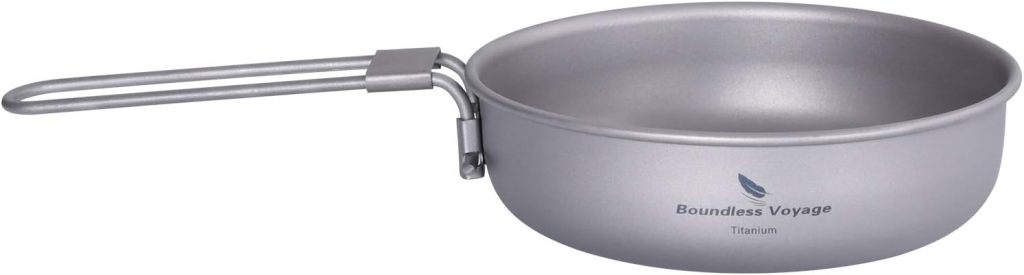
Overview: Boundless Voyage specializes in innovative outdoor cooking solutions, and their standalone titanium frying pan addresses a genuine gap in the market. Many titanium cookware sets skimp on frying pan quality, but this dedicated piece delivers legitimate sautéing and frying performance in a backcountry-friendly package.
Key Features:
- Pure titanium construction with 7.5-inch diameter cooking surface
- Folding handle with secure locking mechanism
- Reinforced lip for easy pouring and reduced spillage
- Weight of only 145 grams with handle
- 450ml capacity when filled to the rim
- Compatible with induction cooktops (though not recommended)
- Subtle measurement markings on interior
Performance and User Experience:
This frying pan transforms backcountry cooking from functional to genuinely enjoyable. The 7.5-inch surface area provides enough real estate to cook two eggs side-by-side or sear a small trout. The even thickness across the pan bottom helps distribute heat more uniformly than cheaper alternatives, though you’ll still want to preheat slowly over moderate flames.
The folding handle mechanism locks positively in both extended and folded positions, eliminating the annoying wobble common in similar designs. When extended, it provides sufficient length to keep your hands away from the heat source while maintaining good leverage for flipping or tossing foods.
Cooking eggs without sticking requires preheating and adequate butter or oil, but once you nail the technique, results rival traditional non-stick pans. The reinforced lip makes pouring excess grease or transferring liquidy foods significantly easier than flat-rimmed alternatives.
Pros:
✅ Genuine frying capability in an ultralight package
✅ Secure handle lock eliminates movement during cooking
✅ Large enough cooking surface for practical meal preparation
✅ Reinforced rim prevents spills and aids pouring
✅ Develops natural non-stick properties with seasoning
✅ Doubles as a plate when eating directly from the pan
Cons:
❌ Requires oil or butter for most cooking applications
❌ Handle can get warm during extended cooking sessions
❌ Shallow depth limits certain cooking techniques
❌ More expensive than similar aluminum alternatives
Ideal For: Outdoor cooks who want to elevate their backcountry cuisine beyond freeze-dried meals. Perfect for anglers who catch their dinner, hunters preparing fresh game, or anyone who enjoys cooking fresh foods while camping.
Final Verdict: The Boundless Voyage frying pan justifies its place in your pack if you value cooking quality and variety. While it’s not essential for minimalist trips, it opens up culinary possibilities that make extended outdoor adventures far more enjoyable. The moderate weight penalty pays dividends in meal quality and cooking satisfaction.
5. Evernew Titanium Ultralight Deep Pot 900ml
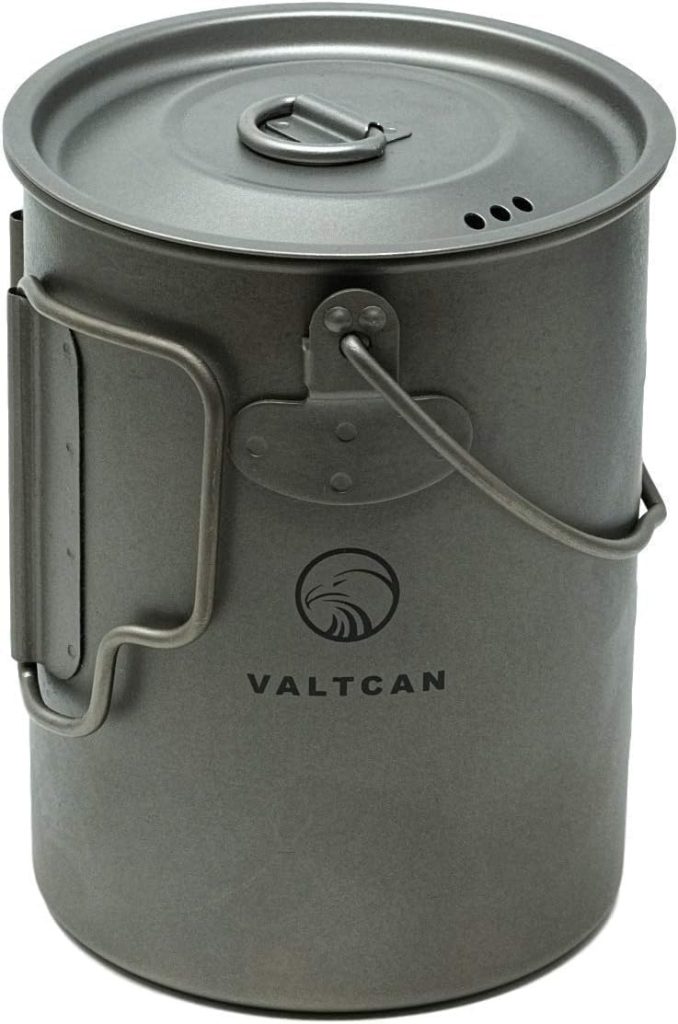
Overview: Evernew, another Japanese outdoor equipment manufacturer, brings meticulous attention to detail to their titanium cookware line. The Ultralight Deep Pot represents extreme weight optimization without compromising structural integrity, making it a favorite among gram-counting fastpackers and thru-hikers.
Key Features:
- Ultra-thin yet durable grade 1 titanium construction
- 900ml capacity with deep, narrow profile
- Weighs an astonishing 85 grams including lid
- Folding wire handles that lock in place
- Precise interior measurement markings
- Tight-fitting lid with steam vents
- Designed to nest 110g fuel canisters perfectly
Performance and User Experience:
Evernew achieved remarkable weight savings through calculated engineering rather than simply using thinner material. The pot’s deep, narrow profile provides structural rigidity while minimizing material use, resulting in a piece that feels surprisingly robust despite weighing less than most smartphones.
The wire handles initially seem flimsy but prove remarkably functional once you understand their design. They lock securely when extended and fold completely flat when packed. While they conduct heat more than insulated handles, they cool quickly when removed from the heat source, and pot grips solve any handling concerns.
Boiling performance matches or exceeds heavier titanium pots thanks to the thin walls and efficient shape. The narrow diameter concentrates heat effectively, bringing water to a boil in under two minutes with a quality stove. The vented lid prevents boil-overs while retaining enough heat for efficient cooking.
Pros:
✅ Among the lightest titanium pots available at this capacity
✅ Deep shape provides structural stability despite thin walls
✅ Excellent nesting efficiency with fuel canisters
✅ Vented lid prevents messy boil-overs
✅ Compact folded size saves pack space
✅ Rapid heating saves fuel on long trips
Cons:
❌ Wire handles lack insulation and can get hot
❌ Narrow opening makes cleaning slightly more difficult
❌ Premium pricing reflects specialized design
❌ Thin walls show dents more readily than thicker alternatives
Ideal For: Ultralight backpackers, fast packers, and long-distance hikers where every gram counts. Ideal for those who primarily boil water for freeze-dried meals rather than cooking elaborate backcountry cuisine.
Final Verdict: The Ever-new Ultralight Deep Pot delivers exactly what its name promises—genuinely ultralight performance without the fragility you might expect. For weight-obsessed hikers tackling long trails, the weight savings justify the premium price. It’s specialized gear for those who understand that shaving ounces creates a cumulative advantage over hundreds of miles.
6. Fire-Maple Titanium Cookware Set FMC-TD3
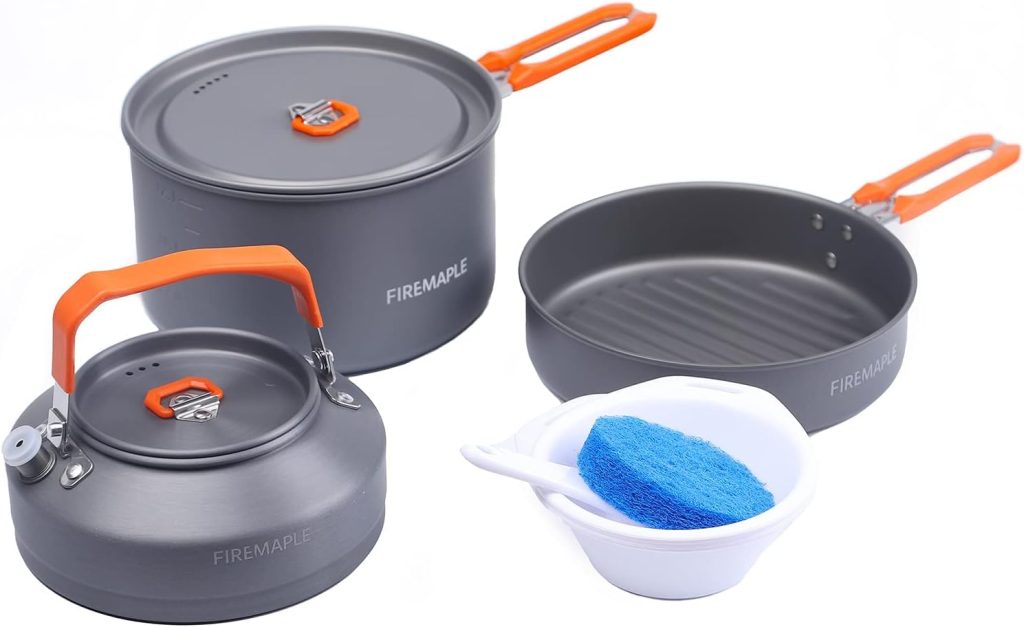
Overview: Fire-Maple has earned recognition for producing reliable outdoor gear at competitive prices, and their FMC-TD3 titanium set continues this tradition. This comprehensive three-piece system includes thoughtful features that enhance usability without adding unnecessary weight or cost.
Key Features:
- Three titanium pieces: 1.5L pot, 800ml pot, and frying pan/lid
- Food-grade titanium with reinforced base rings
- Folding handles with heat-resistant plastic grips
- Insulated sleeve included for the 1.5L pot
- Complete set weights approximately 390 grams
- Mesh storage bag with drawstring closure
- Interior volume markings on both pots
Performance and User Experience:
This set strikes an impressive balance between functionality and packability. The three-piece configuration provides genuine cooking versatility—you can boil water in one pot while heating food in another, or use the frying pan to prepare sides while the main dish simmers.
The insulated sleeve for the larger pot is a standout feature often overlooked by competitors. It protects your hands from hot surfaces, keeps food warmer longer, and adds structural protection during transport. The sleeve fits snugly without slipping, and you can leave it on during cooking if desired.
Heat distribution is typical for titanium—fast but uneven—though the reinforced base rings help somewhat by adding thermal mass. The frying pan doubles as a lid for both pots, creating a versatile cooking system. While shallow, it handles basic frying tasks adequately with proper preheating and oil.
Pros:
✅ The comprehensive set covers most outdoor cooking needs
✅ The insulated sleeve adds value and functionality
✅ Good nesting design minimizes packed size
✅ Handles stay cool thanks to plastic grips
✅ Competitive pricing for a three-piece titanium set
✅ Durable construction withstands regular use
Cons:
❌ Heavier than ultralight-specific alternatives
❌ Frying pan is somewhat shallow for versatile cooking
❌ Plastic handle grips may degrade over many years
❌ Base reinforcements add weight without dramatic performance gains
Ideal For: Versatile backpackers and campers who want cooking options without excessive weight. Perfect for those who camp with a partner or want the flexibility to prepare varied meals in the backcountry.
Final Verdict: The Fire-Maple FMC-TD3 offers excellent value in the crowded titanium cookware market. While it doesn’t excel in any single category, the well-rounded performance, thoughtful features, and reasonable price make it an outstanding choice for most outdoor enthusiasts. It’s the practical choice for those who want titanium’s benefits without extreme specialization.
7. MSR Titan Kettle 850ml

Overview: MSR (Mountain Safety Research) brings decades of outdoor equipment expertise to their Titan Kettle, creating a specialized piece optimized for the specific task of boiling water quickly and efficiently. This design-focused approach results in a kettle that excels at its intended purpose.
Key Features:
- Pure titanium construction with optimized wall thickness
- 850ml capacity with wide mouth opening
- Pivoting handle with locking mechanism
- Spout design for controlled pouring
- Weighs 118 grams complete with lid
- Integrated strainer holes in the lid
- Compatible with MSR stove systems and most alternatives
Performance and User Experience:
The kettle design offers distinct advantages over traditional pots for boiling-focused cooking. The spout allows precise pouring into narrow-mouth bottles or cups without splashing, while the wide opening facilitates easy filling from streams and quick cleaning. The pivoting handle swings away from the heat source, staying notably cooler than fixed handles.
Boiling performance is exceptional—the optimized shape and wall thickness heat water faster than comparable pots while using less fuel. The locking handle mechanism is confidence-inspiring, clicking securely into position and showing no tendency to slip even when swinging a full kettle.
The integrated strainer holes in the lid serve multiple purposes: they prevent boil-overs, allow draining pasta or vegetables, and enable steeping tea or coffee. While these might seem like minor conveniences, they demonstrate thoughtful design that enhances field usability.
Pros:
✅ Fastest boiling times among tested titanium cookware
✅ Spout design enables mess-free pouring
✅ Pivoting handle stays cooler and locks securely
✅ Wide mouth simplifies filling and cleaning
✅ Integrated strainer adds versatility
✅ Trusted brand with excellent warranty support
Cons:
❌ Kettle design limits cooking versatility
❌ More expensive than simple pot alternatives
❌ Spout can drip if not poured carefully
❌ Specialized shape doesn’t nest efficiently with other gear
Ideal For: Coffee and tea enthusiasts, ultralight hikers who primarily boil water for freeze-dried meals, and anyone who values rapid boiling performance and efficient pouring over cooking versatility.
Final Verdict: The MSR Titan Kettle exemplifies specialized design done right. If boiling water constitutes 90% of your backcountry cooking, this kettle will serve you better than any general-purpose pot. The premium price buys genuinely superior performance at its intended task, making it worthwhile for those who prioritize hot beverages and freeze-dried meals.
8. Vargo Titanium Bot Bottle Pot

Overview: Vargo’s innovative Bot design rethinks cookware entirely, creating a dual-purpose bottle and pot that saves weight and pack space through clever integration. This unique piece appeals to minimalists seeking maximum efficiency from every item they carry.
Key Features:
- The dual-function design serves as water bottle and cooking pot
- 1000ml capacity with measurement markings
- The thread-top lid creates watertight seal when cool
- Weighs 145 grams including lid
- Wide mouth accommodates adding ice or cleaning
- Graduated markings in both ml and oz
- Titanium construction throughout
Performance and User Experience:
The Bot concept requires adjusting your typical outdoor cooking workflow, but the benefits justify the learning curve. During the day, it serves as your water bottle, eliminating the need for a separate Nalgene or bladder. When camp arrives, simply empty any remaining water, and it becomes your cooking pot.
Cooking performance matches traditional titanium pots with similar wall thickness. The tall, narrow profile is particularly efficient for boiling water, though the shape makes stirring foods somewhat awkward. The wide mouth prevents the claustrophobic feeling of cooking in narrow pots while still providing good heat retention.
The threaded lid seals tightly enough for transport when the vessel has cooled, though you’d never want to cap it during cooking. This dual-sealing design (loose for cooking, tight for carrying) takes some getting used to but becomes second nature quickly.
Pros:
✅ Eliminates need for separate water bottle, saving weight
✅ Dual-purpose design reduces overall gear count
✅ Wide mouth simplifies filling, cooking, and cleaning
✅ Durable construction handles daily abuse
✅ Innovative design that actually works in practice
✅ Unique conversation starter on the trail
Cons:
❌ Requires carrying dirty cookware during the day
❌ Tall shape isn’t ideal for cooking complex meals
❌ Threads can collect grime, requiring regular cleaning
❌ Price premium for the dual-purpose design
Ideal For: Minimalist backpackers and fast packers who embrace multi-use gear and want to reduce pack weight through smart consolidation rather than simply buying lighter items.
Final Verdict: The Vargo Bot represents innovative thinking that delivers real-world benefits for the right user. While not everyone will appreciate carrying their cookware during the day, those who embrace the minimalist philosophy will find it brilliantly efficient. It’s niche gear that excels within its niche.
9. Lixada Titanium Camping Cookware Set
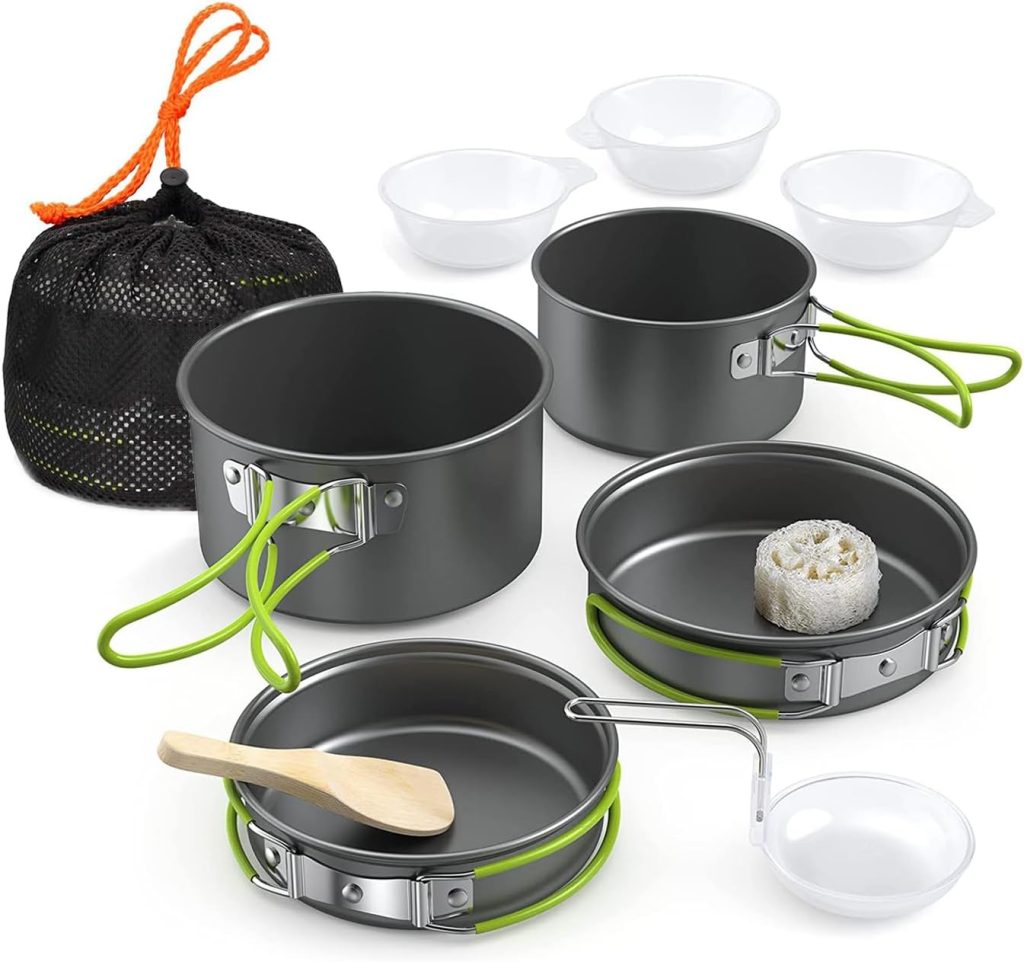
Overview: Lixada has gained traction in the outdoor gear market by offering budget-friendly titanium options that make the material accessible to newcomers. Their camping cookware set provides a complete cooking solution at a fraction of the cost of premium brands.
Key Features:
- Four-piece set including two pots, frying pan, and kettle
- Titanium construction with varying wall thicknesses
- Folding handles on all pieces
- Total set weight approximately 550 grams
- Nesting design for compact storage
- Mesh storage bag included
- All pieces marked with basic capacity indicators
Performance and User Experience:
This set prioritizes value and completeness over weight optimization, making it ideal for those new to titanium cookware or budget-conscious buyers. The multiple pieces provide cooking flexibility that specialized ultralight sets cannot match, allowing you to prepare complex meals with multiple components.
Build quality is noticeably lower than premium alternatives—the titanium feels thinner in some areas, and the handles exhibit more play than MSR or Snow Peak equivalents. However, these compromises enable the attractive pricing that makes titanium accessible to more users.
Cooking performance is adequate rather than exceptional. Hot spots appear more readily than with better-designed cookware, and the thinner construction means foods burn more easily if you’re not attentive. With proper heat management and a light hand with oil, you can achieve satisfactory results across all pieces.
Pros:
✅ Extremely affordable entry into titanium cookware
✅ Complete set covers diverse cooking needs
✅ Enough pieces for cooking multi-component meals
✅ Acceptable performance for casual camping use
✅ Good value for car camping where weight isn’t critical
✅ Enables trying titanium before investing in premium gear
Cons:
❌ Build quality below premium competitors
❌ Heavier than specialized ultralight alternatives
❌ Handles less secure than better-engineered designs
❌ Thinner construction shows wear more quickly
❌ Uneven heating requires careful temperature management
Ideal For: Budget-conscious campers, beginners exploring titanium cookware, car campers who want titanium’s benefits without the premium price, and casual users who camp occasionally rather than extensively.
Final Verdict: The Lixada set proves that titanium cookware doesn’t require massive investment. While serious backpackers will eventually upgrade to specialized pieces, this set serves casual users perfectly well and helps newcomers understand whether titanium’s characteristics suit their cooking style before committing to expensive gear.
10. Pathfinder Titanium Canteen and Nesting Cup Set
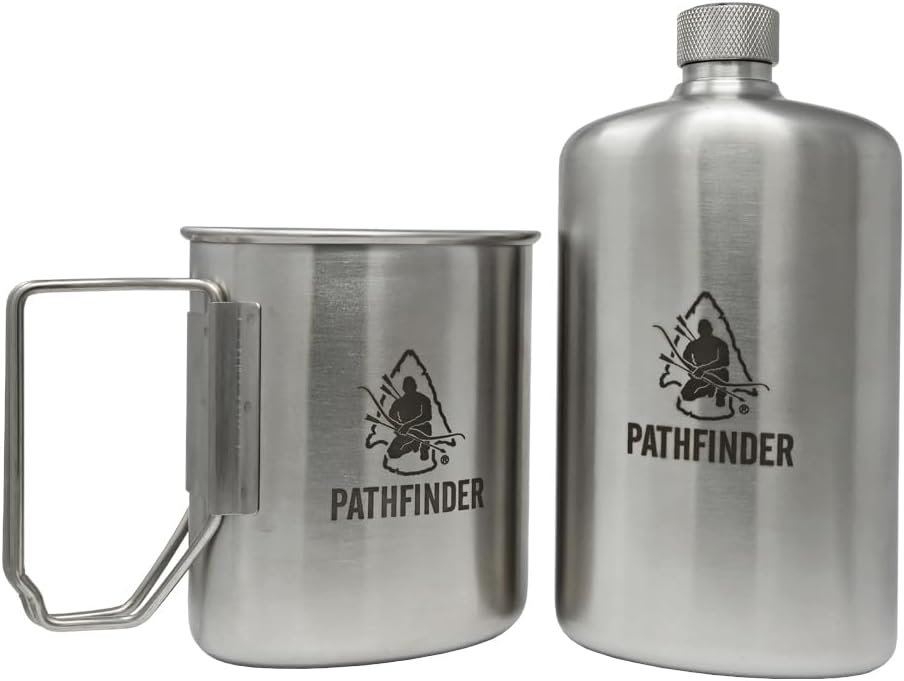
Overview: Pathfinder School, founded by survival expert Dave Canterbury, designed this set to meet bushcraft and survival cooking needs. The combination of a titanium canteen and nesting cup provides versatile options for both water transport and cooking in wilderness settings.
Key Features:
- 1100ml titanium canteen with wide mouth opening
- 750ml nesting cup with folding handle
- Both pieces constructed from food-grade titanium
- Canteen includes threaded cap with lanyard attachment
- Cup features bail handle for hanging over fire
- Combined weight of approximately 280 grams
- Canteen designed to fit standard belt pouches
Performance and User Experience:
This set excels in bushcraft and survival contexts where versatility and durability trump weight savings. The canteen’s wide mouth allows filling from shallow sources and facilitates adding purification tablets or filters. The robust construction withstands the abuse of survival training and extended wilderness living.
The nesting cup provides multiple functions—cooking vessel, eating bowl, measuring cup, and emergency water purification container. The bail handle enables hanging over campfires, a capability many modern cookware pieces lack. When nested, the system creates a compact package that fits standard military-style canteen pouches.
Cooking performance over open fires proves superior to stove-focused designs. The thicker titanium walls withstand direct flame contact without warping, and the material’s natural resistance to oxidation prevents the discoloration common with aluminum canteen cups.
Pros:
✅ Extremely durable construction for demanding use
✅ Versatile system suitable for various survival scenarios
✅ Wide-mouth canteen simplifies filling from various sources
✅ Cup handles open fire cooking effectively
✅ Nesting design creates compact, organized package
✅ Fits standard military-style canteen carriers
✅ Trusted brand in the survival and bushcraft community
Cons:
❌ Heavier than ultralight backpacking alternatives
❌ Canteen shape less efficient for cooking than dedicated pots
❌ Premium pricing for relatively simple design
❌ Bail handle on cup can get very hot over fires
Ideal For: Bushcraft enthusiasts, survival skill practitioners, hunters and trappers spending extended time in the wilderness, and those who prefer traditional outdoor living methods over modern lightweight backpacking.
Final Verdict: The Pathfinder Canteen and Cup Set delivers robust functionality for serious wilderness users. While backpackers might find it heavy, the set excels at its intended purpose—providing reliable, durable cooking and water transport for bushcraft and survival applications. It’s specialized gear for a specific community that values proven performance over weight optimization.
11. Boundless Voyage Titanium Tea Kettle with Infuser
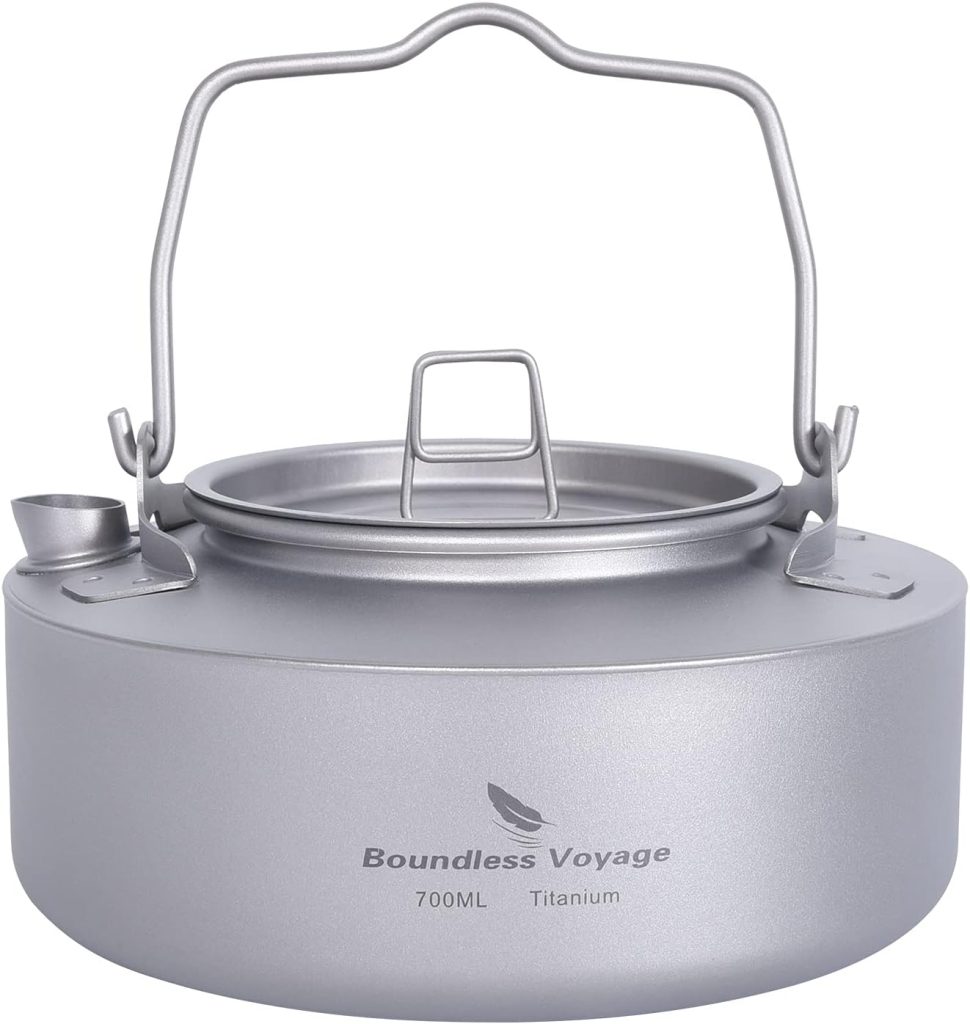
Overview: This specialized titanium kettle from Boundless Voyage caters to tea enthusiasts and coffee lovers who refuse to compromise beverage quality even in the backcountry. The integrated infuser system eliminates the need for separate steeping equipment while the spout design enables civilized pouring in primitive settings.
Key Features:
- 1100ml capacity titanium kettle with gooseneck-style spout
- Removable titanium tea infuser basket
- Folding handle with secure locking mechanism
- Tight-fitting lid with steam vent
- Weighs 205 grams complete with infuser
- Heat-resistant handle grip
- Fine-mesh infuser accommodates loose leaf tea or coffee
Performance and User Experience:
This kettle transforms backcountry beverage preparation from functional to genuinely enjoyable. The gooseneck spout provides controlled pouring essential for proper coffee brewing techniques, while the integrated infuser produces clean tea without requiring separate equipment or disposable filters.
Boiling performance is excellent—the optimized shape heats water efficiently, and the lid’s steam vent prevents pressure buildup while retaining most heat. The folding handle locks positively and includes a heat-resistant section that makes handling comfortable even when the kettle is hot.
The removable infuser basket features fine titanium mesh that contains even small tea particles while allowing proper water circulation for full flavor extraction. After steeping, simply remove the basket rather than struggling with separate strainers or dealing with floating debris.
Pros:
✅ Elevates backcountry coffee and tea to home-quality levels
✅ Integrated infuser eliminates separate equipment needs
✅ Gooseneck spout enables controlled, mess-free pouring
✅ Fine mesh basket works with various tea and coffee types
✅ Durable titanium construction throughout
✅ Reasonable weight for the functionality provided
✅ Enhances outdoor experience for beverage enthusiasts
Cons:
❌ Specialized function limits cooking versatility
❌ Heavier than simple pots of similar capacity
❌ Infuser basket requires careful cleaning to prevent clogging
❌ Premium price for what some consider luxury rather than necessity
❌ Gooseneck spout more fragile than traditional kettle spouts
Ideal For: Coffee and tea enthusiasts who won’t sacrifice beverage quality outdoors, luxury campers who value comfort and routine, overlanders with space for specialized equipment, and anyone who considers quality hot beverages essential to their outdoor experience.
Final Verdict: The Boundless Voyage Tea Kettle represents specialized luxury that genuinely enhances outdoor living for the right user. While backpackers counting grams will skip it, those who prioritize morning coffee rituals or afternoon tea will find the weight penalty worthwhile. It’s proof that backcountry experiences don’t require complete sacrifice of life’s simple pleasures.
Comprehensive Buying Guide: Everything You Need to Know About Titanium Cookware!
Understanding Titanium as a Cookware Material
Titanium’s emergence as a premium cookware material stems from properties that distinguish it dramatically from traditional options. Unlike aluminum, stainless steel, or cast iron, titanium offers a unique combination of characteristics that make it exceptionally well-suited for specific cooking applications, particularly in weight-sensitive and durability-demanding environments.
The material’s strength-to-weight ratio stands as its most celebrated attribute. Pure titanium is approximately 45% lighter than stainless steel while being stronger and more resistant to deformation. This translates to cookware pieces that feel almost impossibly light yet withstand impacts, drops, and rough handling that would dent or damage conventional materials. For backpackers and outdoor enthusiasts, this weight savings accumulates significantly across a complete cookware set.
Titanium’s corrosion resistance surpasses virtually all other cookware materials. The metal naturally forms a stable oxide layer when exposed to air, creating a protective barrier that prevents rust, pitting, and degradation even in harsh environments. You can leave titanium cookware wet without concern, use it over saltwater, and expose it to acidic foods without triggering chemical reactions. This makes titanium ideal for extended outdoor trips where proper cookware care might be challenging.
The biocompatibility of titanium—its complete non-reactivity with human tissue and food—makes it a favorite among health-conscious cooks. Unlike copper or aluminum, titanium won’t leach into acidic foods like tomato sauce or lemon juice. This inert nature ensures your cookware never affects food flavor or nutrition, providing the purest possible cooking surface.
However, titanium’s thermal properties require understanding and adaptation. The material conducts heat less efficiently than aluminum or copper, creating hot spots when placed over concentrated heat sources. This characteristic demands different cooking techniques—lower temperatures, frequent stirring, and understanding that heat concentration occurs directly above the flame or burner.
Types of Titanium Used in Cookware
Not all titanium cookware uses the same material grade, and understanding these differences helps explain performance variations and price disparities across products.
Commercial Pure Titanium (Grades 1-4): Most cookware uses Grade 1 or Grade 2 commercial pure titanium, which contains 99% titanium with trace elements. Grade 1 is slightly softer and more formable, making it ideal for creating complex shapes and thin-walled cookware. Grade 2 offers slightly higher strength while remaining highly corrosion-resistant. These grades provide the best balance of formability, weight, and performance for cookware applications.
Titanium Alloys: Some manufacturers use titanium alloys (typically Grade 5, also called Ti-6Al-4V) that incorporate aluminum and vanadium to increase strength. While stronger than pure titanium, alloys are slightly heavier and less corrosion-resistant. Alloy titanium typically appears in high-stress components like handles or reinforcement rings rather than entire cookware pieces.
Wall Thickness Considerations: Beyond the titanium grade, wall thickness dramatically affects performance and durability. Ultralight cookware uses walls as thin as 0.3mm, reducing weight but increasing vulnerability to dents and uneven heating. Standard thickness ranges from 0.4mm to 0.6mm, providing better heat distribution and durability. Premium cookware sometimes uses variable thickness, with thicker bases for better heat distribution and thinner sides for weight savings.
The titanium’s surface finish also impacts performance. Raw titanium develops a natural oxide layer that provides minimal non-stick properties. Some manufacturers polish or treat surfaces to enhance these characteristics, though truly non-stick performance still requires oil or proper seasoning.
Key Factors to Consider When Choosing Titanium Cookware
Intended Use Environment: Your primary cooking environment should heavily influence your titanium cookware selection. Backpacking demands different characteristics than car camping, which differs from home kitchen use.
For ultralight backpacking, prioritize weight above nearly everything else. Choose thin-walled pieces with minimal handles, typically weighing under 100 grams per piece. Accept that cooking performance may be compromised compared to heavier options. Opt for simple pots optimized for boiling water rather than versatile frying pans.
Car camping allows heavier, more versatile pieces since pack weight isn’t critical. Consider sets with multiple pieces, frying pans, and features like insulated handles that enhance usability. The weight penalty becomes irrelevant when your vehicle carries the gear.
Home kitchen use benefits from premium titanium pieces but requires accepting the material’s cooking characteristics. Choose thicker-walled cookware with good heat distribution. Consider pieces specifically designed for stovetop use rather than backpacking-optimized gear.
Capacity and Size Selection: Matching cookware capacity to your typical group size prevents carrying excess weight or finding yourself unable to prepare adequate meals.
Solo users generally need 600-900ml capacity for main cooking pieces. This handles single freeze-dried meals, morning coffee, and simple cooking tasks without excess weight. Couples or cooking partners should consider 1000-1500ml primary pots with smaller secondary pieces for versatility.
Groups of three or more benefit from multiple pots in the 1500-2000ml range, enabling simultaneous cooking of multiple components. Consider sets that include various sizes rather than single large pots, providing flexibility for different meal types.
Handle Design and Usability: Handle design dramatically impacts daily usability and cooking experience, yet many buyers overlook this critical factor.
Folding handles with locking mechanisms provide the best balance of packability and usability for most users. Look for secure locks that don’t slip under weight, and consider whether the handle length provides sufficient leverage for your cooking style. Heat-resistant grips prevent burns but add weight and potential failure points.
Bail handles excel at packability and weight savings but require careful handling or separate pot grips. They work best for simple boiling tasks rather than complex cooking requiring frequent stirring. Some users find bail handles awkward, while others appreciate their simplicity and reliability.
Wire handles represent extreme weight optimization but conduct heat readily and lack ergonomic comfort. They suit ultralight enthusiasts willing to use pot grips for all handling but frustrate those expecting comfortable, bare-handed use.
Lid Design and Functionality: Lids might seem like simple components, but thoughtful lid design significantly enhances cooking performance and convenience.
Tight-fitting lids retain heat effectively, reducing fuel consumption and cooking times. However, completely sealed lids can cause dangerous pressure buildup or messy boil-overs. Look for lids with small steam vents that release pressure while retaining most heat.
Strainer holes or mesh inserts in lids add versatility for draining pasta, vegetables, or preparing foods that benefit from liquid removal. While not essential, these features prove surprisingly useful in practice.
Lid handles or grab loops should be large enough for easy removal when hot but not so large they snag on pack contents. Some lids double as frying pans or plates, providing dual functionality that justifies carrying them.
Nesting and Packability: How cookware pieces fit together dramatically affects overall pack efficiency and organization.
Well-designed nesting systems allow multiple pieces to stack compactly, often with room for fuel canisters, stoves, or utensils inside. This maximizes pack space utilization and keeps related items organized. Poor nesting wastes valuable space and leads to frustration when packing.
Consider whether your cookware nests with other gear you own or plan to purchase. Many stove systems and fuel canisters follow standard dimensions that fit specific cookware sizes. Research these compatibilities before purchasing to ensure your complete cooking system packs efficiently.
Durability and Construction Quality: While all titanium is durable, construction quality varies significantly across manufacturers and price points.
Examine rim reinforcements, which prevent deformation and improve structural integrity. Quality pieces feature rolled or reinforced rims that resist bending when dropped or packed carelessly. Budget options sometimes skip these reinforcements, making them more vulnerable to damage.
Handle attachment points receive significant stress during use. Look for robust attachment methods—welded or riveted connections rather than simple crimping. Cheap handle attachments fail after extended use, potentially rendering otherwise functional cookware unusable.
Base construction affects both durability and cooking performance. Some manufacturers add reinforcement rings or thicker base sections that improve heat distribution and resist warping over high heat or open flames.
Common Mistakes to Avoid When Buying Titanium Cookware
Mistake 1: Choosing Titanium for the Wrong Reasons
Many buyers purchase titanium cookware based on reputation alone without understanding whether the material actually suits their needs. Titanium excels in scenarios demanding extreme durability and low weight, but other materials often perform better for stationary cooking or when weight isn’t critical.
If you primarily car camp or cook at home, high-quality stainless steel or aluminum often provides better cooking performance at lower cost. Titanium’s benefits only justify the premium when you actually need its unique characteristics—exceptional weight savings, extreme durability, or complete corrosion resistance.
Mistake 2: Buying Complete Sets When Individual Pieces Suffice
Manufacturers market complete cookware sets that include pieces you may never use. Critically evaluate which pieces you’ll actually employ in your cooking style before committing to a complete set.
Solo backpackers rarely need multiple pots—a single 750-900ml pot often handles all cooking tasks. Adding a frying pan might seem attractive but adds weight you’ll carry unused on most trips. Build your titanium collection gradually based on actual needs rather than perceived completeness.
Mistake 3: Ignoring Handle Design Until It’s Too Late
Handle design seems trivial when examining cookware in stores or online photos, but it becomes critical during actual use. Handles that seem acceptable when empty prove awkward when manipulating hot, full cookware in challenging conditions.
Test handle comfort and functionality before purchasing when possible. For online purchases, read user reviews specifically mentioning handle performance. Consider whether you’re willing to use separate pot grips or need handles designed for bare-handed operation.
Mistake 4: Expecting Non-Stick Performance Without Preparation
Titanium naturally forms a thin oxide layer that provides minimal non-stick properties, but expecting true non-stick performance without oil or seasoning leads to frustration and burnt food.
Understand that titanium requires cooking techniques more similar to stainless steel than Teflon-coated pans. Use adequate oil, preheat carefully, and accept that some foods will stick initially. With proper seasoning over time, titanium develops better non-stick characteristics, but it will never match chemical coatings.
Mistake 5: Overlooking Heat Management Requirements
Titanium’s rapid, uneven heating surprises cooks accustomed to aluminum or cast iron. Using the same heat levels and techniques that work with traditional cookware results in burnt food and frustration.
Educate yourself about titanium’s thermal properties before your first cooking session. Start with lower heat settings, preheat gradually, and stir frequently to prevent hot spots. Many disappointed titanium cookware reviews stem from operator error rather than product deficiencies.
Budget vs. Premium Options: What You’re Actually Paying For
The titanium cookware market spans a dramatic price range, from budget sets under $50 to individual premium pieces exceeding $100. Understanding what distinguishes these price tiers helps you decide where to invest.
Budget Titanium Cookware ($30-$80): Entry-level options use thinner titanium and simpler construction methods to achieve accessible pricing. While functional, these pieces often show compromises in handle security, rim reinforcement, and overall fit and finish. They suit casual users, beginners exploring titanium, or those who camp infrequently. Build quality may result in shorter lifespan and more frequent replacement compared to premium alternatives.
Mid-Range Titanium Cookware ($80-$150): This tier represents the sweet spot for most serious outdoor enthusiasts. Pieces feature better construction, more thoughtful design, and improved durability without entering premium pricing territory. Brands in this range typically offer solid warranties and have established reputations for quality. Most users find mid-range titanium cookware provides the best balance of performance, durability, and value.
Premium Titanium Cookware ($150+): Top-tier options command premium prices through exceptional engineering, superior materials, and meticulous quality control. You’re paying for optimized designs that maximize performance within weight constraints, better heat distribution through variable wall thickness, superior handle mechanisms, and often lifetime warranties from reputable manufacturers. Premium pieces suit dedicated enthusiasts who demand the absolute best and use their gear extensively enough to justify the investment.
The performance gap between budget and mid-range options is substantial and noticeable in regular use. The difference between mid-range and premium is more subtle, often representing refinement rather than fundamental capability. Most users should invest in mid-range or premium pieces for frequently-used items while accepting budget options for occasionally-used specialty pieces.
Expert Recommendations for Different Use Cases
For Thru-Hikers and Ultralight Backpackers: Prioritize weight above all else. Choose a single 750-900ml pot with minimal handle design—products like the TOAKS 750ml Pot or Evernew Ultralight 900ml represent ideal solutions. Skip frying pans and multiple pots unless you genuinely cook elaborate meals regularly. Every carried ounce compounds over hundreds of miles, making weight savings worth performance compromises.
For Weekend Backpackers: Balance weight and versatility with two-piece sets offering a primary pot (1000-1500ml) and smaller secondary piece or frying pan. The Fire-Maple FMC-TD3 or Keith Ti6053 sets provide cooking flexibility without excessive weight penalties. You can prepare varied meals while maintaining reasonable pack weight for shorter trips.
For Car Campers and Overlanders: Embrace heavier, more versatile options since vehicle transport eliminates weight concerns. Consider larger capacity sets with multiple pots, frying pans, and convenience features like insulated handles. The Keith or Lixada sets offer cooking capabilities approaching home kitchens at reasonable weights for vehicle-based camping.
For Bushcraft and Survival Enthusiasts: Choose robust pieces designed for open fire cooking and demanding conditions. The Pathfinder Canteen Set or thicker-walled pots handle direct flame contact and rough treatment. Prioritize durability and versatility over weight optimization, accepting heavier gear for reliability in challenging scenarios.
For Backcountry Gourmets: Select sets offering genuine cooking versatility including quality frying pans and multiple pots for simultaneous cooking. The Boundless Voyage Frying Pan combined with a quality pot enables preparing sophisticated meals in wilderness settings. Accept weight penalties for enhanced culinary capabilities.
For Coffee and Tea Enthusiasts: Invest in specialized kettles optimized for beverage preparation. The MSR Titan Kettle or Boundless Voyage Tea Kettle transform morning routines and elevate outdoor experiences for those who prioritize quality hot beverages.
Long-Term Care and Maintenance
Titanium cookware requires minimal maintenance compared to traditional materials, but proper care extends lifespan and maintains performance.
Cleaning: Titanium’s non-reactive surface resists staining and corrosion, simplifying cleanup. Most residue removes easily with water and gentle scrubbing. Avoid abrasive scouring pads that scratch the surface unnecessarily—titanium’s durability means gentler cleaning suffices. For stubborn burnt-on food, boil water in the pot to loosen residue before scrubbing.
Seasoning: While not strictly necessary, seasoning titanium cookware with oil improves non-stick properties over time. Heat the clean, dry cookware, add a thin oil layer, and heat until smoking. Wipe away excess oil and repeat periodically. The process builds a natural patina that enhances performance.
Storage: Titanium’s corrosion resistance means you can store it wet without concern, though drying prevents water spots. Nest pieces carefully to avoid scratching, though titanium’s hardness resists damage better than aluminum. Store in included bags or protective cases to prevent dents during transport.
Heat Discoloration: Titanium naturally develops rainbow coloring when heated, indicating oxide layer formation. This is normal and doesn’t indicate damage—in fact, it proves your cookware is functioning correctly. Some users embrace the patina as character; others prefer keeping cookware pristine through lower temperature cooking.
Handle Maintenance: Inspect folding handles periodically for tightness and proper locking. Tighten loose rivets or fasteners before they fail completely. Replace any damaged heat-resistant grips promptly to prevent burns. Lubricate moving parts occasionally if they become stiff.
Frequently Asked Questions (FAQs)!
Is titanium cookware worth the high price compared to aluminum or stainless steel?
Titanium cookware justifies its premium price for specific users and applications, but it’s not universally superior to cheaper alternatives. The value proposition depends entirely on your priorities and use cases.
For ultralight backpackers and thru-hikers, titanium’s exceptional strength-to-weight ratio makes the investment worthwhile. Carrying titanium rather than aluminum saves significant weight over hundreds of miles, reducing fatigue and increasing hiking enjoyment. The durability ensures your cookware lasts for years of demanding use, potentially outliving multiple cheaper alternatives.
However, for car camping, home cooking, or scenarios where weight isn’t critical, high-quality aluminum or stainless steel often performs better at fraction of the cost. Aluminum heats more evenly, and stainless steel provides better temperature control for complex cooking. Unless you specifically need titanium’s unique properties—extreme lightness, perfect corrosion resistance, or complete non-reactivity—other materials likely serve you better.
The “worth it” calculation also factors in your usage frequency. If you backpack every weekend and log hundreds of trail miles annually, premium titanium cookware represents excellent value. If you camp twice yearly, budget-friendly alternatives make more economic sense.
Can you use titanium cookware on regular kitchen stovetops?
Yes, titanium cookware functions on most kitchen stovetops, though with important considerations. Gas stoves work perfectly—titanium handles direct flame excellently and heats rapidly. Electric coil burners also work well, though you’ll want to match cookware diameter to burner size for even heating.
Induction cooktops present challenges. Pure titanium is not magnetic, so standard titanium cookware won’t work on induction burners. Some manufacturers produce titanium cookware with magnetic stainless steel bases specifically for induction compatibility, but these hybrid pieces are rare and expensive.
The bigger consideration is whether titanium’s characteristics suit home cooking. The rapid, uneven heating that matters little when boiling water for freeze-dried meals becomes problematic when preparing delicate sauces or searing meats. You’ll need to adjust techniques, use lower temperatures, and stir more frequently than with traditional cookware.
Many outdoor enthusiasts who love their titanium cookware for camping maintain separate stainless steel or cast iron pieces for home cooking where performance matters more than weight. Titanium serves admirably in home kitchens if you understand and work with its properties, but it rarely outperforms purpose-built kitchen cookware.
How do I prevent food from sticking to titanium cookware?
Preventing sticking in titanium cookware requires technique adjustments compared to non-stick pans, but becomes manageable with practice and proper preparation.
Use Adequate Oil or Fat: Titanium lacks the non-stick coating of Teflon pans, requiring oil to prevent adhesion. Use more oil than you might with non-stick cookware—a thin film covering the entire cooking surface. Butter, cooking oil, or animal fats all work effectively.
Preheat Properly: Allow titanium to heat gradually before adding food. Drop a small water bead on the surface—if it dances and beads up, the pan is ready. Adding food to insufficiently heated titanium guarantees sticking.
Control Temperature: Titanium heats quickly and creates hot spots. Use moderate heat rather than maximum settings. Lower temperatures give you better control and reduce sticking tendency. If your stove has numerical settings, stay around medium (5-6 on a 1-10 scale) for most cooking.
Don’t Rush: Let proteins develop a crust before attempting to flip. Stuck chicken or fish will release naturally once properly seared. Forcing premature flipping tears the food and frustrates cooks. Patience prevents most sticking issues.
Season Over Time: Like cast iron, titanium develops natural non-stick properties through seasoning. Regular use with oil builds a patina that improves performance. New titanium sticks more than well-used pieces that have developed this protective layer.
Clean Gently: Aggressive scrubbing removes the beneficial patina you’ve built. Clean with warm water and gentle scrubbing, preserving the seasoned surface for improved future performance.
Will titanium cookware last a lifetime?
Titanium cookware can genuinely last a lifetime with proper care—potentially outliving the owner. The material’s properties make it exceptionally durable and resistant to the common failures plaguing other cookware materials.
Titanium doesn’t rust, corrode, or oxidize in ways that compromise structural integrity. You can leave it wet indefinitely without concern. Acidic foods won’t pit the surface. Unlike aluminum that degrades from repeated heating or stainless steel that eventually warps, titanium maintains its properties essentially forever.
Physical damage represents the only real threat to titanium cookware longevity. While extremely strong for its weight, thin-walled titanium can dent if impacted hard by sharp objects or dropped on rocks. These dents rarely affect functionality but can compromise the aesthetic appeal. Thicker-walled pieces resist denting better, essentially becoming indestructible under normal use conditions.
Handle failures represent the most common “end of life” issue for titanium cookware. Rivets loosen, welds crack, or folding mechanisms break after years of use. Quality pieces use robust attachment methods that last decades, while budget options may experience handle problems sooner. Even handle failures often can be repaired by competent craftspeople, extending usable life further.
Many manufacturers offer lifetime warranties on titanium cookware, demonstrating confidence in the material’s longevity. Stories abound of titanium pieces purchased in the 1990s still performing flawlessly today. Barring loss or catastrophic damage, there’s no reason titanium cookware can’t outlast you and potentially serve your children or grandchildren.
Does titanium cookware affect food flavor or nutrition?
Titanium is completely inert and non-reactive, meaning it has zero impact on food flavor or nutritional content. This represents one of titanium’s significant advantages over reactive materials like copper, aluminum, or even some stainless steel grades.
Acidic foods—tomato sauce, citrus, vinegar-based dishes—trigger reactions in many cookware materials that can impart metallic flavors and potentially leach trace metals into food. Titanium remains completely stable regardless of food acidity or pH level. You can cook tomato sauce for hours in titanium without any metallic taste developing.
The biocompatibility that makes titanium suitable for medical implants extends to cookware applications. The material is so biologically inert that human bodies accept titanium implants without rejection. This same property ensures absolutely no interaction with food or beverages cooked in titanium vessels.
Some users report titanium-cooked food tastes “cleaner” or more pure compared to other cookware. While subjective, this likely reflects the absence of any metallic interaction rather than titanium adding positive characteristics. The flavor you experience is purely from your ingredients and cooking technique, unmodified by the cookware material.
From a nutritional standpoint, titanium’s inertness means your food retains exactly the nutrients you prepared with no addition of unwanted metals or chemicals. For health-conscious cooks or those with metal sensitivities, this provides peace of mind impossible with reactive materials.
Can titanium cookware be used over campfires?
Titanium cookware can absolutely be used over campfires, though performance and longevity depend on cookware thickness and design. Understanding the differences between stove-optimized and fire-compatible titanium helps you choose appropriate pieces and use them correctly.
Thin-Walled Ultralight Titanium: Pieces designed for backpacking stoves (typically 0.3-0.4mm wall thickness) can be used over fires but require careful management. Direct flame contact can warp thin titanium or create hot spots that burn food. Suspend these pieces above flames rather than setting them directly in coals. Use lower, more diffused flames rather than roaring fires. Consider these pieces better suited for controlled stove cooking than fire use.
Standard and Thick-Walled Titanium: Cookware with 0.5mm or thicker walls handles fire cooking well. The additional thermal mass distributes heat better and resists warping. These pieces can be set directly on grates over fires or even in coals (though not recommended for extended periods). Choose these for camping scenarios where fire cooking is primary.
Bail Handles for Fire Use: Cookware with bail handles rather than folding handles works better over fires. Bail designs allow hanging the pot above flames at adjustable heights, providing better heat control. Folding handles can be damaged by fire exposure and conduct heat more readily.
Seasoning After Fire Use: Campfire cooking often leaves carbon deposits and discoloration. This is normal and actually beneficial—the carbon buildup provides additional non-stick properties. Don’t aggressively scrub away fire patina unless necessary.
Heat Discoloration: Campfires generate higher temperatures than camp stoves, accelerating the rainbow oxidation titanium naturally develops. This coloring is permanent but harmless—embrace it as character showing your cookware’s history rather than damage requiring correction.
What’s the difference between titanium and titanium-coated cookware?
This distinction confuses many buyers, as titanium-coated cookware and solid titanium cookware represent fundamentally different products despite similar marketing.
Solid Titanium Cookware: Pure titanium construction throughout the entire piece, typically using Grade 1 or Grade 2 commercial pure titanium. These pieces cost significantly more but provide titanium’s true benefits—extreme lightness, perfect corrosion resistance, complete non-reactivity, and exceptional durability. Weight savings and material properties justify the premium price for appropriate applications.
Titanium-Coated Cookware: Typically aluminum or stainless steel base with a thin titanium or titanium-ceramic coating applied to cooking surfaces. These pieces market “titanium” prominently but provide none of titanium’s weight benefits—they’re as heavy as traditional cookware. The coating provides some scratch resistance and non-stick properties but lacks the durability and complete inertness of solid titanium.
The coating thickness in titanium-coated cookware is measured in microns rather than millimeters—an infinitesimally thin layer compared to solid construction. Once this coating wears through (which eventually happens with regular use), you’re cooking on the base metal underneath. Solid titanium maintains its properties regardless of surface wear.
Price provides an immediate indicator—genuine solid titanium cookware rarely costs less than $50-100 per piece, while titanium-coated alternatives often sell for $20-50. If a “titanium” cookware set seems surprisingly affordable, it’s almost certainly coated rather than solid.
For outdoor use where weight matters, only solid titanium delivers meaningful benefits. Titanium-coated pieces suit home kitchens seeking non-stick properties with some durability advantages over traditional coatings but don’t provide the specialized characteristics that justify carrying titanium into the backcountry.
How does titanium cookware perform at high altitudes?
Titanium cookware performs excellently at high altitudes, though the reduced boiling point of water at elevation affects cooking times regardless of cookware material.
The primary altitude-related consideration is that water boils at progressively lower temperatures as elevation increases. At 10,000 feet, water boils around 194°F (90°C) rather than 212°F (100°C) at sea level. This extended cooking time requirement applies to all cookware materials equally—titanium doesn’t solve the fundamental physics of high-altitude cooking.
However, titanium offers specific advantages for mountain cooking. The rapid heating characteristic saves fuel when bringing water to temperature, important when fuel efficiency matters at altitude. Titanium’s light weight becomes increasingly valuable as elevation increases and every carried pound feels heavier in thin air.
The material’s durability proves beneficial in alpine environments where harsh conditions, cold temperatures, and potential impacts from falling equipment or rocks could damage more fragile cookware. Titanium maintains its properties from Death Valley to Everest base camp without performance degradation.
Some high-altitude cooks prefer slightly thicker-walled titanium pieces that provide better heat distribution during the extended cooking times required at elevation. The additional thermal mass helps maintain more stable temperatures despite the lower boiling point.
For mountaineering and high-altitude trekking, titanium cookware has become the de facto standard. The combination of light weight, durability, and reliable performance in extreme conditions makes it ideal for environments where equipment failure could prove dangerous.
Can I put titanium cookware in the dishwasher?
Technically yes, titanium cookware is dishwasher-safe due to its corrosion resistance and stability, but hand washing is strongly recommended for several practical reasons.
Titanium’s complete corrosion resistance means dishwasher detergents won’t damage the material chemically. The high temperatures and water pressure won’t harm titanium’s structural integrity. Unlike aluminum that can oxidize or stainless steel that sometimes shows spots, titanium emerges from dishwashers unscathed from a material standpoint.
However, dishwashing presents several issues for titanium cookware:
Handle Damage: Folding handles, locking mechanisms, and heat-resistant grips may not tolerate dishwasher conditions well. Plastic or rubber components can degrade from high heat and harsh detergents. Mechanical parts might work themselves loose from water pressure and movement during wash cycles.
Loss of Seasoning: Any beneficial patina or seasoning you’ve built up through cooking will be stripped away by aggressive dishwasher detergents. This returns your cookware to its initial stick-prone state, requiring re-seasoning to restore developed non-stick properties.
Unnecessary Wear: While titanium itself won’t be harmed, the cookware banging against other items during wash cycles can create cosmetic damage—scratches, dents, or dings that don’t affect performance but diminish appearance.
Inefficient Cleaning: Titanium cookware cleans so easily by hand that dishwashers represent overkill. A quick scrub with water removes most residue in seconds, making the dishwasher’s resource consumption (water, energy, detergent) wasteful.
The outdoor-focused design of most titanium cookware also means pieces often lack the dishwasher-safe construction features of purpose-built kitchen cookware. Hand washing remains the safest approach that protects your investment and maintains performance characteristics.
What warranty should I expect with quality titanium cookware?
Warranty coverage varies significantly across titanium cookware manufacturers, providing insight into brand confidence and expected longevity.
Premium Manufacturers (Snow Peak, MSR, Evernew): Typically offer lifetime warranties covering manufacturing defects and material failures. These warranties demonstrate manufacturer confidence in their products and provide excellent long-term value. Lifetime coverage often excludes normal wear, user damage, or issues from improper use but protects against premature failure from defects.
Mid-Range Brands (TOAKS, Keith, Fire-Maple): Usually provide 1-5 year warranties covering defects and material issues. These limited warranties still offer reasonable protection while reflecting the more competitive pricing. The shorter coverage doesn’t necessarily indicate inferior quality—many of these brands produce excellent products that easily outlast their warranty periods.
Budget Options (Lixada, generic brands): Often include minimal or no formal warranty coverage. Some offer 30-90 day guarantees or Amazon’s standard return windows, but long-term protection is rare. This reflects the lower price points and the reality that these products may not match premium brands’ longevity.
What Warranties Typically Cover: Manufacturing defects, material failures, weld or rivet failures, and issues from normal use within the product’s intended purpose. Well-designed warranties protect against premature failure that shouldn’t occur with quality construction.
What Warranties Exclude: User damage from drops, impacts, or misuse; normal wear and patina development; lost or stolen items; modifications or repairs by unauthorized parties; and commercial or professional use of consumer products.
Warranty Claim Process: Premium brands typically handle warranty claims efficiently through direct contact or retailer returns. Document your purchase and keep receipts—many warranties require proof of purchase. Photograph any defects thoroughly before initiating claims.
Strong warranty coverage adds value to premium titanium cookware purchases, effectively reducing the risk of expensive equipment failures. When comparing products at similar price points, superior warranty coverage should influence your decision toward brands confident enough to stand behind their products long-term.
Final Verdict: Choosing Your Perfect Titanium Cookware!
After examining eleven exceptional titanium cookware options across various price points and specializations, several clear patterns emerge to guide your purchase decision.
For Dedicated Ultralight Backpackers: The TOAKS 750ml Pot and Evernew Ultralight 900ml Deep Pot represent the best value and performance in this category. Both deliver exceptional weight savings without feeling fragile, and their focused designs excel at their intended purpose. If budget allows, the Snow Peak Multi Compact Cookset provides a premium option that will serve you flawlessly for decades.
For Versatile Outdoor Cooking: The Fire-Maple FMC-TD3 and Keith Ti6053 sets offer the best balance of functionality, weight, and price. These mid-range options provide genuine cooking versatility without extreme specialization, making them ideal for backpackers who occasionally want to prepare real meals beyond boil-and-eat options.
For Budget-Conscious Buyers: The Lixada set and individual TOAKS pieces prove that titanium doesn’t require massive investment. While not matching premium alternatives in refinement, they deliver solid performance that serves casual users well and provides an accessible entry point into titanium cookware.
For Specialized Needs: The MSR Titan Kettle suits beverage enthusiasts, the Boundless Voyage Frying Pan serves backcountry gourmets, and the Pathfinder Canteen Set meets bushcraft requirements. These specialized pieces excel within their niches but represent secondary purchases after establishing your core cookware collection.
The most important takeaway is matching titanium cookware to your actual needs rather than perceived prestige. Titanium’s unique properties justify the premium price only when you genuinely need extreme lightness, perfect durability, or complete corrosion resistance. For many camping scenarios, excellent aluminum or stainless steel alternatives serve perfectly well at fraction of the cost.
However, for those who do need titanium’s specialized characteristics—thru-hikers covering thousands of miles, alpinists climbing at extreme altitudes, or outdoor professionals using gear daily in demanding conditions—the investment pays dividends through years of reliable service. Quality titanium cookware genuinely can last a lifetime, making the cost-per-use calculation favorable for dedicated users.
Ultimately, the “best” titanium cookware depends entirely on your specific requirements, cooking style, and budget constraints. Use this guide’s detailed reviews and buying advice to identify pieces that align with your priorities, then invest confidently knowing you’ve made an informed decision based on your unique needs rather than marketing hype or incomplete information.
Your titanium cookware journey may start with a single pot for testing the material’s characteristics, gradually expanding to a complete system as you discover what works for your outdoor cooking style. Or you might commit fully to a premium set that handles all your needs from day one. Either approach works perfectly—the key is choosing thoughtfully based on honest self-assessment of how you actually cook outdoors rather than how you imagine you might cook in ideal circumstances.

Leave a Reply