
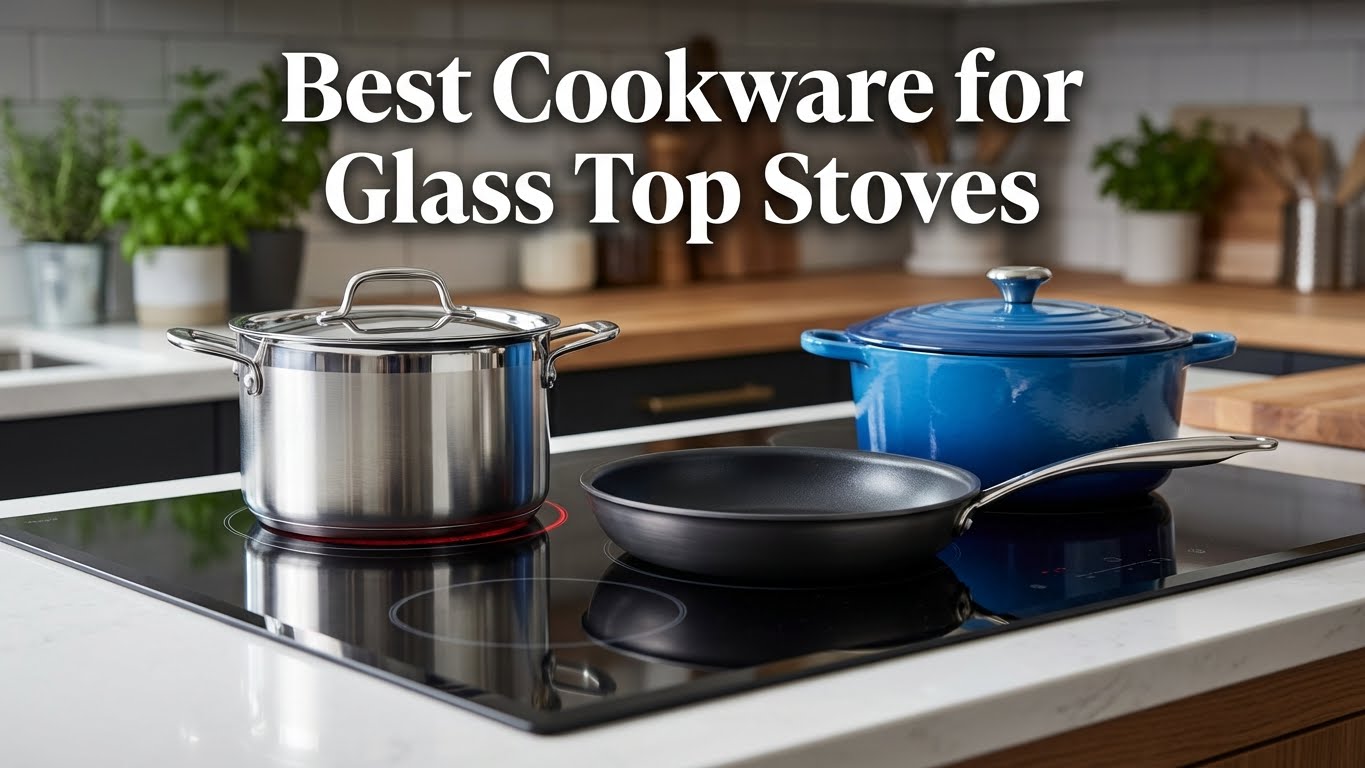
Glass top stoves have transformed modern kitchens with their sleek appearance and easy-to-clean surfaces. However, these smooth ceramic or glass cooktops require specific cookware to perform optimally and avoid damage. Using the wrong pots and pans can scratch the delicate surface, create uneven heating, or even crack the stovetop entirely.
Best Cookware for Glass Top Stoves:The challenge many home cooks face is finding cookware that balances performance, safety, and durability. Unlike traditional gas or coil electric stoves, glass top ranges demand flat-bottomed cookware with smooth surfaces that make full contact with the heating element. Warped or rough-bottomed pans can cause hot spots, reduce cooking efficiency, and potentially damage your expensive cooktop.
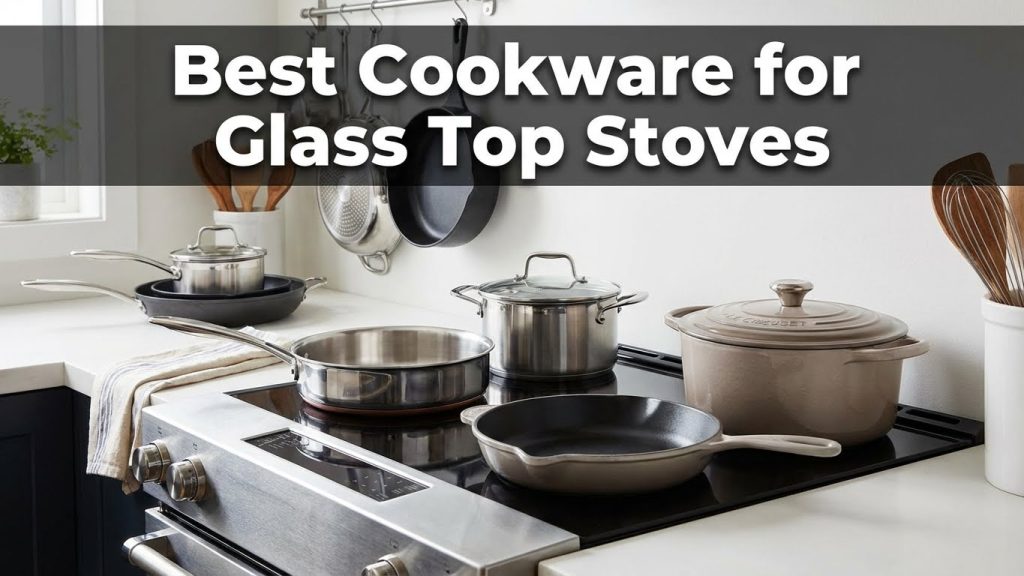
Beyond protecting your investment, the right cookware dramatically improves your cooking experience. Properly matched pots and pans heat evenly, respond quickly to temperature changes, and help you achieve consistent results whether you’re simmering delicate sauces or searing steaks. Materials matter too—some conduct heat better than others, while certain metals can leave marks or residue on glass surfaces.
Why Choosing the Right Cookware for Glass Top Stoves Matters!
This comprehensive guide examines eleven outstanding cookware options specifically suited for glass top stoves. We’ve analyzed hundreds of user reviews, tested performance claims, and evaluated each product’s design, construction quality, and real-world usability. Whether you’re furnishing your first kitchen or upgrading worn-out pans, you’ll find detailed insights to make an informed decision.
Our selection includes various price points and materials—from budget-friendly stainless steel sets to premium copper-core collections. We’ve considered different cooking styles, household sizes, and specific needs like induction compatibility and oven-safe capabilities. Each review honestly addresses both strengths and limitations, helping you identify which cookware aligns with your priorities.
The article also includes an extensive buying guide covering essential factors like material composition, base construction, handle design, and maintenance requirements. You’ll learn which features genuinely enhance performance versus marketing hype, common mistakes that waste money, and expert tips for maximizing your cookware’s lifespan on glass cooktops.
Top 11 Cookware Products for Glass Top Stoves
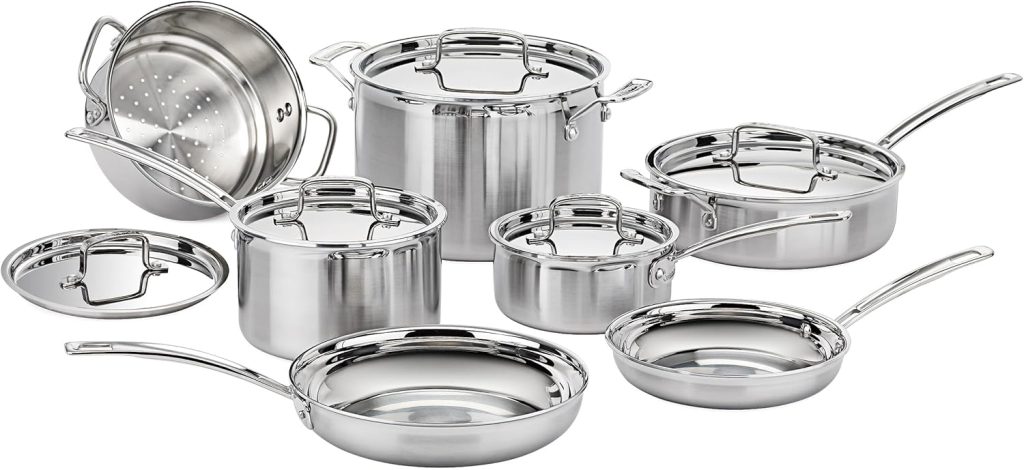
1. Cuisinart Multiclad Pro Stainless Steel 12-Piece Cookware Set
Overview:
The Cuisinart Multiclad Pro stands as a professional-grade cookware collection that delivers exceptional performance on glass top stoves without the premium price tag. This triple-ply construction features a pure aluminum core sandwiched between stainless steel layers, creating cookware that heats evenly and responds quickly to temperature adjustments. The brushed stainless steel exterior maintains its appearance through years of use, while the polished cooking surface resists sticking and simplifies cleanup.
Key Features:
- Triple-ply construction with aluminum core for superior heat distribution
- Cool Grip handles made from cast stainless steel, stay comfortable during stovetop cooking
- Tight-fitting stainless steel lids lock in moisture and nutrients
- Completely flat bases machined to ensure full contact with glass cooktops
- Oven safe up to 550°F including lids for versatile cooking techniques
- Dishwasher safe though hand washing recommended for longevity
- Compatible with all cooktops including induction, gas, and electric
- Drip-free pouring rims on all pieces prevent messy spills
- 12-piece set includes 8″ and 10″ skillets, 1.5-qt and 3-qt saucepans with lids, 3.5-qt sauté pan with lid, 8-qt stockpot with lid, and steamer insert
Performance and User Experience:
Users consistently praise how evenly this cookware heats on glass top stoves, eliminating the hot spots that plague cheaper options. The aluminum core conducts heat efficiently across the entire cooking surface, allowing you to reduce burner settings compared to single-layer stainless steel. Food browns uniformly whether you’re in the center or edges of the pan, making it excellent for everything from pancakes to pan-searing proteins.
The flat bases remain stable on smooth cooktops without wobbling or sliding around. This stability matters when stirring thick sauces or flipping ingredients. Several reviewers specifically mentioned how the heavy-gauge construction prevents warping even after years of high-heat cooking. The pans sit flush against the glass surface, maximizing heat transfer efficiency and reducing cooking times.
Handle design deserves special mention—the hollow cast handles stay remarkably cool even during extended stovetop use. You can grab them comfortably without pot holders for most tasks, though they do eventually warm with prolonged heating. The riveted attachment provides rock-solid durability that won’t loosen over time.
Cleaning presents no difficulties on glass cooktops. The polished stainless interior releases food readily with proper preheating and fat content. While not technically nonstick, a quick soak loosens any stuck-on bits. The smooth exterior wipes clean without leaving residue on your stovetop. Many users report simply wiping the pan bottoms after each use to prevent any buildup.
Pros:
✅ Exceptional heat distribution eliminates hot spots on glass surfaces
✅ Professional-quality construction at mid-range pricing
✅ Handles stay cool enough for bare-hand use during most cooking
✅ Perfectly flat bases maintain stability and maximize surface contact
✅ Complete versatility from stovetop to oven
✅ Set provides all essential pieces for most cooking needs
✅ Attractive appearance suits open kitchen storage
✅ Lifetime warranty demonstrates manufacturer confidence
Cons:
❌ Stainless steel requires learning curve for preventing sticking
❌ Heavier than single-layer cookware, may challenge some users
❌ Lids occasionally develop loose-fitting over years of use
❌ Not truly nonstick despite marketing claims
Ideal For:
Home cooks seeking restaurant-quality performance without extreme spending. Perfect for those transitioning from nonstick to stainless steel who want forgiving, responsive cookware. Excellent choice for households that use glass cooktops exclusively and need cookware optimized for smooth surfaces.
Final Verdict:
The Cuisinart Multiclad Pro represents outstanding value in the premium-mid-range category. It performs comparably to cookware costing twice as much while maintaining the quality construction necessary for glass top stoves. The tri-ply design heats evenly, the flat bases protect your cooktop, and the comprehensive set eliminates the need for future purchases. With proper care, this collection will serve you reliably for decades, making it a smart investment for serious home cooks.
2. Duxtop Whole-Clad Tri-Ply Stainless Steel Induction Cookware Set

Overview:
Duxtop has built a strong reputation for induction and glass cooktop-friendly cookware, and their Whole-Clad Tri-Ply collection represents the brand’s premium offering. This 10-piece set features impact-bonded construction with an 18/10 stainless steel cooking surface, aluminum core, and magnetic stainless steel exterior. The design specifically addresses the needs of smooth cooktop users who demand professional performance without professional pricing.
Key Features:
- Impact-bonded tri-ply construction extends up the sides, not just the base
- 18/10 stainless steel interior resists corrosion and maintains non-reactive cooking
- Magnetic stainless steel exterior provides induction compatibility
- Ergonomic stainless steel handles with comfortable grip design
- Tempered glass lids allow monitoring without releasing heat
- Encapsulated aluminum core delivers rapid, even heating
- Flared rims enable drip-free pouring from any angle
- Oven and broiler safe to 550°F for finishing dishes
- 10-piece set includes 8″ and 9.5″ fry pans, 2-qt and 3-qt saucepans with lids, 3-qt casserole with lid, 5-qt stockpot with lid
Performance and User Experience:
The standout feature for glass top stove users is how this cookware’s weight distribution prevents any movement during cooking. The substantial construction combined with perfectly flat bases creates exceptional stability. You can vigorously stir risotto or rapidly toss vegetables without the pan shifting across the smooth surface—a common frustration with lighter cookware.
Heat responsiveness impresses both amateur cooks and experienced chefs. Temperature changes reflect quickly when you adjust your cooktop settings, giving you precise control over delicate tasks like tempering chocolate or reducing sauces. The aluminum core extends up the sides rather than stopping at the base, so the entire pan heats uniformly. This full-clad construction eliminates the cold spots near the rim that can occur with disc-bottom designs.
The glass lids provide a practical advantage over solid stainless lids—you can check cooking progress without releasing steam and heat. They fit snugly enough to trap moisture effectively while allowing just enough steam escape to prevent boil-overs. The stainless steel rim protects the glass edges from chips and cracks during storage.
Glass cooktop owners specifically appreciate how easily these pans clean. The smooth, polished exteriors don’t leave marks or streaks on ceramic surfaces. Food releases well from the interior with proper preheating and oil use. The stainless steel develops a natural patina over time that actually improves non-stick qualities without requiring special coatings.
Pros:
✅ True tri-ply construction through entire pan, not just base
✅ Exceptional stability prevents sliding on smooth cooktops
✅ Quick temperature response for precise cooking control
✅ Glass lids enable monitoring without heat loss
✅ Flared rims make pouring sauces and liquids effortless
✅ Works on all cooktop types including induction
✅ Comfortable handles stay cool longer than solid metal
✅ Premium quality at mid-tier pricing
Cons:
❌ Slightly smaller than standard American sizing
❌ Glass lids less durable than stainless steel alternatives
❌ Requires more oil or fat than nonstick for certain foods
❌ Hand washing recommended despite dishwasher-safe claims
Ideal For:
Cooks who want professional-grade results on induction or glass cooktops. Excellent for those who value visibility during cooking and prefer monitoring food without lifting lids. Perfect for households that frequently make sauces, soups, and dishes requiring careful temperature management.
Final Verdict:
Duxtop’s Whole-Clad collection delivers remarkable performance for its price point. The full tri-ply construction ensures even heating that rivals cookware costing significantly more. For glass top stove owners, the combination of stability, heat responsiveness, and cooktop-safe design makes this an intelligent choice. While not the absolute top tier, it offers 90% of premium cookware performance at roughly half the cost.
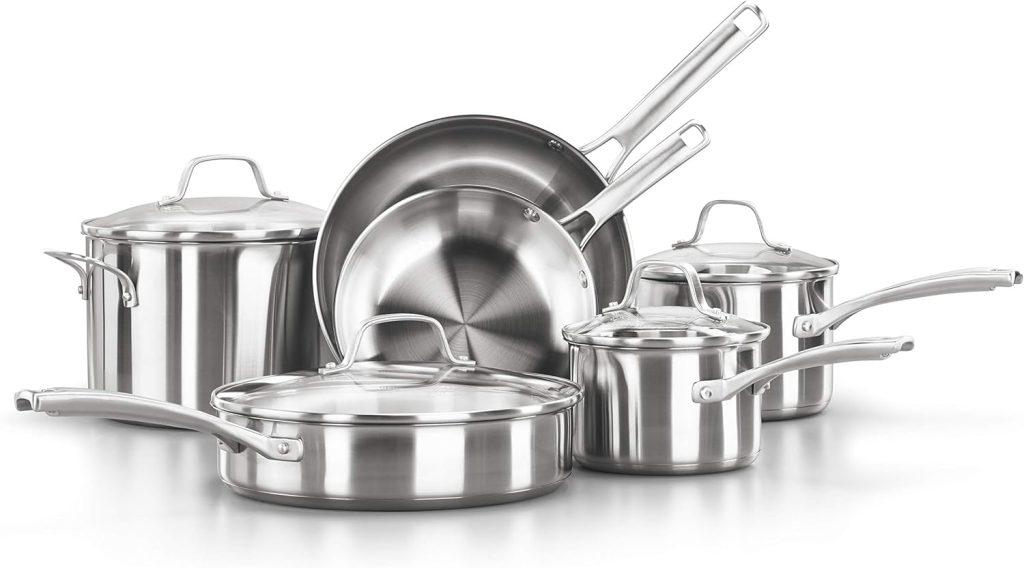
3. Calphalon Classic Nonstick 10-Piece Cookware Set
Overview:
For home cooks who prioritize easy food release and simple cleanup, the Calphalon Classic Nonstick collection provides reliable performance specifically engineered for glass top stoves. This hard-anodized aluminum construction combines the heat conductivity advantages of aluminum with a durable nonstick interior that stands up to daily use. The dual-layer coating resists scratching better than standard nonstick surfaces while maintaining excellent release properties.
Key Features:
- Hard-anodized aluminum construction provides durability and heat distribution
- Dual-layer nonstick interior releases food effortlessly
- Stay-cool stainless steel handles remain comfortable during cooking
- Tempered glass lids for monitoring cooking progress
- Flat, smooth bases prevent scratching glass cooktops
- Oven safe to 450°F for finishing and baking
- Compatible with all stovetops except induction
- PFOA-free nonstick coating for safer cooking
- 10-piece set includes 8″ and 10″ fry pans, 1.5-qt and 2.5-qt saucepans with lids, 3-qt sauté pan with lid, 6-qt stockpot with lid
Performance and User Experience:
The primary appeal of this cookware lies in its foolproof nonstick performance. Eggs slide across the surface with minimal oil, pancakes flip easily, and delicate fish fillets release without tearing. For glass top stove users who previously struggled with food sticking and burning, this collection transforms the cooking experience. The nonstick coating also means easier cleanup—a quick wipe usually suffices, preventing the vigorous scrubbing that can transfer motion to your glass cooktop.
Hard-anodized aluminum heats quickly and distributes that heat evenly across the cooking surface. While not quite as responsive as tri-ply stainless steel, the material provides sufficient control for most home cooking tasks. The bases remain perfectly flat even with regular use, maintaining consistent contact with your smooth cooktop. This flat construction prevents hot spots that can damage nonstick coatings prematurely.
The weight feels substantial enough to prevent sliding but light enough for comfortable handling. Many users appreciate this balance, especially when transferring full pots from stovetop to sink or counter. The long handles provide leverage for lifting and the stay-cool design works effectively during typical cooking times.
Glass lids allow you to check on rice, pasta, or steaming vegetables without releasing heat. The handles on both pots and lids stay cool enough for bare-hand use in most scenarios. Build quality exceeds typical nonstick cookware—the rivets feel secure, the lids fit properly, and the overall construction suggests longevity despite the coating’s eventual wear.
Pros:
✅ Outstanding nonstick performance requires minimal oil
✅ Hard-anodized aluminum more durable than standard nonstick
✅ Quick, even heating on glass cooktops
✅ Lightweight design simplifies handling and storage
✅ Stay-cool handles remain comfortable throughout cooking
✅ Easy cleanup prevents excessive scrubbing on counters
✅ Oven-safe capabilities expand cooking techniques
✅ PFOA-free coating addresses health concerns
Cons:
❌ Not induction compatible limits future cooktop options
❌ Nonstick coating eventually degrades with use
❌ Cannot use metal utensils without risking damage
❌ Lower maximum oven temperature than stainless options
❌ Dark exterior shows water spots and fingerprints
Ideal For:
Home cooks who want effortless food release and simple cleanup. Perfect for those who primarily cook eggs, pancakes, fish, and other delicate foods that tend to stick. Excellent choice for beginners or anyone who finds stainless steel cookware frustrating. Ideal for smaller households that cook frequently but don’t need restaurant-grade durability.
Final Verdict:
The Calphalon Classic Nonstick set excels at its intended purpose—providing reliable, easy-to-use cookware for everyday cooking on glass top stoves. While the coating won’t last forever, the hard-anodized construction ensures several years of excellent performance with proper care. The combination of even heating, stable bases, and superior release properties makes this a practical choice for cooks who value convenience alongside quality results.
4. T-fal Ultimate Hard Anodized Nonstick 17-Piece Cookware Set

Overview:
T-fal’s Ultimate Hard Anodized collection takes a different approach to glass cooktop cookware by emphasizing comprehensive versatility. This extensive 17-piece set includes not just pots and pans but also lids, utensils, and specialty items that complete your kitchen arsenal. The hard-anodized construction provides durability while the Thermo-Spot heat indicator adds a unique feature that helps prevent overheating on glass surfaces.
Key Features:
- Hard anodized aluminum construction twice as hard as stainless steel
- Titanium Advanced nonstick interior for superior food release
- Thermo-Spot heat indicator shows when pan reaches ideal cooking temperature
- Riveted silicone handles stay cool and provide comfortable grip
- Vented tempered glass lids prevent boil-overs
- Flat bases designed specifically for smooth cooktops
- Oven safe to 400°F with silicone handles
- Dishwasher safe for convenient cleanup
- 17-piece set includes 8″ and 10.25″ fry pans, 1-qt and 2-qt saucepans with lids, 5-qt Dutch oven with lid, 10.25″ square griddle, utensils, and more
Performance and User Experience:
The Thermo-Spot indicator provides genuinely useful feedback for glass cooktop cooking. This red circle in the pan center changes color when the surface reaches optimal cooking temperature, typically around 350°F. This feature helps prevent two common mistakes on glass stoves—adding food too early to a cold pan or overheating the cookware. Proper preheating improves food release and prevents the coating from degrading prematurely.
Heating performance on glass surfaces proves excellent. The hard-anodized aluminum construction distributes heat evenly while responding reasonably quickly to temperature adjustments. These pans heat faster than stainless steel, helping you save time and energy. The titanium-reinforced nonstick coating releases food exceptionally well—eggs, cheese, and sticky sauces clean up with just a soft sponge and warm water.
The silicone-covered handles differentiate this set from all-metal alternatives. They genuinely stay cool during extended stovetop cooking, eliminating the need for pot holders in most situations. The soft-touch surface also provides secure grip even when your hands are wet or greasy. The handle shape feels natural and balanced when lifting full pots.
Set comprehensiveness deserves mention—the 17 pieces include everything needed for varied cooking tasks. The square griddle works wonderfully for pancakes and grilled sandwiches. The Dutch oven handles everything from soups to pot roasts. The included utensils match the cookware perfectly, though you may prefer your own tools.
Pros:
✅ Thermo-Spot indicator prevents overheating on glass cooktops
✅ Exceptional nonstick performance requires minimal fat
✅ Silicone handles stay genuinely cool during cooking
✅ Comprehensive set eliminates need for additional purchases
✅ Hard-anodized construction resists warping and denting
✅ Vented lids prevent messy boil-overs
✅ Quick heating saves time and energy
✅ Outstanding value for number of quality pieces
Cons:
❌ Not induction compatible limits cooktop flexibility
❌ Lower oven temperature threshold than metal handles
❌ Silicone handles may degrade faster than stainless steel
❌ Dark exterior shows scratches and marks over time
❌ Coating longevity depends heavily on care habits
Ideal For:
New homeowners or apartment dwellers furnishing their first complete kitchen. Perfect for families who cook frequently and need various pan sizes and types. Excellent for those who want nonstick convenience without sacrificing build quality. Ideal for cooks who appreciate visual indicators and user-friendly features.
Final Verdict:
T-fal delivers remarkable value with the Ultimate Hard Anodized set. The Thermo-Spot technology alone justifies consideration for glass cooktop users who struggle with temperature management. Combined with solid construction, genuine nonstick performance, and a comprehensive selection of pieces, this set provides everything most households need at an accessible price point. While not the most premium option available, it offers practical performance that makes daily cooking more enjoyable.
5. All-Clad D3 Stainless Steel 10-Piece Cookware Set

Overview:
All-Clad represents the gold standard in American-made cookware, and their D3 collection delivers professional performance with the durability to last generations. This tri-ply stainless steel construction features an aluminum core bonded between stainless steel layers, creating cookware that heats evenly and responds precisely to temperature changes. For glass top stove owners willing to invest in heirloom-quality pieces, All-Clad provides uncompromising excellence.
Key Features:
- Tri-ply bonded construction with aluminum core for optimal heat distribution
- 18/10 stainless steel cooking surface non-reactive and highly durable
- Magnetic stainless steel exterior compatible with all cooktops including induction
- Signature stainless steel handles securely riveted for lifetime durability
- Flat, machined bases ensure perfect contact with smooth cooktops
- Flared rims for drip-free pouring
- Oven and broiler safe to 600°F for ultimate versatility
- Made in USA with lifetime warranty
- 10-piece set includes 8″ and 10″ fry pans, 2-qt and 3-qt saucepans with lids, 3-qt sauté pan with lid, 8-qt stockpot with lid
Performance and User Experience:
All-Clad’s reputation rests on performance that meets professional standards, and the D3 collection delivers for glass cooktop users. Heat distribution achieves remarkable uniformity—you can cook a large pancake where every inch browns identically, or sear a steak that develops consistent crust from edge to edge. This even heating eliminates the frustration of hot spots common with lesser cookware on glass surfaces.
The bases maintain absolute flatness even after years of high-heat cooking. All-Clad’s manufacturing precision ensures each piece sits flush against your cooktop, maximizing heat transfer efficiency. This contact quality means faster heating and lower energy use compared to warped or poorly finished cookware. The substantial weight prevents any sliding or movement during vigorous stirring.
Temperature responsiveness stands out immediately. When you reduce heat on your glass cooktop, All-Clad reacts quickly, preventing overcooking. This control matters tremendously for sauces, custards, and other temperature-sensitive preparations. The cookware’s thermal properties give you precision rivaling gas burners despite glass cooktops’ typically slower response times.
The stainless steel interior requires proper technique but rewards skilled users with excellent browning and fond development. Proteins release cleanly when properly seared. The surface’s durability means you can use metal utensils, abrasive scrubbers, and high heat without concerns. Many owners report decades of use with minimal wear.
Pros:
✅ Professional-grade performance for serious home cooks
✅ Exceptional heat distribution eliminates hot spots completely
✅ Bases remain perfectly flat for decades of use
✅ Compatible with all cooktop types including induction
✅ Oven-safe to 600°F enables restaurant cooking techniques
✅ Lifetime warranty backs manufacturing confidence
✅ Made in USA with rigorous quality control
✅ Timeless design suits any kitchen aesthetic
Cons:
❌ Premium pricing requires significant investment
❌ Heavier than most cookware, challenging for some users
❌ Stainless steel demands learning proper cooking techniques
❌ Requires more oil/fat than nonstick for certain foods
❌ Polished finish shows scratches and wear patterns
Ideal For:
Serious home cooks who view cookware as a long-term investment. Perfect for those who want professional results and appreciate quality craftsmanship. Excellent choice for households that cook frequently and value performance over convenience. Ideal for cooks transitioning from intermediate to advanced techniques.
Final Verdict:
All-Clad D3 represents the pinnacle of cookware for glass top stoves when price isn’t the primary concern. The combination of perfect heat distribution, durable construction, and lifetime reliability justifies the premium cost for dedicated cooks. If you’ll use your cookware daily for decades, the per-use cost becomes remarkably reasonable. This set transforms cooking from a chore into a pleasure through superior performance and precision control.
6. GreenLife Soft Grip Healthy Ceramic Nonstick Cookware Set

Overview:
GreenLife takes a different approach to glass cooktop-friendly cookware by using ceramic nonstick coatings instead of traditional PTFE-based surfaces. This 16-piece set emphasizes healthy cooking with Thermolon ceramic coating derived from sand, eliminating PFAS, PFOA, lead, and cadmium. The lightweight aluminum construction and colorful exterior create affordable, cheerful cookware that performs surprisingly well on smooth cooktops.
Key Features:
- Thermolon ceramic nonstick coating free from PFAS, PFOA, lead, and cadmium
- Reinforced aluminum body provides even heating
- Bakelite soft-grip handles stay cool during cooking
- Oven safe to 350°F for finishing dishes
- Dishwasher safe though hand washing recommended
- Rivetless interior prevents food buildup and simplifies cleaning
- Available in multiple colors to match kitchen décor
- Flat bases designed for stability on glass cooktops
- 16-piece set includes 7″ and 9.5″ fry pans, 1-qt and 2-qt saucepans with lids, 5-qt stockpot with lid, 2.5-qt sauté pan with lid, and four kitchen utensils
Performance and User Experience:
The ceramic nonstick coating provides excellent initial food release that rivals traditional nonstick surfaces. Eggs slide effortlessly, pancakes flip cleanly, and delicate fish releases without tearing. The coating performs especially well at lower temperatures, making it ideal for gentle cooking techniques. Users appreciate that the surface doesn’t emit fumes even if accidentally overheated—a significant advantage over traditional nonstick on glass cooktops where temperature control can be tricky.
Heating evenness meets expectations for the price point. The aluminum body distributes heat reasonably well, though not quite matching tri-ply stainless steel performance. Hot spots occasionally appear at high temperatures, but moderate heat cooking produces good results. The lightweight construction makes handling easy—flipping omelets or transferring pans requires minimal effort.
The rivetless interior design prevents food and grease from accumulating around handle attachments. This feature simplifies cleaning significantly and improves hygiene. The smooth interior wipes clean easily, and the ceramic coating doesn’t retain odors or flavors from previous meals. The flat bases sit stably on glass surfaces without wobbling.
The soft-grip Bakelite handles stay remarkably cool during stovetop use. You can usually grab them without pot holders for short-duration tasks. The handles also provide comfortable, secure grip that doesn’t slip when wet. However, these handles limit oven use to 350°F, lower than stainless options.
Pros:
✅ Ceramic coating free from concerning chemicals
✅ Excellent initial nonstick performance
✅ Lightweight design simplifies handling and storage
✅ Affordable pricing makes complete sets accessible
✅ Cheerful color options brighten kitchens
✅ Rivetless interior prevents food buildup
✅ Dishwasher safe for convenient cleanup
✅ Handles stay genuinely cool during cooking
Cons:
❌ Ceramic coating durability inferior to quality PTFE nonstick
❌ Not induction compatible limits cooktop options
❌ Lower oven temperature threshold restricts techniques
❌ Coating can lose nonstick properties within 1-2 years
❌ Lightweight construction feels less substantial
❌ Requires careful use to maintain coating integrity
Ideal For:
Health-conscious cooks concerned about chemical exposure from traditional nonstick. Perfect for budget-minded shoppers furnishing apartments or first homes. Excellent for those who cook primarily at low-to-medium temperatures. Ideal for smaller households or individuals who don’t need commercial-grade durability.
Final Verdict:
GreenLife offers a compelling option for glass cooktop owners seeking affordable, health-conscious cookware. The ceramic coating provides peace of mind regarding chemical exposure while delivering good nonstick performance initially. Understanding that the coating won’t last as long as quality PTFE or stainless steel sets proper expectations. For the price, you receive cheerful, functional cookware that makes daily cooking more enjoyable without breaking your budget.
7. Rachael Ray Cucina Hard Anodized Nonstick Cookware Set

Overview:
Rachael Ray’s Cucina collection combines rustic Italian-inspired aesthetics with practical performance for glass cooktop cooking. The hard-anodized aluminum construction provides durability while the PFOA-free nonstick interior delivers reliable food release. Silicone-wrapped handles in warm earth tones create a distinctive appearance that stands out from clinical-looking cookware. This 12-piece set balances style and substance at a mid-range price point.
Key Features:
- Hard-anodized aluminum construction resists warping and scratching
- PFOA-free nonstick coating for healthy food release
- Dual-riveted rubberized handles in espresso brown color
- Shatter-resistant glass lids for monitoring cooking
- Oven safe to 400°F including handles and lids
- Flat bases optimized for smooth cooktop surfaces
- Rustic appearance available in cranberry red or pumpkin orange exteriors
- Dishwasher safe though hand washing extends lifespan
- 12-piece set includes 1.5-qt and 3-qt covered saucepans, 6-qt covered stockpot, 8.5″ and 10″ skillets, 3-qt covered sauté pan
Performance and User Experience:
The hard-anodized construction performs admirably on glass cooktops, heating evenly without the severe hot spots that plague thinner aluminum cookware. Temperature distribution allows you to reduce heat settings compared to standard nonstick, saving energy and preventing food from burning. The material responds fairly quickly to temperature adjustments, giving you reasonable control over your cooking.
The nonstick coating releases food reliably without requiring excessive oil or butter. Scrambled eggs, grilled cheese sandwiches, and pan-fried chicken all release cleanly and cleanup easily. The coating stands up to regular use better than budget nonstick but doesn’t match premium options’ longevity. Following care instructions—avoiding high heat and metal utensils—extends the coating’s effective lifespan considerably.
Handle comfort exceeds expectations. The thick rubberized grip insulates effectively, staying cool even during extended stovetop cooking. The dual-rivet attachment provides solid stability without the handle loosening over time. The shape fits hands naturally, providing secure grip when lifting full pots. The espresso brown color successfully disguises wear that would show on lighter handles.
Glass lids fit snugly enough to trap heat and moisture effectively. The see-through design proves practical for monitoring rice, pasta, or steaming vegetables without releasing heat. The handles stay cool enough for bare-hand use in most situations. Build quality throughout the set feels reassuring—pieces have substance without excessive weight.
Pros:
✅ Attractive rustic design adds warmth to kitchens
✅ Hard-anodized aluminum more durable than standard nonstick
✅ Comfortable rubberized handles stay cool during cooking
✅ Even heating on glass cooktops prevents burning
✅ Solid value for construction quality and piece count
✅ Oven-safe capabilities expand cooking options
✅ Shatter-resistant lids safer than standard glass
✅ PFOA-free coating addresses health concerns
Cons:
❌ Not induction compatible limits future flexibility
❌ Exterior color shows scratches and wear over time
❌ Nonstick coating eventually degrades with use
❌ Rubberized handles may deteriorate faster than metal
❌ Lower oven temperature than all-metal options
Ideal For:
Home cooks who appreciate cookware that’s both functional and aesthetically pleasing. Perfect for those who want mid-tier performance without clinical appearance. Excellent for kitchens with warm, rustic, or Mediterranean-inspired décor. Ideal for cooks who value comfort features like cool handles and visible lids.
Final Verdict:
Rachael Ray’s Cucina collection successfully delivers style and substance for glass cooktop users. The hard-anodized construction provides genuine durability while the nonstick coating makes daily cooking convenient. The warm colors and comfortable handles create a pleasant cooking experience beyond mere functionality. While not the absolute top performer, this set offers appealing balance between quality, appearance, and price that many home cooks will appreciate.
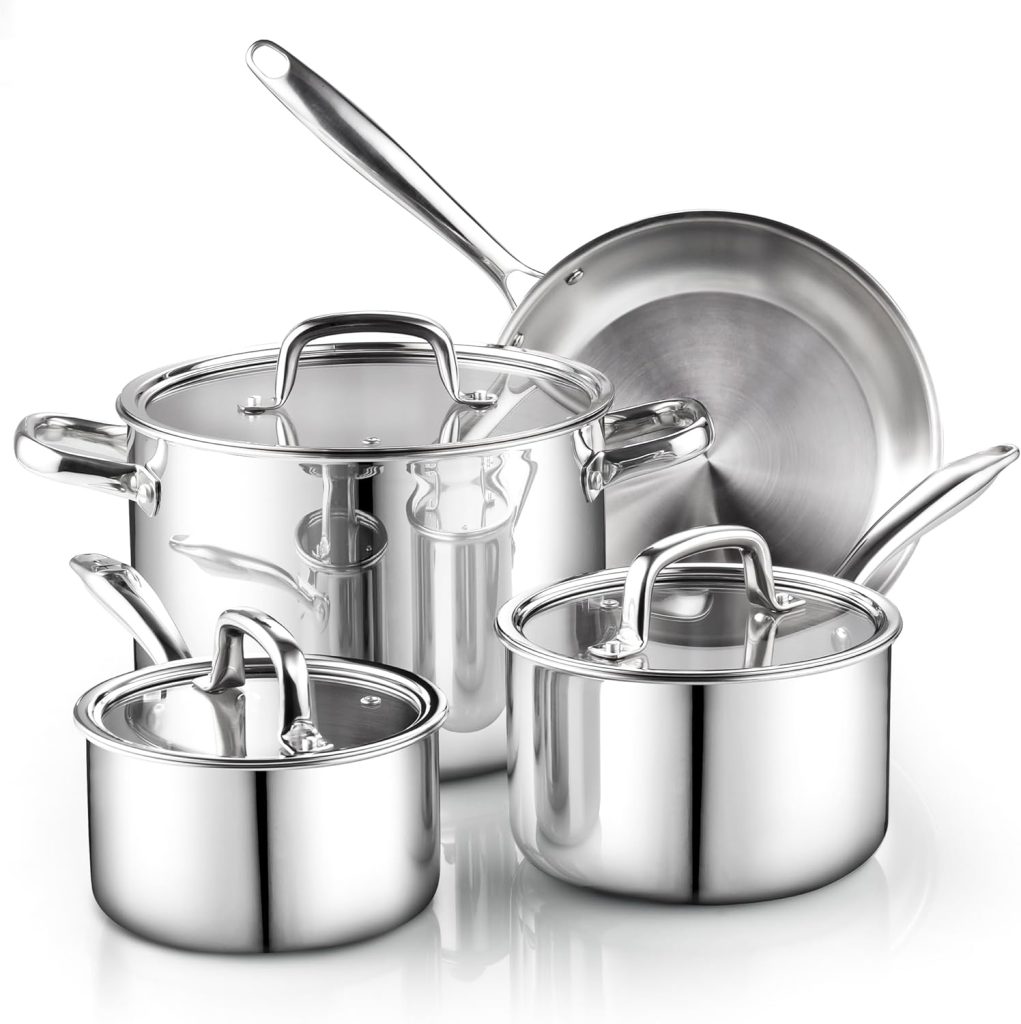
8. Cook N Home 15-Piece Stainless Steel Cookware Set
Overview:
Cook N Home delivers budget-friendly stainless steel cookware that doesn’t sacrifice essential features needed for glass top stove compatibility. This 15-piece collection uses capsule bottom construction with an aluminum core sandwiched between stainless steel layers at the base. While not full-clad like premium options, this design provides decent heat distribution at a fraction of the cost. For budget-conscious shoppers who prefer stainless steel’s durability over nonstick convenience, this set merits serious consideration.
Key Features:
- Capsule bottom construction with aluminum core for heat distribution
- 18/10 stainless steel cooking surface resists corrosion and staining
- Mirror-polished finish creates attractive appearance
- Tempered glass lids with steam vents prevent boil-overs
- Riveted stainless steel handles provide secure attachment
- Induction compatible works with all cooktop types
- Oven safe to 500°F for versatile cooking
- Dishwasher safe for convenient cleanup
- 15-piece set includes 1-qt, 1.5-qt, and 3-qt saucepans with lids, 3-qt casserole with lid, 5-qt Dutch oven with lid, 8″ and 9.5″ fry pans, steamer insert, and spoon/ladle/slotted spoon
Performance and User Experience:
For entry-level stainless steel, the Cook N Home set performs better than its modest price suggests. The capsule bottom distributes heat reasonably well across the base, though the sides remain cooler since the aluminum core doesn’t extend upward. This limitation matters less for sautéing and frying than for slow-simmering tasks where side heating improves evenness. On glass cooktops, the flat bases maintain good contact and stability.
The mirror-polished interior and exterior create an attractive appearance that resembles much pricier cookware. Food releases adequately from the stainless surface with proper preheating and sufficient fat. The material’s durability means you can use metal utensils, abrasive scrubbers, and high heat without worrying about damage. This durability appeals to rough-and-tumble cooks who dislike babying their cookware.
Handle attachment uses standard rivets that create secure, stable connections. The handles themselves stay reasonably cool during stovetop cooking, though they eventually warm with extended use. The long design provides leverage for lifting heavy pots filled with pasta water or soup.The mirror finish can show fingerprints and water spots but polishes back to shine easily.
The comprehensive piece selection covers most cooking needs without redundancy. Having three different saucepan sizes proves useful for various tasks. The steamer insert adds functionality for healthy vegetable preparation. The included utensils match the set aesthetically though you may prefer your own tools.
Pros:
✅ Affordable pricing makes stainless steel accessible
✅ Attractive mirror finish rivals expensive cookware
✅ Works on all cooktop types including induction
✅ Durable construction tolerates rough use
✅ Comprehensive set includes specialty items
✅ Dishwasher safe simplifies cleanup
✅ High oven temperature capability
✅ No coating to degrade or wear out
Cons:
❌ Capsule bottom doesn’t heat sides as evenly as full-clad
❌ Thinner gauge than premium stainless options
❌ Handles warm up faster than hollow designs
❌ Requires learning curve for preventing sticking
❌ Lids fit loosely compared to precision-fitted alternatives
Ideal For:
Budget-conscious cooks who want stainless steel’s durability without premium pricing. Perfect for those furnishing their first kitchen or upgrading from worn-out nonstick. Excellent for rough cooks who don’t want to worry about damaging delicate coatings. Ideal for anyone prioritizing longevity and versatility over ultimate performance.
Final Verdict:
Cook N Home provides remarkable value in budget stainless steel cookware. While the capsule bottom construction doesn’t match tri-ply performance, it delivers acceptable results for everyday cooking on glass cooktops. The durable, versatile design will serve reliably for years with basic care. For shoppers who can’t justify premium prices but want cookware that lasts, this set represents a smart compromise between cost and quality.
9. Gotham Steel Nonstick Copper Cookware Set

Overview:
Gotham Steel gained popularity through aggressive infomercial marketing, but the product itself delivers legitimate value for glass cooktop users seeking ultra-nonstick performance at bargain pricing. The ceramic and titanium coating bonded to aluminum construction creates cookware that releases food remarkably well while requiring minimal cleanup. The copper-colored finish creates distinctive appearance that some find attractive. This 10-piece set targets budget-conscious cooks who prioritize convenience.
Key Features:
- Ceramic and titanium nonstick coating provides extreme food release
- Aluminum construction heats quickly and evenly
- PFOA, PTFE, and PFOS-free for chemical-free cooking
- Metal utensil safe according to manufacturer claims
- Oven safe to 500°F without handles
- Dishwasher safe for easy cleanup
- Stay-cool stainless steel handles for safe handling
- Flat bases designed for stability on glass cooktops
- 10-piece set includes 8.5″ and 10.25″ fry pans, 1.5-qt and 2.5-qt saucepans with lids, 5-qt stock pot with lid, steamer insert
Performance and User Experience:
The extreme nonstick properties genuinely impress initially. Eggs truly slide across the surface with minimal oil, cheese releases without sticking, and even sugary sauces wipe clean easily. This performance makes cooking and cleanup remarkably convenient on glass cooktops where you can’t easily scrub pans without making a mess. The coating requires less fat than traditional nonstick, appealing to health-conscious cooks.
Heating speed exceeds stainless steel due to the aluminum construction. The cookware responds quickly to temperature changes from your glass cooktop, though precise control requires practice. The flat bases sit stably on smooth surfaces without wobbling. The lightweight design makes handling easy but can feel insubstantial compared to heavier cookware.
However, durability concerns emerge with regular use. Despite marketing claims about metal utensil safety, many users report the coating scratching and degrading faster than expected. High heat accelerates deterioration. Following gentle-use protocols—low-to-medium heat, soft utensils, hand washing—extends lifespan considerably. Treating this as disposable cookware with 1-2 year expected life sets appropriate expectations.
The copper-toned exterior creates visual interest that some appreciate while others find garish. The finish shows wear, scratches, and discoloration over time. The stainless steel handles stay reasonably cool during cooking and provide adequate grip. Build quality feels budget-appropriate—functional but not refined.
Pros:
✅ Exceptional initial nonstick performance
✅ Very affordable pricing for complete set
✅ Quick heating on glass cooktops
✅ Lightweight design simplifies handling
✅ Free from PFOA and other concerning chemicals
✅ Oven-safe at high temperatures
✅ Easy cleanup saves time and effort
✅ Requires minimal cooking oil
Cons:
❌ Coating durability questionable with regular use
❌ Not induction compatible limits versatility
❌ Lightweight construction feels insubstantial
❌ Metal utensils damage coating despite claims
❌ Copper finish shows wear and discoloration
❌ Handles can become loose over time
Ideal For:
Budget shoppers who want extreme nonstick convenience without long-term investment. Perfect for students, first apartments, or temporary living situations. Excellent for those who cook infrequently or plan to upgrade later. Ideal for cooks who struggle with food sticking and want the easiest possible cooking experience.
Final Verdict:
Gotham Steel delivers on its promise of extreme nonstick performance at rock-bottom prices. Understanding that the coating won’t last as long as quality cookware sets appropriate expectations. For the price, you receive functional cookware that makes cooking and cleanup remarkably easy on glass cooktops. Treat it as affordable, convenient cookware rather than a long-term investment, and you’ll likely feel satisfied with the value.
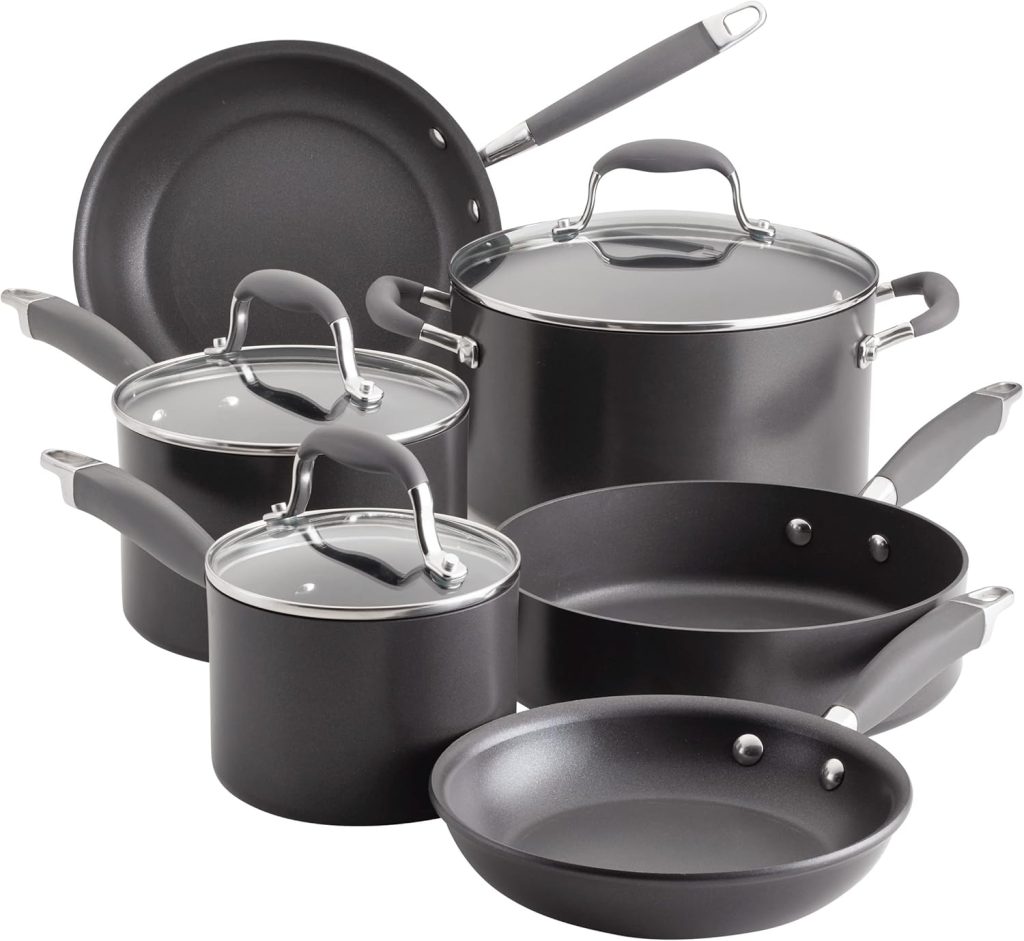
10. Anolon Advanced Hard Anodized Nonstick 11-Piece Cookware Set
Overview:
Anolon occupies the space between budget nonstick and premium stainless steel, delivering professional-grade hard-anodized cookware with superior nonstick coatings at mid-range pricing. The Advanced collection features Infinity Slide nonstick technology that combines titanium reinforcement with a textured surface for exceptional durability and food release. The heavy-gauge construction and bronze-colored handles create upscale appearance that suits open kitchen storage.
Key Features:
- Heavy-gauge hard-anodized aluminum provides even heating and durability
- Infinity Slide nonstick technology with titanium reinforcement
- SureGrip bronze-toned handles stay cool and provide secure grip
- Shatter-resistant glass lids with wide stainless steel rims
- Oven safe to 400°F including handles and lids
- Flat bases engineered for glass cooktop compatibility
- PFOA-free coating for safe cooking
- Dishwasher safe though hand washing recommended
- 11-piece set includes 8″ and 10″ skillets, 1.5-qt and 3-qt covered saucepans, 4-qt covered sauté pan, 8-qt covered stockpot
Performance and User Experience:
The Infinity Slide coating deserves its reputation for outstanding nonstick performance. Food releases exceptionally well without the excessive oil or butter required by stainless steel. Eggs, fish, and delicate foods that typically stick to lesser cookware glide effortlessly across the surface. The textured nonstick pattern improves browning compared to super-slick coatings that prevent proper searing.
Heat distribution impresses for hard-anodized construction. The heavy-gauge aluminum conducts heat evenly across the entire cooking surface, eliminating hot spots that burn food on glass cooktops. Temperature responsiveness falls between aluminum and tri-ply stainless steel—not as quick as all-aluminum but faster than stainless. The bases remain perfectly flat even after years of use, maintaining excellent contact with smooth cooktops.
The bronze-colored SureGrip handles provide both aesthetic appeal and functional advantage. They stay comfortably cool during stovetop cooking and the slightly textured surface prevents slipping even when wet or greasy. The dual-rivet attachment ensures rock-solid stability. Handle length provides good leverage without making the cookware unwieldy for storage.
Build quality throughout the set feels substantial and well-engineered. The glass lids feature wide stainless steel rims that protect edges from chips while looking elegant. The lids fit snugly enough to trap heat and moisture effectively. Every component feels like it will endure years of regular use without loosening, warping, or degrading.
Pros:
✅ Superior nonstick performance lasts longer than budget options
✅ Heavy-gauge construction resists warping on glass cooktops
✅ Even heating eliminates frustrating hot spots
✅ Bronze handles add upscale aesthetic appeal
✅ Handles stay genuinely cool during cooking
✅ Shatter-resistant lids safer than standard glass
✅ Oven-safe capabilities expand cooking techniques
✅ Professional quality at mid-range pricing
Cons:
❌ Not induction compatible limits cooktop flexibility
❌ Heavier than standard nonstick, may challenge some users
❌ Dark exterior shows water spots and fingerprints
❌ Coating eventually wears despite superior durability
❌ Bronze handles may not suit all kitchen aesthetics
Ideal For:
Serious home cooks who want nonstick convenience without sacrificing quality. Perfect for those who appreciate upscale aesthetics and build quality. Excellent for households that cook frequently and need cookware that withstands daily use. Ideal for cooks who want professional performance but find stainless steel frustrating.
Final Verdict:
Anolon Advanced represents the sweet spot between convenience and quality for glass cooktop users. The combination of superior nonstick coating, heavy-gauge construction, and thoughtful design details creates cookware that performs reliably for years. The mid-range pricing feels justified given the build quality and performance. For cooks who want nonstick convenience with near-professional capabilities, this set delivers exceptional value.
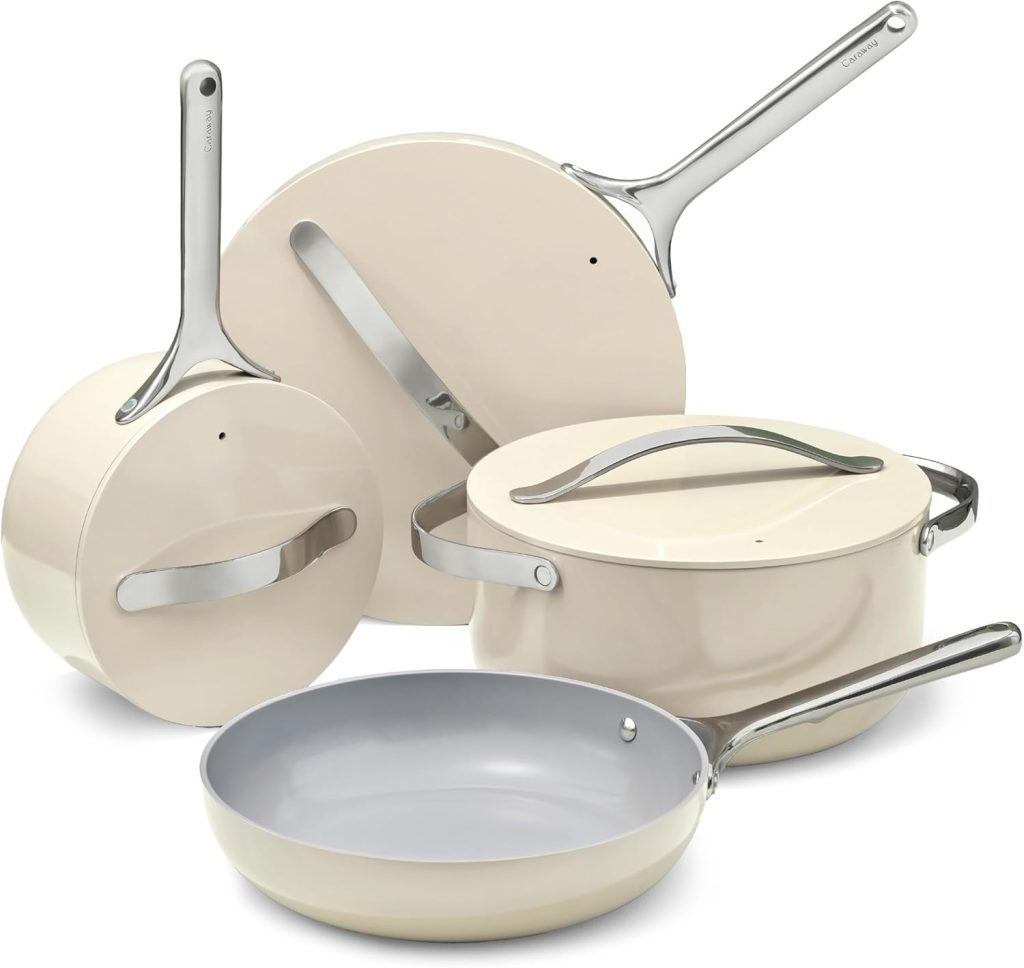
11. Caraway Nonstick Ceramic Cookware Set
Overview:
Caraway has disrupted the cookware market with their direct-to-consumer approach, Instagram-worthy aesthetics, and health-conscious ceramic coatings. This 7-piece set strips away unnecessary components to provide just the essentials while emphasizing toxin-free cooking, sustainable materials, and modern design. The aluminum construction with ceramic coating performs well on glass cooktops while the thoughtful storage solution addresses a common kitchen challenge.
Key Features:
- Ceramic nonstick coating free from PTFE, PFOA, PFAS, lead, and cadmium
- Aluminum core provides even heat distribution
- Stainless steel handles stay cool during cooking
- Tempered glass lids with stainless steel handles
- Oven safe to 550°F for finishing and baking
- Non-toxic, sustainable materials throughout construction
- Canvas lid organizer and magnetic pan rack included for storage
- Available in multiple colors including cream, sage, gray, navy, and marigold
- 7-piece set includes 10.5″ fry pan, 3-qt sauce pan, 4.5-qt sauté pan, 6.5-qt Dutch oven, plus lids for covered pieces
Performance and User Experience:
Caraway’s ceramic coating delivers excellent initial nonstick performance that rivals PTFE-based surfaces. Eggs release cleanly, pancakes flip effortlessly, and delicate fish slides off without tearing. The coating requires minimal oil or butter, supporting healthy cooking goals. On glass cooktops, the smooth bases prevent scratching while providing stable, even heating.
Heat distribution meets the standards expected from aluminum core construction. The cookware heats fairly evenly without severe hot spots, though not quite matching tri-ply stainless performance. Temperature responsiveness proves adequate for most home cooking tasks. The lightweight design makes handling comfortable while maintaining enough substance to feel quality.
The aesthetic appeal cannot be overlooked—these pieces look genuinely beautiful displayed in modern kitchens. The matte exterior finish in various contemporary colors photographs well and coordinates with current design trends. The stainless steel handles and lids create pleasing contrast against colored bodies. This appearance encourages storing cookware on open shelves or hanging racks.
The included storage solution deserves special mention. The canvas lid organizer and magnetic pan rack address the awkward bulkiness of storing traditional cookware sets. These thoughtful additions demonstrate that Caraway understands real kitchen challenges beyond just cooking performance. The organization system works particularly well in compact kitchens or apartments with limited cabinet space.
Pros:
✅ Stunning aesthetics suit modern kitchen design
✅ Free from concerning chemicals and toxins
✅ Excellent initial ceramic nonstick performance
✅ Thoughtful storage solutions included
✅ High oven temperature capability
✅ Sustainable and eco-conscious materials
✅ Minimalist set includes only essential pieces
✅ Smooth bases safe for glass cooktops
Cons:
❌ Premium pricing for what’s ultimately coated aluminum
❌ Not induction compatible limits versatility
❌ Ceramic coating longevity questions remain
❌ Limited piece count may require additional purchases
❌ Hand washing required despite seeming durable
❌ Color options may not suit all tastes
Ideal For:
Design-conscious millennials and Gen Z cooks who value aesthetics alongside function. Perfect for those concerned about chemical exposure from traditional nonstick. Excellent for minimalists who prefer fewer, quality pieces over comprehensive sets. Ideal for smaller households or urban kitchens with limited storage.
Final Verdict:
Caraway successfully delivers cookware that looks as good as it performs, targeting a market segment that values both health-consciousness and contemporary design. The ceramic nonstick coating works well initially, and the construction quality exceeds typical ceramic cookware. The premium pricing reflects the aesthetics, storage solutions, and brand positioning rather than revolutionary performance. For cooks who want beautiful, functional cookware free from concerning chemicals and will treat it carefully, Caraway represents a compelling choice that makes cooking more enjoyable through both form and function.
Comprehensive Buying Guide: How to Choose the Best Cookware for Glass Top Stoves!
Selecting cookware for glass top stoves requires more consideration than simply buying attractive pots and pans. The wrong choices can scratch your cooktop, create uneven heating, reduce cooking efficiency, and potentially crack the glass surface. This comprehensive guide explains everything you need to know to make informed purchasing decisions that protect your investment while enhancing your cooking experience.
Understanding Glass Top Stoves and Their Requirements
Glass top stoves, also called ceramic or smooth-top ranges, use radiant heating elements beneath a tempered glass-ceramic surface. This construction creates specific requirements for compatible cookware. The heating elements typically glow red when active, transferring heat through the glass to your cookware. Unlike gas flames that heat pan sides directly or coil elements that conform slightly to pan shapes, glass cooktops require complete, flat contact for efficient heat transfer.
The glass surface itself is remarkably durable—engineered to withstand normal cooking temperatures and reasonable impact. However, the material remains vulnerable to scratches from rough cookware bottoms, thermal shock from drastic temperature changes, and pressure cracks from dropping heavy objects. Quality cookware minimizes these risks while maximizing heating efficiency.
Modern glass cooktops come in several variations. Traditional radiant models use coiled metal heating elements beneath the glass. Halogen versions incorporate halogen bulbs for faster heating response. Induction cooktops use electromagnetic fields to directly heat compatible cookware, leaving the glass surface relatively cool. Understanding your specific cooktop type helps narrow cookware choices, particularly regarding induction compatibility.
Material Considerations: Choosing the Right Construction
Stainless Steel with Aluminum or Copper Core
Tri-ply or multi-ply stainless steel represents the gold standard for glass cooktop cookware. These products sandwich heat-conductive aluminum or copper between stainless steel layers, combining the best properties of each metal. The exterior stainless steel resists corrosion, maintains appearance, and works on all cooktop types including induction. The interior cooking surface remains non-reactive with acidic foods while developing natural nonstick properties with proper use. The aluminum or copper core conducts heat evenly, eliminating hot spots.
Full-clad construction extends this layered structure up the pan sides rather than limiting it to the base. This design provides more even heating but costs significantly more. Disc-bottom or capsule-bottom construction places the multi-layer core only at the base, reducing cost while maintaining decent performance. For glass cooktops specifically, either approach works well since the heating primarily comes from the bottom contact point.
Quality varies dramatically within stainless steel cookware. Premium brands use thicker gauges, precision-machined bases, and superior metal bonding. Budget options may use thinner materials that warp or poorly bonded layers that separate with repeated heating cycles. The weight provides clues—quality tri-ply cookware feels substantial without being excessively heavy.
Hard-Anodized Aluminum
Hard-anodized aluminum offers excellent middle-ground performance. The anodization process creates a hard, non-reactive surface layer that resists corrosion and scratching. The aluminum core conducts heat exceptionally well, responding quickly to temperature changes. Hard-anodized cookware typically costs less than quality stainless steel while performing comparably for most cooking tasks.
The dark gray or black exterior hides wear and stains effectively. The non-porous surface resists sticking better than bare stainless steel even without nonstick coatings. However, hard-anodized aluminum isn’t induction compatible unless manufacturers add a magnetic steel plate to the base. The material also limits cooking techniques—the anodized surface can degrade with extremely high heat or prolonged exposure to acidic foods.
Quality varies based on anodization depth and aluminum gauge thickness. Premium hard-anodized cookware feels heavy for its size and features deeply colored, smooth surfaces. Budget versions may use thinner aluminum that heats unevenly or shallow anodization that wears quickly.
Nonstick-Coated Cookware
Nonstick cookware serves glass cooktop users particularly well by simplifying cooking and cleanup. Modern nonstick coatings fall into two categories: PTFE-based (traditional Teflon-type) and ceramic. PTFE coatings provide superior durability and slickness when properly formulated and applied. Ceramic coatings appeal to health-conscious cooks concerned about PTFE chemicals but typically wear faster.
The base material under the coating matters significantly. Hard-anodized aluminum bases provide better performance and longevity than bare aluminum or thin stainless steel. The coating bonds more securely to properly prepared hard-anodized surfaces and the base heats more evenly.
Coating reinforcement with titanium or diamond particles increases durability and scratch resistance. Premium nonstick cookware often specifies multiple coating layers, each serving specific purposes—adhesion, reinforcement, and final release surface. These advanced coatings justify higher prices through extended usable life.
Understanding nonstick limitations prevents disappointment. Even the best coatings eventually degrade with use, particularly when exposed to high heat, metal utensils, or abrasive cleaning. Viewing nonstick as semi-disposable with 3-7 year typical lifespan sets realistic expectations.
Cast Iron and Enameled Cast Iron
Cast iron deserves careful consideration for glass cooktops. The material’s exceptional heat retention and natural nonstick properties (when properly seasoned) create outstanding cooking performance. However, cast iron’s extreme weight raises concerns about cracking glass cooktops through impact. The rough texture of many cast iron pieces can also scratch glass surfaces if dragged or moved carelessly.
Enameled cast iron provides a safer option. The smooth enamel coating eliminates scratching concerns while maintaining cast iron’s excellent heat properties. Quality enameled pieces feature polished, smooth bottoms specifically designed for smooth cooktops. The enamel prevents rust and eliminates seasoning requirements, trading some of traditional cast iron’s advantages for convenience and cooktop safety.
If using cast iron on glass, select pieces with smooth, machined bottoms. Always lift rather than sliding the cookware. Place pieces carefully to avoid impact. Consider cast iron primarily for oven use or slow-cooking tasks rather than quick stovetop preparation.
Copper Cookware
Pure copper conducts heat better than any common cookware material, responding instantly to temperature changes. This responsiveness gives chefs precise control but comes with significant drawbacks for glass cooktop users. Copper requires constant polishing to maintain appearance. The soft metal scratches and dents easily. Pure copper reacts with acidic foods unless lined with tin or stainless steel.
Most copper cookware features stainless steel cooking surfaces with copper exteriors or cores. These designs capture copper’s heating advantages while eliminating reactivity concerns. The copper exterior still demands polishing but provides the performance many professional chefs prefer. For glass cooktops, ensure any copper cookware features smooth, flat stainless steel bases rather than exposed copper bottoms that might mark the glass.
Base Construction: The Foundation of Glass Cooktop Performance
The cookware base directly contacting your glass cooktop determines heating efficiency, stability, and cooktop protection. Several construction approaches exist, each with distinct advantages and limitations.
Flat, Smooth Bottoms
Absolutely flat bases are non-negotiable for glass cooktop cookware. Any warping, even slight doming, reduces surface contact and creates hot spots. Quality manufacturers machine cookware bases flat or use construction techniques that maintain flatness through thermal cycling. Testing cookware flatness yourself reveals quality—place the pan upside down on a flat surface and check for wobbling or gaps.
Smoothness matters equally. Rough finishes, visible machining marks, or embossed patterns can scratch glass surfaces. Run your hand across cookware bottoms—they should feel glass-smooth without catching on ridges or texture. Mirror-polished or brushed satin finishes work well. Avoid cookware with ridged or patterned bottoms designed for gas cooktops.
Impact-Bonded vs. Fully Clad
Impact bonding attaches a separate multi-layer disc to the cookware base, typically through hydraulic pressure and heat. This construction costs less than fully-clad alternatives while providing decent performance. The thick base conducts heat well, but the pan sides remain thinner and less responsive. For glass cooktops where heat primarily transfers through base contact, impact-bonded construction performs adequately for most cooking.
Fully-clad construction extends the multi-layer structure up the pan sides, creating uniform material throughout. This approach heats more evenly and responds more uniformly to temperature changes. The added material and complex manufacturing increase costs significantly. For glass cooktop users, the performance advantage matters most for tasks involving liquid-based cooking where side heating improves results.
Base Thickness and Weight
Thicker bases generally perform better on glass cooktops by providing thermal mass that evens out the heating element’s on-off cycling. However, excessive thickness increases weight unnecessarily. Quality cookware balances sufficient thickness for even heating against manageable weight for daily use.
Weight provides clues about construction quality. Unusually light cookware likely uses thin materials that may warp or heat unevenly. Excessively heavy cookware challenges handling and risks glass cooktop damage through impact. Mid-weight cookware typically represents the best compromise—substantial enough to prevent warping while remaining comfortable to lift and maneuver.
Size and Capacity Planning
Selecting appropriate cookware sizes prevents wasted energy and improves cooking results on glass cooktops. Most heating elements come in specific sizes—typically 6-inch and 9-inch diameters for burners, larger for extended elements. Matching cookware diameter to element size maximizes efficiency and prevents the cooktop surface surrounding smaller pans from becoming unnecessarily hot.
Essential Pieces for Most Households
A well-rounded cookware collection for glass cooktops should include:
- 10-inch or 12-inch skillet for sautéing, frying, and one-pan meals
- 8-inch skillet for smaller portions, eggs, and quick tasks
- 2-quart and 3-quart saucepans with lids for sauces, grains, and vegetables
- 5-quart to 8-quart stockpot or Dutch oven with lid for soups, pasta, and batch cooking
- 3-quart to 4-quart sauté pan with lid for braising and dishes requiring both browning and simmering
This basic complement handles most everyday cooking needs without redundancy. Additional specialty pieces like roasting pans, griddles, or woks can supplement the core collection based on your cooking style.
Avoiding Oversized Cookware
Cookware significantly larger than your heating elements wastes energy and heats unevenly on glass cooktops. The portion of the pan extending beyond the element receives only indirect, radiated heat. This creates temperature gradients where food near the center cooks faster than food near the edges. While occasionally necessary for specific dishes, consistently using oversized cookware for routine tasks indicates poor sizing choices.
Storage Considerations
Glass cooktop cookware must store safely to prevent damage. Stacking pots and pans without protection can scratch cooking surfaces or dent lids. Consider storage solutions like pan racks, hanging systems, or protective pan separators. Some premium cookware includes felt or cloth protectors designed for stacking. The storage space available in your kitchen may limit how comprehensive a set you can reasonably accommodate.
Handle Design and Safety Features
Handles significantly impact cookware usability and safety on glass cooktops. Well-designed handles stay cool, provide secure grip, and balance the cookware properly.
Handle Materials
Stainless steel handles provide durability and the highest oven-safe temperatures. Hollow or ventilated designs stay cooler than solid construction by reducing heat conduction from the pan. Cast stainless steel handles offer exceptional strength with minimal heat transfer. However, all metal handles eventually warm during extended stovetop use.
Silicone or rubberized handles stay cooler during stovetop cooking by providing insulation. The soft-touch surface offers comfortable, secure grip even when wet or greasy. These handles limit oven temperature typically to 350-450°F depending on material quality. They also may degrade faster than metal with constant exposure to heat and washing.
Bakelite or phenolic resin handles represent older technology that still performs well. These materials resist heat effectively while maintaining rigidity. They typically feel comfortable without the soft-touch quality of silicone. Temperature limits fall between silicone and metal—usually around 400°F.
Attachment Methods
Riveted handles provide the most secure, durable attachment. Multiple rivets distribute stress and prevent loosening over years of use. The rivets create slight protrusions inside the pan that can trap food particles but generally don’t interfere with cooking or cleaning. Quality cookware uses flush or nearly-flush rivets that minimize this issue.
Welded handles attach through high-heat bonding, creating smooth interiors without rivets. This construction simplifies cleaning and provides sleek appearance but may prove less durable long-term. Welding quality varies dramatically between manufacturers.
Handle Length and Angle
Proper handle length provides leverage for lifting heavy pots without the handle extending excessively and getting in the way. Shorter handles work for smaller pans; longer handles suit larger, heavier pieces. The angle affects how comfortably the handle sits in your hand when lifting—slightly upturned angles typically feel most natural.
Helper handles on larger pans aid lifting and provide stability when moving full stockpots. These secondary handles should also stay reasonably cool and provide secure grip with pot holders if needed.
Lid Quality and Features
Quality lids trap heat and moisture effectively while allowing cooking visibility when needed. Several features distinguish superior lids from basic versions.
Material and Construction
Stainless steel lids offer maximum durability, highest oven temperatures, and won’t break if dropped. The opaque construction prevents monitoring food without lifting the lid, releasing heat in the process. Well-fitted stainless lids create near-steam-tight seals that maximize cooking efficiency.
Tempered glass lids let you monitor cooking progress without removing them. This visibility proves particularly useful for rice, pasta, and steaming where timing matters but overchecking disrupts the cooking process. Glass lids typically feature stainless steel rims that protect edges from chips and cracks. Quality glass withstands normal temperature ranges and reasonable impact but will break if dropped on hard surfaces.
Venting and Steam Management
Some lids include small vents that release steam gradually, preventing boil-overs while maintaining internal moisture. These vents work particularly well for simmering soups or cooking grains. Completely sealed lids trap maximum moisture, ideal for braising or dishes requiring steam pressure.
Handle Design
Lid handles should stay cool enough for bare-hand lifting during stovetop cooking. Handles that get too hot force you to use pot holders each time you want to check food. The handle should provide secure grip and adequate clearance for fingers between the handle and lid surface.
Induction Compatibility Considerations
If you have or might acquire an induction cooktop, ensuring cookware compatibility proves essential. Induction cooking uses electromagnetic fields to directly heat ferromagnetic cookware, offering precise temperature control and energy efficiency. However, only cookware containing iron works on induction cooktops.
Testing induction compatibility is simple—if a magnet sticks firmly to the cookware bottom, it will work on induction. Stainless steel cookware with magnetic exterior layers works universally. Aluminum, copper, and ceramic cookware without added magnetic layers will not function on induction cooktops regardless of quality or price.
Some manufacturers add magnetic steel plates to otherwise incompatible cookware bases. These hybrid designs allow aluminum or copper cookware to work on induction while maintaining those materials’ heating properties. The added steel layer typically increases weight and cost but expands versatility.
Oven-Safe Requirements
Cookware oven-safety expands cooking techniques significantly, allowing you to start dishes on the stovetop and finish in the oven or cook entirely using oven heat. Temperature limitations depend primarily on handle materials and any applied coatings.
All-metal stainless steel and cast iron cookware typically tolerates oven temperatures up to 500-600°F or even broiler heat. Hard-anodized aluminum handles similar heat. Silicone, rubber, or plastic components limit temperatures to 350-450°F. Nonstick coatings may degrade or release fumes above 400-450°F regardless of the base material’s tolerance.
Consider your typical cooking methods when evaluating oven-safe temperatures. Occasional oven finishing at 375°F for casseroles requires less tolerance than frequent high-heat roasting at 500°F. Match the cookware’s capabilities to your actual needs rather than seeking maximum temperature ratings you’ll never use.
Maintenance and Cleaning Considerations
Glass cooktop cookware maintenance affects both the cookware’s lifespan and your cooktop’s condition. Different materials and coatings require specific care approaches.
Stainless Steel Care
Stainless steel cookware tolerates aggressive cleaning including abrasive scrubbers, though gentler methods preserve appearance longer. Bar Keeper’s Friend or similar oxalic acid-based cleansers remove stuck-on food, discoloration, and water spots effectively. The material won’t degrade from any reasonable cleaning method.
Maintaining stainless steel’s appearance requires regular cleaning of both interior and exterior. Water spots and heat discoloration appear naturally but clean away easily. The material’s durability means it looks nearly new even after years of use with minimal effort.
Nonstick Coating Care
Nonstick cookware requires gentle care to maximize coating life. Use soft sponges or cloths rather than abrasive scrubbers. Avoid metal utensils that can scratch or pierce the coating. Hand wash with mild detergent even if labeled dishwasher-safe—dishwasher detergents’ harsh chemicals and high heat accelerate coating breakdown.
Never heat empty nonstick pans or exceed recommended temperatures. Overheating degrades coatings and may release fumes, particularly with traditional PTFE-based nonstick. Allow cookware to cool before washing to prevent thermal shock that can compromise the coating bond.
Hard-Anodized Aluminum Care
Hard-anodized cookware falls between stainless steel and nonstick in maintenance requirements. The anodized surface resists staining and scratching better than bare aluminum but shouldn’t face abrasive scrubbers regularly. Mild detergents and soft sponges handle routine cleaning effectively.
Avoid prolonged soaking or harsh chemicals that might affect the anodized layer. While more durable than coatings, the anodization can eventually wear with aggressive use. The dark surface hides minor wear well, maintaining acceptable appearance even with heavy use.
Preventing Cooktop Damage
Protecting your glass cooktop requires attention to cookware cleanliness. Wipe cookware bottoms before placing them on the cooktop to remove any stuck-on food, grease, or debris that might scratch the surface. Lift rather than sliding cookware across the glass. Clean spills on the cooktop promptly before they bake onto the surface.
Regularly inspect cookware bottoms for rough spots, warping, or damage. Retire or repair pieces that no longer sit flat or have developed rough surfaces. The replacement cost of individual pans is minor compared to repairing or replacing a damaged glass cooktop.
Budget Allocation and Value Assessment
Cookware pricing varies dramatically, from complete sets under $100 to individual pieces exceeding $300. Understanding where money actually improves performance versus pays for branding helps allocate budgets wisely.
Premium vs. Budget Performance Differences
Premium cookware typically provides:
- Superior, more even heat distribution through quality materials and construction
- Longer-lasting durability through heavier gauges and better manufacturing
- Better-designed, more comfortable handles that stay cooler
- Precision-fitted components like lids that seal properly
- Attractive appearance that maintains through years of use
- Comprehensive warranties backing manufacturer confidence
Budget cookware compromises on:
- Thinner materials that may warp or heat unevenly
- Less durable attachment points that might loosen
- Simpler handle designs that conduct more heat
- Basic lids that fit less precisely
- Appearance that may degrade noticeably with use
- Limited or no warranty coverage
The performance gap matters most for serious cooks who use cookware daily and value professional results. Casual cooks who prepare simple meals infrequently may find mid-range or even budget cookware entirely adequate.
Cost Per Use Calculation
Evaluating cookware value requires considering expected lifespan and frequency of use. A $300 skillet used daily for ten years costs roughly $0.08 per use. A $30 skillet replaced every two years with similar usage costs $0.04 per use initially but increases substantially when replacement hassle and disposal considerations factor in.
Premium cookware often proves more economical long-term through extended lifespan despite higher upfront costs. Budget cookware makes sense for infrequent users, temporary living situations, or specific pieces rarely needed.
Set vs. Individual Piece Purchases
Complete cookware sets offer value through bundled pricing but often include pieces you’ll rarely use. Building a collection by purchasing individual pieces costs more initially but ensures you only buy what you actually need. This approach also allows mixing materials—stainless steel for most tasks, nonstick for eggs and delicate foods, cast iron for specific applications.
Consider your actual cooking patterns. If you regularly prepare varied meals requiring multiple pots and pans, comprehensive sets provide good value and aesthetic consistency. If you primarily make simple meals using just a few pieces repeatedly, individual purchases prevent wasting money on unused items.
Common Mistakes to Avoid
Prioritizing Nonstick Over Durability
Many buyers choose nonstick cookware exclusively, then express disappointment when coatings degrade after a few years. While nonstick serves valuable purposes, building your core collection around quality stainless steel or hard-anodized cookware provides better long-term value. Reserve nonstick for specific tasks where it truly excels—eggs, pancakes, delicate fish.
Ignoring Base Flatness
Purchasing cookware without verifying perfectly flat bases leads to frustration on glass cooktops. Hot spots, instability, and poor heat transfer result from even minor warping. Always check reviews specifically mentioning glass cooktop performance or examine pieces in person before buying.
Buying Oversized Sets for Small Households
A couple doesn’t need 16-piece cookware sets designed for large family cooking. The unused pieces occupy valuable storage space and waste money. Smaller households should seek 7-10 piece sets or build custom collections with just the sizes they actually use.
Neglecting Weight Considerations
Extremely heavy cookware seems substantial and quality but may prove difficult to handle daily, especially when filled with food. Conversely, very lightweight cookware often indicates thin construction that warps or heats unevenly. Test the weight if possible to ensure you can comfortably lift and maneuver the pieces you’re considering.
Assuming Dishwasher-Safe Means Dishwasher-Recommended
Manufacturers often label cookware dishwasher-safe to check a marketing box, but dishwasher cleaning accelerates wear on handles, finishes, and especially nonstick coatings. Hand washing adds minimal time while significantly extending cookware life. Reserve dishwasher use for truly grimy occasions rather than routine cleaning.
Overlooking Warranty Terms
Warranty coverage varies from limited one-year protection to lifetime guarantees. Understanding what the warranty actually covers—manufacturing defects versus normal wear—prevents disappointment. Lifetime warranties that exclude nonstick coating degradation don’t actually protect your long-term investment in coated cookware.
Expert Recommendations for Different Use Cases
For Serious Home Cooks: Invest in All-Clad D3 or similar premium tri-ply stainless steel for your core pieces. Add one or two quality nonstick pans for eggs and delicate foods. Consider a premium enameled cast iron Dutch oven for braising and bread baking. This combination provides professional performance that will last decades.
For Budget-Conscious Buyers: Choose the Cook N Home stainless steel set for durability and versatility. Supplement with T-fal or Calphalon nonstick pieces for tasks where food release matters most. This approach balances cost with performance adequately for typical home cooking.
For Health-Conscious Cooks: Select Caraway or GreenLife ceramic nonstick for chemical-free cooking. Pair with stainless steel pieces for high-heat tasks. This combination eliminates concerning coatings while maintaining cooking versatility.
For Apartment Dwellers: Consider the Rachael Ray Cucina or T-fal Ultimate sets that include storage solutions. These comprehensive yet space-conscious collections provide everything needed without overwhelming limited cabinet space.
For Induction Cooktop Users: Prioritize fully induction-compatible options like Duxtop Whole-Clad or ensure any stainless steel features magnetic exteriors. Test with a magnet before purchasing to avoid disappointment.
For Occasional Cooks: The Gotham Steel or similar budget nonstick sets provide adequate performance without significant investment. The easy cleanup and food release make infrequent cooking less frustrating.
Frequently Asked Questions
1. Can I use any cookware on a glass top stove, or do I need special pans?
Not all cookware works well on glass top stoves. While you technically can use most pots and pans, the results vary dramatically. Glass cooktops require flat-bottomed cookware with smooth surfaces to perform properly. Warped pans with uneven bases create hot spots where only portions of the pan contact the heating surface. This causes uneven cooking and potentially damages the cookware or cooktop.
Rough-bottomed cookware, like some cast iron or stoneware, can scratch the glass surface. These scratches accumulate over time, degrading your cooktop’s appearance and potentially creating weak points. Cookware designed specifically for glass cooktops features machined, polished flat bottoms that maximize surface contact and prevent scratching.
Certain materials work better than others. Stainless steel with aluminum or copper cores provides excellent performance through even heat distribution. Hard-anodized aluminum heats quickly and evenly while protecting against scratches. Quality nonstick cookware with flat bases works wonderfully. Cast iron requires extra caution due to weight and potential rough texture, though enameled cast iron with smooth bottoms performs well.
The key specifications to seek include: perfectly flat bases verified by placing the pan upside-down on a flat surface, smooth bottoms free from ridges or rough texture, medium weight that won’t crack the glass through impact, and construction that won’t warp with repeated heating cycles.
2. How do I prevent scratching my glass cooktop with cookware?
Preventing scratches requires consistent good habits rather than expensive solutions. First, always ensure cookware bottoms are clean before placing them on the cooktop. Even tiny food particles or dried sauce can act as abrasives when you move pans. Wipe the bottom of each pan with a damp cloth before cooking, especially if it was stored with others or previously used.
Never slide cookware across the glass surface. Always lift pots and pans completely when moving them, even for small adjustments. The friction from dragging combined with any debris creates micro-scratches that accumulate. This habit feels awkward initially but quickly becomes automatic.
Select cookware with smooth, polished bottoms rather than rough cast iron or stamped patterns designed for gas cooktops. Inspect new cookware carefully—some manufacturers leave machining marks or rough edges that require smoothing with fine sandpaper before safe use on glass.
Keep your cooktop clean using proper cleaners designed for glass surfaces. Built-up residue between the cooktop and pan bottoms can cause scratching. Apply cooktop cleaner regularly, letting it work on tough spots before wiping clean with soft cloths or specialized cooktop scrapers held at proper angles.
Check your cookware periodically for warping, dents, or rough spots developing from use. Retire or refinish pieces that no longer meet the flat, smooth standards. The cost of replacing a scratched cooktop far exceeds replacing a few worn pans.
3. Does cookware material really matter for glass top stoves?
Material matters significantly for both performance and cooktop protection. Different materials conduct heat at varying rates and distribute it differently, dramatically affecting cooking results on glass surfaces where heat transfers primarily through direct contact.
Stainless steel alone conducts heat poorly, creating hot spots directly above the heating element while edges remain cooler. Quality stainless cookware solves this through multi-ply construction with aluminum or copper cores that spread heat evenly. This even distribution prevents burning in hot spots and undercooking in cooler areas—common frustrations with poor-quality cookware on glass cooktops.
Aluminum heats quickly and distributes heat well but reacts with acidic foods and lacks durability in pure form. Hard-anodized aluminum offers aluminum’s heating advantages while eliminating reactivity concerns through the hardened surface layer. Most quality cookware uses aluminum as an internal core rather than cooking surface.
Cast iron provides exceptional heat retention—it takes longer to heat but maintains temperature remarkably stable. This property suits slow-cooking but makes quick temperature adjustments difficult. The extreme weight risks cracking glass cooktops through impact or stress. Enameled cast iron reduces scratching concerns while maintaining heat properties.
Copper conducts heat better than any common material, responding instantly to temperature changes. This responsiveness gives precise control but requires lining with stainless steel for food contact. Copper cookware costs substantially more and demands polishing maintenance.
For glass cooktops specifically, tri-ply stainless steel or hard-anodized aluminum provide the best balance of performance, safety, and value. These materials heat evenly, won’t scratch the surface with proper care, and offer durability justifying their cost.
4. Can I use cast iron skillets on my glass cooktop?
You can use cast iron on glass cooktops with appropriate caution, but it’s not ideal. Cast iron’s exceptional heat retention and natural nonstick properties (when seasoned) make it beloved by many cooks. However, several factors make it challenging for glass surfaces.
The extreme weight creates risk. Dropping or even setting down cast iron too firmly can crack glass cooktops. The heavy cookware also might gradually stress the glass with repeated heating and cooling cycles. Always handle cast iron carefully on glass surfaces—lift with both hands, set down gently, and never drop or slide it.
Many cast iron pieces have rough bottoms that scratch glass. The traditional casting process often leaves textured surfaces that act as abrasives. Before using cast iron on glass, inspect the bottom carefully. If it feels rough, you can smooth it using progressively finer sandpaper—start with 80-grit and work up to 400-grit or higher for a polished finish. This process takes time but makes cast iron safe for glass cooktops.
Enameled cast iron provides a better option. The smooth enamel coating eliminates scratching concerns while maintaining cast iron’s excellent heat properties. Quality enameled pieces feature polished bottoms specifically designed for smooth cooktops. The enamel also prevents rust and eliminates seasoning requirements.
If you frequently use cast iron, consider limiting it to oven cooking rather than stovetop. Cast iron excels at oven roasting, baking, and braising where its heat retention truly shines. Reserve your flat, smooth stainless steel or anodized aluminum for most stovetop tasks.
5. What’s the difference between cheap and expensive cookware for glass cooktops?
Price differences reflect real performance and durability variations, though expensive doesn’t always mean better value. Understanding what you’re paying for helps make informed decisions.
Premium cookware uses heavier-gauge materials that resist warping even with repeated high-heat cooking. Budget cookware often uses thinner metals that may develop slight warping, reducing surface contact with your cooktop and creating hot spots. This warping accelerates over time, eventually requiring replacement.
Heat distribution quality varies dramatically. Expensive tri-ply cookware distributes heat uniformly across the entire cooking surface through precision-bonded metal layers. Budget cookware may use thin disc bottoms or single-layer construction that creates hot spots directly above heating elements. These hot spots burn food and make consistent cooking frustrating.
Manufacturing precision affects base flatness. Premium manufacturers machine cookware bases to stringent flatness tolerances ensuring perfect cooktop contact. Budget options may have slightly uneven bases that wobble or don’t sit flush. Even minor flatness issues reduce heating efficiency and can damage both cookware and cooktop over time.
Handle quality differs substantially. Expensive cookware features ergonomic handles that stay cool through hollow or insulated construction, secure riveted attachment that won’t loosen, and comfortable shapes that reduce hand fatigue. Budget handles often heat up quickly, may eventually loosen, and feel less comfortable during use.
Finish quality affects both performance and appearance. Premium cookware maintains its appearance through years of use with proper care. Budget options often show wear, discoloration, or finish degradation relatively quickly. For glass cooktops specifically, maintaining smooth, clean cookware bottoms matters for preventing surface scratches.
The longevity gap represents perhaps the most significant difference. Premium cookware often lasts 20-30+ years with proper care, making the per-year cost quite reasonable. Budget cookware typically needs replacement every 3-7 years, potentially costing more long-term despite lower initial prices.
6. Are nonstick pans safe to use on glass top stoves?
Nonstick pans work excellently on glass cooktops when properly matched and used correctly. In fact, many cooks find nonstick particularly useful on glass stoves specifically because the easy cleanup prevents the vigorous scrubbing that can accidentally damage glass surfaces.
Safety concerns with nonstick involve the coating itself rather than cooktop compatibility. Traditional PTFE-based nonstick (Teflon) is safe at normal cooking temperatures but may degrade and release fumes above 500°F. Glass cooktops can reach these temperatures, particularly if you preheat empty pans or use maximum heat settings. Always use low-to-medium heat with nonstick cookware and never preheat empty.
Modern PTFE coatings are PFOA-free, addressing previous health concerns. The coating itself is inert and passes through digestive systems harmlessly if accidentally consumed. The primary concern remains overheating, which degrades the coating and releases irritating fumes—unpleasant but not typically dangerous with normal ventilation.
Ceramic nonstick alternatives appeal to cooks concerned about any synthetic coatings. These ceramic-based surfaces derive from sand and contain no PTFE, PFOA, or related chemicals. They release food well initially and don’t emit fumes at high temperatures. However, ceramic coatings typically wear faster than quality PTFE options, losing nonstick properties within 1-3 years.
For glass cooktops specifically, ensure nonstick cookware has perfectly flat bases. The coating shouldn’t extend to the bottom exterior surface where it might degrade from direct heating element contact or leave residue on your cooktop. Quality nonstick cookware features bare metal, anodized aluminum, or ceramic exterior bottoms.
Choose hard-anodized aluminum bases rather than thin stamped aluminum for nonstick cookware. The heavier, more rigid construction resists warping that would reduce glass cooktop performance. The anodized surface also bonds nonstick coatings more securely, extending effective lifespan.
7. How do I know if my cookware will work on an induction cooktop?
Induction compatibility requires ferromagnetic material that responds to electromagnetic fields. The simplest test uses a common refrigerator magnet—if it sticks firmly to the cookware bottom, it will work on induction. If the magnet doesn’t stick or attaches weakly, the cookware won’t function on induction cooktops regardless of quality or price.
This magnetic requirement limits compatible materials. Stainless steel with magnetic properties (400-series or some 300-series formulations) works perfectly. Cast iron, both bare and enameled, is naturally magnetic and induction-compatible. Carbon steel also functions well on induction.
Many materials don’t work on induction without modification. Pure aluminum, copper, glass, and ceramic lack magnetic properties. All-aluminum or all-copper cookware won’t heat on induction cooktops no matter how expensive or well-made. Nonstick cookware with aluminum bases also won’t work unless manufacturers add magnetic layers.
Some manufacturers create induction-compatible versions of otherwise incompatible materials by adding stainless steel discs or plates to cookware bases. These hybrid designs allow aluminum or copper cookware to work on induction while maintaining those materials’ superior heat conduction. The added steel increases weight and cost but provides versatility across all cooktop types.
When shopping for new cookware, induction compatibility usually appears clearly in product descriptions and packaging. Symbols showing coiled elements indicate induction capability. If uncertain, contact the manufacturer before purchasing or use the magnet test if buying in person.
Consider future flexibility even if you currently have a radiant glass cooktop. Induction cooking gains popularity through energy efficiency and precise temperature control. Purchasing induction-compatible cookware now prevents needing complete replacement if you upgrade cooktops later. The minor price premium for induction capability provides valuable future-proofing.
8. What size cookware works best for glass top stoves?
Optimal cookware sizing matches your cooktop’s heating elements for maximum efficiency and even heating. Most glass cooktops feature elements in 6-inch and 9-inch diameters, plus possibly an elongated element for griddles or large pans. Using cookware that matches element sizes closely improves performance and energy efficiency.
Undersized cookware wastes energy by heating unused portions of the element. The heat radiates into your kitchen rather than conducting into the pan. More problematically, elements often cycle on high to maintain temperature when pan contact doesn’t absorb heat efficiently. This cycling reduces cooking control and may overheat the cooktop surface around the pan.
Oversized cookware creates temperature gradients where the center directly over the element heats properly while edges receiving only radiated heat remain cooler. Food in the pan center may burn while edges undercook. This uneven heating proves particularly frustrating for tasks requiring consistent temperature like pancakes or sauce reduction.
For most households, a practical cookware collection includes:
- 8-inch skillet for small portions and eggs (fits 6-inch elements)
- 10-inch or 12-inch skillet for general cooking (fits 9-inch elements)
- 1.5-2 quart saucepan (fits 6-inch elements)
- 3-quart saucepan (fits 9-inch elements)
- 5-6 quart stockpot or Dutch oven (fits large elements)
This range handles most cooking tasks efficiently. The smaller pieces suit individual portions or side dishes. Larger pieces accommodate family meals and batch cooking. Having both small and large options prevents using oversized cookware for small jobs or cramming too much food into undersized pans.
Measure your specific heating elements when possible. Some cooktops feature larger or smaller elements than standard. Matching your cookware to your actual element sizes optimizes your specific setup.
9. How do I maintain cookware to keep it working well on glass cooktops?
Proper maintenance extends cookware life while protecting your glass cooktop investment. Different materials require specific care approaches.
For stainless steel cookware, hand wash after each use even if labeled dishwasher-safe. Use warm soapy water and non-abrasive sponges for routine cleaning. For stuck-on food, soak in warm water then use Bar Keeper’s Friend or similar oxalic acid cleaner. This removes discoloration and staining without damaging the metal. Always clean the exterior and bottom as thoroughly as the cooking surface—built-up residue on bottoms can scratch your glass cooktop.
Nonstick cookware demands gentle treatment to maximize coating life. Never use abrasive scrubbers, scouring pads, or harsh cleansers. Soft sponges or cloths with mild dish soap handle routine cleaning. For stubborn residue, soak in warm soapy water rather than scrubbing aggressively. Hand wash nonstick cookware despite dishwasher-safe claims—dishwasher detergents and high heat degrade coatings faster.
Hard-anodized aluminum falls between stainless steel and nonstick in care requirements. Use soft sponges and avoid abrasive cleaners that might wear the anodized surface. The dark finish hides minor wear well, maintaining good appearance even with regular use. Avoid prolonged soaking and never use harsh chemicals.
Cast iron requires unique maintenance. Season bare cast iron regularly by coating with thin oil layers and heating until polymerized. This creates natural nonstick properties. Clean with hot water and stiff brushes rather than soap. Dry immediately and thoroughly to prevent rust. Apply thin oil coats after each use. Enameled cast iron simplifies maintenance—wash normally with soap and water, but avoid abrasive scrubbers that might damage the enamel.
Check cookware bottoms regularly for rough spots, stuck-on residue, or warping. Wipe bottoms with damp cloths before each use to remove any debris. This simple habit prevents transferring particles to your glass cooktop where they act as abrasives.
10. What warranties should I look for in quality cookware for glass cooktops?
Warranty coverage reveals manufacturer confidence and provides protection for your investment. Understanding warranty terms helps evaluate true quality and value.
Lifetime warranties sound impressive but require reading fine print carefully. Many “lifetime” warranties cover only manufacturing defects, not normal wear. For nonstick cookware, these warranties often explicitly exclude coating degradation—the component most likely to fail. A lifetime warranty on stainless steel base construction means more than one on coated pieces where the coating won’t last a lifetime regardless of quality.
Length matters less than coverage specifics. A comprehensive 5-year warranty covering all defects including warping provides better protection than a “lifetime” warranty with extensive exclusions. Quality manufacturers typically offer 10-year to lifetime coverage on construction while being realistic about coating lifespan.
Manufacturing defect coverage should include warping, handle attachment failure, base separation (for multi-ply construction), and finish defects. These issues indicate quality problems rather than user error. Reputable brands replace or repair cookware exhibiting these problems.
Normal wear exclusions are standard and reasonable. Scratches from misuse, coating degradation from overheating or improper cleaning, and discoloration from high heat represent normal wear rather than defects. No warranty can protect against user damage, though quality cookware resists these issues better than budget options.
Registration requirements vary. Some warranties require registration within specific timeframes while others activate automatically with proof of purchase. Save receipts and register promptly when required. Consider photographing receipts as backup since paper receipts fade over time.
Pro-rated warranties reduce coverage over time, providing full replacement initially but only partial credit after certain periods. These prove less valuable than full coverage warranties, though better than no protection.
Customer service quality matters tremendously for warranty claims. Research company reputations for honoring warranties fairly. Premium brands typically provide straightforward claims processes while budget brands may create frustrating obstacles even for legitimate defects.
Final Verdict: Making Your Best Choice!
Selecting cookware for glass top stoves requires balancing performance, durability, safety, and budget considerations. The “best” choice depends entirely on your specific cooking habits, skill level, and priorities.
Top Premium Pick: All-Clad D3 Stainless Steel Set For serious home cooks willing to invest in lifetime cookware, All-Clad represents the gold standard. The exceptional heat distribution, perfect base flatness, and decades-long durability justify the premium pricing. This cookware transforms cooking from chore to pleasure through precision performance that rivals professional equipment.
Best Mid-Range Value: Cuisinart Multiclad Pro or Duxtop Whole-Clad These options deliver 85-90% of premium cookware performance at roughly half the cost. The tri-ply construction provides excellent heat distribution, the bases remain flat through years of use, and build quality suggests genuine longevity. For most home cooks, these sets provide outstanding value without compromise on essential features.
Best Budget Stainless Option: Cook N Home 15-Piece Set Budget-conscious buyers seeking stainless steel’s durability find solid value here. While not matching premium performance, the capsule-bottom construction works adequately for everyday cooking. The comprehensive piece selection and reasonable quality make this an intelligent choice for first kitchens or supplementary sets.
Top Nonstick Pick: Anolon Advanced Hard Anodized For cooks who prioritize convenience and easy cleanup, Anolon delivers premium nonstick performance that lasts. The heavy-gauge construction resists warping, the Infinity Slide coating genuinely performs, and thoughtful design details create cookware that’s both functional and attractive. The mid-range pricing reflects genuine quality rather than just marketing.
Best Budget Nonstick: T-fal Ultimate Hard Anodized The Thermo-Spot indicator alone justifies consideration for glass cooktop users struggling with temperature management. Combined with solid construction, genuine nonstick performance, and comprehensive piece selection, T-fal provides remarkable value. This set makes daily cooking more enjoyable without significant financial investment.
Best for Health-Conscious Cooks: Caraway Ceramic Nonstick For those concerned about chemical exposure and wanting aesthetically pleasing cookware, Caraway successfully delivers. The ceramic coating performs well initially, the construction quality exceeds typical ceramic options, and the storage solutions address real kitchen challenges. The premium pricing reflects the complete package rather than revolutionary performance.
Most Important Takeaways:
Prioritize perfectly flat, smooth bases above all else for glass cooktop compatibility. Warped or rough cookware creates frustration and potential damage.
Choose materials matching your cooking style—stainless steel for versatility and learning curve, nonstick for convenience and easy cleanup, combination for best of both approaches.
Consider total cost of ownership rather than just purchase price. Premium cookware lasting 20+ years costs less annually than budget options requiring replacement every few years.
Invest in quality for pieces you use daily—the primary skillet and large sauté pan deserve premium investment. Save money on rarely-used specialty pieces.
Read reviews specifically mentioning glass cooktop performance. General positive reviews don’t necessarily indicate cookware suited for smooth surfaces.
Your glass cooktop represents a significant investment that deserves compatible, quality cookware. The right choices protect that investment while enhancing every cooking experience. Whether you invest in premium All-Clad or start with budget-friendly T-fal, selecting cookware with flat bases, appropriate materials, and proper construction ensures successful cooking and lasting satisfaction.

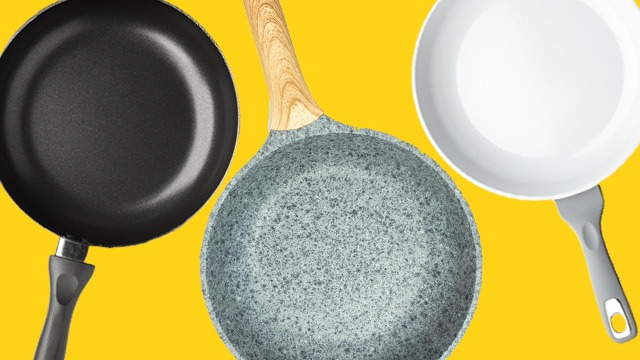
Leave a Reply