

Electric coil stoves remain one of the most common cooking appliances in homes, apartments, and rental properties across America. Despite the rising popularity of induction and smooth-top electric ranges, coil burners continue to offer reliable, affordable cooking performance. However, not all cookware performs equally well on these distinctive heating elements.
The relationship between your pots and pans and electric coil burners is more critical than many home cooks realize. Unlike gas flames that distribute heat evenly around the sides of cookware or induction surfaces that require specific magnetic properties, electric coils demand specific characteristics from your pots and pans to achieve optimal cooking results.
Best Cookware for Electric Coil Stove:Electric coil stoves heat through direct contact and thermal conduction. The metal coils become red-hot and transfer heat directly to the cookware bottom. This heating method creates unique challenges: uneven heat distribution, slower temperature adjustments, and the potential for hot spots that can burn food if your cookware isn’t properly designed.
The wrong cookware on electric coils leads to frustrating cooking experiences. Warped bottoms create air gaps that drastically reduce heating efficiency. Lightweight pans with thin bases overheat quickly, causing food to stick and burn. Cookware with poor heat retention forces you to use higher temperature settings, wasting energy and making precise cooking nearly impossible.
Conversely, the right cookware transforms your electric coil stove into a capable cooking platform. Flat-bottomed pans with sufficient thickness provide even heat distribution across the cooking surface. Heavy-gauge materials retain heat effectively, allowing for better temperature control and more consistent results. Durable construction withstands the thermal stress of repeated heating and cooling cycles without warping.
Material selection plays a pivotal role in cookware performance on electric coils. Stainless steel offers durability and versatility but requires adequate thickness or an aluminum core for proper heat distribution. Cast iron excels at heat retention and creates perfect contact with coil elements, though its weight and maintenance requirements aren’t for everyone. Hard-anodized aluminum provides excellent heat conduction at a lighter weight, making it ideal for everyday cooking tasks.
The investment in quality cookware specifically suited for electric coil stoves pays dividends in cooking performance, food quality, and longevity. Professional chefs and home cooking enthusiasts alike recognize that proper tools make the difference between mediocre meals and culinary excellence.
This comprehensive guide examines eleven outstanding cookware options specifically selected for electric coil stove compatibility. We’ve analyzed construction quality, heating performance, durability, user feedback, and value proposition to help you make an informed purchasing decision. Whether you’re outfitting your first kitchen, upgrading worn-out pans, or seeking professional-grade performance, you’ll find detailed, honest assessments to guide your choice.
Beyond individual product reviews, we’ll explore the essential factors that determine cookware suitability for electric coils, common purchasing mistakes to avoid, and expert recommendations for different cooking styles and budgets. Our goal is to provide you with the knowledge and confidence to select cookware that will serve you reliably for years to come.
Top 11 Best Cookware for Electric Coil Stoves – Detailed Reviews!
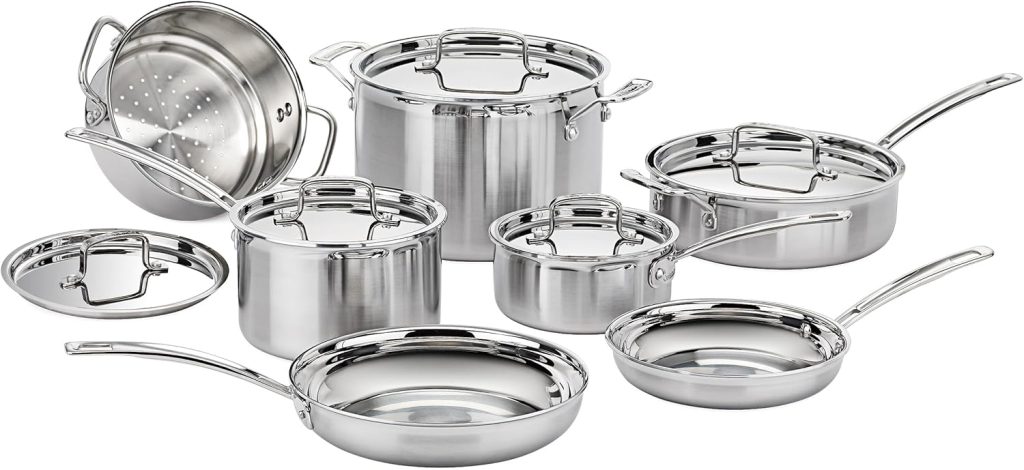
1. Cuisinart MCP-12N Multiclad Pro Stainless Steel 12-Piece Cookware Set
Overview:
The Cuisinart Multiclad Pro represents exceptional value in the professional-grade stainless steel cookware category. This 12-piece set combines triple-ply construction with thoughtful design elements that make it particularly well-suited for electric coil stoves. The collection includes essential pieces that cover virtually all cooking needs, from sautéing and simmering to stock preparation and sauce making.
What distinguishes this set is its Heat Surround technology, which extends the aluminum core up the sides of each pan rather than limiting it to just the base. This construction method ensures remarkably even heating, eliminating the hot spots that plague many cookware options on electric coils. The tight-fitting lids lock in moisture and nutrients, while the cool-grip handles remain safe to touch even during extended stovetop use.
Key Features:
- Triple-ply construction with aluminum core sandwiched between stainless steel for optimal heat distribution and retention
- Heat Surround Technology extends aluminum layer up pan sides for even heating across entire cooking surface
- Flat, thick base design ensures maximum contact with electric coil elements without warping
- Drip-free pouring rims on every piece minimize mess and waste during cooking
- Riveted stainless steel handles provide secure, comfortable grip that stays cool during stovetop cooking
- Dishwasher-safe construction allows for easy cleanup after demanding cooking sessions
- Oven-safe to 550°F including lids, enabling stovetop-to-oven cooking techniques
- Compatible with all stovetops including induction, though optimized for electric coil performance
Performance and User Experience:
Users consistently praise the Cuisinart Multiclad Pro for its exceptional heating characteristics on electric coil stoves. The aluminum core responds reasonably quickly to temperature changes—faster than cast iron or pure stainless steel—while the thick construction prevents the sudden temperature spikes that cause food to stick and burn. Home cooks report that once properly preheated, these pans maintain steady temperatures even when cold ingredients are added, a crucial advantage when searing proteins or sautéing vegetables.
The flat bottom construction proves essential for electric coil compatibility. Even after years of use and countless heating cycles, the pans maintain their shape and sit firmly on coil elements without wobbling. This stability ensures consistent heat transfer and prevents the dangerous tipping that can occur with warped cookware.
Cooking performance across different techniques impresses users. The saucepans excel at delicate tasks like making custards and reducing sauces without scorching. The larger skillets provide excellent searing capabilities once properly heated, developing restaurant-quality crusts on steaks and chops. The stockpot’s even heating eliminates the stirring frequency required with thinner pots, making it ideal for soups, stews, and pasta cooking.
The brushed stainless exterior maintains its appearance remarkably well, resisting the discoloration that electric coil heat sometimes causes. While the interior cooking surface does develop some patina over time, this doesn’t affect performance and can be removed with Bar Keeper’s Friend or similar cleaners when desired.
Pros:
✅ Outstanding heat distribution eliminates hot spots common on electric coils, ensuring even cooking results across entire pan surface
✅ Exceptional value proposition delivers professional-grade performance at mid-range pricing, making quality cookware accessible
✅ Comprehensive 12-piece set includes all essential pans for complete kitchen outfitting without purchasing individual pieces
✅ Superior durability withstands years of electric coil use without warping, maintaining flat bottom contact indefinitely
✅ Versatile oven-safe capability to 550°F enables diverse cooking techniques from stovetop searing to oven finishing
✅ Dishwasher-safe convenience simplifies cleanup, though hand washing preserves appearance longer
✅ Lifetime warranty demonstrates manufacturer confidence and protects your investment against defects
Cons:
❌ Moderate weight makes largest pieces somewhat heavy, which may challenge users with limited strength or mobility
❌ Requires proper preheating for optimal non-stick performance; rushing this step leads to sticking issues with delicate foods
❌ Handles can become warm with extended cooking on high heat settings, occasionally requiring pot holders for safety
❌ Polished interior shows wear patterns over time, though this doesn’t impact cooking performance or food safety
Ideal For:
This cookware set perfectly suits home cooks seeking professional-grade performance without commercial pricing. It’s excellent for anyone cooking regularly on electric coil stoves who values durability and even heating. The comprehensive piece selection makes it ideal for first-time homeowners, newlyweds, or anyone completely outfitting a kitchen. Experienced cooks upgrading from non-stick or thin cookware will immediately notice the performance improvement.
The Cuisinart Multiclad Pro strikes an impressive balance between performance, durability, and affordability. Its tri-ply construction with aluminum core addresses the primary challenge of electric coil cooking—uneven heat distribution—while the flat, heavy base ensures optimal contact with heating elements. The comprehensive 12-piece configuration eliminates the need for supplemental purchases, and the lifetime warranty provides peace of mind. For anyone seeking reliable, professional-quality cookware specifically suited to electric coil stoves without breaking the budget, this set represents one of the best values available on Amazon today.
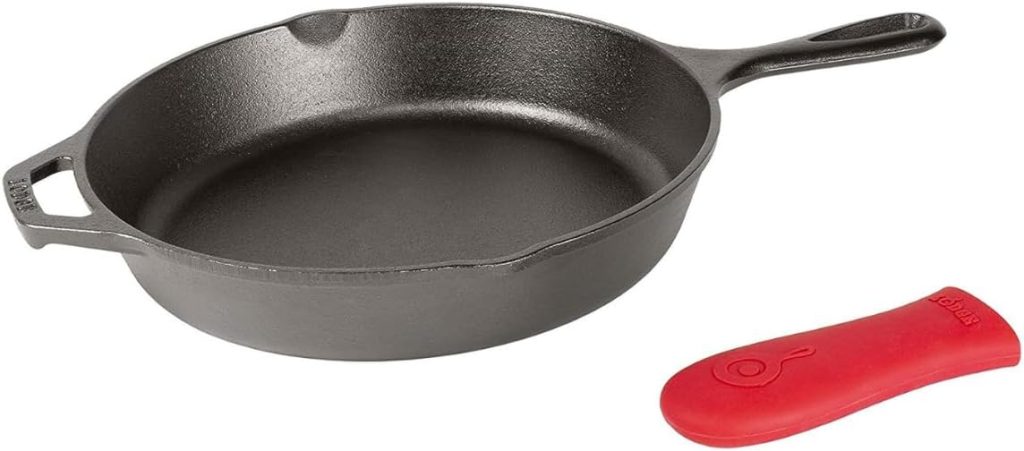
2. Lodge Pre-Seasoned Cast Iron Skillet with Assist Handle (12-inch)
Overview:
Lodge’s 12-inch cast iron skillet stands as an iconic piece of American cookware, manufactured continuously since 1896. This pre-seasoned workhorse excels on electric coil stoves due to cast iron’s exceptional heat retention and the pan’s perfectly flat bottom that maximizes contact with coil elements. Unlike many modern cookware materials, cast iron actually benefits from the slower heating characteristics of electric coils, allowing the metal to heat evenly throughout its mass.
The skillet comes pre-seasoned with Lodge’s proprietary oil formula, making it ready to use immediately while establishing a foundation for developing a natural non-stick surface over time. The dual-handle design—with a long handle and smaller assist handle—provides secure control when moving this substantial pan. At approximately 8 pounds empty, this isn’t delicate cookware, but rather a tool built to last generations with proper care.
Key Features:
- Premium cast iron construction provides unmatched heat retention and even temperature distribution across cooking surface
- Pre-seasoned finish delivers ready-to-use convenience with naturally developing non-stick properties through use
- Perfectly flat 12-inch cooking surface ensures complete contact with electric coil elements for maximum efficiency
- Dual handle design with long handle and assist handle enables safe maneuvering of this substantial pan
- Versatile cooking capability from stovetop to oven to campfire, withstanding temperatures exceeding 650°F
- Self-improving surface develops superior non-stick characteristics and flavor enhancement with proper use and maintenance
- Uncoated interior eliminates concerns about chemical coatings degrading or releasing harmful substances
- Made in USA with traditional manufacturing methods ensuring quality and supporting American manufacturing
Performance and User Experience:
Cast iron’s relationship with electric coil stoves represents a match made in culinary heaven. The slow, steady heat buildup of electric coils perfectly complements cast iron’s thermal properties. Users report that properly preheated Lodge skillets maintain remarkably consistent temperatures, even when searing multiple steaks consecutively or cooking large batches of food. This heat retention prevents the temperature drops that cause food to steam rather than sear.
The flat bottom design crucial for electric coil performance shows thoughtful engineering. Unlike some cast iron pieces with slightly uneven bottoms, Lodge skillets sit firmly on coil elements without rocking. This stability ensures safe handling and optimal heat transfer. Users note that the pan requires 5-7 minutes of preheating on medium-low settings to reach ideal cooking temperature, but once heated, performance surpasses most other cookware materials.
Cooking versatility impresses across applications. Cornbread develops a perfect golden crust that releases cleanly from a well-seasoned surface. Steaks achieve restaurant-quality sears with minimal oil. Fried chicken cooks evenly without requiring constant temperature monitoring. The skillet transitions seamlessly from stovetop to oven, making it ideal for recipes requiring both cooking methods.
The seasoning process, while requiring some learning, becomes second nature with practice. Users who follow simple care guidelines—cooking with oil regularly, avoiding harsh detergents, and drying thoroughly—report that their skillets become increasingly non-stick over months and years. Some users maintain Lodge skillets that have been in family use for decades, testament to cast iron’s longevity.
Pros:
✅ Unparalleled heat retention maintains consistent cooking temperature even when adding cold ingredients, superior for searing and frying
✅ Exceptional durability lasts multiple lifetimes with basic care, making it perhaps the most economical cookware investment possible
✅ Self-improving performance develops better non-stick properties and seasoning over time rather than degrading like coated pans
✅ Chemical-free cooking surface contains no synthetic coatings or potentially harmful materials, ideal for health-conscious cooks
✅ Outstanding value delivers professional-grade performance at remarkably affordable pricing compared to other quality cookware
✅ Extreme versatility performs on any heat source including electric coils, gas, induction, oven, grill, and campfire
✅ Natural iron fortification adds small amounts of dietary iron to food, particularly beneficial when cooking acidic foods
Cons:
❌ Substantial weight at approximately 8 pounds makes handling challenging for users with limited strength or wrist problems
❌ Requires seasoning maintenance and specific care procedures unfamiliar to those accustomed to modern non-stick convenience
❌ Slow temperature response takes several minutes to heat and cool, limiting suitability for recipes requiring rapid temperature changes
❌ Not dishwasher safe requires hand washing and immediate drying to prevent rust formation on the iron surface
❌ Initial food sticking may occur until seasoning fully develops, particularly with delicate items like eggs and fish
Ideal For:
This cast iron skillet suits dedicated home cooks who appreciate traditional cookware and are willing to invest minimal effort in maintenance for superior performance. It’s perfect for anyone who regularly sears steaks, cooks fried foods, or bakes cornbread and other dishes requiring stovetop-to-oven transitions. The exceptional value makes it ideal for budget-conscious shoppers who prioritize longevity over convenience. It’s also excellent for those concerned about chemical coatings in modern non-stick cookware.
The Lodge 12-inch cast iron skillet represents timeless cookware perfection specifically suited to electric coil stoves. Its substantial construction and flat bottom ensure optimal contact with coil elements, while cast iron’s thermal properties complement the slower heating characteristics of electric coils. The minimal investment required delivers performance that rivals cookware costing ten times more, and the potential multi-generational lifespan makes it perhaps the most economical kitchen tool available. For electric coil stove owners willing to embrace basic seasoning maintenance, this skillet delivers unmatched value and performance.
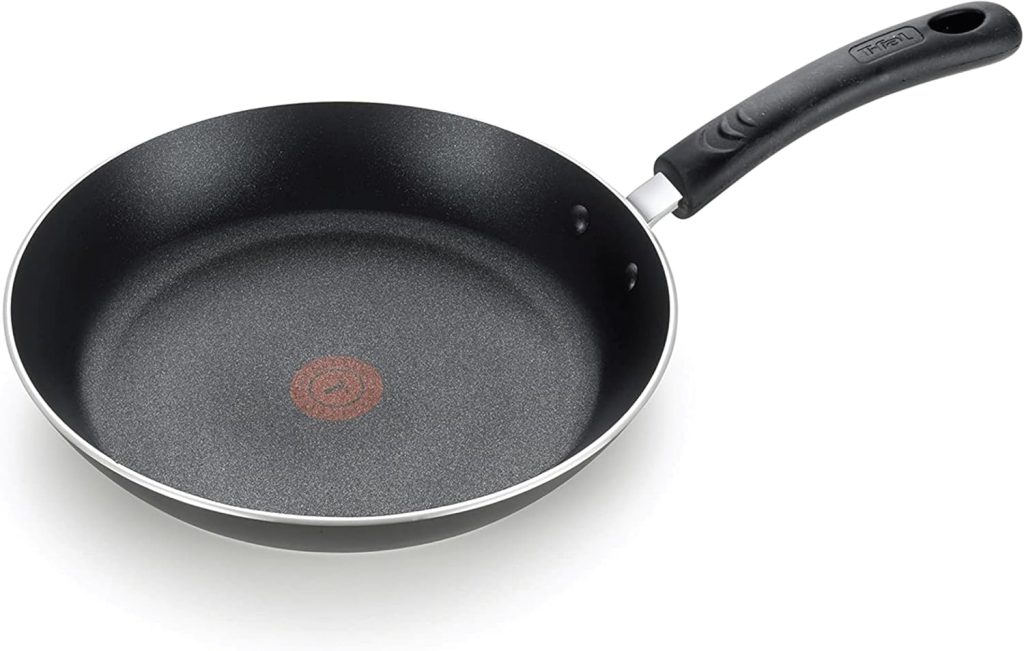
3. T-fal E93808 Professional Nonstick Fry Pan (12.5-inch)
Overview:
T-fal’s Professional series brings French cookware engineering to the affordable cookware segment with impressive results. This 12.5-inch fry pan features the company’s proprietary Thermo-Spot technology—a heat indicator that shows when the pan reaches optimal cooking temperature—addressing one of the primary challenges of electric coil cooking. The heavy-gauge aluminum construction provides excellent heat conduction while maintaining the light weight that makes daily cooking less fatiguing.
The interior features T-fal’s titanium-reinforced non-stick coating, delivering superior food release and durability compared to standard PTFE coatings. The exterior hard anodization creates a scratch-resistant surface that withstands the demands of daily use. At approximately 2.5 pounds, this pan offers easier handling than cast iron while providing better heating characteristics than thin, budget alternatives.
Key Features:
- Thermo-Spot heat indicator changes color when pan reaches optimal 375°F cooking temperature, eliminating guesswork
- Titanium-reinforced non-stick coating provides superior durability and food release compared to standard non-stick surfaces
- Heavy-gauge aluminum construction ensures even heat distribution across cooking surface without hot spots
- Hard anodized exterior creates scratch-resistant, durable surface that resists warping from repeated heating cycles
- Flat, thick base design maintains shape on electric coil elements and ensures maximum heat transfer efficiency
- Riveted silicone handle stays cool during stovetop cooking while providing secure, comfortable grip
- Oven-safe to 400°F enables finishing dishes in oven or keeping food warm until serving
- PFOA-free coating addresses health concerns about legacy non-stick chemical formulations
Performance and User Experience:
The Thermo-Spot technology proves genuinely useful on electric coil stoves where visual heat assessment proves difficult. The indicator pattern changes from visible to solid when the pan reaches 375°F—the ideal temperature for searing and browning most foods. This feature prevents the common mistake of cooking in insufficiently heated pans, which causes sticking even with non-stick coatings.
Users consistently report excellent non-stick performance with minimal oil required. Eggs slide freely across the surface, omelets fold without tearing, and delicate fish fillets release cleanly without breaking apart. The titanium reinforcement extends the coating’s lifespan significantly beyond budget non-stick pans, with many users reporting 3-5 years of daily use before noticing any performance degradation.
Heat distribution across the generous 12.5-inch cooking surface impresses given the affordable price point. The heavy-gauge construction prevents the thin spots and warping that plague cheaper aluminum cookware. Foods brown evenly without requiring constant repositioning, and temperature remains consistent across the entire pan surface—crucial for cooking large batches of pancakes or multiple pieces of chicken simultaneously.
The pan heats efficiently on electric coils, reaching cooking temperature in 2-3 minutes on medium heat settings. The aluminum construction responds to temperature adjustments more quickly than cast iron or thick stainless steel, providing better control for recipes requiring temperature changes. The lightweight design makes tossing vegetables or flipping foods less fatiguing than with heavier pans.
Pros:
✅ Thermo-Spot technology eliminates temperature guessing on electric coils, ensuring proper preheating for optimal cooking results
✅ Outstanding non-stick performance releases delicate foods effortlessly with minimal oil, simplifying cooking and cleanup
✅ Lightweight construction at 2.5 pounds makes daily handling comfortable while maintaining sufficient thickness for even heating
✅ Exceptional value delivers professional-grade performance and durability at budget-friendly pricing under $40
✅ Rapid heating on electric coils reaches cooking temperature quickly, saving time and energy compared to heavier materials
✅ Easy maintenance with simple hand washing, no seasoning required, and excellent stain resistance
✅ Large cooking surface accommodates family-sized meals with 12.5-inch diameter providing ample space
Cons:
❌ Not dishwasher safe despite manufacturer claims; dishwasher use significantly reduces coating lifespan and performance
❌ Lower oven temperature limit at 400°F restricts some cooking techniques compared to all-metal construction
❌ Eventual coating wear inevitable with non-stick surfaces, typically requiring replacement after 3-5 years of regular use
❌ Not suitable for metal utensils requires silicone, wood, or plastic tools to prevent scratching the non-stick surface
❌ Cannot achieve extremely high heat for certain techniques like wok-style cooking or blackening without risking coating damage
Ideal For:
This fry pan excels for everyday home cooks who prioritize convenience and ease of use. It’s perfect for those cooking frequently with delicate ingredients like eggs, fish, and crepes that challenge other cookware types. The generous size suits families or batch cooking, while the lightweight construction appeals to users with arthritis or limited upper body strength. Budget-conscious shoppers seeking reliable performance without premium pricing will appreciate the value proposition.
The T-fal Professional represents the best of modern non-stick engineering at an accessible price point. The Thermo-Spot technology addresses a genuine pain point for electric coil stove users, while the titanium-reinforced coating delivers durability that justifies the investment. While not a lifetime purchase like cast iron, this pan provides 3-5 years of excellent service before requiring replacement—making it economically sensible for those who value non-stick convenience. For electric coil stove owners seeking effortless food release and easy cleanup without complicated maintenance, this fry pan hits the sweet spot of performance and value.
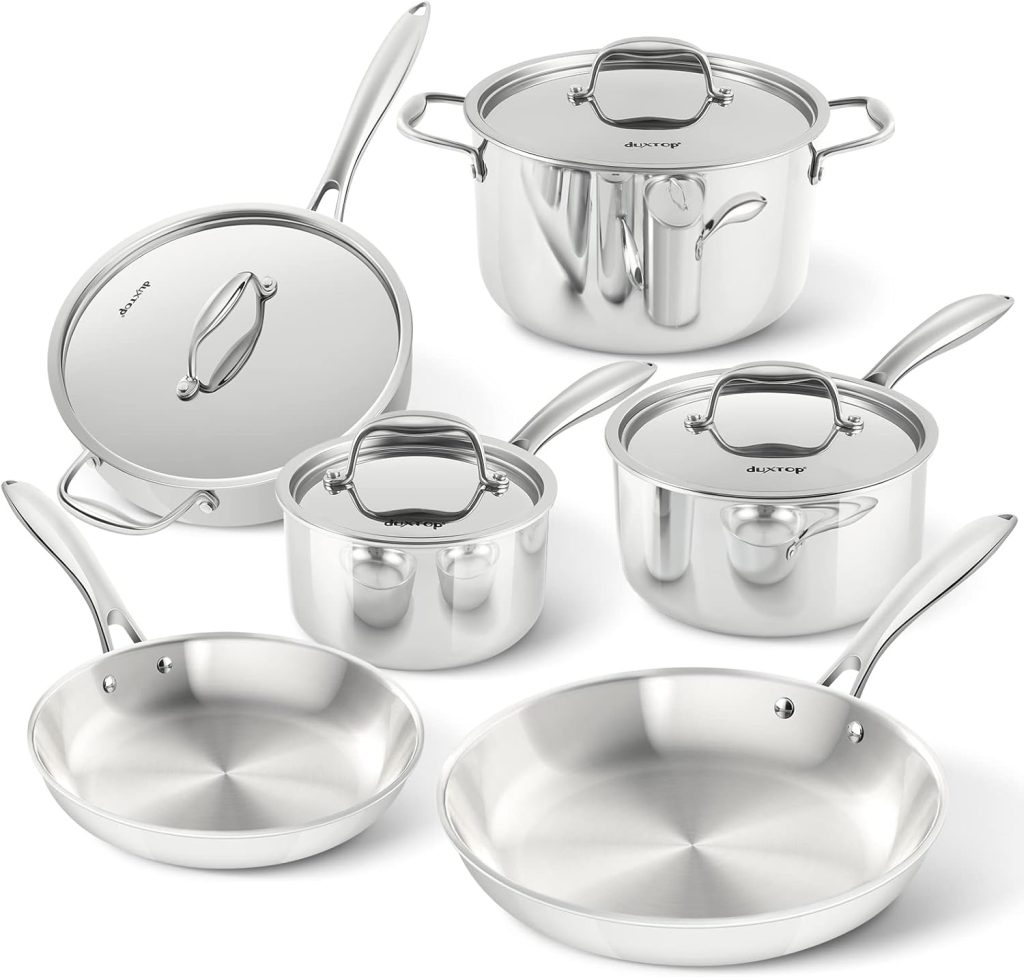
4. Duxtop Whole-Clad Tri-Ply Stainless Steel Cookware Set (10-Piece)
Overview:
Duxtop’s Whole-Clad collection demonstrates that premium tri-ply construction doesn’t require premium pricing. This 10-piece set employs manufacturing techniques typically reserved for luxury brands—an aluminum core completely encapsulated by stainless steel layers extending from base through sidewalls to rim. The result is cookware that heats evenly across entire surfaces, eliminating the hot bottom centers that plague disk-base alternatives on electric coils.
The set includes versatile pieces carefully selected to cover essential cooking tasks: 8-inch and 10-inch frying pans, 1.5-quart and 3-quart saucepans with lids, 3-quart sauté pan with lid, and 8-quart stockpot with lid. The impact-bonded bases maintain perfect flatness even after years of thermal cycling, while the ergonomic handles provide comfortable control without heat transfer during extended cooking.
Key Features:
- Complete tri-ply construction with aluminum core sandwiched between stainless steel throughout entire pan, not just base
- Impact-bonded flat base ensures optimal contact with electric coil elements and prevents warping across lifespan
- Professional-grade 18/10 stainless steel provides durability, corrosion resistance, and non-reactive cooking surface
- Encapsulated aluminum core extends through sidewalls for even heat distribution eliminating sidewall hot spots
- Measurement markings inside saucepans and stockpot enable precise liquid measuring without additional tools
- Flared rims facilitate drip-free pouring for cleaner, more precise transfers to serving dishes or storage containers
- Oven and broiler safe to 550°F with metal lids enables diverse cooking techniques and finishing methods
- Compatible with all cooktops including induction, gas, electric coil, and ceramic, making it future-proof investment
Performance and User Experience:
The comprehensive tri-ply construction delivers heating characteristics that rival brands costing three times more. Users cooking on electric coils report remarkably even heating with no discernible hot spots during testing with water boiling, tomato sauce simmering, and protein searing. The aluminum core extends heat up the sidewalls, meaning food at pan edges cooks at nearly identical rates as food in the center—a dramatic improvement over disk-base designs.
The impact-bonded base proves essential for long-term electric coil compatibility. Even after hundreds of heating cycles, these pans maintain their flat geometry. Users report that skillets sit firmly on coil elements without the wobbling that develops in thinner cookware. This stability ensures consistent heat transfer and safe handling when moving pans containing hot contents.
Cooking performance across different applications consistently impresses. The saucepans excel at delicate tasks requiring gentle, even heat—custards set without curdling, rice cooks without burning bottom grains, and sauces reduce uniformly without excessive stirring. The frying pans, once properly preheated, develop excellent fond (brown bits) when searing proteins, and the stainless surface makes deglazing easy for flavorful pan sauces.
The polished stainless exterior maintains its appearance well under electric coil use, though some rainbow discoloration may develop with time—a normal characteristic of quality stainless steel subjected to high heat. The interior cooking surface’s mirror finish makes visual monitoring easy and simplifies cleaning, though some foods will stick if the pan isn’t properly preheated or sufficient fat isn’t used.
Pros:
✅ Exceptional heat distribution throughout entire pan including sidewalls eliminates hot spots common with electric coil cooking
✅ Outstanding durability with construction quality matching luxury brands at fraction of the price point
✅ Versatile 10-piece configuration covers essential cooking needs without redundant pieces or unnecessary items
✅ Measurement markings add convenience for recipes requiring specific liquid volumes, eliminating extra measuring steps
✅ Excellent value proposition delivers premium tri-ply performance at mid-range pricing under $200
✅ Maintenance simplicity with dishwasher-safe construction and stain resistance, though hand washing extends appearance
✅ Professional appearance with polished finish looks impressive for serving directly from stovetop to table
Cons:
❌ Requires cooking technique adjustment for users accustomed to non-stick; proper preheating and fat usage essential for preventing sticking
❌ Handles become warm with extended high-heat cooking, occasionally requiring pot holders for safe handling
❌ Moderate weight means largest pieces feel substantial, potentially challenging for users with limited strength
❌ Interior shows use patterns over time with some discoloration normal, though this doesn’t affect performance or safety
❌ Learning curve for optimal use requires understanding stainless steel’s characteristics and proper temperature management
Ideal For:
This cookware set suits serious home cooks seeking professional-grade performance without luxury pricing. It’s ideal for those transitioning from non-stick cookware who want the durability and versatility of stainless steel specifically optimized for electric coil stoves. The comprehensive piece selection makes it excellent for completely outfitting a new kitchen or upgrading an entire cookware collection at once. Cooks who appreciate the benefits of clad construction—even heating, precise control, and durability—will find exceptional value here.
Duxtop’s Whole-Clad set challenges the notion that quality tri-ply cookware requires luxury pricing. The complete encapsulation of aluminum core throughout pan walls, combined with impact-bonded flat bases, addresses the specific challenges of electric coil cooking. Performance rivals sets costing $400-600, making this an exceptional value for anyone seeking professional-grade cookware. The learning curve required for optimal stainless steel cooking is offset by the superior control, durability, and versatility these pans provide. For electric coil stove owners ready to invest in cookware that will serve reliably for decades, this set represents one of the best values available.
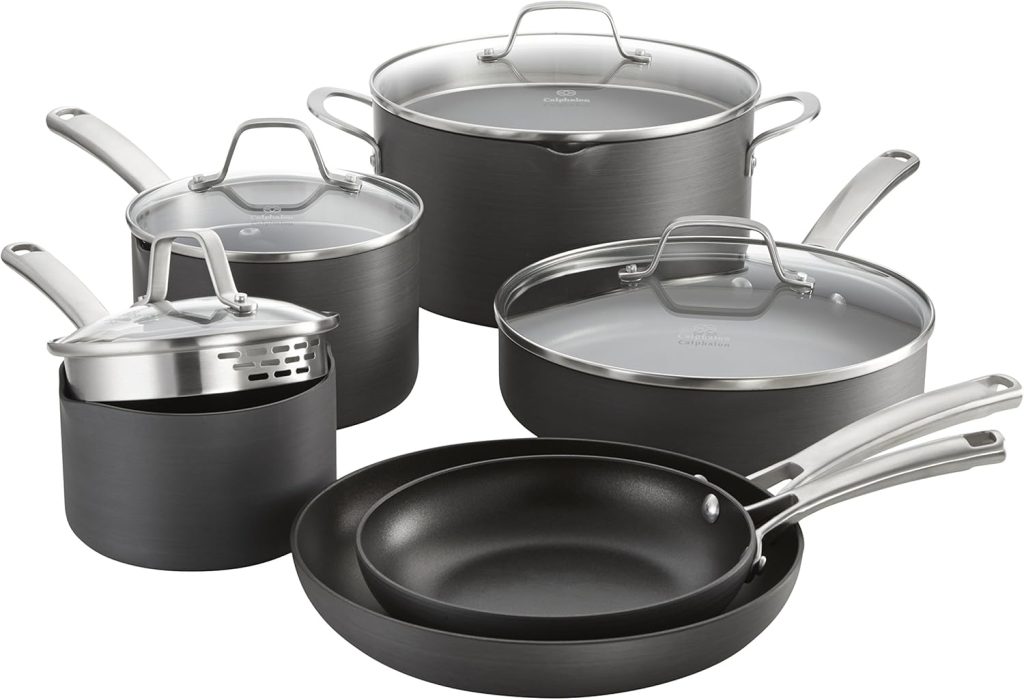
5. Calphalon Classic Nonstick Cookware Set (10-Piece)
Overview:
Calphalon’s Classic line brings over 50 years of American cookware expertise to the affordable home cooking segment. This 10-piece set features dual-layer non-stick coating on heavy-gauge aluminum construction, creating an optimal balance between easy food release and durability. The hard-anodized exterior provides scratch resistance and even heat distribution specifically suited to the heating characteristics of electric coil stoves.
The collection includes two frying pans (8-inch and 10-inch), two saucepans with lids (1.5-quart and 2.5-quart), a 3-quart sauté pan with lid, and an 8-quart stockpot with lid—a thoughtfully curated selection covering daily cooking needs. The tempered glass lids allow visual monitoring without releasing heat, while the stay-cool handles provide safe handling during cooking.
Key Features:
- Dual-layer non-stick coating provides reliable food release and simplified cleanup while resisting wear and scratching
- Heavy-gauge aluminum construction ensures even heating across cooking surface without hot spots or warping
- Hard-anodized exterior creates durable, scratch-resistant surface that withstands daily use and maintains appearance
- Flat, thick base design optimized for electric coil stoves ensures maximum contact and efficient heat transfer
- Stay-cool handles remain safe to touch during stovetop cooking with comfortable, ergonomic grip design
- Tempered glass lids enable visual monitoring of cooking progress without lifting and releasing heat and moisture
- Oven-safe to 450°F including lids allows finishing dishes in oven or keeping foods warm until serving
- Dishwasher-safe construction for convenient cleanup, though hand washing extends non-stick coating lifespan
Performance and User Experience:
The heavy-gauge aluminum construction performs admirably on electric coil elements, heating evenly and maintaining consistent temperatures across cooking surfaces. Users report that these pans reach cooking temperature in approximately 2-3 minutes on medium heat settings—faster than stainless steel or cast iron while providing more even heating than thin budget alternatives.
The dual-layer non-stick coating delivers reliable food release with minimal oil required. Eggs slide effortlessly, pancakes flip cleanly, and delicate fish fillets release without breaking. The coating’s durability impresses users, with many reporting 4-6 years of regular use before noticing performance degradation—significantly longer than single-layer coatings on cheaper cookware.
Heat distribution across the cooking surfaces proves consistently even, eliminating the hot spots that cause burning and uneven cooking. The thick aluminum base prevents warping even after years of thermal cycling between room temperature and cooking heat. Users cooking on electric coils appreciate that these pans sit firmly on coil elements without wobbling or rocking.
The stay-cool handle design functions as promised, remaining comfortable to touch even after 20+ minutes of stovetop cooking. The tempered glass lids prove genuinely useful for recipes requiring covered cooking, allowing visual monitoring without temperature loss. The lids fit securely, creating good seals for simmering and steaming applications.
Pros:
✅ Superior non-stick performance releases food effortlessly with minimal oil, simplifying cooking and cleanup routines
✅ Excellent heat distribution on electric coils eliminates hot spots and provides consistent cooking temperatures across entire surface
✅ Durable dual-layer coating significantly outlasts budget non-stick cookware, typically providing 4-6 years of reliable service
✅ Comprehensive piece selection covers all essential cooking tasks without redundant items or unnecessary filler pieces
✅ Strong value proposition delivers branded quality and performance at mid-range pricing competitive with generic alternatives
✅ Convenient dishwasher compatibility simplifies cleanup, making daily cooking less burdensome for busy households
✅ Tempered glass lids add functionality by enabling visual monitoring without heat loss during covered cooking
Cons:
❌ Moderate oven temperature limit at 450°F restricts some cooking techniques requiring higher temperatures
❌ Non-stick coating lifespan is finite despite durability; eventual replacement necessary after 4-6 years regardless of care
❌ Requires non-metal utensils to prevent scratching coating; metal spatulas and spoons will damage surface quickly
❌ Hand washing recommended despite dishwasher-safe claims; dishwasher detergents accelerate coating degradation significantly
❌ Interior discoloration develops over time with normal use, particularly with high-heat cooking, though performance remains unaffected
Ideal For:
This cookware set perfectly suits busy households prioritizing convenience and easy cleanup. It’s ideal for families cooking daily who want reliable non-stick performance without constant maintenance requirements. First-time home cooks will appreciate the forgiving nature of the non-stick surface, while experienced cooks will value the even heating and quality construction. Anyone seeking branded quality at competitive mid-range pricing—typically $150-200—will find strong value here.
Calphalon’s Classic set represents the middle ground between budget non-stick cookware and premium alternatives, delivering genuine quality at reasonable pricing. The heavy-gauge construction and flat bases address the specific requirements of electric coil cooking, while the dual-layer coating provides durability that justifies the investment. While not a lifetime purchase, the 4-6 year typical lifespan before replacement becomes necessary offers good value considering the daily convenience and consistently reliable performance. For electric coil stove users seeking hassle-free cooking with minimal cleanup, this set hits an ideal balance of quality and affordability.
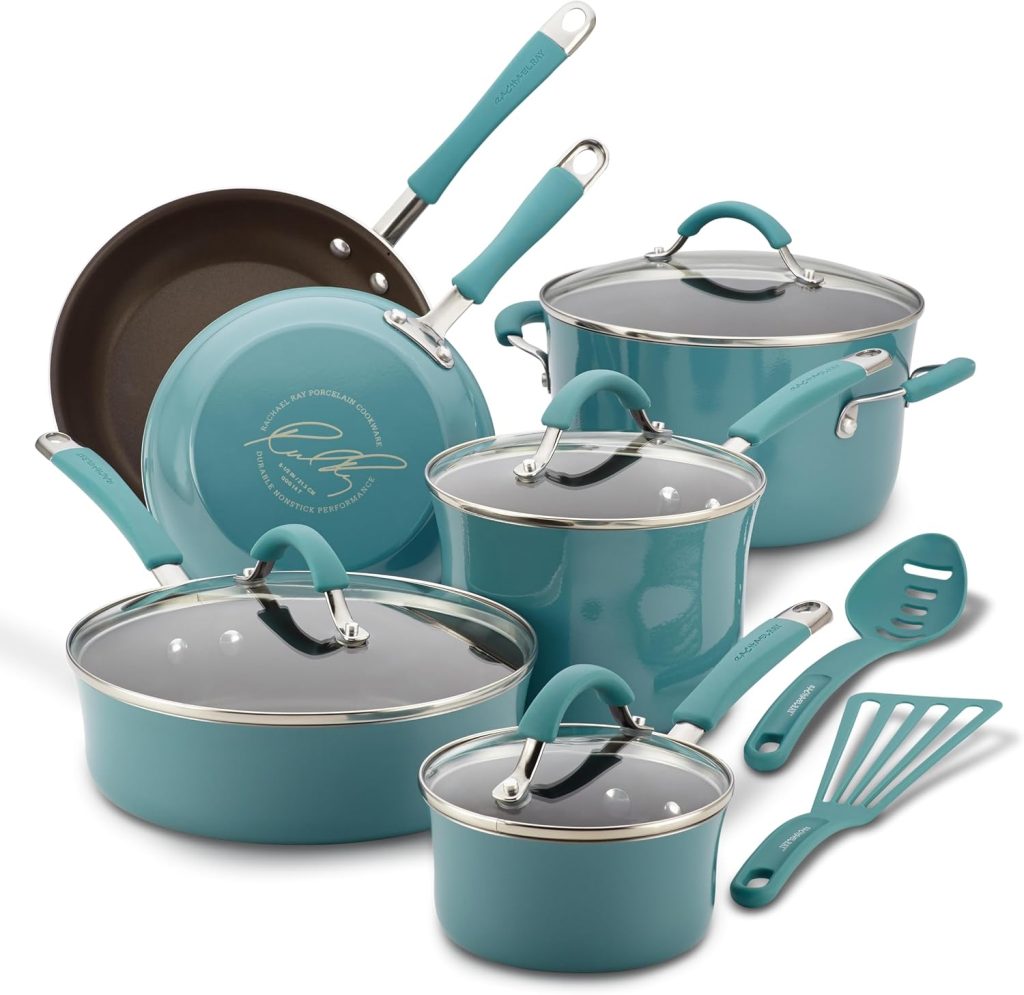
6. Rachael Ray Cucina Hard Porcelain Enamel Nonstick Cookware Set (12-Piece)
Overview:
Rachael Ray’s Cucina line brings Italian-inspired rustic styling to functional, affordable cookware. This 12-piece set combines hard-anodized aluminum construction with durable non-stick coating and distinctive espresso-colored exterior with pumpkin orange handles—creating cookware that transitions seamlessly from stove to table. The porcelain enamel exterior provides scratch resistance while adding visual appeal that complements modern kitchen décor.
Beyond aesthetics, these pans deliver genuine performance optimized for home cooking on electric coil stoves. The aluminum construction ensures even heating, while the thick bases prevent warping and maximize contact with heating elements. The set includes two skillets (9.25-inch and 11-inch), two covered saucepans (1-quart and 3-quart), covered sauté pan (3-quart), covered stockpot (6-quart), and three cooking tools—a comprehensive collection for everyday cooking needs.
Key Features:
- Hard-anodized aluminum construction provides excellent heat conduction with durability surpassing standard aluminum
- Enhanced non-stick coating delivers reliable food release and easy cleanup while resisting scratches and wear
- Porcelain enamel exterior creates attractive, scratch-resistant surface that maintains appearance through daily use
- Distinctive rustic styling with espresso exterior and pumpkin orange silicone handles adds personality to kitchen
- Thick, flat bases optimized for electric coil contact ensure even heating and prevent warping across lifespan
- Rubberized grip handles stay cool during stovetop cooking while providing comfortable, secure control
- Shatter-resistant glass lids enable visual monitoring with stainless steel rims adding durability
- Oven-safe to 400°F allows finishing dishes in oven or transitioning from stovetop to oven seamlessly
Performance and User Experience:
The hard-anodized construction performs admirably on electric coil elements, heating evenly across cooking surfaces without the hot spots common to thinner cookware. Users report consistent cooking temperatures with good heat retention—once heated, these pans maintain temperature well when food is added, important for proper searing and sautéing.
The non-stick coating proves durable and effective, easily releasing eggs, pancakes, and other sticky foods with minimal oil. Users cooking delicate fish consistently report clean releases without tearing or breaking. The coating withstands metal utensil contact better than budget alternatives, though silicone or wood tools still extend lifespan.
Heat distribution testing by users shows even browning across entire cooking surfaces. Pancakes cook uniformly without darker centers or pale edges. Sautéed vegetables brown evenly without requiring constant stirring and repositioning. The thick bases maintain their flat geometry even after extended use, ensuring consistent contact with electric coil elements.
The aesthetic appeal proves more than superficial—the porcelain enamel exterior cleans easily and resists the discoloration that affects bare aluminum or stainless steel. Many users appreciate serving directly from these attractive pans, eliminating transfer to serving dishes. The glass lids fit securely and provide clear visibility for monitoring cooking progress without lifting.
Pros:
✅ Distinctive aesthetic appeal with rustic styling that looks attractive enough for stovetop-to-table serving
✅ Even heat distribution on electric coils eliminates hot spots and provides consistent cooking temperatures across surfaces
✅ Durable non-stick performance releases food easily while resisting scratches better than budget alternatives, typically lasting 3-5 years
✅ Comprehensive 12-piece set includes cooking tools and covers all essential cooking needs for complete kitchen outfitting
✅ Excellent value delivers branded quality, attractive design, and reliable performance at budget-friendly pricing under $150
✅ Easy maintenance with simple hand washing and stain-resistant exterior that maintains appearance through regular use
✅ Comfortable handles with rubberized grips stay cool and provide secure control even when cooking with substantial food volumes
Cons:
❌ Lower oven temperature rating at 400°F limits some cooking techniques requiring higher heat than competing sets
❌ Handles not removable preventing higher-temperature oven use and limiting storage compactness in smaller kitchens
❌ Non-stick coating lifespan is finite despite durability; replacement necessary after several years regardless of care quality
❌ Hand washing strongly recommended despite manufacturer dishwasher-safe claims; machine washing accelerates coating degradation
❌ Larger pieces feel lightweight compared to premium cookware, which some experienced cooks perceive as less substantial
Ideal For:
This cookware set excels for home cooks who value aesthetics alongside functionality and want cookware attractive enough for casual entertaining. It’s perfect for apartment dwellers and first-home buyers seeking complete kitchen outfitting at accessible pricing. The non-stick convenience appeals to busy families and anyone who prioritizes easy cleanup. Fans of Rachael Ray’s approachable cooking philosophy will appreciate the combination of style, function, and value her brand delivers.
Rachael Ray’s Cucina collection proves that affordable cookware doesn’t require sacrificing style or quality. The hard-anodized construction and flat bases perform reliably on electric coil stoves, while the attractive porcelain enamel exterior and distinctive color scheme add personality to kitchens. The non-stick coating delivers the convenience modern cooks expect, and the comprehensive piece selection eliminates the need for supplemental purchases. While not designed for professional durability, this set provides 3-5 years of reliable service at a price point that makes eventual replacement economically sensible. For electric coil stove users seeking attractive, functional cookware without premium pricing, this set represents exceptional value.
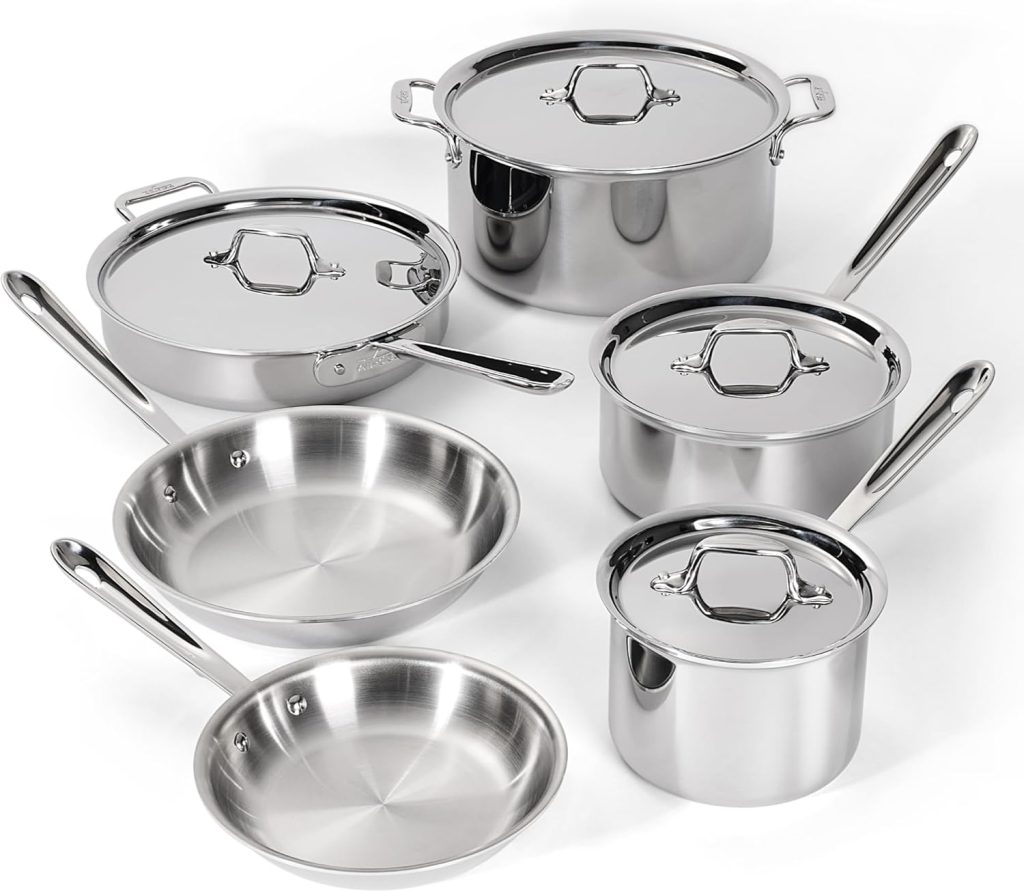
7. All-Clad D3 Stainless Steel Cookware Set (10-Piece)
Overview:
All-Clad represents the gold standard in American-made cookware, with their D3 collection showcasing the tri-ply construction that revolutionized professional and home cooking. This 10-piece set features the company’s signature three-bonded layers—stainless steel exterior, aluminum core, and stainless steel interior—extending from base through rim for unparalleled heat distribution. While positioned at premium pricing, this cookware delivers performance and longevity that justify the investment for serious cooks.
The set includes 8-inch and 10-inch frying pans, 2-quart and 3-quart saucepans with lids, 3-quart sauté pan with lid, and 8-quart stockpot with lid. Every piece features All-Clad’s patented starburst finish on cooking surfaces, which provides superior stick resistance compared to typical polished stainless steel. The signature handle design—stainless steel with a slight curve—provides comfortable control while remaining oven-safe to any temperature.
Key Features:
- Premium tri-ply construction with aluminum core bonded between stainless steel layers throughout entire pan
- Made in USA with rigorous quality control ensuring consistent performance and supporting American manufacturing
- Starburst finish interior provides better stick resistance than standard polished stainless while facilitating fond development
- Perfectly flat bases maintain geometry across decades of use, ensuring optimal electric coil contact indefinitely
- Oven and broiler safe to any temperature including lids, enabling unlimited cooking technique possibilities
- Dishwasher safe though hand washing recommended for maintaining pristine appearance over decades
- Lifetime warranty covers defects and demonstrates manufacturer confidence in product longevity
- Compatible with all cooktops including induction, making it future-proof for kitchen appliance changes
Performance and User Experience:
The heating characteristics on electric coil stoves represent cookware engineering at its finest. The aluminum core distributes heat with remarkable evenness—infrared temperature testing shows variance of less than 10°F across entire cooking surfaces. This uniformity eliminates the hot spots that plague lesser cookware, ensuring even browning, consistent simmering, and predictable cooking times.
The substantial construction—noticeably heavier than budget alternatives—provides thermal mass that stabilizes cooking temperatures. When cold food is added to preheated pans, temperature recovery occurs quickly, maintaining the heat necessary for proper searing and sautéing. Users consistently report that proteins develop restaurant-quality crusts while remaining properly cooked internally.
The starburst finish interior proves genuinely functional beyond aesthetics. Foods release more easily than from polished stainless steel, though proper preheating and adequate fat remain necessary. The textured surface excels at developing fond (brown bits) when searing, creating the foundation for rich pan sauces that elevate everyday meals to special occasions.
Durability exceeds all expectations—professional chefs report using All-Clad daily for 15-20 years without performance degradation. The flat bases maintain perfect geometry even after thousands of heating cycles. The tri-ply construction prevents warping completely, and the stainless steel surfaces resist scratching, staining, and corrosion even under demanding use.
Pros:
✅ Unmatched heat distribution with less than 10°F variance across cooking surface ensures perfectly even results consistently
✅ Exceptional build quality with American manufacturing and rigorous quality control delivering flawless construction
✅ Lifetime durability easily provides 20+ years of daily use without warping, degradation, or performance loss
✅ Superior cooking control with precise temperature response enabling professional-level technique execution at home
✅ Unlimited oven capability withstands any temperature including broiler, expanding technique possibilities dramatically
✅ Investment value with per-use cost becoming negligible across decades of reliable service
✅ Lifetime warranty protects investment and provides peace of mind about long-term performance
Cons:
❌ Premium pricing at $700-900 represents significant upfront investment that may exceed many budgets
❌ Substantial weight makes larger pieces heavy, potentially challenging for users with limited strength
❌ Learning curve required for optimal stainless steel cooking; improper technique leads to frustrating sticking issues
❌ Handles become hot with extended high-heat cooking, requiring pot holders for safe handling
❌ Shows wear patterns over time with interior discoloration normal, though performance remains completely unaffected
Ideal For:
All-Clad D3 suits serious home cooks and culinary enthusiasts who view cookware as a long-term investment rather than consumable purchase. It’s ideal for those cooking regularly who want professional-grade performance and appreciate superior craftsmanship. The set perfectly matches electric coil stoves with flat bases and heating characteristics optimized for direct contact heat transfer. Anyone planning to use cookware for decades rather than years will find the premium pricing justified by longevity and performance.
All-Clad D3 represents the pinnacle of tri-ply cookware engineering, with performance that justifies premium pricing for committed home cooks. The exceptional heat distribution addresses every challenge of electric coil cooking, while the bombproof construction ensures these pans will outlast cheaper replacements many times over. The upfront investment—while substantial—amortizes to reasonable per-year cost across the 20+ year typical lifespan. For electric coil stove users who cook frequently, appreciate quality tools, and want cookware that will serve reliably for decades, All-Clad D3 delivers unmatched value despite its premium price point.
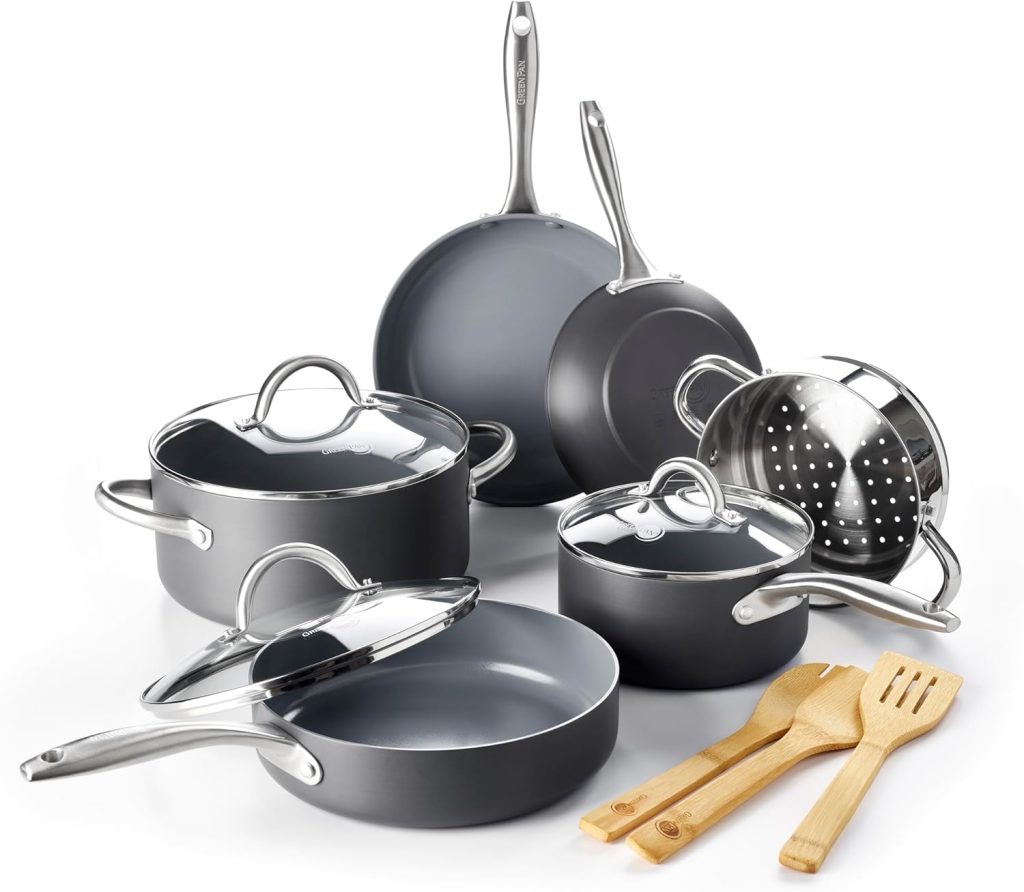
8. GreenPan Lima Healthy Ceramic Nonstick Cookware Set (12-Piece)
Overview:
GreenPan’s Lima collection brings ceramic non-stick technology to health-conscious cooks seeking alternatives to traditional PTFE coatings. This 12-piece set features Thermolon ceramic coating—derived from sand rather than synthetic polymers—providing food release without the concerns some consumers have about conventional non-stick surfaces. The hard-anodized aluminum construction ensures durability and even heating specifically optimized for home cooking on electric coil stoves.
The set includes two frying pans (8-inch and 9.5-inch), two saucepans with lids (1-quart and 2-quart), covered sauté pan (3-quart), covered casserole (5-quart), and five cooking tools. The bakelite handles remain cool during stovetop use, while the tempered glass lids enable visual monitoring. The sage green exterior creates distinctive aesthetic appeal while the ceramic interior provides chemical-free cooking surface.
Key Features:
- Thermolon ceramic coating made from sand-derived materials provides PTFE-free, PFOA-free, PFAS-free cooking surface
- Hard-anodized aluminum construction delivers excellent heat conduction with enhanced durability and scratch resistance
- Diamond-reinforced ceramic increases coating durability and abrasion resistance compared to standard ceramic coatings
- Toxin-free manufacturing produces no toxic fumes during production, addressing environmental and health concerns
- Flat, reinforced bases prevent warping and ensure optimal contact with electric coil elements across lifespan
- Stay-cool bakelite handles remain safe to touch during extended stovetop cooking with comfortable ergonomic grip
- Oven-safe to 600°F including glass lids enables diverse cooking techniques and high-temperature applications
- Dishwasher-safe construction for convenient cleanup, though hand washing extends coating lifespan significantly
Performance and User Experience:
The ceramic coating performs differently than traditional PTFE non-stick, requiring some technique adjustment. When used properly—preheated on medium heat with small amount of oil—food releases reliably. Eggs slide cleanly, pancakes flip without sticking, and delicate fish fillets maintain integrity. However, users report that cooking on high heat or without oil leads to sticking issues not experienced with PTFE coatings.
The hard-anodized aluminum construction heats evenly on electric coils, reaching cooking temperature in 2-3 minutes on medium settings. The reinforced bases maintain flat geometry well, sitting firmly on coil elements without wobbling. Heat distribution across cooking surfaces proves consistent, eliminating hot spots that cause uneven cooking.
The high oven temperature rating—600°F including glass lids—exceeds most competing cookware, enabling techniques like pizza making or bread baking directly in skillets. Users appreciate transitioning dishes from stovetop to oven without equipment changes, particularly for recipes requiring both cooking methods.
The ceramic coating’s longevity varies significantly based on care and usage. Users who follow manufacturer guidelines—avoiding high heat, using adequate oil, and hand washing—report 2-4 years of good performance. Those using dishwashers or cooking on high heat see degradation in 1-2 years. The coating doesn’t peel or flake like damaged PTFE, but gradually loses non-stick properties, requiring more oil for food release.
Pros:
✅ Chemical-free cooking surface with PTFE-free, PFOA-free, PFAS-free ceramic coating addresses health concerns about traditional non-stick
✅ Environmentally responsible manufacturing produces no toxic fumes and uses sand-derived materials rather than synthetic polymers
✅ Exceptional oven capability at 600°F enables high-temperature cooking techniques unavailable with most non-stick cookware
✅ Even heating on electric coils with hard-anodized construction providing consistent temperature across cooking surfaces
✅ Attractive aesthetic with sage green exterior and natural-toned interior creating distinctive, modern appearance
✅ Comprehensive set includes cooking tools and covers all essential kitchen needs at mid-range pricing
✅ Comfortable handles stay cool during cooking and provide secure grip even when moving heavy, food-filled pans
Cons:
❌ Shorter coating lifespan than PTFE alternatives, typically requiring replacement after 2-4 years even with careful use
❌ Requires oil for optimal performance unlike high-quality PTFE coatings that release food in completely dry pans
❌ Sensitive to high heat with coating degradation accelerating when cooking temperatures exceed medium settings
❌ Hand washing strongly recommended despite dishwasher-safe rating; machine washing significantly shortens coating life
❌ Not suitable for metal utensils despite marketing claims; metal tools scratch ceramic coating causing premature failure
Ideal For:
This cookware set perfectly suits health-conscious cooks concerned about chemicals in traditional non-stick coatings. It’s ideal for those cooking primarily at medium temperatures who can commit to proper care protocols. The comprehensive piece selection works well for first-time homeowners or anyone replacing an entire cookware collection. Users with gas or electric coil stoves will appreciate the even heating, while those avoiding all PTFE products will value the ceramic alternative despite its shorter lifespan.
GreenPan’s Lima collection delivers on its promise of chemical-free non-stick cooking with ceramic coating that works well when used within its limitations. The hard-anodized construction and flat bases perform reliably on electric coil stoves, while the high oven temperature rating expands cooking possibilities. The coating’s shorter lifespan compared to premium PTFE alternatives represents the primary tradeoff for chemical-free peace of mind. For electric coil stove users prioritizing health and environmental concerns over maximum longevity, this set provides a viable PTFE-free option at reasonable mid-range pricing.
9. Tramontina Tri-Ply Clad Stainless Steel Cookware Set (12-Piece)
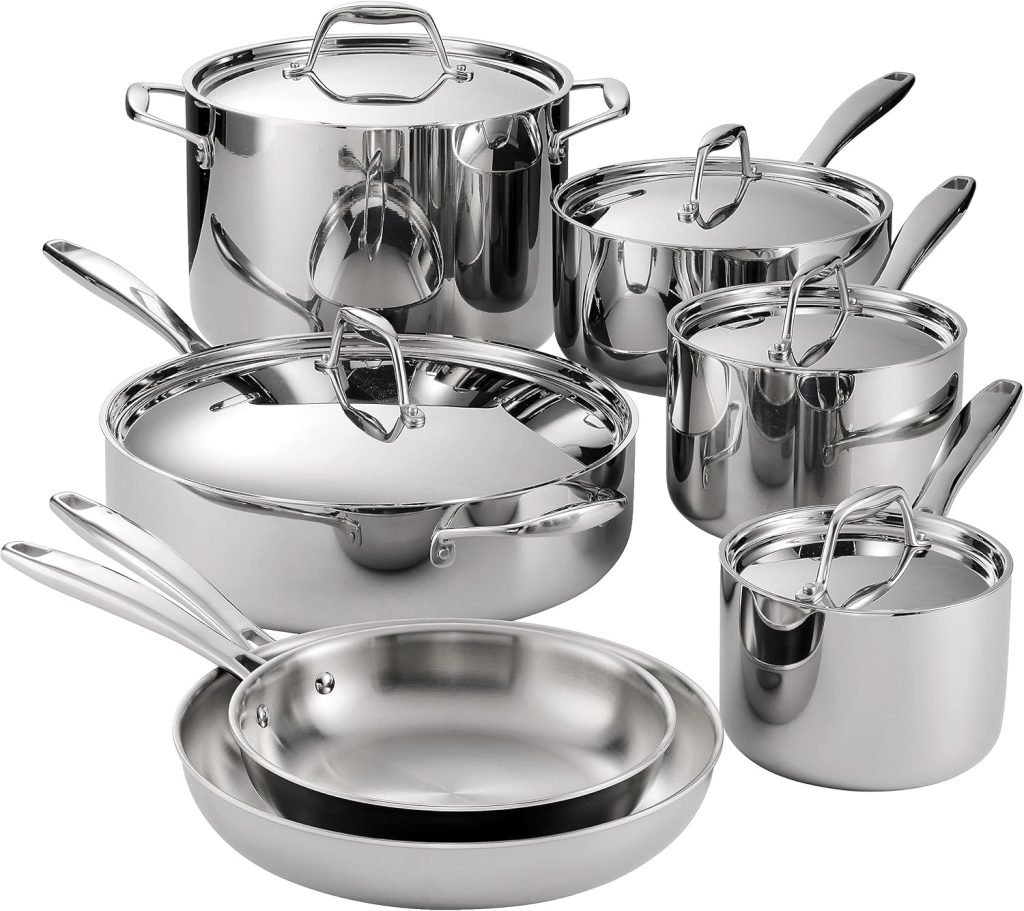
Overview:
Tramontina’s Tri-Ply Clad collection challenges the notion that premium clad cookware requires luxury pricing. This Brazilian manufacturer employs manufacturing techniques and quality standards comparable to brands costing three times more, delivering genuine tri-ply construction throughout entire pans at remarkably accessible prices. The 12-piece set includes comprehensive piece selection covering all essential cooking needs while maintaining the flat bases and even heating critical for electric coil stove compatibility.
The set comprises 8-inch and 10-inch frying pans, 1.5-quart, 2.5-quart, and 5-quart covered saucepans, 3-quart covered sauté pan, and 8-quart covered stockpot. Every piece features 18/10 stainless steel interior for durability and non-reactivity, aluminum core for heat distribution, and magnetic stainless steel exterior for universal cooktop compatibility. The cast stainless steel handles provide comfortable, secure grip while remaining oven-safe to 500°F.
Key Features:
- Complete tri-ply construction with aluminum core extending from base through sidewalls, not just bottom disk
- 18/10 stainless steel interior provides durable, non-reactive cooking surface that won’t alter food flavors
- Precision-fit lids create tight seals for moisture retention during covered cooking and simmering
- Flat, impact-bonded bases maintain perfect geometry indefinitely, ensuring optimal electric coil contact across lifespan
- Oven and broiler safe to 500°F including lids enables stovetop-to-oven cooking techniques
- Dishwasher-safe construction simplifies cleanup, though hand washing preserves appearance longer
- Lifetime warranty demonstrates manufacturer confidence and protects against material and manufacturing defects
- NSF certified meets commercial foodservice standards for safety and sanitation
Performance and User Experience:
The heating characteristics rival premium brands costing significantly more. The aluminum core distributes heat evenly across entire cooking surfaces—base and sidewalls—eliminating hot spots completely. Users cooking on electric coils report consistent results across all pieces, with even browning, uniform simmering, and predictable cooking times.
The substantial construction provides thermal mass that stabilizes cooking temperatures excellently. Once properly preheated, these pans maintain heat effectively when cold ingredients are added—essential for proper searing and preventing steaming instead of browning. The thick bases respond reasonably quickly to temperature adjustments while preventing the sudden temperature spikes that cause burning.
Cooking performance across different techniques consistently impresses users. The saucepans excel at delicate operations—melting chocolate without seizing, making custards without curdling, and reducing sauces without scorching. The skillets develop excellent fond when searing proteins, creating the foundation for restaurant-quality pan sauces. The stockpot’s even heating reduces stirring frequency required for soups and stews.
The flat bottom geometry proves exceptional—even after years of daily use and countless heating cycles, these pans maintain their shape perfectly. Users report zero wobbling on electric coil elements, ensuring consistent heat transfer and safe handling. The precision-fit lids seal securely, trapping moisture and heat effectively during covered cooking.
Pros:
✅ Exceptional value delivers tri-ply performance matching $600+ sets at prices typically under $250
✅ Outstanding heat distribution throughout entire pan eliminates hot spots and ensures even cooking results
✅ Professional-grade durability withstands decades of daily use without warping or performance degradation
✅ Comprehensive 12-piece selection covers all essential cooking needs without redundant or unnecessary items
✅ NSF certification meets commercial foodservice standards, validating quality and food safety
✅ Lifetime warranty protects investment and demonstrates manufacturer confidence in construction quality
✅ Compatible with all cooktops including induction, making it future-proof for appliance changes
Cons:
❌ Requires proper technique for optimal stainless steel performance; improper preheating leads to sticking issues
❌ Moderate weight with largest pieces feeling substantial, potentially challenging for users with limited strength
❌ Handles become warm during extended high-heat cooking, occasionally requiring pot holders for safety
❌ Shows use patterns over time with interior discoloration normal, though performance remains unaffected
❌ Limited brand recognition compared to luxury alternatives, though quality matches premium brands
Ideal For:
This cookware set perfectly suits value-conscious cooks seeking professional-grade tri-ply performance without luxury pricing. It’s ideal for those transitioning from non-stick or thin cookware who want the durability and control of quality clad construction. The comprehensive piece selection works excellently for completely outfitting new kitchens or upgrading entire collections. Anyone skeptical that affordable cookware can match premium performance will find their assumptions challenged by Tramontina’s quality and value proposition.
Tramontina’s Tri-Ply Clad collection represents perhaps the best value in quality cookware available today. The complete tri-ply construction throughout entire pans delivers heating performance indistinguishable from brands costing three times more, while the flat bases and substantial construction prove ideal for electric coil stoves. The lifetime warranty and NSF certification provide confidence in quality and longevity. For electric coil stove users seeking professional-grade clad cookware at accessible pricing—typically under $250 for the 12-piece set—this represents an exceptional value that challenges assumptions about the relationship between price and quality.
10. AmazonBasics Non-Stick Cookware Set (8-Piece)
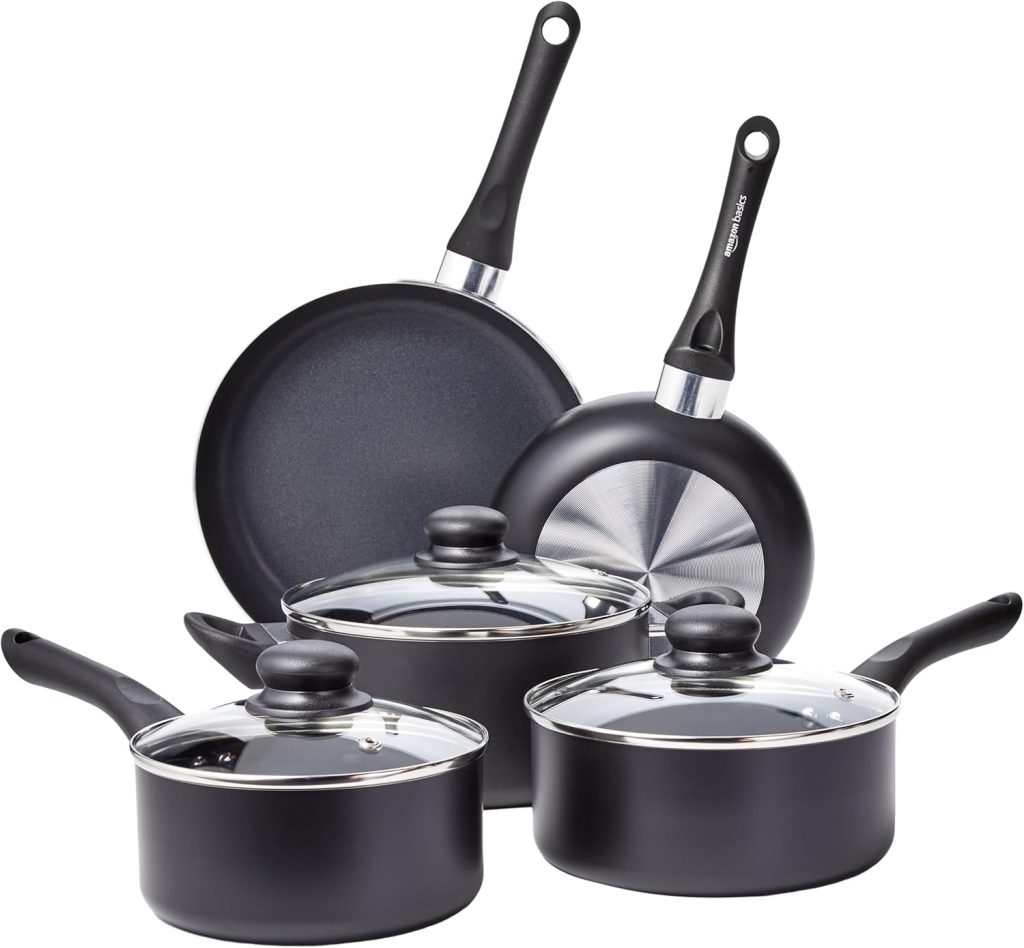
Overview:
Amazon’s private-label cookware line delivers essential non-stick performance at budget pricing that makes quality cooking tools accessible to everyone. This 8-piece set focuses on fundamental pieces—10-inch and 8-inch frying pans, 2-quart and 1.5-quart saucepans with lids, and 3-quart casserole with lid—providing core cooking capabilities without premium features or unnecessary extras. The aluminum construction with non-stick coating creates cookware that heats quickly on electric coils while providing easy food release and cleanup.
While positioned as budget-friendly, this set doesn’t sacrifice essential quality attributes. The bases maintain flatness well for electric coil contact, the handles stay reasonably cool during cooking, and the non-stick coating performs reliably for its price point. For first apartments, starter kitchens, or secondary vacation homes, this set delivers surprising value.
Key Features:
- BPA-free non-stick coating provides reliable food release and easy cleanup at entry-level pricing
- Aluminum construction ensures quick, even heating on electric coil elements with lightweight handling
- Soft-touch handles remain comfortable during cooking with ergonomic design for secure control
- Tempered glass lids enable visual monitoring with steam vents preventing pressure buildup
- Flat bases maintain shape reasonably well and sit firmly on electric coil elements
- Oven-safe to 350°F allows limited oven use for warming or finishing dishes
- Dishwasher-safe for convenient cleanup, though hand washing extends coating life
- Affordable pricing typically under $60 makes complete cookware sets accessible to tight budgets
Performance and User Experience:
The heating performance exceeds expectations for budget cookware. The aluminum construction conducts heat efficiently on electric coils, reaching cooking temperature in 2-3 minutes on medium settings. Heat distribution across cooking surfaces proves reasonably even—sufficient for everyday cooking though not matching premium cookware’s uniformity.
The non-stick coating performs adequately when used within appropriate parameters. Eggs cook and release cleanly with minimal oil, pancakes flip without sticking, and simple sautés work well. The coating withstands normal spatula contact reasonably, though durability doesn’t match premium alternatives. Users report 18-24 months of good performance before noticing degradation with daily use.
The base flatness—critical for electric coil compatibility—holds up reasonably well initially. With careful use avoiding thermal shock and overheating, the pans maintain adequate contact with coil elements for 1-2 years. Heavy use or high-heat cooking can cause warping that compromises performance, a common tradeoff at this price point.
The soft-touch handles remain comfortable during normal cooking, though they heat slightly more than premium alternatives during extended high-temperature cooking. The tempered glass lids fit adequately and enable visual monitoring, though the seal isn’t as precise as more expensive cookware.
Pros:
✅ Outstanding affordability at typically under $60 makes complete cookware sets accessible to minimal budgets
✅ Adequate performance for everyday cooking needs with reliable non-stick release and even enough heating
✅ Lightweight construction makes handling easy and reduces fatigue during cooking and washing
✅ Quick heating on electric coils saves time and energy compared to heavier materials
✅ Essential piece selection covers basic cooking needs without unnecessary items or redundant sizes
✅ Low-risk investment makes trying cooking more accessible for beginners without significant financial commitment
✅ Dishwasher compatibility simplifies cleanup for busy households prioritizing convenience over longevity
Cons:
❌ Limited durability with coating typically degrading within 18-24 months of regular use
❌ Lower oven temperature limit at 350°F restricts cooking techniques requiring higher heat
❌ Potential warping with careless use or high-heat cooking compromises flat base contact with electric coils
❌ Basic construction quality with thinner materials and less precise manufacturing than premium alternatives
❌ Coating scratches easily requiring careful utensil selection and gentle handling for optimal lifespan
Ideal For:
This cookware set perfectly suits budget-conscious shoppers needing basic cooking tools without major investment. It’s ideal for first apartments, college students, or anyone furnishing temporary living situations where long-term durability isn’t priority. The set works well as backup cookware for vacation homes or as starter equipment for beginning cooks exploring culinary interests without financial commitment.
AmazonBasics Non-Stick Cookware delivers remarkable value when expectations align with pricing. The sub-$60 cost provides complete basic cooking capability with adequate performance for everyday needs. While durability and refinement don’t match premium alternatives, the 18-24 month typical lifespan proves economically sensible for its low price point. For electric coil stove users on tight budgets or furnishing temporary living situations, this set provides functional cooking tools at pricing that makes quality home cooking accessible to everyone.
11. Le Creuset Enameled Cast Iron Signature Round Dutch Oven (5.5-Quart)
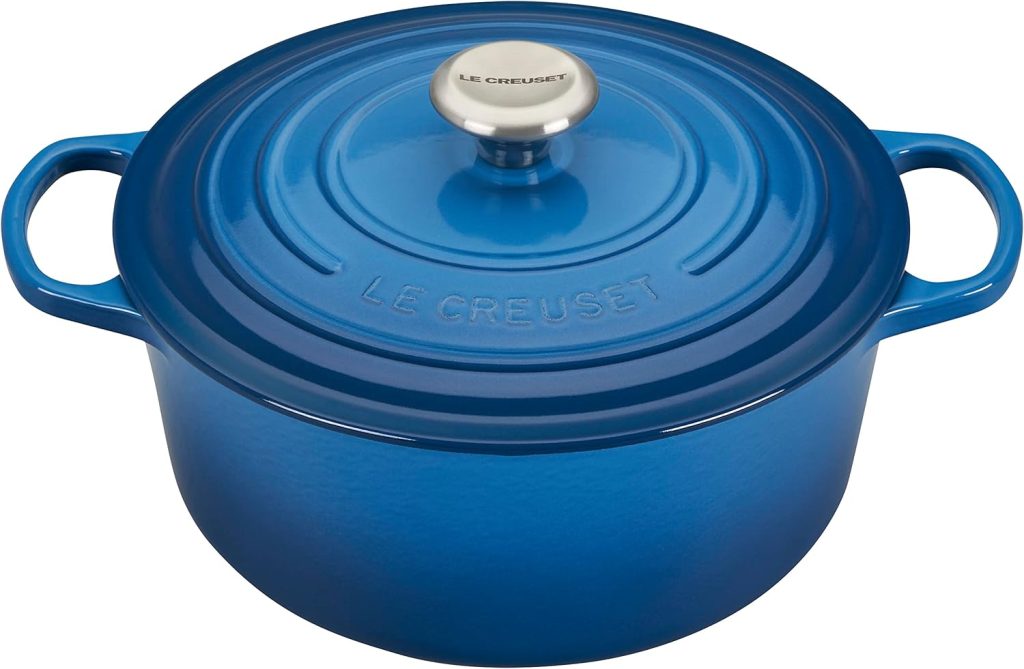
Overview:
Le Creuset’s Signature Dutch Oven represents French culinary engineering at its finest—an iconic piece that has graced kitchens worldwide for nearly a century. This 5.5-quart round Dutch oven combines cast iron’s superior heat retention with durable enamel coating that eliminates traditional cast iron maintenance while providing stunning aesthetic appeal. The three layers of enamel resist staining, chipping, and cracking while creating a virtually non-stick interior that improves with use.
While positioned at premium pricing, this Dutch oven delivers multi-generational durability and unmatched versatility. The cast iron core retains heat exceptionally well—critical for braising, stewing, and bread baking—while the flat bottom ensures optimal contact with electric coil elements. The oversized handles enable secure maneuvering with oven mitts, and the tight-fitting lid traps moisture for exceptional slow-cooking results.
Key Features:
- Premium cast iron construction provides unmatched heat retention and even temperature distribution throughout cooking
- Three layers of enamel coating resist chipping, staining, and cracking while eliminating traditional seasoning maintenance
- Sand-colored enamel interior resists staining better than white while showing food browning for optimal cooking control
- Flat bottom design ensures complete contact with electric coil elements for maximum heating efficiency
- Oversized loop handles enable secure grip with oven mitts for safe handling of this substantial 13-pound piece
- Tight-fitting lid with stainless steel knob traps moisture and heat effectively during braising and slow cooking
- Oven-safe to 500°F enables stovetop-to-oven cooking for braises, bread baking, and one-pot meals
- Lifetime warranty demonstrates manufacturer confidence and protects multi-generational investment
Performance and User Experience:
The heating characteristics on electric coil stoves prove exceptional. Cast iron’s thermal mass complements electric coils’ slower heating perfectly—the gradual heat buildup ensures even temperature distribution throughout the Dutch oven’s thick walls. Users report that properly preheated, this pot maintains remarkably stable cooking temperatures for hours, even through multiple openings to add ingredients or check progress.
The 5.5-quart capacity hits the sweet spot for most households—large enough for family-sized braises, stews, and roasts while remaining manageable to lift and maneuver. The round shape promotes even heat circulation, and the slightly curved bottom edges eliminate sharp corners where food might stick or burn.
Cooking performance excels across diverse applications. Braises develop rich, complex flavors as the tight-fitting lid traps moisture and heat. Bread develops perfect crusts with tender, airy interiors as the retained heat and steam replicate professional oven conditions. Soups and stews cook evenly without hot spots, requiring minimal stirring even during extended simmering.
The enameled interior requires virtually zero maintenance compared to traditional cast iron. Foods release cleanly without elaborate seasoning rituals, and cleanup involves simple washing with dish soap—prohibited with traditional cast iron. The sand-colored interior resists staining while enabling visual monitoring of fond development for optimal flavor building.
Pros:
✅ Multi-generational durability easily provides 50+ years of daily use, making it potentially the last Dutch oven purchase ever needed
✅ Unmatched heat retention maintains consistent cooking temperatures for hours, perfect for slow braises and stews
✅ Zero maintenance requirements compared to traditional cast iron; simple washing with dish soap maintains performance indefinitely
✅ Superior cooking results with even heat distribution and moisture retention elevating braises, breads, and one-pot meals
✅ Stunning aesthetic appeal in multiple color options creates showpiece cookware suitable for stovetop-to-table serving
✅ Versatile cooking capability from stovetop to oven to table enables diverse cooking techniques seamlessly
✅ Lifetime warranty protects significant investment and enables heirloom-quality hand-down to future generations
Cons:
❌ Premium pricing at $350-450 represents significant investment that exceeds many cookware budgets substantially
❌ Substantial weight at approximately 13 pounds challenges users with limited strength even before adding food
❌ Slower heating requires 10-15 minutes preheating on electric coils before reaching optimal cooking temperature
❌ Temperature response lag means adjustments take time to affect cooking, limiting suitability for techniques requiring rapid changes
❌ Enamel can chip with rough handling or metal utensil impacts, though this doesn’t affect performance
Ideal For:
This Dutch oven suits serious home cooks who regularly braise meats, make soups and stews, or bake bread and appreciate heirloom-quality tools. It’s ideal for those viewing cookware as multi-generational investments rather than disposable purchases. The exceptional heat retention perfectly matches electric coil stoves’ characteristics, while the beautiful enamel exterior appeals to those valuing aesthetics alongside functionality. Anyone seeking one premium piece that will serve reliably for decades will find this Dutch oven justifies its premium pricing.
Le Creuset’s Signature Dutch Oven represents the pinnacle of cast iron enameled cookware, with quality and performance that justify premium pricing for committed home cooks. The cast iron construction’s heat retention characteristics perfectly complement electric coil stoves, while the enamel coating eliminates traditional maintenance requirements. The 5.5-quart capacity suits most households, and the multi-generational durability makes the per-use cost negligible across decades of service. For electric coil stove users who regularly braise, stew, or bake bread and appreciate heirloom-quality tools, this Dutch oven delivers unmatched value despite its substantial upfront investment.
Comprehensive Buying Guide: How to Choose the Best Cookware for Electric Coil Stoves
Understanding Electric Coil Stove Heating Characteristics
Electric coil stoves operate fundamentally differently than gas burners or modern induction cooktops, and understanding these differences proves essential when selecting compatible cookware. The exposed metal coils heat through electrical resistance, becoming red-hot and transferring heat primarily through direct conduction—direct contact between the hot coil and the cookware bottom.
This heating method creates several unique characteristics that impact cookware selection. First, heat transfer depends almost entirely on contact quality. Any air gaps between the coil surface and cookware bottom dramatically reduce heating efficiency, causing uneven cooking and wasted energy. Second, temperature adjustments occur more slowly than gas flames. When you reduce a dial setting, the coil takes several minutes to cool, meaning your cookware continues cooking at higher temperatures during this transition period.
Third, electric coils distribute heat unevenly across their surface. The coil itself heats hottest at the center spirals, creating natural hot spots that transfer to your cookware. Quality cookware with proper construction mitigates this issue through even heat distribution, but thin or poorly designed pans amplify these hot spots into burning problems.
Understanding these characteristics explains why flat-bottomed cookware with adequate thickness isn’t optional for electric coils—it’s essential for acceptable cooking results. The better your cookware matches electric coil requirements, the more successfully you’ll overcome the inherent limitations of this heating method.
Critical Cookware Features for Electric Coil Compatibility
Base Flatness and Stability
The single most important characteristic for electric coil cookware is base flatness. The cookware bottom must sit completely flat against the coil element with no warping, bowing, or distortion. Even slight curvature creates air gaps that act as insulators, dramatically reducing heat transfer efficiency.
Test base flatness by placing cookware on a perfectly flat surface like granite countertops. The pan should sit firmly without rocking, with no light visible beneath the edges. Quality cookware maintains this flatness across years of heating and cooling cycles, while inferior products warp after limited use.
Base thickness directly impacts flatness retention. Thin bases—particularly in aluminum cookware—often warp after a few dozen heating cycles. Look for bases at least 3-4mm thick for smaller pans and 5-6mm for larger pieces. Clad construction with aluminum cores sandwiched between stainless steel provides excellent warp resistance while maintaining relatively light weight.
Material Selection and Heat Distribution
Cookware material fundamentally determines heating performance on electric coils. Each material offers distinct advantages and compromises:
Stainless steel provides durability, non-reactivity, and dishwasher safety, but pure stainless steel conducts heat poorly. Quality stainless cookware incorporates aluminum or copper cores for improved heat distribution. Look for tri-ply or five-ply construction where the conductive core extends through the entire pan, not just a disk on the bottom. This full-body construction distributes heat up the sidewalls, eliminating edge hot spots.
Cast iron excels on electric coils due to superior heat retention and naturally flat bottoms. The material’s thermal mass stabilizes cooking temperatures excellently, and its slow heating complements electric coils’ gradual temperature buildup. However, cast iron’s substantial weight and maintenance requirements don’t suit everyone. Enameled cast iron provides cast iron’s benefits with simplified maintenance but costs significantly more.
Aluminum conducts heat exceptionally well and costs less than stainless or cast iron. However, pure aluminum is soft, reactive with acidic foods, and prone to warping. Anodized aluminum addresses these issues through electrochemical hardening that creates durable, non-reactive surfaces. Look for hard-anodized construction thick enough to resist warping—at least 3mm base thickness for most applications.
Copper offers the best heat conductivity of common cookware materials but requires high maintenance and premium pricing. For electric coil use, copper cores bonded between stainless steel layers provide copper’s conductivity benefits without the maintenance burden.
Construction Quality Indicators
Several construction details reliably indicate cookware quality and electric coil suitability:
Handle attachment method significantly impacts durability. Riveted handles provide strongest attachment and longest lifespan, though the rivets create slight cleaning challenges. Welded handles offer sleeker appearance but may fail with heavy use. Avoid handles attached with screws or other mechanical fasteners—these loosen over time and create safety hazards.
Weight and thickness generally correlate with quality and performance. Heavier cookware typically employs thicker materials that distribute heat better and resist warping. However, excessive weight creates handling challenges. Look for cookware feeling substantial but manageable for your strength level.
Lid fit determines moisture retention during covered cooking. Quality lids seat securely on pan rims, creating effective seals that trap steam and heat. Test by holding pans and lids together inverted—the lid should stay seated without sliding off. Loose-fitting lids allow moisture escape, extending cooking times and drying foods.
Cookware Size Selection for Electric Coils
Matching cookware diameter to coil element size maximizes heating efficiency and cooking performance. Pans significantly smaller than the coil element waste energy as heat radiates around the cookware instead of transferring into it. Conversely, pans much larger than the coil create cold spots at the edges where no heat transfer occurs.
Most electric coil stoves feature small burners (approximately 6 inches), medium burners (approximately 8 inches), and large burners (approximately 10 inches). Select cookware sizes that match or slightly exceed these dimensions:
Small burners (6-inch): Ideal for 1-2 quart saucepans and 8-inch skillets. These elements work well for heating small quantities, making sauces, or cooking eggs.
Medium burners (8-inch): Best matched with 2-3 quart saucepans and 10-inch skillets. These versatile elements handle most everyday cooking tasks efficiently.
Large burners (10-inch): Designed for 4+ quart pots, 12-inch skillets, and stockpots. Use these for boiling pasta, preparing soups, or cooking large-batch meals.
Proper sizing ensures heat concentrates beneath the cookware bottom rather than radiating into your kitchen. This improves cooking efficiency, reduces energy waste, and prevents handles from overheating due to stray heat exposure.
Non-Stick vs. Stainless Steel vs. Cast Iron: Making the Right Choice
The fundamental material choice shapes your cooking experience more than any other factor. Understanding each material’s strengths and limitations helps you select cookware matching your cooking style and priorities.
Non-Stick Cookware: Convenience and Ease
Non-stick coatings excel at cooking delicate foods that challenge other surfaces—eggs, fish, and pancakes release effortlessly with minimal oil. Cleanup requires simple wiping, making non-stick ideal for busy households prioritizing convenience.
Modern non-stick coatings fall into two categories: PTFE-based (Teflon and similar) and ceramic. PTFE coatings provide superior non-stick performance and durability, typically lasting 3-5 years with proper care. Ceramic coatings appeal to those avoiding synthetic materials but generally last only 2-3 years before losing effectiveness.
Non-stick limitations include temperature restrictions—most shouldn’t exceed 400-450°F, limiting high-heat searing and oven use. The coatings eventually wear regardless of care quality, requiring replacement. Metal utensils damage coatings, and dishwashers accelerate degradation despite manufacturer claims of dishwasher safety.
Choose non-stick when convenience and easy food release outweigh concerns about eventual replacement. It’s excellent for everyday cooking of delicate foods, quick meals, and situations where minimal cleanup matters most.
Stainless Steel: Durability and Versatility
Quality stainless steel cookware with aluminum or copper cores provides unmatched versatility and virtually unlimited lifespan. The non-reactive surface works with all foods including acidic tomatoes and citrus without metallic flavors or chemical concerns. Stainless steel withstands metal utensils, dishwashers, and oven temperatures exceeding 500°F without damage.
The learning curve represents stainless steel’s primary challenge. Proper preheating and adequate fat prove essential—without them, foods stick frustratingly. However, mastering these techniques enables professional-level cooking control. Stainless steel excels at developing fond (brown bits) when searing, creating the foundation for restaurant-quality pan sauces.
Maintenance involves more effort than non-stick but less than cast iron. Stuck-on food requires soaking and scrubbing, and the surface shows wear patterns over time—though these don’t affect performance. Bar Keeper’s Friend or similar cleaners restore original shine when desired.
Choose stainless steel when you want cookware lasting decades, value versatility across all cooking techniques, and willingly invest effort learning proper technique for superior results.
Cast Iron: Heat Retention and Tradition
Cast iron’s exceptional heat retention and naturally flat bottoms make it ideal for electric coil stoves. The material distributes heat evenly once properly preheated, maintains steady temperatures indefinitely, and withstands any temperature from stovetop to campfire.
Traditional cast iron requires seasoning maintenance—regular oiling and specific cleaning procedures unfamiliar to modern cooks. However, properly maintained cast iron develops superior non-stick properties that improve over decades. Enameled cast iron eliminates maintenance requirements with durable coating but costs significantly more.
Cast iron’s substantial weight challenges users with limited strength. A 12-inch skillet weighs 8+ pounds empty—manageable for some, prohibitive for others. The slow temperature response limits suitability for techniques requiring rapid heat adjustments.
Choose cast iron when you regularly sear steaks, cook fried foods, or bake cornbread and appreciate tools improving with age. The minimal cost and multi-generational durability make it economically sensible despite maintenance requirements.
Budget Considerations: Where to Invest vs. Where to Save
Cookware purchases involve significant financial decisions, and understanding where quality matters most helps allocate budgets effectively.
Premium Investment Pieces Worth the Cost
Certain cookware items justify premium spending due to frequency of use and impact on cooking results:
Large skillet (10-12 inch): You’ll use this piece almost daily for searing, sautéing, and pan-frying. Quality construction with even heating dramatically improves results. Invest in tri-ply stainless steel or quality non-stick from reputable brands. Budget: $50-150.
Medium saucepan (2-3 quart): Essential for sauces, grains, and vegetables, this piece handles delicate cooking tasks where even heating prevents scorching. Quality clad construction proves worthwhile. Budget: $50-100.
Large pot or stockpot (6-8 quart): For soups, stocks, and pasta, even heating across large volumes justifies investment in thick-walled construction. Budget: $60-120.
Dutch oven (5-7 quart): If you regularly braise meats or make stews, a quality enameled cast iron Dutch oven delivers superior results worth the premium pricing. Budget: $80-400 depending on brand.
Acceptable Budget Alternatives
Some pieces handle less demanding tasks where premium quality provides diminishing returns:
Small skillet (8 inch): For eggs and small portions, affordable non-stick performs adequately. Budget: $20-40.
Small saucepan (1-1.5 quart): For heating small quantities, budget options work fine. Budget: $20-35.
Specialty items: Pieces used occasionally like steamers or double boilers don’t justify premium spending. Budget: $15-40 each.
Set vs. Individual Piece Purchasing Strategy
Cookware sets offer convenience and apparent value, but individual piece selection often delivers better results for your specific needs and budget.
When Sets Make Sense
Sets prove advantageous when:
- Outfitting a completely empty kitchen where you need multiple pieces immediately
- The set contains primarily pieces you’ll actually use regularly
- Per-piece pricing represents genuine savings over individual purchases
- You prefer matching aesthetics across all cookware
Analyze set contents carefully before purchasing. Many include filler pieces like tiny saucepans or redundant skillet sizes that waste money. Calculate per-piece cost for items you’ll actually use—if it exceeds 60-70% of individual pricing, you’re not getting real value.
When Individual Purchases Work Better
Buying pieces individually makes sense when:
- You already own some quality cookware and need specific additions
- You have strong preferences about materials for different applications
- You want to allocate budget to premium items for frequent-use pieces while economizing on occasional-use items
- You’re upgrading gradually over time as budget allows
This approach enables mixing materials strategically—perhaps a cast iron skillet for searing, stainless steel for saucepans, and quality non-stick for eggs. You’ll spend more per piece but accumulate only cookware you’ll actually use.
Common Cookware Buying Mistakes to Avoid
Learning from others’ mistakes saves money and frustration. Avoid these common pitfalls when selecting cookware for electric coil stoves:
Mistake 1: Choosing Based Primarily on Appearance
Beautiful cookware proves useless if it doesn’t perform well on your stove. Prioritize functional characteristics—flat bases, appropriate thickness, and proven heating performance—over aesthetic appeal. That stunning copper exterior matters little if the pan warps after three months.
Mistake 2: Assuming All Non-Stick Is Equivalent
Non-stick coatings vary dramatically in quality and durability. Budget non-stick from unknown brands often fails within 6-12 months, while premium non-stick from established manufacturers lasts 4-6 years. The higher upfront cost of quality non-stick proves economical across its extended lifespan.
Mistake 3: Overlooking Handle Comfort and Safety
Handles determine how comfortably and safely you can maneuver cookware. Test handle ergonomics before purchasing—grip should feel natural and secure. Verify handles stay cool during stovetop cooking or require pot holders consistently. Poorly designed handles turn cooking into frustration regardless of pan performance.
Mistake 4: Buying Cookware Too Large for Burners
A 14-inch skillet might seem versatile, but if your largest burner is 10 inches, you’ll battle cold spots at pan edges. Size cookware appropriately for your specific stove burner dimensions to ensure even heating across entire cooking surfaces.
Mistake 5: Neglecting Oven Temperature Ratings
Many recipes require stovetop-to-oven transitions. Verify oven-safe temperature ratings match your cooking needs—preferably 450°F minimum, 500°F+ ideally. Handles and lids often have lower temperature limits than pan bodies, so check all components.
Mistake 6: Ignoring Weight Considerations
A 15-pound stockpot feels manageable empty in the store but becomes unmanageable when filled with soup or pasta water. Consider your strength realistically, particularly if you have arthritis, wrist problems, or limited upper body strength. Lighter materials like aluminum or thinner clad construction may prove more practical despite some performance compromises.
Mistake 7: Expecting Non-Stick Coating to Last Forever
All non-stick coatings eventually degrade regardless of care quality or brand premium. Budget expecting replacement every 3-5 years for quality PTFE coatings, 2-3 years for ceramic alternatives. Factor replacement costs into your total ownership calculation—sometimes stainless steel or cast iron proves more economical long-term despite higher upfront costs.
Mistake 8: Choosing Sets with Unnecessary Pieces
That 16-piece set looks impressive, but if it includes three skillets, two stockpots, and a steamer you’ll never use, you’re wasting money. Count pieces you’ll actually use regularly and calculate effective per-piece cost. Smaller sets with only essential pieces often deliver better value.
Specialty Considerations for Different Cooking Styles
Your cooking style and preferences should influence cookware selection significantly:
For Health-Conscious Cooks
Prioritize non-reactive materials that won’t leach metals or chemicals into food. Quality stainless steel, ceramic-coated, or enameled cast iron meet this requirement. Avoid non-stick if concerned about PTFE chemicals, selecting ceramic alternatives instead despite shorter lifespan. Cast iron provides natural iron fortification—beneficial for many but problematic for those managing iron overload conditions.
For Frequent High-Heat Cooking
If you regularly sear steaks, cook stir-fries, or use high temperatures, select cookware rated for 500°F+ oven temperatures as proxy for high-heat capability. Stainless steel, cast iron, and carbon steel excel here. Avoid standard non-stick which degrades quickly at high temperatures.
For One-Pot and Batch Cooking
Large Dutch ovens and deep sauté pans prove essential for cooking entire meals in single vessels. Prioritize pieces with 5+ quart capacity, tight-fitting lids, and oven-safe capability for stovetop-to-oven recipes. Enameled cast iron excels for these applications despite premium pricing.
For Quick, Everyday Meals
Lightweight non-stick cookware that heats quickly and cleans easily suits busy weeknight cooking. Prioritize quality non-stick fry pans in 10-12 inch sizes and medium saucepans with lids. Don’t overspend on pieces you’ll replace every few years—mid-range quality provides adequate performance at sensible cost.
For Precision Cooking and Technique Development
Serious cooks developing professional skills benefit most from quality stainless steel and cast iron that provide superior control and feedback. The learning curve pays dividends in cooking capability. Invest in premium tri-ply stainless steel for maximum versatility and precision.
Maintenance and Care for Longevity
Proper care dramatically extends cookware lifespan and maintains optimal performance:
Stainless Steel Care
- Preheat properly before adding food to prevent sticking
- Use adequate fat (oil, butter) for improved release
- Allow stuck-on food to soak before scrubbing
- Use Bar Keeper’s Friend periodically to restore shine
- Dry immediately after washing to prevent water spots
- Avoid temperature shock (don’t rinse hot pans with cold water)
Non-Stick Care
- Hand wash even if dishwasher-safe—detergents damage coatings
- Use only silicone, wood, or plastic utensils to prevent scratching
- Avoid cooking sprays which create residue buildup
- Never heat empty pans which degrades coating
- Cook on low-medium heat only
- Replace when food begins sticking regularly despite proper technique
Cast Iron Care
- Season regularly with thin layers of oil heated to smoking point
- Wash with hot water and scrub brush (soap acceptable for well-seasoned pieces)
- Dry immediately and completely to prevent rust
- Store with paper towel layer to absorb any moisture
- Re-season if rust develops or food starts sticking
- Never soak or leave wet
- Avoid acidic foods until seasoning fully develops
General Best Practices
- Match burner size to pan size for efficiency and handle safety
- Use pot holders when handling heated cookware
- Allow pans to cool naturally—don’t rush with cold water
- Stack carefully with protective layers to prevent scratching
- Inspect periodically for warping, handle loosening, or coating damage
- Store in dry location to prevent corrosion
Understanding Warranties and What They Mean
Warranty terms provide insight into manufacturer confidence and quality expectations:
Lifetime Warranties
Typically cover defects in materials and manufacturing but exclude damage from misuse, accidents, or normal wear. These demonstrate manufacturer confidence in construction quality. Premium brands like All-Clad, Le Creuset, and Tramontina offer lifetime coverage. File warranty claims promptly when issues develop—most reputable manufacturers honor commitments without hassle.
Limited Term Warranties
Warranties of 1-5 years suggest manufacturers expect limited product lifespan. This isn’t necessarily negative for non-stick cookware where coating degradation is inevitable. However, short warranties on stainless steel or cast iron suggest lower quality worth avoiding.
Warranty Exclusions
Read fine print carefully. Most warranties exclude:
- Damage from overheating or thermal shock
- Scratches and surface wear from use
- Discoloration from high heat
- Warping from improper cleaning (dishwashers, thermal shock)
- Non-stick coating wear from normal use
Register products when required and retain purchase receipts. Photograph any defects immediately and document issues thoroughly when filing claims.
Expert Recommendations by Budget Category
Based on comprehensive analysis of performance, durability, and value, here are top recommendations for different budget levels:
Best Budget Option ($50-100): AmazonBasics Non-Stick 8-Piece Set supplemented with Lodge 12-inch Cast Iron Skillet. Total investment under $100 provides essential cooking capability with surprising longevity for the cost. The cast iron handles high-heat applications while non-stick manages delicate foods.
Best Mid-Range Option ($150-250): Tramontina Tri-Ply Clad 12-Piece Set delivers premium tri-ply performance at accessible pricing. The comprehensive piece selection eliminates need for supplemental purchases, and construction quality rivals sets costing 3x more. This represents exceptional value for most home cooks.
Best Premium Option ($300-500): Cuisinart Multiclad Pro 12-Piece Set combined with Le Creuset 5.5-Quart Dutch Oven. This combination provides professional-grade clad cookware for everyday cooking plus heirloom-quality Dutch oven for braises and bread. Total investment delivers multi-decade performance justifying premium pricing.
Best Luxury Investment ($700+): All-Clad D3 10-Piece Set represents the pinnacle of clad cookware engineering. The premium pricing purchases American-made quality, lifetime durability, and cooking performance that rivals professional equipment. For serious home cooks viewing cookware as multi-decade investment, this delivers unmatched value despite substantial cost.
Making Your Final Decision
Selecting cookware involves balancing multiple factors specific to your situation:
Prioritize based on your cooking frequency: Daily cooks should invest in quality pieces that will withstand constant use. Occasional cooks can economize without compromising their less frequent cooking experiences.
Consider your physical capabilities: Don’t romanticize cast iron if you struggle with heavy objects. Lighter aluminum or thin clad construction might serve you better despite some performance compromises.
Evaluate your learning willingness: If you’re unwilling to invest time learning stainless steel technique, quality non-stick provides better results despite eventual replacement needs.
Project long-term costs: Sometimes premium upfront investment proves more economical than repeatedly replacing budget alternatives. Calculate ownership costs across 10+ years for realistic comparison.
Trust reputable brands: Established manufacturers like Cuisinart, Tramontina, Calphalon, All-Clad, Le Creuset, and Lodge have reputations built over decades. They honor warranties and produce consistent quality worthy of trust.
Read detailed user reviews: Look for reviews from verified purchasers who’ve used products for 6+ months. Recent reviews often reflect initial impressions rather than long-term durability and performance.
The right cookware transforms cooking from frustration to pleasure. By understanding electric coil stove requirements and selecting cookware with appropriate characteristics, you’ll achieve consistently excellent results that make meal preparation genuinely enjoyable.
Frequently Asked Questions (FAQs)
1. Why does my cookware warp on my electric coil stove, and how can I prevent it?
Warping occurs when cookware bases expand unevenly due to rapid temperature changes or insufficient material thickness. Electric coil stoves concentrate intense heat in specific spots where the pan contacts the coil, creating thermal stress that thin materials can’t withstand.
Several factors contribute to warping: Thermal shock happens when cold water contacts hot pans or when frozen foods are added to overheated cookware. The rapid temperature differential causes metal to contract suddenly and unevenly, distorting the base geometry. Insufficient thickness in the base construction means the material lacks structural rigidity to resist thermal expansion forces. Budget cookware often uses aluminum bases under 2mm thick that cannot maintain flatness under electric coil heat.
Overheating causes excessive expansion that permanently deforms thin bases. When pans are heated empty or on excessively high settings, temperatures exceed the material’s capacity to expand and recover without deformation. Poor quality manufacturing with inconsistent material thickness or inadequate tempering creates weak points that fail under thermal stress.
Prevent warping by following these practices: Preheat gradually on medium settings rather than maximum heat. This allows even temperature distribution throughout the pan before thermal expansion occurs. Avoid thermal shock by never adding cold water to hot pans and allowing cookware to cool naturally before washing. Select appropriate thickness by choosing cookware with bases at least 3-4mm thick for smaller pieces and 5-6mm for larger pans. Invest in quality construction with clad or impact-bonded bases designed to resist warping. Match burner sizes to pan dimensions so heat distributes evenly rather than concentrating in small areas.
Once warping occurs, it’s generally permanent and irreversible. Severely warped cookware should be replaced as it will never perform adequately on electric coils again. The air gaps created by warping dramatically reduce heating efficiency and create dangerous hot spots that burn food.
2. What’s the best material for cookware on electric coil stoves—stainless steel, cast iron, or aluminum?
No single material is universally “best”—each excels in specific applications, and most cooks benefit from having multiple materials for different cooking tasks.
Cast iron performs exceptionally well on electric coils due to its thermal characteristics perfectly matching the heating method. The slow, gradual heat buildup of electric coils allows cast iron to heat evenly throughout its mass. Once heated, cast iron retains heat superbly, maintaining steady cooking temperatures indefinitely—ideal for searing steaks, frying chicken, and baking cornbread. The naturally flat bottoms maximize contact with coil elements. However, cast iron’s substantial weight and maintenance requirements (for traditional uncoated versions) don’t suit everyone or every application. It’s excellent for high-heat cooking, browning, and dishes benefiting from sustained heat, but impractical for quick sautés requiring temperature adjustments or delicate sauces needing precise control.
Stainless steel with aluminum or copper core (tri-ply or clad construction) provides the most versatility for electric coil cooking. The stainless steel interior offers durability and non-reactivity for all foods including acidic tomatoes and citrus. The aluminum core distributes heat evenly, compensating for the uneven heating of electric coils. Quality clad cookware responds to temperature changes faster than cast iron while providing better heat distribution than pure aluminum. It’s ideal for sautéing, making sauces, cooking vegetables, and general-purpose cooking. The learning curve for preventing sticking requires proper preheating and adequate fat, but mastering this technique enables professional-level cooking control.
Hard-anodized aluminum offers excellent heat conduction at lighter weight than cast iron or thick clad stainless. The anodization process hardens the surface, making it scratch-resistant and non-reactive. When paired with quality non-stick coatings, it provides exceptional convenience for everyday cooking. It heats quickly on electric coils and responds promptly to temperature adjustments. However, most aluminum cookware (even hard-anodized) has lower oven temperature limits than stainless or cast iron, and non-stick coatings eventually wear requiring replacement.
Optimal strategy: Build a collection incorporating multiple materials: cast iron skillet (12-inch) for high-heat searing and frying, tri-ply stainless steel saucepans and sauté pans for versatile everyday cooking, and quality non-stick skillet (10-inch) for eggs and delicate foods. This approach leverages each material’s strengths while compensating for individual weaknesses.
3. How long should quality cookware last on an electric coil stove?
Cookware lifespan varies dramatically based on material construction, quality, care practices, and usage frequency:
Premium stainless steel (tri-ply or clad construction from brands like All-Clad, Tramontina, or Cuisinart Multiclad) should last 20-30+ years with proper care—essentially a lifetime purchase for most households. The durable construction resists warping indefinitely, and stainless steel surfaces don’t degrade. While the interior may show discoloration patterns from use, this doesn’t affect performance. These pans often outlive their owners and become heirloom pieces passed to children.
Cast iron lasts multiple generations—literally 50-100+ years—with basic maintenance. Properly seasoned and cared for, cast iron actually improves with age as seasoning develops. Vintage cast iron from the 1950s remains highly sought after and fully functional today. Even neglected rusty cast iron can be completely restored through cleaning and re-seasoning. The primary cause of cast iron “failure” is neglect leading to excessive rust, but even this is reversible.
Quality non-stick cookware (PTFE-based from reputable brands like T-fal Professional or Calphalon) typically provides 3-5 years of good performance with proper care before coating degradation necessitates replacement. Budget non-stick often fails within 12-24 months. Ceramic non-stick generally lasts 2-3 years before losing effectiveness. This limited lifespan isn’t a defect—it’s the inherent nature of non-stick coatings that gradually wear regardless of care quality.
Factors affecting lifespan:
Heat management significantly impacts durability. Overheating causes warping in aluminum and thin stainless, degrades non-stick coatings rapidly, and can crack enamel on cast iron. Using appropriate heat levels extends lifespan dramatically.
Cleaning practices matter enormously. Dishwashers accelerate wear on non-stick coatings and can cause discoloration in stainless steel. Hand washing extends lifespan for all cookware types. Harsh abrasives scratch surfaces and damage coatings unnecessarily.
Thermal shock from rapid temperature changes causes warping and can crack enamel. Allowing cookware to cool naturally and avoiding cold water on hot pans prevents this damage.
Storage methods affect longevity too. Stacking without protection scratches non-stick coatings and polished surfaces. Using pan protectors or hanging cookware prevents damage during storage.
Usage frequency obviously impacts lifespan—daily use wears cookware faster than occasional use. However, quality cookware withstands daily use for decades, so don’t hesitate using premium pieces regularly.
Realistic expectations: Budget for non-stick replacement every 3-5 years as operational expense. Invest in quality stainless steel and cast iron expecting 20+ year lifespan that amortizes premium pricing to reasonable annual cost. The $300 All-Clad pan providing 25 years of service costs $12 annually—far less than replacing $40 non-stick pans every two years.
4. Do I really need to preheat cookware on electric coil stoves, and if so, for how long?
Yes, proper preheating proves absolutely essential for optimal cooking results on electric coil stoves—arguably more critical than with gas or induction cooking.
Why preheating matters:
Even heat distribution requires time on electric coils because the heating method concentrates initial heat at coil contact points. Preheating allows this heat to spread throughout the cookware base and up the sides, creating uniform cooking surface temperatures. Adding food to insufficiently heated pans means some areas cook faster than others, causing uneven browning and sticking.
Non-stick performance depends heavily on proper temperature. Stainless steel forms a temporary non-stick layer through the Leidenfrost effect when properly heated—water droplets should dance and ball up on the surface. Non-stick coatings also perform best at specific temperatures—too cold and food sticks despite the coating; too hot and coatings degrade. Many quality non-stick pans like T-fal Professional include heat indicators showing when optimal temperature is reached.
Proper searing and browning requires adequate heat to trigger Maillard reactions creating flavor and color. Adding proteins to insufficiently heated pans causes sticking as proteins bond to metal before adequate heat triggers browning. The food steams rather than sears, producing gray, tough results instead of golden, crispy exteriors with tender interiors.
Recommended preheating times:
Thin non-stick aluminum (2-3mm): 2-3 minutes on medium heat Standard stainless steel or hard-anodized aluminum: 3-4 minutes on medium heat Thick tri-ply clad stainless: 4-5 minutes on medium to medium-high heat Cast iron: 7-10 minutes on medium-low to medium heat
Preheating techniques:
Water droplet test: Splash small water drops on the pan surface. If they immediately evaporate with angry hiss, temperature is too high. If they sit and slowly evaporate, temperature is too low. Proper preheating causes droplets to ball up and dance across the surface before evaporating—this indicates the Leidenfrost effect and optimal cooking temperature.
Visual heat indicators: Some cookware (like T-fal) includes temperature indicators that change appearance when optimal heat is reached. These eliminate guesswork for cooks less experienced with temperature assessment.
Infrared thermometers: For precision enthusiasts, these inexpensive tools ($15-30) allow exact temperature verification. Most cooking benefits from surface temperatures of 350-400°F for sautéing, 400-450°F for searing.
Common preheating mistakes:
Maximum heat rushing: Many cooks blast burners on high trying to speed preheating, which overheats cookware bottoms while sides remain cool. This creates excessive temperature gradients causing warping and uneven cooking. Medium heat provides adequate preheating speed while distributing heat evenly.
Insufficient waiting: Impatience leads to adding food before pans fully heat. The few minutes invested in proper preheating dramatically improve results and actually save time by preventing sticking that requires scraping and scrubbing.
Preheating with oil: Adding oil to cold pans means oil heats simultaneously, potentially reaching smoke point before pan reaches cooking temperature. Better practice involves preheating dry pan, then adding oil and giving it 20-30 seconds to heat before adding food.
Proper preheating represents perhaps the single most impactful technique improvement for electric coil stove cooking. The time investment pays immediate dividends in cooking results.
5. Can I use cookware with slightly warped bottoms on electric coil stoves, or do I need to replace it?
Slight warping significantly compromises performance on electric coil stoves, and replacement usually proves necessary for acceptable cooking results—though severity determines urgency.
How warping affects electric coil cooking:
Heat transfer reduction: Electric coils transfer heat through direct contact. Warping creates air gaps between coil and cookware bottom that act as insulation layers. Even small gaps reduce heating efficiency by 30-50%, meaning you must use higher temperature settings to achieve adequate cooking temperatures. This wastes energy and makes temperature control difficult.
Hot spot creation: Warped pans only contact coils at specific points—usually center or edges depending on warp direction. These contact points become extremely hot while areas with air gaps remain cooler, creating severe temperature variations across the cooking surface. Foods burn at hot spots while remaining undercooked inches away.
Uneven cooking results: The temperature variations cause frustrating inconsistency—pancakes that are burned on one side and pale on the other, sauces that scorch in spots while remaining thin elsewhere, vegetables that brown unevenly requiring constant repositioning.
Safety concerns: Warped cookware sits unstably on coil elements, rocking when stirred or jostled. This creates tipping hazards, particularly with heavy pans filled with hot liquid. The instability also causes handles to overheat as gaps allow heat to radiate upward.
Assessing warp severity:
The straight-edge test: Place a ruler or straight edge across the pan bottom. Gaps under 2mm might be tolerable for low-stakes applications like boiling water. Gaps exceeding 3-4mm cause significant problems requiring replacement for acceptable performance.
The rocking test: Place the pan on perfectly flat surface (granite countertop works well) and press corners. If the pan rocks noticeably, warping is severe enough to warrant replacement for electric coil use.
The light test: Place pan upside down on flat surface in well-lit area. Visible light beneath pan edges or center indicates air gaps that will compromise electric coil heating.
When replacement isn’t immediately necessary:
Mild warping for non-critical tasks: Slightly warped large pots acceptable for boiling pasta or blanching vegetables where precise temperature control isn’t essential. The large water volume compensates for uneven heating.
Secondary cookware: Warped pieces work adequately on gas stoves (where flames wrap around sides) or as oven-only vessels. Repurpose for baking or casseroles rather than discarding completely.
When replacement is essential:
Skillets and frying pans: Even mild warping causes severe problems when searing or sautéing where even heat distribution proves critical. Replace these pieces when warping develops.
Saucepans: Warped saucepans burn sauces and struggle to simmer evenly. Replace when warping is noticeable.
Prevention strategies:
Prevent warping by selecting quality cookware with adequate base thickness initially, avoiding thermal shock from rapid temperature changes, preheating gradually on medium rather than maximum heat, and matching burner sizes to pan dimensions. Good quality tri-ply stainless, cast iron, or heavy-gauge hard-anodized aluminum resists warping effectively.
Unfortunately, once warping occurs, it’s typically permanent. Some expensive cookware carries warranties covering warping, so check warranty terms before purchasing replacements. Quality brands often honor these claims without hassle.
6. Why does food stick to my stainless steel pans on electric coils even when I use oil?
Food sticking to stainless steel results from several interrelated factors, and addressing each improves results dramatically:
Insufficient preheating represents the most common cause. Stainless steel requires heating to specific temperatures (typically 350-400°F for most applications) before adequate non-stick properties develop. Cold or lukewarm pans bond with protein molecules, causing aggressive sticking. On electric coils where visual heat assessment proves difficult, cooks often add food before pans reach proper temperature.
The Leidenfrost effect creates temporary non-stick characteristics when stainless steel reaches appropriate temperatures. At optimal heat, water molecules instantly vaporize, creating a microscopically thin steam layer between food and metal. This vapor barrier prevents direct contact and sticking. Test readiness with the water droplet test—drops should ball up and dance across the surface. If they sizzle and immediately evaporate, temperature is too high; if they sit and slowly evaporate, temperature is too low.
Inadequate fat provides insufficient barrier between food and metal. While properly preheated stainless steel resists sticking better than cold, adding appropriate oil, butter, or other fats dramatically improves release. Use enough to coat the cooking surface with thin, even layer—usually 1-2 tablespoons for 10-12 inch pans. Too little oil pools in low spots, leaving raised areas unprotected.
Moving food too quickly before browning completes causes sticking. Proteins initially bond to metal surfaces but release naturally once adequate browning occurs through the Maillard reaction. Attempting to flip or move foods before this browning completes tears the surface, leaving stuck portions behind. With properly heated pans and adequate fat, most proteins release cleanly after 3-5 minutes undisturbed contact time.
Improper heat levels during cooking cause problems even if preheating was correct. Reducing heat too much allows temperature to drop below optimal range, causing sticking mid-cook. Excessive heat burns the oil and food surface, creating stuck-on carbon deposits. Maintain steady medium to medium-high heat throughout cooking for best results.
Cold ingredients added to properly heated pans can drop surface temperature below optimal range. Allow refrigerated proteins to sit at room temperature for 15-30 minutes before cooking. This minimizes temperature drop when food contacts the pan, helping maintain the heat needed for proper searing and release.
Pan surface condition affects sticking significantly. Stainless steel with accumulated residue, burned-on oil films, or scratches provides more surface area for food bonding. Deep cleaning with Bar Keeper’s Friend or similar products removes built-up residue and restores smoother surface that releases food more readily.
Solutions for better non-stick performance:
Master proper preheating: Heat pan on medium for 4-5 minutes before adding oil. Test with water droplet—when drops dance and bead up, temperature is optimal. This single technique improvement will eliminate 80% of sticking problems.
Add oil to hot pan, not cold: Heat pan empty, then add oil and give it 20-30 seconds to heat before adding food. The oil should shimmer and flow easily but not smoke. This ensures both pan and oil reach optimal temperature simultaneously.
Don’t rush the sear: Place proteins in pan and resist the urge to move, flip, or check them for at least 3-4 minutes. The browning crust that develops provides natural release. Foods will release cleanly when ready—forcing them prematurely guarantees sticking.
Deglaze stuck bits: If food does stick, it’s often because it formed excellent fond (brown bits) that add tremendous flavor. After removing cooked food, add wine, stock, or other liquid to the hot pan. The liquid loosens stuck particles while creating delicious pan sauce, transforming “sticking” from problem to feature.
Use appropriate utensils: Thin metal spatulas (fish spatulas work excellently) slide under foods more effectively than thick plastic or silicone tools. The thin edge accesses the pan-food interface better, helping release stuck portions gently.
Consider protein surface moisture: Excess surface moisture creates steam barriers that prevent proper browning and cause sticking. Pat proteins thoroughly dry with paper towels before cooking. The drier the surface, the better the sear and easier the release.
Reality check: Stainless steel will never match non-stick coating convenience for completely effortless release. However, with proper technique, it should release foods cleanly without aggressive scraping or food tearing. If you’re regularly battling serious sticking despite following these guidelines, the pan may not be suitable for your cooking style—consider quality non-stick alternatives for problem foods like eggs and delicate fish.
7. How do I clean burnt-on food from cookware used on electric coil stoves?
Burnt-on food happens to everyone, and proper cleaning techniques restore cookware without damage:
For Stainless Steel:
Immediate soaking dramatically simplifies cleaning. Fill the still-warm (not hot) pan with hot water and dish soap. Let soak for 30-60 minutes to soften burnt residue. This passive time investment prevents the intense scrubbing that causes arm fatigue.
Baking soda paste method: Make paste with 3 parts baking soda to 1 part water. Spread generously over burnt areas and let sit for 30 minutes. The mild abrasive action loosens residue without scratching stainless steel. Scrub with non-scratch scrubbing pad, then rinse thoroughly.
Boiling water method: For stubborn residue, fill pan with 1-2 inches of water and bring to boil on stove. The boiling action loosens burnt food that can then be scraped away with wooden spoon or spatula. Add baking soda or dish soap to the water for enhanced effectiveness.
Bar Keeper’s Friend: This oxalic acid-based cleanser excels at removing tough burnt-on residue and restoring stainless steel shine. Make paste with water, apply to burnt areas, let sit 5-10 minutes, scrub gently, and rinse thoroughly. This product works miracles on stainless steel without harsh abrasives that scratch.
Vinegar soak: For particularly stubborn burns, fill pan with equal parts water and white vinegar, bring to boil, remove from heat, and let soak overnight. The acid helps break down carbonized food particles. Follow with baking soda scrub for final cleaning.
For Non-Stick Cookware:
Gentle approach required: Never use abrasive scrubbers, steel wool, or harsh chemicals that damage non-stick coatings. Use soft sponges or cloths exclusively.
Baking soda and water paste: Create paste, apply to burnt areas, and let sit 15-30 minutes. Gently wipe with soft cloth. The mild abrasive action removes residue without scratching coating.
Vinegar and water boil: Mix equal parts water and white vinegar, bring to gentle simmer in the affected pan for 10-15 minutes. The acid loosens burnt-on residue. Let cool, then wash with soft sponge and dish soap.
Commercial non-stick cleaners: Products specifically formulated for non-stick surfaces remove residue without coating damage. Follow product instructions carefully and rinse thoroughly.
Important note: If burnt residue won’t come off non-stick coating with gentle methods, the coating itself may be damaged. Aggressive scrubbing attempting to remove stubborn burns often damages coating further, accelerating its demise. Know when to accept that replacement is necessary.
For Cast Iron:
Salt scrub method: Pour coarse salt in the still-warm pan, add small amount of water to create paste, and scrub with paper towels or cloth. The salt provides abrasive action that removes food particles without damaging seasoning. Rinse briefly, dry immediately, and re-oil lightly.
Chainmail scrubber: Specialized chainmail scrubbers for cast iron remove burnt residue aggressively while preserving seasoning. These stainless steel mesh tools work excellently for tough cleaning jobs. Follow with immediate drying and light oiling.
Boiling water method: Fill pan with water, bring to boil, and simmer 10-15 minutes. The boiling action loosens burnt food that can be scraped with metal spatula. Dry immediately and completely, then re-season with thin oil layer.
Re-seasoning after heavy cleaning: If you must remove heavily burnt food and the cleaning process damages seasoning, re-season the pan. Coat with thin layer of oil, heat upside down in 450°F oven for one hour, let cool completely in oven. This restores the protective seasoning layer.
For Enameled Cast Iron:
Baking soda soak: Fill with warm water and add 2-3 tablespoons baking soda. Soak overnight, then scrub with non-abrasive pad. The alkaline solution loosens burnt residue without damaging enamel.
Le Creuset enamel cleaner: The manufacturer sells specialized cleaner for their cookware that removes stubborn stains and burns without enamel damage. This product works on any enameled cast iron, not just Le Creuset brand.
Bleach solution (light enamel only): For light-colored enamel interiors, fill with solution of 1 tablespoon bleach per quart of water. Soak several hours or overnight. This removes stubborn staining without scrubbing. Rinse extremely thoroughly before using.
Prevention tips:
Deglaze immediately: After cooking, deglaze the hot pan with wine, stock, or water before stuck-on food carbonizes. This loosens fond and prevents serious burning.
Don’t overheat: Using appropriate heat settings prevents burning in the first place. Electric coils make this challenging, but proper preheating and medium heat for most cooking prevents many burning problems.
Monitor closely: Electric coils’ slow temperature response means you must anticipate heat changes and adjust earlier than with gas cooking. Reduce heat before food begins burning rather than waiting for visual signs.
Use adequate fat: Proper oil amounts prevent direct food-to-metal contact that causes burning and sticking.
Understanding that some burnt residue removal takes time and patience prevents the aggressive scrubbing that damages cookware. The passive cleaning methods—soaking, boiling, chemical action—do most of the work with minimal effort.
8. Are expensive cookware brands really worth the premium price for electric coil stoves?
The value equation for premium cookware depends on your cooking frequency, skill level, quality expectations, and long-term perspective:
Performance differences that justify premium pricing:
Superior heat distribution: Premium brands like All-Clad employ tri-ply construction throughout entire pans—base and sidewalls—while budget alternatives often use disk-base construction with aluminum only on the bottom. On electric coils where uneven heating is inherent, full-body clad construction makes dramatic performance differences. The $50 pan with aluminum disk bottom shows 40-50°F temperature variations across the cooking surface, while the $150 fully-clad pan shows less than 10°F variation.
Warp resistance: Premium cookware uses thicker materials and superior manufacturing processes that prevent warping even after years of thermal cycling. Budget cookware often warps within months of regular use on electric coils, requiring replacement that negates initial savings. The premium pan’s flat bottom maintains perfect coil contact indefinitely, ensuring consistent performance across decades.
Manufacturing precision: Expensive brands maintain tighter tolerances—lids fit more precisely, handles attach more securely, and finishes are more consistent. These details enhance cooking experience and extend lifespan significantly. Budget cookware’s loose-fitting lids allow moisture escape, poorly attached handles loosen over time, and inconsistent base thickness creates hot spots.
Material quality: Premium stainless steel uses higher grades (18/10 vs 18/0) that resist corrosion and maintain appearance better. The aluminum cores in expensive clad cookware use purer alloys with better thermal properties. Non-stick coatings on premium pans employ advanced formulations with titanium or diamond reinforcement that last 2-3 times longer than budget coatings.
When premium pricing is justified:
Frequent cooking: If you cook daily or multiple times per week, premium cookware’s superior performance and extended lifespan justify higher costs. The per-use cost becomes negligible across years of reliable service. A $300 All-Clad skillet providing 20 years of daily use costs $15 annually—less than replacing $50 skillets every 3 years.
Serious cooking interests: Cooks developing technique and pursuing culinary excellence benefit from the superior control and feedback premium cookware provides. The better heat distribution and response enable professional-level technique execution impossible with budget alternatives.
Long-term perspective: Premium cookware purchased once and used for decades proves more economical than repeatedly replacing budget alternatives. The environmental impact also favors one lifetime purchase over multiple disposable replacements.
Appreciation for quality tools: Some people simply value well-crafted tools that perform optimally and last indefinitely. If you’re this person, premium cookware delivers satisfaction worth the investment beyond pure functional considerations.
When budget alternatives make sense:
Occasional cooking: Infrequent cooks who prepare meals 2-3 times weekly may never fully appreciate premium cookware’s advantages. Mid-range options from brands like Cuisinart, Tramontina, or Calphalon deliver 90% of premium performance at 40-50% of the cost—adequate for most home cooks.
Temporary situations: College students, temporary living arrangements, or uncertain housing situations don’t justify premium investments. Budget cookware provides acceptable performance with minimal financial commitment.
Learning phase: Beginning cooks still developing technique might damage cookware through mistakes. Starting with budget options limits financial consequences of learning mishaps. Upgrade to premium pieces as skills develop.
Specific applications: Some cooking methods don’t benefit from premium materials. Boiling pasta or blanching vegetables doesn’t require All-Clad—a budget stockpot works fine. Invest premium dollars in pieces where performance matters: skillets, sauté pans, and saucepans used for technique-dependent cooking.
The middle ground:
Brands like Tramontina, Cuisinart Multiclad Pro, and Duxtop Whole-Clad deliver surprisingly close to premium performance at mid-range pricing. These represent the “sweet spot” for most home cooks—professional-grade construction quality at prices 50-60% below ultra-premium brands. The performance gap between these and All-Clad is minimal, while the price difference is substantial.
Reality check:
Expensive cookware doesn’t automatically make you a better cook, but it does make good cooking easier and more consistent. Premium pans forgive some technique imperfections through superior heat distribution, respond more predictably to adjustments, and maintain performance indefinitely. However, proper technique matters more than equipment—a skilled cook achieves excellent results with mid-range cookware, while poor technique produces mediocre results even with All-Clad.
Honest assessment: For electric coil stoves specifically, the performance gap between premium and quality mid-range cookware is smaller than with other cooking methods. Electric coils’ inherent limitations somewhat level the playing field. The durability advantage of premium brands remains substantial, but the cooking performance advantage narrows. This makes mid-range brands like Tramontina particularly attractive value propositions for electric coil users.
9. Can I use induction-ready cookware on my electric coil stove, or do I need specific coil-compatible cookware?
Yes, induction-compatible cookware works excellently on electric coil stoves—in fact, it often performs better than cookware designed solely for traditional electric cooking.
Why induction-ready cookware excels on electric coils:
Flat, thick bases required: Induction technology requires perfectly flat, substantial bases for proper magnetic coupling. Manufacturers engineer induction cookware with reinforced, thick bottoms that resist warping. These same characteristics optimize electric coil performance by ensuring maximum contact with heating elements and preventing the warping that creates air gaps.
Magnetic stainless steel construction: Induction requires magnetic materials (typically stainless steel with sufficient iron content or cast iron). High-quality magnetic stainless steel used in induction cookware provides excellent durability and maintains flatness better than aluminum or thin stainless alternatives. These properties benefit electric coil cooking directly.
Superior build quality: Induction cookware generally employs premium construction methods because the technology demands precision manufacturing. This quality translates to better performance on all cooking surfaces including electric coils. The lids fit more precisely, handles attach more securely, and overall construction tolerances exceed non-induction cookware in similar price ranges.
Performance advantages on electric coils:
Even heating: The thick, flat bases that enable induction efficiency also distribute electric coil heat more evenly. The substantial thermal mass prevents hot spots and maintains steady temperatures—exactly what electric coil cooking needs.
Warp resistance: The engineering that withstands induction’s intense, focused magnetic field creates bases that laugh at electric coil thermal stress. Warping becomes virtually impossible with quality induction cookware, ensuring optimal coil contact across the product’s lifespan.
Versatility and future-proofing: Induction-ready cookware works on all cooking surfaces—gas, electric coil, ceramic, and induction. If you ever upgrade to induction or move to a home with different cooking equipment, your cookware remains fully compatible. This flexibility protects your investment against appliance changes.
Considerations and clarifications:
Not all induction cookware is equal: Budget induction-ready cookware sometimes achieves magnetic compatibility through thin steel disks bonded to aluminum bodies. These pieces work on induction but don’t necessarily provide the premium construction quality that benefits electric coil cooking. Look for fully clad construction or substantial bases regardless of induction compatibility.
Slightly higher pricing: Induction-ready cookware typically costs 10-20% more than equivalent non-induction pieces due to the engineering requirements and material specifications. However, the performance benefits and future-proof versatility often justify this premium.
Unnecessary restrictions: Some shoppers mistakenly believe they must avoid induction cookware because they have electric coils. This misconception limits options unnecessarily. Induction compatibility indicates quality engineering that enhances performance on any cooking surface including electric coils.
Testing induction compatibility: If uncertain whether existing cookware is induction-ready, use the magnet test—if a refrigerator magnet sticks firmly to the bottom, the piece works on induction and likely features construction quality that benefits electric coil use.
Bottom line: When shopping for cookware for electric coil stoves, don’t filter out induction-compatible options. These pieces often represent your best choices for optimal performance, durability, and versatility. The engineering requirements for induction create cookware characteristics that directly benefit electric coil cooking, making induction-ready pieces excellent investments even if you never use an induction cooktop.
10. How do I know when it’s time to replace my cookware, and what are the warning signs?
Recognizing when cookware reaches end-of-life prevents frustration and potentially unsafe cooking situations:
Warning signs for non-stick cookware replacement:
Coating deterioration: When food that previously released effortlessly begins sticking despite proper preheating and oil use, coating effectiveness has degraded. This typically occurs after 3-5 years of regular use with quality coatings, 1-2 years with budget alternatives.
Visible coating damage: Scratches, peeling, flaking, or discoloration indicate coating breakdown. Any flaking or peeling requires immediate replacement—you don’t want coating particles in your food, even though modern coatings are generally inert and considered safe if accidentally consumed in small amounts.
Dark or permanently discolored patches: Persistent dark spots that don’t clean away indicate coating degradation at molecular level. These areas will progressively worsen and lose non-stick properties completely.
Warping: If the pan no longer sits flat on countertops or rocks on your stove, warping has occurred. Warped non-stick pans heat unevenly on electric coils, causing hot spots that accelerate coating degradation and burn food.
Handle problems: Loose, wobbly handles create safety hazards. If handles cannot be tightened securely, replacement becomes necessary regardless of cooking surface condition.
Warning signs for stainless steel cookware replacement:
Severe warping: Moderate warping compromises performance dramatically on electric coils as discussed previously. If the base curves noticeably or the pan rocks unstably, replacement ensures optimal performance and safety.
Handle failure: Riveted handles on quality stainless steel rarely fail, but impact damage or manufacturing defects can cause loosening. If handles wobble significantly or show signs of detaching, safety demands replacement.
Through-holes or cracks: Rare in quality cookware but possible from extreme thermal shock or impacts. Any perforation or crack requires immediate replacement—liquid will leak through during cooking.
Base separation in clad cookware: If tri-ply or clad construction delaminates with the aluminum core separating from stainless steel layers, the pan has failed structurally. This sometimes appears as bubbling or separation visible at pan edges. Quality brands typically honor warranties for this defect.
Reality check: Surface discoloration, rainbow patterns, and interior staining are cosmetic issues that don’t affect performance. Many cooks replace perfectly functional stainless steel due to appearance concerns when the cookware would serve excellently for years more. If performance remains good—even heating, no warping, secure handles—cosmetic issues alone don’t justify replacement.
Warning signs for cast iron replacement:
Honest answer: Traditional cast iron virtually never requires replacement. Severe rust, cracks from thermal shock, or chunks breaking off indicate problems, but even rusty cast iron can be completely restored through cleaning and re-seasoning. Cracks are permanent and indicate replacement necessity, but these are rare with proper use.
Enameled cast iron signs: Chips in enamel coating don’t affect cooking performance but create spots where moisture can reach the iron core potentially causing rust. Minor edge chips are cosmetic only. Interior cooking surface chips or cracks that expose bare iron underneath indicate replacement consideration, though the pan remains functional with proper care of exposed areas.
Decision factors beyond physical condition:
Cooking needs evolution: Your cookware should match your current cooking style. If you’ve transitioned to cooking styles that don’t suit your existing cookware (perhaps from frequent frying to healthier steaming and roasting), upgrading to pieces better matching new needs makes sense regardless of physical condition.
Technology improvements: Cookware engineering advances continuously. Modern non-stick coatings significantly outlast formulations from 10 years ago. Newer clad construction methods distribute heat more evenly than older designs. If your cookware is 15+ years old, newer technology may offer meaningful performance improvements justifying upgrade even if existing pieces remain functional.
Safety concerns: Any situation where cookware creates safety hazards—unstable positioning on burners, handles too hot to touch, warping causing tipping risks—demands immediate replacement regardless of other factors.
Warranty considerations: Quality cookware often carries warranties covering defects and performance issues. If your cookware shows warping, handle problems, or coating failure within warranty period, pursue replacement through the manufacturer before purchasing new pieces.
Final advice: Don’t replace cookware prematurely based on appearance alone, but don’t cling to obviously failing pieces out of frugality. Cookware that performs well—heats evenly, releases food appropriately, sits stably on burners, and shows no structural damage—deserves continued use regardless of cosmetic wear. However, pieces with actual performance problems or safety concerns should be replaced promptly to ensure pleasant, safe cooking experiences.
Final Verdict: Choosing Your Perfect Electric Coil Cookware
Selecting ideal cookware for electric coil stoves requires balancing multiple considerations—performance characteristics, material properties, budget constraints, cooking frequency, and personal preferences. The eleven products reviewed here represent the best options across different price points and material categories, each offering distinct advantages for specific users and cooking styles.
For budget-conscious shoppers: The AmazonBasics 8-Piece Non-Stick Set combined with a Lodge Cast Iron Skillet provides complete cooking capability under $100. While not built for decades of service, this combination delivers surprising performance for minimal investment. It’s perfect for first apartments, starter kitchens, or temporary situations where long-term durability isn’t the priority.
For best overall value: The Tramontina Tri-Ply Clad 12-Piece Set represents exceptional value, delivering professional-grade tri-ply construction at mid-range pricing. Performance rivals sets costing three times more, while comprehensive piece selection eliminates supplemental purchase needs. For most home cooks on electric coil stoves, this set hits the sweet spot of performance, durability, and affordability.
For premium performance without luxury pricing: The Cuisinart Multiclad Pro 12-Piece Set combines superior tri-ply construction with thoughtful design elements specifically suited to electric coil cooking. The Heat Surround technology and lifetime warranty demonstrate genuine quality that justifies the investment for serious home cooks seeking professional-grade performance.
For ultimate quality and longevity: All-Clad D3 represents the pinnacle of clad cookware engineering, with American manufacturing, superior construction, and performance that justifies premium pricing for committed cooks. The 20-30+ year lifespan makes the per-use cost reasonable despite substantial upfront investment. For those viewing cookware as lifetime purchases rather than consumable items, All-Clad delivers unmatched value.
For convenience-focused cooking: The T-fal Professional Non-Stick Fry Pan and Calphalon Classic 10-Piece Set provide excellent non-stick performance with durability exceeding budget alternatives. The Thermo-Spot heat indicator on T-fal addresses electric coil cooking’s primary challenge—temperature assessment—while the titanium-reinforced coatings extend lifespan significantly.
For health-conscious cooks: GreenPan Lima offers PTFE-free ceramic coating for those concerned about synthetic non-stick chemicals. While coating lifespan doesn’t match premium PTFE alternatives, the peace of mind and environmental benefits justify the investment for priority-aligned consumers.
For specialty applications: Le Creuset’s Enameled Cast Iron Dutch Oven excels at braises, stews, and bread baking with multi-generational durability that justifies its premium pricing. This isn’t everyday cookware but rather a specialized tool that transforms specific cooking applications into effortless excellence.
Key Takeaways for Electric Coil Success
Regardless of which cookware you select, remember these essential principles for electric coil cooking success:
Flat bottoms are non-negotiable: Cookware must sit completely flat on coil elements for acceptable performance. Even slight warping dramatically compromises heating efficiency and cooking results.
Thickness matters: Adequate base thickness (minimum 3-4mm) ensures even heat distribution and prevents the warping that creates long-term problems on electric coils.
Preheating is essential: Electric coils’ heating characteristics demand proper preheating for optimal results. The few minutes invested dramatically improve cooking outcomes.
Material selection should match usage: Mix materials strategically—cast iron for high-heat searing, tri-ply stainless for versatile everyday cooking, quality non-stick for delicate foods. No single material excels at everything.
Quality pays dividends: While budget constraints are real, investing in quality cookware suited specifically to electric coil demands prevents the frustration and repeated replacement costs that ultimately cost more than buying right initially.
The cookware options reviewed here represent the best currently available for electric coil stoves across all price points and material categories. Whether you’re outfitting your first kitchen, upgrading worn-out pieces, or seeking professional-grade performance, you’ll find options delivering the flat bottoms, even heating, and durability essential for electric coil cooking success.
Your cooking deserves tools that enable rather than hinder excellence. The right cookware transforms your electric coil stove from a frustrating limitation into a capable cooking platform. Choose wisely, care properly, and enjoy years—or decades—of consistently excellent cooking results.
Ready to upgrade your electric coil cooking experience? Click through to Amazon to check current pricing and customer reviews on any of these outstanding cookware options. Your perfect pans are waiting to transform your cooking from frustrating to effortless.

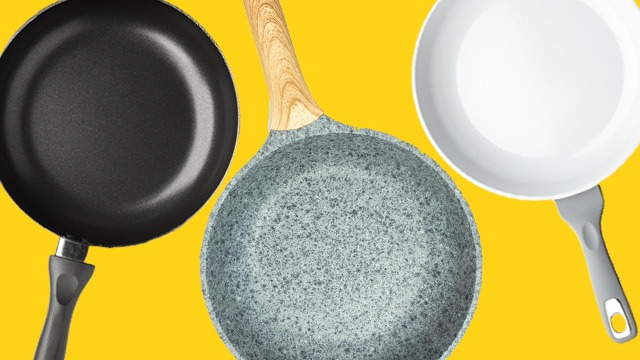
Leave a Reply