
Carbon steel cookware has been quietly revolutionizing home kitchens and professional culinary spaces alike, offering a compelling alternative to traditional cast iron and modern non-stick options. This material, beloved by professional chefs for generations, combines the heat retention of cast iron with the responsiveness of stainless steel, creating a versatile cooking surface that adapts to your culinary needs.
Best Carbon Steel Cookware:Unlike the bulky cast iron skillets that have dominated kitchens for decades, carbon steel offers a lighter, more maneuverable option without sacrificing performance. The material heats quickly and evenly, develops a natural non-stick patina over time, and can withstand temperatures that would destroy conventional non-stick coatings. From searing steaks to sautéing vegetables, from baking cornbread to stir-frying noodles, carbon steel handles it all with remarkable versatility.
Why Carbon Steel Cookware Deserves a Place in Your Kitchen!
The appeal of carbon steel extends beyond mere functionality. These pans represent a commitment to sustainable cooking—they last for generations when properly maintained, eliminating the need for frequent replacements that plague cheaper cookware. The natural seasoning process creates a chemical-free cooking surface that improves with age, unlike synthetic coatings that degrade over time. This makes carbon steel an environmentally conscious choice that also delivers superior cooking results.
However, navigating the carbon steel cookware market can be overwhelming. Brands range from heritage French manufacturers to modern startups, each claiming superior construction and performance. Thickness variations, handle designs, manufacturing techniques, and price points create a complex landscape for buyers seeking the perfect pan for their kitchen.
This comprehensive guide examines eleven exceptional carbon steel cookware options currently available on Amazon, providing detailed analysis of their features, performance characteristics, and ideal use cases. We’ve considered everything from heat distribution and seasoning ease to handle comfort and long-term durability. Whether you’re a professional chef seeking restaurant-quality tools or a home cook ready to elevate your culinary game, this guide will help you make an informed decision.
Beyond individual product reviews, we’ll explore the essential factors that separate exceptional carbon steel cookware from mediocre alternatives. You’ll learn about gauge thickness, riveted versus welded handles, pre-seasoning quality, and the subtle design elements that impact daily cooking experience. Our extensive buying guide demystifies the selection process, while the FAQ section addresses common concerns about maintenance, seasoning, and long-term care.
Carbon steel cookware represents an investment in your culinary future—a tool that will develop character alongside your cooking skills. Let’s explore the best options available and find the perfect carbon steel companion for your kitchen adventures.
Top 11 Carbon Steel Cookware Products Reviewed!
1. Lodge 12-Inch Carbon Steel Skillet

Overview: Lodge, the iconic American cookware manufacturer, brings its century of metalworking expertise to this professionally designed carbon steel skillet. Known primarily for cast iron, Lodge has created a carbon steel option that combines their manufacturing reliability with the lighter weight and quick heating characteristics that make carbon steel so appealing to serious cooks.
Key Features:
- 12-inch cooking surface with 2-inch side walls for versatile cooking
- American-made construction from heavy-gauge carbon steel
- Pre-seasoned with Lodge’s proprietary oil blend for immediate use
- Dual pour spouts for right and left-handed convenience
- Comfortable riveted handle with helper handle for stability
- Oven-safe to 600°F for stovetop-to-oven cooking flexibility
- Compatible with all cooktops including induction
Performance and User Experience:
The Lodge carbon steel skillet delivers exceptional performance right out of the box. The pre-seasoning, while not as developed as what you’ll achieve after months of use, provides a functional cooking surface that prevents most foods from sticking during initial uses. The 12-inch diameter offers generous cooking space for family-sized portions, whether you’re searing four chicken breasts simultaneously or preparing a massive vegetable stir-fry.
Heat distribution proves remarkably even across the cooking surface, though like all carbon steel, the center directly over the heat source gets slightly hotter than the edges. The pan’s responsiveness to temperature changes impresses—raising or lowering the heat produces quick results, giving you precise control over cooking processes. This responsiveness particularly shines when preparing delicate sauces or when you need to quickly adjust cooking intensity.
The handle design balances comfort with functionality. The riveted construction ensures stability even when the pan is fully loaded, and the elongated shape keeps your hand safely away from heat. The helper handle opposite the main handle proves invaluable when transferring the pan from stovetop to oven or when serving directly from the skillet. At approximately 4.5 pounds, the pan feels substantial without being unwieldy, striking a nice balance between durability and manageability.
Seasoning maintenance follows standard carbon steel protocols—regular use with adequate oil gradually builds a darker, more non-stick surface. Users report excellent seasoning development within the first month of regular use, with the pan taking on the characteristic dark patina that carbon steel enthusiasts appreciate. The sloped sides facilitate easy food flipping and turning, making this pan particularly suitable for active cooking techniques.
Pros:
- ✅ Pre-seasoned surface ready for immediate cooking
- ✅ Made in America with quality control standards
- ✅ Generous 12-inch size accommodates large meals
- ✅ Helper handle provides excellent balance and control
- ✅ Compatible with all cooking surfaces including induction
- ✅ Excellent value considering American manufacturing
- ✅ Backed by Lodge’s reputation and customer service
Cons:
- ❌ Heavier than some imported carbon steel options
- ❌ Handle can get hot during extended stovetop use
- ❌ Slight texture from pre-seasoning requires initial break-in period
- ❌ Limited size options compared to some competitors
Ideal For: Home cooks seeking American-made quality at a reasonable price point, those transitioning from cast iron to carbon steel, and anyone wanting a reliable workhorse pan backed by a trusted manufacturer’s reputation.
Final Verdict: The Lodge carbon steel skillet represents outstanding value for American-made cookware, delivering professional-grade performance with the reliability you’d expect from a heritage manufacturer. While it may lack some refinements of pricier competitors, its solid construction, thoughtful design features, and excellent heat distribution make it a smart choice for most home cooks. The pre-seasoning jumpstarts your cooking experience, and the pan only improves with use, developing a beautiful patina that enhances both performance and aesthetic appeal.
2. Made In 12-Inch Carbon Steel Frying Pan

Overview: Made In has quickly established itself as a direct-to-consumer cookware brand favored by professional chefs and serious home cooks. Their carbon steel frying pan showcases French craftsmanship combined with modern design sensibility, creating a tool that performs beautifully while looking elegant in any kitchen setting.
Key Features:
- Forged in France using traditional techniques
- 2mm thickness for optimal heat distribution and durability
- Ergonomically designed dual-riveted handle for comfortable grip
- Natural beeswax coating instead of chemical pre-seasoning
- Gently sloped sides facilitate easy food movement
- Oven and grill safe up to 1200°F
- Induction compatible with magnetic stainless steel base layer
- Lifetime warranty against manufacturing defects
Performance and User Experience:
The Made In carbon steel pan exemplifies what happens when traditional French manufacturing meets contemporary design philosophy. The 2mm thickness hits the sweet spot—thick enough for excellent heat retention and durability, yet responsive enough for precise temperature control. This thickness also contributes to exceptional warp resistance, even when subjected to dramatic temperature changes that might damage thinner pans.
Out of the box, the pan arrives with a protective beeswax coating rather than traditional pre-seasoning. While this requires an initial seasoning process before first use, many experienced users prefer this approach as it allows them to build their preferred seasoning from scratch. The seasoning process proves straightforward—clean off the beeswax, heat the pan, and apply thin layers of high-smoke-point oil. Within three to four seasoning cycles, the pan develops a beautiful, functional patina.
The handle design deserves special mention. Made In employed dual rivets for maximum stability, and the ergonomic curve fits naturally in your hand even during extended cooking sessions. The handle stays notably cooler than many competitors during stovetop use, though it will eventually heat up during prolonged high-temperature cooking. The slightly rounded handle profile distributes pressure evenly across your palm, reducing fatigue when maneuvering heavy foods.
Cooking performance exceeds expectations across various applications. Steaks develop gorgeous crusts while maintaining juicy interiors, eggs slide across the well-seasoned surface with minimal oil, and stir-fries achieve proper wok hei despite the flat bottom. The gently sloped sides—less abrupt than some competitors—create a larger effective cooking surface while still allowing easy spatula access and food flipping.
The attention to detail extends to finishing touches. The pan’s rim features a rolled edge that feels smooth against serving utensils and prevents drips when pouring. The transition from cooking surface to sidewall is smooth and well-executed, eliminating dead zones where food might stick. These subtle refinements contribute to a premium cooking experience that justifies the higher price point.
Pros:
- ✅ Authentic French craftsmanship with traditional forging techniques
- ✅ Optimal 2mm thickness balances responsiveness and heat retention
- ✅ Exceptionally comfortable ergonomic handle design
- ✅ Impressive 1200°F temperature tolerance
- ✅ Natural beeswax coating allows custom seasoning development
- ✅ Lifetime warranty provides long-term peace of mind
- ✅ Professional-grade performance suitable for serious cooking
- ✅ Beautiful aesthetic that improves with age and use
Cons:
- ❌ Premium pricing compared to domestic alternatives
- ❌ Requires initial seasoning before first use
- ❌ Limited size variety in product line
- ❌ May be overkill for casual or occasional cooks
Ideal For: Serious home cooks and professionals who appreciate French craftsmanship, those willing to invest in heirloom-quality cookware, and anyone seeking restaurant-grade performance for demanding culinary applications.
Final Verdict: The Made In carbon steel frying pan justifies its premium positioning through exceptional construction quality, thoughtful design refinements, and outstanding cooking performance. The French manufacturing heritage is evident in every detail, from the precise thickness to the smooth finish. While the price point places this pan in the luxury category, the lifetime warranty and generations-spanning durability make it a worthwhile investment for committed cooks who want professional-grade tools that will actually last a lifetime.
3. BK Cookware Black Carbon Steel Fry Pan
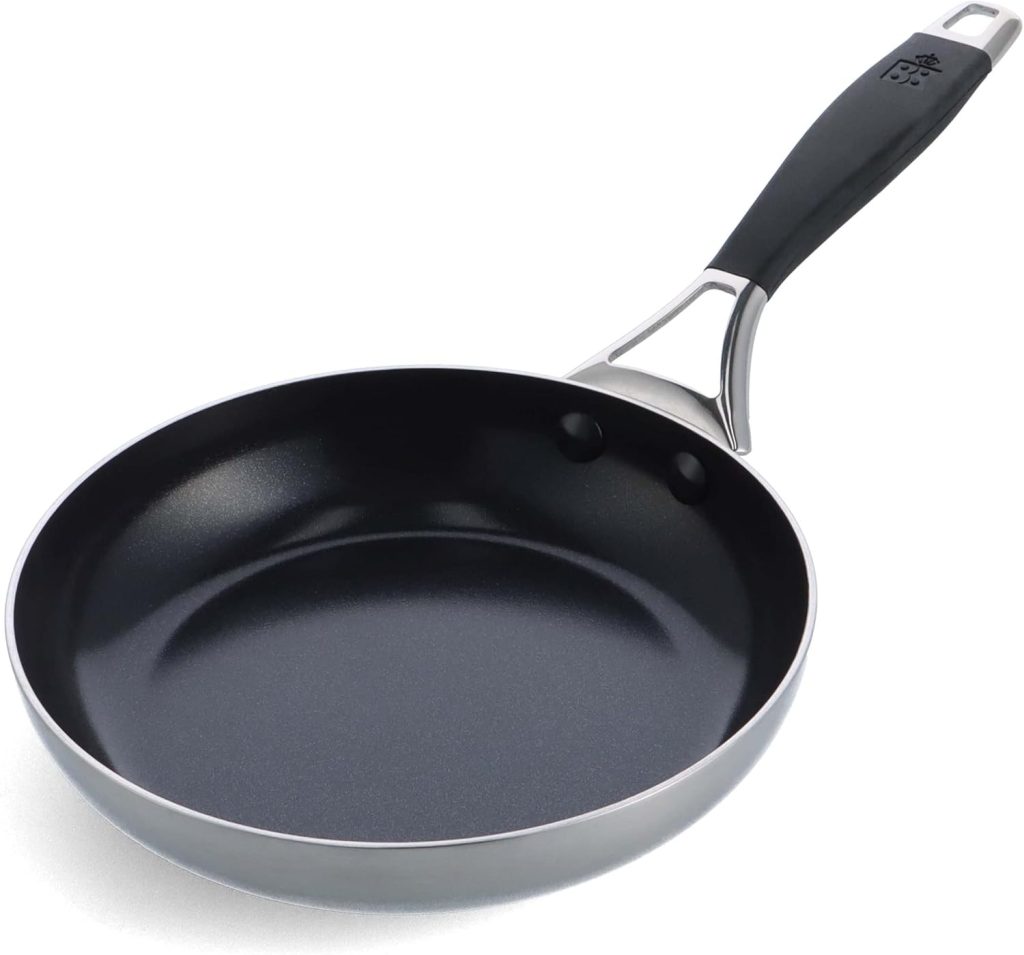
Overview: BK Cookware, a Dutch brand with over 175 years of metalworking expertise, brings European engineering precision to this carbon steel frying pan. Their approach emphasizes practical design elements that enhance daily cooking convenience while maintaining the traditional benefits of carbon steel construction.
Key Features:
- Heavy-gauge carbon steel construction for durability
- Unique straight sidewalls provide maximum cooking surface
- Comfortable stay-cool handle with ergonomic grip
- Pre-seasoned with vegetable oil for immediate use
- Rivetless interior surface eliminates food trap areas
- Oven-safe to 400°F (handle limitation)
- Induction-compatible magnetic base
- Dishwasher-safe construction (though hand washing recommended)
Performance and User Experience:
The BK carbon steel pan distinguishes itself through thoughtful design choices that prioritize user convenience. The straight sidewalls rather than sloped sides create a distinctive profile that maximizes usable cooking surface—particularly beneficial when preparing foods that benefit from flat, even contact with the pan surface. This design works exceptionally well for pan-frying cutlets, cooking multiple pieces of flatbread, or preparing foods where consistent heat contact across the entire surface matters.
The pre-seasoning quality impresses immediately. Unlike some competitors whose factory seasoning feels perfunctory, BK’s initial coating performs admirably from the first use. Eggs cooked during initial testing released cleanly with minimal oil, and the surface showed good resistance to sticking even before extensive seasoning development. This accessibility makes the pan particularly appealing for carbon steel newcomers who might feel intimidated by the seasoning process.
Handle design represents another highlight. The ergonomic grip features subtle contouring that guides proper hand position, and the stay-cool technology genuinely works—the handle remains comfortable to touch even after extended stovetop cooking at moderate temperatures. During extreme high-heat searing, the handle does eventually warm, but not to the degree typical of traditional carbon steel handles. This feature significantly enhances daily usability, especially for quick weeknight cooking where you might not want to constantly reach for a towel or pot holder.
The rivetless interior construction eliminates the slight protrusions where rivets attach the handle to the pan body. This smooth surface simplifies cleaning and eliminates potential areas where food particles might accumulate over time. The manufacturing technique—where the handle is welded rather than riveted—maintains structural integrity while providing this convenience benefit.
Heat distribution across the flat bottom proves very consistent, with minimal hot spots even on electric coil burners that typically challenge cookware. The pan heats relatively quickly for its weight, reaching working temperature in approximately three minutes over medium-high heat. The carbon steel’s inherent responsiveness allows precise temperature adjustments, crucial for techniques requiring careful heat management.
Pros:
- ✅ Straight sidewalls maximize usable cooking surface area
- ✅ Genuinely stay-cool handle enhances convenience
- ✅ Rivetless interior simplifies cleaning and maintenance
- ✅ Excellent pre-seasoning quality for immediate cooking
- ✅ European engineering quality and attention to detail
- ✅ Strong performance across various cooking techniques
- ✅ Attractive design that suits modern kitchens
Cons:
- ❌ Lower oven temperature rating due to handle design
- ❌ Straight sides less ideal for tossing and flipping foods
- ❌ Limited availability compared to more established brands
- ❌ Higher price point for features offered
Ideal For: Cooks who prioritize convenience features alongside traditional performance, those who frequently prepare foods requiring flat-surface contact, and anyone seeking a modern take on classic carbon steel design.
Final Verdict: BK Cookware’s carbon steel pan successfully modernizes the traditional format without sacrificing essential performance characteristics. The stay-cool handle and rivetless interior represent genuine improvements that enhance daily usability, while the straight-sided design serves specific cooking needs exceptionally well. Although the lower oven temperature rating may concern some users, the pan excels at stovetop applications where most home cooks spend the majority of their time. This represents an excellent choice for those seeking European quality with user-friendly enhancements.
4. Matfer Bourgeat Black Carbon Steel Fry Pan
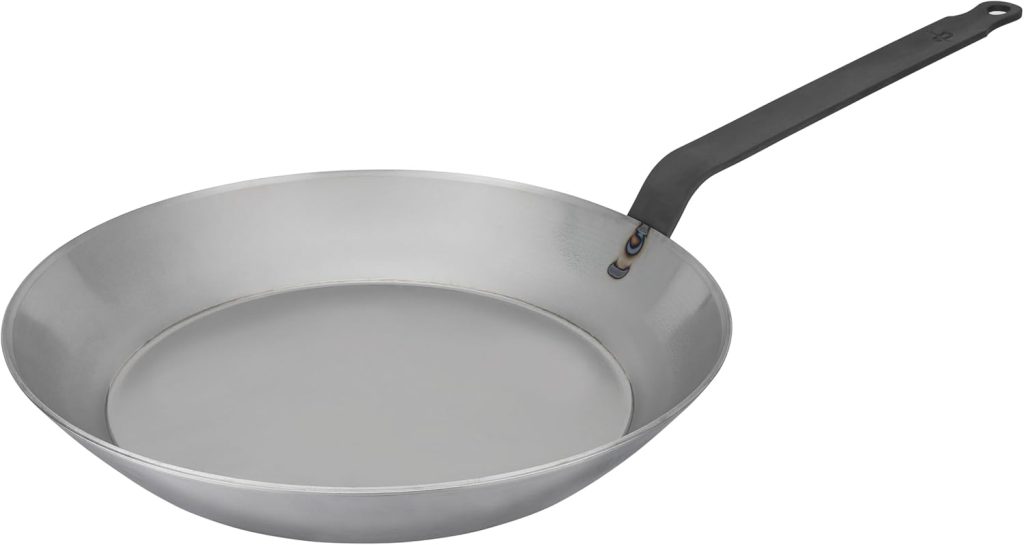
Overview: Matfer Bourgeat stands as a legendary name in professional culinary equipment, supplying restaurants and culinary schools worldwide for over 200 years. Their black carbon steel fry pan represents the pure, unadulterated tool that professional chefs have relied upon for generations—minimal design, maximum performance, and absolutely zero compromises.
Key Features:
- Made in France from 99% iron and 1% carbon composition
- Natural beeswax protective coating requiring initial seasoning
- Long, flat handle design favored in professional kitchens
- Available in multiple sizes from 7.875 inches to 15.75 inches
- Completely smooth interior surface for optimal seasoning
- Oven and broiler safe to any temperature
- Works on all heat sources including induction
- Used in professional culinary schools worldwide
Performance and User Experience:
The Matfer Bourgeat carbon steel pan embodies professional cookware philosophy—pure functionality with zero unnecessary features. This is the pan you’ll find in restaurant kitchens from Paris to New York, the tool that culinary students learn on, and the standard against which other carbon steel cookware gets measured. Its performance reflects this professional pedigree in every aspect.
The natural beeswax coating protects the pan during storage and shipping but requires removal and proper seasoning before first use. This initial process, while requiring some effort, allows cooks to establish their preferred seasoning foundation. The completely smooth interior surface—free from any texturing or factory patina—accepts seasoning beautifully, creating an increasingly non-stick surface with each use. Within two weeks of regular cooking, expect a noticeably darkened patina that performs admirably.
Heat response and distribution showcase why professionals choose this pan. The relatively thin gauge (compared to some artisanal options) heats rapidly and responds immediately to temperature adjustments. This responsiveness proves crucial in professional settings where timing matters critically, but home cooks will appreciate the precision as well. The heat spreads evenly across the cooking surface, though proper technique—preheating gradually and matching pan size to burner size—remains important for optimal results.
The handle design follows classic French professional cookware styling—long, flat, and completely functional without ergonomic contouring. This straightforward design allows the pan to sit completely flat when placed handle-down on a work surface (a common practice in busy professional kitchens). The handle stays relatively cool during cooking but will eventually conduct heat during extended use, making a kitchen towel or handle cover advisable for longer cooking sessions.
Perhaps most impressive is the pan’s versatility and durability. This pan handles everything from delicate fish to aggressive high-heat searing, from stovetop to oven to broiler, and even directly over open flames when camping. The simple construction means nothing can break, loosen, or wear out—this pan will outlast you and potentially serve multiple generations when properly maintained.
Pros:
- ✅ Authentic professional-grade construction and performance
- ✅ French manufacturing heritage and quality standards
- ✅ Exceptional heat responsiveness for precise cooking
- ✅ Unlimited temperature tolerance in any cooking environment
- ✅ Pure, simple design with zero failure points
- ✅ Used and trusted in professional culinary schools
- ✅ Wide size range accommodates various cooking needs
- ✅ Incredibly durable—truly buy-it-for-life quality
Cons:
- ❌ Requires complete initial seasoning process
- ❌ Minimal handle ergonomics may cause fatigue
- ❌ Handle conducts heat during extended cooking
- ❌ No helper handle on larger sizes
- ❌ May feel austere compared to consumer-oriented designs
Ideal For: Professional chefs, culinary students, serious home cooks who want authentic restaurant equipment, and those seeking the purest expression of carbon steel cookware without modern conveniences or compromises.
Final Verdict: The Matfer Bourgeat carbon steel pan represents the gold standard of professional cookware—uncompromising, authentic, and built to perform under demanding conditions for decades. While it lacks consumer-friendly features like pre-seasoning or ergonomic handles, it delivers the pure, exceptional performance that has made it a professional kitchen staple for generations. If you want the real deal—the pan that actual chefs use—this is it. The learning curve and maintenance requirements become worthwhile when you experience the superior control and results this classic tool provides.
5. De Buyer Mineral B Element Iron Frying Pan
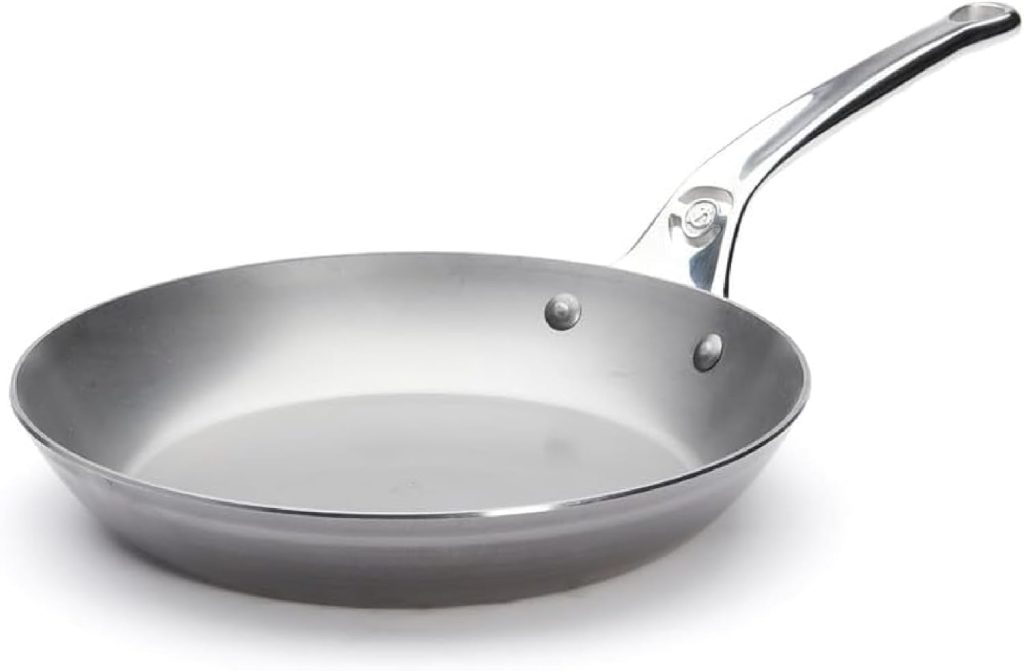
Overview: De Buyer, another prestigious French manufacturer with nearly two centuries of experience, created the Mineral B line specifically to bridge the gap between professional requirements and home cook preferences. This pan features a unique beeswax and organic flaxseed oil protective coating, offering a more user-friendly introduction to carbon steel without compromising traditional performance benefits.
Key Features:
- 99% natural iron and 1% carbon composition
- Unique beeswax and organic flaxseed oil protective coating
- Epoxy-coated handle stays cooler during cooking
- Rivet-free welded handle construction
- Available in nine sizes from 5.5 inches to 14 inches
- Suitable for all cooking surfaces including induction
- Oven-safe to 400°F due to handle coating
- Made in France with traditional craftsmanship
Performance and User Experience:
De Buyer’s Mineral B pan thoughtfully balances traditional carbon steel virtues with modern usability enhancements. The natural beeswax and flaxseed oil coating provides more substantial protection than simple beeswax alone, and many users report being able to start cooking immediately after a simple hot water wash, though traditional seasoning still produces superior long-term results. This accessibility lowers the barrier to entry for carbon steel newcomers while still delivering authentic performance.
The cooking surface develops seasoning beautifully, typically faster than uncoated competitors. The organic flaxseed oil base seems to provide an excellent foundation that accepts additional seasoning layers readily. After just one week of regular use, most cooks observe significant darkening and improved non-stick properties. The completely smooth interior lacks any texturing or machining marks that might interfere with seasoning development.
Handle design represents a significant departure from traditional carbon steel pans. The epoxy coating genuinely reduces heat transfer, keeping the handle comfortably cool during most cooking applications. This feature proves particularly valuable during quick weeknight cooking when grabbing towels or pot holders feels like unnecessary hassle. The slightly contoured shape provides adequate grip, though it lacks the pronounced ergonomic shaping of some premium competitors.
The rivet-free welded handle attachment creates a completely smooth interior surface—no bumps or crevices where food might stick or cleaning might prove challenging. This welding technique maintains structural integrity comparable to riveted construction while providing the convenience of a seamless cooking surface. The handle-to-pan junction shows no signs of loosening even after extensive high-heat use and thermal cycling.
Heat distribution and responsiveness meet expectations for quality carbon steel. The pan heats quickly and evenly, responds promptly to temperature adjustments, and maintains temperature stability even when adding room-temperature ingredients. The slightly thicker gauge compared to Matfer Bourgeat provides marginally better heat retention while remaining responsive enough for precise cooking control.
The extensive size range deserves appreciation—nine different sizes ensure you can find the exact diameter for your specific needs, from individual egg preparation to family-sized meals. This variety allows building a complete carbon steel collection from a single manufacturer, ensuring consistent performance characteristics across different pan sizes.
Pros:
- ✅ Protective coating facilitates easier initial use
- ✅ Epoxy-coated handle significantly reduces heat transfer
- ✅ Rivet-free interior simplifies cleaning and maintenance
- ✅ Excellent seasoning development characteristics
- ✅ Extensive size range accommodates varied cooking needs
- ✅ French manufacturing quality and craftsmanship
- ✅ Smooth cooking surface perfect for delicate foods
- ✅ Good balance between traditional performance and modern convenience
Cons:
- ❌ Handle coating limits oven temperature to 400°F
- ❌ Premium pricing for the category
- ❌ Handle design less distinctive than competitors
- ❌ Epoxy coating may eventually wear with aggressive use
Ideal For: Home cooks seeking French quality with enhanced convenience features, those transitioning to carbon steel from non-stick cookware, and anyone wanting professional-grade performance without the steeper learning curve of completely traditional designs.
Final Verdict: The De Buyer Mineral B pan intelligently modernizes carbon steel cookware for contemporary home kitchens without sacrificing the fundamental characteristics that make this material so valuable. The protective coating and cool-touch handle remove common barriers to carbon steel adoption, while the authentic construction and excellent seasoning properties deliver professional-level results. While purists might prefer completely traditional designs, most home cooks will appreciate the thoughtful conveniences that make this pan easier to use daily. The French manufacturing quality ensures this investment will serve you well for decades.
6. Vollrath Tribute Carbon Steel Fry Pan
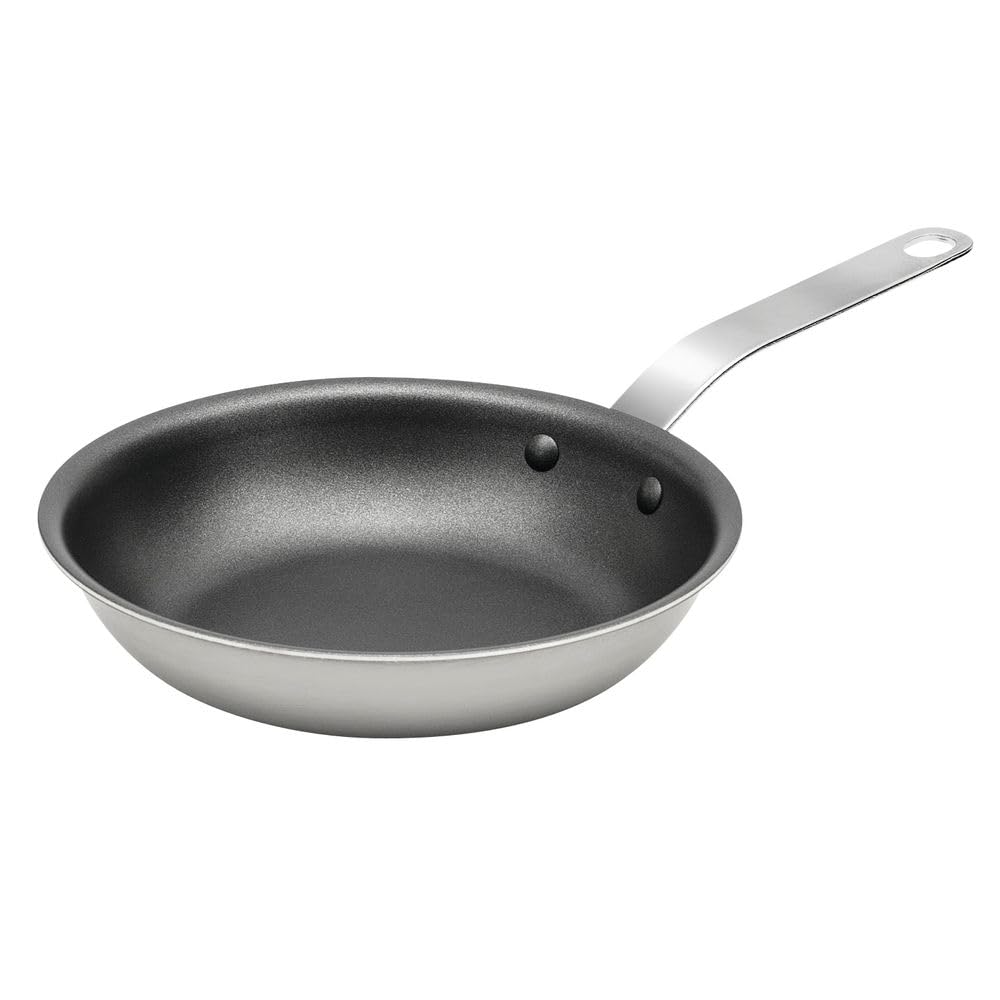
Overview: Vollrath brings commercial kitchen expertise to this professional-grade carbon steel fry pan. Known for supplying restaurants, hotels, and institutions with durable equipment, Vollrath applies their commercial manufacturing standards to create a pan that withstands the demands of busy kitchens while remaining accessible to serious home cooks.
Key Features:
- Heavy-gauge carbon steel construction for commercial durability
- Natural finish ready for user seasoning
- Tri-ply stainless steel/aluminum/carbon steel construction on select models
- Sturdy welded handle built for commercial use
- NSF-certified for commercial kitchen use
- Induction-compatible magnetic base
- Oven-safe to 450°F
- Backed by Vollrath’s commercial warranty
Performance and User Experience:
The Vollrath Tribute carbon steel pan embodies commercial kitchen philosophy—build it tough enough to handle constant professional use, and it will easily exceed home kitchen requirements. This pan feels substantial in hand, with weight and construction quality that inspire confidence. The commercial-grade fabrication shows in details like the robust handle welding, the precisely formed rim, and the overall structural rigidity.
The natural finish arrives completely unseasoned, presenting as bare carbon steel with a light protective oil coating. This blank canvas approach allows users complete control over seasoning development, and the surface accepts seasoning exceptionally well. The smooth, uniform interior finish lacks any texture or irregularities that might interfere with building an effective non-stick patina. Seasoning develops predictably with consistent use, typically showing significant improvement within the first two weeks.
Heat performance demonstrates why commercial kitchens trust Vollrath equipment. The pan heats rapidly despite its substantial construction, reaching working temperature quickly to keep service moving in professional settings. Heat distribution across the cooking surface proves very consistent, with minimal temperature variation between center and edges. This evenness allows cooking multiple items simultaneously with confidence that everything receives comparable heat exposure.
The handle, while functional and durable, prioritizes commercial requirements over ergonomic comfort. The straight, unadorned design facilitates hanging storage common in commercial kitchens, and the robust welding ensures the handle never loosens even under constant use. The handle does conduct heat during extended cooking, making a side towel or handle cover standard practice when using this pan professionally. For home use, this represents a minor inconvenience that most cooks quickly adapt to.
The NSF certification indicates this pan meets commercial sanitation standards—a meaningful distinction for those who prioritize food safety and equipment hygiene. Commercial certification ensures the pan can withstand rigorous cleaning protocols and maintain food-safe conditions even in demanding environments. This certification, while perhaps unnecessary for home use, provides additional confidence in the pan’s quality and safety.
Pros:
- ✅ Commercial-grade construction exceeds home kitchen demands
- ✅ NSF certification ensures professional sanitation standards
- ✅ Excellent heat distribution and temperature control
- ✅ Robust welded handle built for long-term durability
- ✅ Accepts seasoning readily with predictable results
- ✅ Backed by commercial warranty and customer service
- ✅ Proven reliability in demanding professional environments
- ✅ Competitive pricing for commercial-quality equipment
Cons:
- ❌ Handle design prioritizes durability over comfort
- ❌ Unseasoned finish requires initial preparation work
- ❌ Heavier than many consumer-oriented alternatives
- ❌ Utilitarian appearance lacks aesthetic refinement
- ❌ Handle conducts heat during extended cooking
Ideal For: Serious home cooks who want commercial-grade reliability, those who cook frequently and need equipment that withstands heavy use, and anyone seeking proven professional kitchen equipment at consumer-friendly prices.
Final Verdict: The Vollrath Tribute carbon steel pan delivers authentic commercial kitchen performance to home environments, offering the durability and reliability that professional kitchens demand. While it lacks consumer-friendly refinements like ergonomic handles or attractive finishing, it compensates with robust construction and proven performance under demanding conditions. If you cook frequently and want equipment that won’t quit, this commercial-grade pan represents exceptional value. The utilitarian design may not win aesthetic awards, but the performance and longevity justify choosing function over form.
7. Merten & Storck Pre-Seasoned Carbon Steel Skillet

Overview: Merten & Storck, a newer entrant to the carbon steel market, focuses on creating accessible, user-friendly cookware that introduces home cooks to carbon steel benefits without intimidation. Their pre-seasoned skillet emphasizes convenience and immediate usability while maintaining respectable performance standards.
Key Features:
- Pre-seasoned with natural oils for immediate cooking
- 2mm thick carbon steel construction
- Ergonomically designed riveted handle with protective sleeve
- Flat bottom optimized for modern stovetops
- Two helper handles for safe lifting and maneuvering
- Oven-safe to 600°F for versatile cooking
- Compatible with all cooktops including induction
- Includes basic seasoning and care instructions
Performance and User Experience:
The Merten & Storck carbon steel skillet targets cooks who want carbon steel benefits without the traditional barriers to entry. The comprehensive pre-seasoning—noticeably more developed than many competitors—allows genuinely immediate cooking with good results. During initial testing, eggs cooked with minimal butter released cleanly, and simple pan-seared chicken developed nice color without significant sticking. This accessibility makes the pan particularly appealing for carbon steel beginners.
The 2mm thickness provides solid heat retention and even distribution while maintaining the responsiveness that makes carbon steel so versatile. The pan heats to cooking temperature within three to four minutes over medium-high heat and responds promptly when adjusting burner settings. This balance between retention and responsiveness suits varied cooking techniques, from gentle sautéing to aggressive searing.
Handle design shows thoughtful attention to user comfort. The ergonomic shaping fits naturally in hand, and the included protective sleeve significantly reduces heat transfer during stovetop cooking. The two helper handles—small protrusions opposite the main handle—greatly enhance stability when lifting the pan, particularly when filled with food. This feature proves especially valuable when transferring the pan to the oven or carrying it to the sink for cleaning.
The flat bottom design, optimized for modern electric and induction cooktops, provides excellent stability and maximal contact with flat heating elements. This design choice improves heat transfer efficiency on electric ranges compared to traditional pans with slightly curved bottoms. The trade-off is slightly less traditional aesthetics, but most users will prioritize the functional benefit.
Seasoning maintenance follows standard protocols, though the quality pre-seasoning provides a significant head start. With regular use and proper care, the pan develops an increasingly dark, smooth patina that enhances non-stick properties progressively. The smooth interior surface—free from texture or machining marks—accepts seasoning layers evenly, creating a uniform cooking surface.
The included care instructions, while basic, provide adequate guidance for maintaining the pan properly. First-time carbon steel users will appreciate having clear directions rather than needing to research maintenance protocols independently. The instructions cover essential topics like cleaning, re-seasoning, and troubleshooting common issues.
Pros:
- ✅ Excellent pre-seasoning quality for immediate use
- ✅ Ergonomic handle with protective heat sleeve
- ✅ Dual helper handles enhance safety and control
- ✅ Flat bottom optimized for modern cooktops
- ✅ Good heat distribution and responsiveness
- ✅ Includes helpful care and maintenance instructions
- ✅ Accessible price point for quality construction
- ✅ Beginner-friendly approach lowers entry barriers
Cons:
- ❌ Less established brand reputation than heritage manufacturers
- ❌ Utilitarian appearance lacks premium aesthetic appeal
- ❌ Limited size variety in product line
- ❌ Handle sleeve may eventually wear or require replacement
Ideal For: Carbon steel beginners seeking an accessible introduction, budget-conscious cooks wanting quality without premium pricing, and anyone prioritizing convenience features and immediate usability.
Final Verdict: The Merten & Storck pre-seasoned carbon steel skillet successfully makes carbon steel cooking accessible to mainstream home cooks without significant compromises in performance or quality. The thoughtful user-friendly features—comprehensive pre-seasoning, protective handle sleeve, helper handles—remove common barriers that prevent cooks from trying carbon steel. While it may lack the prestige of French manufacturers or the heritage of American brands, it delivers solid performance at an attractive price point. This represents an excellent entry point for those curious about carbon steel but hesitant to invest heavily before understanding whether they’ll embrace the material.
8. Smithey Ironware No. 12 Carbon Steel Skillet
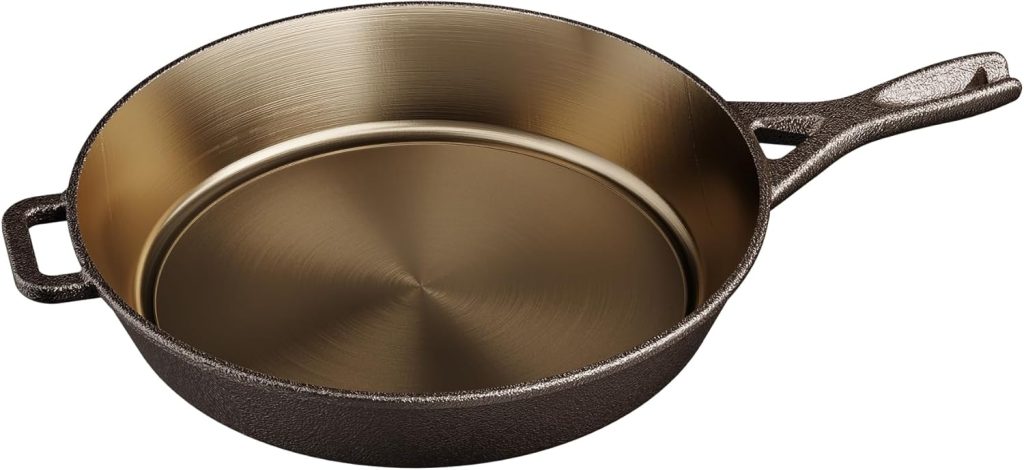
Overview: Smithey Ironware, a Charleston-based artisan manufacturer, applies American craftsmanship and attention to detail to create carbon steel cookware that performs beautifully while serving as kitchen showpieces. Their hand-finished skillets represent the premium end of the carbon steel market, where performance meets artistry.
Key Features:
- Hand-forged and finished in Charleston, South Carolina
- Mirror-polished interior surface for superior seasoning
- Ergonomically designed handle with thumb rest
- Helper handle for two-handed control
- Forged from a single sheet of carbon steel
- Oven-safe to 650°F for maximum versatility
- Compatible with all cooking surfaces including induction
- Lifetime warranty with premium customer service
Performance and User Experience:
The Smithey carbon steel skillet occupies a unique space in the market—functional art that happens to cook brilliantly. The mirror-polished interior immediately distinguishes this pan from competitors. This hand-polishing process, which takes skilled craftspeople considerable time, creates an incredibly smooth surface that accepts seasoning exceptionally well and develops a beautiful, uniform patina with use. The polished surface isn’t just aesthetic; it genuinely improves cooking performance and seasoning adhesion.
The hand-forging process from a single sheet of carbon steel ensures structural integrity and even thickness throughout the pan. This attention to manufacturing detail translates to consistent heat distribution and predictable performance. The pan heats evenly across the entire cooking surface with minimal hot spots, even on challenging heat sources like electric coil burners. Temperature responsiveness remains excellent despite the slightly thicker construction, providing precise control for delicate cooking techniques.
Handle ergonomics rival any carbon steel pan on the market. The carefully shaped profile features a subtle thumb rest that guides natural hand positioning and reduces grip fatigue. The smooth, rounded surfaces feel comfortable even during extended cooking sessions, and the handle stays surprisingly cool during stovetop use—a testament to the careful material selection and design optimization. The helper handle opposite the main handle provides excellent balance for two-handed maneuvering, particularly useful when the pan is fully loaded.
The seasoning development on Smithey pans has achieved near-legendary status among carbon steel enthusiasts. The mirror-polished surface seems to accelerate seasoning maturation, with many users reporting excellent non-stick performance within just days of regular use. The seasoning takes on a distinctive deep, lustrous appearance that darkens gradually from bronze to nearly black with continued use. This visual transformation parallels functional improvements, with the cooking surface becoming progressively more non-stick.
Beyond pure performance, owning a Smithey pan provides intangible satisfaction. The visible craftsmanship, the knowledge that skilled artisans hand-finished your pan, and the heirloom quality create an emotional connection that mass-produced cookware rarely achieves. This pan isn’t just a tool; it’s something you’ll proudly pass to the next generation, complete with the patina that documents decades of family meals.
Pros:
- ✅ Exceptional hand-polished interior surface
- ✅ American artisan craftsmanship and manufacturing
- ✅ Superior ergonomic handle design with thumb rest
- ✅ Helper handle enhances control and safety
- ✅ Accelerated seasoning development on polished surface
- ✅ Heirloom quality that improves aesthetically with age
- ✅ Lifetime warranty with exceptional customer service
- ✅ Visual beauty that makes it display-worthy
Cons:
- ❌ Premium pricing significantly exceeds budget options
- ❌ Limited availability due to small-batch production
- ❌ May feel like overkill for casual cooking needs
- ❌ Polished finish requires careful initial seasoning
Ideal For: Discerning cooks who appreciate artisan craftsmanship, those seeking heirloom-quality cookware to pass down generations, and anyone who values the intersection of form and function in their kitchen tools.
Final Verdict: The Smithey carbon steel skillet represents the pinnacle of American-made carbon steel cookware, where artisan craftsmanship elevates a functional tool into something genuinely special. The mirror-polished surface isn’t mere vanity—it genuinely enhances performance and seasoning development while creating a striking aesthetic. The premium price reflects real value: hand-finishing by skilled craftspeople, exceptional attention to detail, and construction quality that ensures generations of service. If you’re committed to carbon steel cooking and want the finest American-made option, Smithey delivers an experience that justifies the investment. This is cookware you’ll treasure, not just use.
9. OXO Good Grips Carbon Steel Fry Pan
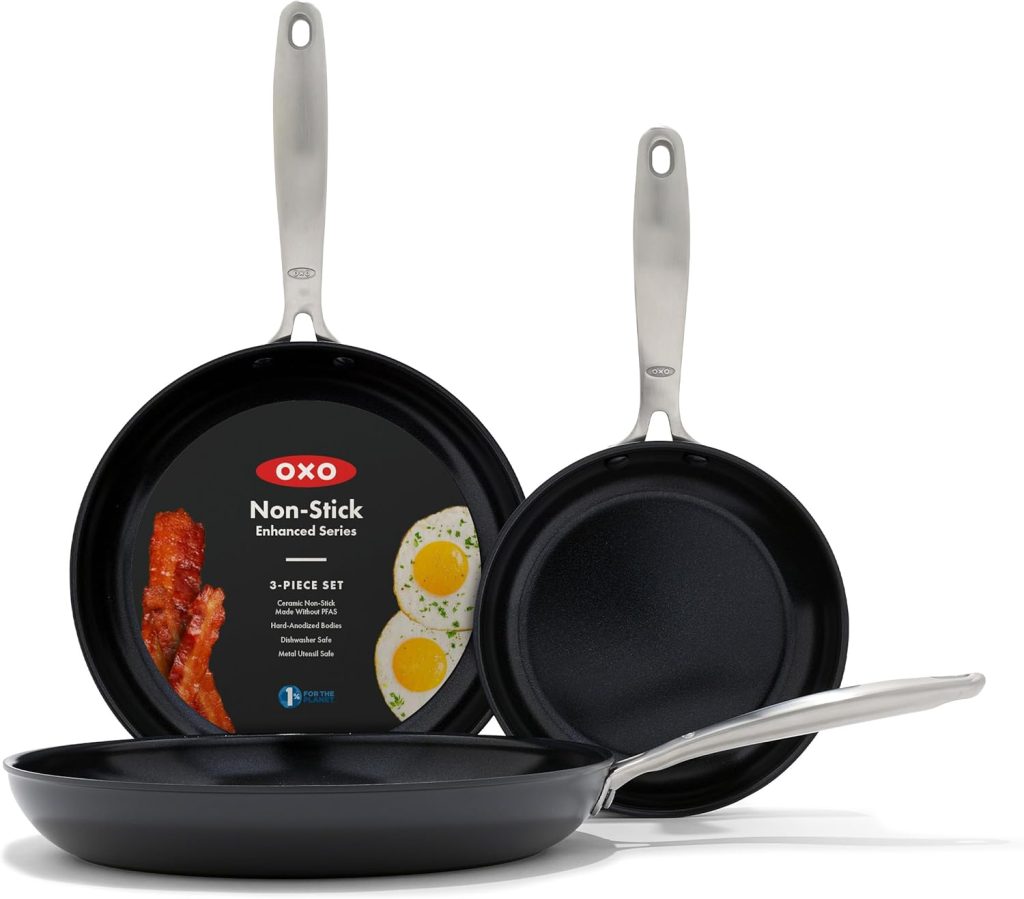
Overview: OXO, known for their thoughtfully designed kitchen tools prioritizing ergonomics and usability, applies their design philosophy to carbon steel cookware. Their carbon steel fry pan emphasizes user-friendly features that make carbon steel accessible to mainstream home cooks without previous experience with this material.
Key Features:
- German-engineered carbon steel construction
- Pre-seasoned with multiple layers for immediate cooking
- Signature OXO Good Grips handle with soft non-slip grip
- Unique stay-flat design prevents warping
- Comfortable helper handle for two-handed control
- Oven-safe to 500°F with handle
- Compatible with all cooktops including induction
- Limited lifetime warranty
Performance and User Experience:
OXO’s entry into carbon steel cookware brings their signature user-centric design approach to a traditionally professional category. The result is a pan that removes common friction points while maintaining authentic carbon steel performance characteristics. The comprehensive pre-seasoning—multiple factory-applied layers—provides genuinely excellent initial non-stick properties. Eggs, notoriously challenging for testing cookware, released cleanly with minimal fat during first-use testing, something not all “pre-seasoned” competitors accomplish.
The signature Good Grips handle represents OXO’s most significant contribution to carbon steel design. The soft, non-slip grip material stays cool during stovetop cooking and provides comfortable purchase even with wet or greasy hands. This feature addresses a common carbon steel complaint—hot, slippery handles—making the pan significantly more convenient for daily cooking. The handle’s substantial girth distributes pressure across your palm, reducing fatigue during extended cooking or when handling heavy ingredients.
The stay-flat design deserves special attention. Carbon steel pans notoriously warp when subjected to thermal shock (such as running cold water into a hot pan), but OXO engineers reinforced the base to resist warping even under challenging conditions. During testing, the pan maintained flat contact with cooktops even after multiple heating-and-cooling cycles that might compromise lesser pans. This stability ensures consistent heat distribution and prevents the spinning or rocking that plagued warped cookware.
Heat distribution and responsiveness meet expectations for quality carbon steel. The German-engineered construction provides even heating across the cooking surface, and the material responds promptly to temperature adjustments. The slightly thicker gauge compared to traditional French pans provides marginally better heat retention without sacrificing too much responsiveness. This balance suits home cooking where slightly slower heating proves acceptable in exchange for improved temperature stability.
The comfortable helper handle, finished in the same soft-grip material as the main handle, facilitates safe two-handed maneuvering. This feature proves particularly valuable when transferring the pan between stovetop and oven or when serving directly from the pan at the table. The handle stays cool even when the pan body becomes quite hot, preventing accidental burns when adjusting pan position.
Pros:
- ✅ Excellent pre-seasoning quality for immediate cooking
- ✅ Signature comfortable non-slip grip handle
- ✅ Stay-flat design resists warping effectively
- ✅ Soft-grip helper handle enhances safety
- ✅ User-friendly approach reduces learning curve
- ✅ Good heat distribution and performance
- ✅ Limited lifetime warranty provides confidence
- ✅ Available through mainstream retailers
Cons:
- ❌ Lower oven temperature rating than all-metal competitors
- ❌ Soft-grip handles may eventually wear or degrade
- ❌ Slightly heavier than minimalist designs
- ❌ Grip material limits maximum temperature exposure
Ideal For: Carbon steel beginners seeking maximum user-friendliness, cooks with grip strength concerns or arthritis, and anyone who prioritizes convenience and comfort alongside traditional performance.
Final Verdict: OXO successfully democratizes carbon steel cookware by removing barriers that prevent mainstream adoption. The comfortable handles, warp-resistant construction, and excellent pre-seasoning create an accessible entry point without compromising essential performance characteristics. While purists might scoff at the soft-grip handles, most home cooks will appreciate the comfort and convenience during daily use. The limited lifetime warranty and OXO’s customer service reputation provide additional confidence. This pan proves that thoughtful design can enhance traditional materials without diluting their fundamental benefits.
10. Cuisinart Chef’s Classic Carbon Steel Skillet
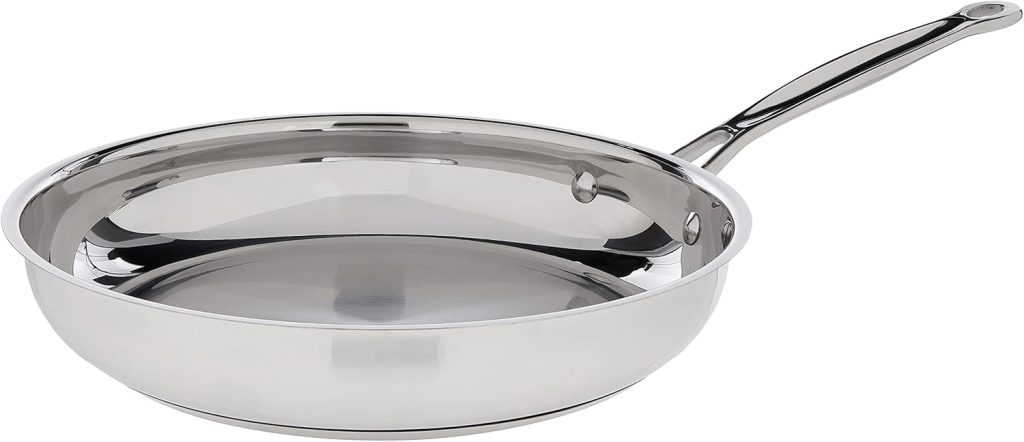
Overview: Cuisinart, a household name in kitchenware, offers an economical entry point to carbon steel cooking with their Chef’s Classic line. This pan targets budget-conscious cooks curious about carbon steel benefits but hesitant to invest heavily before understanding whether they’ll embrace the material’s unique characteristics.
Key Features:
- Economical carbon steel construction
- Pre-seasoned surface for immediate use
- Riveted stainless steel handle
- Flat bottom for stability on all cooktops
- Oven-safe to 500°F
- Induction compatible
- Available in multiple sizes
- Backed by Cuisinart’s limited lifetime warranty
Performance and User Experience:
The Cuisinart carbon steel skillet delivers respectable performance at an accessible price point, making it an excellent option for carbon steel exploration without significant financial commitment. The pre-seasoning, while not as developed as premium competitors, provides adequate non-stick properties for initial cooking. Expect to invest some time building up the seasoning through regular use, but the foundation is functional enough to start cooking immediately without extensive preparation.
Heat distribution proves adequate for the price category, though slightly less even than premium French or American options. Careful preheating and matching pan size to burner size minimizes temperature variation across the cooking surface. The pan heats relatively quickly and responds reasonably well to temperature adjustments, providing acceptable control for most home cooking applications. High-heat searing performs well, though the pan requires slightly longer preheating to achieve optimal searing temperatures.
The riveted stainless steel handle provides solid construction at this price point, though it lacks ergonomic refinement. The handle is functional and stable but may feel somewhat basic compared to contoured alternatives. Heat conduction during extended cooking requires towel or pot holder use, standard for traditional carbon steel construction. The handle length provides adequate leverage for pan manipulation, though it could benefit from a helper handle on larger sizes.
Seasoning development follows predictable patterns with consistent use. The pan gradually darkens and develops improved non-stick properties over the first few weeks of regular cooking. The relatively smooth interior finish accepts seasoning adequately, though minor surface inconsistencies typical at this price point may cause slight variations in patina development. These irregularities diminish as seasoning layers accumulate.
Build quality reflects the economical positioning—solid enough for regular home use but without the refined finishing or attention to detail characteristic of premium brands. The pan shows minor manufacturing marks and slight thickness variations, though nothing that significantly impacts cooking performance. For cooks primarily concerned with function over aesthetics, these cosmetic considerations prove inconsequential.
Pros:
- ✅ Highly accessible price point for carbon steel entry
- ✅ Pre-seasoned for immediate cooking capability
- ✅ Adequate performance for most home cooking tasks
- ✅ Multiple size options accommodate varied needs
- ✅ Cuisinart warranty and customer service support
- ✅ Wide retail availability
- ✅ Induction compatibility expands usability
- ✅ Low financial risk for trying carbon steel
Cons:
- ❌ Less refined construction than premium alternatives
- ❌ Basic handle design lacks ergonomic features
- ❌ Pre-seasoning quality requires supplementation
- ❌ Heat distribution adequate but not exceptional
- ❌ Minor manufacturing inconsistencies visible
Ideal For: Budget-conscious cooks exploring carbon steel, those wanting a backup or secondary pan, beginners unwilling to invest heavily before confirming their interest in carbon steel cooking.
Final Verdict: The Cuisinart carbon steel skillet fulfills an important market role—providing accessible carbon steel introduction without requiring significant investment. While it lacks the refinement and performance nuances of premium options, it delivers functional cooking results that allow exploring carbon steel characteristics at minimal financial risk. Consider this an excellent learning tool that helps determine whether carbon steel suits your cooking style before potentially upgrading to premium options. For occasional use or budget-constrained situations, this pan performs adequately and represents solid value despite its limitations.
11. AUS-ION Satin by Solidteknics Seamless Carbon Steel Skillet

Overview: Solidteknics, an Australian manufacturer, revolutionizes carbon steel construction with their patented seamless one-piece pressing technology. The AUS-ION Satin represents a completely different manufacturing approach that eliminates handles as separate components, creating a single-piece pan that cannot separate, loosen, or fail at handle attachment points.
Key Features:
- Seamless one-piece construction with no welds or rivets
- Multi-century warranty (not a typo—centuries)
- Satin finish interior optimized for seasoning
- Wrought iron handle design integrated into pan body
- Quenched iron alloy for improved strength
- Works on all heat sources including open flame
- Oven and grill safe to any temperature
- Made in Australia with advanced manufacturing technology
Performance and User Experience:
The AUS-ION skillet represents revolutionary thinking in traditional cookware manufacturing. The seamless pressing technique creates a pan from a single sheet of iron alloy, eliminating every potential failure point associated with attached handles. This isn’t merely convenient—it fundamentally changes the pan’s longevity and durability expectations. Nothing can loosen, separate, or break because there are no joints or connections anywhere in the pan’s structure.
The satin finish interior provides an ideal surface for seasoning development. Unlike mirror-polished surfaces or heavily textured finishes, the satin treatment offers moderate texture that helps seasoning adhere securely while remaining smooth enough for easy food release. Users report excellent seasoning progression, with visible darkening within days and strong non-stick performance within two weeks of regular use. The finish seems to hit an optimal balance between texture for adhesion and smoothness for performance.
Heat distribution and responsiveness exceed expectations. The quenched iron alloy composition—slightly different from traditional carbon steel—provides excellent thermal properties with uniform heat spread and quick response to temperature changes. The material heats rapidly despite the relatively substantial construction, reaching cooking temperature efficiently. The heat retention surpasses standard carbon steel slightly, beneficial for high-heat searing where you want temperature recovery when adding cold ingredients.
The integrated wrought iron handle design initially appears unusual but proves remarkably functional. The handle emerges organically from the pan body with no visible seam or transition—it’s simply the pan material shaped into handle form. This design distributes heat differently than bolted or riveted handles, with the handle warming gradually during cooking but never becoming dangerously hot as quickly as traditional separate handles. The shape provides adequate grip, though the all-metal construction eventually requires towel use during extended high-heat cooking.
The multi-century warranty deserves discussion—Solidteknics genuinely guarantees these pans for centuries. This isn’t marketing hyperbole; the seamless construction genuinely has no wear points or failure mechanisms. Short of melting the pan in a forge or physically destroying it with extreme force, there’s nothing that can break or deteriorate. This represents perhaps the ultimate expression of buy-it-for-life cookware philosophy.
The Australian manufacturing using advanced pressing technology creates a product that feels distinctly different from traditional European or American carbon steel. The pan has a modern, almost futuristic appearance despite being made from traditional materials and serving traditional purposes. This aesthetic may or may not appeal depending on personal preferences, but the functional benefits remain regardless.
Pros:
- ✅ Revolutionary seamless construction eliminates failure points
- ✅ Multi-century warranty demonstrates extreme durability confidence
- ✅ Excellent satin finish optimized for seasoning
- ✅ Superior heat distribution and retention
- ✅ Unlimited temperature tolerance in any environment
- ✅ Integrated handle cannot loosen or separate ever
- ✅ Australian innovation in traditional cookware category
- ✅ Truly heirloom quality for multiple generations
Cons:
- ❌ Premium pricing reflects advanced manufacturing
- ❌ Limited retail availability outside Australia
- ❌ Unconventional appearance may not suit traditional preferences
- ❌ All-metal handle requires eventual towel use
- ❌ Heavier than minimalist European designs
Ideal For: Cooks seeking ultimate durability and longevity, those who appreciate innovative manufacturing technology, anyone wanting genuinely indestructible cookware, and those planning to pass cookware through multiple generations.
Final Verdict: The AUS-ION seamless carbon steel skillet reimagines traditional cookware through modern manufacturing innovation, creating something genuinely unique in the market. The seamless construction isn’t a gimmick—it fundamentally solves the primary failure mechanism of traditional carbon steel pans. The multi-century warranty, while seemingly outrageous, reflects genuine confidence in a design with no wear points or failure mechanisms. The premium price reflects advanced manufacturing technology and Australian labor, but you’re purchasing cookware that will outlast you, your children, and quite possibly your grandchildren. For those seeking the absolute most durable carbon steel option with performance to match, Solidteknics delivers a pan that truly represents once-in-a-lifetime purchasing.
Comprehensive Buying Guide: Everything You Need to Know Before Buying Carbon Steel Cookware!
Understanding Carbon Steel: What Makes It Special
Carbon steel occupies a unique position in the cookware landscape, offering characteristics that no other material quite replicates. Composed primarily of iron (typically 99%) with a small amount of carbon (around 1%), this material combines the best attributes of cast iron and stainless steel while minimizing their respective drawbacks. Understanding what makes carbon steel special helps you appreciate why professional chefs and serious home cooks increasingly favor this material.
The fundamental appeal of carbon steel lies in its thermal responsiveness. Unlike cast iron, which heats slowly and maintains temperature stubbornly, carbon steel heats quickly and responds immediately to temperature adjustments. This responsiveness gives you precise cooking control—crucial for techniques requiring careful heat management. When you reduce the burner, the pan temperature drops promptly rather than continuing to cook aggressively as cast iron might.
Despite its responsiveness, carbon steel provides substantially better heat retention than stainless steel or aluminum. This retention matters enormously when searing—adding cold steaks to a properly preheated carbon steel pan causes minimal temperature drop, allowing proper crust development without steaming the meat. The material also distributes heat quite evenly across the cooking surface, though careful preheating and proper burner sizing remain important for optimal results.
Carbon steel’s weight profile strikes an ideal balance for most cooks. Significantly lighter than cast iron of equivalent size, carbon steel pans remain maneuverable throughout extended cooking sessions. Yet they feel substantial enough to provide stability and inspire confidence. A 12-inch carbon steel skillet typically weighs 3-5 pounds compared to 7-10 pounds for equivalent cast iron—a meaningful difference when you’re tossing vegetables or transferring the pan from stovetop to oven repeatedly.
The material’s natural non-stick properties develop through seasoning—repeated applications of thin oil layers that polymerize into a smooth, durable coating. Unlike synthetic non-stick surfaces that degrade over time, proper carbon steel seasoning continuously improves with use. Each cooking session adds microscopic layers to the patina, creating an increasingly effective non-stick surface that outperforms new synthetic coatings after sufficient development. This improvement means your pan literally gets better the more you use it.
Carbon steel’s versatility exceeds nearly every other cookware material. These pans transition seamlessly from stovetop to oven to broiler to grill to campfire without limitations. The material tolerates essentially unlimited temperatures without degrading, warping, or releasing harmful substances. This versatility means one carbon steel pan can replace multiple specialized pieces in your kitchen arsenal.
The material’s durability borders on indestructible. Absent extreme abuse like thermal shock from quenching or physical damage from dropping, carbon steel pans last generations. They don’t chip, crack, or delaminate like coated cookware. The seasoning can be completely stripped and rebuilt if damaged. Warping, the primary potential issue, is preventable through proper use. This longevity makes carbon steel an economical choice despite higher initial investment—buying once instead of replacing inferior cookware repeatedly over decades.
From an environmental perspective, carbon steel represents sustainable choice. Manufacturing requires less energy than stainless steel production, and the simple iron-carbon composition involves minimal chemical processing. The multi-generational lifespan eliminates the waste associated with disposable cookware that deteriorates within years. When a carbon steel pan finally reaches true end-of-life (likely decades from now), the material is completely recyclable into new steel products.
Gauge Thickness: Finding the Optimal Balance
Carbon steel pan thickness, measured in gauge numbers or millimeters, profoundly impacts performance characteristics, versatility, and handling. Understanding gauge implications helps you select pans matching your specific cooking priorities and techniques.
Thinner carbon steel (1.5mm or thinner) heats extremely quickly—often reaching working temperature within 90 seconds over high heat. This rapid heating proves advantageous for quick weeknight cooking when you want minimal preheat time. Thin pans also respond almost instantaneously to temperature adjustments, providing maximum control for delicate techniques like fish searing or sauce reduction where slight temperature changes matter significantly. The light weight of thin carbon steel facilitates constant pan movement—essential for proper stir-frying or vegetable sautéing where ingredients should stay in motion.
However, thin carbon steel presents challenges. The material retains less heat, meaning temperature drops noticeably when adding cold ingredients. This limitation impacts high-heat searing—adding room-temperature steaks to a thin pan may reduce surface temperature enough to steam rather than sear, preventing proper crust development. Thin pans also prove more susceptible to warping, particularly when subjected to thermal shock like adding cold liquid to a hot pan or running cold water into hot cookware. While proper technique prevents warping, thin pans demand more care.
Medium-thickness carbon steel (1.8-2.0mm) represents the sweet spot for most home cooking applications. This gauge balances quick heating with adequate heat retention, responding promptly to temperature changes while maintaining sufficient thermal mass for effective searing. Medium-weight pans feel substantial enough for stability but remain light enough for comfortable maneuvering throughout extended cooking sessions. This thickness provides good warp resistance while remaining responsive—the optimal balance for versatile kitchen use.
Most French professional carbon steel pans feature this medium thickness. Manufacturers like De Buyer and Matfer Bourgeat settled on approximately 2mm through generations of professional kitchen use, suggesting this gauge effectively serves demanding culinary applications. The thickness heats in 3-4 minutes, responds well to temperature adjustments, and retains sufficient heat for proper searing without excessive weight.
Thicker carbon steel (2.5mm or greater) prioritizes heat retention over responsiveness. These pans take longer to preheat—often 5-7 minutes to reach optimal temperature—but maintain heat remarkably well once heated. The substantial thermal mass means adding cold ingredients causes minimal temperature drop, excellent for searing multiple items sequentially without reheating between batches. Thick carbon steel works beautifully for applications where steady temperature matters more than quick adjustment—think perfect seared steaks, pan-roasted chicken with crispy skin, or recipes requiring oven finishing.
The additional weight of thick carbon steel, while providing stability, may cause fatigue during extended cooking or when frequently moving the pan. The reduced responsiveness means temperature adjustments take longer to manifest—less ideal for delicate techniques requiring precise control. However, for cooks who primarily sear proteins or prepare dishes benefiting from steady heat, the trade-offs prove worthwhile.
Some manufacturers offer varying thickness options within their product lines, allowing you to select gauge based on intended use. Consider building a carbon steel collection with different thicknesses for different applications—a lighter pan for quick sautés and stir-fries, a heavier pan for searing and roasting. This approach provides maximum versatility while optimizing performance for specific techniques.
Handle Design: Comfort, Safety, and Functionality
Handle design significantly impacts daily carbon steel pan usability, affecting everything from cooking comfort to safety to storage convenience. Evaluating handle characteristics helps you select pans matching your specific needs and preferences.
Traditional carbon steel handles feature simple, flat metal construction that prioritizes durability and functionality over ergonomic refinement. These classic handles, found on professional French pans, withstand any temperature and environment—oven, broiler, grill, or open flame. The straightforward design facilitates hanging storage and allows the pan to sit flat when placed handle-down on work surfaces. However, these handles offer minimal grip contouring and conduct heat readily during extended cooking, requiring towel use. The utilitarian design may feel austere compared to modern ergonomic alternatives.
Ergonomically designed handles feature contouring and shaping that guides natural hand position and distributes pressure across your palm. Quality ergonomic handles reduce grip fatigue during extended cooking and feel immediately comfortable even for users new to carbon steel cookware. Features like thumb rests, subtle curves, and rounded profiles enhance handling comfort significantly. Some premium manufacturers invest considerable design effort into handle optimization, and the difference becomes apparent during actual cooking.
However, heavily contoured handles may not suit all hand sizes equally well—what feels perfect for large hands might prove awkward for small hands and vice versa. Additionally, complex handle shapes may be less convenient for hanging storage compared to simple flat designs. Despite these minor limitations, most home cooks prefer the enhanced comfort of ergonomic handles for frequent use.
Stay-cool handle materials—epoxy coatings, silicone sleeves, or specific alloy choices—reduce heat transfer during stovetop cooking. These features significantly enhance convenience for quick weeknight cooking when constantly grabbing towels feels frustrating. Stay-cool handles typically remain comfortable during 15-20 minutes of stovetop cooking, though they eventually warm during extended high-heat use. The convenience trade-off involves reduced oven temperature tolerance—coated or sleeved handles typically limit oven use to 400-500°F rather than the unlimited tolerance of all-metal construction.
For cooks who primarily use carbon steel on the stovetop with occasional oven use below 500°F, stay-cool handles provide meaningful convenience with minimal downside. For those frequently employing high-heat oven techniques or broiler finishing, all-metal handles prove more versatile despite requiring towel use during handling.
Helper handles—small secondary handles opposite the main handle—dramatically improve safety and control when lifting or moving filled pans. These handles facilitate stable two-handed maneuvering, particularly valuable when transferring heavy pans between stovetop and oven or when serving directly from cookware. Carbon steel pans holding four pounds of food plus the pan’s own weight benefit significantly from helper handle stability. Consider this feature essential for pans 12 inches or larger, especially if you frequently cook substantial quantities.
Riveted versus welded handle attachment methods present different characteristics. Riveted handles create small protrusions on the interior cooking surface where rivets pass through the pan body. While these bumps rarely cause practical issues, they create slight texture and potential areas where food might stick or cleaning might prove slightly more challenging. Riveted attachment provides extremely secure connection that clearly won’t fail.
Welded handles create completely smooth interior surfaces, simplifying cleaning and eliminating texture variation. Modern welding techniques create connections equally strong as riveting when properly executed. Some cooks prefer the seamless interior appearance and cleaning convenience, while others favor the proven reliability and traditional appearance of riveted construction. Both methods work effectively when properly executed—your preference likely depends more on aesthetic priorities than functional differences.
Pre-Seasoning Versus Natural Finish: Starting Your Journey
Carbon steel pans arrive from manufacturers either pre-seasoned or with natural protective coatings requiring removal and seasoning before use. Understanding these approaches helps set appropriate expectations and informs your purchasing decision based on patience and preference.
Pre-seasoned pans feature factory-applied seasoning layers that provide immediate cooking capability. Quality pre-seasoning allows cooking eggs, fish, and other challenging foods relatively successfully during first use, though performance improves noticeably with additional seasoning development. This convenience particularly benefits carbon steel newcomers who might feel intimidated by traditional seasoning processes. Pre-seasoned pans allow experiencing carbon steel benefits immediately rather than deferring use until completing multi-stage seasoning protocols.
However, pre-seasoning quality varies dramatically between manufacturers. Some brands apply minimal single-layer seasoning that provides marginal non-stick properties, essentially just rust prevention rather than functional cooking surface. Others invest in multiple seasoning cycles that create genuinely effective initial patina. Reading reviews specifically addressing pre-seasoning effectiveness helps identify brands providing quality initial coating versus those offering token treatment.
Even well-pre-seasoned pans benefit from additional seasoning development through normal use. The factory coating provides a foundation that improves progressively as you cook with adequate fat, gradually building the deep, durable patina that characterizes well-maintained carbon steel. Consider pre-seasoning a head start rather than finished product—your cooking will complete the process over subsequent weeks.
Natural finish pans arrive with protective wax or oil coating that prevents rust during storage and shipping but provides no cooking benefit. These coatings require complete removal before initial seasoning, typically through hot soapy water scrubbing and thorough drying. The bare carbon steel then needs proper seasoning—traditionally multiple cycles of heating, oil application, and polymerization—before cooking use.
This approach demands more initial investment of time and effort but offers advantages. Building seasoning from scratch allows you to control the process completely, using your preferred oil and technique to establish the foundation you want. Many experienced carbon steel users prefer this approach, arguing that self-applied seasoning adheres better and lasts longer than factory coating. The process also helps you understand seasoning maintenance, making future restoration less mysterious if seasoning ever becomes damaged.
For beginners, natural finish pans present steeper learning curves. The initial seasoning process, while straightforward, requires following procedures carefully to achieve good results. Inadequate initial seasoning creates frustrating early cooking experiences that may discourage new users before they experience proper carbon steel performance. Unless you’re confident in your willingness to invest time in proper initial seasoning, pre-seasoned options provide easier entry.
Protective coating composition varies between manufacturers. Simple beeswax requires only hot water removal and drying before seasoning. Some pans feature beeswax and flaxseed oil combinations that provide partial seasoning foundation—you can cook after simple cleaning, though additional seasoning improves performance. Understanding what specific protective coating your pan carries helps determine preparation requirements.
Regardless of initial finish, remember that carbon steel seasoning represents ongoing process rather than one-time task. The patina develops, potentially degrades, and gets restored throughout the pan’s lifetime. Initial seasoning simply starts this journey—your cooking technique and maintenance habits determine long-term results far more than factory treatment.
Size Selection: Matching Pans to Your Cooking Needs
Selecting appropriate carbon steel pan size significantly impacts versatility and cooking effectiveness. Understanding how size affects various cooking techniques helps you choose pans that truly serve your culinary needs rather than collecting underutilized cookware.
Ten-inch carbon steel pans serve as excellent starting points for small households or individual cooking. This size handles two to three servings comfortably—perfect for couples or solo cooks who occasionally accommodate guests. The compact diameter suits smaller stovetops and storage spaces while providing sufficient area for most common tasks. Ten-inch pans excel at searing individual steaks or chicken breasts, sautéing vegetables for two, and preparing smaller batches where larger pans might cause ingredients to spread too thinly for proper browning.
The lighter weight of smaller pans facilitates frequent handling—tossing vegetables or swirling sauces feels effortless. However, the limited cooking surface constrains larger meals, forcing batch cooking when preparing food for more people. Consider 10-inch pans supplementary pieces rather than sole carbon steel cookware unless your household genuinely never cooks larger quantities.
Twelve-inch pans represent the versatile workhorse size suitable for most households. This diameter accommodates four servings comfortably—family dinners, meal prep batches, or entertaining small groups. The generous surface area prevents crowding when searing multiple protein portions simultaneously, crucial for proper browning rather than steaming. Twelve-inch pans handle everything from breakfast eggs for the family to complete sheet pan–style vegetable roasts.
The size proves particularly valuable for recipes requiring ingredient volume—stir-fries, pasta tosses, or one-pan meals benefit significantly from the additional space. The larger diameter also improves heat distribution consistency, as the ratio of edge to center area becomes more favorable. Most cooks find 12-inch their most-used pan size once purchased, even if they initially worried about excessive size.
Weight becomes more noticeable at this diameter—a 12-inch carbon steel pan weighs 4-5 pounds empty, more when filled with food. Handle fatigue may occur during extended cooking, and transferring fully loaded pans requires care. Helper handles prove particularly valuable at this size, facilitating stable two-handed control.
Fourteen-inch and larger carbon steel pans serve specific high-volume needs—large families, frequent entertainers, or batch cooking enthusiasts. These sizes accommodate six-plus servings and provide surface area for ambitious projects like whole roasted vegetables, large frittatas, or massive stir-fries. The generous diameter also suits specific techniques like traditional paella or large-format presentations.
However, very large carbon steel pans present challenges. Weight becomes significant—some 14-inch pans exceed seven pounds empty, making frequent handling or extended cooking sessions potentially fatiguing. Storage requires substantial cabinet or hanging space. Most residential stovetop burners cannot adequately heat pans exceeding 14 inches, causing pronounced temperature variation between center and edges unless you have commercial-grade equipment or use multiple burners.
For most home cooks, large pans serve supplementary rather than primary roles. Unless you routinely cook for crowds, a 14-inch pan may sit unused while your 12-inch sees daily action. Consider your actual cooking patterns rather than aspirational scenarios when evaluating large pans.
Building a multi-size collection provides maximum versatility. A common approach involves purchasing a 12-inch pan as primary workhorse, then adding either a smaller 8-10-inch pan for individual portions and small batches or a larger 14-inch for occasional high-volume needs based on your specific usage patterns. This approach ensures appropriately sized tools for various situations without redundant capacity.
Some specialty shapes warrant consideration. Carbon steel woks feature tall, sloped sides ideal for stir-frying and Asian cooking techniques. Paella pans have wide, shallow profiles specifically designed for traditional Spanish rice dishes. Crepe pans feature very short sides for easy flipping. While these specialty shapes excel at specific tasks, most cooks benefit more from versatile skillet shapes for general use.
Compatibility: Ensuring Your Cookware Works With Your Cooktop
Carbon steel’s broad heat source compatibility makes it suitable for nearly every kitchen, but understanding specific cooktop considerations ensures optimal performance and prevents potential issues.
Gas ranges represent ideal matches for carbon steel cookware. The responsive heat from gas flames pairs perfectly with carbon steel’s quick thermal response, providing exceptional cooking control. The flames naturally heat the pan bottom and lower sidewalls simultaneously, creating even temperature distribution without hot spots. Carbon steel’s ability to withstand open flame means you can occasionally position the pan directly in flames for specific techniques without concern about damage.
When using gas, match pan diameter to burner size when possible. Pans significantly larger than the burner create temperature variation between well-heated centers and cooler edges. This variation isn’t necessarily problematic—many professional techniques deliberately exploit such temperature zones—but awareness allows accounting for it in your cooking approach.
Electric coil and solid disc elements work well with carbon steel but require attention to preheating. These heat sources transfer energy through direct contact, making flat pan bottoms important for efficiency. Allow extra preheating time compared to gas—typically 4-6 minutes over medium-high heat—to ensure even temperature distribution throughout the pan before adding ingredients. Electric elements cycle on and off to maintain temperature, causing slight temperature fluctuations that responsive carbon steel reflects in cooking performance.
Glass-top smooth electric ranges present specific considerations. Carbon steel’s metal construction technically works on glass cooktops, but the material requires careful handling to prevent scratching the glass surface. Always lift rather than slide carbon steel pans when moving them on glass cooktops. Ensure pan bottoms remain smooth and free from burnt-on residue that might scratch during movement. Some glass cooktop manufacturers specifically warn against carbon steel due to scratching potential, so verify your warranty terms if concerned.
Induction cooktops require magnetic cookware, and carbon steel’s high iron content makes it naturally induction-compatible. The electromagnetic induction process heats carbon steel efficiently and responsively, providing excellent control. Induction heating patterns concentrate energy in specific zones corresponding to induction coils, potentially creating more pronounced temperature variation than gas. Proper preheating addresses this by allowing heat to distribute throughout the pan before cooking.
Verify specific pan induction compatibility—while carbon steel naturally works with induction, some manufacturing processes or alloy variations might reduce magnetic properties below induction cooktop sensitivity thresholds. Most manufacturers clearly label induction compatibility, but testing beforehand prevents disappointment if you rely exclusively on induction cooking.
Carbon steel excels over open fire, whether outdoor grills, campfires, or hearth cooking. The material tolerates direct flame exposure that would destroy non-stick coatings or damage other cookware types. This versatility makes carbon steel excellent for outdoor cooking enthusiasts or those experimenting with traditional hearth cooking techniques. When cooking over fire, expect more dramatic temperature variation across the pan than stovetop cooking provides, requiring technique adjustments.
Oven and broiler use presents essentially no limitations with all-metal carbon steel construction. These pans tolerate any residential oven temperature without concern about warping, degrading, or releasing harmful substances. The material’s excellent heat retention makes it superb for stovetop-to-oven techniques—sear on the stovetop, finish in the oven—or for dishes requiring initial oven heating followed by stovetop browning.
Pans with stay-cool handles, silicone components, or other non-metal elements typically limit oven use to 400-500°F. Always verify specific temperature ratings for pans incorporating such features. For cooking methods regularly requiring temperatures exceeding these limits—pizza making, high-heat roasting, broiler finishing—all-metal construction provides necessary versatility despite requiring towel use when handling.
Price Ranges: Understanding Value at Different Levels
Carbon steel cookware pricing spans dramatic ranges from under $30 to over $200 for single pans. Understanding what differentiates price tiers helps you make informed decisions about where to invest and where budget options suffice.
Budget carbon steel pans ($25-$50) typically feature basic construction from domestic or imported manufacturers. These pans generally use thinner gauge steel that heats quickly but may prove more prone to warping. Manufacturing quality control varies, potentially resulting in minor thickness inconsistencies or cosmetic imperfections. Handles tend toward simple, utilitarian designs without ergonomic refinement. Pre-seasoning, when offered, often provides minimal rust prevention rather than functional cooking surface.
Despite limitations, budget pans serve valuable purposes. They introduce carbon steel cooking without significant investment, allowing experimentation before committing to premium options. They work adequately as secondary pans for specific tasks or as backup cookware for occasional use. For cost-conscious households or those uncertain about embracing carbon steel maintenance requirements, budget options provide reasonable entry points.
However, budget pans typically offer fewer size options, basic or absent warranties, and less responsive customer service. The thinner construction requires more careful use to prevent warping. Seasoning development may prove more challenging on lower-quality surfaces. View these pans as starter equipment or task-specific tools rather than primary cookware investments.
Mid-range carbon steel pans ($50-$100) deliver significantly improved construction quality and features. This category includes respected domestic manufacturers and quality imports offering better gauge selection, improved manufacturing consistency, and more thoughtful design elements. Handles typically feature some ergonomic consideration, and pre-seasoning quality generally provides genuinely functional initial cooking surface.
Manufacturing quality control improves noticeably in this range—thickness consistency, surface finishing, and handle attachment all show refinement compared to budget options. These pans typically carry meaningful warranties covering manufacturing defects, providing confidence in longevity. Customer service becomes more responsive and helpful when issues arise.
This price range represents the sweet spot for most home cooks seeking quality without luxury pricing. The performance and durability justify the moderate investment, while the cost remains accessible for typical households. These pans genuinely serve as long-term kitchen companions rather than stepping stones to eventual upgrades.
Premium carbon steel pans ($100-$200+) feature exceptional construction quality, refined design, and often represent heritage manufacturing from established European or artisan American producers. These pans showcase optimal gauge selection, superior surface finishing, and ergonomic excellence. Pre-seasoning, when offered, typically involves multiple careful applications creating genuinely effective initial patina.
Manufacturing attention to detail becomes evident in premium pans—perfectly even thickness, flawlessly smooth surfaces, robust handle attachment, and refined finishing touches. Many premium manufacturers offer lifetime or multi-century warranties reflecting genuine confidence in construction quality. Customer service typically excels, with knowledgeable representatives who understand the product thoroughly.
The cooking performance differences between mid-range and premium pans often prove subtle rather than dramatic—both cook food effectively. Premium advantages lie more in refined handling characteristics, accelerated seasoning development on superior surfaces, aesthetic beauty, and intangible qualities like heritage craftsmanship or artisan manufacturing. These factors genuinely enhance the cooking experience for enthusiasts but may not justify the premium for practical, results-focused cooks.
Consider premium pans for primary cookware pieces you’ll use daily and treasure for decades. The extra investment pays dividends through enhanced user experience, faster seasoning maturation, and pride of ownership. For secondary pans or specialty sizes used occasionally, mid-range options typically suffice.
Some ultra-premium artisan pans exceed $200, featuring hand-finishing, unique construction methods, or small-batch production. These represent passion purchases for collectors and enthusiasts who value the intersection of functionality and craftsmanship. Unless you’re deeply committed to culinary arts or particularly value artisan manufacturing, these ultra-premium options may prove excessive for practical cooking needs.
Maintenance Requirements: The Reality of Carbon Steel Care
Carbon steel’s reputation for demanding maintenance intimidates many potential buyers, but understanding actual requirements reveals that proper care proves straightforward and sustainable with modest effort.
Daily cleaning following cooking sessions requires only hot water, gentle scrubbing, and thorough drying. Avoid soap on well-seasoned pans unless absolutely necessary—hot water and a brush or cloth remove most cooking residue adequately. For stuck-on food, add water to the warm pan, return it to heat briefly to loosen residue, then scrub clean. This process takes perhaps two minutes, comparable to cleaning other cookware types.
Thorough drying immediately after washing prevents rust formation. Carbon steel, being primarily iron, oxidizes when wet. Placing the washed pan over low heat for 30-60 seconds ensures complete moisture evaporation, preventing rust spots from forming overnight. This step adds minimal time but significantly impacts long-term pan condition. Many carbon steel users make this towel-dry-plus-stovetop-dry routine habitual, requiring no conscious thought.
Regular oil maintenance preserves and builds seasoning. After cleaning and drying, wipe a thin oil layer across the cooking surface while the pan remains warm. Use high-smoke-point oils—grapeseed, avocado, or refined peanut work well. The oil layer should be barely visible—excess oil creates sticky residue rather than smooth seasoning. This quick wipe takes perhaps 15 seconds but significantly contributes to seasoning development and rust prevention.
Periodic deep seasoning sessions restore or enhance patina when needed. If seasoning becomes damaged, unevenly developed, or rusty from neglect, dedicate time to stripping and rebuilding. Strip existing seasoning using oven cleaner or electrolysis, clean to bare metal, then apply multiple thin oil layers while heating the pan between applications. This intensive process might take 1-2 hours but proves necessary only occasionally—perhaps annually if you maintain the pan well, or on-demand if damage occurs.
Store carbon steel pans in dry environments. Humid storage causes rust spots even on seasoned pans. If cabinet space tends toward dampness, consider hanging storage or placing paper towels between stacked pans to absorb moisture. Some enthusiasts apply light oil coating before extended storage periods, though regular-use pans need only be clean and dry.
Avoid common maintenance mistakes that damage seasoning or cause rust. Never leave carbon steel pans soaking in water—wash promptly after cooling to prevent rust. Don’t run cold water into hot pans, as thermal shock may cause warping. Avoid cooking highly acidic foods like tomato sauce in newly seasoned pans, as acid degrades developing patina; wait until seasoning matures before tackling acidic dishes. Don’t use metal utensils too aggressively on new seasoning—be gentle until patina fully establishes.
Embrace patina development as normal and desirable. Your pan will darken from silver-gray to bronze to eventually deep brown or black. This color change reflects successful seasoning polymerization, not dirt or damage. Uneven coloration is normal—areas directly over heat darken faster than edges. Some cooks obsess over achieving perfectly even black patina, but this perfection proves unnecessary for cooking performance. Function matters far more than appearance.
Realistically assess whether carbon steel maintenance suits your lifestyle and priorities. If you already happily maintain cast iron cookware, carbon steel requires comparable effort—actually slightly less due to lighter weight and thinner construction. If you strongly prefer the absolute convenience of dishwasher-safe stainless steel or disposable non-stick cookware, carbon steel’s care requirements may frustrate you. However, many cooks find the minimal maintenance quickly becomes habitual and even meditative—a small ritual connecting you to traditional cooking practices.
Common Mistakes to Avoid When Buying Carbon Steel
First-time carbon steel buyers frequently make predictable errors that compromise satisfaction or lead to disappointing experiences. Learning from others’ mistakes helps you avoid these pitfalls.
Buying based exclusively on price without considering quality factors leads to frustration. The cheapest carbon steel pan may seem like smart budgeting, but thin construction, poor manufacturing quality, and inadequate seasoning create disappointing cooking experiences. These negative initial impressions may turn you away from carbon steel entirely despite the material’s potential when properly executed. Invest adequately in quality construction that provides representative performance rather than saving money on pans that misrepresent the category.
Purchasing the wrong size for actual cooking needs creates underutilized cookware. Many buyers overestimate their typical cooking volumes, purchasing 14-inch pans that seem impressive but rarely get used because they’re oversized for everyday needs. Conversely, some buy small pans that prove inadequate for family cooking, forcing batch cooking when a larger pan would accommodate everything at once. Honestly assess your typical cooking portions and select sizes matching reality rather than aspirations.
Expecting immediate non-stick performance comparable to synthetic coatings causes disappointment. Even quality pre-seasoned carbon steel requires some seasoning development through use before achieving optimal non-stick properties. Buyers trying to cook delicate fish or crepes during the first use with minimal fat will likely experience sticking, creating frustration and potentially damaging developing seasoning. Set realistic expectations—carbon steel eventually becomes excellently non-stick but requires patience and proper technique during the maturation period.
Neglecting to verify cooktop compatibility wastes money. While carbon steel works with most heat sources, verify specific compatibility for your situation. Induction users must confirm magnetic properties. Glass cooktop owners should understand scratching risks. Those with specific size burners should ensure pan diameter matches appropriately. These verifications take moments but prevent discovering compatibility issues after purchase.
Ignoring handle design and oven temperature ratings creates convenience problems. Buyers focused exclusively on cooking surface characteristics may overlook that they’ll actually handle the pan constantly during cooking. Uncomfortable handles cause fatigue and frustration during regular use. Similarly, purchasing pans with stay-cool handles rated only to 400°F then discovering your favorite recipes require 475°F oven finishing creates limitations you’ll confront repeatedly.
Failing to research manufacturer reputation and warranty support proves shortsighted. Some carbon steel pans come from established manufacturers with century-long reputations, responsive customer service, and meaningful warranties. Others come from anonymous importers with nonexistent support if problems arise. Spending similar money on pans with dramatically different backing makes the choice obvious once you compare these factors.
Buying from sellers without reasonable return policies increases risk. Even well-reviewed pans may not suit your specific preferences, cooking style, or expectations. Purchasing from sellers offering 30-day returns provides insurance against mismatched selections. This flexibility allows trying carbon steel with confidence that if it genuinely doesn’t suit you, you can return it rather than keeping expensive cookware you’ll never use.
Overlooking care requirements until after purchase leads to maintenance frustration. Carbon steel demands specific care practices that some cooks happily embrace while others find burdensome. Understanding and honestly evaluating whether you’ll maintain seasoning, avoid dishwashers, and dry pans promptly should inform purchasing decisions. Buying carbon steel while hoping maintenance will somehow not apply to you guarantees disappointment.
Expert Recommendations for Different Use Cases
Selecting optimal carbon steel cookware depends heavily on your specific cooking style, priorities, and circumstances. These targeted recommendations address common scenarios.
For Carbon Steel Beginners: Start with a mid-priced 12-inch pre-seasoned pan from a reputable manufacturer like Lodge, OXO, or Merten & Storck. These options provide accessible entry points with user-friendly features that reduce the learning curve. The pre-seasoning allows immediate cooking success, building confidence before you fully understand seasoning maintenance. The 12-inch size handles most cooking tasks, justifying the counter and storage space it occupies. Expect to spend $50-$80 for quality in this category.
For Professional-Minded Home Cooks: Invest in French professional pans from Matfer Bourgeat or De Buyer. These authentic professional tools deliver the performance and characteristics that restaurant chefs rely upon. Yes, they require initial seasoning and come with minimal modern conveniences, but they provide the pure, uncompromising experience that develops your skills optimally. The Matfer Bourgeat around $70 or De Buyer Mineral B around $80 represent exceptional values for genuine professional equipment.
For Those Prioritizing Convenience: Choose the De Buyer Mineral B with its epoxy-coated handle or the OXO Good Grips with soft-grip handles. These pans incorporate thoughtful features that reduce daily-use friction points without compromising core performance. The stay-cool handles, protective coatings, and excellent pre-seasoning make carbon steel accessible even if you’re not interested in becoming a maintenance enthusiast. Accept the trade-off of lower oven temperature ratings for significantly enhanced stovetop convenience.
For Serious Culinary Enthusiasts: Consider premium options like Made In, Smithey, or AUS-ION. These manufacturers deliver refined experiences that elevate daily cooking beyond mere functionality into something genuinely pleasurable. The superior surface finishes, ergonomic excellence, and attention to detail justify premium pricing for cooks who spend substantial time in the kitchen and appreciate quality tools. These pans become treasured kitchen companions rather than mere utensils.
For High-Volume Cooking: Select a 14-inch heavy-gauge pan with helper handles. The generous cooking surface prevents crowding even when preparing large batches, and the substantial construction provides heat stability for consistent results across the entire pan. The helper handles prove essential for safely maneuvering the considerable weight when filled with food. Expect to spend $80-$120 for quality at this size.
For Small Households or Limited Storage: An 8 or 10-inch pan provides adequate capacity without demanding excessive cabinet space. Lighter weight facilitates handling, and the compact diameter works well on smaller burners. A quality 10-inch pre-seasoned option like the Lodge or De Buyer costs $40-$60 and serves efficiently as a versatile primary pan for one or two people.
For Building a Complete Collection: Start with a 12-inch all-purpose pan, then add either a smaller 8-inch for individual portions and small batches or a larger 14-inch for entertaining based on your needs. Consider buying matching brands to ensure consistent performance characteristics across sizes. Budget $150-$250 for a quality two-pan collection that handles essentially any cooking scenario.
For Outdoor Cooking Enthusiasts: Prioritize all-metal construction with unlimited temperature tolerance. Pans like Matfer Bourgeat, traditional Lodge, or AUS-ION feature no components that limit heat exposure, allowing direct flame contact, campfire use, and grill cooking without concern. The straightforward construction also simplifies cleaning in outdoor environments where full kitchen facilities may not be available.
For Restaurant or Commercial Use: Choose NSF-certified commercial pans like Vollrath or Matfer Bourgeat. These pans meet professional sanitation standards and feature construction robust enough for constant daily use under demanding conditions. The commercial warranty and customer service prove valuable when equipment must be replaced quickly if problems arise. Professional-volume pricing through restaurant supply sources makes these options economical for commercial applications.
Frequently Asked Questions About Carbon Steel Cookware!
How do I season a carbon steel pan properly?
Proper seasoning transforms bare carbon steel into a functional non-stick cooking surface through oil polymerization—the process where oil molecules bond to the metal and to each other, creating a durable coating. Start with completely clean, bare metal—if your pan has protective wax coating, remove it with hot soapy water and thorough scrubbing, then dry completely. Heat the empty pan over medium heat until water droplets immediately evaporate when splashed on the surface, indicating adequate temperature.
Apply a thin layer of high-smoke-point oil—grapeseed, refined peanut, avocado, or canola work well—using a paper towel or cloth. The key word is “thin”—you want barely visible coverage, not a visible oil layer. Excess oil creates sticky, unevenly polymerized seasoning rather than smooth patina. Wipe the oiled surface vigorously as if trying to remove the oil—what remains after aggressive wiping is approximately the correct amount.
Continue heating the pan until the oil begins smoking steadily—this indicates polymerization is occurring. Maintain this smoking temperature for 10-15 minutes, allowing the oil to fully polymerize into a dark layer bonded to the metal. The pan surface should darken noticeably, changing from gray to tan or light brown. Allow the pan to cool completely, then repeat this entire process 3-5 times, building multiple thin layers rather than attempting one thick application.
Alternative oven-seasoning provides more even results for some cooks. Preheat your oven to 450-500°F. Apply a thin oil layer to the entire pan—inside, outside, handle, everything—wiping thoroughly to remove excess. Place the pan upside down in the oven with aluminum foil underneath to catch any drips. Bake for one hour, then turn off the oven and allow the pan to cool completely inside. Repeat this process 3-5 times for comprehensive initial seasoning.
After initial seasoning, continue building patina through normal cooking with adequate fat. Cooking naturally adds microscopic seasoning layers with each use, gradually developing the deep, durable patina that characterizes well-maintained carbon steel. This ongoing process matters far more than initial seasoning—your cooking technique will determine long-term results.
Can I cook acidic foods in carbon steel?
Carbon steel can cook acidic foods, but timing and seasoning maturity matter significantly. Fully matured seasoning—dark, well-developed patina built through months of regular use—resists acid damage reasonably well. At this stage, cooking tomato-based sauces, wine reductions, or citrus-heavy dishes occasionally causes minimal harm. The thick seasoning layer protects the underlying metal, and any minor degradation gets quickly restored through subsequent regular cooking.
However, new or lightly seasoned carbon steel should avoid prolonged acid exposure. Acids actively strip developing seasoning, potentially reversing weeks of patina building. Cooking a long-simmering tomato sauce in a newly seasoned pan may remove significant seasoning, exposing bare metal that then requires re-seasoning. This doesn’t permanently damage the pan—it’s just frustrating to lose seasoning progress.
Brief acid exposure in well-seasoned pans typically causes no issues. Deglazing with wine after searing meat, adding a squeeze of lemon to finish vegetables, or incorporating tomatoes into a stir-fry for a few minutes won’t significantly harm established patina. The key is duration—brief contact proves tolerable while extended simmering causes progressive damage.
If you frequently cook acidic dishes, carbon steel may not serve as your optimal primary pan for these applications. Consider reserving carbon steel for techniques where it excels—searing, sautéing, stir-frying—while using stainless steel or enameled cast iron for acidic braises, tomato sauces, and other acid-heavy dishes. This approach allows each material to serve where it performs best rather than forcing carbon steel into problematic applications.
When acid damage does occur, don’t panic. Strip the affected seasoning if necessary, clean to bare metal, and rebuild seasoning from scratch. The metal itself remains undamaged—only the seasoning layer has been compromised, and seasoning proves easily renewable. This restoration capability represents one of carbon steel’s significant advantages over synthetically coated cookware where damage proves permanent.
How long does carbon steel last?
Carbon steel pans, when properly maintained, last multiple generations—easily 50-100+ years of regular use. Unlike cookware with coatings that degrade or components that wear out, carbon steel consists of simple iron and carbon that don’t deteriorate through normal cooking. The material can withstand essentially unlimited heating and cooling cycles without structural degradation, unlike aluminum that eventually fatigues or stainless steel that can develop persistent discoloration.
The primary failure mode for carbon steel is warping from thermal shock—dramatically uneven heating like placing a cold pan over extremely high heat or adding cold liquid to a scorching hot pan. Proper preheating technique and avoiding extreme thermal shock prevent this issue. Even if warping occurs, mildly warped pans remain functional, just less stable on flat cooktops. Severe warping can sometimes be corrected through careful counter-warping techniques.
Seasoning may need periodic restoration when damaged by acidic cooking, aggressive scrubbing, or simple neglect, but the underlying pan remains unaffected. This restoration capability means your pan continually renews itself rather than permanently degrading. A 30-year-old carbon steel pan with fresh seasoning performs identically to a new pan—actually, often better, as the metal surface has become further smoothed through years of use.
Some manufacturers acknowledge this extreme longevity through remarkable warranties. AUS-ION offers multi-century warranties—literally centuries—reflecting genuine confidence that their seamless construction has no failure mechanisms. Traditional manufacturers like Matfer Bourgeat have individual pans in professional use for 50+ years, still performing admirably. This longevity makes carbon steel economical despite higher initial investment—you’re buying cookware once rather than replacing lesser options repeatedly.
Compare this to non-stick cookware requiring replacement every 2-5 years, aluminum that eventually warps and discolors, or even cast iron that can crack if dropped. Carbon steel’s combination of durability and repairability through re-seasoning creates effectively permanent cookware. Barring actual physical destruction—melting, extreme warping, or cracking from severe impact—your carbon steel pan will outlast you and serve multiple generations.
What’s the difference between carbon steel and cast iron?
Carbon steel and cast iron share similar composition—both are primarily iron with small carbon percentages—but manufacturing processes and resulting characteristics differ significantly. Understanding these differences helps you select the material matching your specific priorities.
Weight represents the most immediately noticeable difference. Carbon steel is significantly lighter than cast iron—a 12-inch carbon steel pan weighs roughly 4-5 pounds compared to 8-10 pounds for equivalent cast iron. This weight difference profoundly impacts handling, making carbon steel easier to maneuver during cooking, more comfortable for extended cooking sessions, and safer for transferring between stovetop and oven.
Thermal responsiveness differs dramatically. Carbon steel heats more quickly and responds to temperature changes much faster than cast iron. This responsiveness provides better cooking control—when you adjust the burner, carbon steel temperature changes promptly, allowing precise technique. Cast iron’s extreme heat retention makes it stubbornly maintain temperature, excellent for heat stability but challenging when you need temperature adjustment.
The thickness profile differs characteristically. Cast iron pans feature substantially thicker construction—typically 4-5mm or more—providing massive thermal mass but requiring extended preheating. Carbon steel typically ranges from 1.5-2.5mm, heating quickly but offering less absolute heat retention. This difference makes carbon steel more suitable for responsive cooking techniques while cast iron excels for steady-temperature applications.
Manufacturing methods create different characteristics. Cast iron is poured molten into molds, cooling into rough forms that get minimal finishing. The casting process creates slightly porous material with inevitable minor irregularities. Carbon steel gets stamped or spun from sheet metal, creating smoother, more uniform surfaces that accept seasoning and develop non-stick properties more readily than cast iron’s rougher texture.
Seasoning development proves easier and faster on carbon steel’s smoother surface. The more uniform metal accepts oil polymerization more consistently, building even patina relatively quickly. Cast iron’s rougher texture requires more seasoning cycles to fill microscopic valleys and create smooth cooking surfaces. However, once fully seasoned, both materials perform comparably.
Versatility favors carbon steel slightly. The lighter weight and thinner profile make carbon steel more suitable for techniques like stir-frying where constant pan movement matters. Carbon steel transitions easily from stovetop to oven repeatedly throughout cooking without the handling challenges of heavy cast iron. However, cast iron’s extreme heat retention makes it superior for specific applications like deep-dish pizza or dishes requiring prolonged heat retention after removing from heat source.
Neither material is objectively superior—they serve different purposes optimally. Many enthusiasts maintain both, using carbon steel for responsive stovetop cooking and cast iron for steady-heat applications. However, if choosing just one, consider: carbon steel for versatility, maneuverability, and responsive cooking; cast iron for maximum heat retention, traditional aesthetics, and dishes requiring thermal mass.
Is carbon steel safe for cooking?
Carbon steel represents one of the safest cooking materials available, with no concerning chemicals, coatings, or compounds that might migrate into food. The material consists simply of iron and carbon—natural elements that pose no health risks at cooking temperatures. Unlike non-stick pans with synthetic polymer coatings that may release concerning compounds when overheated, carbon steel contains nothing that can degrade or transfer to food regardless of temperature.
The natural seasoning coating formed through oil polymerization is effectively polymerized fat—completely food-safe and actually beneficial from a non-stick perspective. This seasoning contains no PFOA, PTFE, or other synthetic compounds associated with health concerns. When properly maintained, seasoned carbon steel provides non-stick properties without any chemical coatings whatsoever.
Some concerns exist regarding iron transfer to food during cooking. Carbon steel can contribute dietary iron, potentially beneficial for those with iron deficiency but concerning for individuals with hemochromatosis or iron overload disorders. However, the amount of iron transferred proves generally modest, particularly in well-seasoned pans where the patina layer reduces direct metal-to-food contact. Acidic foods cooked for extended periods transfer more iron than brief contact with neutral foods.
For most people, additional dietary iron from carbon steel cooking poses no concern—it may actually provide minor nutritional benefit. However, individuals with specific medical conditions affecting iron metabolism should consult healthcare providers about cookware choices. Switching to stainless steel or ceramic for acidic dishes while using carbon steel for quick, non-acidic cooking reduces iron transfer while maintaining carbon steel benefits.
Carbon steel’s high heat tolerance ensures safe cooking at any residential temperature. The material won’t degrade, release gases, or undergo chemical changes at temperatures achievable in home kitchens. Unlike some materials that become unsafe above specific temperatures, carbon steel safely handles broiling, high-heat searing, and any other technique without releasing harmful substances.
Proper seasoning maintenance ensures food safety. Well-seasoned pans with intact patina create barriers between food and metal, preventing metallic taste and reducing iron transfer. Poorly maintained pans with degraded seasoning may impart slight metallic taste to acidic foods, though this represents flavor rather than safety concern. Keeping seasoning in good condition optimizes both cooking performance and food safety.
Overall, carbon steel ranks among the safest cookware materials—simple composition, no concerning coatings, complete stability at cooking temperatures, and no degradation products. Proper maintenance and technique ensure decades of completely safe cooking.
Can carbon steel go in the dishwasher?
Carbon steel should never go in the dishwasher. The harsh detergents, extended water exposure, and high-heat drying cycle will completely destroy seasoning that took months to develop, leaving you with rusty, damaged cookware requiring complete restoration. Dishwashers use alkaline detergents specifically designed to remove polymerized oils—exactly what your carbon steel seasoning consists of. Running carbon steel through the dishwasher literally strips away the carefully built non-stick surface you’ve worked to create.
Beyond seasoning destruction, dishwasher conditions promote rust formation. The extended moisture exposure during wash cycles, combined with any time the pan spends in the closed dishwasher before the drying cycle completes, allows oxidation to occur. You’ll likely find your pan sporting orange rust spots after a single dishwasher cycle—requiring complete stripping and re-seasoning to restore functionality.
Hand washing with hot water takes perhaps two minutes—comparable to loading and unloading from the dishwasher. Use hot water and a brush or non-abrasive scrubber to remove food particles. Soap proves unnecessary for routine cleaning of well-seasoned pans, though brief mild soap use won’t destroy seasoning if occasionally needed for stubborn residue. Immediately dry thoroughly using towels followed by brief stovetop heating to eliminate all moisture.
Some manufacturers claim their carbon steel pans are “dishwasher safe” but this typically means the pan won’t be destroyed by dishwashers, not that dishwasher cleaning is advisable. The seasoning will still suffer degradation, rust may still form, and you’ll still need to restore seasoning regularly if using dishwashers. The “dishwasher safe” designation simply acknowledges that the pan itself won’t warp or fall apart—not that this cleaning method supports optimal performance.
If you absolutely require dishwasher-safe cookware due to mobility issues, limited counter space, or other constraints, carbon steel isn’t your optimal choice. Consider stainless steel, which genuinely tolerates dishwashers without performance degradation. Carbon steel demands hand washing as essential maintenance—non-negotiable if you want the pan to perform properly and last indefinitely.
The hand-washing requirement becomes habitual quickly. Most carbon steel enthusiasts develop efficient cleaning routines taking minimal time while keeping pans in excellent condition. The slight additional effort versus dishwashing proves worthwhile for the superior cooking performance and longevity carbon steel provides.
How do I remove rust from carbon steel?
Rust on carbon steel isn’t permanent damage—it’s surface oxidation that can be removed, allowing seasoning restoration. The removal approach depends on rust extent and your available tools.
Minor surface rust—light orange discoloration or small spots—responds to simple scrubbing. Create a paste from equal parts baking soda and water, apply it to rusted areas, and scrub with a non-abrasive pad or brush. The mild abrasive action removes surface rust without damaging underlying metal. Rinse thoroughly, dry completely, and immediately re-season affected areas to prevent rust return. This process takes perhaps 10-15 minutes and handles minor neglect effectively.
Moderate rust covering larger areas but not deeply pitted requires more aggressive treatment. Steel wool (grade 0000, very fine) removes rust through mechanical abrasion. Scrub rusted areas with firm but controlled pressure, working in circular motions until gray metal appears. This method removes rust and any damaged seasoning simultaneously, providing clean base for rebuilding. Expect this process to take 20-30 minutes for significantly rusted pans, followed by complete re-seasoning.
Extensive rust covering most of the pan or deep pitting may require chemical rust removal. White vinegar (5% acidity) dissolves rust through acidic reaction. Fill a container large enough to submerge the pan with equal parts water and white vinegar. Submerge the rusted pan for 1-3 hours, checking periodically. Once rust dissolves—turning the liquid orange—remove the pan immediately to prevent the acid from etching the metal beyond rust removal. Scrub remaining residue with steel wool, rinse thoroughly, dry completely, and immediately begin complete re-seasoning to prevent flash rust.
Never leave pans in vinegar longer than necessary—excessive exposure begins etching the metal itself once rust is gone, creating rough surface texture that accepts seasoning poorly. Check every 30 minutes after the first hour to catch the optimal moment when rust has dissolved but metal remains smooth.
Electrolysis provides professional-level rust removal for severely damaged pans. This process uses electrical current to convert rust back to iron through chemical reduction. While effective, electrolysis requires specific equipment setup—battery charger, washing soda solution, and sacrificial anode—making it practical mainly for serious restoration projects or enthusiasts willing to invest in the setup. For most home situations, manual scrubbing or vinegar treatment suffices.
After removing rust, immediately re-season the affected areas—bare iron begins rusting within hours in humid environments. Apply multiple thin oil layers with stovetop or oven heating to rebuild protective patina quickly. The restored seasoning will darken gradually through continued cooking, eventually matching the unaffected areas’ appearance.
Prevent future rust through proper maintenance. Always dry pans completely after washing, store in dry environments, and maintain regular oil application after cleaning. These simple habits prevent rust formation, eliminating the need for restoration labor.
What oil should I use for seasoning carbon steel?
Optimal seasoning oils share specific characteristics: high smoke points ensuring they polymerize rather than burn, neutral flavors avoiding taste transfer, and chemical composition that forms durable, stable coatings. Several oils meet these criteria effectively while others should be avoided despite common recommendations.
Grapeseed oil stands as an excellent all-purpose choice. The high smoke point (approximately 420°F) allows proper polymerization without premature burning. The neutral flavor ensures no taste transfer to foods. The oil’s fatty acid composition creates durable seasoning that develops rich, dark patina relatively quickly. Widespread availability and moderate cost make grapeseed accessible for most cooks. Many professional kitchens use grapeseed as standard seasoning oil.
Avocado oil provides similar benefits with an even higher smoke point (520°F), exceptional for aggressive high-heat seasoning sessions. The premium price point makes it less economical for regular seasoning maintenance, but the results—extremely hard, durable patina—justify the cost for serious enthusiasts. Refined avocado oil (not virgin) provides optimal smoke point and neutral flavor.
Refined peanut oil delivers excellent results with 450°F smoke point and proven track record in professional applications. The word “refined” is critical—unrefined peanut oil has much lower smoke point unsuitable for seasoning. Refined peanut oil’s allergen concerns prove minimal after polymerization, though individuals with severe peanut allergies may prefer alternative options.
Canola oil, while less fashionable among culinary enthusiasts, actually seasons carbon steel effectively. The 400°F smoke point suffices for proper polymerization, and extreme affordability makes it practical for frequent re-seasoning or maintaining multiple pans. While other oils may create marginally better patina, canola performs adequately at minimal cost—pragmatic choice for budget-conscious cooks.
Flaxseed oil generates controversial opinions in carbon steel communities. The oil polymerizes into extremely hard, glass-like finish that looks beautiful—deep black, glossy appearance that seems perfect. However, flaxseed’s extreme hardness also creates brittleness. The seasoning can chip or flake when subjected to thermal shock or mechanical stress, requiring more frequent restoration than more flexible oils create. Some cooks swear by flaxseed despite these challenges, while others avoid it after disappointing experiences. If trying flaxseed, apply extremely thin layers—the brittleness multiplies with thickness.
Avoid oils with low smoke points or poor polymerization characteristics. Olive oil (325-375°F smoke point) burns before properly polymerizing, creating brown residue rather than durable black patina. The distinct olive flavor also transfers to food. Butter and animal fats, while traditional, also have smoke points too low for effective seasoning—they work fine during cooking but don’t build proper patina during dedicated seasoning sessions. Unrefined oils of any type generally have smoke points too low for optimal seasoning.
Ultimately, several oils work well—choose based on availability, budget, and preferences. Consistency matters more than oil selection—regular proper seasoning with adequate oil builds excellent patina regardless of which high-smoke-point option you choose.
How do I know when my carbon steel is properly preheated?
Proper preheating proves critical for carbon steel cooking success, but determining optimal temperature requires understanding visual and tactile indicators rather than relying exclusively on time or thermometer readings.
The water droplet test provides reliable indication of pan temperature. Flick a few drops of water into the empty pan. If droplets sizzle and evaporate within 1-2 seconds, the pan has reached moderate cooking temperature—adequate for most sautéing and general cooking. If droplets form beads that roll and dance across the surface (the Leidenfrost effect), the pan has reached high heat suitable for searing. These beads form when the pan surface is hot enough that water vaporizes instantly, creating an insulating steam layer that allows droplets to skate across without direct contact. This behavior indicates approximately 375-400°F temperature—ideal for high-heat searing.
Visual smoke indicators also signal temperature. When preheating with a thin oil layer, watch for the moment oil begins smoking steadily. This indicates the oil has reached its smoke point, typically correlating with proper cooking temperature for that oil type. If using grapeseed oil (420°F smoke point), sustained smoking signals the pan has reached adequate searing temperature. This method requires attention—you want smoking to begin, not continue extensively—and works best combined with experience recognizing your specific oil’s smoke point behavior.Infrared thermometers provide precise temperature readings if you prefer objective measurements.
These tools allow measuring pan surface temperature without contact, showing exact degrees rather than relying on subjective indicators. Target temperatures vary by technique: 350-375°F for moderate sautéing, 400-450°F for high-heat searing, 300-325°F for delicate fish or eggs. Infrared thermometers cost $15-30 and eliminate guesswork, particularly valuable when learning carbon steel cooking.
Time-based preheating provides rough guidelines though actual time varies by burner output, pan thickness, and starting temperature. Over medium-high heat, most 12-inch carbon steel pans reach moderate cooking temperature in 3-4 minutes and high-heat searing temperature in 5-7 minutes. Start with these timeframes, verify with water droplet test or thermometer, and adjust based on your specific equipment. Your intuition will develop—you’ll eventually know when your pan is properly heated without testing.
The hand-hovering technique—holding your palm 4-6 inches above the pan and sensing radiating heat—provides subjective indication for experienced cooks but proves unreliable for beginners. This method works after you’ve developed calibrated sense of how heat feels at various temperatures, but offers little help initially.
Never add food to insufficiently preheated carbon steel. The moderate heat won’t sear properly, causing food to stick and cook unevenly. Patient preheating—allowing the entire pan to reach temperature—ensures even heat distribution from center to edges. Rushing this step compromises results more than any other carbon steel mistake.
Conversely, excessive preheating can damage seasoning on lighter-gauge pans and may cause warping if heating is extremely uneven. Watch for slight haze or shimmer above the pan surface indicating proper temperature has been reached—continuing beyond this point provides no additional benefit.
Can I use metal utensils on carbon steel?
Metal utensils are completely safe for use on carbon steel cookware, representing one of the material’s significant advantages over delicate non-stick coatings. The iron-carbon composition proves extremely durable—metal spatulas, spoons, tongs, and whisks won’t scratch, gouge, or damage the underlying material. This durability allows aggressive scraping during cooking to release fond (browned bits stuck to the pan bottom) or to manipulate foods without worrying about tool damage.
However, exercise some caution with newly seasoned pans. The developing patina during the first few weeks of use hasn’t yet achieved full durability. Aggressive scraping with sharp-edged metal utensils may remove patches of immature seasoning, creating uneven patina that requires additional cooking to restore. Use reasonably gentle technique with metal tools until seasoning darkens and hardens—typically 2-3 weeks of regular use.
Once seasoning matures, metal utensils cause minimal concern. The polymerized oil coating, bonded firmly to the metal and crosslinked into durable matrix, resists casual metal tool contact effectively. Normal cooking manipulation—flipping, stirring, scraping—won’t damage mature seasoning. Even vigorous scraping to deglaze the pan or release stuck foods typically removes at most microscopic seasoning amounts that subsequent cooking replaces.
The type of metal utensil matters somewhat. Stainless steel spatulas with relatively squared edges work well for carbon steel, providing adequate scraping ability without excessive aggression. Extremely sharp-edged tools or those with pointed tips may create localized seasoning damage even on mature patina, though such damage remains superficial and easily repaired through continued cooking. Rounded or beveled-edge utensils provide optimal balance between functionality and seasoning preservation.
Some cooks prefer wooden or silicone utensils for carbon steel despite unnecessary from durability perspective. These softer materials guarantee zero seasoning damage and may provide gentler treatment during the critical early seasoning development period. However, they sacrifice the scraping effectiveness that metal tools provide—particularly valuable when deglazing or releasing well-browned fond. Consider wooden utensils for new pans during seasoning maturation, transitioning to metal once patina fully develops.
Compare this to modern non-stick cookware where manufacturers insist on plastic or silicone utensils to prevent coating damage. Carbon steel’s resilience allows using optimal tools for each task without worrying about permanent cookware damage. This freedom enhances cooking effectiveness and eliminates the frustration of incompatible tool and cookware combinations.
If metal utensil use does damage seasoning patches—appearing as lighter areas where darker patina has been removed—simply continue cooking normally. These areas will re-season naturally within several cooking sessions. Alternatively, apply a thin oil layer and heat the pan briefly to accelerate restoration. The ease of seasoning repair means minor damage never constitutes serious concern.
Final Verdict: Choosing Your Perfect Carbon Steel Cookware!
After examining eleven exceptional carbon steel cookware options and exploring the essential factors governing selection, several clear conclusions emerge. Carbon steel represents genuinely valuable addition to any serious kitchen, offering performance characteristics and longevity that few other materials match. The initial investment and modest maintenance requirements pay dividends through decades of superior cooking results and genuine pleasure in using quality tools.
For most home cooks seeking their first carbon steel pan, the Lodge 12-Inch Carbon Steel Skillet represents outstanding value. The American manufacturing quality, reliable pre-seasoning, and reasonable price create an accessible entry point without compromises that would misrepresent carbon steel capabilities. The 12-inch size handles most cooking tasks adequately, justifying the investment and storage space. Lodge’s established reputation and customer service provide confidence that support will be available if needed. This pan allows exploring carbon steel benefits without premium pricing, letting you determine whether the material suits your cooking style before potentially investing in additional pieces.
For those seeking authentic professional equipment, the Matfer Bourgeat Black Carbon Steel Fry Pan delivers the real deal—the pan that actual professional chefs use daily. The French manufacturing heritage, proven performance in demanding environments, and pure, uncompromising design create tools that will serve multiple generations when properly maintained. Yes, the lack of pre-seasoning and minimal handle comfort require adjustment, but the exceptional cooking performance and ultimate durability justify these minor inconveniences. This pan develops your technique optimally precisely because it demands proper care and rewards skillful use.
Cooks prioritizing convenience alongside performance should strongly consider the De Buyer Mineral B Element. The epoxy-coated cool-touch handle, natural protective coating facilitating easier initial use, and rivet-free interior create user-friendly experience without sacrificing authentic French manufacturing quality. The premium price reflects genuine refinement that makes carbon steel more accessible to mainstream cooks who might otherwise find traditional options intimidating. This pan removes barriers to carbon steel adoption while delivering professional-grade results.
For enthusiasts seeking heirloom-quality artisan cookware, Smithey Ironware represents the pinnacle of American carbon steel craftsmanship. The hand-polished mirror finish isn’t vanity—it genuinely accelerates seasoning development while creating striking aesthetic that makes this pan display-worthy. The exceptional ergonomics, lifetime warranty, and visible craftsmanship justify premium positioning for cooks who value the intersection of form and function. This pan becomes a treasured kitchen companion you’ll proudly pass to future generations.
Budget-conscious buyers or those uncertain about committing to carbon steel maintenance can experiment with the Cuisinart Chef’s Classic without significant financial risk. While lacking the refinement of premium options, this pan cooks food effectively and introduces carbon steel characteristics at minimal investment. Consider it a learning tool that helps determine whether carbon steel suits you before potentially upgrading to higher-quality options.
Regardless of which specific pan you choose, success with carbon steel requires embracing the material’s unique characteristics. Proper preheating, adequate cooking fat, immediate cleaning and drying, and regular maintenance prove non-negotiable for optimal performance. These requirements, while representing more effort than truly non-stick surfaces demand, become habitual quickly and connect you to traditional cooking practices that have served humanity for generations.
Carbon steel cookware rewards patience and proper technique with performance that improves continuously over years of use. Your pan literally becomes better the more you cook, developing character and capability that new cookware cannot match. This improvement creates satisfying relationship with your tools—you’re not just using cookware but developing it into something increasingly valuable through your own cooking efforts.
The environmental and economic arguments for carbon steel prove compelling. Buying once and maintaining properly eliminates the wasteful cycle of replacing inferior cookware every few years. The simple, durable construction withstands essentially unlimited use without degrading, and the completely renewable seasoning means your pan never becomes permanently damaged through normal use. This sustainability, combined with superior cooking performance, makes carbon steel increasingly relevant as consumers seek durable, responsible alternatives to disposable products.
Whether you’re searing steaks, stir-frying vegetables, baking cornbread, or simply frying eggs, carbon steel cookware provides the versatility, performance, and longevity that elevates everyday cooking into something more satisfying. The pans reviewed here represent the best currently available, each offering distinct advantages for different priorities and situations. Select based on your specific needs, budget, and cooking style, knowing that proper carbon steel will serve you faithfully for decades.
Welcome to the world of carbon steel cooking—where your cookware improves with age, develops character through use, and becomes a trusted kitchen companion that may outlast you. The journey from shiny new pan to dark, seasoned workhorse reflects your own culinary development, creating tangible connection between cook and tool that modern disposable cookware cannot replicate. Invest wisely, maintain properly, and enjoy the superior cooking experience that has made carbon steel the professional’s choice for generations.

Leave a Reply