

Stainless steel cookware offers durability and resistance to rust, while aluminum cookware is lightweight and heats quickly. Each material has its unique advantages, catering to different cooking styles.
Stainless Steel Vs Aluminum Cookware:Cookware selection plays a significant role in cooking efficiency and food quality. Stainless steel is favored for its longevity and non-reactive nature, making it ideal for various cooking methods. It maintains heat well and is dishwasher-safe, enhancing convenience. On the other hand, aluminum cookware is lightweight and conducts heat evenly, allowing for faster cooking.
Many chefs appreciate its affordability and versatility. While stainless steel is perfect for browning and deglazing, aluminum excels in quick sautéing and frying. Understanding these differences helps home cooks choose the right cookware for their culinary needs.
Introduction To Metal Cookware
Metal cookware is a staple in kitchens worldwide. It offers durability, versatility, and excellent heat conduction. Two popular materials are stainless steel and aluminum. Understanding their properties helps in making the right choice for your cooking needs.
Qualities Of Metal In Cooking
Different metals have unique qualities that affect cooking. Here are key attributes:
| Metal Type | Heat Conductivity | Durability | Reactivity |
|---|---|---|---|
| Stainless Steel | Moderate | High | Non-reactive |
| Aluminum | High | Moderate | Reactive |
Stainless steel is durable and non-reactive. It won’t alter food flavors. Aluminum heats quickly but may react with acidic foods.
Why Metal Choice Matters
The choice of metal impacts cooking performance and food quality. Consider these factors:
- Heat Distribution: Even heating prevents hot spots.
- Weight: Lighter pans are easier to handle.
- Maintenance: Some metals require more care than others.
- Cost: Budget affects material choice.
- Choose stainless steel for durability and versatility.
- Select aluminum for quick cooking.
- Consider your cooking style and preferences.
Metal choice influences cooking success. Understanding each type helps you make informed decisions.
The Basics Of Stainless Steel
Stainless steel is a popular choice for cookware. It combines strength with durability. This material is resistant to rust and staining. Many chefs prefer stainless steel for its even heat distribution.
Composition And Types
Stainless steel consists of iron, carbon, and chromium. The chromium protects it from corrosion. Different types of stainless steel exist for various cooking needs. Here are some common types:
| Type | Features |
|---|---|
| 18/10 | High nickel content, very durable, resistant to rust. |
| 18/8 | Good balance of strength and affordability. |
| 16/10 | Less nickel, more affordable, decent durability. |
Pros And Cons
Stainless steel cookware has several advantages:
- Durable: Lasts for years with proper care.
- Non-reactive: Safe for acidic foods.
- Easy to clean: Dishwasher safe and stain-resistant.
- Versatile: Suitable for all cooking methods.
Some drawbacks exist:
- Heat conductance: It can be slower to heat up.
- Price: Higher than aluminum cookware.
- Weight: Heavier than other materials.
Delving Into Aluminum
Aluminum cookware is popular among many home cooks. It offers unique benefits and features. Understanding its key characteristics helps in making informed choices.
Key Characteristics
- Lightweight: Aluminum is much lighter than stainless steel.
- Good Conductor: It heats up quickly and evenly.
- Corrosion Resistant: Natural oxide layer protects from rust.
- Reactive: Can react with acidic foods.
Advantages And Drawbacks
| Advantages | Drawbacks |
|---|---|
|
|
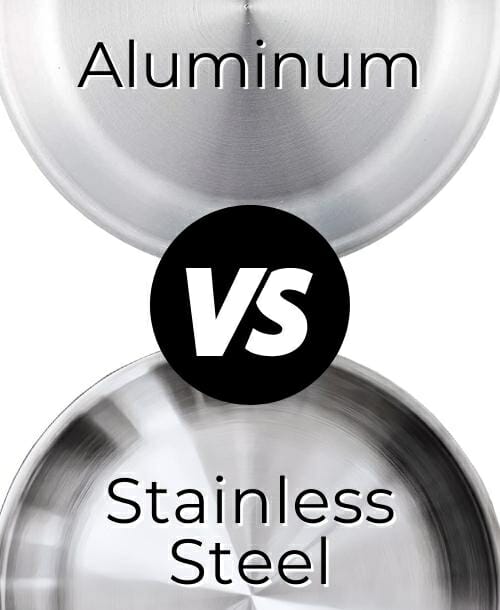
Choose aluminum for its lightweight nature and quick heating. Consider its drawbacks like scratching and warping. Each cook has unique needs, making cookware selection important.
Credit: thegoodlifedesigns.com
Heat Conductivity And Cooking Performance
Understanding heat conductivity is crucial for choosing cookware. Stainless steel and aluminum offer unique benefits. Each material affects cooking performance and results differently.
Comparing Thermal Properties
Thermal properties determine how evenly and quickly cookware heats up. Here’s a quick comparison:
| Property | Stainless Steel | Aluminum |
|---|---|---|
| Heat Conductivity | Moderate | High |
| Heat Retention | Good | Fair |
| Reaction to Heat | Slow | Fast |
Aluminum heats up quickly. It distributes heat evenly, preventing hot spots. Stainless steel, while slower to heat, retains heat well. This feature is great for simmering.
Impact On Cooking Results
Cooking results depend on heat conductivity. Here are key points to consider:
- For sautéing: Aluminum is superior. It gives fast, even cooking.
- For browning: Stainless steel shines. It allows for better caramelization.
- For simmering: Stainless steel holds heat well. It keeps dishes warm.
- For baking: Aluminum is preferred. It ensures even heat distribution.
Choose based on your cooking style. Each material has strengths. Understanding these differences leads to better cooking experiences.
Durability And Maintenance
Choosing between stainless steel and aluminum cookware often depends on their durability and maintenance. Each material has unique characteristics that affect how long your cookware lasts and how easy it is to clean.
Lifespan Comparison
Both stainless steel and aluminum offer different lifespans. Here’s a quick comparison:
| Cookware Type | Average Lifespan | Durability Rating |
|---|---|---|
| Stainless Steel | 20+ years | High |
| Aluminum | 5-10 years | Medium |
Stainless steel cookware lasts much longer than aluminum. It resists scratches and dents. Aluminum cookware may warp and scratch more easily.
Ease Of Care And Cleaning
Cleaning and maintaining cookware is vital for longevity. Here’s how stainless steel and aluminum compare:
- Stainless Steel:
- Resistant to stains and odors.
- Dishwasher safe for easy cleaning.
- Requires minimal special care.
- Aluminum:
- Can stain and retain odors.
- Hand wash is recommended to avoid damage.
- May require special cleaning agents.
Stainless steel is easier to care for than aluminum. It stays cleaner and lasts longer with proper care. Aluminum needs more attention to maintain its appearance.

Credit: vinodcookware.uk
Health And Safety Considerations
Choosing the right cookware impacts your health and safety. Stainless steel and aluminum both offer unique benefits. Understanding their safety factors is essential for cooking healthy meals.
Food Safety Factors
Food safety is crucial for everyone. Both stainless steel and aluminum cookware have distinct features:
| Cookware Type | Food Safety Feature |
|---|---|
| Stainless Steel | Non-reactive, does not leach chemicals |
| Aluminum | May react with acidic foods |
Stainless steel is safe for all types of food. Aluminum might cause reactions with tomatoes or vinegar. Always choose high-quality cookware for food safety.
Potential Health Risks
Each type of cookware has potential health risks. Here are some key points:
- Stainless Steel: Generally safe, but low-quality types may contain nickel.
- Aluminum: Risk of aluminum leaching into food.
- Coated Aluminum: Non-stick coatings may degrade over time.
Watch for signs of wear on cookware. Avoid using scratched or damaged surfaces. Select cookware based on safety ratings and materials used.
Cost Analysis
Understanding the cost of cookware helps in making wise choices. Stainless steel and aluminum each have unique price points. This section explores their price ranges and value for money.
Price Range Overview
Cookware prices vary widely. Here’s a quick comparison:
| Cookware Type | Price Range |
|---|---|
| Stainless Steel | $30 – $300+ |
| Aluminum | $20 – $150+ |
Stainless steel cookware generally costs more. High-quality brands can be expensive. Aluminum is more affordable and accessible.
Value For Money
Assessing value is crucial. Here are some points to consider:
- Durability: Stainless steel lasts longer than aluminum.
- Heat Conductivity: Aluminum heats quickly but can warp.
- Maintenance: Stainless steel is easier to clean.
- Versatility: Stainless steel can go in the oven.
Stainless steel may cost more but offers better longevity. Aluminum provides quick cooking at a lower price. Think about your cooking style and budget.

Credit: m.youtube.com
Top Picks And Recommendations
Choosing between stainless steel and aluminum cookware can be tough. Here are the best options for both materials. Each choice offers unique benefits. Find the right cookware for your kitchen.
Best Stainless Steel Options
- All-Clad D3 Stainless Steel Cookware Set
- Durable and long-lasting.
- Excellent heat distribution.
- Compatible with all cooktops.
- Cuisinart Multiclad Pro Stainless Steel Cookware Set
- Affordable yet high-quality.
- Triple-ply construction for better performance.
- Oven safe up to 550°F.
- Calphalon Classic Stainless Steel Cookware Set
- Nonstick interior for easy cooking.
- Cool-touch handles for safety.
- Dishwasher safe for easy cleanup.
Top Aluminum Choices
- T-fal Professional Nonstick Cookware Set
- Great heat conduction.
- Durable nonstick coating.
- Affordable and lightweight.
- Nordic Ware Natural Aluminum Bakeware Set
- Perfect for baking.
- Rust-resistant and easy to clean.
- Even baking results every time.
- GreenLife Soft Grip Healthy Ceramic Nonstick Cookware Set
- Eco-friendly and safe.
- Bright colors add fun to cooking.
- Easy to handle and lightweight.
| Cookware Type | Key Features | Best For |
|---|---|---|
| Stainless Steel | Durable, non-reactive, oven safe | All-around cooking |
| Aluminum | Lightweight, great heat conduction | Baking and frying |
Stainless Steel vs. Aluminum Cookware: An In-depth Analysis
Selecting the right cookware is crucial for any kitchen, and the decision often comes down to choosing between stainless steel and aluminum. Each material boasts distinct characteristics, health considerations, and culinary performance attributes that suit different cooking needs. This article provides a thorough exploration of the pros and cons of both stainless steel and aluminum cookware, examining their health implications, and helping you determine which might be the best fit for your cooking style.
Understanding Stainless Steel and Aluminum Cookware
Before comparing the two, it’s essential to grasp the fundamental properties of each material:
Stainless Steel Cookware
- Composition: Made from an alloy that includes iron, chromium, and often nickel.
- Properties: Celebrated for its robust durability, resistance to rust, and polished appearance.
- Common Uses: Ideal for techniques like browning, braising, and sauce-making due to its non-reactive nature.
Aluminum Cookware
- Composition: Composed of a soft, highly conductive metal.
- Properties: Known for its outstanding heat conductivity, light weight, and affordability.
- Common Uses: Frequently used for frying, boiling, and sautéing due to its ability to heat up and cool down rapidly.
Stainless Steel vs. Aluminum Cookware: Comparative Insights
Determining which material is “better” depends on various factors, including heat conductivity, durability, maintenance, cost, and health implications. Here’s a detailed comparison:
| Feature | Stainless Steel | Aluminum |
|---|---|---|
| Heat Conductivity | Inferior to aluminum; heats slowly | Superior; heats and cools quickly |
| Durability | Highly durable; resists denting | Less durable; prone to warping |
| Reactivity | Non-reactive with food | May react with acidic foods |
| Maintenance | More challenging to maintain | Easier to clean |
| Cost | Typically more expensive | Generally more budget-friendly |
| Health Implications | Considered very safe | Potential concerns with acidic foods |
Pros and Cons of Stainless Steel and Aluminum Cookware
Stainless Steel Cookware
Pros:
- Durability: Highly resistant to scratches, dents, and corrosion.
- Non-Reactive: Does not react with acidic or alkaline foods, making it safe for all types of cooking.
- Aesthetic Quality: Maintains a lustrous appearance over time.
Cons:
- Heat Distribution: Can cook unevenly without a core or cladding of more conductive metals.
- Cost: Generally pricier than aluminum options.
- Weight: Typically heavier, which may affect handling.
Aluminum Cookware
Pros:
- Heat Conductivity: Excellent for recipes requiring precise temperature control.
- Lightweight: Easy to handle, ideal for tasks that require frequent movement.
- Affordability: Provides good quality at a lower price point.
Cons:
- Reactivity: Its interaction with acidic and alkaline foods can alter flavor and color.
- Health Risks: There are concerns about aluminum leaching into food, especially if the surface is damaged.
- Durability: More susceptible to scratches and dents.
Health Risks Associated with Aluminum Cookware
- Aluminum Leaching: Particularly a concern with acidic foods which can increase aluminum absorption beyond safe levels.
- Neurological Concerns: High aluminum levels have been linked to neurological issues, although no direct connection has been proven with the use of aluminum cookware.
Examining Stainless Steel Cookware
While highly valued for its safety and robustness, stainless steel cookware has its downsides:
- Heat Distribution: May create hotspots unless combined with aluminum or copper at the base.
- Maintenance: Can be tough to clean if food burns onto the surface.
- Cost: Premium stainless steel cookware sets can be expensive.
Myth about Aluminum Cookware in Europe
Despite rumors, aluminum cookware is not banned in Europe; however, its use is regulated to ensure safety standards are met, minimizing health risks.
Drawbacks of Stainless Steel Cookware
- Weight: Heavier models can be cumbersome to handle.
- Non-Stick Qualities: Generally lacks non-stick properties, requiring more oil or butter for cooking.
The choice between stainless steel and aluminum cookware will largely depend on your specific cooking needs, health concerns, and budget. Stainless steel is a great choice for those seeking durability and a non-reactive surface, making it a worthy long-term investment for any kitchen. Aluminum cookware, while more affordable and excellent for heat conductivity, requires careful handling, particularly when cooking acidic foods. By understanding each material’s attributes and drawbacks, you can make a well-informed decision that aligns with your culinary preferences and requirements.
Frequently Asked Questions
Stainless Steel Or Aluminum: Which Is Better For Cooking?
Both stainless steel and aluminum have their merits. Stainless steel is durable, non-reactive, and great for browning. Aluminum, on the other hand, is lightweight and conducts heat well. Your choice depends on your cooking style and preferences.
Is Aluminum Cookware Safe For Cooking?
Yes, aluminum cookware is generally safe. However, it’s advisable to avoid cooking acidic foods in bare aluminum, as it can react. Opt for anodized or coated aluminum for better safety. Always follow manufacturer guidelines for optimal use and care.
Can I Use Stainless Steel On Induction Cooktops?
Yes, stainless steel cookware is compatible with induction cooktops. Ensure your stainless steel pots and pans have a magnetic base. This allows them to work effectively on induction surfaces. Check for “induction-ready” labels when purchasing.
How Do I Maintain Aluminum Cookware?
To maintain aluminum cookware, avoid using abrasive cleaners. Hand wash with mild soap and a soft sponge. Regularly check for scratches or dents, and avoid high heat to prevent warping. Proper care can extend the lifespan of your aluminum cookware.
Conclusion
Choosing between stainless steel and aluminum cookware depends on your cooking style and preferences. Stainless steel offers durability and resistance to stains, while aluminum is lightweight and heats quickly. Assess your needs to find the best fit for your kitchen.
Invest wisely to enhance your culinary experience and achieve delicious results.

Leave a Reply