
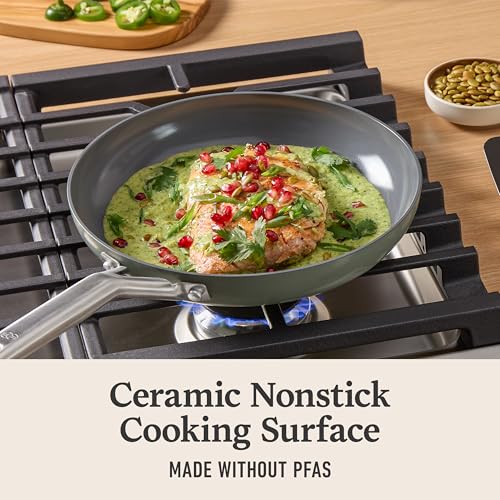
Both work great—ceramic for light, easy cooking; cast iron for heat and lasting sear.
I’ve stood at the stove with both ceramic vs cast iron cookware on the burners. One saves time and cleanup; the other gives depth and browning. I tested ceramic and cast iron cookware across weeks of breakfasts, stir-fries, and oven roasts. I’ll share what worked, what annoyed me, and who should pick which in real kitchens.
Is ceramic cookware Good?
Yes — for many home cooks, ceramic cookware is a solid, user-friendly choice. It works best for low- to medium-heat cooking, eggs, pancakes, delicate fish, and quick stir-fries. If you want light pans, easy cleanup, and a non-metal surface that’s mostly stick-resistant, ceramic cookware fits most everyday needs.
I remember the first week I swapped my hectic weekday breakfasts to a ceramic nonstick skillet. Eggs slid out with almost no oil. I also used a ceramic sauté pan for a quick weeknight stir-fry; it heated fast and cleaned in minutes. That said, I did notice the coating dulled after a few months of heavy metal spatula use. For gentle cooks who value convenience and low-fat cooking, ceramic cookware has been a reliable tool in my kitchen.

What Makes It Stand Out / Key Features
- Lightweight aluminum body with ceramic nonstick coating.
- Quick, even heating for low- to medium-heat cooking.
- Easy release for eggs, pancakes, and delicate fish.
- Often PTFE- and PFOA-free ceramic surface.
- Simple cleanup by hand; many pieces are dishwasher-safe (check label).
What I Like
- Fast morning cooking and almost no sticking with minimal oil.
- Great for delicate foods that break apart in cast iron.
- Handles stay cooler and pans are easy to maneuver.
- Cleaning is quick — usually a soft sponge and warm water.
- Nice-looking finish that fits a modern kitchen aesthetic.
What Could Be Better
- Coating can wear with metal utensils or high heat.
- Not ideal for high-heat searing or oven work at very high temperatures.
- Durability varies by brand; some coatings chip over time.
My Recommendation
Choose ceramic cookware if you want easy-clean pans for low- to medium-heat cooking and quick meals. Good value and widely available.
| Best For | Why |
|---|---|
| Everyday quick cooks | Lightweight and easy to clean for fast meals. |
| Healthy, low-fat cooking | Excellent nonstick surface reduces need for oil. |
| Beginner cooks | Forgiving and easy to use with minimal maintenance. |
Is cast iron cookware Good?
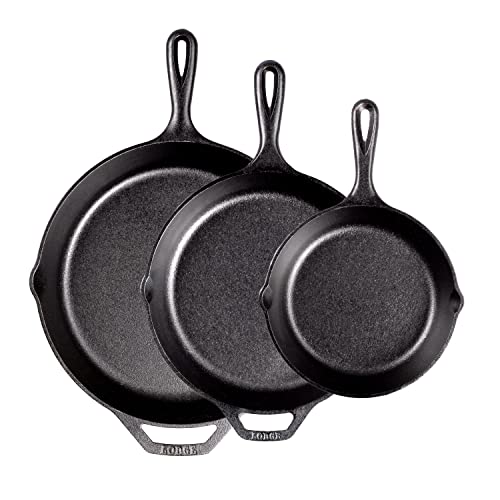
It depends — cast iron cookware is excellent for high-heat work, long sears, and oven-to-table meals. It’s best for people who want durability, heat retention, and a naturally seasoned surface. If you don’t mind weight and extra care, cast iron offers performance many pans can’t match.
I still reach for my cast iron when I want a serious sear on steak or when I roast vegetables in the oven. I once pan-roasted a chicken in a 12-inch cast iron skillet; the skin browned beautifully and the skillet went from stovetop to oven without fuss. I also use smaller cast iron pans for cornbread and burgers. The trade-offs—weight, need to re-season, and handwashing—are worth it when I want that deep crust and even heat.
What Makes It Stand Out / Key Features
- Superior heat retention for even cooking and deep sears.
- Durable iron construction that can last decades.
- Develops a natural nonstick patina with use and seasoning.
- Safe for high-heat oven and grill use.
- Can be restored and re-seasoned; low tech and reliable.
What I Like
- Unbeatable sear and crust on meats.
- Even heat for long cooks and braises.
- Works on any heat source, including campfires.
- Gets better with age if you care for it.
- Simple repairs — rust can be scrubbed and pan re-seasoned.
What Could Be Better
- Heavy — lifts and storage can be awkward.
- Needs handwashing and regular seasoning to keep patina.
- Reactive to acidic foods if not well-seasoned (can strip flavor/coating).
My Recommendation
Pick cast iron cookware if you want long-term heat performance and a workhorse pan for searing, roasting, and baking.
| Best For | Why |
|---|---|
| Searing and roasting | Excellent heat retention creates superior crusts. |
| Home cooks who maintain gear | Durable and improves with regular seasoning. |
| Outdoor cooks | Safe on grills and campfires; versatile heat source use. |
ceramic vs cast iron cookware: Side-by-Side Test
I ran side-by-side tests with ceramic vs cast iron cookware to see how they handled everyday tasks. Below I compare key categories from my hands-on use.
Cooking Functions: Which One Does More?
Here’s what each pan handles well and where they fall short.
| Function | Ceramic | Cast Iron |
|---|---|---|
| Frying eggs | Easy nonstick release | Works but needs seasoning |
| Searing steaks | Poor at high sear | Excellent deep sear |
| Oven roasting | Limited at high temps | Ideal for oven use |
| Stir-frying | Good for quick tosses | Good but heavy to toss |
Rating: Ceramic – 7/10 | Cast Iron – 9/10
“Cast iron wins for heavy-duty cooking and searing; ceramic is best for delicate, low-heat tasks.”
Heat Retention & Distribution
How steady and even is the heat for each pan?
| Metric | Ceramic | Cast Iron |
|---|---|---|
| Heat-up speed | Fast | Slower |
| Heat retention | Low-moderate | High |
| Evenness | Good on flat bottoms | Very even after preheat |
| Hot spots | Rare | Rare when preheated |
Rating: Ceramic – 7/10 | Cast Iron – 10/10
“Cast iron holds heat far better; ceramic heats quickly but cools faster.”
Ease of Use & Cleaning
Which one makes your life easier after cooking?
| Task | Ceramic | Cast Iron |
|---|---|---|
| Post-cook cleanup | Very easy | Requires scrubbing and drying |
| Maintenance | Low (avoid metal) | High (seasoning upkeep) |
| Weight and handling | Light and nimble | Heavy and sturdy |
| Dishwasher safe? | Often yes (check label) | No (handwash only) |
Rating: Ceramic – 9/10 | Cast Iron – 6/10
“Ceramic is easier day-to-day; cast iron needs more care but rewards you with performance.”
Durability & Lifespan
Which pan lasts longer under normal use?
| Aspect | Ceramic | Cast Iron |
|---|---|---|
| Resistance to wear | Moderate — coating can wear | Very high — can last generations |
| Repairability | Limited (replace coating) | High (clean and re-season) |
| Long-term value | Depends on coating quality | Excellent with care |
| Susceptible to chipping | Yes (coating may chip) | No (may rust if neglected) |
Rating: Ceramic – 6/10 | Cast Iron – 10/10
“Cast iron wins on longevity; ceramic can be good but often needs replacement sooner.”
Value for Money
Which pan gives the best return on your money?
| Consideration | Ceramic | Cast Iron |
|---|---|---|
| Initial cost | Low to moderate | Moderate |
| Replacement frequency | Higher if coating fails | Low if cared for |
| Performance per dollar | Great for light cooks | Exceptional for heavy cooks |
| Long-term cost | Possible repeat buys | Often one-time buy |
Rating: Ceramic – 8/10 | Cast Iron – 9/10
“Cast iron is usually the better long-term value; ceramic is cost-effective short-term.”
Final Verdict: Which Should You Buy?
Ceramic cookware shines if you want light pans, easy cleanup, and low-fat cooking. It’s ideal for eggs, pancakes, fish, and speedy weeknight meals. I recommend ceramic cookware to beginners and busy cooks who value convenience.
Cast iron cookware is the pick for searing, oven-to-table cooking, and long-term durability. If you want lasting performance and deep sears, choose cast iron cookware and be ready to maintain it. I recommend cast iron for serious home cooks and anyone wanting a lifelong pan.
FAQs Of ceramic vs cast iron cookware
What is the main difference between ceramic vs cast iron cookware?
Ceramic cookware uses a nonstick ceramic coating on a lightweight base. Cast iron cookware is solid iron that holds heat and builds a seasoning patina. Ceramic is easy to use; cast iron is built for high heat and longevity.
Can I use metal utensils on ceramic vs cast iron cookware?
On ceramic, avoid metal utensils — they can scratch the coating. On cast iron, metal tools are fine and often used; just keep the seasoning intact and reapply oil when needed.
Which one is better for searing and high-heat cooking?
Cast iron is better for searing, roasting, and high-heat tasks. Ceramic coatings are not designed for very high heat and can degrade if overheated.
Which pan is easier to clean and maintain?
Ceramic cookware is easier to clean and often dishwasher-safe. Cast iron requires handwashing, drying, and regular seasoning to prevent rust and keep the surface nonstick.
Which is safer for non-toxic cooking: ceramic vs cast iron cookware?
Both can be safe. Many ceramic coatings are PFAS-free, but they can wear. Cast iron is chemical-free and can add trace iron to food. Safety depends on care and product quality.

Leave a Reply