
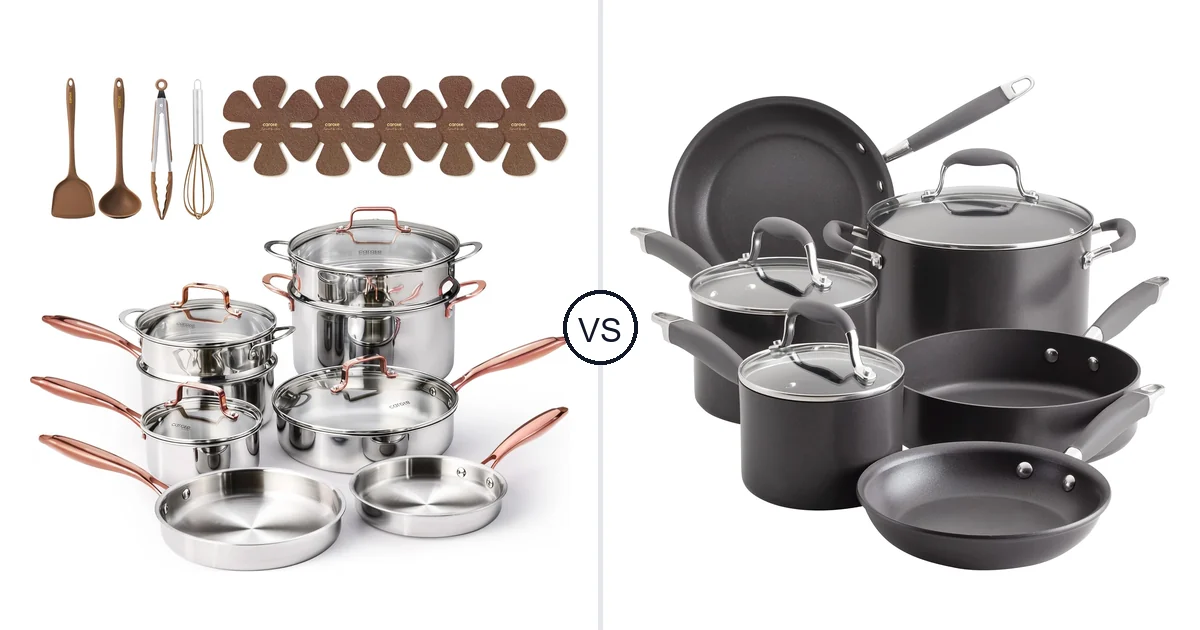
Both work well — stainless steel wins on searing and longevity; hard anodized wins on nonstick ease.
I stood at my stove, torn between stainless steel vs hard anodized cookware after buying both. One day I wanted a perfect sear; another day I wanted eggs that slid right off. I tested both across weeks. I’ll share what I learned, with clear pros, cons, and when to pick stainless steel vs hard anodized cookware for your kitchen.
Is stainless steel Good?
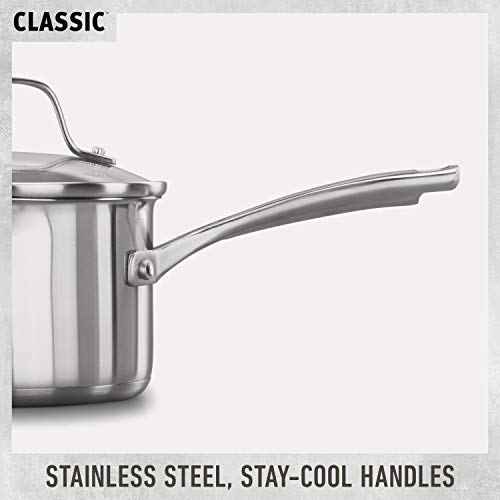
Yes — stainless steel is an excellent choice for cooks who want control, durability, and high-heat performance. In my kitchen, stainless steel has handled daily use for roasting, searing, and deglazing. It holds heat well and won’t chip or peel. If you like to build sauces from pan fond or use metal utensils, stainless steel is generally the better pick. For many home cooks who value longevity and technique, stainless steel is a clear yes.
I remember searing a steak on stainless steel and getting that perfect brown crust. The pan was hot and even. I also used the same pan for a pan sauce, scraping the browned bits into red wine. The result tasted like a restaurant. I will say stainless steel needs more attention when cooking eggs or sticky foods. It rewards technique. Overall, stainless steel vs hard anodized cookware taught me that stainless is for cooks who enjoy active stove work and want lasting gear.
What Makes It Stand Out / Key Features
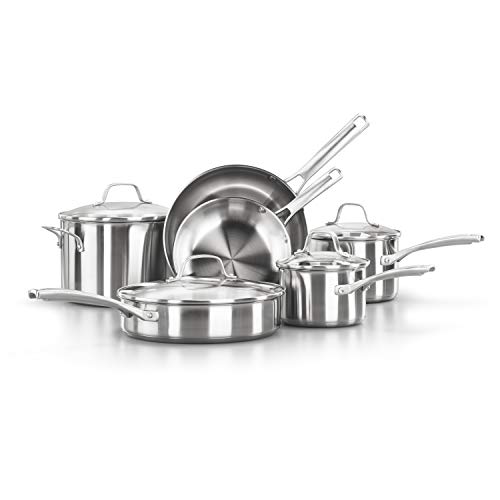
- High-heat tolerance for searing and browning.
- Durable, scratch-resistant surface that handles metal utensils.
- Often full-clad or with aluminum core for even heat.
- Oven safe to high temperatures (varies by model).
- Easy to deglaze and form pan sauces using fond.
What I Like
- Excellent browning for steaks and vegetables.
- Very durable—rarely shows wear from daily use.
- No coating to worry about peeling or degrading.
- Versatile across high-heat and oven cooking.
- Good for building flavors with fond and sauces.
What Could Be Better
- Sticky for eggs and delicate fish unless you master temperature and oil.
- Requires more cleaning effort to remove stuck-on bits at times.
- Heavier sets can be bulky to store.
My Recommendation
Choose stainless steel if you want durable, high-heat performance and plan to cook steaks, pan sauces, and frequent roasting.
| Best For | Why |
|---|---|
| Searing meat | Retains high heat and builds fond for sauces. |
| Longevity | No coating to wear off; stands up to metal tools. |
| Oven finishing | Handles higher oven temps safely. |
Is hard anodized Good?
It depends — hard anodized cookware shines if you want effortless nonstick cooking and easier cleanup. In my kitchen, hard anodized pans made pancakes, eggs, and simmered sauces quick and painless. They heat relatively evenly and feel lighter than some stainless sets. If you prize low-maintenance cooking, hard anodized is generally a solid yes.
I used a hard anodized skillet for weekend breakfasts. Eggs slid out with almost no oil. I also simmered tomato sauce and cleaned the pan in seconds. But I noticed it won’t take extreme searing heat like stainless; I had to be cautious with very high heat. For everyday low to medium-heat cooking, hard anodized stands out. Between stainless steel vs hard anodized cookware, hard anodized won my mornings, but not my steak nights.

What Makes It Stand Out / Key Features
- Hard-anodized aluminum base for durability and nonstick surface.
- Lightweight compared to many stainless sets.
- Usually PFOA-free nonstick coating for easy food release.
- Good heat conduction and quick warm-up.
- Often dishwasher-safe (check model for specifics).
What I Like
- Eggs and pancakes release reliably with minimal oil.
- Quick, easy cleanup—often wipes clean in seconds.
- Lighter pans make cooking and handling easier.
- Great for low-to-medium heat simmering and sautéing.
- Less learning curve for new cooks compared to stainless steel.
What Could Be Better
- Nonstick coating can wear over years, especially with metal utensils.
- Not ideal for extreme high-heat searing compared to stainless steel.
- Some models are not oven-safe at high temperatures.
My Recommendation
Pick hard anodized if you want low-effort cooking and easy cleanup for everyday meals and delicate foods.
| Best For | Why |
|---|---|
| Everyday nonstick cooking | Reliable food release for eggs and pancakes. |
| Lightweight handling | Easier to lift, flip, and store. |
| Low-maintenance kitchens | Quick cleanup and less technique required. |
stainless steel vs hard anodized cookware: Side-by-Side Test
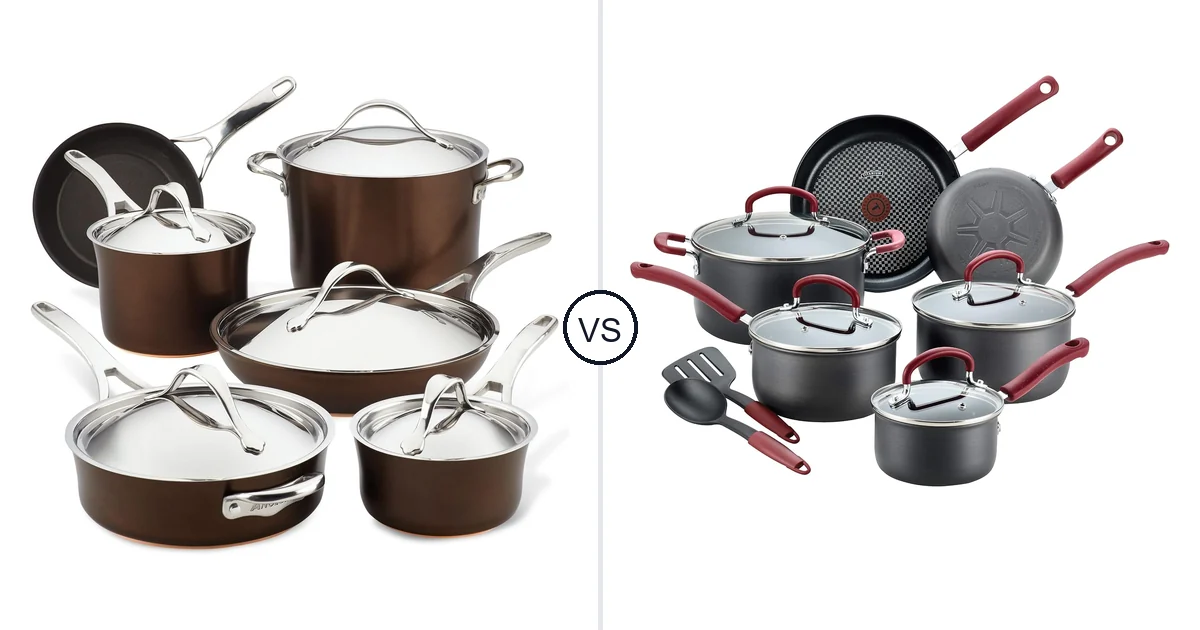
I ran both through real tasks: searing, eggs, sauces, heat tests, cleanup, and long-use wear. Below are clear category comparisons from my hands-on use of stainless steel vs hard anodized cookware.
Cooking Functions: Which One Does More?
A look at typical cooking tasks and which product handles them better.
| Task | Stainless Steel | Hard Anodized |
|---|---|---|
| Searing steaks | Excellent — deep fond, high heat | Good — browns but less crust |
| Eggs & pancakes | Tricky — needs more oil and skill | Excellent — easy release |
| Pan sauces / deglazing | Best — fond develops well | OK — less fond formation |
| Simmering sauces | Very good — even heat | Very good — easy cleanup |
Rating: Stainless steel – 9/10 | Hard anodized – 8/10
"Stainless steel edges out for high-heat cooking and sauces; hard anodized is best for nonstick tasks."
Heat Distribution & Durability
How evenly each heats and how they hold up over time.
| Feature | Stainless Steel | Hard Anodized |
|---|---|---|
| Even heating | Very even if clad or with aluminum core | Good — heats quickly and evenly |
| High heat tolerance | Excellent — safe to very high temps | Moderate — avoid extreme temps |
| Scratch resistance | Excellent — metal utensils safe | Moderate — avoid metal to protect coating |
| Long-term durability | Superior — minimal change over years | Good but coating may wear after long use |
Rating: Stainless steel – 9/10 | Hard anodized – 7/10
"Stainless steel wins on heat tolerance and long-term durability; hard anodized is durable but can wear."
Ease of Cleaning
Which one is easier to clean after everyday cooking.
| Type of Mess | Stainless Steel | Hard Anodized |
|---|---|---|
| Grease and oil | Needs scrubbing sometimes | Wipes clean easily |
| Burnt-on food | Requires soaking and scrubbing | Often cleans with gentle scrub |
| Dishwasher safe | Often yes, but check handles | Many are, but hand-wash recommended |
| Maintenance level | Moderate — polishing sometimes | Low — routine wipe or wash |
Rating: Stainless steel – 6/10 | Hard anodized – 9/10
"Hard anodized is easier to clean day-to-day; stainless steel needs more work but is recoverable."
Versatility & Cooking Styles
What styles of cooking each handles well.
| Cooking Style | Stainless Steel | Hard Anodized |
|---|---|---|
| High-heat searing | Superior | Acceptable |
| Delicate food (fish, eggs) | Challenging | Excellent |
| Oven finishing | Great (high temp safe) | Depends on model (check limits) |
| Slow simmering | Very good | Very good |
Rating: Stainless steel – 8/10 | Hard anodized – 8/10
"Both are versatile. Stainless for technique and heat; hard anodized for delicate or low-effort dishes."
Safety & Health
Concerns about coatings, leaching, and chemical safety.
| Safety Point | Stainless Steel | Hard Anodized |
|---|---|---|
| Coating concerns | None—no nonstick coating | Coating exists—check PFOA-free status |
| Metal leaching | Possible trace metals if damaged, but minimal | Coating reduces direct metal contact |
| Safe at high temp | Yes | Avoid very high temps to protect coating |
| Food reactivity | Acidic foods can pick up a metallic taste with low-quality steel | Non-reactive surface for most sauces |
Rating: Stainless steel – 8/10 | Hard anodized – 8/10
"Both are safe if used correctly; choose quality stainless or PFOA-free hard anodized for peace of mind."
Value for Money
Which gives more bang for your buck over time.
| Value Factor | Stainless Steel | Hard Anodized |
|---|---|---|
| Initial cost | Varies; quality can be pricey | Often similar or slightly less |
| Longevity | High — can last decades | Good — but coating may reduce lifespan |
| Replacement frequency | Low | Moderate |
| Overall cost per year | Often lower long-term | May be higher if replaced sooner |
Rating: Stainless steel – 9/10 | Hard anodized – 7/10
"Stainless steel often gives better long-term value; hard anodized is great short-term or for low-effort cooks."
"Overall, stainless steel wins for long-term value and high-heat work. Hard anodized wins for daily convenience and nonstick ease."
Final Verdict: Which Should You Buy?
If you love searing, building pan sauces, and want gear that lasts decades, buy stainless steel. It excels in high-heat work and adds depth to meals. For cooks who want easy cleanup, worry-free egg mornings, and lighter pans, buy hard anodized. It's forgiving and fast to work with.
In short: pick stainless steel for technique and longevity. Choose hard anodized for low-maintenance, everyday cooking. Both have a place in my kitchen and likely yours too.
FAQs Of stainless steel vs hard anodized cookware
What is the main difference between stainless steel vs hard anodized cookware?
Stainless steel has no nonstick coating and excels at high heat and pan sauces. Hard anodized has a durable nonstick surface and is easier to clean.
Which is healthier for daily use?
Both are healthy when used correctly. Choose quality stainless or PFOA-free hard anodized. Avoid overheating nonstick pans.
Which is better for searing and browning?
Stainless steel is better for searing and creating fond. Hard anodized browns, but not as aggressively.
Which is easier for eggs and pancakes?
Hard anodized is easier. It releases eggs and pancakes with minimal oil and cleanup.
Can I use metal utensils on both?
Use metal utensils freely on stainless steel. Avoid metal on hard anodized to protect the coating and extend its life.

Leave a Reply