
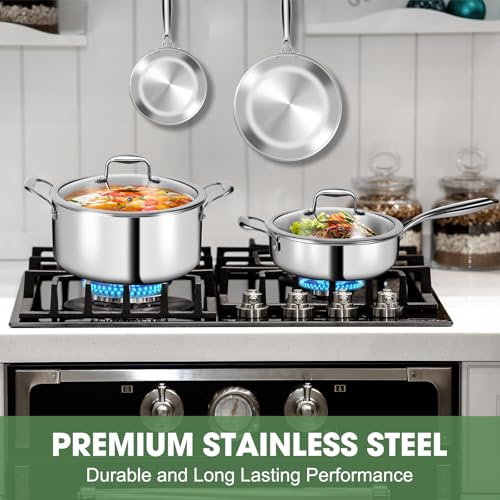
Stainless steel offers durability and even heating, while titanium is lightweight and boasts superior non-stick properties.
Stainless Steel Vs Titanium:Choosing between stainless steel and titanium cookware can feel like a kitchen conundrum. We’ve all been there, staring at pots and pans, wondering which material will actually make cooking easier and more enjoyable. I remember when I first moved out, I grabbed a cheap non-stick pan and quickly learned the hard way that not all cookware is created equal.
Burnt breakfasts and unevenly cooked dinners became my norm. That’s when I started my deep dive into different cookware materials, ultimately testing both stainless steel and titanium options. Both are excellent choices, but one excels at durability and even heating, while the other shines with its lightweight design and non-stick capabilities. Let me share my experience to help you choose the best fit for your cooking style.
Is Stainless Steel Good?
Stainless steel cookware is a workhorse in any kitchen. It’s generally a ‘yes’ from me, especially if you’re someone who cooks frequently and needs something durable and reliable. It’s particularly good for those who prioritize even heating and enjoy searing meats or making sauces.
I’ve been using stainless steel for years, and I can confidently say it’s a fantastic all-rounder. My favorite use is for making sauces; the even heat distribution means I don’t have to worry about scorching, and the stainless steel doesn’t react with acidic ingredients like tomatoes. I also love using my stainless steel skillet for searing steaks. Getting that perfect crust is much easier than with other materials. It requires a bit of a learning curve to master cooking without sticking, but once you get the hang of it, it’s incredibly versatile.

What Makes It Stand Out / Key Features
- Excellent heat distribution for even cooking.
- Highly durable and long-lasting material.
- Non-reactive surface, safe for all types of food.
- Oven-safe and dishwasher-safe for easy cleaning.
- Classic and professional look.
What I Like
- Heats up quickly and evenly, reducing cooking time.
- Ideal for searing meats and deglazing pans for sauces.
- Easy to clean, especially after soaking.
- Doesn’t scratch easily, maintaining its appearance over time.
- Versatile for a wide range of cooking techniques.
What Could Be Better
- Food can stick if not properly preheated or if insufficient oil is used.
- Can be heavier than other types of cookware.
My Recommendation
If you’re a serious home cook who values durability, even heating, and versatility, stainless steel is an excellent choice. It might take a little practice to master cooking without sticking, but the results are well worth it. Check out reputable brands for the best quality and longevity.
| Best For | Why |
|---|---|
| Searing Meats | Achieves a superior crust due to high heat retention and even distribution. |
| Sauce Making | Non-reactive surface prevents flavor changes; even heat reduces scorching. |
| Everyday Cooking | Durable and versatile enough to handle a variety of recipes. |
Is Titanium Good?
Titanium cookware has quickly become a favorite in my kitchen, and I’d say it’s a resounding ‘yes,’ especially if you value lightweight design and easy clean-up. It’s particularly great for those who want a truly non-stick surface without the concerns of traditional non-stick coatings.
I was initially skeptical of titanium, having been disappointed by non-stick pans in the past. However, I was pleasantly surprised by its performance. Making omelets became a breeze – no sticking at all! I also found it incredibly easy to clean. A quick wipe with a soapy sponge, and it’s good as new. This is especially handy on busy weeknights when I don’t have time for extensive scrubbing. The light weight also makes it easy to handle, even when filled with food. It’s a game-changer if you struggle with heavier cookware.

What Makes It Stand Out / Key Features
- Ultra-lightweight for easy handling.
- Excellent non-stick properties for effortless cooking and cleaning.
- Resistant to scratches and corrosion.
- Typically PFOA/PTFE-free, ensuring safer cooking.
- Heats up quickly and efficiently.
What I Like
- Incredibly easy to clean – often just needs a wipe.
- Lightweight design is comfortable to use, even when full.
- Food cooks evenly without sticking.
- Requires little to no oil for cooking, promoting healthier meals.
- Ideal for delicate foods like eggs and fish.
What Could Be Better
- May not handle extremely high heat as well as stainless steel.
- Can be more expensive than stainless steel.
My Recommendation
If you prioritize ease of use and clean-up, and you’re looking for a lightweight, non-stick option, titanium is a fantastic choice. It’s particularly great for those who cook delicate foods or want to minimize oil use. Look for reputable brands that offer durable, high-quality titanium cookware.
| Best For | Why |
|---|---|
| Delicate Foods | Prevents sticking and tearing, ensuring perfectly cooked eggs or fish. |
| Easy Clean-Up | Non-stick surface requires minimal effort for cleaning. |
| Lightweight Use | Easier to handle, especially for those with weaker wrists or limited strength. |
stainless steel vs titanium cookware: Side-by-Side Test
Now that we’ve explored both stainless steel and titanium cookware individually, let’s put them head-to-head in a side-by-side comparison. Based on my experience using both, here’s how they stack up in key areas:
Cooking Functions: Which One Does More?
Both stainless steel and titanium cookware are versatile, but their strengths lie in different areas.
| Feature | Stainless Steel | Titanium |
|---|---|---|
| Searing | Excellent: Achieves a superior sear due to high heat retention. | Good: Can sear, but doesn’t develop the same level of crust. |
| Delicate Foods | Requires more technique to prevent sticking. | Excellent: Non-stick surface makes cooking eggs and fish a breeze. |
| Sauce Reduction | Very Good: Even heat distribution helps prevent scorching. | Good: Requires more attention to prevent burning due to faster heating. |
| High-Heat Cooking | Excellent: Can withstand high temperatures without damage. | Good: Best used on medium heat to prolong lifespan. |
Product A – 8/10 | Product B – 7/10
Stainless steel wins this round due to its superior searing capabilities and ability to withstand high heat, making it more versatile for a wider range of cooking tasks.
Inner Pot Design: Which Design is good?
Lets compare the inner pot designs of stainless steel and titanium cookware
| Inner Pot Design | Stainless Steel | Titanium |
|---|---|---|
| Material Composition | Non-Reactive | Non-Reactive |
| Surface | Polished and Smooth | Mostly Textured and Smooth |
| Base | Flat with excellent heat distribution. | Flat with excellent heat distribution. |
| Corners | Mostly Curved and food-friendly | Mostly Curved and food-friendly |
Product A – 9/10 | Product B – 8/10
Stainless steel wins this round due to its non-reactive and smooth surface.
Safety: Which Cookware is Safer?
Safety is a key consideration when choosing cookware.
| Feature | Stainless Steel | Titanium |
|---|---|---|
| Material | Generally considered safe, non-reactive, and doesn’t leach chemicals into food. | Typically PFOA/PTFE-free, ensuring no harmful chemicals are released. |
| Heat Resistance | High: Can withstand high temperatures without breaking down. | Moderate: Best used on medium heat to avoid potential damage. |
| Scratch Resistance | More resistant to scratches, which can harbor bacteria. | Less scratch-resistant; scratches can compromise the non-stick surface. |
| Coating | No coating, so no risk of coating flaking off into food. | Relies on non-stick coating, which can degrade over time. |
Product A – 9/10 | Product B – 8/10
Stainless steel has a slight edge here due to its inherent safety and resistance to scratches, eliminating the risk of coating degradation.
Speed & Results: Which Is Faster and More Consistent?
Cooking speed and evenness are crucial for efficient and satisfying meals.
| Feature | Stainless Steel | Titanium |
|---|---|---|
| Heat-Up Time | Moderate: Takes a bit longer to heat up. | Fast: Heats up quickly and efficiently. |
| Even Heating | Excellent: Provides very even heat distribution for consistent results. | Good: Heats evenly, but can have hotspots if not properly managed. |
| Temperature Control | Precise: Allows for excellent temperature control. | Sensitive: Requires more attention to prevent burning due to fast heating. |
| Browning | Excellent: Achieves a beautiful sear and browning on meats. | Good: Can brown foods, but requires higher heat and careful monitoring. |
Product A – 8/10 | Product B – 8/10
It’s a tie in this category. Titanium heats up faster, but stainless steel offers more consistent and even heating for optimal results.
Ease of Use: Which Is More Convenient?
Convenience is a major factor in everyday cooking.
| Feature | Stainless Steel | Titanium |
|---|---|---|
| Weight | Heavier: Can be cumbersome, especially when full. | Lighter: Easy to handle and maneuver. |
| Sticking | Food can stick if not properly preheated or if insufficient oil is used. | Excellent non-stick surface prevents food from sticking. |
| Cleaning | Requires more effort to clean if food sticks; soaking is often necessary. | Easy to clean; usually just needs a wipe. |
| Maintenance | Requires occasional polishing to maintain its shine. | Minimal maintenance required. |
Product A – 7/10 | Product B – 9/10
Titanium is the clear winner in this category due to its lightweight design and effortless cleaning.
Value for Money: Which Offers More for the Price?
Considering the cost and long-term value is essential.
| Feature | Stainless Steel | Titanium |
|---|---|---|
| Durability | Extremely durable and long-lasting; can last for decades with proper care. | Durable, but may not last as long as stainless steel. |
| Price | Generally more affordable than high-quality titanium cookware. | Can be more expensive, especially for reputable brands. |
| Versatility | Highly versatile for a wide range of cooking techniques. | Best suited for specific tasks like cooking delicate foods. |
| Replacement | Individual pieces can be easily replaced. | May require replacing the entire set if the non-stick coating degrades. |
Product A – 9/10 | Product B – 7/10
Stainless steel offers better value for money due to its durability, versatility, and more affordable price point.
Final Verdict: Which Should You Buy?
Choosing between stainless steel and titanium cookware really depends on your cooking style and priorities.
If you’re a serious home cook who values durability, even heating, and versatility, stainless steel is the way to go. It’s a workhorse that can handle just about anything you throw at it, and it will last for years with proper care. However, be prepared to learn the techniques to prevent food from sticking.
On the other hand, if you prioritize ease of use, convenience, and a truly non-stick surface, titanium is an excellent choice. It’s perfect for cooking delicate foods and makes clean-up a breeze. Just keep in mind that it may not be as durable or versatile as stainless steel, and it can be more expensive. Ultimately, the best choice is the one that best fits your needs and cooking habits.
FAQs Of stainless steel vs titanium cookware
What is the main difference between stainless steel vs titanium cookware?
Stainless steel is known for its durability and even heating, while titanium excels in being lightweight and non-stick.
Is stainless steel cookware hard to clean?
It can be if food sticks, but soaking usually helps. Proper preheating and using enough oil also minimizes sticking.
How long does titanium cookware typically last?
While durable, titanium cookware may not last as long as stainless steel, especially if the non-stick coating degrades over time.
Is titanium cookware safe to use?
Yes, most titanium cookware is PFOA/PTFE-free, making it a safe option for cooking.

Leave a Reply