
Choosing the right cookware set is about matching material, heat distribution, and budget to your cooking style and needs. Finding the perfect cookware set can feel overwhelming with endless options flooding the market, from stainless steel to non-stick and copper-core designs. But here's the thing: selecting cookware doesn't have to be complicated. With a clear understanding of materials, construction methods, and your personal cooking habits, you'll discover exactly what works best for your kitchen. This guide walks you through everything you need to know about how to choose cookware set that will last for years and make every meal a joy to prepare.
Understanding Your Cooking Style and Needs
Before diving into brands and specifications, take a moment to think about how you actually cook. Do you spend weekends meal prepping, or do you mostly throw together quick weeknight dinners? Are you someone who loves experimenting with high-heat searing, or do you prefer gentle simmering? Your cooking habits directly influence which cookware will serve you best.
I learned this the hard way when I purchased an expensive stainless steel set without considering that I mostly make soups and stews. While the set was beautiful, I eventually realized I needed better non-stick options for everyday breakfast cooking. Understanding your cooking style helps you avoid similar mistakes and invest wisely.
Different cooking methods require different cookware features. If you frequently use your oven for finishing dishes, you'll want oven-safe cookware with heat-resistant handles. Home cooks who love searing meats and deglazing pans benefit from heavy stainless steel bottoms. Those preparing delicate foods like fish or eggs will appreciate a quality non-stick surface.
Material Types and Their Characteristics
The material of your cookware determines heat distribution, durability, and how food cooks. Let's explore the most common materials you'll encounter when learning how to choose cookware set:
Stainless Steel Cookware
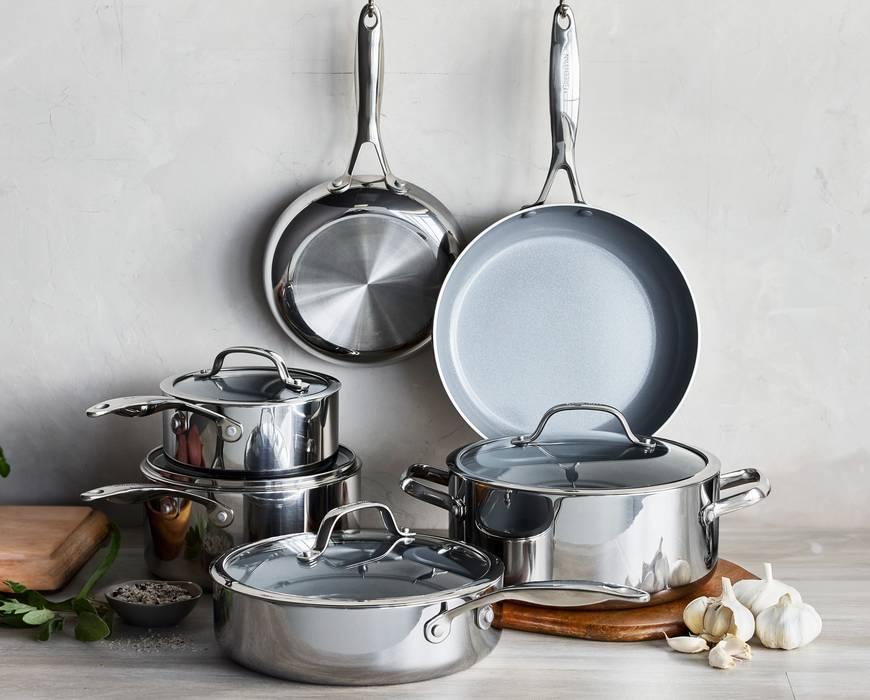
Stainless steel is the workhorse of professional and home kitchens alike. It resists corrosion, lasts decades, and won't react with acidic foods like tomato sauce or vinegar. The main drawback is that stainless steel alone doesn't conduct heat evenly, which is why quality cookware includes an aluminum or copper core on the bottom.
When shopping for how to choose cookware set with stainless steel, look for multi-ply construction with a bonded bottom. This means multiple layers of metal are fused together, creating superior heat distribution. High-quality stainless steel cookware can handle metal utensils and aggressive scrubbing without damage.
Non-Stick Cookware
Non-stick surfaces make cooking and cleanup incredibly easy, which is why many home cooks love them. Modern non-stick coatings are much safer than older versions and offer reliable performance for everyday cooking. They're ideal for cooking delicate proteins, making pancakes, and preparing meals with minimal oil.
However, non-stick cookware does have limitations. The coating will eventually wear down with use, and you cannot use high heat or metal utensils on most non-stick surfaces. When choosing non-stick cookware, invest in reputable brands that use advanced coating technology. Budget cookware often disappoints quickly, so this is one area where spending a bit more pays off.
Cast Iron Cookware
Cast iron deserves special mention despite its different category from traditional cookware sets. These pans develop a natural non-stick seasoning over time and can last generations. Cast iron distributes heat beautifully and works on any cooktop, including induction.
The trade-off is weight and maintenance. Cast iron requires proper seasoning and care to prevent rust. If you're interested in incorporating cast iron into your kitchen, start with one or two pieces rather than a full set to see if the maintenance fits your lifestyle.
Aluminum Cookware
Aluminum conducts heat extremely well, making it popular for the inner layers of cookware. However, pure aluminum cookware is reactive and can discolor foods and leave metallic tastes. This is why quality cookware combines aluminum with stainless steel or ceramic coatings.
When evaluating how to choose cookware set, understand that aluminum is usually a feature in multi-ply construction rather than the main material. It's valuable for its heat-conducting properties but shouldn't be your only consideration.
Copper Cookware
Copper offers exceptional heat conductivity and precise temperature control, which is why professional chefs favor it. However, copper cookware is expensive and requires regular polishing to maintain its appearance. Most home cooks find the investment and maintenance not worth the benefits.

Heat Distribution and Construction Quality
How evenly cookware distributes heat directly affects your cooking results. Uneven heat leads to hot spots where food burns while other areas remain undercooked. This is why understanding construction quality matters when learning how to choose cookware set.
Single-ply cookware has only one layer of material. While affordable, it typically distributes heat unevenly, making it frustrating for serious cooks. Three-ply construction, which sandwiches aluminum between stainless steel layers, offers much better heat distribution at a reasonable price. Five-ply or higher construction provides professional-grade performance with superior heat control.
The bottom of the cookware is equally important. Look for cookware with a fully encapsulated bottom that extends slightly up the sides. This ensures heat reaches all areas of the pan, not just the base. When you hold the cookware up to light, you shouldn't see gaps or thin spots in the bottom construction.
Weight is another indicator of quality. Heavier cookware typically means thicker materials and better heat retention. Pick up cookware in the store if possible, or check reviews that mention weight. Quality cookware should feel substantial without being unwieldy.
Non-Stick vs. Stainless Steel Considerations
When choosing between non-stick and stainless steel cookware, you're really deciding between convenience and versatility. Both have their place in a well-equipped kitchen, and many cooks benefit from owning both types.
Non-stick cookware excels at cooking eggs, pancakes, delicate fish, and anything you want to slide easily from the pan. It requires less fat and makes cleanup quick and easy. The downside is that you cannot use high heat, metal utensils will damage the coating, and eventually, you'll need to replace it.
Stainless steel cookware is incredibly versatile. You can use high heat for searing, cut directly in the pan with metal utensils, and deglaze for sauces. It won't scratch or damage easily and lasts indefinitely with proper care. The trade-off is that stainless steel requires more cooking skill to prevent sticking and demands patience during cleanup if food sticks.
My personal recommendation when learning how to choose cookware set is starting with a quality stainless steel set and adding a few non-stick pieces for specific tasks. This approach gives you the versatility of stainless steel with the convenience of non-stick for daily cooking.

Handle Design and Comfort
You'll hold your cookware hundreds of times, so handle design matters more than you might think. Poor handle design leads to uncomfortable cooking experiences and can even cause injuries if handles conduct heat or don't grip securely.
Look for handles that are ergonomic and stay cool during cooking. Stainless steel handles conduct heat, so quality cookware uses riveted handles with insulation between the metal layers. Silicone or rubber-wrapped handles offer excellent grip and heat protection. Make sure handles are angled slightly upward for comfortable lifting.
Weight distribution is another consideration. Handles should be designed so the cookware balances nicely when you lift it. A bottom-heavy pan with inadequate handle support creates strain on your wrist during cooking. When selecting how to choose cookware set, pick up each piece and simulate pouring or lifting to ensure it feels natural.
Some cookware features helper handles on both sides of larger pots, which is genuinely useful when transferring hot liquid. While this feature isn't essential, it adds safety and comfort to your cooking experience.

Lid Quality and Functionality
Lids are often overlooked when learning how to choose cookware set, but they significantly impact cooking performance. Quality lids seal properly, trap steam effectively, and allow you to see inside without removing them.
Glass lids are popular because they let you monitor your food without lifting them and releasing heat. However, glass lids can crack if you're not careful, and they're heavy. Stainless steel lids are durable and work well, though you can't see inside without lifting them.
Check that lids fit snugly on cookware and come with ventilation holes to prevent liquid from boiling over the edge. Lids should have sturdy handles that don't get too hot during cooking. Some quality cookware sets include lids that work across multiple pan sizes, offering flexibility and storage space savings.
Make sure the cookware you choose comes with well-designed lids that match the quality of the pots and pans themselves. A poorly fitting lid undermines even the best cookware set's performance.

Size and Quantity Considerations
Cookware sets vary dramatically in size and quantity, from compact three-piece sets to elaborate twelve-piece collections. Choosing the right set size depends on your household size, cooking frequency, and storage space.
A basic starter set typically includes an 8-inch and 10-inch skillet, one or two saucepans with lids, a Dutch oven or stockpot, and sometimes a steamer insert. This covers most everyday cooking needs for individuals or couples. Larger households often benefit from having more pieces, including larger stockpots and multiple skillets.
Consider your actual storage space before buying a huge set. Open shelving or limited cabinet space means you'll use a smaller set more effectively than an unused twelve-piece collection gathering dust. I once bought an overly large cookware set that didn't fit in my kitchen, and half the pieces never left the box.
When learning how to choose cookware set, think about what you actually cook and buy accordingly. A smaller set of quality cookware you'll use regularly outperforms an extensive collection of mediocre pieces. You can always add specialty pieces like grill pans or small sauce pans later as your cooking interests evolve.
Price Range and Budget Planning
Quality cookware represents a significant kitchen investment, and understanding price ranges helps you make smart decisions. Budget cookware ($50-$200) often disappoints with uneven heating and coating failure. Mid-range cookware ($200-$500) offers good quality and reliability for most home cooks. Premium cookware ($500+) provides exceptional performance and longevity.
The best approach when choosing how to choose cookware set is thinking long-term value. A $400 cookware set lasting fifteen years costs less per year than a $100 set you replace every three years. However, you don't need to spend the most to get good quality.
Many respected cookware brands offer excellent mid-range options that deliver professional performance without luxury price tags. Reading reviews from verified purchasers helps you understand which brands offer the best value. Avoid the cheapest options, but also know that the most expensive isn't always necessary.
Consider whether you want a matched set or prefer buying individual pieces. Sometimes purchasing specialty cookware from different brands costs less than buying a complete set while better meeting your specific needs.
Compatibility with Your Cooktop
Different cooktops require different cookware, and compatibility matters when learning how to choose cookware set. Your current cooktop and future cooking plans should influence your decision.
Gas cooktops work with virtually any cookware that has a flat bottom. Electric coil cooktops require cookware with smooth, flat bottoms that make full contact. Smooth glass cooktops need cookware with scratch-resistant bottoms and perfectly flat bases to prevent damage.
Induction cooktops are the most finicky, requiring magnetic cookware. Most stainless steel and cast iron work on induction, but some aluminum and copper cookware won't work unless they have induction-compatible bases. If you currently use an induction cooktop or might upgrade in the future, verify that cookware you're considering is induction-compatible.
Look for cookware labeled as "induction-ready" or check the bottom for magnetic properties using a magnet. When planning how to choose cookware set, confirm compatibility with your current cooktop and consider potential future upgrades to avoid buying cookware that won't work.
Brand Reputation and Warranty Coverage
Established brands with solid reputations typically offer better quality and reliable customer service. When researching how to choose cookware set, look at brand history, customer reviews, and warranty offerings.
Reputable brands stand behind their products with multi-year warranties covering manufacturing defects. Limited lifetime warranties suggest confidence in the product's durability. Check warranty details carefully, as some only cover specific defects and exclude normal wear.
Read customer reviews across multiple platforms to identify patterns. Isolated negative reviews happen with any product, but consistent complaints about the same issue indicate potential problems. Look for reviews from people who've owned the cookware for several years to understand long-term performance.
Join online cooking communities and ask about experiences with specific brands. Real home cooks provide honest feedback about which cookware delivers value and which disappoints over time. This research takes time but prevents expensive mistakes.
Care, Maintenance, and Longevity
How you care for cookware significantly impacts its lifespan. Understanding maintenance requirements helps you make choices that fit your lifestyle. When learning how to choose cookware set, consider whether the care requirements match your habits.
Stainless steel cookware is relatively low-maintenance. Hand washing with warm soapy water keeps it clean and lasting for decades. Some cookware is dishwasher-safe, though hand washing is gentler. Occasionally, use special stainless steel cleaner to maintain appearance.
Non-stick cookware requires careful handling. Always hand wash with soft sponges, avoid metal utensils, and never use high heat that degrades the coating. Proper care extends non-stick lifespan to 3-5 years or longer. Ignoring care guidelines dramatically shortens it.
Cast iron demands seasoning and rust prevention but rewards you with essentially permanent cookware if maintained properly. Stainless steel with hard anodized aluminum requires similar care to standard stainless steel cookware.
The best cookware for your situation is one whose maintenance requirements fit your lifestyle. If you won't hand wash delicate non-stick cookware, investing in it frustrates rather than helps your cooking.
Testing Before You Buy
When possible, handle cookware before purchasing to assess weight, balance, and feel. Visit kitchen supply stores or department stores where you can pick up pieces and evaluate comfort. This tactile experience reveals things that pictures and descriptions cannot.
Hold skillets with different weights to determine what feels right for your strength and cooking style. Lift pots filled with water or sand to understand how weight distribution affects handling. Twist the handle gently to check for wobbling or flexibility, which indicates poor construction.
If purchasing online, choose retailers with generous return policies. This allows you to test cookware in your own kitchen with your specific cooktop. Return anything that doesn't perform as expected rather than living with regret.
Many retailers offer trial periods or satisfaction guarantees. Taking advantage of these policies gives you confidence that you're making the right choice when learning how to choose cookware set.
Making Your Final Decision
At this point, you understand materials, construction, compatibility, and personal needs. Now it's time to synthesize this knowledge into a final decision. Create a list of priorities based on your cooking style, budget, and kitchen setup.
Do you value convenience and ease of cleaning most? Non-stick cookware might be your priority. Do you want versatility and longevity? Invest in quality stainless steel. Do you cook frequently and need professional performance? Mid to premium cookware with excellent construction justifies the investment.
Compare three to five cookware sets that meet your criteria, checking reviews and specifications. Calculate cost-per-year by dividing the price by the expected lifespan. A $500 set lasting fifteen years costs about $33 per year, while a $150 set lasting three years costs $50 annually.
Trust your instincts when choosing how to choose cookware set. The right cookware feels right when you hold it, matches your cooking needs, and fits your budget. You'll enjoy cooking more with cookware that supports your style rather than fighting against it.
Frequently Asked Questions
What is the most versatile cookware material for home cooking?
Stainless steel is the most versatile material for home cooks because it handles any cooking method, works with all cooktop types, and lasts indefinitely with proper care. You can use high heat, metal utensils, and acidic ingredients without damage.
How long should quality cookware last?
Well-made stainless steel cookware lasts 15-20 years or longer if cared for properly. Non-stick cookware typically lasts 3-5 years before the coating degrades. Cast iron lasts indefinitely when seasoned and maintained correctly.
Is it better to buy a complete cookware set or individual pieces?
Buying individual pieces gives you more flexibility to match your needs, but complete sets offer better value if they include pieces you'll actually use. Most cooks benefit from a basic set supplemented with specialty pieces purchased separately.
Can you use cookware on induction cooktops?
Not all cookware works on induction cooktops. Only magnetic cookware functions on induction, which includes most stainless steel and cast iron but excludes pure aluminum and copper unless they have induction-compatible bases.
What's the difference between clad and non-clad cookware?
Clad cookware has multiple layers of material bonded together, providing excellent heat distribution. Non-clad cookware has a separate bonded bottom layer rather than sides, making it more affordable but with slightly less even heat distribution across the sides.
Is expensive cookware really worth the cost?
Premium cookware offers superior heat distribution and durability but isn't necessary for most home cooks. Mid-range cookware from reputable brands often delivers excellent performance at reasonable prices, providing the best value for typical home cooking.
How do I prevent food from sticking to stainless steel cookware?
Preheat the pan properly, add enough fat or oil, and wait until the pan is hot before adding food. Avoid moving food too early; let it develop a golden crust before flipping, which naturally prevents sticking.
Conclusion
Selecting the right cookware transforms your cooking experience from frustrating to enjoyable. By understanding materials, construction quality, and your personal cooking style, you'll make choices that serve you well for years to come. The best cookware set isn't always the most expensive or the most complete—it's the one that matches how you actually cook and fits your lifestyle.
Start by evaluating your current cooking habits and identifying what frustrates you most in the kitchen. Does food stick? Is cleanup overwhelming? Do you struggle with even heating? These answers guide you toward the right materials and construction methods. Then consider your budget realistically, understanding that investing more upfront often saves money long-term through durability.
Don't rush into purchasing. Visit stores to feel cookware, read reviews from verified owners, and research brands thoroughly. Take time to understand warranty coverage and return policies. Remember that you can always start with a basic set and expand with specialty pieces as your cooking evolves.
Now that you understand how to choose cookware set intelligently, take action. Make a list of your top three options based on this guide's principles, then make your final decision with confidence. Share your cookware selection journey in the comments below—I'd love to hear what you choose and why. You can also explore additional kitchen guides on our site to continue building your cooking skills and knowledge.

Leave a Reply