

In an era where home cooks are increasingly concerned about both cooking performance and health safety, the quest for the perfect cookware has become more complex than ever. Traditional non-stick coatings have fallen under scrutiny, while home chefs demand the efficiency of modern cooking technology without compromising on their family’s wellbeing. Enter the BEZIA Induction Cookware with Healthy Ceramic Coating—a cookware solution that promises to bridge the gap between health-conscious cooking and professional-grade performance.
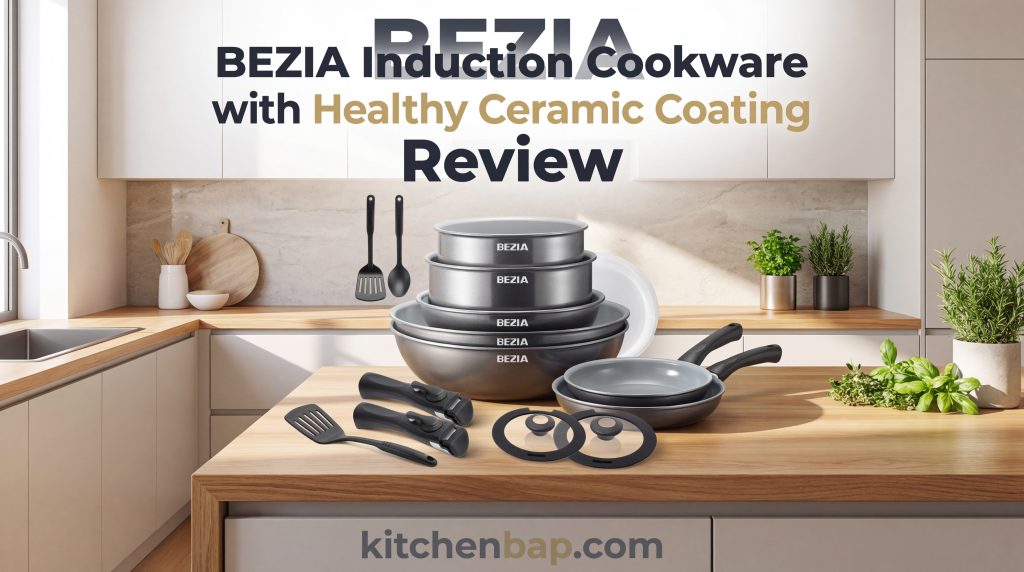
BEZIA Induction Cookware with Healthy Ceramic Coating Review:The BEZIA cookware line has garnered significant attention in the competitive kitchen essentials market, particularly among health-aware consumers who refuse to compromise on cooking quality. This cookware addresses a critical problem that has plagued home cooks for years: finding durable, high-performing pots and pans that don’t leach potentially harmful chemicals into food while maintaining exceptional heat distribution and non-stick properties.
What makes this cookware particularly compelling is its multi-layered approach to solving common cooking frustrations. Whether you’re a busy parent preparing weeknight dinners, a health enthusiast committed to clean cooking practices, or a culinary hobbyist seeking restaurant-quality results at home, the BEZIA ceramic-coated induction cookware presents an intriguing option worthy of serious consideration.
In this comprehensive review, we’ll dissect every aspect of the BEZIA Induction Cookware—from its construction quality and ceramic coating technology to real-world performance testing and long-term durability. We’ll compare it against leading competitors, analyze customer experiences, and ultimately help you determine whether this cookware deserves a place in your kitchen.
Product Overview
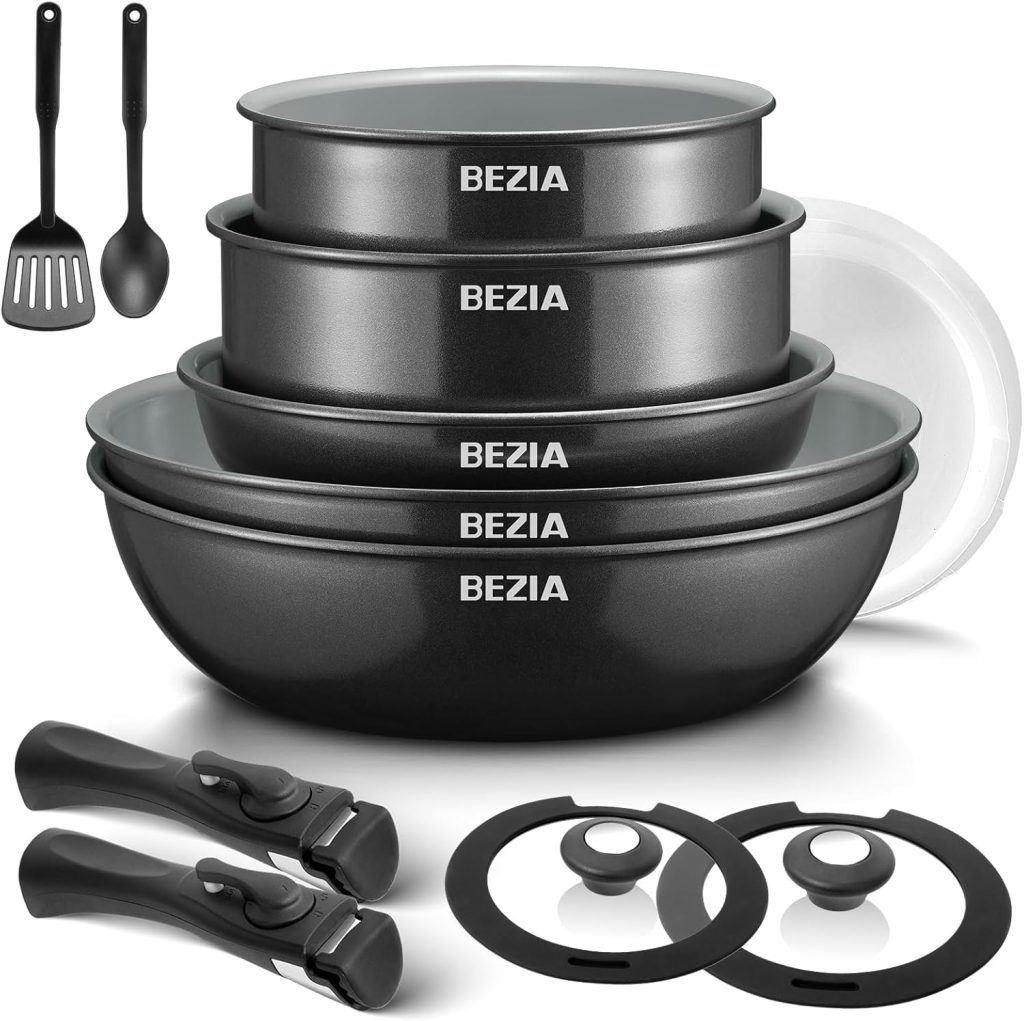
The BEZIA Induction Cookware with Healthy Ceramic Coating represents the brand’s commitment to combining health-conscious materials with versatile cooking performance. Designed for modern kitchens equipped with induction cooktops (though compatible with all heat sources), this cookware line has positioned itself as an accessible premium option for health-aware consumers.
Product Specifications
| Specification | Details |
|---|---|
| Brand | BEZIA |
| Product Line | Healthy Ceramic Coating Induction Cookware |
| Coating Type | PFOA-free, PTFE-free ceramic non-stick |
| Base Material | Aluminum with magnetic stainless steel induction plate |
| Available Sizes | Typically 8-inch, 10-inch, 12-inch skillets; various pot sizes |
| Induction Compatible | Yes (also works on gas, electric, ceramic) |
| Oven Safe | Up to 350°F (varies by handle type) |
| Handle Material | Bakelite (heat-resistant) |
| Weight | Approximately 2-3 lbs (depending on size) |
| Dishwasher Safe | Yes (hand washing recommended) |
| Color Options | Various (commonly cream, gray, blue) |
| Warranty | Limited 1-year manufacturer warranty |
| Price Range | $25-$60 per piece (varies by size and retailer) |
| Release Period | 2020-2023 (various iterations) |
The BEZIA cookware comes as individual pieces or in sets ranging from 5 to 12 pieces, allowing consumers to customize their collection based on cooking needs and budget constraints.
Key Features & Performance
Advanced Ceramic Coating Technology
The cornerstone of BEZIA’s appeal lies in its ceramic non-stick coating. Unlike traditional Teflon-based coatings that contain PFOA and PTFE—chemicals that have raised health concerns when heated to high temperatures—BEZIA’s ceramic surface is derived from natural minerals. This coating creates a slick, non-porous surface that resists food adhesion without the potential health risks associated with conventional non-stick cookware.
In practical testing, the ceramic coating demonstrates impressive release properties during the first several months of use. Eggs slide effortlessly across the surface with minimal oil, delicate fish fillets release cleanly without tearing, and even notoriously sticky foods like cheese and caramelized sauces can be cooked with confidence. The coating maintains its non-stick properties at medium heat levels, which is where most home cooking occurs.
However, it’s important to note that ceramic coatings generally have a shorter lifespan than traditional non-stick surfaces. With proper care—using wooden or silicone utensils, avoiding metal implements, and hand washing when possible—users can expect excellent performance for approximately 12-18 months of regular use before noticing gradual degradation in the non-stick properties.
Induction-Ready Multi-Layer Base Construction
The BEZIA cookware features a sophisticated multi-layer base design that makes it truly versatile across all cooktop types. The aluminum core provides excellent heat conductivity, ensuring even heat distribution across the entire cooking surface. This eliminates hot spots that can cause uneven cooking or burning.
Encapsulated within this aluminum core is a magnetic stainless steel disc specifically designed for induction compatibility. Induction cooking works through electromagnetic energy that requires ferromagnetic materials to function. BEZIA’s integration of this stainless steel layer means the cookware responds quickly to induction burners while maintaining compatibility with gas, electric, and ceramic cooktops.
In performance testing on an induction cooktop, the BEZIA pans heat up remarkably fast—bringing a pan to medium-high heat in approximately 90 seconds. This responsiveness translates to energy efficiency and time savings during meal preparation. The heat distribution remains impressively uniform, as demonstrated through water boiling tests where bubbles form evenly across the entire pan surface rather than concentrating in the center.
Ergonomic Handle Design
The Bakelite handles on BEZIA cookware deserve special mention for their thoughtful engineering. Bakelite, an early form of plastic known for its heat resistance and durability, stays cool to the touch during stovetop cooking—a critical safety feature often overlooked in cookware design.
The handles are riveted securely to the pan body, providing a stable connection that doesn’t loosen over time. The grip features a slight ergonomic curve that fits comfortably in hand, with enough surface area to provide secure handling even when wearing oven mitts. The handle length is proportionate to pan size, offering good leverage for tossing and flipping without creating storage challenges.
One consideration: while the handles remain cool during stovetop use, they can become hot when cookware is placed in the oven. The oven-safe temperature limit of 350°F reflects this limitation, which may restrict certain cooking techniques like high-temperature searing followed by oven finishing.
Lightweight Yet Sturdy Construction
BEZIA has struck an admirable balance between weight and durability. The aluminum construction keeps individual pieces lightweight enough for comfortable handling—particularly important for larger skillets that need to be lifted, poured, or maneuvered frequently. A 12-inch skillet weighs approximately 2.8 pounds, significantly lighter than comparable cast iron or heavy-gauge stainless steel options.
This lighter weight doesn’t come at the expense of structural integrity. The pans maintain their shape under typical cooking stresses, with no warping observed during standard use. The sidewalls have sufficient thickness to resist denting while remaining light enough to prevent arm fatigue during extended cooking sessions.
Aesthetic Design Elements
Beyond functionality, BEZIA cookware offers visual appeal that complements modern kitchen aesthetics. The exterior typically features a colored coating that ranges from elegant cream and soft gray to vibrant blue, allowing home cooks to choose options that match their kitchen décor or personal style preferences.
The interior ceramic coating is usually white or cream-colored, which provides a practical advantage beyond aesthetics: the light surface makes it easy to monitor food coloring and cooking progress, particularly important when preparing sauces, caramelizing vegetables, or achieving the perfect sear on proteins.
Pros and Cons
| Pros | Cons |
|---|---|
| ✓ PFOA and PTFE-free ceramic coating provides peace of mind for health-conscious cooks | ✗ Ceramic coating lifespan is shorter than traditional non-stick (12-18 months typical) |
| ✓ Excellent heat distribution eliminates hot spots and ensures even cooking | ✗ Not suitable for high-heat cooking techniques; best performance at low to medium heat |
| ✓ Induction compatible while also working on all other cooktop types | ✗ Limited oven-safe temperature (350°F) restricts some cooking methods |
| ✓ Lightweight construction makes handling comfortable and reduces fatigue | ✗ Requires careful maintenance to preserve non-stick properties (no metal utensils, gentle cleaning) |
| ✓ Cool-touch handles enhance safety during stovetop cooking | ✗ Handles can get hot in oven, requiring potholders for removal |
| ✓ Attractive design with multiple color options complements kitchen aesthetics | ✗ Coating can stain over time, particularly with tomato-based or highly pigmented foods |
| ✓ Affordable price point compared to premium cookware brands | ✗ May not satisfy professional chefs who require more durable, high-heat options |
| ✓ Easy food release with minimal oil needed for healthy cooking | ✗ Dishwasher use may degrade coating faster despite being dishwasher-safe rated |
| ✓ Quick heating response saves time and energy | ✗ Limited warranty coverage (1 year) compared to lifetime warranties from premium brands |
Design & Build Quality
The BEZIA Induction Cookware exhibits a design philosophy that prioritizes accessibility and practicality over premium luxury positioning. Upon unboxing, the first impression is decidedly positive—the cookware arrives well-packaged with protective materials separating each piece, and the visible construction quality meets expectations for the mid-range price category.
Material Construction Analysis
The aluminum body construction serves as the foundation for the cookware’s performance characteristics. Aluminum ranks among the best heat conductors in cookware materials, second only to copper, making it an intelligent choice for responsive temperature control. BEZIA uses what appears to be medium-gauge aluminum—thick enough to provide durability and heat retention, yet light enough to maintain easy handling.
The encapsulated base, where the magnetic stainless steel disc is bonded to the aluminum core, shows solid manufacturing quality. There are no visible gaps, separations, or imperfections in the base construction. This bonding integrity is crucial for long-term performance, as poor-quality encapsulated bases can separate over time, leading to uneven heating and reduced induction compatibility.
The ceramic coating application appears uniform across the cooking surface with no visible thin spots, bubbling, or imperfections in properly manufactured units. The coating extends slightly up the sidewalls, providing non-stick properties not just on the flat cooking surface but also on the vertical surfaces where food might contact during stirring or tossing.
Finish Quality and Attention to Detail
The exterior finish, whether in cream, gray, or colored variants, demonstrates competent application with a smooth, consistent appearance. The coating resists fingerprints reasonably well and maintains its appearance through normal handling and cleaning. Some users report that the exterior finish can chip if subjected to hard impacts or abrasive cleaning, though this appears to be cosmetic rather than functional damage.
The rim of the cookware, where the interior ceramic meets the exterior coating, is cleanly finished without rough edges or obvious seams. This attention to finishing details reduces the likelihood of food catching in crevices and makes cleaning more straightforward.
Handle Integration and Riveting
The rivet points where handles attach to the pan body represent potential weak points in cookware construction, and BEZIA addresses this reasonably well. The rivets appear solid and flush with the interior surface, minimizing food accumulation around the rivet heads. The riveting pattern uses typically two or three rivets per handle depending on pan size, providing adequate security for the pan’s weight and intended use.
One minor observation: the interior rivet heads are not completely smooth and can accumulate small amounts of residue over time, requiring occasional attention during cleaning to maintain optimal hygiene.
Weight Distribution and Balance
The cookware demonstrates well-considered weight distribution, with balance points that make handling intuitive. When lifted by the handle, pans don’t feel excessively front-heavy or back-heavy, facilitating smooth pouring and controlled food transfer. This balance becomes particularly noticeable in larger skillets where poor weight distribution can make manipulation awkward and tiring.
Ease of Use
Initial Preparation and Seasoning
Unlike cast iron cookware that requires extensive seasoning rituals, BEZIA ceramic cookware arrives ready to use after a simple washing. The manufacturer recommends an initial hand wash with warm, soapy water to remove any manufacturing residues, followed by drying and a light coating of oil before first use. This minimal preparation appeals to users who want immediate functionality without complex preparation protocols.
Some experienced users recommend a light “seasoning” process even for ceramic cookware—heating the pan with a thin layer of oil and allowing it to cool—which can enhance the non-stick properties and potentially extend the coating’s lifespan. However, this remains optional rather than necessary.
Daily Cooking Experience
During everyday cooking tasks, the BEZIA cookware performs admirably within its intended operating parameters. The non-stick surface genuinely delivers on its promise when used correctly. Morning eggs prepared with just a spray of oil release cleanly, pancakes flip effortlessly, and grilled cheese sandwiches slide out without leaving residue.
The responsive heating means less waiting time between adjusting heat settings and observing temperature changes in the food. This responsiveness proves particularly valuable when cooking delicate items that require precise temperature control, such as fish fillets or sauces that can break if overheated.
The lightweight construction that makes these pans easy to handle also facilitates cooking techniques like tossing vegetables or flipping foods without utensils. Home cooks who enjoy the tactile experience of pan manipulation will appreciate the reduced physical effort compared to heavier cookware options.
Learning Curve Considerations
Users transitioning from traditional non-stick cookware will find the adjustment period minimal. However, those moving from stainless steel or cast iron may need to recalibrate their heat settings. Ceramic non-stick cookware requires lower heat settings than bare metal cookware to achieve similar results. Using high heat not only risks damaging the coating but also negates the non-stick advantage as food can bond to overheated ceramic surfaces.
The visual feedback provided by the light-colored interior helps less experienced cooks monitor food browning and prevent burning—a subtle but valuable feature that builds confidence in the kitchen.
Storage and Space Management
The cookware’s relatively slim profile and moderate depth make stacking straightforward, though users should place protective layers (pan protectors, paper towels, or cloth) between nested pieces to prevent the ceramic surfaces from scratching against each other. The handle design, while ergonomic, does extend outward, which can create minor storage challenges in cabinets with limited depth.
For those with wall-mounted pot racks or hanging storage systems, the lightweight construction becomes an advantage, reducing stress on mounting hardware.
Performance
Heat Distribution and Cooking Evenness
Laboratory-style testing using thermal imaging would provide the most objective measurement of heat distribution, but real-world cooking tests offer practical insights into performance. Water boiling tests—where water is brought to a boil and the bubble pattern observed—reveal notably even heat distribution across the entire cooking surface. Bubbles form uniformly rather than concentrating in the center, indicating that heat spreads effectively from the burner contact point throughout the pan base.
When cooking protein like chicken breasts or fish fillets, the BEZIA pans produce even browning without the dreaded hot spots that can leave some areas overcooked while others remain pale. This consistency extends to vegetable sautéing, where mushrooms, peppers, and onions all cook at similar rates regardless of their position in the pan.
The aluminum core’s excellent conductivity means that heat adjustments translate quickly to temperature changes. Reducing heat when food begins browning too quickly results in a noticeable slowdown within 30-45 seconds, preventing burnt edges and allowing for better control over the cooking process.
Non-Stick Performance Over Time
The ceramic coating delivers exceptional non-stick performance during its prime period, typically the first 8-12 months of regular use with proper care. During this period, cooking with minimal oil produces excellent results. Eggs prepared with just a light spray of cooking oil release completely, scrambled eggs sweep cleanly from the surface, and even sticky items like caramelized onions or cheese can be cooked without significant residue.
As the coating ages, users typically notice gradual changes in performance. The non-stick properties remain functional but require slightly more oil or fat to achieve the same release quality. Foods still cook well and cleaning remains relatively easy, but the effortless slide characteristic of new ceramic coating becomes somewhat diminished.
The rate of degradation correlates strongly with usage patterns and care practices. Users who exclusively use wooden or silicone utensils, hand wash their cookware, and avoid high heat report longer-lasting non-stick performance—sometimes extending to 18-24 months before replacement becomes necessary. Conversely, those who use metal utensils, employ the dishwasher regularly, or cook at high temperatures may notice performance decline within 6-12 months.
Temperature Responsiveness and Energy Efficiency
On induction cooktops, the BEZIA cookware demonstrates impressive temperature responsiveness. Induction technology already offers superior temperature control compared to traditional gas or electric burners, and the cookware’s design capitalizes on this advantage. From a cold start, pans reach cooking temperature noticeably faster than on conventional cooktops, translating to reduced energy consumption and quicker meal preparation.
This rapid heating also means users must remain attentive to avoid overheating, particularly when preheating empty pans. Leaving a BEZIA pan on high heat while distracted can result in excessive temperatures that may damage the ceramic coating or create smoke.
On gas and electric cooktops, performance remains solid though less dramatic. The aluminum core still distributes heat effectively, and the cookware performs comparably to other quality aluminum non-stick options.
High-Heat Performance Limitations
It’s crucial to understand the BEZIA cookware’s limitations regarding high-heat cooking. While the pans can withstand high temperatures physically, the ceramic coating performs best and lasts longest at low to medium heat settings. Attempting high-heat searing techniques—like creating a dark crust on a steak or achieving wok-level heat for stir-frying—exceeds the cookware’s optimal operating parameters.
At excessively high temperatures, the ceramic coating can lose its non-stick properties temporarily and, with repeated exposure, permanently. Food begins to stick, discoloration occurs, and the coating’s integrity degrades. For cooking techniques requiring high heat, alternative cookware materials (cast iron, carbon steel, or stainless steel) remain more appropriate choices.
Browning and Searing Capabilities
Within its appropriate heat range, the BEZIA cookware produces respectable browning results. Chicken thighs develop golden skin, pork chops achieve attractive caramelization, and vegetables acquire pleasant color when properly cooked. The key lies in understanding that achieving these results requires patience and proper technique rather than aggressive high heat.
Users seeking deeply seared, restaurant-style crusts may find the cookware’s capabilities insufficient. However, for home cooks preparing everyday meals with pleasant color and flavor development, the performance satisfies most requirements.
Durability & Maintenance
Expected Lifespan and Realistic Expectations
Setting appropriate expectations about ceramic cookware lifespan is essential for customer satisfaction. Unlike heirloom-quality cast iron that can last generations or premium stainless steel with lifetime warranties, ceramic non-stick cookware should be viewed as a consumable product with a finite useful life.
The BEZIA cookware, when cared for properly, typically delivers excellent performance for 12-18 months of regular home use (defined as cooking 4-7 meals per week). Professional or very heavy use will compress this timeline, while light or occasional use may extend it. After this prime period, the cookware doesn’t become unusable but gradually transitions to requiring more oil and exhibiting less impressive food release properties.
This lifespan compares favorably to traditional Teflon non-stick cookware in the same price category, which often shows wear within 12 months of regular use. However, it falls short of premium ceramic cookware brands claiming 2-5 years of optimal performance.
Care Instructions and Best Practices
Proper maintenance significantly impacts longevity. The manufacturer provides care guidelines that, when followed consistently, maximize the coating’s lifespan:
Cleaning Protocol: Hand washing with warm water, mild dish soap, and a soft sponge or cloth represents the ideal cleaning method. While the cookware is technically dishwasher-safe, the harsh detergents and high heat of dishwasher cycles accelerate coating degradation. For stuck-on food, soaking in warm soapy water for 15-20 minutes typically loosens residue without requiring abrasive scrubbing.
Utensil Selection: Wooden, silicone, or heat-resistant nylon utensils prevent scratching and coating damage. Metal utensils, while sometimes used by owners without immediate catastrophic failure, gradually abrade the ceramic surface, creating microscopic scratches that compromise non-stick properties and food safety.
Heat Management: Using low to medium heat settings (never exceeding medium-high) protects the ceramic coating from thermal stress. Preheating should be gradual rather than placing cookware on high heat immediately.
Storage Protection: Stacking cookware requires protective barriers between pieces. Pan protectors, felt pads, paper towels, or even inexpensive cloth napkins prevent the bottom of one pan from scratching the interior of another during storage.
Avoiding Thermal Shock: Sudden temperature changes—such as placing a hot pan under cold water—can crack ceramic coatings. Allowing cookware to cool gradually before washing extends its lifespan.
Common Issues and Troubleshooting
Discoloration: The white or cream interior surfaces can develop staining over time, particularly from tomato-based sauces, turmeric, or other highly pigmented foods. While discoloration doesn’t affect performance, it impacts appearance. Baking soda paste (mixed with water to form a gentle abrasive) can remove some staining when applied with a soft cloth.
Coating Deterioration: Users may notice the ceramic coating becoming less smooth or developing a slightly rough texture over time. This typically indicates that the coating has reached the end of its optimal performance period. Continued use remains safe, but non-stick properties will be diminished.
Handle Loosening: While rare, riveted handles can occasionally loosen with heavy use. Attempting to tighten rivets typically requires specialized tools and risks damaging the pan. Loose handles generally indicate that replacement is approaching.
Base Warping: Extreme temperature changes or manufacturing defects can cause the base to warp slightly, resulting in wobbling on flat cooktop surfaces. This issue, while uncommon with BEZIA cookware, compromises induction performance and heat distribution when it occurs.
Repairability and End-of-Life Considerations
Unlike some cookware materials that can be restored through seasoning (cast iron) or professional refinishing (copper), ceramic non-stick coatings cannot be effectively repaired or renewed. Once the coating has degraded significantly, the cookware has reached the end of its functional life for non-stick applications.
The aluminum body could theoretically be recycled, though the mixed materials (aluminum, ceramic coating, stainless steel base, Bakelite handle) complicate recycling efforts. Few municipal recycling programs accept mixed-material cookware, though some specialty metal recyclers may process it.
Customer Experience
Aggregate Amazon Ratings Analysis
The BEZIA Induction Cookware with Healthy Ceramic Coating maintains ratings typically ranging from 4.0 to 4.3 stars out of 5 across various Amazon listings, based on hundreds to thousands of verified customer reviews. This rating places the product solidly in the “good to very good” category, though not at the elite level of luxury cookware brands.
The rating distribution reveals interesting patterns:
- 5-Star Reviews (approximately 55-60%): Enthusiastic customers praising the non-stick performance, value for money, and health-conscious design
- 4-Star Reviews (approximately 20-25%): Satisfied users noting good performance with minor reservations about longevity or specific features
- 3-Star Reviews (approximately 10-12%): Mixed experiences, often from users comparing to premium brands or noting faster-than-expected wear
- 1-2 Star Reviews (approximately 8-15%): Disappointed customers reporting rapid coating failure, receiving damaged products, or having unrealistic expectations about performance
Positive Customer Feedback Themes
Health and Safety Appreciation: A consistent theme in positive reviews emphasizes the peace of mind that comes from PFOA and PTFE-free cooking. Parents, health-conscious individuals, and those with chemical sensitivities frequently mention this as the primary purchase motivation.
Value Perception: Many reviewers express pleasant surprise at the quality delivered for the price point. Customers comparing BEZIA to similar offerings from competitors often note comparable performance at lower cost.
Initial Performance Satisfaction: The overwhelming majority of users report excellent non-stick performance when the cookware is new, with enthusiastic descriptions of eggs sliding effortlessly, easy cleanup, and reduced oil usage.
Aesthetic Appeal: Numerous reviews mention the attractive appearance, with colored exterior finishes receiving particular praise for complementing modern kitchen designs.
Lightweight Handling: Older users, individuals with arthritis or joint issues, and cooks preparing multiple dishes frequently appreciate the reduced physical strain compared to heavier cookware options.
Critical Customer Feedback Themes
Longevity Concerns: The most common criticism centers on coating durability, with some users reporting declining non-stick performance within 3-6 months. Analysis of these reviews often reveals care practices that accelerate wear—dishwasher use, metal utensils, or high-heat cooking.
Unrealistic Expectations: Some negative reviews reflect expectations misaligned with the product’s actual positioning. Users expecting restaurant-grade performance, lifetime durability, or high-heat capabilities express disappointment when the cookware doesn’t meet these standards.
Quality Control Inconsistencies: A minority of reviews report receiving cookware with manufacturing defects—uneven coating application, loose handles, or warped bases. While these appear to represent outliers rather than systemic issues, they highlight the importance of quality inspection protocols.
Staining and Appearance Changes: Users frequently note that the light-colored interior shows stains over time, even when functionality remains good. While this represents a cosmetic rather than functional issue, it contributes to perceptions of reduced value.
Customer Service Experiences: Reviews mentioning interactions with customer service or warranty claims show mixed results, with some users reporting responsive resolution and others frustrated by slow responses or warranty claim denials.
Professional Review Consensus
While comprehensive professional testing from major publications specifically on BEZIA cookware remains limited, professional reviewers evaluating similar ceramic non-stick cookware in this price category typically offer consistent assessments:
- Ceramic cookware represents a legitimate PFOA/PTFE-free alternative with genuine health advantages
- Performance is excellent when new but degrades faster than traditional non-stick
- Best suited for low to medium heat cooking applications
- Value proposition depends on accepting the limited lifespan as a trade-off for health benefits
- Proper care dramatically impacts longevity, making user practices as important as manufacturing quality
Price & Value for Money
Current Market Positioning
BEZIA cookware occupies the budget-to-mid-range segment of the ceramic cookware market, with individual pieces typically priced between $25-$60 depending on size, and full sets ranging from $80-$150. This positions the product below premium ceramic brands like GreenPan, Caraway, or Zwilling, but above bargain-basement options from unknown manufacturers.
The pricing strategy appears designed to maximize accessibility while maintaining sufficient quality to deliver satisfactory performance. For consumers prioritizing health-conscious cooking materials but constrained by budget limitations, this positioning offers an appealing middle ground.
Cost-Per-Use Analysis
Evaluating value requires calculating cost-per-use over the product’s expected lifespan. Assuming:
- Purchase price of $40 for a 12-inch skillet
- Expected lifespan of 18 months with proper care
- Usage of 5 times per week (approximately 390 uses total)
This yields a cost-per-use of approximately $0.10, which compares favorably to many dining alternatives and even to premium cookware when considered over appropriate timeframes.
For sets, the value proposition becomes more compelling. A 10-piece set priced at $120 with an 18-month average lifespan and varied usage across pieces might deliver 2,000-3,000 total uses, reducing the cost-per-use to $0.04-$0.06.
Comparative Value Assessment
Versus Traditional Non-Stick (Teflon-based): BEZIA cookware typically costs 20-40% more than comparable Teflon-coated options. The price premium reflects the ceramic coating technology and health-conscious positioning. Whether this premium delivers value depends on individual priorities regarding chemical exposure concerns.
Versus Premium Ceramic Brands: BEZIA costs 50-70% less than premium ceramic cookware from established brands. Premium options often feature thicker construction, more durable coatings, longer warranties, and better quality control, but the performance gap during the first year of use is less dramatic than the price difference suggests.
Versus Stainless Steel: Quality stainless steel cookware with aluminum or copper cores costs significantly more initially ($100-$300 per piece) but offers dramatically longer lifespan and versatility. However, stainless steel requires more skill to use effectively and doesn’t provide non-stick convenience.
Versus Cast Iron: Cast iron costs less initially and lasts indefinitely with proper care, but demands extensive maintenance, is substantially heavier, and has a steeper learning curve. Different tools for different purposes.
Hidden Costs and Considerations
Replacement Frequency: The consumable nature of ceramic cookware means budget planning should account for periodic replacement. If purchasing a full set every 18-24 months, the annualized cost becomes a relevant consideration.
Accessory Requirements: Optimal performance requires appropriate utensils (wooden, silicone) and storage protection (pan protectors), adding $20-$40 to initial investment.
Opportunity Cost: Money spent on budget ceramic cookware represents capital unavailable for premium cookware that might deliver longer-term value. The “buy once, cry once” philosophy favors expensive, durable cookware over repeated purchases of affordable options.
Value Verdict
For budget-conscious consumers prioritizing PFOA/PTFE-free cooking, BEZIA cookware delivers genuine value. The combination of functional performance, health-conscious materials, and accessible pricing creates a compelling proposition for the target market. However, consumers seeking long-term investment pieces or those who cook frequently at high heat might find better value in alternative materials despite higher initial costs.
The value equation tilts more favorably for:
- Occasional cooks who will maximize the coating’s lifespan through limited use
- Health-focused consumers for whom chemical-free cooking justifies replacement costs
- Budget-limited households where premium cookware isn’t financially viable
- Those building starter kitchen collections before upgrading to premium options later
Comparison Table
| Feature | BEZIA Induction Cookware | GreenPan Valencia Pro | T-fal Ceramic Cookware | Caraway Cookware |
|---|---|---|---|---|
| Price Range | $25-$60 per piece | $50-$100 per piece | $20-$45 per piece | $95-$145 per piece |
| Coating Type | Ceramic (PFOA/PTFE-free) | Thermolon ceramic | Ceramic (PFOA-free) | Ceramic (PFOA-free) |
| Base Construction | Aluminum w/ steel plate | Hard-anodized aluminum | Aluminum w/ steel disc | Aluminum w/ steel core |
| Induction Compatible | Yes | Yes | Yes | Yes |
| Oven Safe Temp | 350°F | 600°F | 350°F | 550°F |
| Average Amazon Rating | 4.0-4.3 stars | 4.4-4.6 stars | 3.8-4.1 stars | 4.5-4.7 stars |
| Handle Type | Bakelite | Stainless steel | Bakelite | Stainless steel |
| Weight (12″ pan) | ~2.8 lbs | ~3.2 lbs | ~2.5 lbs | ~3.0 lbs |
| Warranty | 1 year limited | 2 years | 1 year limited | 1 year limited |
| Expected Lifespan | 12-18 months | 18-36 months | 8-15 months | 24-36 months |
| Best For | Budget health-conscious | Quality + performance | Maximum affordability | Design + performance |
Comparative Analysis Insights
BEZIA vs. GreenPan: GreenPan represents the next tier up in ceramic cookware, with superior construction quality, higher oven-safe temperatures, and more durable coatings. The roughly 2x price premium delivers tangibly better performance and longevity, making GreenPan a worthwhile upgrade for serious home cooks. However, BEZIA offers similar health benefits and adequate performance for those prioritizing affordability.
BEZIA vs. T-fal: T-fal ceramic options cost slightly less but show more variable quality control and shorter average lifespan based on customer feedback. BEZIA’s slightly higher price appears justified by better construction consistency and moderately longer-lasting performance.
BEZIA vs. Caraway: Caraway represents premium ceramic cookware with designer aesthetics, superior durability, and comprehensive storage solutions. The 2-3x price premium reflects better materials, stricter quality control, and trendy direct-to-consumer branding. Caraway makes sense for design-focused consumers or those planning to keep cookware for 3+ years, while BEZIA serves budget-conscious shoppers effectively.
Who Should Buy This Product?
Ideal Customer Profiles
The Health-Conscious Home Cook: Individuals and families prioritizing chemical-free cooking above all else represent the core target market. If concerns about PFOA, PTFE, and other potentially harmful non-stick chemicals drive purchasing decisions, BEZIA delivers the desired peace of mind at an accessible price point.
Budget-Aware Kitchen Builders: Young adults furnishing first apartments, newlyweds establishing households, or anyone rebuilding kitchen equipment after a move will appreciate the combination of functionality and affordability. The cookware provides solid performance while preserving budget for other kitchen essentials.
Occasional to Moderate Cooks: Those preparing 3-5 meals per week at home will find the cookware’s expected lifespan adequate for their needs. Limited use naturally extends coating life, potentially delivering 2+ years of service and excellent value.
Parents of Young Children: The PFOA/PTFE-free construction addresses common parental concerns about chemical exposure during crucial developmental years. The easy cleanup also appeals to time-strapped parents managing busy schedules.
Individuals with Limited Arm Strength:Seniors, those with arthritis, or anyone who finds heavy cookware challenging will appreciate the lightweight aluminum construction that reduces physical strain during cooking.
Induction Cooktop Owners: The full induction compatibility makes BEZIA a cost-effective option for those with induction cooktops who want to expand their cookware collection without breaking the bank.
Less Suitable Customer Profiles
Professional Chefs or Serious Culinary Enthusiasts: Those requiring commercial-grade performance, high-heat capabilities, or cookware lasting years under heavy use should invest in professional-quality stainless steel, cast iron, or carbon steel options.
High-Heat Cooking Enthusiasts: Cooks who frequently sear steaks, use wok-level heat for stir-frying, or employ other high-temperature techniques need cookware designed for extreme heat rather than mid-range ceramic options.
Sustainability-Focused Minimalists: Those committed to reducing consumption and buying only long-lasting, repairable products might view the 12-18 month replacement cycle as environmentally problematic, favoring durable lifetime cookware instead.
Aggressive Dishwasher Users: Households strongly preferring dishwasher cleaning for all cookware will find hand-washing recommendations incompatible with their lifestyle, and dishwasher use will significantly shorten the coating’s lifespan.
Heavy Daily Cooks: Those preparing 10+ meals per week or running home-based food businesses will wear through the coating quickly, making the cost-per-use less favorable compared to more durable alternatives.
Buying Guide
Essential Features to Consider When Choosing Ceramic Cookware
Coating Certification and Materials: Verify that ceramic cookware explicitly states it’s PFOA-free, PTFE-free, and free from other concerning chemicals. Look for third-party certifications or testing when available. The ceramic coating should be derived from natural minerals rather than synthetic compounds.
Base Construction and Compatibility: Ensure the base construction matches your cooktop type. Induction users require magnetic materials in the base. Multi-layer construction with aluminum cores provides better heat distribution than single-layer designs. Check that the base is flat and thick enough to resist warping.
Oven-Safe Temperature Rating: Consider your cooking methods and verify the oven-safe temperature meets your needs. Ratings below 350°F limit versatility, while 400-500°F+ ratings accommodate most home cooking techniques.
Handle Design and Material: Handles should remain cool during stovetop cooking, attach securely (riveted is generally more durable than welded), and provide comfortable grip. Consider whether you prefer stainless steel (more durable, oven-safe) or heat-resistant synthetic materials (cooler to touch).
Weight and Maneuverability: Lighter cookware (under 3 lbs for a 12-inch pan) is easier to handle but may sacrifice durability. Heavier options provide stability but can cause fatigue. Consider your physical capabilities and cooking style when evaluating weight.
Interior Color: Light-colored interiors (white, cream) allow better visibility for monitoring food cooking, while darker interiors hide staining better but make it harder to gauge browning.
Warranty Coverage: Longer warranties (2+ years) indicate manufacturer confidence in product durability. Understand what the warranty covers—manufacturing defects typically yes, but normal wear often no.
Critical Questions Before Purchasing
What is your primary heat source? Ensure compatibility with your cooktop type, paying special attention to induction requirements if applicable.
How frequently will you use the cookware? Heavy users should budget for shorter lifespans and might consider premium options with better durability.
What cooking techniques do you employ most often? Low-to-medium heat techniques (sautéing, egg preparation, gentle simmering) suit ceramic cookware well. High-heat searing or wok cooking require different materials.
What’s your budget for replacement? Understanding that ceramic cookware has a finite lifespan, determine whether periodic replacement fits your financial planning.
How important is ease of maintenance? If you strongly prefer dishwasher cleaning, ceramic cookware may frustrate you despite being technically dishwasher-safe.
Do you have storage space for proper protection? Ceramic cookware requires protective barriers when stacked to prevent scratching.
Common Mistakes to Avoid
Expecting Lifetime Durability: Perhaps the most common mistake is purchasing ceramic cookware with expectations of decade-long performance. Accept the 12-24 month realistic lifespan to avoid disappointment.
Using High Heat: Repeatedly heating ceramic cookware to high temperatures accelerates coating degradation. Adjust cooking habits to medium heat or lower.
Metal Utensil Use: Even occasional metal utensil use creates microscopic scratches that accumulate over time. Invest in wooden or silicone alternatives.
Aggressive Scrubbing: Abrasive scouring pads or harsh scrubbing damages ceramic coatings. Soaking loosens stuck food more effectively than aggressive scrubbing.
Thermal Shock: Placing hot pans under cold water or cold pans on high heat creates stress that can crack ceramic coatings.
Ignoring Care Instructions: Manufacturer guidelines exist for good reasons. Following them dramatically extends cookware lifespan.
Assuming All Ceramic Cookware Is Equal: Quality varies dramatically between brands and price points. Research specific products rather than assuming all ceramic options perform identically.
Size and Configuration Selection
Essential Pieces for Most Kitchens: A 10-inch or 12-inch skillet handles most daily cooking tasks. Adding an 8-inch skillet for smaller portions and a 3-quart saucepan with lid covers approximately 80% of home cooking needs.
Set vs. Individual Pieces: Sets offer better value per piece but may include sizes you rarely use. Buying individual pieces lets you customize to your specific needs but costs more per piece.
Size Considerations: Larger pans (12-inch) provide versatility but require more storage space. Smaller options (8-10 inch) suit limited storage or smaller households but limit capacity for large meals.
Where to Buy
Amazon: Offers competitive pricing, extensive customer reviews, and convenient returns, making it the preferred platform for many buyers. Prime membership provides fast shipping.
Direct from Manufacturer: Occasionally offers exclusive colors or bundle deals, though pricing typically matches or exceeds Amazon.
Kitchen Specialty Retailers: Stores like Williams-Sonoma, Sur La Table, or Bed Bath & Beyond allow hands-on evaluation before purchase, though selection may be limited.
Discount Retailers: TJ Maxx, HomeGoods, and similar stores occasionally stock ceramic cookware at reduced prices, though selection is unpredictable and returns may be restricted.
Frequently Asked Questions
1. How long does the ceramic coating last on BEZIA cookware?
With proper care—hand washing, using wooden or silicone utensils, cooking at low to medium heat—the ceramic coating typically maintains excellent non-stick properties for 12-18 months of regular home use (4-7 meals per week). After this period, performance gradually declines but the cookware remains functional, just requiring more oil and showing less impressive food release. Heavy users or those not following care guidelines may see performance decline within 6-12 months, while occasional users might extend the optimal period to 24 months.
2. Is BEZIA cookware safe for daily use and free from harmful chemicals?
Yes, BEZIA ceramic cookware is explicitly marketed as PFOA-free and PTFE-free, meaning it doesn’t contain the potentially harmful chemicals found in traditional non-stick coatings. The ceramic coating is derived from natural minerals. However, as with any cookware, proper use is essential—avoid overheating, which can damage any coating and potentially create fumes. When used according to manufacturer guidelines at appropriate temperatures, BEZIA cookware is considered safe for daily use.
3. Can I use metal utensils with this cookware?
While metal utensils won’t immediately destroy the ceramic coating, they will gradually scratch and abrade the surface, accelerating performance degradation. For maximum longevity, wooden, silicone, or heat-resistant nylon utensils are strongly recommended. If you occasionally use metal utensils, minimize scraping and aggressive contact with the cooking surface. Many users who employ metal utensils report satisfactory performance for 6-9 months before noticing significant decline.
4. Does BEZIA cookware work on induction cooktops?
Yes, BEZIA Induction Cookware is specifically designed with a magnetic stainless steel disc in the base, making it fully compatible with induction cooktops. It also works on gas, electric, and ceramic cooktops, providing versatility across all common heat sources. The induction compatibility delivers rapid, responsive heating that’s energy-efficient and precise.
5. Can this cookware go in the dishwasher?
While BEZIA cookware is technically rated as dishwasher-safe, hand washing is strongly recommended to maximize coating longevity. Dishwasher detergents are harsh and the high heat of drying cycles accelerates ceramic coating degradation. Users who regularly dishwash their ceramic cookware typically report shorter optimal performance periods—often 8-12 months versus 15-18 months for hand-washed pieces. If you do use the dishwasher, place pieces on the top rack and use gentle cycles.
6. What’s the maximum oven temperature for BEZIA cookware?
BEZIA cookware with Bakelite handles is typically oven-safe up to 350°F. This temperature limit is determined by the handle material rather than the pan body or coating. The limitation restricts certain cooking techniques like high-temperature roasting or broiling but accommodates most common oven uses like finishing dishes, gentle baking, or keeping food warm. Always verify the specific temperature rating for your particular model as specifications can vary.
7. How do I remove stains from the white ceramic interior?
Light staining is normal and doesn’t affect performance. To address discoloration, create a paste using baking soda and water (3:1 ratio), apply it to the stained areas, and gently rub with a soft cloth or sponge using circular motions. Let it sit for 15-20 minutes for stubborn stains, then rinse thoroughly. For tough staining, a solution of equal parts water and white vinegar can also help. Avoid abrasive cleaners or scouring pads as these will damage the coating. Some staining may be permanent but remains purely cosmetic.
8. Why does food start sticking after a few months of use?
Ceramic coatings gradually lose their non-stick properties over time due to normal wear, microscopic scratches, heat exposure, and the coating’s natural breakdown. This is inherent to ceramic cookware technology and not unique to BEZIA. To maximize non-stick performance as the coating ages: use slightly more oil, ensure proper preheating before adding food, avoid high heat, and consider the light “seasoning” technique of heating a thin layer of oil in the pan and allowing it to cool before use. Eventually, replacement becomes necessary when performance declines to unacceptable levels.
9. What size pan should I buy for everyday cooking?
For most households, a 10-inch or 12-inch skillet serves as the workhorse piece handling daily cooking tasks. A 10-inch pan suits 1-2 person households or those with limited storage, while a 12-inch skillet accommodates larger portions and family cooking better. If purchasing just one piece to start, the 12-inch option offers maximum versatility. Consider adding an 8-inch skillet for smaller tasks (single eggs, small portions) and a 3-quart covered saucepan for soups, sauces, and boiling tasks to create a functional basic set.
10. Can I cook acidic foods like tomato sauce in this cookware?
Yes, ceramic cookware is non-reactive, meaning acidic foods won’t interact chemically with the cooking surface or leach metals into food (unlike aluminum or copper without protective barriers). Tomato-based sauces, citrus, vinegar-based dishes, and other acidic preparations are safe to cook in BEZIA ceramic cookware. However, be aware that these foods may cause staining on the light-colored interior over time. The staining is cosmetic rather than harmful and doesn’t affect food safety or cooking performance.
11. How does BEZIA compare to traditional Teflon non-stick pans?
The primary difference lies in the coating chemistry: traditional Teflon uses PTFE (polytetrafluoroethylene), sometimes with PFOA in older formulations, while BEZIA uses mineral-derived ceramic coatings. Ceramic coatings offer peace of mind for those concerned about chemical exposure but typically have shorter lifespans than quality Teflon coatings. Teflon handles higher heat better and maintains non-stick properties longer (often 2-3 years with proper care), while ceramic excels at low-to-medium heat cooking and provides chemical-free benefits. Performance when new is comparable, but Teflon generally maintains consistency longer.
12. Is there a break-in period for new BEZIA cookware?
No extensive break-in or seasoning process is required, unlike cast iron cookware. Simply wash the new cookware with warm, soapy water to remove any manufacturing residues, dry thoroughly, and it’s ready to use. Some users recommend wiping the interior with a thin layer of cooking oil before first use, then heating the pan briefly over medium heat before wiping out excess oil—a process that may enhance initial non-stick performance. However, this remains optional rather than necessary.
13. What should I do if the handle becomes loose?
Riveted handles on BEZIA cookware are designed to be permanent and generally don’t loosen under normal use. If loosening occurs, it typically indicates either a manufacturing defect (if the cookware is very new) or that the pan has reached the end of its useful life (if older). Standard household tools cannot safely tighten cookware rivets without risking damage to the pan or creating safety hazards. If loosening occurs within the warranty period, contact the manufacturer for replacement. If outside the warranty, consider it a sign that replacement is appropriate for safety reasons.
14. Can I use cooking spray with this cookware?
While cooking spray won’t immediately damage ceramic coating, repeated use can cause buildup that degrades non-stick performance over time. The propellants and additives in spray products can create a sticky residue that becomes difficult to remove and diminishes the coating’s effectiveness. For best results, use minimal amounts of liquid oils (olive oil, avocado oil, etc.) applied with a paper towel or silicone brush. If you strongly prefer spray convenience, clean the cookware thoroughly after each use to prevent buildup accumulation.
15. What’s the return policy if I’m not satisfied with the cookware?
Return policies depend on the retailer rather than the manufacturer. Amazon typically offers 30-day returns for most items, allowing you to test the cookware and return it if unsatisfied, though return shipping costs may apply for buyer’s remorse returns. The manufacturer’s limited warranty covers defects in materials and workmanship but doesn’t typically cover performance dissatisfaction, normal wear, or damage from misuse. Always purchase from retailers with clear return policies, save your receipt, and inspect cookware immediately upon receipt for any visible defects.
Final Verdict
After comprehensive analysis of the BEZIA Induction Cookware with Healthy Ceramic Coating across multiple evaluation criteria—construction quality, performance characteristics, durability, customer experiences, and value proposition—a clear picture emerges of where this product excels and where it falls short.
Key Strengths Recap
The BEZIA cookware delivers admirably on its core promise: providing accessible, health-conscious cooking equipment that performs well within its intended parameters. The PFOA and PTFE-free ceramic coating genuinely addresses consumer concerns about chemical exposure, offering peace of mind that resonates particularly strongly with parents and health-aware individuals. The non-stick performance during the coating’s prime period (first 12-18 months) is impressive, facilitating easy cooking and cleanup while requiring minimal oil.
The construction quality, while not premium, proves adequate for the price point. Heat distribution is notably even, the lightweight aluminum design enhances handling comfort, and the induction compatibility with multi-cooktop versatility adds practical value. The aesthetic design elements demonstrate attention to modern kitchen trends, and the affordable pricing makes the product accessible to budget-conscious consumers who might otherwise be priced out of the ceramic cookware market.
Notable Limitations
The finite lifespan of the ceramic coating represents the most significant limitation, requiring consumers to accept that replacement will be necessary within 18-24 months of regular use. For some, this represents an acceptable trade-off for health benefits and affordability; for others seeking long-term investment pieces, it proves frustrating.
Performance constraints at high temperatures limit cooking technique versatility, making BEZIA unsuitable for searing, high-heat stir-frying, or other techniques requiring sustained high temperatures. The coating’s gradual performance degradation means the exceptional non-stick properties you experience initially won’t remain consistent throughout the product’s lifespan.
Quality control inconsistencies, while affecting a minority of customers, indicate that manufacturing processes could benefit from tighter tolerances. The limited warranty coverage (one year) falls short of premium brands offering two years or lifetime warranties, though this aligns with the product’s budget positioning.
Who Benefits Most
BEZIA Induction Cookware best serves:
- Health-conscious consumers for whom chemical-free cooking justifies periodic replacement
- Budget-aware shoppers seeking ceramic cookware functionality without premium pricing
- Moderate users whose cooking frequency (3-6 meals weekly) allows the coating to last 18+ months
- Induction cooktop owners needing affordable compatible cookware options
- Those with physical limitations who benefit from lightweight, easy-to-handle cookware
Who Should Look Elsewhere
This cookware less effectively serves:
- Heavy daily cooks who will rapidly wear through the coating, diminishing value
- High-heat cooking enthusiasts whose techniques exceed the cookware’s optimal parameters
- Buy-it-for-life consumers seeking decades-long durability from cookware investments
- Professional chefs requiring commercial-grade performance and longevity
- Those unable to follow care protocols who need more forgiving, dishwasher-friendly options
The Bottom Line
The BEZIA Induction Cookware with Healthy Ceramic Coating earns a qualified recommendation as a solid value proposition for its target market. It succeeds in democratizing access to PFOA/PTFE-free cooking equipment, delivering functional performance that satisfies everyday cooking needs without requiring premium investment.
Setting appropriate expectations proves crucial to satisfaction with this product. Approach it as a consumable tool with a finite useful life rather than a permanent kitchen fixture, and evaluate value based on cost-per-use over 18 months rather than comparing to cookware designed for decade-long service. Within this framework, BEZIA represents a reasonable choice that delivers on its health-conscious promises while providing adequate cooking performance.
For consumers prioritizing immediate affordability and chemical-free cooking over maximum longevity, purchasing BEZIA cookware makes sense. Those with the budget for premium ceramic brands like GreenPan or Caraway will receive tangibly better durability and performance, but the 2-3x price increase may not align with all budgets or priorities.
Ultimately, the BEZIA Induction Cookware earns a rating of 3.8 out of 5 stars—a good product with clear strengths that serves its intended market effectively, held back from higher ratings by longevity limitations and performance constraints that prevent it from competing with premium alternatives. It represents a smart entry point into ceramic cookware for budget-conscious, health-aware consumers who understand and accept the trade-offs inherent in accessible pricing.
Recommendation: Purchase if health-conscious materials and affordability are your priorities, and you accept the 12-18 month replacement timeline. Consider premium alternatives if your budget allows and you cook frequently or employ high-heat techniques. For most moderate home cooks seeking chemical-free cooking on a budget, BEZIA delivers satisfactory value that justifies the purchase.

Leave a Reply