
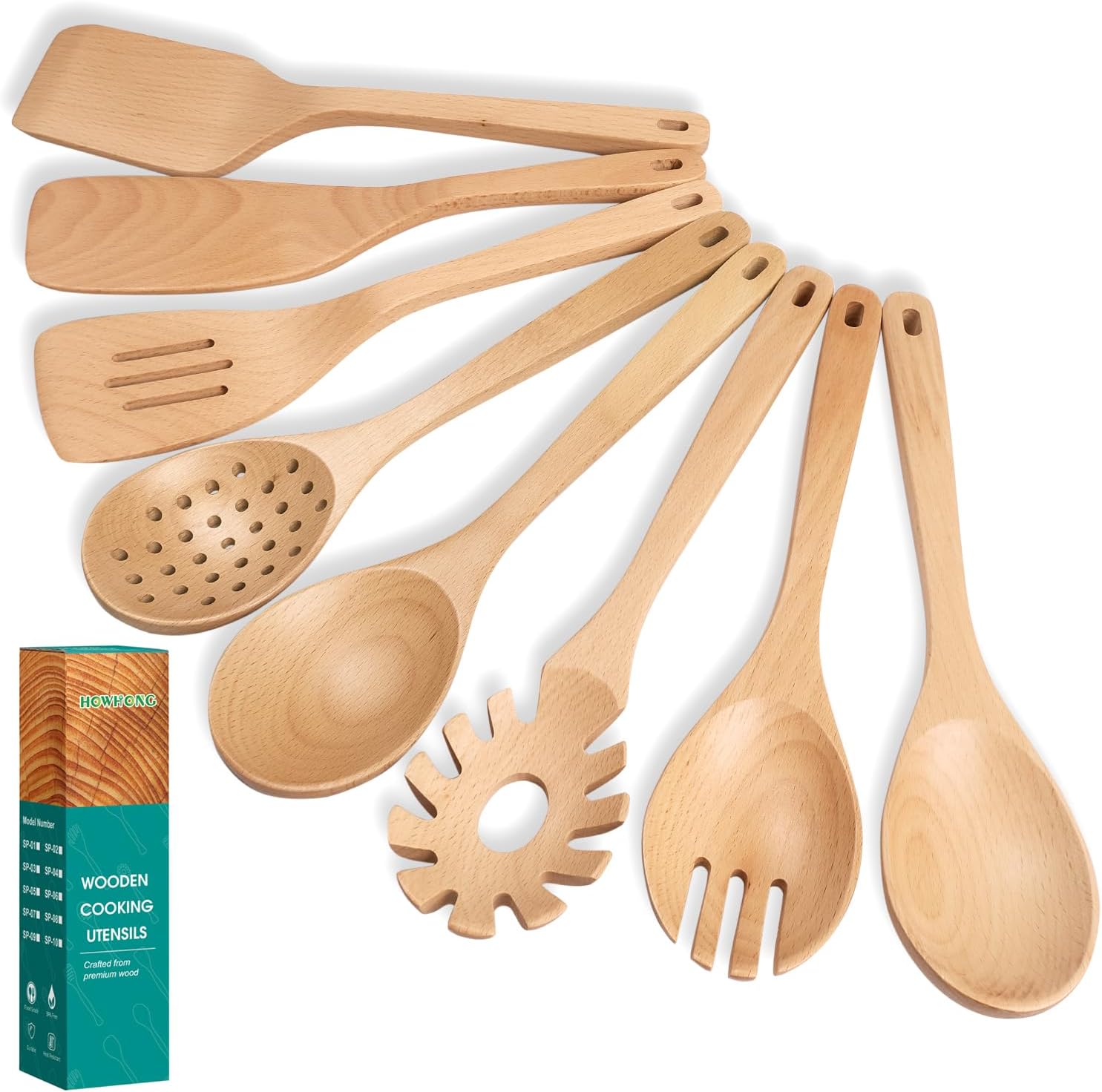
Stainless steel cookware has become the gold standard in professional and home kitchens worldwide, prized for its durability, heat retention, and non-reactive properties. However, the performance and longevity of your stainless steel pots and pans depend significantly on the utensils you use with them. The wrong utensils can scratch, dent, or damage the cooking surface, while the right ones will preserve your cookware’s appearance and functionality for decades.
Understanding the relationship between utensils and stainless steel cookware is crucial for maintaining your investment and achieving optimal cooking results. Stainless steel surfaces, while durable, can be susceptible to scratching from harder materials, making material selection for utensils a primary consideration. Additionally, the thermal conductivity properties of different utensil materials can affect cooking performance and safety during use.
Best Utensils for Stainless Steel Cookware:The market offers an overwhelming array of utensil options, from traditional wood and silicone to modern composite materials and specialized stainless steel designs. Each material brings distinct advantages and limitations when used with stainless steel cookware. Wood offers natural antibacterial properties and gentle surface contact, silicone provides heat resistance and flexibility, while properly designed metal utensils can offer precision and durability when used correctly.
Professional chefs and serious home cooks understand that utensil selection goes beyond preventing damage to cookware. The right utensils enhance cooking technique, improve safety, and can significantly impact the quality of finished dishes. Heat distribution, ingredient release, and precise control all depend on having appropriate tools that work harmoniously with stainless steel cooking surfaces.
This comprehensive guide examines the best utensils specifically designed for use with stainless steel cookware, analyzing materials, design features, and performance characteristics that matter most. We’ll explore how different utensil materials interact with stainless steel surfaces, what features to prioritize when building your collection, and how proper utensil selection can extend the life of your cookware while improving your cooking results.
Understanding Stainless Steel Cookware Compatibility
Surface Properties and Scratch Resistance
Stainless steel cookware surfaces vary significantly in their scratch resistance and durability characteristics, depending on the grade of steel used and the finishing process applied during manufacturing. The most common grades used in cookware are 18/10 and 18/8 stainless steel, referring to the percentage of chromium and nickel content respectively. These alloys provide excellent corrosion resistance and durability, but they can still be damaged by inappropriate utensils.
The surface finish of stainless steel cookware plays a crucial role in determining appropriate utensil compatibility. Mirror-polished surfaces show scratches more readily than brushed or matte finishes, though they may actually be more resistant to damage. Understanding your cookware’s finish helps inform utensil selection decisions and maintenance expectations.
Hardness ratings become important when considering metal utensils for stainless steel cookware. Stainless steel typically rates between 150-200 on the Brinell hardness scale, meaning that utensils made from harder materials can potentially cause scratching. However, properly designed metal utensils with appropriate edge treatments can be used safely with careful technique.
Heat Transfer Considerations
The thermal properties of utensils affect cooking performance when used with stainless steel cookware. Metal utensils conduct heat readily, which can make handles uncomfortably hot during extended cooking. This heat transfer also affects ingredient manipulation, as metal spoons and spatulas can quickly reach temperatures that affect delicate foods.
Non-conductive materials like wood and silicone remain cooler during cooking, providing more comfortable handling and gentler treatment of temperature-sensitive ingredients. However, some heat transfer can actually be beneficial for certain cooking techniques, such as when using metal utensils to help distribute heat evenly through thick sauces or batters.
The thermal mass of utensils also impacts cooking performance. Heavy metal utensils can absorb significant heat from stainless steel cookware, potentially affecting cooking temperatures and timing. Lighter materials maintain more consistent cooking conditions while requiring less energy to heat the utensil itself.
Chemical Compatibility and Reactivity
Stainless steel’s non-reactive properties make it compatible with acidic ingredients, but utensil materials must also be considered for their chemical compatibility. Some materials can react with acidic foods or cleaning products, potentially affecting flavor or safety. Wood utensils, for example, can absorb acidic liquids and develop off-flavors if not properly maintained.
Food-grade silicone and properly finished wood utensils provide excellent chemical compatibility with all ingredients commonly used in stainless steel cookware. Metal utensils should be made from food-grade stainless steel or other non-reactive alloys to prevent any interaction with acidic or alkaline ingredients.
The non-porous nature of stainless steel cookware makes it easy to clean and sanitize, but utensil materials vary in their porosity and cleaning requirements. Selecting utensils that match the cleaning standards of your stainless steel cookware ensures consistent food safety and maintains the hygienic advantages of stainless steel cooking.
Top 11+ Utensils for Stainless Steel Cookware
1. OXO Good Grips Wooden Spoon Set with Silicone Handles
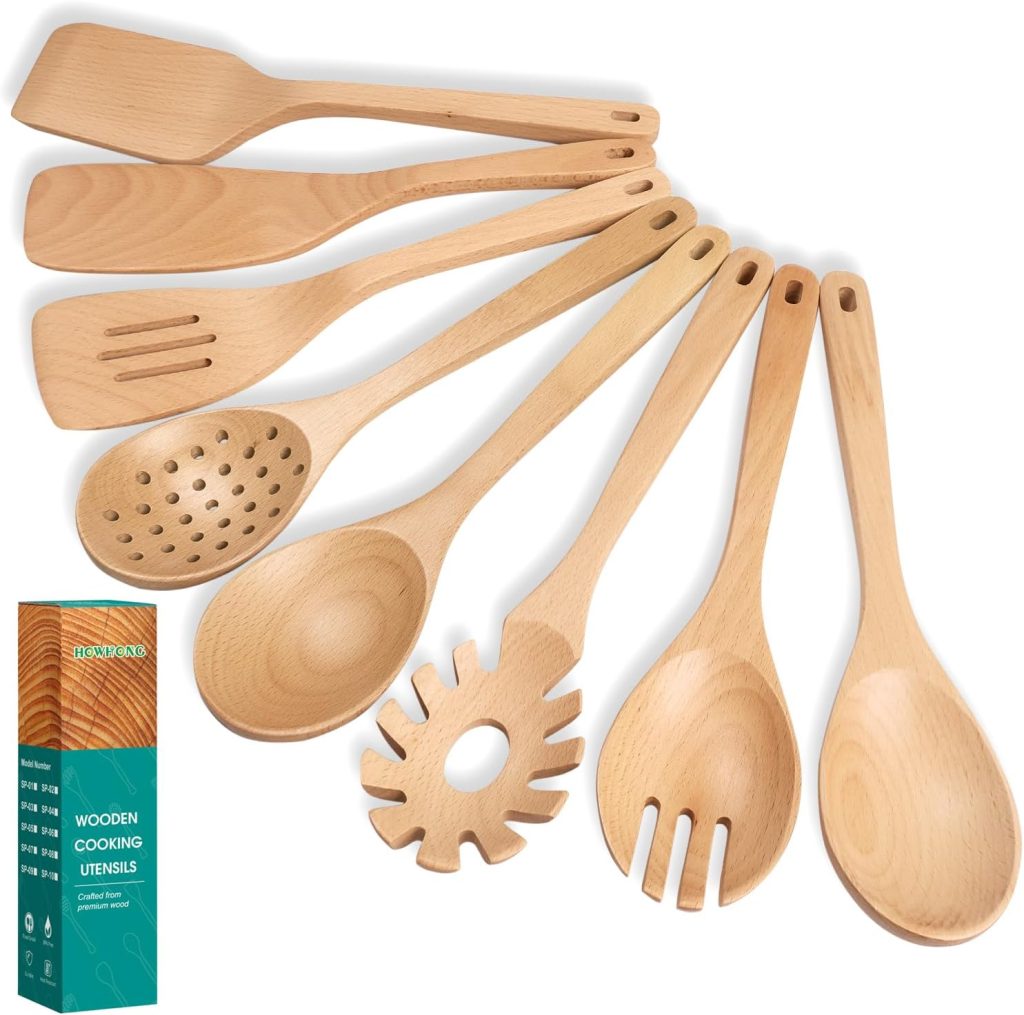
The OXO Good Grips wooden spoon set represents the perfect marriage of traditional wood craftsmanship and modern ergonomic design. These spoons feature carefully selected beechwood heads that provide gentle contact with stainless steel surfaces while offering excellent durability for everyday cooking tasks. The natural wood is completely safe for all stainless steel cookware, eliminating any concerns about scratching or surface damage.
What sets this collection apart is the innovative silicone handle design that provides comfortable grip even during extended cooking sessions. The silicone material remains cool to the touch while providing non-slip grip properties that enhance safety and control. The transition between wood and silicone is seamlessly executed, creating a unified tool that feels natural in hand.
The beechwood used in these spoons is sustainably sourced and treated with food-safe finishes that resist moisture absorption while maintaining the natural antibacterial properties of wood. The grain structure provides natural flex that makes these spoons excellent for stirring thick sauces, folding delicate batters, and scraping fond from stainless steel pan bottoms without damage.
The set includes multiple sizes suitable for different cooking applications, from small sauce preparation to large batch cooking. The curved bowl design optimizes liquid retention while the flat edges provide effective scraping capabilities. The smooth finish eliminates splinter concerns while maintaining the tactile feedback that makes wooden utensils preferred by many professional chefs.
Pros:
- Gentle on stainless steel surfaces
- Ergonomic silicone handles stay cool
- Natural antibacterial properties of beechwood
- Multiple sizes for versatile applications
- Sustainable materials and construction
- Excellent for thick sauces and delicate batters
Cons:
- Requires hand washing for longevity
- Wood can absorb strong flavors over time
- May need periodic oiling to maintain condition
Rating: 4.8/5
2. GIR Premium Silicone Spatula Set
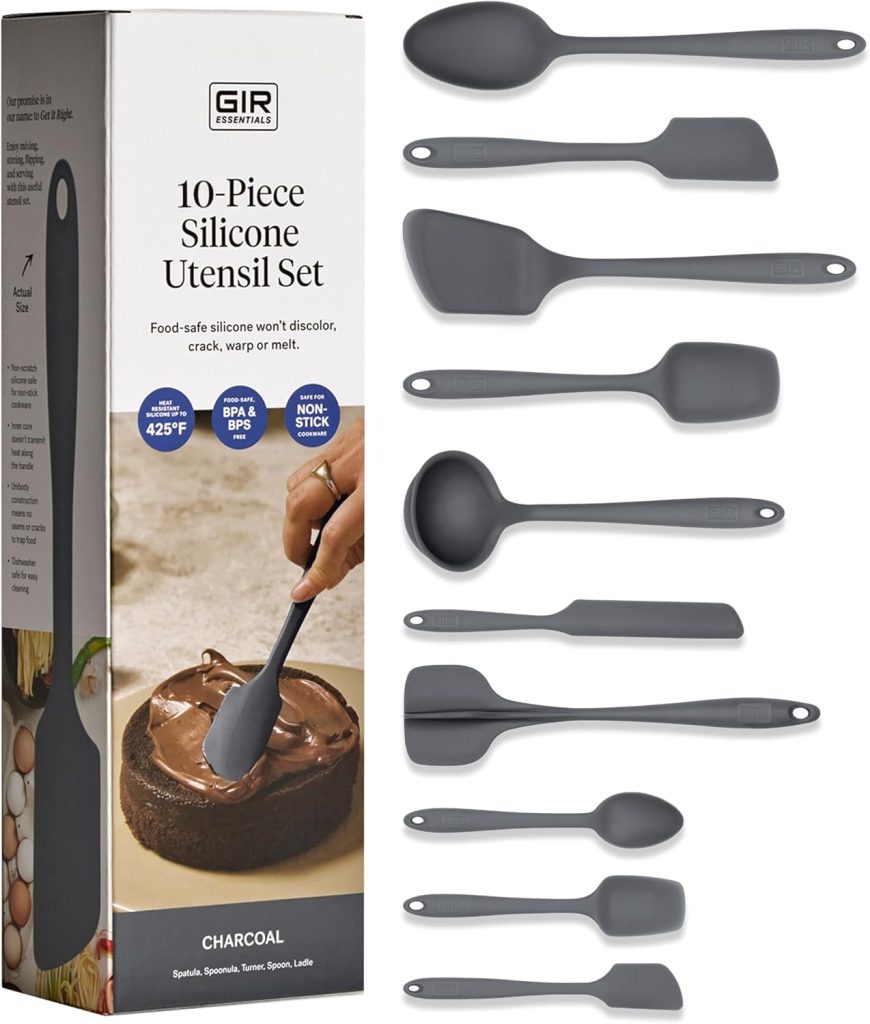
The GIR Premium Silicone Spatula Set revolutionizes silicone utensil design with their patented one-piece construction that eliminates the weak points common in traditional two-piece designs. These spatulas are molded from platinum-grade silicone that provides exceptional heat resistance up to 550°F, making them safe for all stainless steel cookware applications including high-heat searing and sautéing.
The unique design features a reinforced core that provides excellent rigidity for heavy-duty mixing while maintaining enough flexibility for effective scraping and folding techniques. The silicone material is completely non-reactive and won’t absorb flavors or odors, ensuring that each use produces pure, uncontaminated results when used with stainless steel cookware.
The curved and angled edges are precisely engineered to match common cookware shapes, providing maximum efficiency when scraping fond, folding batters, or transferring ingredients. The smooth silicone surface glides effortlessly across stainless steel without any risk of scratching, while the material’s natural non-stick properties prevent food from adhering to the utensil surface.
Color-coding options allow for organization and food safety protocols, while the dishwasher-safe construction makes cleanup effortless. The ergonomic handle design provides comfortable grip for extended use, and the balanced weight distribution reduces hand fatigue during intensive cooking sessions.
Pros:
- One-piece construction eliminates weak points
- Heat resistant to 550°F for high-temperature cooking
- Won’t scratch or damage stainless steel surfaces
- Non-reactive and odor-resistant
- Dishwasher safe for easy cleanup
- Color-coding options for organization
Cons:
- Higher price point than basic silicone utensils
- Limited color availability in some markets
- May retain heat longer than wood alternatives
Rating: 4.7/5
3. Zwilling J.A. Henckels Twin Signature 2-Piece Stainless Steel Spoon Set
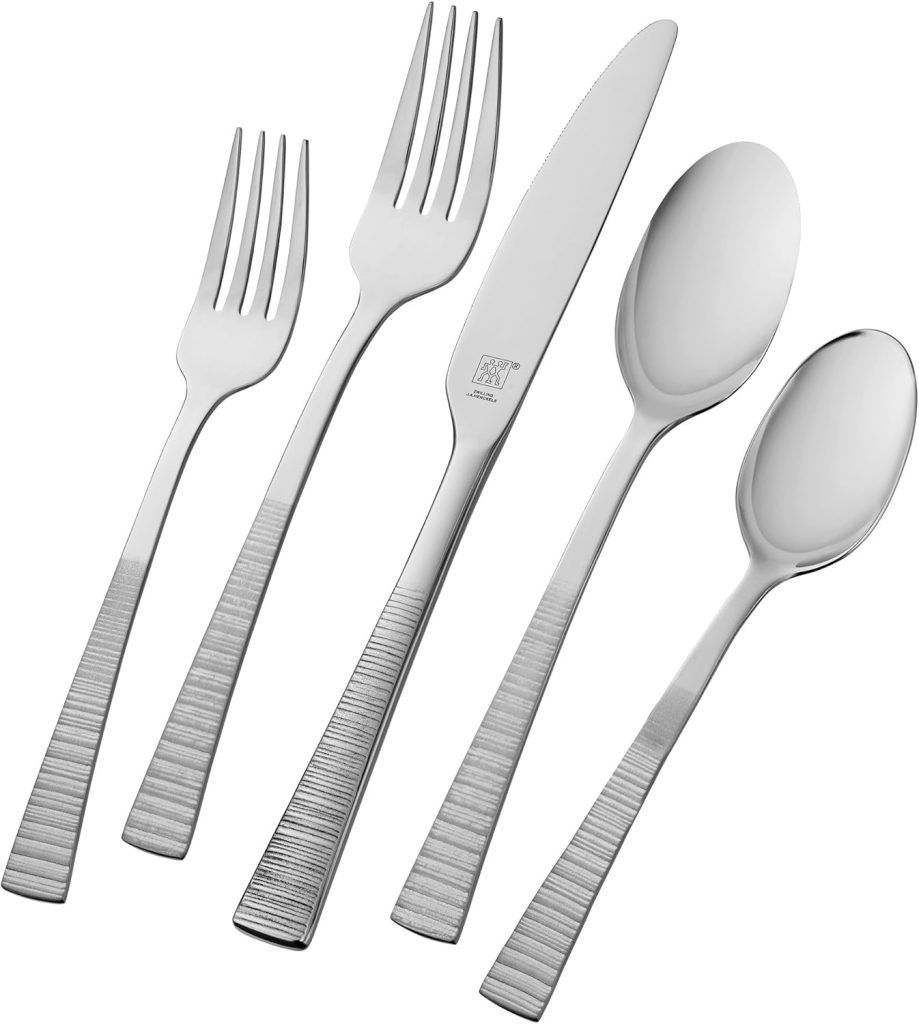
The Zwilling Twin Signature spoon set brings German engineering excellence to stainless steel utensil design, creating tools that complement high-quality stainless steel cookware perfectly. These spoons are forged from 18/10 stainless steel, the same grade used in premium cookware, ensuring compatible hardness levels that won’t damage cooking surfaces when used with proper technique.
The precision forging process creates seamless construction with no joints or weak points that could harbor bacteria or fail under stress. The mirror-polished finish not only provides elegant appearance but also creates a smooth surface that releases food easily and cleans effortlessly. The balanced weight distribution provides excellent control for precise ingredient manipulation and sauce preparation.
The bowl design optimizes capacity while maintaining structural strength, making these spoons excellent for both delicate stirring and heavy-duty mixing applications. The handle length provides adequate reach for deep pots while keeping hands safely away from heat sources. The tapered edges allow for effective scraping while the rounded surfaces prevent damage to stainless steel cookware.
Professional chefs appreciate the thermal properties of stainless steel utensils, which can help distribute heat evenly through sauces and batters. However, these thermal properties require careful handling to prevent burns, making these spoons more suitable for experienced cooks who understand proper technique.
Pros:
- Premium 18/10 stainless steel construction
- Seamless forged design eliminates weak points
- Mirror finish provides elegant appearance
- Compatible hardness with stainless steel cookware
- Professional-grade performance and durability
- Excellent thermal conductivity for sauce work
Cons:
- Handles can become hot during extended cooking
- Requires proper technique to prevent scratching
- Higher price point reflects premium construction
Rating: 4.6/5
4. RSVP International Bamboo Utensil Set

The RSVP International Bamboo Utensil Set offers an eco-friendly alternative that provides excellent performance with stainless steel cookware while supporting sustainable manufacturing practices. Bamboo’s natural properties make it ideal for cookware protection, as it’s softer than stainless steel while still providing adequate strength for most cooking applications.
Bamboo’s rapid growth and renewability make it an environmentally responsible choice for conscious consumers. The material naturally resists bacterial growth and doesn’t absorb flavors or odors like some other wood varieties. The smooth finish eliminates splinter concerns while maintaining the natural grip properties that make bamboo comfortable to handle.
The set includes essential shapes for comprehensive cooking coverage, from basic stirring spoons to specialized spatulas designed for specific techniques. The natural grain patterns provide visual appeal while the consistent thickness ensures even strength distribution throughout each utensil. The lightweight nature reduces hand fatigue during extended cooking sessions.
Heat resistance characteristics make bamboo suitable for high-temperature cooking with stainless steel, though prolonged exposure to extreme heat can cause discoloration. The material’s natural flexibility helps prevent breakage while providing gentle contact with cookware surfaces. Regular oil treatment maintains the bamboo’s condition and extends service life.
Pros:
- Sustainable and eco-friendly material choice
- Natural antibacterial properties
- Lightweight design reduces hand fatigue
- Won’t scratch or damage stainless steel
- Attractive natural grain patterns
- Affordable price point for quality construction
Cons:
- Requires regular oiling for maintenance
- Can discolor with prolonged heat exposure
- May not be suitable for extremely heavy-duty use
Rating: 4.4/5
5. All-Clad Stainless Steel Slotted Spoon
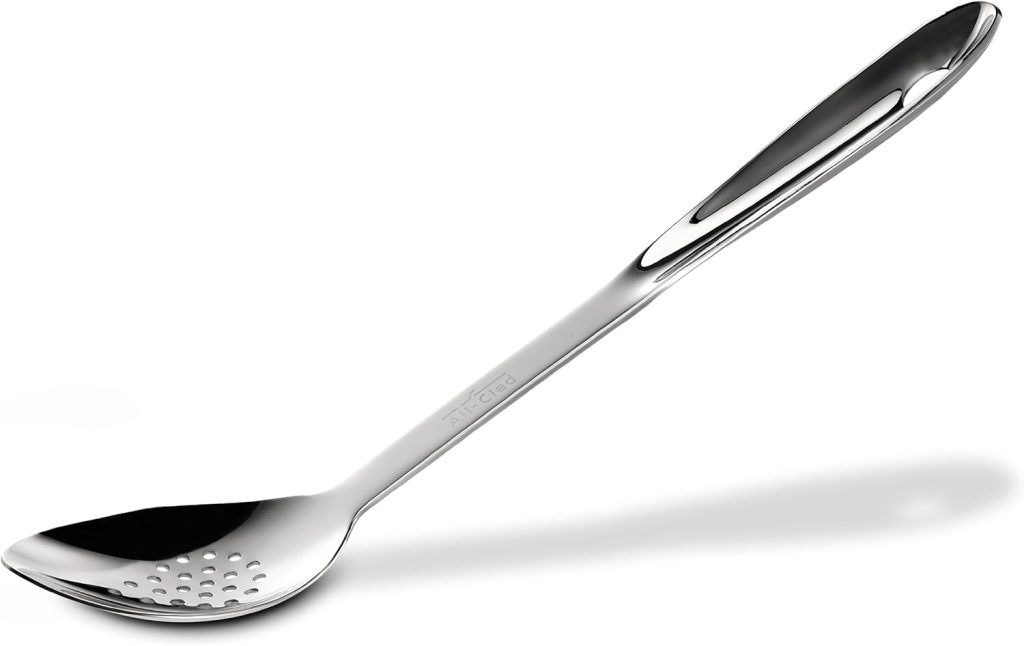
The All-Clad Stainless Steel Slotted Spoon represents the pinnacle of metal utensil design for stainless steel cookware applications. Crafted from 18/10 stainless steel with precision-engineered edges, this spoon provides professional performance while maintaining compatibility with high-quality stainless steel cooking surfaces.
The slotted design serves multiple purposes, allowing liquid drainage while retaining solid ingredients, making it essential for techniques like removing vegetables from blanching water or transferring proteins from braising liquids. The slot pattern is optimized for efficient drainage while maintaining structural integrity and preventing food from falling through unexpectedly.
The handle design incorporates a subtle curve that provides comfortable grip while the weighted balance point ensures precise control during use. The mirror finish matches premium cookware aesthetics while providing easy cleanup and stain resistance. The seamless construction eliminates crevices where bacteria could accumulate.
Professional-grade thickness provides durability without excessive weight, while the carefully finished edges prevent scratching when used with proper technique. The thermal conductivity helps maintain consistent temperatures in stirred ingredients while requiring careful handling to prevent burns during extended cooking.
Pros:
- Premium 18/10 stainless steel construction
- Professional-grade thickness and durability
- Optimized slot pattern for efficient drainage
- Mirror finish matches premium cookware
- Balanced weight distribution for precise control
- Seamless construction for easy cleaning
Cons:
- Requires proper technique to prevent scratching
- Handle becomes hot during extended use
- Premium pricing reflects professional quality
Rating: 4.7/5
6. Williams Sonoma Goldtouch Nonstick Turner Set

The Williams Sonoma Goldtouch Turner Set features innovative nylon construction with reinforced edges that provide flexibility and strength while ensuring complete safety for stainless steel cookware surfaces. The golden color isn’t just aesthetic; it indicates heat resistance up to 400°F, making these turners suitable for most cooking applications with stainless steel.
The thin, flexible edges slide easily under delicate foods like fish fillets or crepes, while the reinforced construction provides adequate strength for flipping heavier items like burgers or chicken breasts. The angled design optimizes leverage while the smooth surfaces prevent food from sticking during transfer operations.
The handle design incorporates ergonomic principles that reduce hand fatigue during extended cooking sessions. The non-conductive material keeps handles cool while the textured grip surface prevents slipping even when hands are wet or greasy. The balanced weight distribution provides excellent control for precise food manipulation.
The nylon construction resists staining and odor absorption while maintaining easy cleanup characteristics. The material’s flexibility allows these turners to conform slightly to pan surfaces, improving efficiency when scraping or turning foods. The dishwasher-safe construction adds convenience for busy kitchens.
Pros:
- Heat resistant to 400°F for versatile use
- Flexible edges perfect for delicate foods
- Won’t scratch or damage any cookware surface
- Ergonomic handles reduce hand fatigue
- Dishwasher safe for easy cleanup
- Stain and odor resistant construction
Cons:
- May not be suitable for extremely high-heat cooking
- Can become brittle over time with heavy use
- Limited color options may not suit all preferences
Rating: 4.5/5
7. Lodge Cast Iron Chainmail Scrubber with Silicone Handle
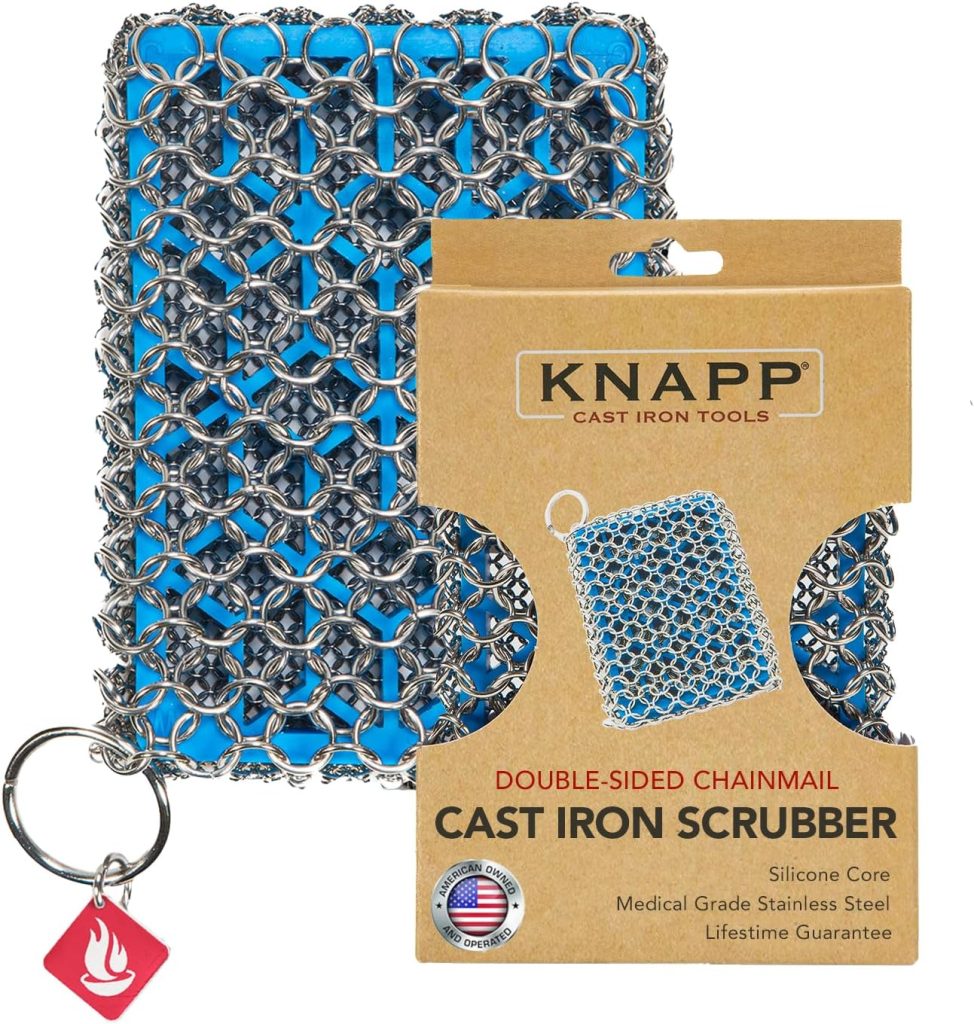
While not a traditional cooking utensil, the Lodge Chainmail Scrubber deserves inclusion as an essential tool for maintaining stainless steel cookware. This innovative cleaning tool removes stuck-on food and builds seasoning layers without damaging stainless steel surfaces, making it invaluable for cookware maintenance and performance optimization.
The chainmail construction uses small stainless steel rings that provide effective scrubbing action while conforming to cookware surfaces. This design removes food particles and carbon buildup that can affect cooking performance, while the individual rings prevent the concentrated pressure that could cause scratching with other abrasive tools.
The silicone handle design provides comfortable grip while protecting hands from heat when cleaning warm cookware. The chainmail can be used with or without soap, depending on the cleaning requirements, and the stainless steel construction makes it completely dishwasher safe for easy sanitization.
Professional chefs appreciate this tool’s ability to restore cooking surfaces without damage, extending cookware life and maintaining optimal performance. The chainmail effectively removes caramelized sugars, protein residues, and other stubborn deposits that can interfere with even heating and food release.
Pros:
- Effectively cleans without scratching stainless steel
- Chainmail design conforms to cookware surfaces
- Dishwasher safe stainless steel construction
- Comfortable silicone handle protects hands
- Professional-grade cleaning performance
- Extends cookware life and maintains performance
Cons:
- Specialized tool with limited cooking applications
- May require technique development for optimal use
- Initial investment for a cleaning-specific tool
Rating: 4.6/5
8. OXO Good Grips 3-Piece Mixing Spoon Set
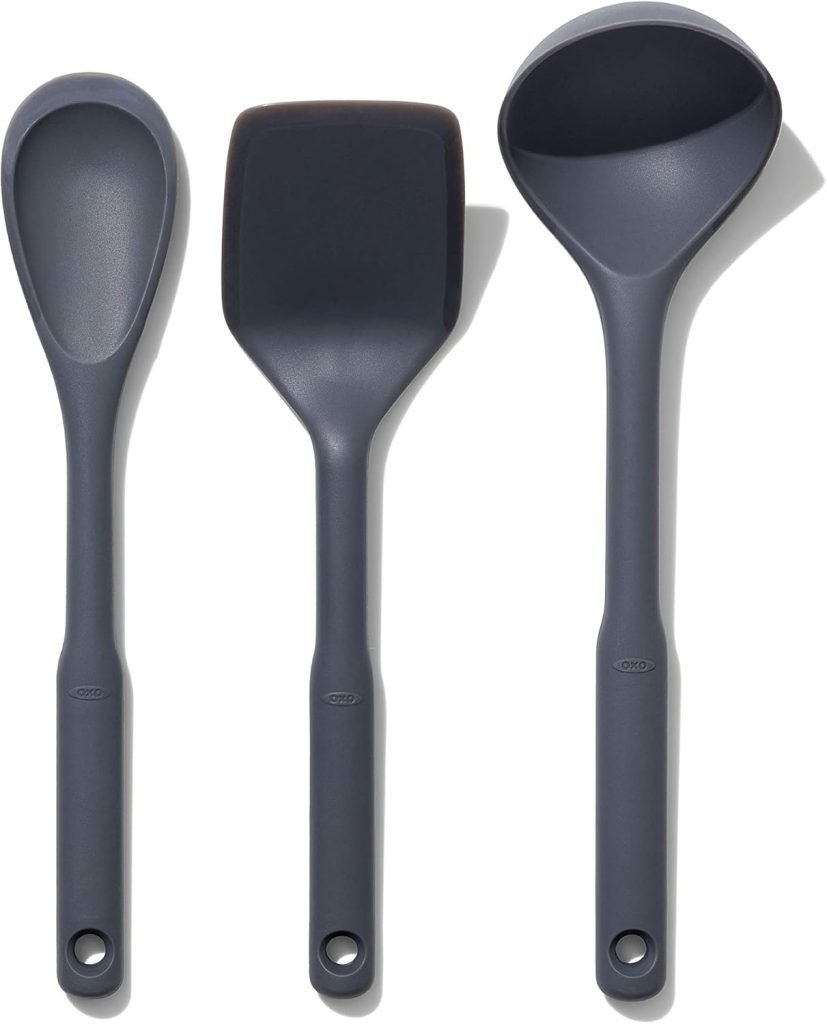
The OXO Good Grips 3-Piece Mixing Spoon Set combines thoughtful design with durable construction to create versatile tools perfect for stainless steel cookware applications. These spoons feature stainless steel heads with comfortable non-slip handles that remain cool during cooking while providing excellent control and durability.
The three different sizes accommodate various cooking tasks, from delicate sauce preparation to heavy-duty mixing of thick batters or doughs. The spoon bowls are designed with optimal depth and capacity for efficient ingredient manipulation, while the smooth edges prevent scratching when used with proper technique on stainless steel surfaces.
The handle design incorporates OXO’s signature comfort grip technology, featuring non-slip materials that provide secure hold even when wet or greasy. The handles remain comfortable during extended use while the balanced weight distribution reduces hand fatigue. The transition from metal to handle material is seamlessly executed for durability.
The stainless steel construction ensures compatibility with stainless steel cookware while providing professional-grade performance and longevity. The mirror finish facilitates easy cleanup while resisting stains and corrosion. The set covers essential sizes for most home cooking applications without redundancy.
Pros:
- Comfortable non-slip handles stay cool
- Three sizes cover most cooking applications
- Stainless steel heads for durability and performance
- Balanced weight distribution reduces fatigue
- Mirror finish facilitates easy cleanup
- Professional-grade construction and materials
Cons:
- Metal heads require careful technique with cookware
- May conduct heat to handles during extended use
- Higher price point than basic spoon sets
Rating: 4.5/5
9. Cuisinart Advantage Color Collection 12-Piece Nylon Utensil Set

The Cuisinart Advantage Color Collection represents excellent value in nylon utensil sets, providing comprehensive coverage for all cooking needs while ensuring complete safety for stainless steel cookware surfaces. The vibrant color options add personality to kitchen décor while the nylon construction delivers reliable performance and longevity.
The 12-piece set includes all essential utensil shapes for complete cooking coverage, from basic spoons and spatulas to specialized tools like pasta forks and basting spoons. Each piece is designed with optimal proportions for its intended function while maintaining consistent quality and performance standards throughout the collection.
The nylon material provides heat resistance up to 400°F while remaining completely safe for all cookware surfaces including delicate non-stick coatings and pristine stainless steel finishes. The material’s natural flexibility allows these utensils to conform slightly to pan surfaces while maintaining adequate strength for heavy-duty applications.
Ergonomic handle design incorporates comfort features that reduce hand fatigue during extended cooking sessions. The non-conductive handles remain cool while textured surfaces provide secure grip even under challenging cooking conditions. The dishwasher-safe construction simplifies cleanup and maintenance.
Pros:
- Comprehensive 12-piece set covers all cooking needs
- Heat resistant to 400°F for versatile applications
- Won’t scratch or damage any cookware surface
- Available in multiple color options
- Excellent value for comprehensive coverage
- Dishwasher safe for easy maintenance
Cons:
- May not match premium cookware aesthetics
- Nylon can stain over time with certain foods
- Limited heat resistance compared to silicone alternatives
Rating: 4.3/5
10. Mercer Culinary Hell’s Handle Heavy Duty Spoon Set
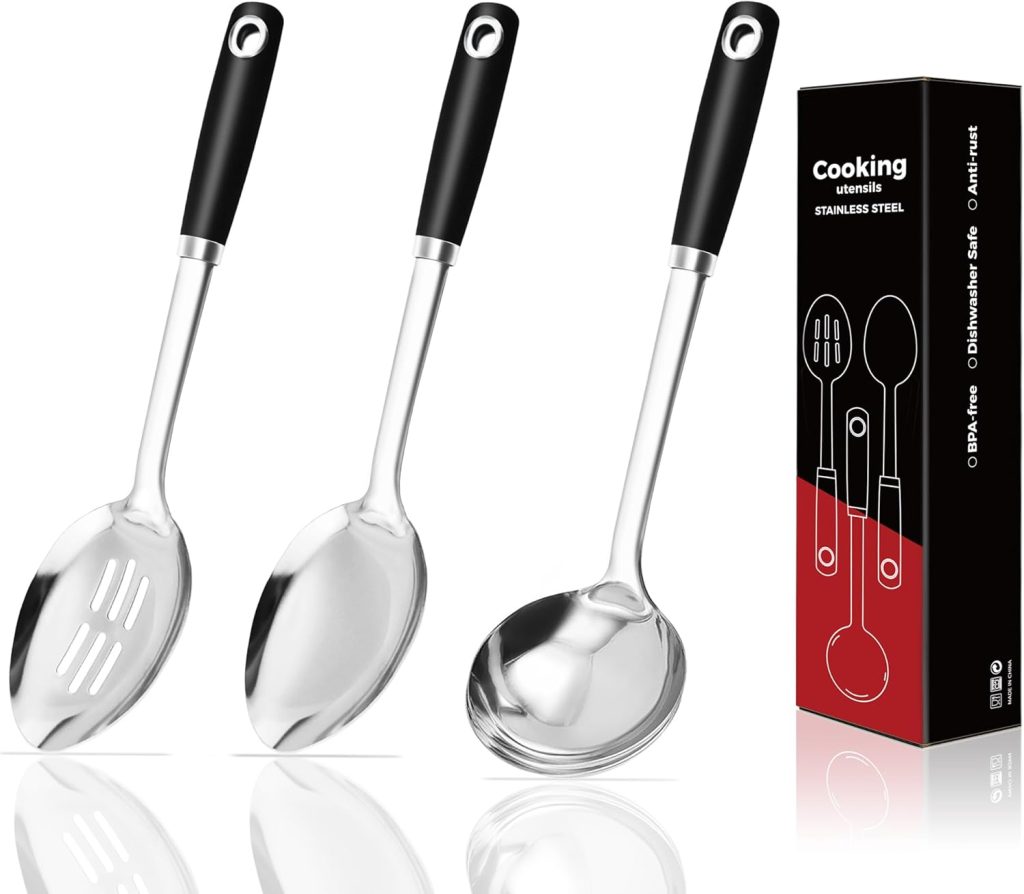
The Mercer Culinary Hell’s Handle Spoon Set brings professional kitchen durability to home cooking applications, featuring heat-resistant handles that remain comfortable even during the most demanding cooking conditions. These spoons are designed for the rigors of commercial kitchen use while providing the performance and reliability needed for stainless steel cookware applications.
The stainless steel bowl construction provides professional-grade durability and performance while the specially treated edges ensure compatibility with high-quality stainless steel cookware when used with proper technique. The bowls are precisely formed for optimal capacity and efficiency in ingredient manipulation and food service.
The signature “Hell’s Handle” design incorporates advanced materials that resist heat transfer while providing comfortable grip surfaces that don’t slip even under extreme conditions. This technology makes these spoons suitable for high-heat cooking applications where traditional plastic handles would fail or become uncomfortable.
Professional chefs appreciate the balanced weight distribution and precise control these spoons provide for demanding applications like sauce preparation, protein manipulation, and high-volume cooking. The construction quality ensures consistent performance even under intensive daily use.
Pros:
- Professional-grade construction and materials
- Heat-resistant handles for extreme cooking conditions
- Stainless steel bowls for durability and performance
- Balanced weight distribution for precise control
- Designed for intensive commercial kitchen use
- Excellent value for professional-quality tools
Cons:
- Industrial design may not suit all home kitchens
- Requires proper technique to prevent cookware damage
- Limited size variety in standard configurations
Rating: 4.4/5
11. Joseph Joseph Elevate Carousel Tool Set
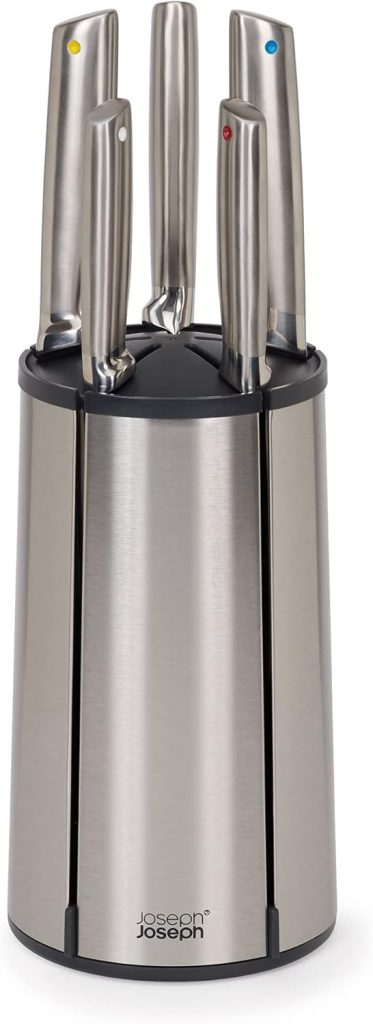
The Joseph Joseph Elevate Carousel Tool Set revolutionizes utensil storage and hygiene with innovative weighted handles that keep utensil heads elevated above countertop surfaces when set down. This design feature prevents contamination while cooking and reduces cleanup requirements, making it particularly valuable for maintaining the cleanliness standards expected with stainless steel cookware.
The set includes essential cooking tools with nylon heads that provide complete safety for all cookware surfaces while offering heat resistance up to 392°F. The tool selection covers fundamental cooking needs including spoons, spatulas, and specialized implements like pasta servers and slotted spoons, all designed with consistent quality and performance standards.
The carousel storage system provides organized, accessible storage while showcasing the tools’ attractive design. The rotating base allows easy access to any tool while maintaining countertop organization. The modern aesthetic complements contemporary kitchen designs while the functional benefits enhance cooking efficiency.
The weighted handle technology incorporates small stainless steel weights that provide balanced feel during use while enabling the signature elevation feature. This design prevents tool heads from touching surfaces, reducing contamination risk and maintaining food safety standards important when working with stainless steel cookware.
Pros:
- Innovative elevated design prevents contamination
- Comprehensive tool selection with carousel storage
- Heat resistant nylon heads safe for all surfaces
- Modern aesthetic complements contemporary kitchens
- Weighted handles provide balanced feel during use
- Organized storage enhances kitchen efficiency
Cons:
- Premium pricing for design innovation
- Carousel system requires dedicated counter space
- Replacement individual tools may be expensive
Rating: 4.6/5
12. Calphalon Contemporary Stainless Steel Ladle Set
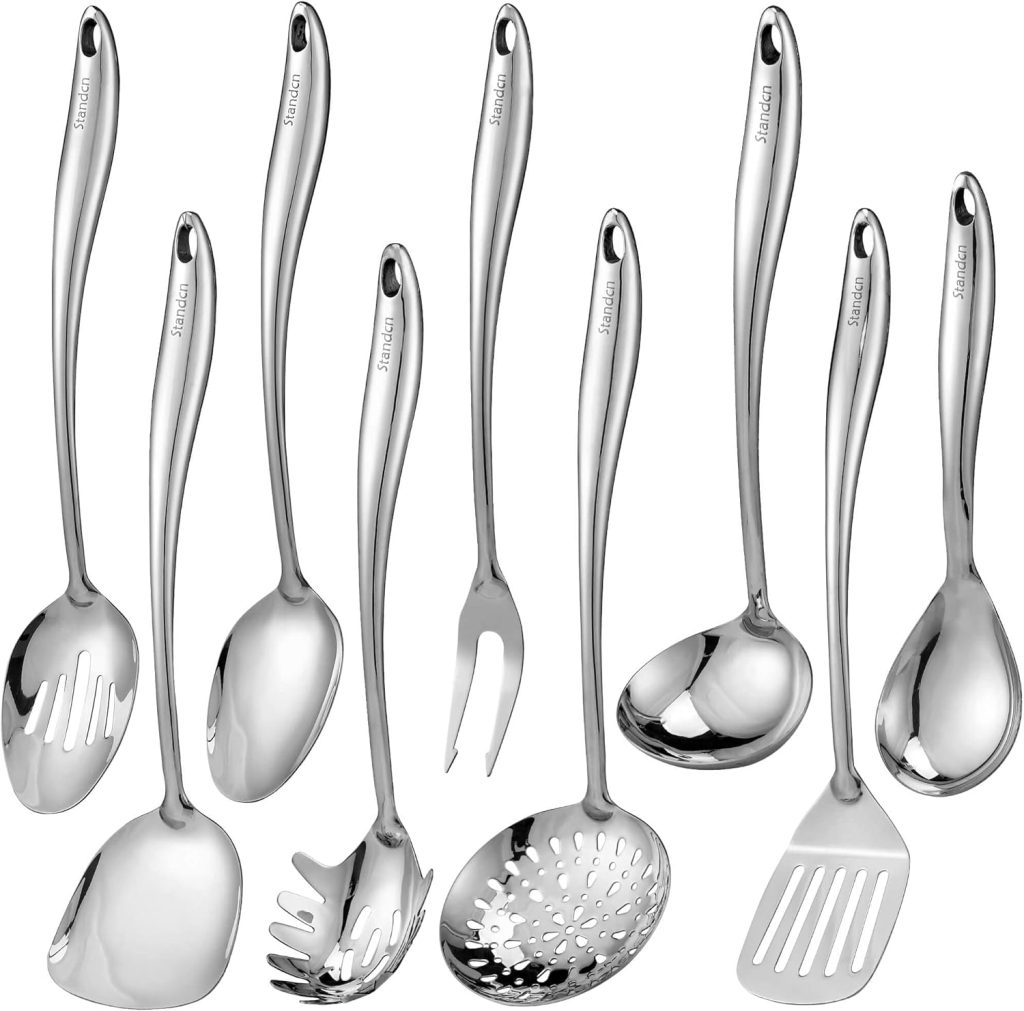
The Calphalon Contemporary Stainless Steel Ladle Set brings professional performance to soup service and sauce preparation, featuring precision-formed bowls that optimize liquid retention while providing elegant presentation. These ladles are specifically designed to complement stainless steel cookware while delivering the performance standards expected in professional kitchens.
The stainless steel construction ensures compatibility with stainless steel cookware while providing the thermal conductivity that helps maintain consistent temperatures in served liquids. The mirror finish matches premium cookware aesthetics while facilitating easy cleanup and maintenance. The seamless construction eliminates crevices where bacteria could accumulate.
The bowl designs are optimized for different serving needs, from small sauce portions to large soup servings. The precise forming process creates smooth edges that pour cleanly while the capacity markings help with portion control. The handles provide comfortable grip while the balanced weight distribution ensures precise control during service.
Professional-grade thickness provides durability without excessive weight, while the carefully finished surfaces prevent scratching when used properly with stainless steel cookware. The set covers essential serving sizes for most home and professional applications without redundancy.
Pros:
- Professional-grade stainless steel construction
- Precision-formed bowls for optimal liquid retention
- Mirror finish matches premium cookware aesthetics
- Multiple sizes cover various serving needs
- Balanced weight distribution for precise control
- Seamless construction for easy cleaning
Cons:
- Handles can become hot during extended use
- Requires proper technique to prevent cookware scratching
- Premium pricing reflects professional quality
Rating: 4.5/5
13. Tovolo Flex-Core All Silicone Spatula Set
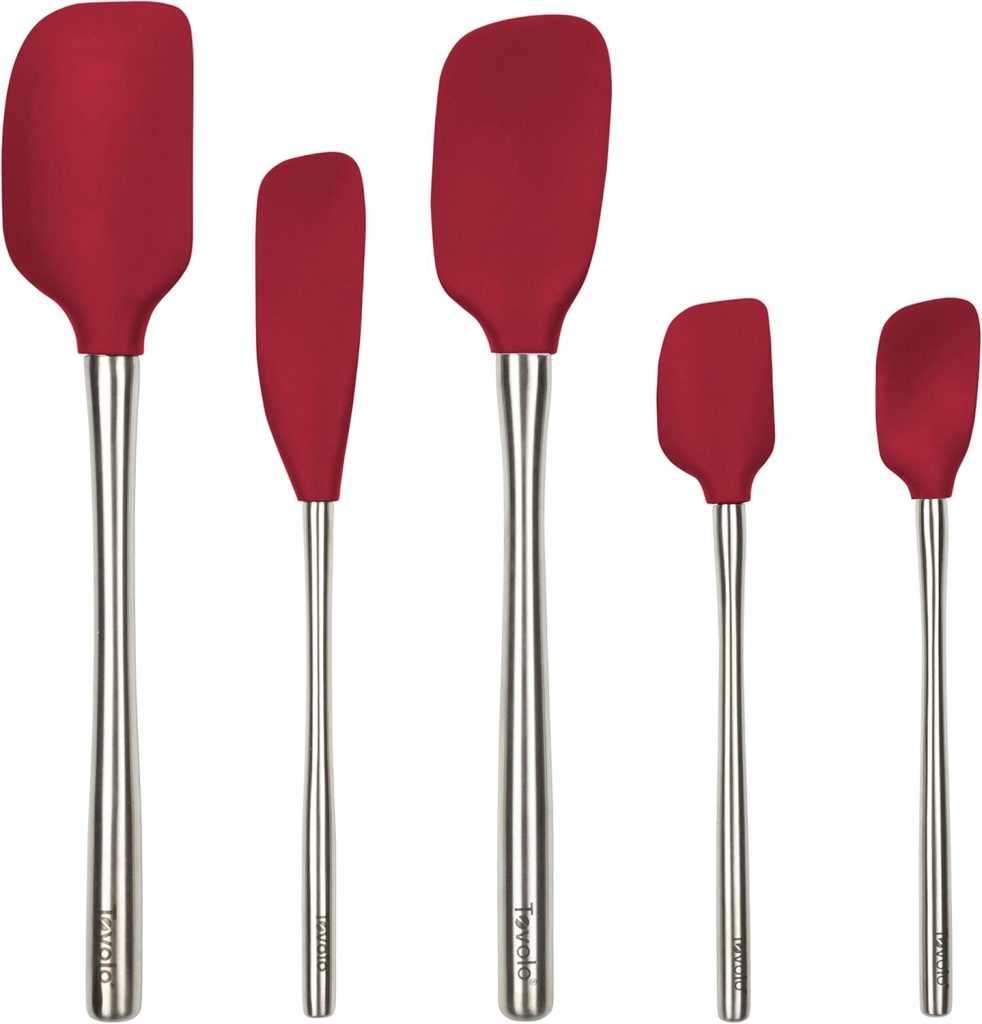
The Tovolo Flex-Core All Silicone Spatula Set represents advanced silicone technology that provides the perfect balance of flexibility and strength for demanding cooking applications with stainless steel cookware. The patented Flex-Core technology incorporates a flexible nylon core surrounded by premium silicone, creating spatulas that bend without breaking while maintaining edge integrity.
The heat resistance up to 600°F exceeds most cooking requirements, making these spatulas suitable for high-heat applications including searing and candy making with stainless steel cookware. The silicone material provides complete surface safety while the reinforced edges maintain effectiveness for scraping and folding techniques.
The ergonomic handle design incorporates comfort features that reduce hand fatigue during extended use while the non-slip surface provides secure grip even under challenging conditions. The spatulas are completely dishwasher safe while the non-porous silicone resists staining and odor absorption.
Color-coding options allow for food safety protocols while the attractive designs add personality to kitchen décor. The set includes multiple sizes and shapes for comprehensive cooking coverage, from delicate folding operations to heavy-duty mixing applications.
Pros:
- Advanced Flex-Core technology prevents breaking
- Heat resistant to 600°F for extreme applications
- Won’t scratch or damage any cookware surface
- Ergonomic handles reduce hand fatigue
- Dishwasher safe with stain and odor resistance
- Color-coding options for food safety protocols
Cons:
- Premium pricing for advanced technology
- May be over-engineered for basic cooking needs
- Limited availability of replacement individual pieces
Rating: 4.7/5
Comprehensive Buying Guide for Stainless Steel Cookware Utensils
Material Selection Considerations
Choosing the right materials for utensils used with stainless steel cookware requires balancing several factors including surface protection, heat resistance, durability, and performance characteristics. Each material category offers distinct advantages and limitations that must be considered in relation to your cooking style and requirements.
Wood utensils represent the traditional choice for cookware protection, offering natural antibacterial properties and complete surface safety for even the most delicate finishes. Different wood species provide varying characteristics, with hardwoods like beech and maple offering durability while softer woods like bamboo provide enhanced flexibility. The key consideration with wood is maintenance requirements, as proper care ensures longevity while neglect can lead to splitting, staining, or bacterial contamination.
Silicone utensils have revolutionized modern cooking with their combination of heat resistance, flexibility, and surface safety. High-quality food-grade silicone maintains its properties across a wide temperature range while providing excellent chemical resistance. The flexibility allows silicone utensils to conform to cookware surfaces while maintaining structural integrity. However, quality varies significantly between manufacturers, making brand reputation and material specifications important selection criteria.
Nylon utensils offer excellent value and performance for most cooking applications, providing good heat resistance and complete surface safety at affordable prices. The material’s strength and durability make nylon utensils suitable for heavy-duty applications while the smooth surface facilitates easy cleanup. Temperature limitations become the primary consideration, as lower-grade nylon can soften or melt at high temperatures.
Metal utensils, when properly designed and used with appropriate technique, can provide excellent performance with stainless steel cookware. The key is selecting utensils with compatible hardness levels and understanding proper usage techniques that prevent damage. Stainless steel utensils offer professional-grade performance and longevity while requiring more skill and care in application.
Heat Resistance and Temperature Considerations
Understanding heat resistance characteristics helps ensure utensil safety and performance across all cooking applications. Different materials have varying temperature limits, and exceeding these limits can result in melting, degradation, or safety hazards that affect both utensil performance and food safety.
Silicone generally offers the highest heat resistance among non-metal materials, with premium grades maintaining integrity up to 600°F or higher. This heat resistance makes silicone suitable for high-temperature applications including candy making, deep frying, and high-heat searing with stainless steel cookware. However, prolonged exposure to extreme temperatures can cause discoloration or slight degradation even in high-quality silicone.
Nylon heat resistance varies significantly between formulations, with basic grades limited to around 200°F while premium grades can handle temperatures up to 400°F or more. Understanding your cookware’s typical operating temperatures helps determine whether nylon utensils meet your requirements. Most stovetop cooking remains within nylon’s capabilities, but high-heat techniques may require alternative materials.
Wood heat resistance depends on moisture content and species characteristics, but most cooking applications remain within wood’s tolerance. The primary consideration with wood is prolonged exposure to high heat, which can cause drying, cracking, or charring. However, brief contact with high temperatures during normal cooking doesn’t typically cause damage to quality wood utensils.
Metal utensils have virtually unlimited heat resistance for cooking applications, but their thermal conductivity creates different safety considerations. Metal utensil handles can become uncomfortably hot during extended cooking, requiring careful handling or insulated grips for safety and comfort.
Ergonomics and Handle Design
Handle design significantly impacts user comfort, safety, and control during cooking operations. Poor ergonomics can lead to hand fatigue, reduced precision, and safety hazards, while well-designed handles enhance cooking performance and enjoyment.
Handle length affects reach and leverage while influencing heat exposure during cooking. Longer handles provide better reach for deep pots and keep hands further from heat sources, but they can be cumbersome for small cookware or limited storage spaces. Shorter handles offer better control and storage convenience but may expose hands to heat during use.
Grip diameter and shape influence comfort during extended use, with larger diameters generally providing more comfortable grip for users with larger hands while smaller diameters may be preferred for detailed work or users with smaller hands. Textured surfaces improve grip security, particularly when hands are wet or greasy, but they can be more difficult to clean thoroughly.
Weight distribution affects control and fatigue during use, with balanced designs reducing wrist strain during extended cooking sessions. Heavier handles can provide better balance for large utensil heads, while lighter overall weight reduces fatigue during repetitive operations.
Heat resistance in handle materials becomes crucial for safety and comfort, particularly during high-temperature cooking or when utensils remain in contact with hot cookware for extended periods. Non-conductive materials like wood, silicone, and certain plastics maintain comfortable temperatures while metal handles require careful technique to prevent burns.
Durability and Longevity Factors
Investing in durable utensils provides better long-term value while ensuring consistent performance throughout their service life. Understanding durability factors helps identify utensils that will maintain their appearance and functionality even under intensive use conditions.
Construction quality affects longevity significantly, with seamless designs generally outlasting multi-piece assemblies that can separate or fail at joints. Reinforced stress points, quality control standards, and appropriate material thickness all contribute to extended service life. Premium manufacturers often provide warranties that reflect confidence in their construction quality.
Material degradation characteristics vary between utensil materials, with some showing gradual wear while others may fail suddenly when their limits are exceeded. Understanding these characteristics helps set appropriate replacement schedules and usage guidelines that maximize utensil life.
Maintenance requirements significantly impact effective durability, as proper care can extend service life dramatically while neglect can cause premature failure even in high-quality utensils. Consider your willingness to perform recommended maintenance when selecting utensil materials and brands.
Replacement part availability becomes important for premium utensil sets, as the ability to replace individual pieces can extend the useful life of a collection significantly. Some manufacturers offer individual piece replacement while others require complete set replacement when pieces are lost or damaged.
Cleaning and Maintenance Requirements
Different utensil materials have varying cleaning and maintenance requirements that affect both daily use convenience and long-term care needs. Understanding these requirements helps ensure proper care while avoiding damage from inappropriate cleaning methods.
Dishwasher compatibility varies between materials and manufacturers, with some utensils requiring hand washing to maintain their condition and appearance. High-temperature dishwasher cycles can damage certain materials while the mechanical action and detergents used in dishwashers may not be suitable for all utensil types.
Wood utensils require special care to maintain their condition and prevent bacterial growth. Regular oiling helps preserve wood moisture content and prevents cracking while proper drying prevents warping and bacterial contamination. Some woods are naturally antimicrobial, but proper hygiene practices remain important for food safety.
Silicone and nylon utensils generally require minimal special care beyond regular cleaning, but they can absorb strong flavors or odors that may require additional attention. Staining can occur with certain foods, though it typically doesn’t affect performance or safety.
Metal utensils require care to maintain their finish and prevent corrosion, particularly at stress points or areas where protective coatings may be compromised. Proper drying and storage help prevent water spots and corrosion while avoiding abrasive cleaning methods preserves surface finishes.
Specialized Utensil Functions
Different cooking techniques require specialized utensils that optimize performance for specific applications. Understanding these specialized functions helps build a utensil collection that covers all cooking needs efficiently without redundancy.
Stirring implements vary in design to optimize different mixing applications, from thin liquids to thick batters. Spoon bowl depth, edge design, and handle length all affect efficiency for specific stirring tasks. Large, deep bowls work well for thick mixtures while shallow bowls provide better control for delicate sauces.
Scraping tools require specific edge designs that balance effectiveness with surface protection. Flexible edges conform to cookware curves while rigid edges provide better scraping power for stubborn residues. The material hardness must be carefully matched to cookware requirements to prevent damage while ensuring effective performance.
Turning and flipping utensils need thin, flexible edges that slide easily under foods while providing adequate support for transfer operations. Spatula width affects the types of foods that can be handled effectively, while flexibility determines suitability for delicate items like fish fillets or crepes.
Serving utensils often combine functional requirements with presentation considerations, as they may be used for both cooking and table service. Materials and finishes should complement both cookware and serving ware while maintaining appropriate food safety standards.
Specialty tools like tongs, whisks, and strainers serve specific functions that may require unique design considerations. Tong grip strength, whisk wire spacing, and strainer mesh size all affect performance for their intended applications while material compatibility with stainless steel cookware remains important.
Advanced Techniques for Utensil Use with Stainless Steel
Proper Technique for Metal Utensils
Using metal utensils safely with stainless steel cookware requires understanding proper technique and developing appropriate skills that prevent damage while maximizing performance benefits. The key principle is controlled contact that distributes pressure evenly while avoiding concentrated force that could cause scratching or denting.
Angle of contact significantly affects the interaction between metal utensils and stainless steel surfaces. Shallow angles distribute force across larger contact areas while steep angles concentrate pressure into smaller areas that may cause damage. Professional chefs develop instinctive angle control that optimizes performance while preserving cookware condition.
Pressure application should be appropriate for the task while remaining within safe limits for both utensil and cookware. Light pressure is usually adequate for most stirring and scraping operations, while heavier pressure may be needed for stubborn residues. Understanding the feedback from cookware surfaces helps develop appropriate pressure sensitivity.
Motion patterns affect wear distribution and effectiveness for different cooking tasks. Circular stirring motions distribute wear evenly while linear scraping motions may create directional wear patterns. Varying motion patterns during extended cooking sessions helps prevent localized wear while maintaining cooking effectiveness.
Heat management becomes crucial when using metal utensils, as thermal conductivity can make handles uncomfortable or dangerous during extended cooking. Understanding heat transfer characteristics helps develop safe handling techniques while taking advantage of thermal benefits where appropriate.
Optimizing Heat Distribution
The thermal properties of different utensil materials can be leveraged to improve cooking performance and heat distribution in stainless steel cookware. Understanding these interactions helps optimize cooking techniques while achieving more consistent results.
Metal utensils can help distribute heat evenly through thick mixtures or batters by conducting thermal energy throughout the mixture during stirring operations. This thermal mixing effect is particularly valuable for temperature-sensitive preparations like custards or chocolate work where even heating prevents scorching or seizing.
Non-conductive utensils preserve temperature differentials that may be important for certain cooking techniques. When precise temperature control is crucial, silicone or wood utensils prevent unwanted heat transfer that could affect delicate cooking processes.
Thermal mass considerations become important when using heavy utensils with stainless steel cookware, as large utensils can absorb significant energy from the cooking system. Understanding these effects helps adjust cooking times and temperatures to compensate for thermal losses to utensils.
Preheating utensils can optimize their performance for certain applications, such as warming serving spoons for hot sauces or cooling metal utensils for temperature-sensitive mixtures. These techniques require careful temperature management to prevent damage to either utensils or cookware.
Maintenance Techniques for Cookware Protection
Proper utensil technique extends beyond basic use to include maintenance practices that preserve both utensil condition and cookware performance. Developing comprehensive maintenance routines ensures optimal performance throughout the service life of both utensils and cookware.
Regular inspection of utensil condition helps identify wear patterns or damage that could affect cookware safety. Sharp edges, rough surfaces, or structural damage in utensils can cause cookware damage even when proper technique is used. Early identification and correction of utensil issues prevents cookware damage.
Cleaning techniques should preserve both utensil condition and cookware surfaces while ensuring proper hygiene and food safety. Using appropriate cleaning methods for each material type prevents degradation while maintaining the surface qualities that ensure cookware compatibility.
Storage considerations affect both utensil longevity and cookware protection, as improper storage can cause damage to either utensils or cookware when they contact each other. Organized storage systems that protect cutting edges and prevent contact damage extend the life of both utensils and cookware.
Seasoning and conditioning routines help maintain optimal performance for certain utensil materials while preserving their protective qualities for cookware surfaces. Wood utensils benefit from periodic oiling while metal utensils may require polishing or protective treatments.
Frequently Asked Questions (FAQs)
What utensil materials are safest for stainless steel cookware?
The safest utensil materials for stainless steel cookware are those softer than the stainless steel surface, including wood, bamboo, silicone, and high-quality nylon. These materials provide complete surface protection while offering excellent performance for most cooking applications.
Wood utensils, particularly those made from hardwoods like beech or maple, offer natural antibacterial properties and gentle surface contact that eliminates scratching concerns. The natural flexibility of wood allows these utensils to conform slightly to cookware surfaces while maintaining structural integrity for effective cooking performance.
Silicone utensils provide excellent heat resistance and flexibility while ensuring complete surface safety. High-quality food-grade silicone maintains its properties across wide temperature ranges while resisting chemical degradation and flavor absorption. The non-reactive nature of silicone makes it ideal for all cooking applications with stainless steel.
Nylon utensils offer good performance and value while providing complete surface protection. Quality varies significantly between manufacturers, so selecting reputable brands with appropriate heat resistance ratings ensures safe and effective performance with stainless steel cookware.
Metal utensils can be used safely with stainless steel cookware when they’re made from compatible materials and used with proper technique. Stainless steel utensils with hardness levels similar to cookware surfaces minimize damage risk while providing professional-grade performance for experienced users.
Can I use wooden utensils with all stainless steel cookware?
Wooden utensils are universally safe for all stainless steel cookware, regardless of grade or finish. Wood is significantly softer than any stainless steel used in cookware manufacturing, making scratching virtually impossible under normal use conditions.
Different wood species offer varying characteristics that may affect performance and maintenance requirements. Hardwoods like beech, maple, and cherry provide excellent durability and fine grain structure that resists absorption and splitting. Softwoods and bamboo offer more flexibility and lighter weight while maintaining adequate strength for most applications.
The natural antibacterial properties of certain woods provide additional food safety benefits when used with stainless steel cookware. However, proper cleaning and maintenance remain important for preventing bacterial growth and maintaining wood condition throughout extended use.
Maintenance requirements for wooden utensils include regular cleaning with mild soap and water, thorough drying to prevent warping, and periodic oiling to maintain moisture content and prevent cracking. These maintenance practices ensure optimal performance and longevity while preserving the surface-safe characteristics that make wood ideal for stainless steel cookware.
Heat resistance in wooden utensils varies by species and moisture content, but most cooking applications remain well within wood’s tolerance. Brief contact with high-temperature surfaces during normal cooking doesn’t typically cause damage, though prolonged exposure to extreme heat should be avoided.
How do I prevent scratching my stainless steel pans?
Preventing scratches in stainless steel pans requires careful utensil selection, proper technique, and appropriate maintenance practices. The most effective prevention strategy is using utensils softer than the stainless steel surface, including wood, silicone, and quality nylon options.
When using metal utensils with stainless steel cookware, proper technique becomes crucial for scratch prevention. Use gentle pressure and avoid dragging utensils across dry surfaces. Keep utensils moving smoothly rather than applying concentrated pressure in single locations. Ensure adequate lubrication from cooking oils or liquids to reduce friction between metal surfaces.
Surface preparation can help prevent scratching by ensuring cookware surfaces are properly heated and lubricated before cooking begins. Proper preheating techniques help prevent food sticking, which reduces the scraping force needed during cooking and cleanup. Using appropriate cooking fats or oils provides lubrication that protects surfaces during utensil contact.
Cleaning techniques significantly impact scratch prevention, as abrasive cleaners or scrubbers can cause damage that makes surfaces more susceptible to scratching during cooking. Use non-abrasive cleaning methods and avoid steel wool or harsh scrubbing pads that can create microscopic scratches that become more visible over time.
Storage practices should prevent utensil contact with cookware surfaces when not in use. Organized storage systems that separate utensils from cookware prevent accidental scratching during storage and retrieval. Consider protective coverings or separators for valuable cookware pieces.
What’s the difference between food-grade and regular silicone?
Food-grade silicone differs from regular silicone in its purity, additives, and manufacturing standards that ensure safety for food contact applications. Food-grade silicone undergoes more rigorous testing and quality control to meet safety standards for direct food contact.
The primary differences include the absence of fillers and additives that could migrate into food during cooking. Food-grade silicone uses platinum-based catalysts rather than tin-based systems that can leave residues. This results in a purer material that doesn’t impart flavors or odors to food during cooking or storage.
Temperature stability in food-grade silicone is generally superior to regular grades, with consistent performance across wider temperature ranges. This stability ensures that the material doesn’t degrade or release compounds when exposed to cooking temperatures, maintaining both safety and performance standards.
Testing requirements for food-grade silicone include migration testing to ensure that no harmful substances transfer to food during normal use. Regular silicone may not undergo these tests, making it unsuitable for food contact applications despite similar physical properties.
Quality food-grade silicone maintains its properties throughout extended use and repeated cleaning cycles, while lower grades may degrade more quickly or develop performance issues that affect cooking results or safety. Investing in verified food-grade silicone ensures optimal performance and safety for stainless steel cookware applications.
How often should I replace my cooking utensils?
Replacement frequency for cooking utensils depends on the material, usage intensity, and condition rather than arbitrary time schedules. High-quality utensils maintained properly can last for many years, while heavily used or poorly maintained utensils may require more frequent replacement.
Wood utensils should be replaced when they show signs of cracking, splitting, or deep staining that can’t be cleaned effectively. Surface roughness that could scratch cookware or harbor bacteria also indicates replacement needs. With proper care, quality wooden utensils can last for decades.
Silicone utensils typically show wear through degradation of flexibility, surface roughness, or permanent staining. While staining doesn’t necessarily affect performance or safety, it may indicate material degradation. Tears, cuts, or areas where the silicone has become brittle indicate immediate replacement needs.
Nylon utensils should be replaced when they show signs of melting, cracking, or surface degradation that could affect performance or safety. Discoloration may indicate heat damage that compromises material integrity. Sharp edges or rough surfaces that develop over time can scratch cookware surfaces.
Metal utensils require replacement when they develop sharp edges, dents, or corrosion that could damage cookware or affect food safety. Quality stainless steel utensils can last indefinitely with proper care, while lower-grade metals may show corrosion or wear that necessitates replacement.
Regular inspection of all utensils helps identify replacement needs before problems affect cooking performance or safety. Consider replacing utensils preemptively if their condition raises concerns about cookware damage or food safety.
Are expensive utensils worth the investment?
The value of expensive utensils depends on your cooking frequency, performance requirements, and priorities regarding durability and aesthetics. For serious cooks who use their equipment daily, premium utensils often provide better long-term value through superior performance and longevity.
Quality differences between premium and budget utensils are often significant, affecting everything from heat resistance and durability to ergonomics and cooking performance. Premium materials, better construction methods, and stricter quality control contribute to performance advantages that can justify higher costs for intensive users.
Durability considerations often favor premium utensils, as higher-quality materials and construction typically provide longer service life. While the initial investment is higher, the cost per year of use may actually be lower for premium utensils that last significantly longer than budget alternatives.
Performance benefits of premium utensils include better heat resistance, more comfortable ergonomics, and superior cooking performance that can improve cooking results. For users who appreciate these performance advantages, the premium pricing may be justified by the enhanced cooking experience.
Budget utensils can provide adequate performance for casual cooks or those just starting to build their kitchen equipment collection. However, false economy can occur when cheap utensils require frequent replacement or damage expensive cookware through poor performance or degradation.
Consider your cooking habits, budget constraints, and performance priorities when evaluating utensil investments. Starting with quality basics and upgrading gradually often provides the best balance of performance and value for most users.
Can I put my utensils in the dishwasher?
Dishwasher compatibility varies significantly between utensil materials and individual manufacturer specifications. Always check manufacturer recommendations before putting any utensils in the dishwasher, as improper cleaning can damage utensils or void warranties.
Silicone utensils are generally dishwasher safe and actually benefit from the high-temperature sanitization that dishwashers provide. The non-porous surface and chemical resistance of quality silicone make it ideal for dishwasher cleaning. However, avoid overcrowding that could cause deformation during the wash cycle.
Nylon utensils may be dishwasher safe depending on their temperature rating and construction quality. High-quality nylon with adequate heat resistance can typically handle dishwasher temperatures, while lower-grade nylon may soften or deform. Check manufacturer specifications for temperature limits and dishwasher compatibility.
Wooden utensils generally should not be put in dishwashers, as the combination of high temperature, harsh detergents, and extended moisture exposure can cause warping, cracking, and degradation. Hand washing with mild soap and immediate thorough drying preserves wood condition and extends service life.
Stainless steel utensils are typically dishwasher safe and benefit from the sanitization provided by dishwasher cleaning. However, contact with other metal items during washing can cause scratching, and certain dishwasher detergents may cause spotting or discoloration on polished surfaces.
Consider the value and condition of your utensils when deciding on cleaning methods. Premium utensils may warrant hand washing to preserve their condition and appearance, while everyday utensils may be suitable for dishwasher cleaning if manufacturer specifications permit.
What size utensils work best with different pan sizes?
Utensil sizing should be proportional to cookware size to ensure efficient cooking and comfortable handling. Using appropriately sized utensils improves cooking performance while preventing damage from oversized tools or inadequate coverage from undersized implements.
Small pans (6-8 inches) work best with compact utensils that provide adequate coverage without overwhelming the cooking surface. Short-handled spoons and spatulas offer better control in small spaces while preventing contact with adjacent burners or cookware. Narrow utensil heads match the proportions of small pans while providing efficient ingredient manipulation.
Medium pans (9-11 inches) accommodate standard-sized utensils that provide good balance between coverage and control. Most general-purpose utensils are designed for this size range, offering optimal performance for the majority of home cooking applications. Handle length should provide adequate reach while maintaining comfortable balance.
Large pans (12+ inches) require longer utensils that provide reach across the entire cooking surface. Extended handles keep hands safely away from heat while longer utensil heads ensure effective coverage of the larger cooking area. Consider the weight and balance of larger utensils to prevent fatigue during extended cooking sessions.
Deep pots and stockpots need long-handled utensils that reach to the bottom while keeping hands safely away from steam and heat. Ladles should have sufficient capacity for efficient serving while spoons should provide adequate reach for stirring and ingredient incorporation throughout the pot’s depth.
Consider your cookware collection when building utensil sets to ensure appropriate sizing across all pieces. Having multiple sizes available allows optimal matching for different cooking tasks and cookware sizes.
Specialized Applications and Professional Techniques
High-Heat Cooking Considerations
High-heat cooking with stainless steel cookware requires careful utensil selection and technique to ensure safety and optimal performance. The thermal properties of both cookware and utensils become critical factors in achieving desired results while preventing damage or safety hazards.
Temperature management becomes crucial when cooking at high heat, as utensil materials must maintain their integrity and safety characteristics under extreme conditions. Premium silicone utensils rated for 500°F or higher provide excellent performance for high-heat applications, while lower-grade materials may soften, melt, or degrade under these conditions.
Heat transfer through metal utensils creates safety considerations during high-heat cooking, as handles can become dangerously hot very quickly. Professional techniques include using towels or heat-resistant gloves when handling metal utensils during high-heat cooking, and removing utensils from cookware when not actively in use.
Thermal shock prevention applies to utensils as well as cookware during high-heat cooking. Rapid temperature changes can damage some utensil materials, particularly when moving from high-heat cooking to cold cleaning water. Allow utensils to cool gradually to prevent thermal shock damage.
Preheating considerations may apply to certain utensils used in high-heat cooking applications. Some professional techniques involve warming metal utensils before use to prevent thermal shock when they contact very hot cookware, though this requires careful handling to prevent burns.
Sauce and Reduction Techniques
Sauce preparation represents one of the most demanding applications for utensils used with stainless steel cookware, requiring precise control and gentle technique that preserves both ingredient integrity and cookware condition. The right utensils can significantly improve sauce quality while preventing common problems like breaking emulsions or scorching.
Stirring technique becomes critical for maintaining emulsions and preventing sauce separation during preparation. Continuous, gentle stirring with appropriately sized utensils maintains ingredient suspension while preventing hot spots that can cause breaking or scorching. The thermal conductivity of different utensil materials affects temperature distribution throughout the sauce during stirring.
Scraping effectiveness varies between utensil materials and designs, affecting the ability to incorporate fond and prevent sticking during reduction processes. Flexible utensils that conform to cookware surfaces provide better scraping efficiency while preventing damage to pan surfaces. The material properties must balance flexibility with structural integrity for effective performance.
Temperature-sensitive sauce preparation benefits from non-conductive utensils that don’t transfer heat into delicate mixtures. Silicone and wood utensils maintain consistent temperatures while metal utensils can conduct unwanted heat that affects emulsion stability or causes premature thickening.
Visual monitoring capabilities become important for sauce preparation, making light-colored utensils preferable for observing color changes and consistency development. Dark utensils can interfere with visual assessment of sauce progress, particularly for delicate preparations where subtle changes indicate doneness.
Protein Manipulation and Handling
Protein cookery with stainless steel requires specialized utensil techniques that optimize browning and texture development while preventing damage to both protein and cookware surfaces. The interaction between protein, cookware, and utensils significantly affects final results and cooking efficiency.
Turning and flipping techniques require utensils with appropriate size and flexibility to support protein weight while providing gentle handling that preserves surface texture. Thin, flexible spatulas work best for delicate proteins like fish fillets, while broader, more rigid tools provide better support for larger proteins like steaks or chops.
Surface contact considerations affect browning and texture development during protein cookery. Minimal utensil contact preserves browning surfaces while necessary manipulation should use smooth, gentle motions that don’t tear or damage protein surfaces. Understanding protein behavior during cooking helps optimize utensil timing and technique.
Heat management during protein manipulation requires quick, efficient movements that minimize heat loss while ensuring proper cooking progress. Thermal mass in utensils affects heat balance during cooking, with lighter utensils having less impact on cooking temperatures than heavy implements.
Resting and carryover cooking considerations apply to utensil selection for protein service, as the thermal properties of serving utensils can affect final temperature and texture. Room-temperature utensils preserve optimal serving temperature while very hot or cold utensils can affect the protein’s final condition.
Investment and Value Considerations
Building a Complete Utensil Collection
Developing a comprehensive utensil collection for stainless steel cookware requires strategic planning that balances functionality, quality, and budget considerations. A well-planned approach ensures adequate coverage of cooking needs while avoiding redundancy and unnecessary expense.
Essential basics should form the foundation of any utensil collection, including primary stirring, turning, and serving implements that cover the majority of cooking applications. These core pieces should prioritize quality and versatility over specialized features, providing reliable performance across multiple cooking tasks.
Specialized additions can enhance cooking capabilities once basic needs are covered, including implements designed for specific techniques like candy making, pasta service, or delicate protein handling. These specialized tools often provide significant performance advantages for their intended applications while being less critical for general cooking needs.
Quality tiers within collections allow balancing premium performance for frequently used items with adequate quality for occasional-use pieces. Investing in premium quality for daily-use basics while selecting good-value options for specialized pieces optimizes overall collection value.
Expansion planning helps guide collection development over time, allowing for gradual upgrades and additions based on cooking experience and changing needs. Starting with quality basics and adding specialized pieces as skills develop provides optimal value progression.
Brand coordination considerations include warranty coverage, replacement part availability, and aesthetic compatibility when building collections over time. Coordinated collections often provide better value and more consistent performance than mixing multiple brands randomly.
Long-Term Cost Analysis
Evaluating the long-term costs of utensil ownership helps make informed investment decisions that optimize value over the expected service life. Total cost of ownership includes initial purchase price, maintenance costs, replacement frequency, and performance value throughout the service period.
Quality investment typically provides better long-term value through extended service life and superior performance characteristics. Premium utensils may cost significantly more initially but often provide lower annual ownership costs through reduced replacement frequency and better cooking results.
Maintenance cost considerations include cleaning supplies, conditioning products, and storage requirements that affect total ownership costs. Some materials require minimal maintenance while others need regular attention to maintain optimal condition and performance.
Replacement frequency analysis helps project long-term costs based on expected service life under typical usage conditions. Understanding durability characteristics for different materials and quality levels helps predict replacement needs and associated costs.
Performance value encompasses the cooking improvements and convenience benefits provided by quality utensils throughout their service life. Enhanced cooking results, improved safety, and increased cooking enjoyment provide value that may justify premium pricing for serious cooks.
Resale value considerations apply to premium utensil collections that may retain value over time. Quality materials and construction often provide better resale value than budget alternatives, though most cooking utensils have limited resale markets compared to other kitchen equipment.
Conclusion and Recommendations
Selecting the right utensils for stainless steel cookware involves balancing multiple factors including surface protection, performance requirements, durability expectations, and budget considerations. The investment in appropriate utensils pays dividends through improved cooking results, extended cookware life, and enhanced safety during cooking operations.
Material selection remains the primary consideration, with wood, silicone, and quality nylon providing excellent surface protection while offering distinct performance characteristics. Each material category serves different cooking styles and preferences, making it important to match utensil materials to individual cooking needs and priorities.
Quality investment in utensils often provides superior long-term value through extended service life, better performance, and improved cooking results. While premium utensils require higher initial investment, their durability and performance characteristics often justify the additional cost for serious cooks who use their equipment regularly.
Professional technique development enhances the performance of any utensil collection while providing better cookware protection and improved cooking results. Understanding proper utensil use, maintenance requirements, and safety considerations maximizes the value of both utensils and cookware throughout their service life.
Building a complete utensil collection should follow a strategic approach that prioritizes essential basics while allowing for gradual expansion based on cooking experience and changing needs. This approach ensures adequate functionality while optimizing value and avoiding unnecessary redundancy in utensil collections.
The relationship between utensils and stainless steel cookware represents a critical factor in cooking success that deserves careful consideration and appropriate investment. Quality utensils enhance the performance of premium cookware while protecting the investment represented by high-quality stainless steel pieces.
Future developments in utensil technology continue to improve performance and durability while maintaining compatibility with stainless steel cookware. Staying informed about material innovations and design improvements helps make informed decisions about upgrades and replacements as utensil collections evolve over time.
The foundation of excellent cooking with stainless steel cookware begins with selecting appropriate utensils that enhance performance while protecting your investment. Understanding the principles outlined in this guide provides the knowledge needed to make informed decisions that support years of successful cooking with stainless steel cookware.


Leave a Reply